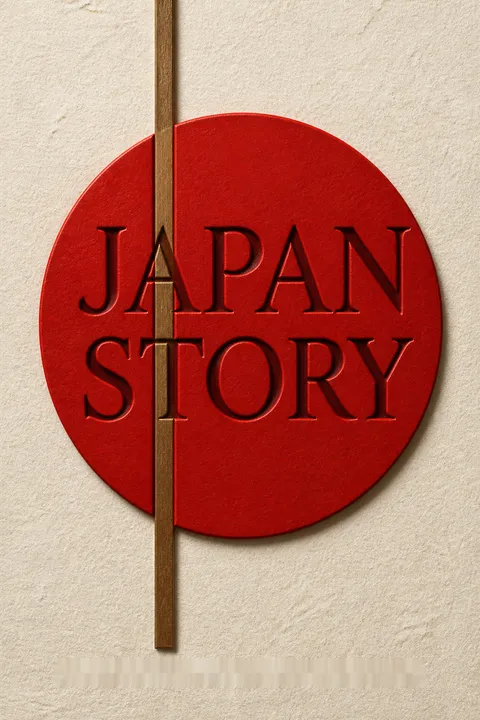


Key Takeaways
Treat national identity as a story people build, not a fact they inherit
Stories shape reality. Japan’s modern history is often told through two powerful accounts: a country that rapidly modernized, fell into militarism, then prospered peacefully, and a people with a timeless, distinctive culture. Both contain truth, but each can conceal people and events that do not fit. The book opens with novelist Setouchi Harumi seeking help from psychoanalyst Kosawa Heisaku, whose Buddhist and Freudian outlook helped her see beyond the single story she had built about herself.
A nation has inner life. Harding uses their encounter to suggest that national narratives, like personal ones, can offer coherence while narrowing what people are able to notice. Japan’s story is therefore not simply a record of events. It is also a struggle over which events count, who gets to tell them, and what futures those stories make imaginable.
What’s striking is the book’s refusal to treat national identity as either pure invention or ancient essence. It works more like a shared interpretive habit: institutions repeat a story until it shapes common sense and policy. This resembles the way personal memory organizes experience, while also differing from it because states can teach, reward, and enforce preferred narratives. The analogy is illuminating, but it has limits. A nation has no single unconscious or unified voice. Its stories are contested by people with unequal power to make theirs heard.
Modernize by adapting tools, not pretending technology carries no values
Imports change their hosts. When Commodore Perry forced Japan to open its ports in the 1850s, the country faced pressure to adopt foreign technology and institutions or risk subordination. Meiji leaders pursued rapid state-building: they centralized government, introduced national schooling and conscription, and built railways, factories, and a modern military. Their guiding phrase, wakon-yōsai, meant Japanese spirit and Western techniques.
Technique carries assumptions. The book shows that the distinction was never clean. Japan borrowed models from Britain, France, Prussia, and the United States, but adapted them to local priorities. A postal service modeled on Britain’s excluded women employees; a national army required ordinary men’s bodies and time. Imported systems reshaped ideas of authority, work, gender, and citizenship, even when leaders described them as merely practical tools.
This history complicates the familiar choice between copying foreign models and protecting local culture. Institutions are not neutral containers: a school system or army carries assumptions about authority, discipline, and whose labor counts. Yet adaptation is not automatically liberation. Meiji leaders modified imported systems while using them to centralize power and strengthen the state. The useful question is therefore not whether a practice is foreign, but who designed its local version, who benefits from it, and which alternatives it makes harder to imagine.
Notice when governments turn homes, schools, and bodies into national machinery
Private life became public work. Meiji leaders treated schooling, taxation, conscription, and family life as tools for building a stronger country. The conscription law described military service as a blood tax, prompting rural rumors that officials planned to collect people’s actual blood. The panic reflected real anger at new demands imposed from distant Tokyo.
Family rules were remade. The 1898 Civil Code made the ie, or household, the basic legal unit, with authority passing from father to eldest son. Women had few independent legal rights, while girls were trained for domestic management. The ideal of the good wife and wise mother presented household work as service to the nation. This model was not simply an unchanged tradition. It was a modern political arrangement assembled from selected older customs and new state priorities.
The household is often treated as outside politics, but rules about marriage, inheritance, and care distribute power just as laws governing elections do. Japan’s case makes visible how social policy can mobilize intimate life without appearing coercive: domestic education and family registration looked ordinary while serving national goals. The book also shows that people resisted, from rural protests to women’s writing. One caution is that state programs never fully determine private behavior. Families adapt, evade, and reinterpret official ideals, so the gap between policy and lived practice matters as much as the policy itself.
When national identity becomes sacred, dissent can be recast as betrayal
Loyalty acquired divine force. Japan’s leaders placed the Emperor at the center of a national story, using schools, ceremonies, and the Imperial Rescript on Education to teach loyalty and duty. In the 1930s, the idea of kokutai, the national polity centered on the Emperor, was presented as Japan’s spiritual essence. Critics could then be portrayed as threats to the country rather than participants in political debate.
Grand ideals excused violence. Pan-Asian language promised regional cooperation and freedom from Western domination, yet Japanese expansion brought colonial rule and devastating violence. The army’s 1937 capture of Nanjing was followed by mass executions, rape, and looting. Philosophical and religious ideas did not mechanically cause these crimes, but national myths and imperial ambitions helped make aggression seem purposeful and morally defensible.
The danger here is not simply religion or patriotism. It is the fusion of moral authority with a political project that claims to embody the whole nation. Once loyalty is treated as proof of virtue, disagreement can be dismissed without answering its substance. The book is careful to show that intellectual traditions were diverse and sometimes appropriated for purposes their thinkers did not intend. That distinction matters: ideas create possibilities, not automatic outcomes. Responsibility still belongs to the institutions and people who turn them into policy and action.
Read distress as evidence about society without reducing people to symptoms
Suffering became a public question. From the 1870s, Japanese newspapers discussed neurasthenia, a condition associated with exhaustion and the pressures of rapid change. Later observers worried about salarymen, overworked employees, school refusal, and people withdrawing from society. Writers made these strains visible: Natsume Sōseki linked his own anxiety to Japan’s hurried modernization, while Akutagawa Ryūnosuke’s final fiction portrayed a mind overwhelmed by city life.
Care offered another lens. Kosawa Heisaku treated people through psychoanalysis informed by Buddhism. His practice invited clients to speak freely, including about thoughts they would normally censor. Folklorist Yanagita Kunio, meanwhile, valued rural stories as ways of understanding lives that abstract theories could miss. These approaches made distress meaningful, but the book also asks whether therapeutic guidance can free people or simply recruit them into new authorities.
The section anticipates a modern insight from social science: distress can be shaped by working conditions, social isolation, and cultural expectations, not only by individual vulnerability. That perspective helps prevent the reflex to blame people for failing to adapt. But interpreting illness as a signal of society can also flatten the person into evidence for an argument. Kosawa’s listening practice offers a useful counterweight: social context matters, yet each person’s account remains particular and cannot be inferred from a diagnosis alone.
Expect power to manage dissent by absorbing useful critics and punishing the rest
Control was more than force. In the 1920s, Japanese bureaucrats built networks that sought to guide public behavior through campaigns, local groups, and moral education. The approach, called kyōka, meant moral suasion: persuading people to adopt habits officials considered beneficial. Women’s organizations and social reformers could gain influence by cooperating with ministries, but their agendas were redirected toward state-approved roles.
The limits could turn brutal. Alongside persuasion stood the Special Higher Police, which targeted political dissent and pressured prisoners to recant. The same state could support poverty relief or worker organizations while restricting those it could not manage. This was neither simple repression nor genuine partnership. It was a flexible system of inclusion and coercion, with participation encouraged when it strengthened official goals and curtailed when it threatened them.
The pattern resembles what political theorists call managed participation: authorities concede a voice or a benefit while keeping control over the terms of debate. This can produce real improvements, so it should not be dismissed as merely cynical. But access is not the same as power. The key test is whether participants can define the problem, refuse the offered role, and impose consequences when officials ignore them. Without those options, consultation can strengthen legitimacy without redistributing decision-making authority.
Use culture to question national myths, not merely decorate them
Art carried competing messages. Japanese culture could serve state power, as in wartime animation that recast the folk hero Momotarō as a leader fighting foreign enemies. It could also preserve independent judgment. During the Occupation, pianist Akiyoshi Toshiko resisted the idea that jazz belonged naturally to Americans. After years of experimenting, she combined jazz with Japanese musical forms in a composition shaped by her own experience rather than by a national formula.
The medium changes the meaning. Artists also challenged the bright, prosperous image of postwar Japan. Reportage painters depicted communities confronting military bases and industrial pollution; filmmakers and performers used ambiguity, satire, and discomfort to make audiences look again. Culture was never automatically resistant or liberating. The same medium could sell a national ideal, expose its costs, or do both at once.
Culture is powerful partly because it reaches people before they have decided whether they agree with a political claim. A song or film can make an unfamiliar experience emotionally legible, while a state-sponsored story can make violence seem natural. Akiyoshi’s experience shows that cultural exchange need not end in imitation or defensive purity. Still, art’s openness is not a guarantee of political effect. A provocative work can be absorbed as style, ignored, censored, or marketed as another attractive product.
Turn everyday dependence into leverage when institutions ignore harm
Citizens found pressure points. After the 1960 Anpo protests, some Japanese activists shifted from grand ideological battles toward specific public problems. Residents challenged military bases, pollution, and local government decisions. In Minamata, people poisoned by industrial mercury pollution combined lawsuits, demonstrations, media work, and support networks. The campaign helped force a court ruling against Chisso, the company responsible, and contributed to tougher national pollution controls.
No single tactic was enough. Earlier, residents near Tokyo’s Sunagawa air base had challenged its expansion, while a court ruling briefly declared the American bases unconstitutional. The Supreme Court reversed that decision. These cases show how legal action can change public expectations even when it loses or is narrowed. Organizing works best when affected people control their story and connect courtroom arguments to visible evidence and public pressure.
The Minamata campaign illustrates a form of power often missed by accounts focused only on elections: people can exploit institutions’ dependence on reputation, legal legitimacy, and public cooperation. The result is not simply protest but a change in what companies and governments must explain. Yet access to courts, media, and organizing resources is unequal, and a successful verdict does not automatically repair harm. The lesson is to treat legal victories as leverage for continued accountability, not as proof that the underlying conflict has ended.
Economic success can rebuild a country without settling its political bargain
The bright life was real. After defeat in 1945, Japan adopted a new constitution under American occupation, land reform, and a pacifist framework. Cold War priorities soon shifted the Occupation toward economic recovery and a reliable alliance. Orders for the Korean War helped Japanese industry recover, and companies such as Sony turned technical skill into globally recognized products. The 1964 Tokyo Olympics and the shinkansen made the recovery visible to the world.
Prosperity did not resolve power. The treaty with the United States preserved American bases, while many Japanese opposed the security arrangement. The 1960 Anpo protests brought millions into the streets but failed to stop renewal. Japan’s success story therefore rested on a bargain: rapid growth and protection alongside constrained foreign policy, unresolved wartime memory, and an uneasy relationship with military power.
Economic growth can provide genuine security and opportunity, but it is not a substitute for political consent. Japan’s postwar settlement shows how an external protector may enable recovery while also narrowing a country’s choices. The Olympics made prosperity visible; the protests made its conditions visible. This is a useful distinction for evaluating development: rising incomes are important outcomes, but they do not tell whether people have meaningful influence over the rules that organize their lives.
Make belonging plural enough for people to live more than one identity
Japan was never uniform. The book follows Ainu people, Okinawans, Koreans living in Japan, Burakumin, and disabled people whose experiences complicate the claim of a homogeneous nation. Ainu recognition in law improved, but discrimination and disputed land rights remained. Okinawa continued to bear a disproportionate military presence. Cultural visibility alone did not guarantee political influence or safety.
Shared life need not mean sameness. Yanase Takashi’s Anpanman, a hero who gives hungry children pieces of his own bread-like face, became a comfort to children after the 2011 earthquake and tsunami. His appeal rests on practical compassion, not purity or invulnerability. Harding closes by treating festivals, local traditions, and ordinary care as places where people negotiate belonging. National identity can hold difference, but only if those represented have power to shape the story.
Plural belonging is more demanding than celebrating diversity as a festival theme. It requires institutions to share authority, resources, and the power to define what counts as normal. The book’s examples show why visibility is only a first step: a culture can admire Okinawan music or Ainu craft while leaving political inequalities untouched. Anpanman offers a smaller but resonant model of solidarity, grounded in feeding and helping. Its limitation is equally clear: kindness sustains people, but it cannot replace rights or structural change.
Analysis
Japan’s modern history, as presented here, is not a straight passage from isolation to modernization, militarism, defeat, and recovery. That sequence is factually recognizable, but it can become a tidy moral fable: the country adopts modernity, misuses it, suffers punishment, and returns as a peaceful economic model. Harding’s central intervention is to show that such narratives are not neutral summaries. They guide what leaders build, what citizens are asked to sacrifice, and which memories are permitted to organize public life.
The book’s strongest analytical move is to pair state projects with intimate experience. Conscription is not only a military policy; it is a demand on bodies and families. The ie is not simply a domestic custom; it is a legal design for distributing authority. A railway, television program, or Olympic ceremony is both infrastructure and a claim about what the country is becoming. This approach makes national history legible without reducing it to leaders and institutions alone.
The recurring tension is between integration and coercion. Central institutions can educate, coordinate, and provide material security, but they can also narrow political choice and portray dissent as disloyalty. Conversely, local movements, art, religious practice, and minority communities offer alternatives, but none is inherently emancipatory. Rural nostalgia can be mobilized by nationalists; spiritual language can be bent toward imperial aims; protest can be commercialized or contained. Harding’s account resists assigning virtue to either the state or its critics in advance.
The book also suggests that resilience is not the same as recovery. Japan repeatedly adapts, yet adaptation may preserve unresolved bargains: security dependence, unequal treatment, environmental damage, and selective memory. Its ending therefore favors neither national exceptionalism nor inevitable decline. It asks whether a shared story can remain coherent while allowing people to revise it, and whether the state can recognize plural identities without converting them into decorative symbols. That question extends beyond Japan: modern nations are not only inherited communities, but ongoing arrangements whose legitimacy depends on who gets to participate in telling their history.
Review Summary
Japan Story receives largely positive reviews for its unique approach to Japanese history, focusing on cultural and social aspects through individual stories. Readers appreciate Harding's balanced perspective and engaging writing style. The book covers Japan's modernization from 1850 to the present, exploring themes of identity, westernization, and societal changes. Some criticize its structure and depth, but many find it informative and accessible. It's recommended for those seeking a broader understanding of Japan beyond political events, though prior knowledge may be helpful.
People Also Read



Glossary
wakon-yōsai
Japanese spirit, Western techniquesA Meiji-era guiding phrase meaning Japanese spirit and Western techniques. It expressed the ambition to adopt foreign technology and institutions while retaining a distinct national character. The book emphasizes that this separation was unstable: technologies and institutions carry assumptions about society, and they reshape the people who use them.
ie
Legally defined householdThe household as established in Japan’s modern Civil Code, which made the family rather than the individual the basic legal unit. Authority generally passed from a father to the eldest son, while women had restricted legal rights. The book stresses that this arrangement was not simply an untouched ancient tradition; it was formalized and reshaped by modern state policy.
kokutai
Emperor-centered national polityA concept of Japan’s national polity, increasingly centered on the Emperor and presented as the country’s spiritual and historical essence. In the 1930s, official education and political writing promoted kokutai as a basis for unity and loyalty. Its sacral authority could be used to portray dissent as a threat to the nation.
nihonjinron
Theories of Japanese uniquenessA genre of writing that explains Japanese society through claims about distinctive national psychology, culture, or social organization. Such accounts often contrast Japanese people with Westerners and may describe Japan as uniquely cooperative, indirect, or homogeneous. Harding notes that these ideas can contain observations while exaggerating national uniformity and obscuring differences within Japan.
minponshugi
Government focused on the peopleA political idea associated with Yoshino Sakuzō that treats the people as the basis or focus of governance, rather than insisting on direct government by the people. It proposed leaders of character who would protect constitutional freedoms and serve public welfare. The book presents it as a moderate alternative to both elite rule and some forms of mass politics.
kyōka
State-led moral suasionA strategy of guiding public behavior through persuasion, education, local organizations, and campaigns promoting approved habits. Japanese bureaucrats used kyōka to influence communities on matters ranging from thrift to hygiene and social conduct. It could bring reforms and practical benefits, but also drew citizens and organizations into state-defined roles.
shimin
Citizens acting in publicThe term for citizens as participants in public life, particularly important in postwar movements that organized around specific social and political problems. Activists used constitutional rights, local groups, media, and courts to press for change. The idea differed from a model in which governance was left mainly to politicians and bureaucratic specialists.
amakudari
Officials moving into businessLiterally descent from heaven, amakudari refers to senior civil servants retiring from government and taking positions in companies or organizations connected to their former areas of expertise. The practice could transfer useful knowledge, but it also reinforced close relationships between the bureaucracy and business, raising concerns about accountability and conflicts of interest.
tabunka kyōsei
Multicultural coexistenceA term used in modern Japan for the goal of people from different cultural backgrounds living together. The book describes it as an official ideal that had not resolved discrimination or the uncertain status of groups such as Koreans who had long resided in Japan. The term raises the question of whether coexistence includes shared power or merely tolerates difference.
Download PDF
Download EPUB
.epub digital book format is ideal for reading ebooks on phones, tablets, and e-readers.








