

Key Takeaways
Treat reality as a learned map, not the whole terrain
A world we learn. Don Juan argues that people are taught from childhood how to interpret what they perceive. Shared assumptions make that description feel like reality itself. Castaneda initially believes hallucinogenic plants are the essential route into Don Juan's knowledge, then recognizes that the deeper work is learning to perceive beyond his usual interpretations. The book calls the disruption of those settled interpretations stopping the world; seeing means responding to possibilities outside the familiar description.
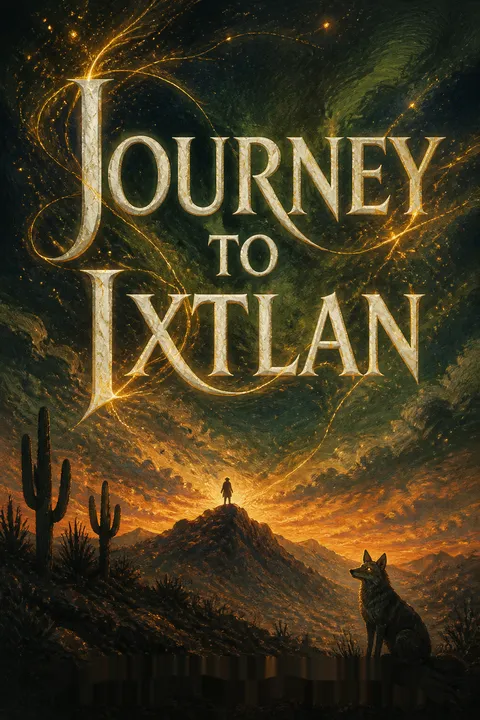
A changed perception. Near the end, Castaneda reports an encounter with a coyote that seems to communicate and a vision of luminous lines across the landscape. Don Juan treats this as a shift between worlds. The experience is presented as personal revelation, not independently verified proof that perception reveals supernatural facts.
What's compelling is the distinction between sensing and interpreting: perception is not a neutral camera, but is shaped by expectation, language, and habit. Cognitive science similarly examines how the brain uses prior expectations to make incoming signals intelligible. That connection supports the book's challenge to certainty without confirming its supernatural claims. The introduction also cautions that Don Juan's teachings should not be taken as representative of Yaqui people generally, and says their conversations occurred in Spanish. That distinction matters when reading a work that blends anthropology, spiritual teaching, and extraordinary narrative.
Loosen the story others use to keep you predictable
Identity as a public file. Don Juan calls the accumulated account of one's past and identity personal history. He argues that people keep reinforcing others' fixed ideas of them by explaining their choices, routines, and motives. His proposed alternative is to reveal less, stop compulsively justifying oneself, and leave room for surprise. He describes his own identity as deliberately difficult for others to pin down.
Not a license to deceive. In their early conversations, Don Juan presses Castaneda about his habit of explaining his actions and then resenting people who see him as unreliable. The advice is less about erasing memory than loosening the grip of a fixed self-image. Yet Don Juan's recommendations sometimes involve withholding information and mystifying others, so the principle needs a boundary: privacy can create freedom, but habitual secrecy can damage trust.
The useful distinction is between identity as a flexible account and identity as a cage. Narrative psychology treats the stories people tell about themselves as important to continuity, but those stories can also become self-fulfilling scripts. Revising a self-description may create room to act differently. Still, relationships rely on enough predictability to support consent and trust. The book's most transferable insight is freedom from compulsory self-explanation, not an obligation to become unknowable. A person can protect private space while remaining candid about commitments that affect others.
Let death put vanity and resentment back in scale
Mortality as perspective. Don Juan asks Castaneda to imagine death as a constant companion. When irritation or self-pity takes over, he says, remembering mortality can reveal how little those moods deserve to dominate a finite life. The image becomes concrete when Don Juan helps Castaneda recover a forgotten childhood memory of stalking a rare white falcon. He interprets the cold sensation Castaneda remembers as a warning from death, though the interpretation belongs to the book's sorcerous worldview.
A wider circle of value. Don Juan also challenges Castaneda's self-importance by asking him to treat plants and animals as fellow inhabitants rather than lesser things. When they eat a trapped animal, he frames taking its life as a serious exchange, not a casual entitlement. The combination of mortality and reciprocity makes attention less self-centered.
Mortality can clarify priorities because it makes opportunity costs emotionally vivid. Research on mortality awareness also suggests a complication: reminders of death can increase defensiveness and attachment to familiar beliefs, not automatically produce wisdom. Don Juan's approach works within the story because mortality is paired with attention to the surrounding world, not just fear of personal extinction. Its strongest ethical implication is humility toward other lives. The caution is that death awareness should sharpen care and judgment, rather than become a reason to dismiss ordinary pain or treat risk recklessly.
Own the choice, including the choice you avoid making
Decisions have consequences. Don Juan tells Castaneda that assuming responsibility means recognizing a choice as one's own and acting without endlessly retreating into regret. He links this to the brevity of life: if time is limited, postponement is also a decision. A story about Castaneda's father makes the point. The father repeatedly planned to take an early swim with his son, then went back to bed. Castaneda criticizes the broken promises, but Don Juan asks why he neither swam alone nor openly rejected the plan.
Responsibility is not blame. Don Juan's argument is that Castaneda remained entangled because he did not choose a clear response. A separate fable about a hungry young man who takes food gourds instead of a promised spirit deer makes a related point: he chooses without understanding what matters, then destroys what he has. The lesson is to know why a choice is being made and accept its real outcome.
This is a sharp account of how resentment can conceal one's own agency. In decision theory, choosing not to act still preserves the status quo, so it carries consequences even when it feels like neutrality. The father's missed swims illustrate a familiar mismatch between intention and behavior, while the son's silence shows how another person's inconsistency can become a shared pattern. Responsibility is most useful when it expands possible action. It becomes harmful if interpreted as blaming people for constraints, coercion, or harms they did not choose.
Study others' patterns, then disrupt your own routines
A hunter reads behavior. Don Juan shifts Castaneda's education from medicinal plants to hunting. He teaches him to watch where animals feed, rest, and flee, then place traps according to those habits. While they observe small desert rodents, Castaneda learns to predict when they will stop after escaping danger. The hunter's advantage is not simply equipment. It is patient attention to the prey's repeated behavior.
Become less trackable. Don Juan applies the lesson to human life. Fixed meal times, predictable reactions, and repeated habits make a person easy to anticipate. He disrupts Castaneda's expectations by pretending to announce lunch, the end of work, and the next morning, exposing how quickly Castaneda responds to familiar cues. The goal is not chaos for its own sake. It is to notice automatic routines and gain enough flexibility to act deliberately rather than on schedule alone.
The hunter is a model of attention before action: observe the system, identify regularities, then intervene. That resembles behavioral ecology, where successful prediction depends on understanding an organism in its environment, and it also resembles habit research on cues that trigger automatic responses. But routine is not merely a weakness. Sleep, meals, and shared schedules can support health and coordination. The practical distinction is between routines that serve chosen purposes and routines followed without awareness. Flexibility is valuable when it restores choice, not when unpredictability becomes another performance.
Be selectively available without turning boundaries into deception
Do not exhaust the world. Don Juan explains inaccessibility through the image of a hunter who uses resources sparingly. He refuses to catch every quail in a trap, and he objects when Castaneda wants to damage shrubs to build a cooking pit. He extends the same principle to relationships: constant exposure and anxious dependence can wear people down. Castaneda's intense closeness with a woman, Don Juan suggests, helped turn affection into boredom.
Boundaries, not hiding. Don Juan distinguishes being inaccessible from being secretive. His point is to stop placing oneself at everyone's disposal, not to withdraw from human contact. A hunter can remain intimately engaged with the world while touching it lightly and moving away when enough has been taken. The lesson is to notice when attention, reassurance, or contact becomes grasping, and to give both oneself and other people room.
This section anticipates a useful distinction in relationship psychology: closeness and autonomy are not opposites. Sustainable intimacy needs connection, but also enough space for each person to retain a life beyond the relationship. Don Juan's metaphors make overuse visible by comparing people to resources that can be depleted. That framing can encourage care, though it risks treating relationships instrumentally if taken too literally. Healthy boundaries are negotiated and transparent. They differ from strategic withholding designed to control another person's interest.
Prepare carefully, then act without being ruled by fear
Control, then commitment. Don Juan calls the warrior's mood a combination of self-command and the ability to release hesitation once action is necessary. Castaneda experiences it during a dangerous encounter with a mountain lion. He follows instructions, helps frighten the animal away, and climbs a steep bluff in darkness. Don Juan later points out that Castaneda did not freeze, complain, or waste attention on whether the lion was behaving fairly. His focus was survival.
A response, not a costume. Don Juan says fear helped bring on this state, but a warrior can learn to summon it without waiting for a crisis. The useful sequence is to assess, prepare, and then act. The book also stages frightening ordeals and presents danger as instruction. Those episodes are part of its narrative, not safe exercises to imitate; the principle does not require courting physical danger.
The scene resembles performance under pressure: preparation narrows attention, while commitment prevents endless deliberation from consuming the moment. In sport, emergency response, and skilled work, trained procedures can make decisive action possible without eliminating fear. Don Juan's claim that a warrior cannot be offended is less convincing as a universal rule. Real injury and injustice deserve recognition and response. The more defensible reading is narrower: anger at circumstances should not displace the immediate task, but emotional control need not mean accepting abuse or denying harm.
Interrupt familiar attention to discover what habit makes invisible
Looking is an action. Don Juan distinguishes ordinary doing, the learned way of sorting the world into familiar objects, from not-doing, which interrupts that habitual interpretation. To explain, he asks Castaneda to study a pebble and its shadow. Instead of immediately naming the pebble and moving on, Castaneda attends to the tiny shadow and the rock's surface until the familiar object seems newly detailed.
A practice of noticing. Don Juan describes other exercises, including attending to shadows rather than leaves and shifting how the eyes focus. Within the narrative, these practices can open perception to unfamiliar worlds. Their grounded value is also legible without accepting that claim: sustained attention can reveal details that quick categorization skips. The exercises are not presented as a scientific method, and Castaneda's dramatic perceptions should be read as reported experience rather than reliable evidence of supernatural forces.
Not-doing is memorable because it makes attention physical: the ordinary object does not change, but the way of attending does. This connects to perceptual learning, in which repeated, focused observation improves discrimination of features a novice overlooks. It also resembles mindfulness practices that notice experience before assigning it a label. Those comparisons explain why the exercise may feel transformative without settling what the experience means. Novel perception is not automatically more accurate. Careful noticing and careful interpretation are separate skills.
Train dream attention as a practice of choice, not escape
A deliberate dream. Don Juan defines dreaming as more than having vivid dreams: it is the claimed ability to act deliberately within them. His first exercise is to choose a familiar object, such as one's hands, and find it in a dream. The dreamer briefly looks at other objects, then returns to the chosen one when the scene begins to shift. Castaneda reports gaining some control, then losing it as ordinary dream imagery takes over.
Power in the story. Don Juan describes personal power as a capacity a warrior gradually gathers through disciplined living, and says dreaming can become one route to it. Castaneda's later visions include a bridge in fog and a coyote encounter. Don Juan reads these as encounters with power; the book does not provide independent evidence that they are external realities. For readers, the distinction between lucid-dream practice and supernatural interpretation is essential.
The exercise has a clear psychological analogue in lucid dreaming: recognizing a dream state can allow some people to make choices inside it. It also makes a broader point about metacognition, the ability to notice and redirect one's attention. Those are useful possibilities, but vividness and perceived control do not establish that dream events reveal hidden facts about the external world. The book's value here lies in treating attention as trainable and experience as worth examining, while keeping claims about what a dream proves open to scrutiny.
Accept that some journeys end in longing, not return
The home one cannot reach. Don Genaro tells of meeting an ally and then finding himself far from home, on a journey toward Ixtlan. Along the way, people repeatedly invite him to stop, offering company or food. He senses that these encounters are phantoms and keeps moving. When Don Juan explains the story, Ixtlan becomes an image of the people, places, and former life that a person may lose through transformation. Genaro says he continues to feel close to home, though he never arrives.
An unfinished departure. The story makes knowledge costly: change can enlarge a person's world while separating them from what once made it familiar. At the book's end, Castaneda has a chance to face an ally but decides he is not ready and leaves. The ending refuses a triumphant conversion. The journey remains open, and longing is not neatly solved.
The Ixtlan story gives the book an emotional counterweight to its discipline and supernatural spectacle. Transformation is not portrayed as uncomplicated liberation; it carries homesickness for people and places that cannot simply be recovered. That tension recalls migration narratives and rites of passage, where a changed identity can make return difficult even when the physical home remains. The ending's restraint is significant: Castaneda chooses not to force a confrontation. The story therefore leaves room for discernment, rather than equating courage with pressing ahead at any cost.
Analysis
Journey to Ixtlan is structured as an apprenticeship narrative, but its deeper plot is a struggle over who gets to define reality. Castaneda arrives seeking practical information about plants. Don Juan repeatedly redirects him, first toward hunting, then toward the disciplines of a warrior, and finally toward experiences that destabilize Castaneda's confidence in ordinary perception. The progression matters: the book presents altered vision not as a trick performed by a substance, but as the culmination of attention, conduct, and a revised relationship to uncertainty.
Its most durable ideas can be read without accepting its supernatural claims. The learner's map is not the terrain; self-description can harden into a constraint; routine can make behavior predictable; mortality can sharpen priorities; and attention can be trained by interrupting familiar labels. These ideas gain force through recurring scenes rather than a tidy abstract framework. The forgotten falcon, trapped animals, the shadow of a pebble, the mountain lion, and Genaro's unreachable Ixtlan each give a different emotional texture to the same demand: stop treating the familiar as final.
The book also asks for skepticism about its own authority. Its introduction says Don Juan's teachings do not represent Yaqui practice generally, and describes their conversations as occurring in Spanish. The extraordinary episodes are reported experiences, not independently established evidence of sorcery or alternate worlds. A responsible reading can preserve their psychological and literary force while withholding judgment about their literal truth.
There is a real ethical tension in the teaching relationship. Don Juan's humor and attention can be perceptive, but he also manipulates, frightens, and places Castaneda in danger. The text sometimes treats these tactics as instruction, yet they are not necessary models for ordinary mentorship. Its strongest practical challenge is less dramatic: examine the habits that narrow perception, choose actions deliberately, and remain humble about what experience alone can prove. The ending reinforces that humility by leaving Castaneda short of the final encounter.
Review Summary
Journey to Ixtlan is widely regarded as a pivotal work in Castaneda's series, focusing on non-drug induced spiritual practices and shamanic wisdom. Readers appreciate its philosophical depth, vivid storytelling, and thought-provoking concepts about perception and reality. Many find it life-changing, praising Don Juan's teachings on personal power, death as an advisor, and erasing personal history. While some question its authenticity as non-fiction, most agree it offers valuable insights regardless. The book's accessible style and profound ideas make it a favorite among Castaneda's works.
People Also Read




Glossary
Stopping the world
Interrupting familiar realityIn Don Juan's teaching, stopping the world is a disruption of the ordinary flow of interpretations that makes familiar reality seem unquestionable. Castaneda describes it as the result of learning a different account of the world so thoroughly that it changes perception. The book presents this as a threshold to seeing, not merely as a metaphor for pausing or relaxing.
Seeing
Perceiving beyond learned labelsSeeing is Don Juan's term for responding to what he describes as perceptual possibilities outside the familiar interpretation of everyday life. It is contrasted with merely looking, which accepts ordinary categories as definitive. Castaneda's reported visions, including luminous forms and lines across the landscape, are treated by Don Juan as examples, though the narrative does not independently verify their supernatural interpretation.
Personal history
A fixed public identityPersonal history is the accumulated account of a person's past, identity, and behavior that they repeatedly share and reinforce with others. Don Juan argues that it lets people believe they know what someone will do, and can make the person feel bound by those expectations. His proposed alternative is to reduce compulsive explanation and avoid treating identity as settled.
Personal power
A gathered capacity to actPersonal power is Don Juan's name for a capacity a warrior can gradually acquire and store through a disciplined way of living. He describes it as something felt rather than easily defined, and claims it can guide action and make extraordinary experiences possible. The book treats it as part of its sorcerous worldview, not as a scientifically established force.
Doing
Habitual world-making interpretationDoing is Don Juan's term for the learned activity of interpreting and organizing experience into familiar things and categories. A rock is experienced as a rock because people know how to perceive it that way, he argues. Doing includes ordinary habits of attention, not just physical actions, and forms the contrast against which he explains not-doing.
Not-doing
Disrupting habitual perceptionNot-doing is a practice of interrupting familiar ways of attending and interpreting. Don Juan illustrates it by directing Castaneda to examine shadows, small details, or an object's relation to its surroundings instead of immediately treating it as an ordinary thing. In the book, not-doing is also linked to personal power and stopping the world, claims that belong to its spiritual framework.
Dreaming
Deliberate action within dreamsDreaming, in Don Juan's specialized use, is not simply dreaming vividly. It means gaining enough deliberate control within a dream to focus on chosen objects, sustain attention, and eventually travel to a selected place. He begins Castaneda with an exercise of finding his hands in a dream. The book distinguishes this from ordinary dreams, where events unfold without deliberate control.
Ring of power
A force shaping perceived worldsDon Juan describes a ring of power as a human capacity involved in making and maintaining a shared world through common interpretations. He says everyone possesses an ordinary ring connected to the familiar world, while a sorcerer can develop another associated with not-doing and a different world. The concept is part of the book's metaphysical system, rather than an empirical account of perception.
Mood of a warrior
Self-command with committed actionThe mood of a warrior is Don Juan's term for acting with control and preparation while also releasing hesitation when action is required. Castaneda experiences it during a frightening encounter with a mountain lion, when attention shifts from complaint to survival. Don Juan treats the state as a discipline that can be cultivated, not simply a temporary rush of fear or courage.
Gait of power
A method for moving in darknessThe gait of power is a walking and running technique Don Juan teaches for moving at night. It involves bending the torso and knees, lifting the knees high, taking short steps, and keeping the eyes on the ground immediately ahead rather than glancing around. Don Juan explains it as a way to move with greater confidence in darkness, while framing its effectiveness through personal power.
A cubic centimeter of chance
A brief opening for actionDon Juan uses this phrase for a small, temporary opportunity that appears in a person's life. He says an average person may miss it through distraction or preoccupation, whereas a warrior stays alert and prepared enough to act. The image condenses the book's recurring emphasis on readiness: opportunity is not useful merely because it appears; it must be noticed and met.
FAQ
What is Journey to Ixtlan: The Lessons of Don Juan about?
- Anthropologist's Shifting Reality: Carlos Castaneda, initially seeking information on medicinal plants, finds his academic framework challenged by Yaqui sorcerer Don Juan Matus, who teaches that everyday reality is merely a learned description.
- Techniques for Perception: The book details Don Juan's non-peyote-induced methods for altering perception and achieving a state called "stopping the world," including erasing personal history, losing self-importance, and using death as an adviser.
- Path of the Warrior: Carlos is guided through the principles of a warrior's life – impeccability, responsibility, inaccessibility, and disrupting routines – as preparation for encountering and interacting with unknown forces or "power."
Why should I read Journey to Ixtlan: The Lessons of Don Juan?
- Challenges Conventional Thought: The book offers a radical perspective on reality, perception, and the self, prompting readers to question deeply ingrained assumptions about the world and their place in it.
- Explores Human Potential: It delves into concepts of personal power, discipline, and awareness, suggesting that individuals possess untapped capabilities to navigate life with greater intent and freedom.
- Unique Narrative Style: Castaneda's engaging, first-person account blurs the lines between ethnography and mystical journey, creating a compelling and often bewildering reading experience that stays with the reader.
What is the background of Journey to Ixtlan: The Lessons of Don Juan?
- Shift in Focus: This third book marks a significant departure from Castaneda's previous works by asserting that psychotropic plants were not the essential element of Don Juan's teachings, but merely an aid used due to Carlos's initial insensitivity.
- Fieldwork Re-evaluation: The content is presented as a re-examination of Castaneda's earlier field notes (from 1960-1962) that he had previously discarded because they did not involve plant use, highlighting the "techniques for stopping the world" as foundational.
- Cultural Context: While Don Juan identifies as Yaqui, the book emphasizes that his sorcery knowledge is personal and not necessarily representative of Yaqui culture in general, focusing instead on the universal applicability of the warrior's path.
What are the most memorable quotes in Journey to Ixtlan: The Lessons of Don Juan?
- "Death is the only wise advisor that we have.": Don Juan repeatedly emphasizes death's presence "always to our left, at an arm's length," as a tool to shed pettiness and make every decision count, highlighting the theme of urgency and responsibility.
- "Self-importance is another thing that must be dropped, just like personal history.": This quote encapsulates the core teaching that shedding the ego's inflated view is crucial for a warrior to truly appreciate the world and act impeccably.
- "The world is a mystery. This, what you're looking at, is not all there is to it.": Don Juan constantly reminds Carlos that perceived reality is limited, urging him to embrace the unknown and the "endless" nature of the world beyond learned descriptions.
What writing style, narrative choices, and literary techniques does Carlos Castaneda use?
- First-Person Ethnographic Account: The narrative is presented as Carlos's direct field notes and recollections, creating an immersive, subjective experience that blurs the line between objective observation and personal transformation.
- Dialogue-Driven Structure: Much of the teaching unfolds through extensive, often circular, dialogues between Carlos and Don Juan, reflecting the oral tradition of the lessons and Carlos's intellectual struggles to grasp abstract concepts.
- Juxtaposition of Mundane and Mystical: Castaneda frequently contrasts Carlos's rational, often bewildered, internal monologue and everyday concerns (like taking notes, eating, driving) with Don Juan's profound, non-ordinary explanations and demonstrations, emphasizing the clash of worldviews.
Hidden Details & Subtle Connections
What are some minor details that add significant meaning?
- Don Juan's Physical Prowess: Early descriptions of Don Juan's unexpected strength and agility, like out-walking Carlos or his "incredibly agile jump," foreshadow the concept of "personal power" and "not-doing" as physical capabilities beyond ordinary human limits.
- Recurring Animal Omens: The crow appearing at specific moments (e.g., at the "enemy spot," before the mountain lion encounter) and the coyote encounter later gain significance as "omens" or "messengers" from the world of power, linking seemingly random animal appearances to the unfolding mystical path.
- The "Bed of Strings": The description of the prepared resting spot on the hilltop as a "bed of strings" that makes Carlos feel "suspended" subtly connects the physical act of preparing a space to the non-ordinary sensation of floating achieved through "not-doing" and accessing power.
What are some subtle foreshadowing and callbacks?
- Early Mentions of "Stopping the World": Don Juan introduces the phrase "stopping the world" early on as a cryptic concept, only to reveal its central importance much later as the prerequisite for "seeing," turning a seemingly throwaway line into a foundational technique.
- The Falcon's Gaze: Carlos's recollection of the falcon's fierce gaze, triggered by looking into Don Juan's eyes, foreshadows the later teaching about death as a hunter and its constant presence "to our left," linking a childhood memory to a core tenet of the warrior's path.
- The Wind's Volition: Don Juan's early, seemingly eccentric claim that the wind "agrees" with him foreshadows the later, more serious teaching that the wind is not just air movement but a "power" or "entity" with volition, capable of recognizing and acting upon individuals.
What are some unexpected character connections?
- Carlos and the Rabbit: Carlos's intense identification with the rabbit caught in his trap, feeling its "tragedy" and seeing himself as the "rabbit," reveals a deeper, unspoken connection to the vulnerability of prey, which Don Juan uses to highlight Carlos's lack of impeccability and responsibility.
- Don Juan and Carlos's Father: Don Juan's seemingly random critique of Carlos's father's "unreal resolutions" serves as a surprising parallel, using a figure from Carlos's personal history to illustrate the warrior's principle of assuming full responsibility for decisions, no matter how small.
- The Young Men as "Shadows": The encounter with the four young men, initially perceived as ordinary people, culminates in Don Juan revealing they were "shadows" or "apprentices" touched by "not-doing," unexpectedly linking a seemingly social interaction to the mystical realm and the concept of altered perception.
Who are the most significant supporting characters?
- Don Genaro: More than just a friend, Don Genaro acts as a catalyst for Carlos's transformation, using bizarre and inexplicable demonstrations ("swimming on the floor," making the car disappear) to force Carlos beyond rational explanation and towards "stopping the world" and "seeing."
- La Catalina: Introduced as a "worthy opponent," La Catalina serves as a tangible threat that forces Carlos to apply Don Juan's teachings on impeccability, strategy, and facing the unknown, acting as a crucial external pressure for his development as a warrior.
- The Coyote: The talking coyote encounter is pivotal, not just as a mystical event, but as a "magical being" that directly communicates with Carlos's body after he has "stopped the world," symbolizing the non-ordinary reality accessible through sorcery and becoming Carlos's lifelong companion in that realm.
Psychological, Emotional, & Relational Analysis
What are some unspoken motivations of the characters?
- Don Juan's "Gesture": Don Juan states he is having a "gesture" with Carlos, implying a motivation beyond simple teaching – perhaps fulfilling a debt to his own benefactor, passing on knowledge before his death, or simply acting impeccably according to his path, rather than personal attachment.
- Carlos's Underlying Drive: Despite his intellectual resistance and fear, Carlos's persistent return to Don Juan, even after terrifying experiences, suggests an unspoken, perhaps unconscious, drive for transformation or a deep-seated dissatisfaction with his ordinary reality.
- Don Genaro's Playfulness: Don Genaro's constant clowning and absurd actions, while explained as techniques to disrupt Carlos's "doing," also seem motivated by a genuine joy or lightness derived from his mastery of power, contrasting sharply with Carlos's heavy seriousness.
What psychological complexities do the characters exhibit?
- Carlos's Rational vs. Experiential Conflict: Carlos constantly grapples with cognitive dissonance, trying to reconcile his academic, rational worldview with the inexplicable phenomena he witnesses, leading to internal turmoil, anxiety, and a compulsion to explain everything.
- Don Juan's Impeccable Detachment: Don Juan embodies a complex state of being both deeply engaged with Carlos's development ("I have had a gesture with you") and yet detached from the outcome ("It doesn't matter whether or not all this is true"), reflecting the warrior's balance of intent and abandon.
- Don Genaro's Embodied Knowledge: Don Genaro's ability to perform seemingly impossible physical feats and communicate through non-verbal means ("swimming on the floor," the gait of power) suggests a psychological state where knowledge is not just intellectual but deeply integrated into the body's capabilities.
What are the major emotional turning points?
- Remembering the Albino Falcon: Recalling the childhood incident with the albino falcon, prompted by Don Juan, is a significant emotional shift, connecting Carlos to a forgotten sense of patience and efficiency and introducing the theme of death's presence.
- The Rabbit Incident: Being unable to kill the rabbit and his subsequent identification with its fate ("the many times I had been the rabbit myself") is a powerful emotional moment that forces Carlos to confront his own vulnerability and the "pettiness" of his self-importance in the face of death.
- The Coyote Encounter: The encounter with the talking coyote and the subsequent "seeing" of the lines of the world culminates in an "extraordinary moment of elation" and "divine euphoria," representing a breakthrough into a non-ordinary perception that transcends his usual fear and doubt.
How do relationship dynamics evolve?
- Mentor-Apprentice Shift: The relationship moves from a formal informant-anthropologist dynamic to a profound mentor-apprentice bond, where Don Juan takes increasing responsibility for Carlos's transformation, pushing him beyond academic inquiry into a life-altering path.
- From Annoyance to Awe: Carlos's initial feelings towards Don Juan fluctuate between annoyance, disbelief, and fear, gradually evolving into respect, awe, and a deep, albeit often bewildered, affection as he witnesses Don Juan's mastery and experiences inexplicable events.
- Shared Mystical Experience: The inclusion of Don Genaro introduces a dynamic of shared mystical experience and playful challenge, where both sorcerers work together to disrupt Carlos's perception, solidifying their bond through their joint "gesture" towards him.
Interpretation & Debate
Which parts of the story remain ambiguous or open-ended?
- The Nature of "Power" and "Entities": The book deliberately leaves the exact nature of "power," "allies," "entities of the night," and the "spirit" of places undefined, describing them only through their effects and the feelings they evoke, leaving their ontological status open to interpretation.
- The Reality of Non-Ordinary Events: Whether events like the disappearing car, the talking coyote, or the "gait of power" are literal occurrences, shared hallucinations, or profound shifts in perception remains ambiguous, challenging the reader's own definition of reality.
- The Destination of Ixtlan: Don Genaro's story of the journey to Ixtlan is presented as an endless path, not a physical place to be reached, leaving the ultimate goal or state of being it represents open to metaphorical interpretation as a state of perpetual seeking or belonging that is always just out of reach.
What are some debatable, controversial scenes or moments in Journey to Ixtlan: The Lessons of Don Juan?
- The Disappearing Car: This scene is highly controversial, prompting debate among readers and critics about whether it represents a genuine mystical event, a staged trick by Don Juan and Don Genaro, or a psychological break/hallucination on Carlos's part.
- The Talking Coyote: The scene where Carlos converses with a coyote raises questions about the literalness of the narrative; is the coyote truly speaking words, or is Carlos experiencing a form of non-verbal communication or symbolic interaction interpreted as speech in his altered state?
- The Nature of "Not-Doing": The concept of "not-doing" is presented as a key to stopping the world and accessing power, but its abstract and paradoxical description ("to not do what I knew how to do") makes it highly debatable whether it's a practical technique, a metaphor for shifting perception, or an inherently inexplicable mystical act.
Journey to Ixtlan: The Lessons of Don Juan Ending Explained: How It Ends & What It Means
- Carlos Stops the World: The book culminates with Carlos experiencing "stopping the world" and "seeing" the "lines of the world" and a "luminous being" (the coyote/ally) during his solo venture into the mountains, a breakthrough achieved through the cumulative effect of Don Juan's teachings and Don Genaro's catalytic actions.
- The Journey to Ixtlan as Metaphor: Don Genaro's story reveals that "Ixtlan" is not a physical place but a state of belonging or home that the sorcerer leaves behind upon entering the world of power; the "journey" is the perpetual, often lonely, path of the sorcerer who can never truly return to their ordinary life or loved ones.
- Facing the Ally and the Path Ahead: Don Juan states Carlos is now "almost ready to meet the ally" at the edge of a plain, implying that "stopping the world" is a necessary step to confront this powerful force; the ending leaves Carlos at a threshold, having achieved a new perception but facing the daunting, solitary path of a sorcerer who must choose whether or not to fully embrace the unknown world.
The Teachings of Don Juan Series Series


About the Author
Download PDF
Download EPUB
.epub digital book format is ideal for reading ebooks on phones, tablets, and e-readers.








