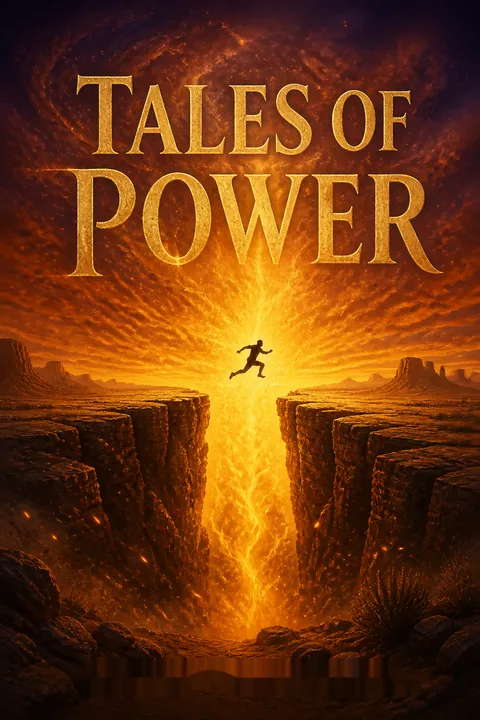


Plot Summary
An Appointment in the Chaparral
In autumn 1971, Carlos1 drives toward central Mexico to find Don Juan,2 but an impulse brings him instead to the old teacher’s2 Sonora home. Don Juan2 is waiting. When Carlos1 asks why he once made him take power plants, Don Juan2 says Carlos1 needed a shock, then names the harder goal: becoming whole. He leads Carlos1 to a bare circle in the chaparral, where they wait for knowledge.
Carlos1 reports that he can now find his hands in dreams and briefly stop his internal dialogue. At dusk, Don Juan2 directs him to face the bushes in silence. A shadow appears to change from a man into a bird, and a frightening cry sends Carlos1 running back to the house, where Don Juan2 identifies the visitor as a moth.
The opening makes the book’s central conflict physical: Carlos experiences an event, then immediately sorts it into forms his familiar world can explain. Don Juan does not resolve that conflict with proof. He gives Carlos a new task, silence, and lets perception become the test. The moth matters less as a zoological answer than as a limit case for interpretation. Carlos sees something that unsettles him, but his habits rapidly rename it. The apprenticeship therefore begins again at the point where explanation fails, with fear revealing how tightly his sense of reality depends on naming.
Genaro Appears Twice
After the first encounter, Don Juan2 uses the moth’s strange call to guide Carlos1 through exercises in silent perception. Carlos1 calls up people he knows and sees them as glowing forms, some heavy and earthbound, others light and buoyant. Eligio6 and Pablito,4 apprentices with more personal power, appear especially vivid.
When Carlos1 summons Don Genaro,3 he sees him in a vision and then finds him standing beside Don Juan.2 Carlos1 constructs a plausible explanation: Genaro3 must have hidden nearby and followed them. The two older men refuse to confirm it. Don Juan2 instead says that Genaro3 can act through a double, a self developed in dreaming. Carlos1 leaves with his ordinary certainty fractured, unsure whether he has met one Genaro3 or two.
Carlos’s visions turn people into perceived patterns before he can reduce them to familiar personalities. The contrast between his heavy forms and the apprentices’ lighter ones makes personal power legible as a quality of embodiment, not a moral label. Yet the appearance of Genaro tests the limits of that lesson: Carlos can witness something extraordinary and still retrofit it to a practical conspiracy. Don Juan and Genaro’s laughter destabilizes rather than settles the question. Their humor prevents the mystery from becoming solemn doctrine, while their refusal to certify Carlos’s explanation leaves him responsible for living with what he saw.
The Dreamer and Dreamed
At a later visit, Carlos1 returns to Don Juan2 unsettled by the double. Don Genaro3 tells him how his own dreaming began: he once saw himself asleep while apparently moving through the world, then learned to follow sounds and enter increasingly vivid experiences.
Genaro’s3 stories establish the double as more than an ordinary dream, though neither apprentice1 nor teacher2 can neatly explain it. Genaro3 then pulls Carlos1 down, and Carlos1 experiences himself as coming apart into shifting scenes and sensations.
Don Juan2 and Genaro3 guide him toward the image of his own body on the ground. For an instant Carlos1 occupies both that scene and the power place, with a choice of which one to enter. He returns to ordinary awareness exhausted, having glimpsed how the self might dream the self.
Genaro’s autobiographical account gives Carlos a model, but not a manual. The double emerges through accidents, repeated attention, and a willingness to act before understanding. Carlos’s own experience intensifies the problem: the observer and the observed are no longer securely separated, and ordinary identity becomes one possible arrangement among several. The brief choice between the house and the power place makes perception an active orientation rather than passive reception. The chapter’s humor and physical exhaustion keep this metaphysical experience grounded in dependence: Carlos needs the older men to help him return, even as the lesson concerns a self that cannot be reduced to their guidance.
The Riddle of the Moth
Don Genaro3 sets Carlos1 a test: leave Don Juan’s2 house at the right moment and find him without directions. Carlos1 learns that the moth’s call can guide him, follows it through silence, and reaches Genaro3 on a high rock ledge.
But when Genaro’s3 power overwhelms him, Carlos1 fights instead of yielding and loses consciousness. Don Juan2 explains that Carlos1 passed the riddle but failed to withstand the encounter. He then maps the human being through centers associated with reason, speech, feeling, dreaming, seeing, and will, with two further centers beyond ordinary explanation.
In a final demonstration, Don Juan2 lifts his hat to reveal Genaro3 sitting where there had been only ashes. Carlos1 has gained a framework, but not control of what it describes.
The test separates recognition from capacity. Carlos can follow the call and arrive at the right place, but reaching a threshold does not mean he can endure what waits there. His resistance is not simply skepticism; it is an attempt to preserve agency by turning an encounter into a contest he understands. Don Juan’s map offers structure without claiming completeness, particularly in its unnamed centers. The final appearance under the hat turns explanation itself into another unstable performance. Knowledge here is not a prize for asking the correct question. It requires a body capable of staying present without forcing the event into familiar categories.
The Stranger in the Park
In Mexico City, Don Juan2 finds Carlos1 among the market stalls wearing an unexpectedly elegant suit. They settle on a park bench and discuss a story Carlos1 once told about two cats: one8 escaped the car taking it to be put down, while the other went calmly into the animal hospital.
Carlos1 has identified with the escapee,8 imagining that the cat’s final dash restored its wildness. Don Juan2 makes him consider the other animal too, and the possibility that Carlos1 may be proceeding trustfully toward his own undoing.
Nearby, a motionless man lies on the grass. Don Juan2 treats him as a dying stranger and an omen. Watching the man’s exposed vulnerability, Carlos1 understands that choosing to believe in life’s uncertainty means accounting for every possibility, including death.
The two cats expose the self-serving shape of Carlos’s preferred story. He admires the animal that breaks free because its escape confirms the possibility of his own transformation; the quiet cat threatens that identification by showing how easily obedience can resemble peace. The dying man turns this abstract correction into a present-tense encounter. Don Juan does not ask Carlos to adopt optimism, but to make a choice while recognizing what that choice excludes. Belief becomes an act of responsibility rather than comfort. Death sharpens the scene because it removes the fantasy that a person can postpone commitment until certainty arrives.
The Island of the Tonal
The next day, Don Juan2 explains that the tonal is everything Carlos1 can name and organize: the social self and the ordered world it helps maintain. He sets this known territory against the nagual, which cannot be contained by description. At a church-side park, he asks Carlos1 to observe passersby as tonals rather than excuse or condemn them.
Carlos1 notices frail older women, a poorly dressed young man, and a sweating businessman, then recognizes how habits shape bodies and choices. Don Juan2 also points out three Indigenous brothers, gives them money as a gesture of feeling, and describes the damage done to Indigenous life by conquest. Near dusk, a composed young woman passes the bench, an omen that Carlos’s1 next challenge is close.
The tonal and nagual are not presented as two rival places so much as two limits on how a person can know. Don Juan’s table-and-island teaching gives Carlos a practical distinction: the mind can organize experience, but organization is not the whole of experience. The people in the park prevent the distinction from remaining abstract. Carlos is asked to look without turning observation into a verdict or an excuse. Don Juan’s account of Indigenous dispossession adds history to the model: a social world can be injured, not merely questioned. The young woman’s appearance shifts the lesson from diagnosis of others to the condition of Carlos’s own life.
The Market in Seconds
When Carlos1 meets Don Juan2 again, a friend follows them, and Don Juan2 suddenly shoves Carlos1 through one door of an airline office. Carlos1 expects to emerge on the opposite street, but finds himself in the Lagunilla market, more than a mile away. Don Juan2 urges him to attend to the people around him instead of demanding an account of how he got there.
Carlos1 cannot remember what those people were doing and later learns that the market stalls he remembers operate only on Sundays, though this encounter happened midweek. Don Juan2 says Carlos’s1 tonal briefly shrank, allowing the nagual to take over, but the event leaves Carlos1 with no reliable explanation. The shock forces him to question which parts of reality he has actually witnessed.
The sudden displacement makes the tonal’s vulnerability concrete: Carlos’s ordinary assumptions about distance and bodily continuity fail before he can observe the event closely. His instinct is to ask how it happened, but that question competes with the more immediate demand to notice what is happening now. His later visit to the market exposes the weakness of memory as evidence, since the stalls he recalls should not have been there on a weekday. Don Juan’s account does not erase the contradiction. Instead, the scene makes observation itself the missed opportunity. Carlos is learning that wonder can become another form of self-absorption when it turns attention away from the world.
Genaro Walks the Tree
Three days later, Carlos1 reaches Don Genaro’s3 house, where Genaro3 and Don Juan2 take him into a harvested field. Genaro3 calls the field one of worms, then gives a piercing yell and appears standing sideways on a distant eucalyptus trunk. He walks along the tree, sits on its branches, and seems to ignore gravity. Don Juan2 adjusts Carlos’s1 head and breathing so he can keep watching without locking his gaze.
At dusk, Genaro3 returns to the trees, glides between branches in a furry, animal-like form, and circles above Carlos.1 He then invites Carlos1 to follow. Genaro’s3 repeated whispers and Don Juan’s2 separate instructions split Carlos’s1 attention, pulling him into a state where the world seems to move in two directions at once.
Genaro’s performance is both demonstration and intervention: it gives Carlos an image he cannot comfortably assimilate, while Don Juan helps regulate the bodily panic that might make him stop seeing. The lesson is not simply that ordinary physics can be violated. Carlos’s perspective changes through blinking, head position, breathing, and attention, so the observer’s body participates in what appears. At dusk, the whispering turns instruction into sensory pressure. Two voices do not merely convey competing ideas; they divide Carlos’s felt unity. The scene presents perception as trainable, but also precarious: the same opening that reveals unfamiliar experience threatens the self that must interpret it.
Perception Before Language
After Don Juan2 leaves Carlos1 at Genaro’s3 house, Pablito4 arrives and describes his closeness to Genaro,3 his fear of Don Juan,2 and an earlier encounter in which a woven basket seemed to breathe, swell, and chase him around a dark room.
Later, Don Juan2 and Genaro3 whisper into Carlos’s1 ears until he feels divided from his usual self. He recognizes a tree and the ground through sensation rather than names. Then he finds himself helpless on a strange floor beneath a yellow sky, carried by a giant girl to a beautiful structure.
A larger woman overturns it, revealing it to be an ordinary chair in a room. Carlos1 also sees an unfamiliar structure he cannot interpret. Don Juan2 identifies the first vision as his early perception, before the world had been organized into familiar objects.
Pablito’s frightening basket story establishes that the nagual can arrive through ordinary things made strange, not only through spectacular feats. Carlos’s later vision reverses the usual process of perception: the chair is first a world of beauty, then an object named and domesticated by adult understanding. The sequence dramatizes how language and social learning make experience usable, while narrowing what can be seen. The second structure matters because it resists that return to familiarity. Carlos cannot simply decode every vision as a childhood memory. The scene therefore holds both a psychological insight about learned categories and a remainder that the story refuses to translate.
Three Witnesses on the Cliff
On a later journey, Don Juan2 and Carlos1 find Don Genaro3 near a group of boulders, then collect Genaro’s3 apprentices Pablito4 and Nestor.5 At a mountain cliff, the moth’s call precedes a black shape that rushes over the three apprentices.
Carlos1 sees Don Juan2 and Genaro3 as luminous forms, then watches them rise and descend along lines of light. Nestor’s5 awkwardness gives way to laughter as he reveals his crooked teeth and demonstrates a handmade sound-making device. At twilight, Carlos’s1 left ear seems to locate a massive presence moving through the rocks.
A roaring darkness engulfs the group, but they reappear together, sheltered beneath Carlos’s1 arms. The three apprentices then watch Don Juan2 and Genaro3 perform further feats of ascent before the night’s encounter ends.
The shared event complicates the book’s emphasis on private perception: Carlos, Pablito, and Nestor undergo related phenomena, but their different bodies and temperaments shape how they endure them. Nestor’s shift from shame to laughter is especially concrete. His crooked teeth, once a source of concealment, become part of a playful exchange that loosens his self-importance. Carlos’s protective movement toward the other apprentices also marks a change from solitary fear toward responsibility for companions. Yet the luminous displays do not produce a common explanation. They produce a common ordeal, leaving the witnesses connected by what happened rather than by certainty about what it means.
The Teacher’s Hidden Design
After the cliff encounter, Don Juan2 recounts the design of Carlos’s1 apprenticeship. He says he first drew Carlos1 in through a forceful gaze, then used unfocused walking, absurd chores, disrupted routines, dreaming, and the discipline of the warrior to loosen his fixed view of the world.
Power plants provided the shock Carlos1 needed, but Don Juan2 says they were costly and never the destination. He also reveals that La Catalina7 served as a worthy opponent, forcing Carlos1 to choose between returning to his ordinary life and continuing the path.
Don Juan2 explains the perception-bubble model: the teacher2 reorganizes the known world, while the benefactor3 opens a way beyond it. At a ravine, Carlos1 repeatedly leaps through perception until he can see the bottom clearly, showing that the training has prepared him to act.
The recapitulation transforms earlier episodes from a string of baffling shocks into a deliberate pedagogy. Don Juan admits that he diverted Carlos’s attention, but frames the deception as necessary because Carlos clung to rational control. That rationale remains ethically uneasy: the teacher’s care and manipulation are intertwined, and Carlos’s choice is shaped by conditions Don Juan helped create. The account of La Catalina makes this tension explicit by showing how an adversary can force a life decision. The bubble model assigns distinct roles to teacher and benefactor, but the ravine exercise returns theory to the body. Carlos’s progress is measured not by assent, but by what he can perceive and do.
The Bubble Opens
At the cliff, Don Juan2 and Genaro3 summon shadowy allies that change into threatening animal forms. One enormous feline charges across the boundary Genaro3 has drawn. Carlos1 and Pablito4 pool their strength and force it away, leaving Pablito4 exhausted.
Don Juan2 and Genaro3 then send Pablito4 out over the abyss, where his circling form vanishes. They guide Carlos1 through a second plunge. As his body seems to come apart, Carlos1 experiences himself as countless separate awarenesses that repeatedly gather into a single self.
The older men draw him back and cover him with earth until he feels solid again. Don Juan2 explains that the life force binds those separate feelings into a person, while the nagual holds what cannot be described. Carlos1 now understands the explanation through experience, not argument.
The climax gives the book’s most abstract claim an embodied cost. The allies threaten the apprentices, and survival comes through coordinated action rather than intellectual mastery. Pablito’s disappearance over the cliff raises the stakes before Carlos undergoes his own passage. His experience of a self assembled from many awarenesses unsettles the assumption that identity is a single, stable core. Don Juan’s explanation follows rather than causes the event, preserving the distinction between knowledge heard and knowledge lived. The burial is also a practical return mechanism: Carlos must be held by earth and by another person before he can re-enter ordinary life. Discovery depends on care as much as on exposure.
Earth Holds the Farewell
Before the final departure, Don Juan2 reminds Carlos1 of a joyful memory of carrying a little boy9 on his shoulders, giving him a way to say farewell without clinging to grief. At a mesa, Don Juan2 and Genaro3 tell Carlos1 and Pablito4 that they must enter the unknown by their own power and decide whether to return.
Pablito4 thanks his companions and speaks toward home; Carlos1 voices gratitude to the people who helped him. Genaro3 then demonstrates his love for the earth by moving across it as if embracing it.
Don Juan2 presents that affection as the source of a warrior’s freedom, a counterweight to loneliness and death. As twilight opens the way onward, Don Juan2 and Genaro3 disappear into the dark. Carlos1 and Pablito4 run together and leap from the mesa; the book ends before their fate is known.
The ending refuses to turn the journey into a completed victory. Carlos and Pablito face a choice whose outcome the narrative withholds, making the leap an act rather than a report of success. Farewell becomes a discipline of attention: Carlos uses a specific memory of shared joy instead of demanding reassurance about the future. Genaro’s physical embrace of the earth answers the danger of abstraction. Even after the revelation of multiple selves and the unknown, freedom remains tied to a particular world that shelters the body. The final disappearance of the teachers leaves Carlos without interpretive protection, while the joint leap preserves companionship at the exact moment each must act alone.
Analysis
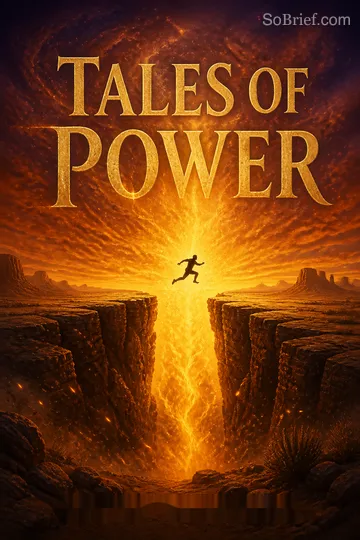
Tales of Power turns instruction into a sequence of encounters that repeatedly frustrate the narrator’s1 preferred method of knowing. Carlos1 observes, records, compares, and asks for causes; those habits make him a careful witness, but they also encourage him to replace attention with explanation. Don Juan2 and Genaro3 unsettle that substitution through practical exercises and theatrical disruptions. Their teaching depends on Carlos’s1 body: he must run in darkness, watch without fixing his gaze, endure the moth’s call, and face experiences that his concepts cannot absorb. The book does not treat reason as worthless. Don Juan2 insists that the tonal, the organized world of language and judgment, must be strengthened rather than destroyed. The task is to stop mistaking that useful structure for the whole of reality.
The story’s repeated contrasts between teacher2 and benefactor,3 reason and will, ordinary time and nagual experience, are not simply oppositions to be solved. They create a discipline of holding incompatible accounts without collapsing into denial or credulity. Carlos’s1 tendency to invent a rational trick, then swing toward overwhelmed acceptance, shows how both skepticism and belief can become shelters from responsibility. The book’s comic episodes, especially Genaro’s3 teasing and Nestor’s5 laughter, prevent its metaphysics from hardening into solemn certainty. Humor loosens self-importance and keeps the characters responsive to one another.
The ending brings this training into contact with mortality. Carlos1 and Pablito4 must enter the unknown without Don Juan2 and Genaro3 deciding the outcome for them. Their farewells acknowledge grief, but Don Juan’s2 insistence on love for the earth gives the journey an attachment rather than an escape. The final leap remains unresolved, so the novel closes not with proof of transformation but with an act made under uncertainty. Its deepest claim is practical: a life gains intensity when a person recognizes its limits, acts carefully within them, and remains open to what those limits cannot contain.
Review Summary
Tales of Power receives mixed reviews, with many praising its philosophical depth and mystical elements. Readers appreciate Castaneda's vivid storytelling and the book's ability to challenge perceptions of reality. Some view it as a work of fiction, while others consider it a genuine spiritual guide. Critics note inconsistencies and question its authenticity. Despite controversy, many find the book thought-provoking and transformative, praising its exploration of consciousness and alternate realities. The ending is frequently mentioned as particularly impactful.
People Also Read





Characters
Carlos Castaneda
The questioning apprenticeCarlos is the first-person narrator, a writer and student of Don Juan2 whose strongest instinct is to ask for a coherent account of what he experiences. He records carefully, tests explanations against memory, and often tries to convert uncertainty into an intellectual problem. Those habits make him observant, but they also keep him at a distance from events that demand attention rather than interpretation. His apprenticeship repeatedly puts his reasoning beside bodily fear, dream experience, and dependence on other people. He is neither a passive believer nor a detached skeptic. His central struggle is to become more capable of acting amid uncertainty without confusing explanation with mastery.
Don Juan
The demanding teacherDon Juan guides Carlos1 through practical exercises, unnerving demonstrations, and long stretches of deliberate uncertainty. He is wry and affectionate, but his humor often accompanies a stern refusal to soothe Carlos1 with easy answers. He values discipline, attention, and a strong everyday self, even while teaching that the familiar world is not the whole of perception. As Carlos’s1 teacher, Don Juan works through explanation, bodily exercises, and carefully timed disruptions. His manner can seem both protective and manipulative, making trust a complicated part of the apprenticeship. He treats knowledge as something that must change conduct, not merely enlarge a student’s store of ideas.
Don Genaro
The playful benefactorDon Genaro is Don Juan’s2 close companion and a sorcerer whose humor, agility, and startling demonstrations draw Carlos1 into experiences beyond ordinary explanation. He teases Carlos’s1 reliance on writing and reason, yet the comedy is rarely detached from danger. His warmth is especially apparent in his relationship with Pablito4, whom he treats with familial affection. Genaro’s role is to challenge perception through action, not to supply a tidy theory afterward. His lightness is itself a discipline: he can make frightening events funny without pretending they are harmless. For Carlos1, Genaro embodies a form of knowledge that is vivid, generous, and difficult to imitate.
Pablito
Genaro’s affectionate apprenticePablito is Don Genaro’s3 apprentice and a close companion to Nestor5. Jovial, frank, and physically capable, he speaks openly about his affection for Genaro3 and his fear of Don Juan2. His humor makes him approachable, but it does not mean he is untouched by the dangers of the apprenticeship. He describes frightening encounters without pretending to understand them and shows care toward Nestor5 as Nestor5 changes. Pablito offers Carlos1 a peer’s perspective on the path of knowledge, including its dependence on trust, fear, and companionship. His straightforwardness contrasts with Carlos’s1 habit of turning each experience into an extended intellectual puzzle.
Nestor
The guarded apprenticeNestor is Don Genaro’s3 other apprentice, initially reserved and gloomy in Carlos’s1 view. He is taller and older-looking than Pablito4, and self-conscious about his crooked teeth. Around Pablito4 and Carlos1, he gradually shows a playful side, including a homemade sound-making device and a willingness to laugh at himself. His character illustrates how shame and self-importance can shape the way a person inhabits the world. Nestor’s close bond with Pablito4 is expressed through practical care rather than grand declarations. He is a witness to the same extraordinary events as the others, but his reactions remain distinctly his own.
Eligio
Don Juan’s gifted apprenticeEligio is Don Juan’s2 other apprentice, whom Don Juan2 describes as highly advanced despite taking power plants only once. He serves as a comparison that challenges Carlos’s1 assumption that one method or temperament determines progress. Don Juan2 also characterizes him as prone to morbid seriousness, a quality that may hinder rather than help his development. Eligio is not central to the events Carlos1 narrates, but his brief presence widens the picture of apprenticeship: different students require different routes, and skill alone does not guarantee balance.
La Catalina
The worthy opponentLa Catalina is an Indian sorceress whom Don Juan2 brings into Carlos’s1 life as a formidable adversary. Their encounters combine danger with attraction, making her difficult for Carlos1 to reduce to a simple enemy. Don Juan2 says her role was to disrupt Carlos’s1 established view and force him to confront the kind of life he wanted. She is a serious warrior in her own right, not merely an instrument of Don Juan’s2 teaching. Her presence shows how conflict can function within the apprenticeship, while also complicating the boundaries between affection, fear, and deliberate challenge.
Max
The cat who escapesMax is the reddish cat belonging to one of Carlos’s1 friends. When the friend takes two cats to be put down, Max bolts from the car and disappears into a sewer. Carlos1 later treats the escape as an emblem of a last-minute release from a domesticated life. Don Juan2 asks him to consider the other cat as well, whose trusting compliance complicates Carlos’s1 preferred identification. Together, the animals give a personal memory a role in Carlos’s1 moral and psychological reflection.
The little boy
A memory of joyThe little boy is someone Carlos1 once carried on his shoulders during a mountain walk. His exuberant response to the sun and mountains becomes a lasting memory of uncomplicated shared happiness. Don Juan2 later uses that memory to help Carlos1 approach farewell without reducing it to loss or self-pity. The boy is not involved in the apprenticeship, but his brief appearance gives Carlos1 an emotional reference point outside the language of sorcery.
Plot Devices
The Internal Dialogue
Interrupts familiar perceptionDon Juan2 teaches Carlos1 to quiet the constant self-talk that, in the book’s framework, keeps experience organized according to familiar assumptions. Carlos1 practices through unfocused walking, dreaming, and periods of stillness. The technique enables him to notice the moth, attend to the strange sounds around the chaparral, and experience visions without immediately naming them. It is not presented as a magic switch that solves every problem. Carlos1 can still panic, misinterpret what he sees, or become obsessed with explanations. The practice matters because it creates a pause in which perception can change before the old account of the world takes over.
The Moth and Its Call
Signals knowledge approachingA strange call and a presence associated with a moth recur around Carlos’s1 encounters with the unfamiliar. Don Juan2 calls the moth a guardian or carrier of knowledge, while Carlos1 experiences its presence through sound, bodily feeling, and golden shapes rather than a stable description. The call guides him toward Genaro3 at the boulders and helps prepare him for later exercises. The book never turns the moth into a simple explanatory key. Its importance lies in how it focuses attention and marks a threshold: Carlos1 may sense that knowledge is near without knowing what form the encounter will take.
Tonal and Nagual
Maps the known and unknownDon Juan’s2 central distinction names the tonal as the realm of the known, organized, and describable, and the nagual as what escapes those descriptions. He uses the image of an island to show how language and shared habits create an intelligible world, while insisting that the world exceeds that order. The distinction shapes Carlos’s1 interpretation of the market displacement, Genaro’s3 feats, and the final encounter. It is not a neat division between a false world and a true one: Don Juan2 stresses that a capable person needs a strong tonal as well as access to what lies beyond it.
The Double
Makes selfhood unstableThe double first appears through Carlos’s1 uncertainty about how Don Genaro3 can seem to arrive from far away and yet stand before him. Don Juan2 describes it as the self developed through dreaming, but the explanation repeatedly strains ordinary ideas of location, bodily solidity, and identity. Genaro3 recounts episodes in which he saw himself asleep while acting elsewhere, and Carlos1 later experiences his own body as an object of perception. The double connects dreaming to the larger question of who perceives whom. It remains a source of bewilderment rather than a tool Carlos1 learns to control with confidence.
The Bubble of Perception
Frames the final revelationDon Juan2 describes perception as a bubble whose contents are shaped from birth into an ordered view of the world. The teacher’s2 work is to reorganize that view; the benefactor’s3 work is to help open it beyond its familiar limits. This image gathers the book’s earlier practices, including the warrior’s discipline, dreaming, disrupted routines, and attention to the nagual. In the final sequence, Carlos1 experiences his sense of self as a cluster of separate awarenesses that can gather into a person. The bubble therefore links the practical training to the culminating experience, while preserving the limits of what language can explain.
FAQ
Synopsis & Basic Details
What is Tales of Power about?
- A Journey Beyond Reason: The book chronicles Carlos Castaneda's continued apprenticeship with Yaqui sorcerer Don Juan Matus, focusing on the transition from altered states induced by psychotropic plants to achieving non-ordinary reality through discipline and intent.
- Exploring Duality: It delves deeply into the concepts of the tonal and the nagual (the known, organized world of reason and the self) and (the unknown, the void, the realm of power and the totality of oneself), presenting them as two fundamental aspects of human existence.
- Warrior's Path Culmination: The narrative follows Carlos as he faces increasingly challenging physical and perceptual tests orchestrated by Don Juan and his fellow sorcerer Don Genaro, pushing him towards a final confrontation with the nagual and the culmination of his training.
Why should I read Tales of Power?
- Deep Dive into Consciousness: The book offers a unique and challenging perspective on human perception, reality, and the potential of consciousness beyond conventional understanding, pushing readers to question their own assumptions about the world.
- Experiential Philosophy: Rather than abstract theory, the teachings are embedded in vivid, often bizarre, experiences and dialogues, making complex philosophical ideas about self, reality, and power tangible and engaging.
- Literary Intrigue: Beyond the philosophical content, the book functions as a compelling narrative with memorable characters, dramatic scenes, and a sense of unfolding mystery, making it a captivating read for fiction enthusiasts interested in the esoteric.
What is the background of Tales of Power?
- Continuation of Apprenticeship: Published in 1974, it is the fourth book in Carlos Castaneda's series detailing his purported apprenticeship with Don Juan Matus, following The Teachings of Don Juan, A Separate Reality, and Journey to Ixtlan.
- Shift in Focus: This book marks a significant shift from the earlier emphasis on psychotropic plants as a means to access non-ordinary reality, focusing instead on techniques like stopping the internal dialogue, dreaming, and the warrior's way as paths to personal power.
- Setting as Symbol: The narrative unfolds across various locations in Mexico – Don Juan's house in Sonora, Mexico City, and Don Genaro's mountain home – with each environment often serving as a symbolic backdrop for the lessons being imparted, from the mundane "island of the tonal" in the city park to the powerful, unknown "nagual" in the wilderness.
What are the most memorable quotes in Tales of Power?
- "A warrior seeks impeccability in his own eyes and calls that humbleness.": This quote defines the core difference between the average man's self-confidence (seeking external validation) and the warrior's humbleness (seeking internal alignment), a central theme in the warrior's path analysis.
- "The tonal is everything we know... The nagual is the part of us which we do not deal with at all.": This fundamental definition introduces the core duality that structures the sorcerers' explanation, highlighting the boundary between the rational, describable world and the mysterious, unspeakable unknown.
- "Only if one loves this earth with unbending passion can one release one's sadness.": Delivered near the end, this quote reveals the ultimate grounding for the warrior navigating the unknown, emphasizing that love for the world is the source of joy and freedom, not just knowledge or power.
What writing style, narrative choices, and literary techniques does Carlos Castaneda use?
- First-Person Experiential Narrative: The book is told entirely from Carlos's perspective, immersing the reader directly in his subjective experiences, doubts, and transformations, making the abstract concepts feel immediate and personal.
- Dialogue-Driven Structure: Much of the teaching and plot progression occurs through extensive dialogues between Carlos, Don Juan, and Don Genaro, characterized by repetition, rhetorical questions, teasing, and often circular logic that mimics the non-linear nature of the sorcerers' world.
- Juxtaposition of Mundane and Mystical: Castaneda frequently places extraordinary events and profound philosophical discussions within ordinary settings (a park bench, a restaurant, a car ride), highlighting the sorcerers' ability to perceive the mystical within the mundane and challenging the reader's sense of normal reality.
Hidden Details & Subtle Connections
What are some minor details that add significant meaning?
- The Feeling in the Stomach: Recurring physical sensations, particularly in the stomach or midsection, are consistently linked to moments of fear, power, perceptual shifts, and the location of 'will' and the nagual, suggesting a bodily, non-intellectual form of knowing. (e.g., Carlos feeling a strange pain in his stomach when trying to hold the man's image, the anguish during falling sensations, the location of 'will' below the navel).
- Don Juan's Suit: Don Juan's appearance in a tailored suit in Mexico City is presented as a deliberate "challenge" and a symbol of his mastery over the "tonal" world, demonstrating that a warrior can navigate and even embody the conventional world impeccably without being bound by it.
- The Moth's Call as a Feeling: The mysterious sputtering sound of the moth is initially heard externally but later experienced internally as a feeling or vibration, illustrating how external phenomena in the sorcerers' world can be perceived directly by the body, bypassing rational interpretation.
What are some subtle foreshadowing and callbacks?
- The Moth Encounter: The initial encounter with the moth, described as "knowledge prowling," foreshadows the later revelation that moths are "heralds... guardians of eternity" and carriers of "gold dust of knowledge," linking a seemingly minor event to a core symbolic element of the nagual.
- The Gait of Power: Carlos's involuntary execution of the "gait of power" while fleeing the moth callbacks an earlier technique taught by Don Juan, demonstrating that the body has absorbed knowledge and capabilities beyond Carlos's conscious awareness or control in moments of extreme stress.
- The Dying Man in the Park: The encounter with the dying man, presented as an "omen," foreshadows the later discussions about death as the ultimate adviser and the indispensable ingredient in "having to believe," linking a specific event to a fundamental principle of the warrior's path.
What are some unexpected character connections?
- Don Genaro as Benefactor: The revelation that Don Genaro, known for his playful antics, is Carlos's "benefactor" (the one who guides into the nagual) while Don Juan (the stern teacher) is Pablito and Nestor's benefactor, subverts expectations and highlights the personalized nature of the apprenticeship based on the apprentice's needs.
- Carlos and Pablito's Parallel Journeys: Despite their different personalities and teachers, Carlos and Pablito are explicitly paired by "power" and undergo similar final tests together, suggesting a shared destiny or complementary paths towards the totality of self.
- The "Trinity" Dynamic: Don Genaro playfully labels Carlos, Pablito, and Nestor as the "Trinity" (Father, Son, Holy Ghost) during a moment of shared experience, a brief, unexpected religious allusion that highlights their interconnectedness in the face of the unknown, albeit in a humorous, subversive way.
Who are the most significant supporting characters?
- Don Genaro: As Carlos's benefactor, Don Genaro is crucial for providing direct, undeniable experiences of the nagual, often through physically impossible or bizarre actions that challenge Carlos's reason and force perceptual shifts. His playful nature contrasts with Don Juan's severity, offering a different facet of sorcery.
- Pablito: As a fellow apprentice and Carlos's counterpart, Pablito's parallel journey, fears, and experiences (like the basket encounter or being split) serve as validation and comparison points for Carlos, highlighting shared struggles and the diverse manifestations of the nagual.
- Nestor: The third apprentice, Nestor, primarily serves as a "witness" in the final stages, his reactions (fear, shyness, unexpected humor) providing an external gauge of the intensity of the events and the impact of the nagual on different individuals.
Psychological, Emotional, & Relational Analysis
What are some unspoken motivations of the characters?
- Don Juan's Pedagogical Intent: While Don Juan states his goal is to guide Carlos to the totality of self, his unspoken motivation often seems to involve deliberately provoking Carlos's emotional and rational limits through disorientation, teasing, and fear, as a calculated strategy to break down his conventional worldview.
- Carlos's Need for Control/Explanation: Carlos's persistent need to understand, rationalize, and take notes, even in the face of the inexplicable, reveals an unspoken motivation driven by intellectual habit and a deep-seated fear of losing control, which Don Juan constantly challenges.
- Don Genaro's Affectionate Guidance: Beyond his role as benefactor, Don Genaro's actions towards Carlos, particularly the physical contact and playful interactions, seem motivated by a genuine, unspoken affection and concern, contrasting with Don Juan's more detached approach and making the terrifying experiences more bearable.
What psychological complexities do the characters exhibit?
- Carlos's Duality of Self: Carlos exhibits a profound psychological split between his rational, academic self ("the tonal") and a deeper, instinctual self capable of non-ordinary perception ("the nagual"), leading to internal conflict, self-doubt, and moments of disassociation when these two aspects clash.
- Don Juan's Calculated Severity: Don Juan displays a complex psychological control, maintaining a severe, often mocking demeanor while simultaneously expressing underlying care and strategic intent, using emotional manipulation as a tool for teaching.
- Don Genaro's Playful Power: Don Genaro embodies the psychological complexity of integrating immense power with childlike playfulness and vulnerability (e.g., his "pain" after landing, his shyness about his teeth), suggesting that mastery does not require abandoning human emotion but transforming it.
What are the major emotional turning points?
- Encountering the Moth/Knowledge: Carlos's first sober perception of the moth as "knowledge" is a turning point, shifting his understanding of sorcery from plant-induced visions to a state achievable through discipline, marking a move towards greater personal responsibility for his experiences.
- Witnessing Don Genaro's Double: Seeing Don Genaro appear seemingly out of nowhere after being "called" is a major emotional shock that shatters Carlos's rational framework and forces him to confront the possibility of realities beyond his comprehension, leading to intense fear and intellectual turmoil.
- The Splitting Experience: The deliberate "splitting" of Carlos's awareness by Don Juan and Don Genaro's whispering is a pivotal emotional and perceptual event, forcing him to experience himself as a "cluster" of awarenesses rather than a unified self, fundamentally altering his sense of identity and reality.
How do relationship dynamics evolve?
- Teacher-Apprentice to Benefactor-Ward: Carlos's relationship with Don Juan evolves from a traditional teacher-apprentice dynamic focused on discipline and the tonal to a more complex relationship where Don Juan acts as a protector of Carlos's tonal while Don Genaro takes on the role of benefactor, guiding him into the nagual.
- Carlos's Connection with Don Genaro: Initially terrified by Don Genaro's unpredictable power, Carlos develops a bond of affection and trust with him, seeing him not just as a sorcerer but as a "warm," "gentle" benefactor, highlighting the personal nature of the guidance.
- Shared Journey with Pablito and Nestor: Carlos forms a sense of camaraderie and shared fate with Pablito and Nestor, particularly during the final trials, moving from observing them as other apprentices to experiencing profound, terrifying events alongside them, recognizing their mutual vulnerability and strength.
Interpretation & Debate
Which parts of the story remain ambiguous or open-ended?
- The Nature of the Nagual Manifestations: The exact nature of the nagual's manifestations (moth, man, bird, furry crocodile, feline) remains ambiguous; are they objective forms, subjective perceptions, or something else entirely? The text suggests they are "a mixture of you and him," leaving their ontological status open to interpretation.
- The Reality of Physical Feats: Scenes like Don Genaro standing horizontally on a tree, gliding through the air, or Carlos being "transported" miles instantly blur the line between literal event, shared hallucination, or a radical shift in perception, leaving the reader to question the nature of reality within the narrative.
- The Outcome of the Final Leap: The book ends with Carlos and Pablito leaping into the "unknown," but their ultimate fate – whether they survive, return, or are permanently transformed – is left open-ended, emphasizing that the journey into the nagual is ongoing and its results unpredictable.
What are some debatable, controversial scenes or moments in Tales of Power?
- The Physical Manipulations: Don Juan and Don Genaro's use of physical force (shoving, hitting, dunking, burying) to induce perceptual shifts or break Carlos's state is highly debatable from a conventional perspective, raising questions about the ethics and necessity of such methods in spiritual or psychological transformation.
- The "Spirit Catcher" Fart: Nestor's use of a fart as a "spirit catcher" during a moment of intense fear, while presented humorously, is a controversial juxtaposition of the sublime and the scatological, challenging traditional notions of spiritual practice and potentially alienating readers seeking a more conventionally reverent tone.
- The "Splitting" of Awareness: The description of Carlos's awareness being "split" by whispering in his ears, leading to a sensation of being a "cluster" of awarenesses, is a highly abstract and potentially controversial concept that defies easy psychological or philosophical categorization, inviting debate about the nature of consciousness itself.
Tales of Power Ending Explained: How It Ends & What It Means
- The Final Leap: The book culminates with Carlos and Pablito, guided to a place of power by Don Juan and Don Genaro, making a deliberate leap into the "unknown" at twilight, the "crack between the worlds." This is not necessarily a physical jump into an abyss but a plunge into the realm of the nagual, the totality of self, beyond the confines of the tonal.
- Embracing the Unknown & Love for Earth: Before the leap, Don Juan and Don Genaro emphasize that the decision to return to the tonal world rests solely on the warrior's "will" and, crucially, their "unbending love for this earth." This reveals that the ultimate power and grounding for navigating the unknown comes not just from knowledge or technique, but from a profound connection to the world itself.
- Becoming "Dust on the Road": Don Juan and Don Genaro state they will become "dust on the road," signifying their departure from Carlos's life as active guides. Carlos and Pablito are left to navigate their paths alone, armed with the knowledge and experiences gained, their future uncertain but dependent on their impeccability and ability to integrate the tonal and nagual, living fully as luminous beings. This ending emphasizes self-reliance and the ongoing nature of the warrior's journey.
The Teachings of Don Juan Series Series


About the Author
Download PDF
Download EPUB
.epub digital book format is ideal for reading ebooks on phones, tablets, and e-readers.








