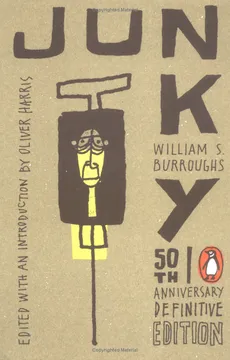


Plot Summary
Prologue
Bill Lee1 remembers a protected Midwestern childhood shadowed by nightmares, loneliness, and a fascination with lives beyond the suburb’s safe routines. As a young man, he drifts through university, Europe, odd jobs, and minor schemes, never finding a purpose that holds him. Psychoanalysis loosens his inhibitions, and an Army discharge clears the way for further drifting.
Only later does he identify narcotics as the thing that gave him a concrete need: he began out of curiosity, kept using without a plan, and gradually became dependent. He presents addiction not as a decision but as a way of life that takes shape before its cost is understood.
The prologue makes aimlessness the book’s first cause. Bill’s childhood fear, social isolation, and attraction to criminal lives do not mechanically produce addiction, but they establish a person with few commitments capable of competing with it. His retrospective account is deliberately wary of tidy explanations: he remembers wanting danger, yet insists that he did not set out to become dependent. That tension gives the book its central psychological problem. The narrator can describe the habits and bodily consequences of addiction with precision, while resisting the comforting idea that insight alone could have prevented it.
Norton’s Morphine Sample
In wartime New York, Bill’s1 acquaintance Norton9 arrives with a stolen Tommy gun and a box of morphine syrettes, hoping Bill1 can find buyers. Bill1 has never used narcotics and initially treats the morphine as just another item to move. Through Jack,10 he meets the user Roy3 and Roy’s3 wary associate Herman,4 then sells Roy3 the supply.
Curiosity overtakes caution a few nights later, when Bill1 injects a syrette alone. The first dose brings relaxation, nausea, and frightening visions, but he returns to it. Roy3 keeps coming back to buy more, and Bill1 begins reserving some for himself. What started as an attempt to dispose of stolen goods has become his first private experiment with the drug.
The entry into addiction is embedded in an ordinary transaction, not a dramatic declaration. Bill’s first role is intermediary, which lets him approach the drug while pretending it belongs to someone else’s business. That distance collapses when he keeps syrettes for himself. Roy’s casual expertise makes the unfamiliar seem manageable, while Bill’s alarming first reaction does not deter him. The scene establishes a recurring pattern: immediate danger can be recognized without becoming a reason to stop. The book’s account of dependence begins with small permissions, each one easier to grant because the previous one did not yet feel final.
The Habit Takes Shape
After using up his saved syrettes, Bill1 contacts Roy3 for more and learns how to prepare injections, find needles, and obtain morphine through doctors willing to write prescriptions. He helps invent medical complaints, divides prescriptions with Roy,3 and watches supply become an everyday problem.
Meanwhile, he spends time with Herman4 and the unstable crowd around the Angle Bar, where drugs, petty theft, and sudden violence overlap. A partnership to sell marijuana collapses when their supplier’s household throws them out, and Bill1 abandons the scheme.
His own morphine use, however, keeps increasing. He begins injecting every day, stops drinking and going out, and grows protective of his hidden supply. Junk is no longer an occasional curiosity; it organizes his time and attention.
Bill’s dependency grows through logistics as much as sensation. The doctors, prescriptions, hiding places, and repeated meetings turn drug use into a system that rewards planning while steadily shrinking the life being planned. His failed marijuana venture offers a revealing contrast: that business is inconvenient and socially demanding, so he quits it. Morphine remains because it supplies a need that now feels bodily and non-negotiable. The surrounding bar crowd makes danger look commonplace, but the decisive change is private. Bill’s routines contract before he fully accepts that they have done so, showing how habit can reorganize a person’s priorities while leaving his self-image temporarily intact.
The New York Supply Breaks
Roy’s3 reliable Brooklyn doctor stops writing prescriptions after a narcotics inspector warns him that his license is at risk. Drugstores refuse the remaining scripts, Herman4 is arrested, and Bill1 runs out of morphine. He manages his first forced withdrawal with codeine, then is arrested at home on a prescription charge and taken to the Tombs.
As the last substitute wears off, he endures sweating, chills, muscle pain, and days of immobility before his old lady2 bails him out. Ten days later the sickness has passed, but the interruption has not ended his dependence. Roy3 returns from Rikers Island with access to a seller of Mexican heroin, and Bill1 soon begins using again, now drawn into a supply that is more potent and less regulated.
This first withdrawal is imposed by a collapsed supply chain and arrest, not by a settled decision to quit. Bill’s body makes the hidden extent of his dependence impossible to ignore, yet the relief of getting through the sickness does not produce lasting separation from the drug. Roy’s return with heroin reconnects survival to the same network that caused the crisis. The episode also introduces the state as a force that can interrupt access without resolving addiction. Confinement and withdrawal overlap, leaving Bill to experience punishment and physical dependence as mutually reinforcing pressures rather than as a route to recovery.
The Peddler Becomes the Hook
The Mexican heroin available uptown costs more than Bill1 can afford, so he and Roy3 begin robbing sleeping drunks on subway platforms and trains. Bill1 discovers he cannot tolerate the risk easily, especially when one victim wakes and fights them, but the money keeps the habit supplied.
After his New York prescription case brings a suspended sentence, Bill1 turns to selling heroin with Bill Gains,7 a practiced thief from a respectable family. Their customers include the perpetually sick Nick,11 the pushy Gene Doolie,12 and young Chris, who repeatedly asks for credit and warns Bill1 about other customers.
Short counts, unpaid debts, and fear of informers leave little profit. The trade offers Bill1 access to his own supply, but also makes him responsible for a widening circle of dependent buyers.
The shift from consumer to seller is not an escape from dependence but a way to finance it. Bill rejects the danger of stealing from drunks only after learning how exposed and frightened the work makes him; pushing appears more sustainable because it places the drug within reach. Yet the business binds him to customers whose needs and unreliability mirror his own. Bill’s suspicion of informers is often practical, but it also turns every relationship into a security calculation. The peddler role grants limited control over supply while deepening his entanglement with the same compulsions he believes he is managing.
New Orleans Finds Pat
After leaving New York, Bill1 reaches New Orleans and stays off heroin for about four months, though he has no firm plan for what comes next. In a bar, he meets Pat,5 a local user who offers to find him a score. Bill1 accepts a cap, misjudges its strength, and collapses after injecting it; Pat5 takes money from his pocket and leaves him to recover.
Rather than ending the experiment, the near-fatal dose hooks Bill1 again within a week. He and Pat5 begin looking for reliable supply, then sell small amounts to local users, including Dupré,15 a gambling-house dealer who spends his earnings on heroin. As police attention intensifies and sellers disappear, Bill’s1 brief period away from junk gives way to another life governed by access and shortage.
The relapse is propelled by a combination of desire and misplaced confidence. Bill has been away from heroin long enough to underestimate his tolerance, but he treats the overdose as a supplier’s warning rather than a reason to stop. Pat’s opportunism makes the danger stark: the man who facilitates the dose also exploits Bill when he loses consciousness. Still, the drug’s return quickly becomes more compelling than the betrayal. New Orleans repeats New York’s pattern in a new setting, suggesting that changing geography can disrupt a routine without undoing the need that sustains it.
The Police Close In
A citywide anti-narcotics campaign makes marked arms and known associates grounds for police attention. While Bill,1 Pat,5 Red McKinney, and the inexperienced Cole14 search for a connection, a patrol car recognizes Pat5 and forces them into a chase. Cole14 throws marijuana from the car, but police find another stick on him and a pistol in the glove compartment.
At the precinct, officers read a letter that links Bill1 to a larger weed supply and threaten his family2 to make him cooperate. Bill1 leads them to the pound of marijuana and heroin at his house, but the officers claim they expected far more. Federal agents question him, and he signs a statement while sick and under pressure, believing the case will be handled federally.
The arrest turns a routine search for drugs into a collision between informal underworld rules and institutional power. Bill’s choice to reveal the stash is not a clean act of cooperation: he is responding to threats against his wife and children and bargaining for a particular legal outcome. The police control what counts as leverage, while Bill tries to preserve a narrow zone of choice. The letter, the car search, and the hidden drugs show how separate parts of his life have become evidence against him. His addiction makes resistance harder precisely when the state demands a decision.
The Cure Becomes a Bargain
Bill’s1 attorney, Tige,13 discovers that federal prosecutors will not take the case because the search was illegal, despite the statement Bill1 signed. To keep him from enduring withdrawal in jail, Tige13 arranges a hospital stay and then a sanitarium admission, using police officers as witnesses to Bill’s1 condition.
The sanitarium initially gives Bill1 little effective help, so Tige’s13 doctor arranges antihistamine injections that ease the worst symptoms. A psychiatrist interprets Bill’s1 addiction as a psychological problem and predicts he will relapse, while Bill1 distrusts the diagnosis and stops taking the injections when he feels ready.
He leaves against medical advice, newly able to eat and drink, and declines Pat’s5 offer to score. For the moment, the cure gives him distance from heroin and a chance to reconsider his next move.
Recovery here is both bodily treatment and legal strategy. Tige uses the hospital to document Bill’s condition, while Bill’s distrust of the psychiatrist reflects a broader conflict between lived dependence and explanations imposed from outside. The psychiatrist’s confidence cannot substitute for the narrator’s knowledge of withdrawal, but Bill’s skepticism also leaves him without an appealing framework for sustained change. His refusal of Pat’s offer matters because he no longer wants the drug immediately, not because he has acquired a heroic supply of willpower. The book treats that distinction as psychologically important and precarious.
Cotton Before Exile
After leaving the sanitarium, Bill1 asks Tige13 whether he can travel to Texas, where he has farm property, and receives permission to leave Louisiana. In the Rio Grande Valley, he partners with Evans to grow cotton, spending the summer watching a hired farmer tend their fields while he waits through a post-cure slump.
The crop breaks even, but the cost of living and the Valley’s uncertain economy make the venture feel temporary. Then a letter warns that his New Orleans case is approaching trial. Tige13 secures a short continuance but doubts he can obtain another. Bill1 tells him he is going to Mexico, then decides not to return. He leaves the United States as the legal threat and the prospect of renewed addiction converge.
The Valley offers Bill a temporary structure, but not a durable alternative identity. Cotton gives the days a practical rhythm, yet he admits he contributes little to the work and remains emotionally depleted after the cure. The landscape’s precarious economy echoes his own legal and bodily instability: each apparent foothold depends on conditions that can change without warning. The approaching trial converts drift into a consequential choice. By crossing into Mexico, Bill avoids a court date, but exile also preserves the conditions in which he can continue seeking drugs beyond the reach of the case.
Lupita’s Morphine Monopoly
In Mexico City, Bill1 spots the signs of a junk district and eventually meets Ike,6 an old user who knows the city’s only dependable seller, Lupita.8 Her papers are expensive and weak, so Bill1 and Ike6 seek doctors who will write morphine prescriptions.
When pharmacies begin refusing their scripts, a doctor helps Ike6 obtain a government permit for a monthly morphine allotment. The permit gives Bill1 access to far more drug at a fraction of the street cost, and he settles into a daily routine of shots.
He also helps Ike,6 whose own work selling imitation silver and religious objects brings little security. Bill1 tries several reduction plans, but keeps finding reasons for extra doses. The new supply makes life easier to organize around junk, not easier to leave it.
The permit creates an apparent victory through bureaucracy: legal authorization makes the supply cheaper and more stable, yet it strengthens the habit by removing the immediate pressure of scarcity. Lupita’s monopoly and the corrupt, unreliable prescription market show that legality and safety are not the same thing. Bill’s partnership with Ike carries a small form of mutual care, but even that relationship is structured by access to morphine. The more efficiently Bill solves the problem of supply, the less incentive he has to confront what the supply is doing to his days.
Withdrawal Turns to Liquor
Bill1 repeatedly tries to stop using, but breaks his schedules by getting extra morphine from Ike.6 One morning, while struggling to inject, he feels pity for his damaged veins and decides to quit. He uses hop and codeine to blunt withdrawal, then follows Ike’s6 homemade mixture as the sickness continues.
Alcohol becomes his replacement: within days he is drinking from morning to night, losing stretches of memory, neglecting himself, and making crude advances to strangers. During a blackout, he loses a gun and later threatens a man and a police officer with another.
After weeks of drinking, he becomes violently ill and fears uremic poisoning. A doctor confirms an early kidney crisis and warns that another bout could kill him. Bill1 stops drinking, remains off heroin, and begins to recover.
Bill experiences quitting as a collapse of agency rather than a clean moral victory. He can name the decision, yet cannot reliably carry out a taper, and the substitute that helps him endure withdrawal becomes a second danger. The gun episodes make the consequences public: intoxication erodes his judgment until strangers and authorities become targets in a private crisis. The medical emergency interrupts that spiral, but it does not prove that willpower has solved the underlying problem. The chapter’s bleak insight is that escape from one dependence can expose another vulnerability rather than restore a ready-made self.
The Exiles Bring Peyote
Two months after leaving heroin, Bill1 sees Ike6 again and accepts a morphine-and-cocaine shot, discovering that the old attraction remains. Around him, young American hipsters arrive in Mexico carrying accounts of harsher sentences, informers, and even undercover agents who pose as users.
Bill1 observes their dependence on drugs and their restless pursuit of excitement, then joins them in trying peyote at a local herb dealer’s home. The cactus makes him nauseated before producing a prolonged, sleepless high and disturbing dreams.
Its effects do not offer the clean alternative some of the young men imagine, but they widen Bill’s1 curiosity beyond heroin. His attention shifts toward substances that might alter perception without drawing him back into the same narrow cycle.
The chapter places personal addiction within a changing political climate. The younger arrivals describe a drug trade in which the user may be an agent, making trust even harder to distinguish from performance. Bill’s return to a speedball confirms that abstinence has not erased his susceptibility, while peyote represents experimentation rather than cure. He is drawn to altered perception, but the experience is physically unpleasant and psychologically unstable. The distinction between a drug as escape and a drug as knowledge remains unsettled, and the book refuses to treat novelty as proof of liberation.
Gains Arrives With Heroin
Bill Gains7 escapes the United States and reaches Mexico loaded with heroin and sedatives. He brings news of New York associates, including arrests, prison terms, and deaths, while explaining that staying in America could cost him years in jail.
Later, a Mexican politician offers Gains7 an ounce of heroin, which proves impure and leaves him delirious, convinced that shipments of superior morphine are arriving. Bill1 and Ike6 calm him with laudanum, and Gains7 recovers. With Federal surveillance growing more aggressive and his wife2 now separated from him, Bill1 decides to leave Mexico City.
He has read about yage, a South American plant said to heighten telepathic sensitivity, and plans to travel to Colombia. He wants an experience that opens outward rather than returning him to heroin’s cycle.
Gains’s arrival brings the American drug world into Bill’s refuge and demonstrates that geography cannot keep its dangers at a distance. The bad heroin episode turns the trade’s material uncertainty into psychological collapse, while the stories of former associates make the cost of staying in the United States newly concrete. Bill’s final decision is not a settled recovery: he remains interested in a powerful chemical experience. But he distinguishes the narrowing compulsion of heroin from the possibility of an experience that might enlarge perception. The ending leaves that hope untested, making departure an opening rather than a cure.
Analysis
Junky presents addiction as a system that gradually replaces the systems a person might otherwise use to organize life. Bill’s1 days become governed by supply, money, medical access, and the timing of withdrawal. His repeated efforts to describe these processes with clinical precision make him a compelling witness, but not an uncomplicated authority: he can explain how the habit works while continuing to rationalize the next dose. That gap between knowledge and agency is the book’s central psychological tension.
The drug economy also redraws the boundaries between care and exploitation. Roy3 teaches Bill1 how to obtain morphine, Ike6 helps him through sickness, and Pat5 locates supply, yet each relationship can also bring danger or renewed dependence. Police and doctors are not presented as clean opposites to the underground world. Some doctors profit from scripts, while the law uses addiction and informers as instruments of enforcement. Bill’s1 world is therefore neither outside society nor simply condemned by it. Its informal market reflects the incentives and compromises of the institutions surrounding it.
The narrative’s episodic form matters. New York, New Orleans, Texas, and Mexico City each offer a different arrangement of sellers, police, and escape routes, but relocation does not erase the bodily memory of addiction. Bill’s1 temporary abstinence is real, as is his return to use; the book refuses to make either a final moral verdict. Its ending shifts toward yage because Bill1 wants an experience that might widen perception instead of tightening life around a fix. That hope remains speculative. The novel closes not with mastery but with a change in direction, leaving the reader to distinguish genuine curiosity from another search for intensity.
Review Summary
Reviews of Junky are largely positive, averaging 3.84/5. Many praise Burroughs' raw, unflinching honesty and detached, journalistic prose style that neither romanticizes nor moralizes addiction. Readers appreciate the stark realism and accessibility compared to his later experimental works like Naked Lunch. Common themes noted include the all-consuming nature of opiate addiction, vivid characterization of fringe society, and subtle social critique. Some critics find the emotional detachment off-putting or the content tediously technical. Many consider it an important Beat Generation document and a powerful portrait of addiction's dehumanizing cycle.
People Also Read





Characters
Bill Lee
The observing addictBill is the book’s first-person observer, a man who approaches drugs, crime, and travel with curiosity but rarely with a stable plan. He is intelligent about the mechanics of addiction and sharply attentive to the people around him, yet that knowledge does not reliably give him control over his own use. His need for junk gradually becomes more compelling than work, friendship, sex, or security. He often frames choices as responses to circumstances, which can be perceptive and self-protective at once. His prose-minded attention turns drug routines and street encounters into material for analysis, even as his life repeatedly narrows around obtaining a fix. He is driven by the desire for intensity and by a persistent search for a different kind of experience.
Bill’s wife
The intimate counterweightBill’s1 wife shares his unstable life and sees the cost of addiction from close range. She bails him out, visits him during treatment, and challenges the idea that he can continue using without losing all interest in the rest of life. Her concern is practical as well as emotional: she acts when Bill1 is too sick or distracted to manage himself. She is not simply a rescuer, however, and the relationship remains marked by strain, disagreement, and Bill’s1 self-absorption. Her presence makes the consequences of his private routines visible in the household.
Roy
The seasoned connectionRoy is a practiced user who introduces Bill1 to the mechanics and social world of morphine. He knows how to find doctors, obtain supplies, and navigate the street, but his competence is inseparable from his dependence. Roy can be generous with knowledge and blunt about the danger of junk, yet he also presses Bill1 into risky work and treats survival as a matter of strategy. He embodies the addict’s contradictory authority: experienced enough to explain the trap, still caught inside it himself.
Herman
The volatile companionHerman is a suspicious, mercurial figure in Bill’s1 early New York circle. He moves among drugs and hustles without the steadiness of a reliable partner, often taking advantage of other people’s resources while resisting responsibility. His flashes of fear, irritation, and opportunism make him difficult to read. For Bill1, Herman is part of the social environment that normalizes deception and risk, as well as a reminder that proximity among users does not necessarily create trust.
Pat
The New Orleans peddlerPat is Bill’s1 local guide to heroin in New Orleans, a resourceful user who knows how to locate supply and build a small customer network. He is possessive of his position and quick to resent customers who seek drugs elsewhere. Pat’s practical knowledge can keep the business moving, but his conduct also reveals how dependence makes kindness conditional. He is neither a mastermind nor a dependable friend; he is a survivor guarding a precarious place in the local drug economy.
Ike
The loyal old userIke is an experienced Mexico City addict who helps Bill1 find morphine and navigate local sellers, doctors, and paperwork. He supplements his income with small, dubious sales but avoids the more dangerous criminal life around him. Ike can be generous to people in withdrawal, even when that generosity keeps them attached to the drug. His mixture of practical knowledge, sentiment, and resentment gives him a human warmth that the drug economy rarely permits. He becomes both Bill’s1 companion and a route back to supply.
Bill Gains
The practiced street dealerGains is an experienced thief and heroin dealer who brings a polished, respectable appearance to criminal work. He knows how to move through public spaces without drawing attention and treats pushing as a practical means of maintaining his habit. His careful self-presentation sits beside bodily decline and a distinctly cold pleasure in other people’s vulnerability. To Bill1, Gains is a business partner whose skill makes the trade seem manageable, while his private conduct exposes the damage concealed beneath that competence.
Lupita
The protected monopolyLupita controls Mexico City’s street supply and maintains her position through payments, information, and selective retaliation. She functions less as a conventional villain than as the organizer of a small economy in which police and sellers are openly entangled. Her willingness to operate visibly depends on knowing who holds power and how to pay it. For Bill1, she represents the price of access and the limits of independence in a market controlled by someone with deeper local connections.
Norton
The accidental supplierNorton is a hard-working thief who brings Bill1 stolen goods, including the morphine that begins Bill’s1 firsthand experience with junk. His sullen manner and daily appetite for theft make crime seem like routine labor rather than an exceptional act. He matters because his attempt to sell contraband creates the accidental bridge between Bill’s1 drifting life and the drug world.
Jack
The criminal go-betweenJack connects Bill1 to Roy3 and Herman4 and moves comfortably through New York’s bars and criminal apartments. He is a successful thief when circumstances favor him, but also a compulsive storyteller whose self-invention blurs fact and performance. His role is brief yet consequential: by introducing Bill1 to the people who can sell the morphine, he turns a piece of contraband into a new direction for Bill’s1 life.
Nick
The desperate intermediaryNick is a sick, financially precarious user who scores for others and struggles to secure enough heroin for himself. His poverty and constant need make him an unreliable intermediary, though his desperation is not simple malice. He shows how the drug trade’s smallest participants can be exploited by customers, sellers, and police alike. Bill’s1 decision to deal with him reflects the pressure of needing every sale, even when the arrangement invites danger.
Gene Doolie
The suspected informerDoolie is a customer whose insistent manner and warnings about other users make Bill1 suspect him of informing. He uses vulnerability as leverage, appearing sick and asking for credit while implying he has access to police intelligence. The uncertainty around him is important: Bill1 cannot prove whether Doolie is a source of information or merely a manipulator. He makes suspicion itself part of the cost of doing business.
Tige
The tactical lawyerTige is Bill’s1 New Orleans attorney, alert to how procedure, evidence, and witness testimony can shape a case. He arranges treatment as both medical help and legal documentation, and he thinks several moves ahead, sometimes proposing strategies Bill1 finds implausible. His methods are difficult for Bill1 to read, but they reveal a professional who understands that criminal defense often depends on timing and presentation as much as abstract fairness.
Cole
The inexperienced companionCole is a young merchant seaman who wants marijuana and has not yet developed a heroin habit. His inexperience becomes consequential when he joins Bill1 and Pat5 on a search for drugs, carrying evidence that gives police grounds to detain the group. He represents the point at which casual interest can bring someone into a dangerous network without the habits or knowledge needed to navigate it.
Dupré
The gambling-house customerDupré works in a gambling house and has access to money, making him an attractive customer for Bill1 and Pat5. His appetite for heroin undermines his ability to keep that income and turns an apparently steady job into an unstable source of supply. He helps show that dependence can consume a person’s livelihood from within, without requiring a dramatic criminal transformation.
Cash
The trumpet-playing hipsterCash is a young American musician who reaches Mexico carrying both a trumpet and a dependence on drugs. He says music gives him more meaning than ordinary social life, but he also leans on others for drugs and money. His presence introduces a younger generation of users whose habits are entangled with music, travel, and a changing drug culture.
Plot Devices
The habit cycle
Need, relief, renewed needMorphine and heroin organize the narrative through a repeated bodily sequence: Bill1 uses, feels temporary relief, develops dependence, and faces sickness when supply stops. The cycle explains why a fix can feel less like pleasure than a condition for functioning. It also shapes the structure of the book, which moves through attempts to stop, interruptions by police or scarcity, and returns to use. The device is not merely a theme; it determines where Bill1 goes, whom he trusts, how he earns money, and what counts as an urgent problem.
Scripts and permits
Supply through institutionsDoctors’ prescriptions, pharmacies, and Mexico City’s morphine permit create shifting routes to narcotics. Bill1 and his associates learn how to persuade doctors, divide scripts, and adapt when pharmacies refuse to fill them. In Mexico, Ike’s6 government permit briefly makes morphine cheaper and more accessible. These mechanisms show institutions as part of the drug economy, not simply its opposite: medical authority can restrict supply, enable it, or become a tool users manipulate to stay supplied.
Informers and surveillance
Trust becomes a liabilityPolice pressure users to identify sellers, sometimes by offering drugs or relief from charges. Bill’s1 customers may be desperate, dishonest, or connected to narcotics agents, and he cannot always tell which. The device steadily changes the meaning of social contact: a meeting can be a sale, a warning, a trap, or all three. In Mexico, stories of undercover agents posing as users extend the same uncertainty beyond the American cases. Surveillance heightens the risk of selling while making isolation feel safer.
Forced withdrawal
The body sets the clockArrest, exhausted supplies, and attempted cures repeatedly cut Bill1 off from junk. Withdrawal makes ordinary time feel unbearable and brings physical symptoms that neither argument nor intention can quickly dispel. The book contrasts involuntary detox in custody with treatment arranged through Lexington and a New Orleans sanitarium. Each interruption changes Bill’s1 immediate circumstances, but none guarantees lasting abstinence. Withdrawal is therefore both a physical ordeal and a test of the limits of institutions, insight, and self-control.
Download PDF
Download EPUB
.epub digital book format is ideal for reading ebooks on phones, tablets, and e-readers.








