

Key Takeaways
Let ʿAlī’s teachings unite justice and remembrance beyond sectarian boundaries
A legacy across traditions. ʿAlī was the Prophet Muḥammad’s cousin and son-in-law, a major early Muslim leader, and the first Imam in Shiʿi Islam. The book presents his spiritual legacy as important well beyond a single community. Sunni scholars and Sufi traditions also revere him, while Muslims differ over the political meaning of his relationship to the Prophet and his place in the succession.
Read the teaching closely. The Nahj al-balāgha, a collection of sermons, letters, and sayings compiled by al-Sharīf al-Raḍī, is the book’s central source. Its attribution is debated: the compilation lacks transmission chains, though much of its material appears in earlier sources. Shah-Kazemi does not treat every passage as equally certain. He argues that historical scrutiny and attention to the text’s spiritual influence can both matter, while focusing here on its teachings about justice and remembrance.
What's striking is the choice to keep historical uncertainty visible without letting it erase a text’s intellectual and religious influence. This resembles a distinction in the study of literature between a work’s origin and its reception: those questions overlap, but neither answers the other. The approach makes the teachings accessible across sectarian lines, although it cannot settle disputes about authorship or interpretation. Readers can therefore hold two questions together: how securely is a saying attributed, and what role has it played in shaping a tradition?
Use intellect as a bridge between revelation, clear thought, and conduct
More than reasoning. The Arabic term ʿaql means intellect, but here it is broader than the ability to reason or debate. It includes a capacity for spiritual insight, ethical judgment, and recognition of truth. Revelation and intellect are not rivals in this account: scripture gives the intellect material to understand, while the intellect interprets scripture rather than treating its words as self-explanatory.
Interpret the inner meaning. The book calls taʾwīl a spiritual interpretation that seeks the deeper meaning of revelation and returns its signs to their source. It describes the fiṭra as the God-given primordial nature of human beings, including an innate orientation toward knowledge of God. Revelation is meant to awaken this nature, not replace thought with blind obedience. Reason matters, but the book argues that it cannot exhaust every dimension of knowing.
The account pushes against a familiar modern split: either reason is treated as the only legitimate source of knowledge, or faith is treated as a reason to stop asking questions. Its more integrated model gives interpretation a serious role. A useful parallel is the distinction between analytical skill and practical judgment: knowing a rule does not guarantee knowing how to apply it well. The tension is that appeals to spiritual insight can be hard to assess publicly. The book’s emphasis on revelation offers a shared reference point, but disagreement about interpretation remains.
Turn knowledge into character before calling it wisdom
Kumayl’s lesson. In a private discourse to his follower Kumayl, ʿAlī sorts people into three broad groups: a learned person close to God, a student seeking guidance, and an unreflective crowd that follows shifting influences. He says knowledge is more valuable than wealth because sharing it can increase its benefit, while spending wealth reduces it. Yet having information is not the same as possessing wisdom.
Knowledge must take root. The true knower is not merely clever or well-informed. Knowledge must penetrate insight, shape conduct, and loosen the grip of egoistic desire. The Imam describes worthy learning as requiring a struggle against the self, including greed, vanity, and caprice. Such inner work is not grim self-denial for its own sake: knowledge, reflection, and closeness to God are also sources of joy. The measure of learning is what it makes a person able to see and do.
This distinction anticipates a central problem in education: people can repeat concepts accurately without being able to use them wisely. The passage treats ethical formation as part of knowing, not an optional benefit added after learning. That is a powerful corrective to credentialism, but it also raises a question: virtuous conduct cannot by itself prove that a belief is true. The strongest reading keeps both tests in view. Claims need intellectual scrutiny, and knowledge that never affects judgment or behavior may remain shallow.
Judge justice by whether each person receives their due, especially the powerless
Justice puts things in order. ʿAlī defines justice as placing things where they properly belong. This makes justice more than impartial procedure: it means recognizing the rights and needs of each person, and correcting what is out of place. Shah-Kazemi connects this principle to the divine nature, arguing that justice becomes a deeper obligation when people understand it as reflecting ultimate reality.
Begin with the self. A person cannot reliably put others in their proper place while excusing their own disorder. The book therefore links justice to self-restraint, humility, and the effort to resist vanity and self-interest. It also gives the principle a universal reach: people are owed fair treatment whether they share the ruler’s faith or not. The inward demand and the public duty belong together. Justice is not simply a rule imposed on others; it is a discipline that begins with the person applying it.
The definition is memorable because it makes justice relational: fairness depends on seeing what each person is owed, rather than applying one abstract formula without regard to circumstances. This resonates with virtue ethics, which asks what kind of character and judgment make fair action possible. Yet the language of a divinely grounded order can be interpreted differently by different communities. A public ethic still needs reasons and standards that people can examine together. The account is strongest when spiritual motivation supports, rather than replaces, transparent judgments about rights.
Make power answerable through compassion, fair process, and care for the poor
A ruler’s practical test. In a letter appointing Mālik al-Ashtar governor of Egypt, ʿAlī lays out duties toward soldiers, officials, judges, farmers, merchants, and people in poverty. He insists that a ruler treat subjects as either fellow believers or fellow human beings. He tells Mālik to favor the common people’s welfare over the comfort of the elite, and to give particular attention to those too destitute or ashamed to ask for help.
Build checks into rule. The letter calls for careful selection of judges and administrators, scrutiny of officials, and punishment for misuse of public funds. It also warns against favoritism. Elsewhere, ʿAlī refuses his blind brother’s request for more money from the public treasury, using a heated piece of iron to make the point that kinship cannot justify unfairness. Compassion, in this account, requires both personal restraint and administrative accountability.
The letter combines a demanding ideal of personal virtue with practical attention to administration: fair taxation, reliable officials, competent judges, and access for people without influence. That combination matters because good intentions alone do not prevent abuse. Modern institutional thinking reaches a related conclusion: accountability works best when authority is observable and decisions can be challenged. The text’s reliance on a ruler’s moral character remains a limitation if taken alone. Its own emphasis on oversight, clear duties, and impartial treatment points toward a more durable reading.
Anchor public ethics in devotion, but test devotion by humane conduct
Prayer shapes action. The book argues that ethical behavior is strengthened by a lived relationship with God. Its key term iḥsān means spiritual excellence, understood through the Prophetic teaching of worshipping God as though one sees Him, while knowing that God sees the worshipper. In the letter to Mālik, ʿAlī tells the governor to reserve time for duties to God and to perform them with full attention, even amid demanding public responsibilities.
Let faith sustain the difficult work. The letter’s concern for the poor is described as onerous, particularly when helping them brings little political reward. The hope of the Hereafter and trust in divine justice are presented as sources of persistence. This is not a license to neglect earthly needs: devotion should result in mercy, fairness, and service. The book’s ideal joins contemplation and action, asking whether inward worship produces outward responsibility.
The account identifies a real weakness in ethics built only on convenience: duties that bring no immediate reward can be easy to abandon. A transcendent purpose can give people a reason to persist when recognition or advantage is absent. But devotion is not a reliable measure of justice by itself. History and everyday experience both show that sincere religious language can coexist with harmful conduct. The passage addresses this danger by judging worship through its effects on others. Its moral force depends on keeping that test central.
Make remembrance a daily discipline that keeps the heart awake
Remember through practice. Dhikr means remembrance of God and, in this book, also the practice of invoking God’s Names. The practice is meant to make divine awareness present, not merely to repeat words mechanically. ʿAlī describes remembrance as polishing the heart, allowing a person to perceive what heedlessness obscures. The book links this image to Qur’anic verses that describe the heart as capable of understanding and seeing in a spiritual sense.
Carry it beyond ritual time. The Qur’an calls for abundant remembrance, and the book treats dhikr as a discipline that can accompany ordinary life. It complements formal prayer rather than replacing it. The ideal is a continuity of attention in which work, reflection, and worship no longer feel like sealed-off compartments. In the book’s account, the person who remembers God is less easily distracted from justice and more able to recognize the sacred significance of everyday choices.
This practice has a useful connection to contemporary attention training: repeated focus can change what a person notices and how readily attention returns after distraction. The distinction is important, though. Dhikr is not simply a concentration exercise; its object is God, and its purpose is spiritual awareness within a religious tradition. Nor does repetition guarantee transformation. The book itself distinguishes meaningful remembrance from heedless recitation. Its strongest practical insight is that attention needs cultivation, and that the quality of the practice should be judged by the clarity and care it brings into daily conduct.
Let remembrance loosen the ego’s grip, not inflate the self
The paradox of remembering. ʿAlī distinguishes a complete remembrance, in which intention and speech agree, from the ultimate reality of remembrance, in which the person forgets the self in remembering God. The Sufi term fanāʾ refers here to the extinction of self-centered awareness, not physical destruction. The claim is that sustained attention to God can displace the ego’s assumption that it is the independent source of thought and action.
Return to life with humility. This mystical language does not endorse treating a human being as God. It describes the individual’s dependence on divine reality and the possibility of living with less self-importance. The book presents ʿAlī’s inner discipline alongside his public insistence on justice and mercy. Its account of his death, with reports that he continued invoking God, brings the theme to a close: remembrance is not an escape from life, but an orientation that shapes how life is lived and faced.
The account gives self-transcendence an ethical criterion: less ego should mean more humility and care, not a grander claim to authority. That criterion is crucial because intense experiences of self-loss can be interpreted in many ways, and intensity alone does not establish spiritual truth. A psychologically useful parallel is decentering, the ability to observe thoughts without treating them as the whole self. The theological claim goes further, locating awareness in relation to God. Its practical credibility rests on whether the resulting person becomes less self-serving and more just.
Analysis
The book’s central move is to refuse the modern division between inward spirituality and outward ethics. Justice is not presented as a procedure that can be detached from the character of the people administering it, while remembrance is not treated as private consolation separate from public responsibility. The movement runs in both directions: devotion is tested by conduct, and conduct is sustained by a vision of reality that makes justice more than a convenient social arrangement.
This synthesis gives the book its distinctive power. The letter to Mālik al-Ashtar makes metaphysical commitments legible in administrative choices: how officials are selected, how taxes are collected, whether the poor can reach the ruler, and whether relatives receive special treatment. The argument is not simply that a good ruler has good intentions. It is that the ruler must discipline the self and organize public duties around the rights of others. That practical texture prevents the spiritual claims from floating free of ordinary life.
The book also takes a clear interpretive position. It reads ʿAlī’s teachings as a resource for universal spirituality, while acknowledging that the Nahj al-balāgha has contested provenance and that Sunni and Shiʿi communities do not interpret his political role identically. This approach is fruitful for studying the text’s influence, but it does not resolve historical disputes. Reception and attribution answer different questions, and a reader can value the former without treating the latter as settled.
A productive tension remains between inner virtue and institutional protection. The letter demands extraordinary integrity from rulers, but no political community can safely depend on personal virtue alone. Its own insistence on supervision, fair procedures, and sanctions suggests a bridge: spiritual discipline can motivate justice, while public institutions make power answerable even when virtue fails. The result is not a simple political blueprint. It is a demanding account of how moral perception, worship, and governance can reinforce one another, while remaining open to scrutiny across traditions.
Review Summary
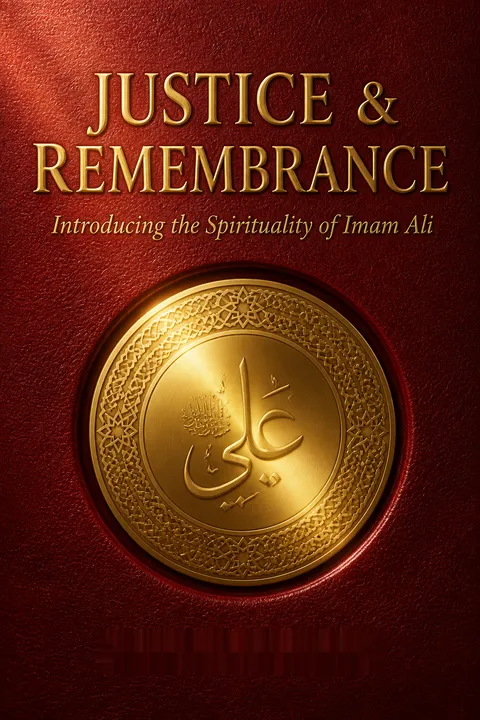
Justice and Remembrance explores Imam Ali's teachings on justice and spiritual remembrance, offering a metaphysical perspective on Islamic ethics. Readers praise its depth, mystical insights, and connections to Sufism, though some find the writing style challenging. The book examines Ali's wisdom, linking social justice to divine remembrance and exploring esoteric aspects of Islam. While dense and philosophical, many reviewers found it spiritually enriching and intellectually stimulating, appreciating its unique approach to understanding Ali's spiritual legacy and its relevance to Islamic thought.
People Also Read




Glossary
Nahj al-balāgha
Collected teachings of ʿAlīA collection of sermons, letters, and sayings attributed to Imam ʿAlī, compiled by al-Sharīf al-Raḍī around the turn of the eleventh century. It is a major source for the book’s discussion of ʿAlī’s spiritual and political thought. The collection’s attribution and the authenticity of individual passages have been debated.
ʿaql
Intellect beyond reasoningIn the book, ʿaql means more than the capacity for logical or discursive thought. It includes the deeper human capacity to recognize spiritual realities, interpret revelation, judge ethically, and orient the self toward truth. Reason is treated as one activity of intellect, not its full extent.
taʾwīl
Interpretation of inner meaningA form of interpretation that seeks the deeper significance of revealed words and signs, rather than stopping at their surface meaning. In the book’s account, taʾwīl returns a sign toward its source and depends on intellectual and spiritual insight. It does not mean inventing an interpretation without reference to revelation.
tawḥīd
Affirming and realizing onenessThe Islamic affirmation that God is one. The book also stresses a deeper meaning: realizing divine oneness in one’s understanding and way of being. On this account, tawḥīd calls for integration of the self and recognition that all genuine goodness and reality depend on God.
fiṭra
Primordial human natureThe innate nature according to which, in the book’s reading of the Qur’an, human beings are created. It includes an original orientation toward knowledge of God and the capacity for moral recognition. Revelation is understood to awaken and restore this disposition, which can become obscured by heedlessness and self-interest.
iḥsān
Spiritual excellenceA term for virtue or excellence, associated in the book with the Prophetic teaching to worship God as though one sees Him, while knowing that God sees the worshipper. It links spiritual awareness with ethical conduct. The word also carries an association with making beautiful, suggesting virtue as beauty of character.
dhikr
Remembrance and invocationRemembrance of God, understood both as sustained awareness of the divine and as the devotional practice of invoking God’s Names. In the book, dhikr polishes the heart, counters heedlessness, and supports spiritual perception. It is a recurring practice that complements, rather than replaces, formal prayer.
fanāʾ
Extinction of self-centerednessA Sufi term for the passing away of the ego’s claim to independent existence or agency in awareness of God. In this book’s discussion of remembrance, fanāʾ describes an advanced spiritual realization, not physical destruction or a claim that a human being is identical to God. It is associated with humility and dependence on the divine.
FAQ
What's Justice and Remembrance about?
- Exploration of Spirituality: The book delves into the spirituality of Imam Ali, focusing on his teachings about justice, remembrance of God, and the relationship between intellect and faith.
- Historical Context: Reza Shah-Kazemi provides a biographical sketch of Imam Ali, detailing his life and his role in early Islamic history, which is crucial for understanding his teachings.
- Philosophical and Ethical Dimensions: It explores the philosophical underpinnings of justice and ethics in Islam, linking them to spiritual principles derived from the Qur'an and the teachings of the Prophet Muhammad.
Why should I read Justice and Remembrance?
- Rich Spiritual Insights: The book offers profound insights into the spiritual ethos of Imam Ali, making it a valuable resource for those interested in Islamic spirituality and ethics.
- Comprehensive Analysis: Shah-Kazemi provides a thorough analysis of Imam Ali's letters, sermons, and sayings, particularly focusing on his letter to Malik al-Ashtar as a guide for governance and justice.
- Universal Relevance: The themes of justice, compassion, and moral responsibility are universally applicable, making the book relevant to anyone interested in ethical leadership and spirituality.
What are the key takeaways of Justice and Remembrance?
- Justice as a Sacred Principle: Justice is portrayed as a divine quality, emphasizing that it is more than a legalistic framework but a profound ethical obligation.
- Role of Remembrance: The practice of dhikr (remembrance of God) is essential for cultivating a just and virtuous life, indicating that spiritual awareness is crucial for ethical behavior.
- Integration of Ethics and Spirituality: True virtue is inseparable from spirituality, as ethical actions are grounded in a deep relationship with the divine.
What are the best quotes from Justice and Remembrance and what do they mean?
- "I am the city of knowledge and Ali is its gate": This underscores Imam Ali's pivotal role in Islamic knowledge and spirituality, suggesting that access to true understanding comes through him.
- "The soul incites to evil, unless God has mercy": Reflects the inherent struggle within the human soul and the necessity of divine grace for moral rectitude.
- "He who knows his soul fights it": Illustrates the internal struggle against one's base desires and the importance of self-awareness in achieving moral integrity.
How does Justice and Remembrance define justice?
- Justice as Divine Quality: Justice is a reflection of God's nature, elevating it beyond human constructs to a divine imperative.
- Practical Application: Involves ensuring that "everything is in its right place," applying to both personal conduct and governance.
- Spiritual Dimension: Justice is not merely a legalistic concept but a spiritual obligation requiring a deep connection to the divine.
What is the significance of Imam Ali's letter to Malik al-Ashtar in Justice and Remembrance?
- Guidance for Governance: The letter serves as a comprehensive guide for rulers, outlining the ethical and moral responsibilities of leadership.
- Universal Ethical Principles: Offers timeless principles applicable to contemporary leadership and ethical dilemmas.
- Integration of Spirituality and Politics: Illustrates how spiritual principles can inform political action, emphasizing justice and the welfare of the people.
How does Justice and Remembrance connect spirituality and ethics?
- Spiritual Foundation of Ethics: Ethical behavior is deeply rooted in spiritual awareness, with the quality of one's action determined by the quality of one's prayer.
- Role of Remembrance: Dhikr is essential for cultivating a just and virtuous life, reinforcing that spirituality enhances ethical conduct.
- Holistic Approach: Advocates for a holistic understanding of ethics that encompasses both spiritual and moral dimensions.
How does Justice and Remembrance connect Imam Ali's teachings to contemporary issues?
- Relevance to Modern Ethics: Discusses how Imam Ali's principles can inform contemporary ethical dilemmas, particularly in governance and social justice.
- Spiritual Practices in Modern Context: Explores the practice of dhikr and its application in today's fast-paced world, emphasizing the need for spiritual grounding.
- Interfaith Dialogue: Suggests that Imam Ali's teachings can serve as a bridge in interfaith discussions, promoting understanding and respect among different religious traditions.
What is the significance of dhikr in Justice and Remembrance?
- Spiritual Discipline: Dhikr is presented as a vital practice for spiritual growth, purifying the heart and enhancing one's awareness of God.
- Connection to Imam Ali: Illustrates how Imam Ali's teachings on dhikr have influenced both Shi'i and Sunni Sufi traditions.
- Transformative Power: Argues that dhikr has the power to transform one's consciousness, leading to a state of peace and connection with the divine.
How does Justice and Remembrance portray the relationship between intellect and faith?
- Intellect as a Tool: Imam Ali's teachings suggest that intellect is essential for understanding faith, emphasizing the importance of knowledge in religion.
- Integration of Knowledge and Action: True faith manifests in action, aligning with the idea that knowledge should lead to ethical behavior.
- Spiritual Awareness: A well-developed intellect enhances spiritual awareness, allowing individuals to grasp deeper truths about existence and divinity.
How does Justice and Remembrance address the concept of self-effacement?
- Path to Spiritual Realization: Self-effacement is a necessary step in the spiritual journey, allowing individuals to transcend their ego and connect with the divine.
- Imam Ali's Teachings: Encourages followers to prioritize their relationship with God over personal desires, as reflected in the quote about forgetting one's soul in remembrance.
- Sufi Perspectives: Connects this concept to Sufi practices, where self-effacement is seen as essential for achieving unity with God.
What insights does Justice and Remembrance provide on the nature of God?
- Transcendence and Immanence: Explores the dual aspects of God as both transcendent and immanent, emphasizing His presence with everything.
- Divine Attributes: Discusses the importance of understanding God's attributes without limiting Him, highlighting His boundless nature.
- Personal Relationship: Highlights that the nature of God invites a personal relationship, where remembrance and knowledge of God lead to a deeper understanding of His essence.
Download PDF
Download EPUB
.epub digital book format is ideal for reading ebooks on phones, tablets, and e-readers.








