

Plot Summary
The Permit on Pike Road
Jake Buckman, a financial planner who has drifted from his sixteen-year-old son, Ryan, hopes a ride home from the movies will bring them closer. When Ryan asks to drive, Jake bends the learner-permit rules and takes the passenger seat. The fog thickens on Pike Road. As Ryan turns to answer his father, the car strikes something at the blind curve.
They find a young woman lying motionless beside the road. Jake tries CPR, but she does not respond. Ryan is shattered and admits he has marijuana in his pocket. Jake weighs the dead woman against the future he imagines for his son, then takes the phone and drugs and orders Ryan back into the car. They leave without calling for help.
The accident begins with an ordinary parental compromise, not a dramatic act of rebellion. Jake grants Ryan the wheel because he wants affection and conversation, and that wish turns a moment of distraction into an irreversible crisis. His choice afterward is presented as protective, but it also converts a collision into a shared secret: Ryan is spared immediate exposure while being bound to his father's fear and judgment. The scene establishes the novel's central moral trap. Love gives Jake a reason to act, but it does not make his action just, and his attempt to protect his son becomes the first thing that endangers him.
The Lie Comes Home
At home, Jake tells Pam that he and Ryan argued after the movie and went to a diner, inventing a story that explains Ryan's tears. His wife, an appellate judge, accepts the account, and Ryan stays silent. In the night, Ryan asks whether they should confess; Jake refuses, insisting that a test could expose the marijuana and ruin Ryan's life.
Before dawn, a radio report identifies the dead runner as Kathleen Lindstrom, a sixteen-year-old at Ryan's school. Jake deliberately crashes the Audi into a Wawa Dumpster, then lets the staff and police record the damage as an accident. Later, while Pam is away, he burns his bloodstained clothes and throws the ashes into an abandoned quarry. Ryan sees him tending the fire.
The lie expands through practical acts: a fabricated meal, a damaged car, burned clothing, and ashes discarded in a quarry. Each step makes the next one easier to justify and the possibility of returning to the truth harder to bear. Kathleen's identification destroys the comforting distance of an unknown victim. She is Ryan's age and part of his school community, so the secret is no longer merely about law enforcement; it is about the people who will mourn her around him. Jake's financial-planner instinct to manage risk is turned against him. He constructs a plan that suppresses evidence while multiplying the emotional and social costs.
The Cost of Confession
Ryan, unable to accept his father's decision, secretly contacts criminal lawyer Morris Hubbard under a false name. Jake finally agrees to meet him at the Gardenia office.
Hubbard explains that reporting the crash could expose both men: Ryan might enter juvenile placement, while Jake could face criminal charges for allowing an underage driver to use the car. Ryan rejects Jake's attempt to take sole blame and insists that he was driving. The lawyer says the police are thorough, but also explains that no law requires them to report themselves.
Ryan decides not to turn his father in, making the secrecy a choice they now share. That night, Pam returns from a benefit dinner with news that she may be nominated to a federal judgeship, whose background investigation will scrutinize the family.
Hubbard gives the family a map of legal consequences, not an ethical verdict. The distinction matters: the law can describe what might happen to Jake and Ryan, yet cannot decide what they owe Kathleen or her family. Ryan's choice to protect his father reverses their expected roles. Jake had treated secrecy as a paternal duty, but his son now accepts responsibility for maintaining it. The new judicial nomination adds a public dimension to a private crime. Pam's reputation depends on integrity, while the family has created a secret that could invalidate the very values she represents.
Deaner Knows the Night
At Ryan's playoff game, Jake meets Lewis Deaner, a slight man who claims to be a freelance writer and says he lives near Pike Road. Deaner notices Jake's Audi and mentions the hit-and-run before promising to visit his office.
The next morning, he arrives while Jake is meeting a prospective client. In private, Deaner identifies Ryan as the driver and shows Jake a photograph and video of the crash scene, including the Audi's license plate. He demands $250,000 by the following morning in exchange for the evidence.
Jake cannot draw the money from disclosed family accounts without risking Pam's pending investigation, so he asks his banker to arrange a personal line of credit and an offshore transfer. The secret has acquired a price and a witness.
Deaner turns surveillance into leverage. Jake's first response is to think in the language he knows best, accounts, liquidity, and deadlines. That professional competence cannot solve the moral problem; it only gives the blackmail a new mechanism. The threat also reaches beyond Jake, since Deaner knows Ryan's identity and understands the danger of Pam's public position. The scene changes secrecy from a closed pact between father and son into a commodity controlled by an outsider. Jake's willingness to pay does not restore control. It teaches Deaner that fear can be converted into money.
Ryan's Phone Turns Hostile
At school, Ryan receives a barrage of texts from an unknown number. The sender claims to watch his classes and practices, then accuses him of killing Kathleen and urges him to die. A photograph of Kathleen confirms that the sender knows the truth.
Ryan bolts from school and asks Jake to drive somewhere private. Jake admits that Deaner is blackmailing them and promises to pay, but insists Ryan return to class. Ryan smashes his phone against the dashboard when another message arrives. Jake arranges the transfer, then discovers Ryan has skipped class despite promising otherwise.
At home, Ryan explains that he could not concentrate and had smoked marijuana with Caleb to calm himself before practice. While looking at a company photograph on Ryan's laptop, Jake recognizes Deaner among Kathleen's coworkers.
The texts weaponize the guilt Ryan already carries, making the blackmailer's voice seem like an extension of Ryan's own judgment. His attempt to keep attending school and basketball cannot contain the pressure; he skips class, returns to marijuana, and breaks the device that delivers the threats. Jake's insistence that he can manage the crisis offers Ryan no understanding of its scale, only instructions. The photograph changes the threat's meaning. Deaner is not a stranger who happened upon the crash but someone connected to Kathleen's workplace and life. Jake's protective strategy is now failing both practically and psychologically.
Pam Hears the Truth
Pam discovers Ryan's absence from class and confronts him at home. When she presses him to explain what happened with Caleb, Ryan admits that he killed Kathleen on Pike Road. Jake then tells Pam the full story, including their flight, the lawyer, Deaner's blackmail, and the planned transfer.
Pam first condemns Jake for turning an accident into a crime, then decides she will not send Ryan to prison. She withdraws from consideration for the federal judgeship and tells Jake to cancel the transfer arrangement.
The family agrees to keep the secret together. That same evening, Ryan reveals that he overheard Pam expressing love for Dr. Dave, his basketball coach and shooting mentor. The disclosure leaves Jake reeling from both his own deception and his wife's hidden affair.
Pam's decision is not a simple endorsement of Jake's conduct. She names the harm and recognizes that her position as a judge makes concealment especially compromising, then chooses her son over the career she has pursued. The choice draws her into the same moral bind she condemns in Jake. Meanwhile, Ryan's revelation of the affair breaks the family's idea of who has been honest and who has not. The secret is no longer a single offense protected by a united household. Everyone has withheld something, but the consequences are unequal: Jake's lie concerns a death, while Pam's betrayal has already damaged the marriage.
The Marriage Splinters
Jake leaves the house after learning about Pam and Dr. Dave, then drives aimlessly through the night. On an unfamiliar road, he considers steering into an oncoming car. He cannot make himself take another life and realizes that, despite the wreckage around him, he wants to live and try to repair his family.
He returns home hoping to speak with Pam, but finds a note saying she will not come back that night and expects him to go to work as usual. The next morning, Jake learns that Andrew Voloshin, Deaner's real name, has been murdered. A detective asks Jake to meet him, and Jake realizes the police may find the photographs and video on Voloshin's devices. He tries to stop the offshore transfer before it goes through.
Jake's near-collision echoes the original crash, but this time he consciously refuses to let despair become another person's catastrophe. The refusal does not absolve him; it marks the first moment he chooses life without pretending that his choices can be planned into safety. Pam's note denies him the reconciliation he imagined and leaves him to face the consequences without her immediate support. Voloshin's murder then transforms the blackmail plot into a homicide investigation. Jake's fear is no longer only that evidence will expose Ryan. He must also consider whether his family has become entangled in a second crime.
Pam's Visit to Voloshin
Jake meets Detective Zwerling and learns that Voloshin has been stabbed; his phone and computer are missing. Before Jake can understand what the police know, Pam texts that she has handled Voloshin. They meet at the old quarry.
Pam explains that she went to Voloshin's apartment the previous night, confronted him about threatening Ryan, and took photographs of his rooms before leaving him alive. She found a wall covered with pictures of Kathleen. Jake realizes Pam could be the brunette seen arguing with Voloshin shortly before his murder, making her a possible suspect.
When she emails him the photographs, Jake sees the obsessive collection and realizes Voloshin had been stalking Kathleen. Pam leaves furious when Jake warns that the visit may put her under investigation.
Pam's visit is an attempt to reclaim agency after Jake's unilateral decisions, but it exposes her to suspicion and adds another uncontrolled fact to the family crisis. The photographs give Jake evidence of Voloshin's fixation, while also making Pam's presence at the apartment traceable. Their conversation at the quarry repeats the novel's pattern of intimacy under pressure: each spouse wants the other to trust them, yet each has acted alone and concealed essential information. Pam's anger is justified by Jake's choices, but his warning is not merely a ploy to keep her close. Her independent intervention has created real danger.
The Watcher in the Woods
Studying Pam's photographs, Jake notices nighttime images of Kathleen running on Pike Road and two pictures of a couple in a parked car on nearby Dolomite Road. He drives to the area and follows the apparent camera angle through the brush until he finds a concealed clearing with a direct view of the crash site.
Rain-washed candies on the ground match the sweets scattered across Voloshin's desk. A corporate-center groundskeeper tells Jake that employees use Dolomite Road as a secluded place to meet in parked cars.
Jake concludes that Voloshin watched Kathleen there and may have photographed her with someone. He searches the corporate-center lots for the dark BMW shown in the pictures, but does not find it before the school's memorial service that evening.
Jake's investigation is driven by guilt, but it also shows how quickly he has learned to read the physical world as evidence. The clearing connects Voloshin's surveillance to the exact road where Jake and Ryan believed they had killed Kathleen. The scattered candy gives the hidden observer a bodily presence, turning the photographs from abstract proof into the trace of a person who waited in the brush. Yet the photographs do not explain the relationship between Kathleen and the person in the car. Jake's inference that a secret meeting points toward a killer is plausible, but incomplete.
A BMW Leaves the Memorial
At Kathleen's school memorial, Ryan arrives with his classmate Sabrina, who is preparing to speak for the track team. Jake notices a black BMW with the same plate and model as the car in Voloshin's photographs.
During the service, Chamber of Commerce president Chris Slater tells how Kathleen helped the track team earn money for uniforms, confirming that he knew her and worked at the corporate center. Jake suspects Slater may have been the man in the BMW and Voloshin's killer.
But he cannot identify who drives away, and Detective Zwerling approaches him outside, connecting Voloshin to Kathleen's workplace and pressing Jake with questions. At home, Ryan admits that he sometimes wishes he were dead. Pam says Dr. Dave has offered to treat him, prompting Jake to go confront the coach.
The memorial gives Kathleen a social life beyond the evidence file: friends, teammates, a grieving family, and a community that remembers what she made possible. Jake's suspicion of Slater arises from genuine clues, but also from his urgent need to identify a threat before it reaches his family. He mistakes access and opportunity for proof. Ryan's admission of suicidal thoughts makes the danger immediate and personal, while Dr. Dave's offer to become his therapist feels to Jake like another intrusion into the family. These pressures send Jake toward confrontation at precisely the moment his reasoning remains uncertain.
The Shooting Coach's BMW
At Dr. Dave's secluded home, Jake demands that the coach stay away from Pam and Ryan. Through the glass, he spots the black BMW and recognizes its plate as the car from Voloshin's photographs. Before Jake can act on the discovery, Dr. Dave shoots him in the abdomen. He plans to stage the kitchen as a struggle, place a knife in Jake's hand, and leave Voloshin's stolen phone and laptop in Jake's car so the murders appear connected to the blackmail.
Jake cannot move or reach his ringing phone. Dr. Dave returns to arrange the scene, but Ryan and Pam arrive and Ryan tackles him. A shot wounds Dr. Dave in the shoulder. Pam calls for an ambulance as Jake loses consciousness, managing to tell Ryan about the car trunk.
The BMW resolves the visual clue, but the revelation arrives at the worst possible moment: Jake recognizes the danger only as Dr. Dave has already chosen violence. The coach's calm construction of a false self-defense story mirrors Jake's own earlier effort to control appearances, but here deception is used deliberately to kill and frame. Jake's injury makes the family's dependence on one another literal. Ryan's return interrupts the staged narrative before it can be completed, and Pam's presence turns the confrontation into a shared rescue. Even incapacitated, Jake tries to pass on the evidence that may expose the real killer.
Kathleen Was Dead First
In the hospital, Jake wakes to find Pam, Ryan, and Detective Zwerling beside him. Pam and Ryan have given the police the laptop and phone from Jake's trunk and told them what they know. An autopsy establishes that Kathleen was already dead when the Audi struck her; Dr. Dave had killed her by slamming her head against the BMW's dashboard.
Investigators connect him to her through forensic evidence and learn that he had been her therapist and secret lover. He also murdered Voloshin, who had photographed his meetings with Kathleen and tried to profit from the evidence.
The district attorney charges Jake and Ryan with leaving the scene, but not with vehicular homicide. Ryan receives juvenile probation and community service. Pam resigns her judgeship because she helped conceal the crime.
The forensic finding separates physical causation from moral responsibility. Ryan did not kill Kathleen, but he and Jake did abandon her body and conceal what they had done. The revelation lifts the false burden of homicide from Ryan without restoring the life and security the family lost through secrecy. Their decision to hand over the evidence marks a change from managing appearances to cooperating with accountability. Pam's resignation underscores that consequences are not limited to criminal sentences: public trust matters, especially for someone whose authority rests on the law. The resolution offers relief, but not exoneration from every harm.
Epilogue
Six months later, Jake and Pam are back in therapy and sitting together at a small basketball game, where Ryan coaches eight-year-old girls on a team sponsored by what remains of Jake's business. Dave has pleaded guilty to Kathleen's and Voloshin's murders and received life without parole. Jake keeps most of his staff and clients, while Pam works as a contract lawyer.
Ryan finishes a bruising school year, loses the attention of college recruiters, and finds that coaching suits him. The family plants a weeping willow for Kathleen after her parents decline a meeting. At the game, Jake discovers Ryan has a first date with Sabrina. For the first time, father and son share an easy joke, and Pam laughs with them.
The epilogue refuses a miraculous return to the life the Buckmans had before Pike Road. Pam has left the bench, Jake's firm is smaller, and Ryan's athletic prospects have changed. Their repair is measured instead through repeated actions: therapy, shared games, coaching, and time spent together without a secret to guard. The willow honors Kathleen privately after her parents decline contact, respecting that the family's need for forgiveness does not obligate the bereaved to provide it. Ryan's new role as a coach also turns his experience into care for younger players. The closing date with Sabrina is hopeful, but modestly so. Connection is rebuilt through attention, not erased guilt.
Analysis
Keep Quiet makes parental love morally difficult by showing how easily protection can become control. Jake's defining error is not simply that he breaks a rule by letting Ryan drive. It is that, in the first seconds after the crash, he decides that his son's future is a value he can preserve by withholding the truth. The decision feels intimate and sacrificial, but it also makes Ryan carry a guilt he cannot resolve and teaches him that consequences can be managed through deception.
The novel distinguishes legal responsibility from moral responsibility without allowing either category to replace the other. Hubbard explains what the law may do, while the Buckmans remain unable to use that explanation as proof that silence is right. The later autopsy changes the factual account of Kathleen's death, but it does not retroactively make the family's choices harmless. This separation matters: innocence regarding the fatal injury does not undo abandonment, concealment, or the emotional damage of living inside a false story.
The family plot broadens that ethical problem. Pam's judicial ambitions make public integrity part of domestic life, yet her choice to protect Ryan echoes Jake's. Her affair and Jake's secrecy are not equivalent acts, but both reveal how a marriage can hide the very facts its members need in order to understand one another. The parents are neither simple moral opposites nor interchangeable sinners. They love Ryan, disagree about what that love requires, and discover that secrecy binds them without making them honest. The novel's resolution is deliberately costly. Jake and Ryan face legal consequences, Pam leaves the bench, and Ryan's basketball prospects change. Their recovery comes not from returning to their former ambitions but from giving up the fantasy that love can shield a family from every consequence. Ryan coaches children, Jake attends his games, and Pam sits beside them. The ending suggests that trust is rebuilt through attention and truthful presence, not through perfect plans or the promise that no one will ever be hurt again.
Review Summary
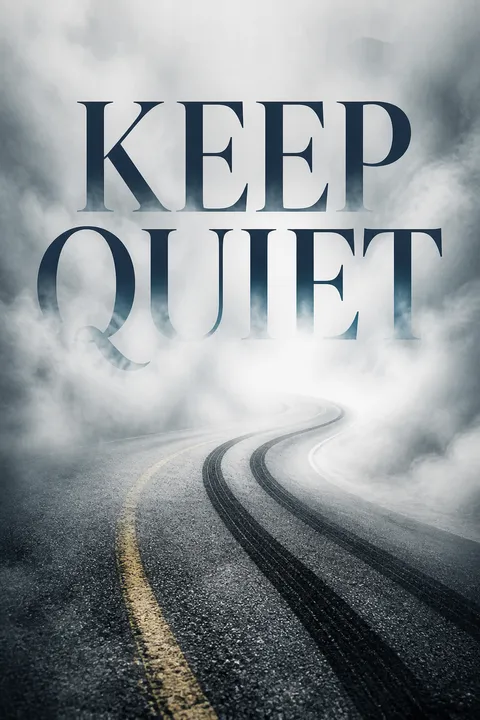
Keep Quiet by Lisa Scottoline receives mixed reviews averaging 3.83/5 stars. The thriller follows Jake Buckman, who lets his teenage son Ryan drive illegally, resulting in a fatal hit-and-run they cover up. Readers praise the page-turning suspense and moral dilemmas about protecting children, though many criticize repetitive dialogue, unlikeable characters, and unbelievable plot twists. Some find the writing clunky and overladen with detail, while others appreciate the tension and surprising ending. Common complaints include predictability and an implausible resolution, though fans of Jodi Picoult-style family dramas may enjoy it.
People Also Read







Characters
Jake Buckman
The frightened fatherJake is a self-made financial planner whose business grew from the humiliation of losing his old job. He loves his wife, Pam, and son, Ryan, but years of overwork have left him unsure how to speak to Ryan except through practical gestures and shared interests. His wish to reconnect makes him eager to be the permissive, entertaining parent, and that need for approval clouds his judgment. Jake is accustomed to assessing risk and building plans, yet his deepest difficulty is accepting that a plan cannot undo moral damage. He is protective, resourceful, and capable of tenderness, but fear can make him treat concealment as care. His relationship with Ryan is central to how he understands himself as a husband and father.
Ryan Buckman
The burdened sonRyan is a tall, academically capable sixteen-year-old and a highly regarded basketball player. Reserved with his father, he is more at ease with teammates and coaches, whose attention has helped fill the distance between him and Jake. He values responsibility and fairness, but his size and athletic maturity can make adults forget how young he is. Ryan wants greater independence, including the chance to drive and make his own decisions, while still relying on his parents when fear overwhelms him. Basketball gives him structure and a way to express himself without much talking. His strong conscience is both a source of moral clarity and a vulnerability when he believes he has caused harm.
Pam Buckman
The principled judgePam is an appellate judge, a devoted mother, and Jake's intelligent, energetic partner. Her disciplined habits and legal training make her attentive to details, responsibilities, and consequences. She is deeply invested in Ryan's education and basketball future, and often anticipates his needs before he asks. That competence can become overmanagement, especially when fear of losing her son makes her reluctant to let him grow away from her. Pam's marriage to Jake has endured earlier strain, and she wants him to become a more present father. Her faith in law is sincere, but it exists beside powerful personal loyalties. She is not merely the family's moral authority; she is also a woman whose own choices and needs complicate that role.
Dr. Dave Tolliver
Ryan's trusted coachDr. Dave is a child and adolescent psychologist who also serves as Ryan's shooting coach. His background in basketball allows him to read Ryan's routines and performance with unusual precision, and his professional role makes him a trusted presence in the Buckman household. Pam turns to him for insight into their son, while Jake feels displaced by the closeness he has developed with Ryan. Dave's calm manner can sound reassuring, but his confidence also allows him to take up considerable space in family decisions. He represents the double edge of expertise: a person may understand another's behavior while remaining difficult for relatives to challenge.
Andrew Voloshin
The GreenTech employeeVoloshin works at GreenTech, the small technology company where Kathleen and her mother are also connected. He first presents himself to Jake as Lewis Deaner, a freelance writer, and speaks with the assurance of someone who has gathered private information. His outwardly unremarkable manner contrasts with his appetite for control and the careful way he uses digital material. His connection to Kathleen is more significant than Jake initially understands. Voloshin functions as a reminder that information is not neutral: photographs, phones, and online accounts can become instruments of protection, surveillance, or pressure, depending on who controls them.
Kathleen Lindstrom
The gifted young runnerKathleen is a sixteen-year-old student and track runner who has recently moved to Concord Chase with her mother. She is skilled with computers and graphics, and she helps her team raise money for uniforms by organizing paid work rather than relying on a conventional fundraiser. Friends remember her as open-hearted and energetic, while colleagues at GreenTech value her intelligence and initiative. Her close relationship with her mother is visible in the photographs they share. Kathleen's plans, talents, and friendships give the story a vivid sense of the young life at stake, rather than allowing her to remain only a name in a police report.
Morris Hubbard
The cautious defense lawyerHubbard is a criminal defense attorney whom Ryan contacts after the accident. He explains confidentiality, the limits of legal representation, and the different consequences Ryan and Jake could face. His manner is careful rather than comforting. He will explain the protections available to a client, but he will not help fabricate a story or conceal evidence. Hubbard gives the Buckmans legal clarity without pretending that legal advice can settle their moral dilemma.
Detective Bill Zwerling
The persistent investigatorZwerling is a veteran detective investigating both Kathleen's death and Voloshin's murder. He is observant, conversational, and willing to let a question linger while he watches how someone responds. His informal manner can make an interview feel less like an interrogation, but his persistent follow-up shows that he is tracking inconsistencies. He represents patient police work rather than instant certainty, and he does not treat Jake's attempts to investigate on his own as a substitute for professional procedure.
Sabrina Moravia
The track team captainSabrina is the girls' track captain, a teammate asked to speak at Kathleen's memorial. She struggles to write a eulogy because she fears failing Kathleen and the grieving school community. Ryan helps her find a story about Kathleen's initiative in raising money for team gear. Sabrina's uncertainty gives her an honest, unpolished presence amid the public ceremony, and her reliance on Ryan shows that he can still offer steadiness even while privately overwhelmed.
Janine Mae Lamb
Kathleen's closest friendJanine Mae is a new student from Texas who rides horses and becomes Kathleen's close friend through the track team. Ryan is interested in taking her on a date, but the developing connection is disrupted by the crisis surrounding Kathleen. Janine Mae's grief at the memorial makes clear how much trust and companionship Kathleen created in a short time. She is important not because she solves the mystery, but because her friendship gives the loss a personal face within Ryan's school.
Chris Slater
The Chamber presidentSlater leads the local Chamber of Commerce and speaks at Kathleen's memorial about her work raising money for the track team. His position at the corporate center and his personal knowledge of Kathleen make him a plausible figure in Jake's search for answers.
Grace Lindstrom
Kathleen's devoted motherGrace is Kathleen's mother, a web designer at GreenTech who recently moved with her daughter from Seattle. Their affection and closeness are evident in the photographs and in the way coworkers speak of them.
William Lindstrom
Kathleen's fatherWilliam is Kathleen's father, present at the school memorial alongside Grace. His grief and public appeal for information show the family left behind by the events on Pike Road.
Plot Devices
Ryan's learner permit
A small rule becomes leverageThe permit and its restrictions make Jake's decision to let Ryan drive a concrete breach of parental responsibility. Ryan is driving after the allowed hours, and the marijuana in his pocket makes the consequences of calling the police seem even more frightening to Jake. Later, lawyer Morris Hubbard explains that Jake could face charges for entrusting the car to an underage driver. The permit therefore works on two levels: it begins as an ordinary legal safeguard that Jake treats casually, then becomes evidence of how his desire to be liked has displaced his judgment.
The missing-scene evidence
Images turn secrecy into a threatPhotographs and video of the crash give Voloshin the leverage to demand money from Jake. The same digital trail later connects Voloshin to Kathleen and helps Jake identify the hidden place from which she was watched. The devices create a chain of partial knowledge: Jake knows what happened in the car, Voloshin has images of the aftermath, and the police may eventually recover what Voloshin stored. The device keeps changing meaning as the family moves from concealment to investigation and finally to disclosure.
The anonymous text barrage
Guilt becomes a weaponA series of messages reaches Ryan at school from an unknown number. The sender appears to know Ryan's routine, names Kathleen, and urges him to die. The texts intensify Ryan's existing guilt and prompt him to flee school, while the attached photograph confirms that the sender has access to evidence of the crash. Their sequence also signals that Jake cannot keep the blackmail threat contained in his own office. The phone makes private fear immediate, portable, and difficult to escape.
Voloshin's photo board
A hidden route exposes the watcherPam's photographs of Voloshin's apartment reveal a board filled with images of Kathleen, including night photographs taken near Pike Road and a picture of a car on Dolomite Road. Jake follows the likely camera angle into the woods, finds the concealed viewing place, and recognizes candy on the ground as the kind Voloshin kept at his desk. The board shifts the investigation from an unexplained blackmail demand to the possibility that Voloshin had been following Kathleen and photographing her meetings. Its incomplete images still mislead Jake about who was in the car.
The postmortem finding
Forensics separates guilt from causeThe autopsy establishes that Kathleen's fatal head injury occurred before the Audi struck her. That finding overturns Jake and Ryan's belief that they caused her death, while leaving their decision to flee and conceal the crash intact. It also redirects the investigation toward the person who killed Kathleen before placing her body by the road. The forensic distinction between the cause of death and the later collision brings relief to Ryan but does not erase the family's responsibility for leaving her unattended or lying afterward.
About the Author


Download PDF
Download EPUB
.epub digital book format is ideal for reading ebooks on phones, tablets, and e-readers.








