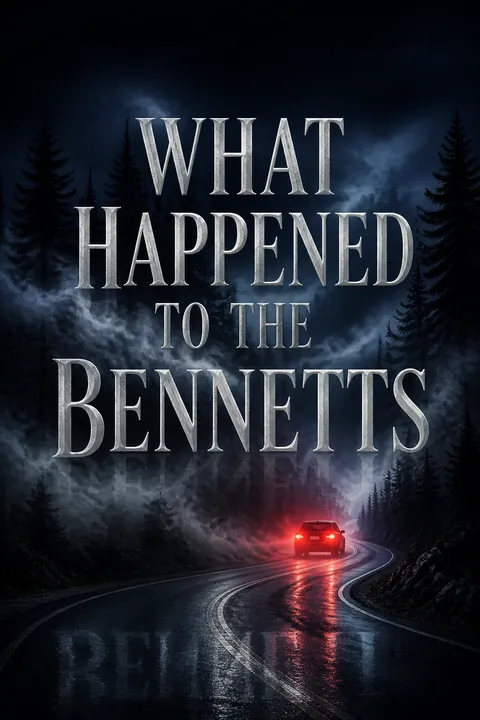


Plot Summary
The Family Carjacking
Jason Bennett is driving home through the woods with his wife, Lucinda, their teenage children, Allison and Ethan, and their dog, Moonie, after Allison scores in a field hockey game. When a pickup blocks the road, two armed men demand the Mercedes. Jason moves his family away from the car, but Moonie leaps at the robbers and a shot strikes Allison in the neck.
As Jason presses his shirt against the wound, the driver kills his accomplice, Junior, then escapes. Allison dies in surgery. Jason, a court reporter who prides himself on staying calm, cannot make sense of the blood on his hands or the fact that his daughter is gone.
The attack turns an ordinary family ritual into a permanent divide between before and after. Jason's training in accuracy and procedure gives him a way to describe events, but not to control them. His first instinct is protective action, yet the violence exposes the painful limit of parental competence: love can guide a response without guaranteeing survival. Ethan's release of Moonie becomes an early source of guilt, while the dog's impulsive intervention is neither a moral failure nor a solution. The opening tragedy therefore refuses a neat assignment of blame, even as Jason's mind immediately seeks one.
The Bennetts Become Targets
At the hospital, county detectives initially question whether Jason killed Junior. Before the family can absorb Allison's death, FBI agents identify the dead accomplice as Junior Veria and the escaped gunman as John Milo, both members of the George Veria Organization, a drug network led by Junior's father.
The agents connect the carjacking to a double homicide Milo and Junior committed earlier that night, and explain that Milo may claim Jason killed Junior. Big George could retaliate, while Milo could silence the family as witnesses. The FBI urges Jason, Lucinda, and Ethan to enter witness protection. They resist leaving their home, jobs, friends, and Lucinda's mother, but Jason decides they cannot risk losing Ethan too.
The FBI's warning changes the Bennetts' grief from a private catastrophe into a security problem governed by strangers. Jason must make an irreversible decision while his family is still in shock, and his choice to leave is less an act of confidence than a refusal to gamble with Ethan's life. The agents offer safety by demanding that the family surrender its ordinary sources of identity and support. This tension establishes a central conflict: protection can preserve a body while isolating the people it is meant to protect.
A Funeral Behind Glass
The family leaves Pennsylvania in an FBI van with only a few packed belongings and settles into a guarded house near Delaware's marshes. Jason tries to orient himself in the unfamiliar landscape, while Lucinda and Ethan withdraw into grief. When he asks how they can attend Allison's funeral, agent Dom Kingston explains that Milo's people may watch funeral homes and recognize them.
The service will happen without the family present. Jason searches court records for Milo and discovers that attorney Paul Hart repeatedly helped members of GVO escape prosecution, including Milo. The finding gives Jason a legal name to attach to his daughter's killer's freedom, but the FBI's rules still leave him unable to act or even say goodbye in person.
The funeral restriction makes the cost of witness protection intimate rather than abstract: the state can guard the living only by controlling their mourning. Jason's research is a bid to recover agency through documents, the medium he understands best. Yet the court records unsettle his faith in law, showing how procedural expertise can protect both legitimate rights and dangerous clients. The absent funeral also turns memory into a contested space. The family has to grieve through photographs, objects, and screens because the institutions safeguarding them cannot accommodate the ritual they need.
Fire Erases Their Home
The FBI's cameras capture a suspicious car circling the Bennetts' former street, then violence reaches their property. Jason sees news footage of his court-reporting office burning; soon the agents show him video of the family home engulfed in flames and report that Lucinda's photography studio has been vandalized.
The attacks destroy the work and possessions through which the couple built their life, including Allison's room and family photographs. Lucinda is furious that the FBI failed to prevent the damage and insists her mother must be protected too.
As she and Jason struggle with the loss, Ethan retreats to his room, eats poorly, and blames himself for letting Moonie jump at the gunmen. The family is physically safe, but their old life is being dismantled around them.
The fires make the threat visible while exposing the limits of institutional care. The FBI can relocate the family, but it cannot preserve a home, a livelihood, or the network of relationships that made those things meaningful. Jason's practical identity as a provider is attacked alongside his property; Lucinda's anger names a gap between being treated as a witness and being treated as a person. Ethan's self-blame shows how children convert random violence into a manageable personal cause. His explanation is painful, but it gives him an illusion of control.
The Affair Comes to Light
While Jason and Lucinda remain cut off from friends, Lucinda secretly reads neighborhood posts and sees people speculate that Jason murdered his family. Her friend Melissa, trying to find the Bennetts, gives citizen investigator Bryan Krieger an interview.
Under pressure, Melissa reveals that Lucinda had an affair with a Philadelphia lawyer the previous summer. Jason hears the recording and confronts Lucinda. She admits the relationship, then names Paul Hart, the same lawyer Jason found in GVO's court records.
Before he can understand the connection, Jason sees FBI investigator Matt Reilly arrive and lip-reads him discussing Milo as a valuable informant. Jason realizes the FBI may know where Milo is while telling the family he fled to Mexico. Lucinda's betrayal and the government's deception collapse into one crisis of trust.
The affair is not merely a romantic rupture. It connects Jason's private marriage to the criminal and legal systems already surrounding Allison's death. Lucinda's confession forces Jason to revise his picture of their shared past, while Hart's identity makes intimacy suddenly consequential to public danger. At the same time, Jason's lip-reading turns professional skill into a tool of suspicion. He can detect words the FBI has not meant him to hear, but he cannot yet verify their meaning. The scene shifts the story from helpless mourning toward investigation, powered by doubt rather than certainty.
Allison's Empty Funeral
The Bennetts watch Allison's funeral on a distant video feed while FBI agents pose as mourners beside her casket. Lucinda and Ethan cry; Jason stays apart, increasingly convinced that the agency may be shielding the man who killed his daughter. He does not tell Lucinda what he overheard.
Afterward, she explains that Hart threatened Jason during their affair and suggests the carjacking may have been designed to target him, with the earlier double homicide used to make the attack look random. Her theory gives new meaning to Hart's link with Milo, though neither can prove it. Jason decides the FBI's version of events is no longer enough. He begins preparing to leave the safe house and pursue the truth himself.
The televised funeral makes Jason's isolation physical: he can see the ceremony but cannot participate in it. His silence about Reilly's remark creates a new separation from Lucinda just as her own disclosure has destabilized their marriage. Her theory is important because it treats their private relationship as evidence, not merely injury. Yet Jason's decision to act rests on an unverified suspicion. Grief has become investigative fuel, but it also narrows his judgment, making the pursuit of justice inseparable from his need to regain control.
The Dented BMW
On the morning Lucinda and Ethan leave for therapy, Jason tricks agent Michael Hallman into the outdoor shower and locks him inside. He buys a used Honda with cash, changes his appearance, and drives to Junior's funeral. Among the mourners, he recognizes Paul Hart and spots a dark blue BMW with a distinctive vertical mark on its bumper, matching the car he photographed outside his former home.
An elderly mourner warns Jason that he is in danger, but Jason keeps watching. He follows the funeral procession, survives a black SUV's attempt to force him off the road, then slips into the funeral home and steals the invoice from Big George's arrangements. The invoice gives him the address he could not find online.
Jason's departure is a point of no return. He moves from being a protected witness to an unauthorized investigator, using observation, cash, disguise, and the habits of a court reporter to build his own case. The funeral setting places bereavement beside criminal hierarchy: each flower arrangement and vehicle becomes evidence of allegiance. The old mourner's warning complicates Jason's confidence, suggesting that someone knows more than he does. His methods are clever, but every successful deduction also carries him deeper into danger without professional backup.
Hart's Last Night
Jason reaches Philadelphia and waits outside the building where Hart attends a political fundraiser. When Hart leaves, a dark sedan deliberately hits him and speeds away. Jason follows, recognizing the car as the dented BMW from Junior's funeral, but loses it near the expressway.
News reports identify the vehicle as dark blue, and citizen investigator Bryan Krieger soon announces that he saw Jason near the killing. The next morning Jason goes to Hart's lover and paralegal, Contessa Burroughs, hoping she can explain Milo's cooperation deal.
A neighbor lets him into the apartment, where they find Contessa hanging from a ceiling fan. Jason suspects her death was staged to look like suicide and flees before police arrive. Hart and Contessa are both gone, leaving Jason with fewer witnesses and a more dangerous trail.
The deaths of Hart and Contessa turn Jason's search into a race against the destruction of evidence. His pursuit of the BMW yields recognition but not capture, an important distinction between seeing a clue and being able to use it. Krieger's public attention compounds the danger by making Jason visible to both law enforcement and the criminals he is tracking. Contessa's death echoes Allison's in its suddenness, but Jason's response has changed: he now reads a scene for motive and staging even while his grief keeps intruding.
North Philly Phil
At a motel, Jason lays out the cards from Junior's funeral flowers and compares their informal names with aliases in court indictments. He notices that one card is signed by North Philly Phil and links it to the lowest-level dealers, then identifies the alias as Phillip Nerone, the man associated with the blue BMW.
Jason searches drug corners in New Cumberton and neighboring towns until he finally finds Nerone. He tells the dealer that he is the man Big George wants and demands a meeting.
Nerone instead drives him to a composting plant, where Milo appears without Big George. Jason warns Nerone that Milo is an informant. Nerone and Milo draw their guns; Milo shoots Nerone, then chases Jason through the plant, killing Bryan Krieger in the chaos.
The flower cards turn ceremonial display into a map of power. Jason's ability to connect aliases, court files, and the size of arrangements is a civilian form of intelligence work, built from his profession rather than formal authority. But the discovery does not bring him closer to safety; it brings him face to face with Milo. Krieger's death is a grim consequence of public curiosity crossing into a violent investigation. Jason's truth-telling can expose betrayal, but in the plant it also triggers an immediate struggle for survival.
The Photograph From Gitmo
After escaping the plant, Jason learns from truckers that Nerone and Krieger were killed and that a Collins driver named Jaybird survived the gunfight. Big George then contacts him, and Jason agrees to meet. George admits he had made Milo an informant but suspects Milo has been playing both him and the FBI.
Their discussion turns to Paul Hart's political ambitions and Jason's work at Guantánamo Bay. Back in a van, Jason searches his cloud files and discovers that his archived Gitmo records have been deleted.
A surviving birthday photograph from November 3, 2003, shows him with a young military escort who is now Senator Mike Ricks. Ricks had claimed to be in the infirmary on the day detainee Rohan Doha died under interrogation. The photograph could disprove his alibi.
The novel's apparent street-level crime plot opens into a political cover-up, but the revelation remains rooted in Jason's ordinary archive of personal work. A birthday photograph, kept for sentimental reasons, becomes more valuable than official files because it records a moment outside the government's intended account. George's willingness to listen is equally consequential: a criminal leader can recognize the logic of a lie without becoming morally innocent. The story complicates the distinction between lawful power and criminal power, while insisting that evidence can survive in the margins of a person's life.
Betrayal in the Marsh
Jason returns to the Delaware safe house ready to tell the FBI what the photograph proves, but learns Milo has kidnapped Lucinda, Ethan, and Dom. Wiki drives Jason toward what he claims is a command center, while revealing that the kidnappers entered through the back door and that Milo wants money and a way out.
Jason realizes the trip is another trap. He wrenches the Tahoe off the road and fights Wiki in the marsh, taking his phone and escaping in the vehicle. Wiki later turns up dead, killed by Milo and left beneath a bridge.
Jason hears a police alert naming him as the suspect, but reaches West Philadelphia and finds Dom's uncle Tig through an old neighborhood connection. In Tig's cellar, Jason reunites with Lucinda, Ethan, and Dom, who had escaped with them before the kidnapping.
This section overturns the apparent safety of the witness-protection arrangement: the betrayal comes from inside the system, not only from the criminal organization. Jason's fight with Wiki marks a physical and ethical threshold, as he uses force to escape a man he had trusted. The recovery of his family depends on memory and community rather than official channels. Dom's old ties to Tig become a counter-network, suggesting that survival rests not only on institutions but on durable human loyalties that formal procedures cannot predict.
The Crane Yard Trap
Jason explains the Gitmo photograph and Ricks's possible motive to Dom, then agrees to help draw Milo out. Dom plans to contact investigator Matt Reilly and falsely report that Jason's family is at an airport warehouse, hoping a corrupt agent will alert Milo.
At a deserted crane yard, Dom, Tig, and two of Tig's Vietnam veteran friends take positions while Jason is meant to stay hidden. Milo arrives with armed men, including Reilly's allies, and a second car attacks from the dark.
Jason leaves cover to help Dom, and both sides exchange gunfire. Then Big George and his men arrive. In the crossfire, George shoots Milo, and Milo's crew falls. George is mortally wounded. He tells Jason he called Reilly to lure Milo, then dies after Jason prays beside him.
The climax makes allegiance unstable until the last moment. Reilly's betrayal has corrupted the official chain of protection, while George's intervention comes from a criminal world that has its own loyalties and grudges. Jason's choice to leave cover repeats his first instinct on Coldstream Road, but now it is deliberate rather than reflexive. George's death does not restore moral order; it ends an immediate threat at a human cost. The scene resists a clean victory, even as Jason and Dom finally act together against Milo.
A Family Chooses Again
Federal prosecutors take Jason's statement, arrest Reilly, and announce a simplified account of the carjacking rather than expose the full Gitmo conspiracy. Jason refuses to stay near their offices and returns with Dom to Delaware, where the family searches for Moonie.
A trucker, Flossie Bergstrom, brings the dog back and offers Jason her late husband's Chihuahua, Jack, who has bonded with Moonie. Jason and Lucinda eventually talk on the beach.
He admits he loves her but cannot yet make forgiveness easy; she says they should stay married only if they choose each other as they are now, not simply for Ethan. They agree to rebuild their life together. Six months later, Jason sends Ricks the photograph during a Senate hearing, forcing the senator to confront the evidence.
The resolution does not confuse reunion with repair. Jason and Lucinda choose their marriage without pretending that grief or betrayal has vanished, and Ethan's question about divorce helps bring the adults' private rupture into view. The return of Moonie, followed by Jack's arrival, gives the family a small, embodied restoration after so many losses. Politically, Jason's use of the photograph counters the government's preference for a simplified public story. He cannot restore Allison's life, but he can refuse to let the record be shaped entirely by institutions.
Epilogue
A year later, the Bennetts have moved back into their rebuilt home and planted a magnolia for Allison beside the goalposts she named. They hold a school vigil attended by hundreds, resume their work, and meet weekly with other bereaved parents. Ethan has returned to school and regained weight; therapy helps all three survive their grief.
Ricks has left the presidential race and resigned from Congress, while Reilly has received a lengthy prison sentence. Jason and Lucinda remain together, learning that forgiveness is an ongoing choice rather than a return to the marriage they had before. As they hang a heron-shaped memorial tag on Allison's tree, the family gathers around Jason when grief finally breaks through.
The ending offers continuation without cure. The magnolia and the heron tag give grief a place in the family's rebuilt home, while the weekly support group makes survival collective rather than heroic. Jason's work and Lucinda's photography return, but neither is presented as a substitute for Allison or evidence that the old life can be restored. Their marriage endures through renewed consent, not through a claim that betrayal has been erased. The final image gathers the family around Jason as he cries, reversing his earlier insistence that he must be the unbreakable center. Their strength now includes dependence on one another.
Analysis
The novel begins with violence that cannot be made meaningful by assigning blame, then follows Jason as he tries to impose meaning through testimony, legal records, surveillance images, and ultimately a photograph. His court-reporter identity matters because it makes truth a practiced discipline, not an abstract virtue. Yet the institutions that claim authority over truth repeatedly withhold information, protect compromised actors, or substitute procedure for care. Witness protection preserves the family's bodies while separating them from the rituals and relationships that help people endure loss.
Grief is not confined to Jason. Ethan turns it inward as guilt, Lucinda experiences it through both her daughter and her mother, and Jason learns that stoicism can leave loved ones emotionally alone. The marsh and ghost forest give these losses a physical setting: living water moves among dead trees, neither restoring them nor allowing the landscape to remain unchanged. The family cannot return to the version of itself that existed before the shooting, even when it returns to its house.
The mystery's political escalation also challenges easy divisions between law and crime. GVO is violent, but lawyers and officials can exploit the same appetite for power under respectable titles. George's late cooperation with Jason does not erase his responsibility; it shows that people can act from mixed motives without becoming morally simple. The final justice is partial. Ricks faces exposure, Reilly is punished, and the family regains some freedom, but Allison's future cannot be recovered. The ending's more credible hope lies in the Bennetts' renewed willingness to depend on one another. Forgiveness is neither instant absolution nor forgetfulness. It is a decision to build a life while carrying what cannot be repaired.
Review Summary
What Happened to the Bennetts received mixed reviews. Many readers found it gripping and suspenseful, praising the intense opening and fast-paced action. Some appreciated the emotional depth and family drama. However, others criticized the implausible plot developments, repetitive writing, and unrealistic character actions. The book's second half was particularly divisive, with some enjoying the thriller elements while others found them over-the-top. Overall, readers were split on whether the novel lived up to Scottoline's previous works, with ratings ranging from 1 to 5 stars.
People Also Read







Characters
Jason Bennett
A father's exacting eyeJason is a court reporter and former law student who built a successful business through discipline, accuracy, and caution. Raised on a dairy farm, he carries his father's work ethic and distrust of debt into suburban family life. He is a devoted husband to Lucinda and father to Allison and Ethan, though he often tries to solve emotional trouble with practical reasoning. His ability to read lips reflects both his professional attention to detail and his need to know what others are withholding. When his family is threatened, he becomes more willing to take risks, but his deepest motivation remains the same: to protect the people he loves and make the truth count.
Lucinda Bennett
A fiercely present motherLucinda is Jason's wife, a photographer, and the emotional organizer of the Bennett household. She manages school, sports, friendships, and care for her mother with intense attention, often making competence look effortless. Her closeness with Allison is rooted in their shared energy and temperament, while her relationship with Jason carries both affection and unspoken tensions about ambition, work, and the life they chose. Lucinda is direct, resourceful, and deeply attached to her family, but caregiving has left her with needs she struggles to acknowledge. Her instincts push her to question rules when they threaten people she loves, even when defiance creates new risks.
Allison Bennett
The family's bright centerAllison is Jason and Lucinda's athletic, quick-witted teenage daughter and Ethan's older sister. Competitive and energetic, she excels at field hockey and lacrosse, teases her family, and cares intensely about school, friends, and how she looks. Beneath her confidence is a young person who worries about grades, appearance, and the future she is trying to shape. She is especially close to Lucinda and has a tender bond with her grandmother, whom the family calls Muggy. Allison's presence continues through photographs, family stories, and the ambitions her loved ones remember, making her more than the event that changes their lives.
Ethan Bennett
A sensitive younger brotherEthan is Jason and Lucinda's younger son, a quiet eighth grader who prefers video games and time alone to the outdoor pursuits his sister loved. He thinks carefully and needs explanations rather than commands, but he carries guilt and fear inwardly, often interpreting events as evidence that he should have acted differently. His bond with Allison is affectionate and teasing, and Moonie is a source of comfort when the family is displaced. Ethan's grief disrupts his routines and appetite, revealing how easily a child's private pain can be overlooked when adults are consumed by crisis.
Dom Kingston
The family's steadfast agentDom is an FBI special agent assigned to guide the Bennetts through witness protection. Raised in West Philadelphia by his grandmother and uncle, he is socially perceptive, physically disciplined, and more candid than his official role requires. His experience undercover has left him with unresolved grief and caution, yet he cares about the people entrusted to him. Dom is practical without being cold: he runs with Jason, tries to support Ethan, and works to accommodate Lucinda's concerns about her mother and friends. His loyalty is tested by a case in which the agency's own decisions cannot be trusted.
Michael Hallman
The marshland naturalistKnown as Wiki, Hallman is Dom's FBI colleague and a native of Delaware. He is a patient explainer of local ecology, fond of fossils, birds, and the salt marsh surrounding the Bennetts' safe house. His awkward warmth offers Ethan a possible connection and gives Jason a glimpse of kindness inside the rigid protection program. Hallman's curiosity and loyalty to his work shape the way he relates to the family, though his reserved manner makes him less immediately easy to read than Dom.
John Milo
A calculating GVO enforcerMilo is a powerful, tattooed member of the George Veria Organization, accustomed to violence and to being trusted with dangerous work. He has spent years close to George and Junior, giving him a position that combines personal loyalty with ambition. Milo is observant enough to exploit sudden opportunities and ruthless enough to turn on allies when they become obstacles. His capacity to move between criminal and official worlds makes him especially difficult to understand from the outside. He embodies the danger of treating cooperation as proof of reform.
George Veria
A crime boss facing lossCalled Big George, he leads the drug organization that bears his name and has spent decades building its reach. He is a father whose attachment to Junior coexists with the brutal logic of the business he commands. George is physically imposing, blunt, and accustomed to making decisions through force, but illness has begun to alter his position and his sense of time. His relationship with Milo is personal as well as strategic, which makes questions of loyalty especially consequential. George's worldview is shaped by power, survival, and the belief that every institution has its own interests.
George Veria Jr.
The heir to GVOJunior is George Veria's son and the presumed successor to his father's criminal organization. He is close to Milo and has been entrusted with increasing responsibility as George steps back from daily operations. His status gives him influence inside GVO, but also makes him a focus for the ambitions and rivalries surrounding the organization. He is known to the Bennetts only through the violent encounter that brings the family into the criminal world.
Paul Hart
A lawyer with political reachHart is a prominent Philadelphia attorney at the prestigious firm Lattimore and Finch. He represents powerful clients, cultivates political relationships, and understands how legal procedure can protect people facing criminal charges. His polished public standing contrasts with the private relationships and ambitions that shape his choices. Hart's professional reach connects the worlds of Jason's marriage, GVO's legal defense, and political influence, making him more consequential than his respectable image initially suggests.
Matt Reilly
An investigator in the caseReilly is an FBI investigator assigned to the broader case surrounding the Bennetts and GVO. He is experienced enough to work alongside agents managing the family, but his role places him within the complicated overlap between witness safety and criminal investigation. His connection to the case illustrates how institutional trust depends on individual conduct, not merely a badge or agency name.
Bryan Krieger
A self-appointed sleuthKrieger is a Brooklyn-based citizen investigator who builds an online following by pursuing unsolved and developing cases. He is energetic, confident in his instincts, and eager to turn scattered public details into a coherent theory. His attention to the Bennett disappearance brings their private crisis into the public eye. Krieger's work is driven by a mixture of curiosity, conviction, and the belief that ordinary people can pressure institutions to act.
Melissa DeLuca
Lucinda's searching best friendMelissa is Lucinda's closest adult friend outside the family and part of the network of local sports parents. She is loyal, sociable, and accustomed to checking in on Lucinda through everyday routines and shared responsibilities. When the Bennetts disappear, her concern becomes active pursuit, even though she does not understand the danger surrounding them. Her impulse to seek help comes from friendship, but public exposure of private details shows how care can have unintended consequences.
Claire Romarin
Lucinda's vulnerable motherClaire is Lucinda's mother and lives in the memory-care wing of an assisted-living facility. She has Alzheimer's disease and depends on familiar people, routines, and sensory comforts such as lavender lotion. Lucinda's devotion to Claire reflects the care Claire once gave her daughters, especially during family illness. Her condition makes separation particularly painful because she cannot reliably understand why Lucinda is absent.
Flossie Bergstrom
A trucker who helps strangersFlossie is a long-haul truck driver for Collins Consolidated who travels with three small dogs. Widowed, independent, and warm without being sentimental, she has built a life around motion and practical kindness. She judges people by how they behave rather than by the stories told about them, and she is willing to help Jason when his circumstances seem desperate. Her dog Jack remains a living connection to the husband she misses.
Tig Kingston
Dom's protective uncleTig is Dom's uncle, who helped raise him in West Philadelphia and gave him work at a check-cashing business when he was young. He is tough, proud, and fiercely loyal to the family he chose, though he jokes that he is not sentimental. His old friendships and neighborhood ties form a support network beyond the FBI's formal reach.
Mike Ricks
A senator seeking higher officeRicks is a prominent senator with political ambitions and a carefully managed public reputation. His past military service and relationships with lawyers and political allies are part of the image he presents to voters. He is accustomed to public scrutiny, but his career depends on controlling which parts of his history become visible. His story intersects with Jason's because of events at Guantánamo Bay.
Plot Devices
Witness protection
Safety at a steep priceThe FBI relocates Jason, Lucinda, and Ethan to a guarded home in Delaware after warning that GVO may retaliate against them. The program limits travel, communication, access to accounts, and contact with friends and relatives. It creates the physical conditions for safety while intensifying grief and isolation, especially when the Bennetts cannot attend Allison's funeral. The device also makes the family dependent on agents whose information and loyalties they cannot independently verify.
Jason's lip-reading
A private skill becomes evidenceJason's professional commitment to accuracy includes reading lips. He uses the skill first to identify Junior's name during the carjacking, then to detect a remark that suggests Milo is cooperating with the FBI. Later, he uses the same attention to evidence, alongside court records and surveillance images, to pursue clues the official investigation does not share with him. The ability makes Jason an unusually observant narrator, but what he sees can still be incomplete or misinterpreted.
The Gitmo photograph
A birthday image breaks an alibiA photograph Jason kept from his 2003 birthday at Guantánamo Bay shows him beside a young military escort later known as Senator Mike Ricks. Ricks has claimed to have been in the infirmary on the day detainee Rohan Doha died during interrogation. The image becomes the surviving record that contradicts the senator's account after Jason's archived files disappear. Its origin as a personal keepsake contrasts with the classified documents and official statements that political actors have tried to control.
The funeral flower cards
Floral tributes map GVOAt Junior's funeral, Jason steals the funeral home's paperwork and the cards attached to the flower arrangements. He compares aliases on the cards with names in public court indictments, using the senders' placement and the apparent scale of their tributes to infer relationships within GVO. One card signed by North Philly Phil leads him to Phillip Nerone, the man associated with the dented BMW. A gesture of sympathy thus becomes a rough organizational chart.
The marsh safe house
A refuge becomes a trapThe Delaware home is selected for its isolation, fenced yard, marshland, and surrounding cameras. The landscape gives the Bennetts a measure of privacy, while its limited roads make movement easy to monitor and hard to disguise. The marsh also becomes a recurring setting for Jason's grief, his changing relationship with Ethan, and his confrontation with an agent who betrays him. Its physical ambiguity mirrors the family's uncertainty about who is actually keeping them safe.
FAQ
Synopsis & Basic Details
What is What Happened to the Bennetts about?
- Family's life shattered: The Bennetts' ordinary family drive turns into a nightmare when they are targeted by carjackers, resulting in the tragic death of their daughter, Allison.
- Forced into hiding: The family is thrust into the witness protection program, grappling with the loss of their old lives and the constant threat of danger.
- Unraveling a conspiracy: As they navigate their new reality, they uncover a web of secrets, betrayals, and a political conspiracy that puts them in even greater peril.
Why should I read What Happened to the Bennetts?
- Emotional depth: The novel explores the raw emotions of grief, betrayal, and the struggle for justice, creating a deeply moving and relatable experience.
- Intricate plot: The story is filled with unexpected twists and turns, keeping readers engaged and guessing until the very end.
- Compelling characters: The Bennetts are complex and well-developed, making their journey both heartbreaking and inspiring.
What is the background of What Happened to the Bennetts?
- Contemporary setting: The story is set in the present day, reflecting modern concerns about crime, political corruption, and the challenges of family life.
- Suburban backdrop: The initial setting is a seemingly ordinary suburban community, which is contrasted with the dangerous world of organized crime and political intrigue.
- Legal and political elements: The plot incorporates elements of the legal system, political maneuvering, and the complexities of law enforcement, adding depth and realism.
What are the most memorable quotes in What Happened to the Bennetts?
- "Nothing good gets away.": This quote, from John Steinbeck, foreshadows the Bennetts' struggle to hold onto what they value most, and the lengths they will go to for justice.
- "We have a right to enjoy the drive.": This seemingly innocuous line, spoken by Jason, highlights the family's desire for normalcy, which is shattered by the carjacking.
- "I'm telling you the truth.": This phrase, repeated by Jason, underscores his commitment to honesty and his frustration with the lies and deceit surrounding him.
What writing style, narrative choices, and literary techniques does Lisa Scottoline use?
- Fast-paced narrative: Scottoline employs a quick, engaging pace, using short chapters and cliffhangers to maintain suspense and reader interest.
- First-person perspective: The story is primarily told from Jason's point of view, allowing readers to experience his emotions and thoughts directly.
- Dialogue-driven scenes: Scottoline uses realistic and often witty dialogue to reveal character traits and advance the plot, creating a sense of immediacy.
Hidden Details & Subtle Connections
What are some minor details that add significant meaning?
- The new Mercedes: The family's new car, a symbol of their success and happiness, becomes the target of the carjacking, highlighting the fragility of their lives.
- Allison's ponytail holders: These seemingly insignificant items, found throughout the house, serve as a poignant reminder of Allison's presence and the family's loss.
- The names of Allison's trees: Scylla and Charybdis, from Greek mythology, foreshadow the dangerous path the family is forced to navigate.
What are some subtle foreshadowing and callbacks?
- Jason's lip-reading ability: His skill as a court reporter, initially presented as a quirky detail, becomes crucial in identifying the carjackers and understanding their motives.
- The mention of Justin Bieber: This seemingly random reference to Ethan's hairstyle foreshadows the generational gap and the loss of normalcy in their lives.
- The discussion of the homecoming dress: The seemingly trivial conversation about Allison's dress becomes a heartbreaking reminder of the life she will never have.
What are some unexpected character connections?
- Paul Hart and Milo: The connection between Lucinda's lover and Allison's killer is a shocking twist that reveals the depth of the conspiracy.
- Dom Kingston and Jason Bennett: The bond between the FBI agent and the grieving father, initially professional, evolves into a genuine friendship, highlighting the importance of trust.
- The old man in the cemetery: This seemingly random character turns out to be an FBI agent, revealing the extent of the surveillance and the hidden dangers.
Who are the most significant supporting characters?
- Marie, Jason's office manager: Her absence from the story after the fire highlights the loss of Jason's professional life and the impact on his employees.
- Melissa, Lucinda's best friend: Her concern and actions reveal the depth of Lucinda's connections and the impact of the family's disappearance on their community.
- Uncle Tig, Dom's uncle: His connection to Dom and his past provides a glimpse into Dom's background and his motivations.
Psychological, Emotional, & Relational Analysis
What are some unspoken motivations of the characters?
- Jason's need for control: His desire to protect his family and seek justice stems from a deep-seated need to regain control after feeling helpless during Allison's death.
- Lucinda's search for self: Her affair and subsequent actions reveal a desire for personal fulfillment and a struggle with her identity as a wife and mother.
- Dom's desire for redemption: His dedication to protecting the Bennetts stems from a need to atone for past failures and to find purpose in his work.
What psychological complexities do the characters exhibit?
- Jason's compartmentalization: He uses his professional skills as a court reporter to cope with the emotional trauma, highlighting his ability to separate his feelings from his actions.
- Lucinda's guilt and self-blame: She struggles with the weight of her affair and its consequences, leading to feelings of inadequacy and self-reproach.
- Ethan's emotional withdrawal: He retreats into himself, using sleep and his dog as a way to cope with the loss of his sister and the upheaval in his life.
What are the major emotional turning points?
- The discovery of Allison's death: This moment shatters the family's world and sets the stage for their emotional journey.
- Jason's confrontation with Lucinda: The revelation of her affair and his subsequent anger mark a turning point in their relationship.
- Jason's decision to leave WITSEC: This act of defiance signals his determination to take control of his family's fate and seek justice.
How do relationship dynamics evolve?
- Jason and Lucinda's marriage: Their relationship is tested by betrayal and grief, but they ultimately find a way to forgive each other and rebuild their bond.
- Jason and Ethan's father-son bond: Their relationship deepens as they navigate their shared grief and the challenges of their new reality.
- Jason and Dom's friendship: Their professional relationship evolves into a genuine friendship, highlighting the importance of trust and loyalty.
Interpretation & Debate
Which parts of the story remain ambiguous or open-ended?
- The extent of Senator Ricks's involvement: While his political career is ruined, the full extent of his knowledge and participation in the conspiracy remains unclear.
- The future of the Bennetts' marriage: While they reconcile, the long-term impact of Lucinda's affair and the trauma they have endured remains uncertain.
- The fate of the other GVO members: The story focuses on Milo and Big George, but the fate of the other members of the criminal organization is left unresolved.
What are some debatable, controversial scenes or moments in What Happened to the Bennetts?
- Jason's decision to leave WITSEC: Some readers may question the wisdom of his decision, given the risks involved, while others may admire his courage and determination.
- Lucinda's affair: Her actions may be seen as a betrayal of her marriage and family, while others may sympathize with her search for personal fulfillment.
- The FBI's actions: The agency's use of Milo as an informant and their withholding of information from the Bennetts may be seen as a necessary evil or a betrayal of trust.
What Happened to the Bennetts Ending Explained: How It Ends & What It Means
- Justice is served, but at a cost: While Milo and other conspirators are brought to justice, the Bennetts' lives are forever altered by the loss of Allison and the trauma they have endured.
- Family bonds endure: Despite the challenges they face, the Bennetts' love for each other and their commitment to their family remain strong, highlighting the importance of resilience and forgiveness.
- New beginnings are possible: The family's decision to rebuild their lives and honor Allison's memory symbolizes hope and the possibility of finding peace after tragedy.
About the Author
Other books by Lisa Scottoline


Download PDF
Download EPUB
.epub digital book format is ideal for reading ebooks on phones, tablets, and e-readers.








