

Key Takeaways
Treat chakra awakening as disciplined inner work, not a purchasable accessory
Beware the quick fix. The book opens with a woman who has paid for a gemstone chakra pendant after an expert told her the energy centers were spinning incorrectly. The author dismisses the diagnosis and the promised cure: incense, jewelry, and atmospheric décor, he argues, cannot produce kundalini awakening. He also rejects claims that someone can read or instantly activate another person’s chakras by touch.
Practice over props. In his account, the work is sustained meditation, not shopping for symbols or chasing a special sensation. The point is not that every spiritual object is worthless, but that it should not be mistaken for the practice itself. Persistent unusual physical symptoms, he cautions, belong with a medical professional, not a chakra reader.
The opening is a useful consumer-protection lesson: when a practitioner diagnoses an invisible imbalance and sells the remedy, the buyer has little independent way to verify either claim. Similar skepticism is valuable across wellness markets, where confidence and atmosphere can be mistaken for evidence. At the same time, ritual objects may hold personal or cultural meaning without being treatments. The important distinction is between using a pendant as a reminder and believing it can repair a hidden bodily mechanism. The author draws that boundary sharply, though his own spiritual claims also rest largely on personal testimony.
Read the goddess myths as a map of practice, not just divine history
A lineage in legend. The book grounds its account in the Hindu hymn Lalita Sahasranama and the stories surrounding the Goddess. Its mythic sequence begins with Sati’s death after her father insults Shiva, then follows the Goddess’s return as Parvati and her emergence as a cosmic power. The teaching passes from Hayagriva to the sage Agastya, then through a lineage that culminates in Vyasa.
Myth becomes instruction. The author reads these episodes as a symbolic record of how spiritual knowledge is transmitted and how latent energy unfolds. The stories are not offered as detached mythology: they set up the book’s central claim that practice requires devotion, discipline, patience, and a qualified lineage. This is the author’s interpretive tradition, not a claim of independently documented history.
The narrative does more than decorate a technical subject. It gives the reader memorable characters for qualities such as devotion, arrogance, restraint, and transformation, much as parables make abstract ethical ideas easier to retain. Reading the account symbolically also allows it to speak to readers who do not accept its cosmology as literal fact. Still, the line between scripture, interpretation, and history needs to remain clear. The book’s lineage explains its authority within a devotional framework, but it does not establish that the described transmission happened as historical evidence would require.
Recover your forgotten capacities by turning attention inward
Remember Hanuman. In a familiar episode retold by the author, the powerful Hanuman has forgotten his abilities. When the elder Jambavan reminds him of his strength, Hanuman crosses the ocean to reach Sita. The author uses this as an image of kundalini, the latent creative energy that he believes is present in everyone and can be awakened through inward attention.
Wholeness before approval. The book links this potential to the belief that people are made to feel inadequate by comparison and then seek completion through status, possessions, relationships, or other people’s approval. Its proposed alternative is to examine thoughts, emotions, and abilities directly. The goal is not to become superhuman, but to stop treating external recognition as the source of inner completeness.
The Hanuman story makes an effective distinction between having a capacity and recognizing it. In psychology, confidence and performance can reinforce each other: people who expect to cope are more likely to attempt difficult tasks, gain experience, and update their self-image. That does not mean every limit is imaginary, or that effort can overcome structural barriers, illness, or lack of resources. The story is most useful as a prompt to test underestimated abilities rather than as proof of limitless power. Its inward turn can support agency, provided it does not become blame for circumstances outside a person’s control.
Judge awakening by less reactivity, not by visions or bodily sensations
Change is the measure. The author describes awakening as a gradual shedding of ten veils, including desire, anger, greed, attachment, fear, and self-concern. In his account, the meaningful evidence is not a flash of light or a sensation along the spine, but a lasting shift: fewer impulsive reactions, less domination by difficult thoughts, and a more natural concern for other beings.
Experiences are personal. During meditation, practitioners may notice sensations or unusual states, but the author warns against treating any one experience as a universal sign of progress. He compares these events to side effects rather than the central result. His standard is behavioral and ethical: a transformed person may still feel pain, but is less likely to answer injury with anger.
This emphasis on conduct is a strong corrective to spiritual spectacle. Contemplative traditions often distinguish temporary altered states from enduring traits, and contemporary psychology similarly separates an experience from the habits and behavior that persist afterward. Reduced reactivity can be a meaningful outcome without proving a metaphysical explanation for it. The author’s particular promise of irreversible bliss, however, goes beyond what such behavioral changes can establish. A careful reader can keep the practical test, whether daily life becomes less governed by anger and fear, while remaining open about the cause.
Loosen craving, emotional clinging, and self-attacking thought without force
Three inner knots. The book calls recurring psychological obstacles granthis, or knots. Brahma Granthi concerns sexual desire, creation, and the impulse to acquire more. Vishnu Granthi concerns attachment to people, pleasures, and emotional states. Rudra Granthi concerns destructive and self-critical thinking, especially fixation on past failures. Together, they describe ways attention and energy become bound up in wanting, holding, or rejecting.
Observe rather than wrestle. The author argues that fighting a thought can strengthen its hold. He recommends patient attention: notice the desire or emotion, avoid automatically acting on it, and allow it to lose force. A story about Buddha’s disciple Ananda makes a related point: devotion can itself become a tie if it prevents independent inner work. In this account, the knots loosen through practice, not forced visualization.
The three knots offer a compact way to sort different kinds of mental friction. Modern approaches such as cognitive defusion also teach people to notice a thought as a mental event rather than obeying it as a command. That can create room for deliberate action without pretending that grief, desire, or attachment should simply disappear. The framework is interpretive rather than diagnostic, and the three categories will not capture every source of distress. Its practical value lies in asking what is happening: reaching for more, clinging to what exists, or attacking the self.
Accept sexual energy without letting guilt or compulsion govern it
Desire is not a verdict. In discussing Brahma Granthi, the author treats sexuality as part of creative energy, not as a moral stain. He rejects lifelong abstinence as a universal requirement, though he presents temporary restraint as a way to reduce distraction. He also advises readers not to panic over sexual thoughts or orientation, but to notice thoughts without automatically pursuing or suppressing them.
Four styles of intimacy. The book distinguishes animal-like gratification, human intimacy based on affection and belonging, a protective or warrior mode, and a selfless mode centered on giving. These are the author’s spiritual categories, not a clinical model. They invite reflection on whether intimacy is driven by use, attachment, care, or generosity. The practical concern is how desire affects attention, respect, and one’s relationship with others.
Normalizing desire can reduce shame, while the suggestion to notice impulses without acting on every one supports self-regulation. The four-part account is evocative, but its ranking of sexual styles can oversimplify real relationships and import assumptions about gender, dominance, and spiritual maturity. Intimacy is not made ethical by calling it divine; consent, mutual respect, and freedom from coercion remain essential. A reader can use the categories as questions about motive and care, not as labels for judging people or as instructions for how sex should work.
Use the chakras as a contemplative map, not physical anatomy
A sequence of attention. The author does not treat chakras as organs that can be seen or measured. He describes them as subtle centers, at most linked to concentrations of nerves, and uses them as successive meditation targets. His interpretations move from grounding and sensory life at the root, through sexuality and appetite, to fear and emotion, then authenticity, wisdom, and integration.
Not a medical chart. The book also assigns particular colors, syllables, foods, and bodily effects to each center, sometimes departing from familiar chakra descriptions. These are presented as part of the author’s reading of Lalita Sahasranama and his own practice. Claims that meditating on a chakra can heal bones, skin, blood, or other conditions should not be taken as established medical evidence or used in place of healthcare.
A symbolic map can help organize attention even when its landmarks are not anatomical structures. Similar distinctions appear in contemplative practice: a body location can serve as an anchor without being a literal container for a separate energy organ. This keeps the method available as a subjective exercise while avoiding confusion with physiology. The book’s specific colors, syllables, and healing claims are less secure: traditions vary, and experiential testimony cannot establish medical efficacy. The most defensible use is reflective, asking what themes a focus brings up, rather than treating the map as a diagnostic instrument.
Train one focus at a time; lasting change takes sustained practice
A demanding schedule. The author recommends working through one chakra at a time, using posture, concentration, visualization, or a seed syllable. He suggests alternating between visualization and mantra rather than trying both simultaneously. His sample two-hour day includes breathing, a short focus on the brow center, a longer session on the current target, and a closing period of breathing.
Years, not shortcuts. He estimates about a year each for the root and sacral centers, then roughly six months for each remaining center, assuming regular daily practice. He also describes much longer personal sessions and says intensity affects progress. These are the author’s prescriptions and estimates, not validated timelines. He recommends a weekly rest day and consistency, while warning readers not to mistake a temporary peak experience for settled progress.
The method’s most transferable feature is its emphasis on regular attention and a manageable object of focus. Structured repetition is common to skill acquisition, although meditation is not equivalent to learning an instrument and the book’s exact timetable has no demonstrated universal basis. Two hours a day is a substantial commitment, and extreme austerities or restrictive diets can carry risks. A cautious practitioner would adapt the schedule to health and daily responsibilities, seek competent guidance when needed, and treat unusual or distressing physical experiences as a reason to pause and seek appropriate care.
Transform difficult energies into compassion instead of condemning them
Tantra as integration. The book presents kundalini practice as tantric: instead of labeling every desire or uncomfortable trait sinful, examine it, understand its roots, and redirect its force. A caterpillar’s transformation into a butterfly serves as its central image. The old form is not simply scolded away; it changes through a gradual process that requires time and discipline.
The stated destination. In the author’s account, the result is a growing sense of connection with other beings and less self-centeredness. He describes a long, difficult retreat in which meditation eventually made his awareness of rain and a spider unusually vivid, then became a more stable sense of peace in ordinary life. Such experiences are his testimony, not independently verifiable proof. The book’s ethical test remains compassion, not extraordinary powers.
The idea of transforming rather than suppressing experience has clear psychological appeal: pushing unwanted thoughts away can make them more salient, while examining them can reveal needs or habits that can be redirected. The butterfly image captures change without promising that it is quick or comfortable. Yet intense retreat experiences can have many interpretations, and vivid perception alone cannot verify a cosmic connection. The book is strongest when it ties inner work to less self-absorption and greater care for others. That ethical outcome is observable, meaningful, and less dependent on accepting the author’s metaphysics.
Analysis
This book blends Hindu devotional mythology, first-person spiritual memoir, and practical meditation instruction. Its organizing claim is that kundalini is a latent inner energy whose awakening gradually transforms the practitioner, and its narrative moves from sacred lineage to psychological obstacles, a chakra sequence, and the author’s own account of practice. The result is less a neutral survey of chakra traditions than a distinctive interpretation rooted in Lalita Sahasranama and the author’s reported experience.
The narrative is a major strength. Sati’s conflict, Hanuman’s forgotten abilities, and the author’s solitary meditation make abstract claims memorable. The three knots also provide a usable vocabulary for craving, attachment, and self-criticism. Most compelling is the insistence that spiritual progress should show up in ordinary conduct: less reactivity, greater steadiness, and more concern for others. That standard helps separate durable change from dramatic but temporary experiences.
The book also makes claims that require careful qualification. It presents personal mystical experiences and scriptural interpretation as evidence for a spiritual science, but subjective conviction does not establish a mechanism or guarantee that another practitioner will have the same result. Its chakra descriptions differ from other traditions, and its suggested bodily benefits, foods, and timelines are not supported in the text by clinical evidence. The demanding practice schedule should not be mistaken for a universal prescription.
A balanced reading preserves the practical insights without accepting every metaphysical or medical claim. Meditation can train attention and help people relate differently to thoughts; that does not prove energy rises through physical centers or that a chakra practice treats disease. The book is most useful as a guide to disciplined self-observation and a particular tantric worldview, not as a medical manual or a definitive account of all chakra traditions.
Review Summary
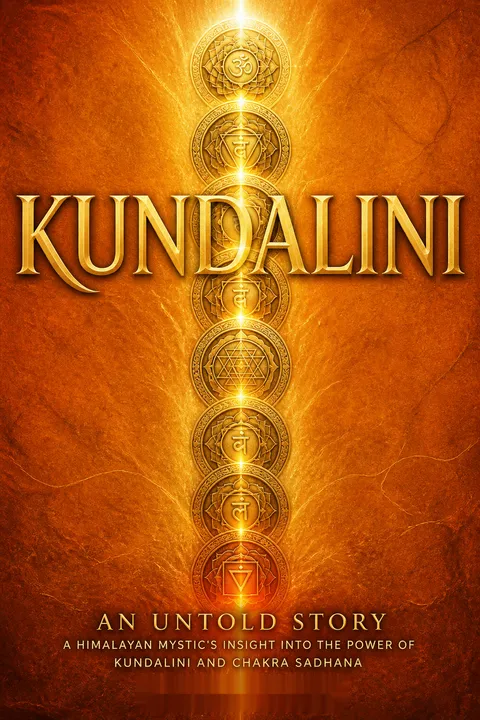
Kundalini -- An Untold Story receives mostly positive reviews, with readers appreciating its clear explanations of chakras and kundalini concepts. Many find it accessible for beginners, praising the author's storytelling and personal experiences. Some criticize the connection to sexuality and dietary recommendations. Readers value the book's insights into spirituality and meditation, though a few question the scientific basis. Overall, it's considered a good introduction to kundalini, with some reservations about certain claims and interpretations.
People Also Read










Glossary
Kundalini
latent creative energyIn this book, kundalini is the subtle, latent energy present in everyone, not a physical snake or structure in the spine. The author describes awakening it as a gradual inward process that loosens psychological obstacles and leads toward greater concentration, creativity, equanimity, and compassion.
Chakra
subtle meditation centerA chakra is one of the subtle centers used as a focus in the book’s meditation system. The author associates seven centers with a progression of inner themes, from basic needs and desire to insight and spiritual integration. He explicitly distinguishes them from visible physical organs.
Sadhana
disciplined spiritual practiceSadhana is a sustained spiritual practice or set of practices directed toward realization. In this book it principally means regular chakra meditation, supported by concentration, posture, and disciplined living. The author stresses gradual effort and warns against expecting immediate results.
Brahma Granthi
knot of creationBrahma Granthi is the first of the book’s three inner knots. Associated with creation and the sacral center, it includes sexual desire and the urge to expand, acquire, and produce. The author presents it as energy that can be observed and redirected, not simply condemned.
Vishnu Granthi
knot of emotional attachmentVishnu Granthi is the knot associated with sustaining and holding on. In the book it concerns emotional dependence, attachment to pleasures and relationships, and difficulty accepting change. The practice is not described as erasing emotion, but as reducing the compulsion to cling or react.
Rudra Granthi
knot of destructive thoughtRudra Granthi is the knot associated with destructive or self-defeating thought. The author places it near the brow center and describes it as fixation on past failures, harsh self-judgment, and the mental habit of giving thoughts excessive authority. Patient observation is intended to loosen it.
Avarana
veil over true natureAvarana means a covering or veil. The book uses the term for layers of desire, anger, greed, attachment, ego, jealousy, hatred, fear, and self-concern that obscure a person’s underlying nature. Spiritual progress is described as gradually shedding these layers rather than acquiring a new identity.
Sahasrara
crown state of integrationSahasrara is commonly identified as the crown center and is the culmination of the book’s chakra sequence. The author distinguishes it from an ordinary chakra, describing it more as a state of integration in which the seeker experiences union with the energy being sought and a movement beyond self-centered concern.
Chatush-antahkarana
four aspects of mindChatush-antahkarana is the book’s term for four aspects of the inner instrument: manas, or mind; buddhi, or intelligence; citta, or consciousness; and ahamakara, or the sense of individuality. The author uses these categories to explain how a thought may be noticed, considered, judged, and acted upon.
Divya bhava
selfless mode of intimacyDivya bhava is the divine temperament in the book’s four-part account of sexuality. It describes intimacy approached through selflessness, care, and surrender rather than mere gratification, possessiveness, or control. The author presents it as an elevated spiritual ideal, not a scientific or clinical classification.
FAQ
What's "Kundalini -- An Untold Story" about?
- Author's Background: The book is written by Om Swami, a mystic and advanced yogi who has spent years meditating in the Himalayan foothills. Before his renunciation, he was a successful entrepreneur.
- Core Theme: It explores the concept of Kundalini, a primal energy believed to reside at the base of the spine, and its awakening through meditation and spiritual practices.
- Chakra Sadhana: The book delves into the practice of chakra sadhana, which involves meditating on the body's energy centers to awaken the Kundalini.
- Mythological Insights: It includes mythological stories and insights to explain the spiritual journey and the power of Kundalini.
Why should I read "Kundalini -- An Untold Story"?
- Practical Guidance: The book offers practical advice on how to meditate on chakras and awaken Kundalini, making it useful for spiritual seekers.
- Debunking Myths: Om Swami addresses common misconceptions about Kundalini and chakra balancing, providing a more authentic understanding.
- Personal Experience: The author shares his personal journey and experiences, adding credibility and depth to the teachings.
- Spiritual Growth: It provides insights into achieving spiritual growth and self-realization through disciplined practice.
What are the key takeaways of "Kundalini -- An Untold Story"?
- Kundalini Awakening: The awakening of Kundalini is a gradual process that requires prolonged meditation and discipline.
- Chakra Meditation: Each chakra has specific attributes and meditating on them can lead to physical, emotional, and spiritual benefits.
- Misconceptions: Many popular beliefs about Kundalini and chakras are myths; true awakening is not about quick fixes or external aids.
- Spiritual Transformation: The ultimate goal is to reach a state of bliss and self-realization, shedding layers of ego and negativity.
What are the best quotes from "Kundalini -- An Untold Story" and what do they mean?
- "Awakening of the kundalini is reaching your innermost state of bliss and joy." This highlights the ultimate goal of Kundalini awakening as achieving profound inner peace and happiness.
- "Universe always makes way for the one who is positive and determined." It emphasizes the power of positivity and determination in overcoming obstacles on the spiritual path.
- "Kundalini is your polar opposite within you." This suggests that Kundalini represents the untapped potential and energy within each person, waiting to be realized.
- "Awakening of kundalini is a steady and gradual process on the path of kundalini sadhana." It underscores the importance of patience and persistence in spiritual practice.
How does Om Swami describe Kundalini in "Kundalini -- An Untold Story"?
- Primal Energy: Kundalini is described as a primal energy coiled at the base of the spine, waiting to be awakened.
- Spiritual Potential: It represents the spiritual potential within each individual, capable of leading to self-realization.
- Not Physical: Kundalini is not a physical entity but a perceptible energy that can be experienced through meditation.
- Path to Fulfillment: Awakening Kundalini is seen as a path to eternal fulfillment and spiritual enlightenment.
What is the significance of chakras in "Kundalini -- An Untold Story"?
- Energy Centers: Chakras are energy centers in the body that play a crucial role in the awakening of Kundalini.
- Seven Chakras: The book details the seven primary chakras, each associated with specific attributes and benefits.
- Meditation Focus: Meditating on each chakra helps in overcoming physical, emotional, and spiritual challenges.
- Path to Awakening: Mastering the chakras is essential for the gradual awakening of Kundalini and achieving spiritual growth.
How does Om Swami address misconceptions about Kundalini and chakras?
- Quick Fix Myths: He debunks the idea that Kundalini can be awakened quickly through external aids like pendants or incense.
- Misguided Practices: The book criticizes practices that claim to balance chakras without meditation and discipline.
- True Awakening: Om Swami emphasizes that true Kundalini awakening requires prolonged meditation and inner work.
- Clarity and Truth: He provides clarity on what Kundalini and chakra sadhana truly entail, based on his personal experiences.
What is the role of mythology in "Kundalini -- An Untold Story"?
- Illustrative Stories: Mythological stories are used to illustrate spiritual concepts and the journey of Kundalini awakening.
- Symbolic Meanings: These stories often have symbolic meanings that relate to the challenges and triumphs on the spiritual path.
- Cultural Context: They provide a cultural and historical context to the practices of Kundalini and chakra meditation.
- Deeper Insights: Mythology helps in understanding the deeper insights and esoteric aspects of Kundalini sadhana.
What practical advice does Om Swami offer for Kundalini awakening?
- Meditation Practice: He advises a disciplined meditation practice focused on each chakra for a specific duration.
- Diet Regulation: The book suggests dietary changes to support the meditation on different chakras.
- Posture and Concentration: Maintaining correct posture and building concentration are emphasized as crucial for success.
- Patience and Persistence: Om Swami stresses the importance of patience and persistence in the spiritual journey.
How does "Kundalini -- An Untold Story" relate to Tantra?
- Tantric Sadhana: Kundalini awakening is described as a tantric sadhana, focusing on transforming energy and consciousness.
- Beyond Duality: Tantra emphasizes going beyond duality and embracing all aspects of oneself for spiritual growth.
- Inner Transformation: The book aligns with tantric principles of inner transformation and self-realization.
- Practical Application: Tantra is presented as a practical approach to understanding and harnessing one's energy for liberation.
What challenges are discussed in "Kundalini -- An Untold Story" regarding spiritual practice?
- Internal Hurdles: The book discusses internal challenges like thoughts, emotions, and desires that hinder spiritual progress.
- Three Knots: It introduces the concept of three knots (Brahma, Vishnu, Rudra) that represent different internal challenges.
- Overcoming Obstacles: Om Swami provides guidance on overcoming these obstacles through meditation and self-awareness.
- Gradual Process: The challenges are part of the gradual process of Kundalini awakening, requiring patience and dedication.
What is the ultimate goal of Kundalini awakening according to Om Swami?
- Self-Realization: The ultimate goal is to achieve self-realization and experience one's true nature beyond duality.
- State of Bliss: Kundalini awakening leads to a state of bliss and joy, free from negative emotions and ego.
- Union with Divine: It represents a union with the divine energy within, leading to spiritual enlightenment.
- Transformation: The process transforms the individual, shedding layers of conditioning and revealing one's true potential.
About the Author
Other books by Om Swami






Download PDF
Download EPUB
.epub digital book format is ideal for reading ebooks on phones, tablets, and e-readers.








