

Key Takeaways
Awakening begins when you stop punishing yourself and choose the middle way.
The lute offers a clue. In the book’s opening story, a musician warns that a lute string played too tight will snap, while one left too loose will not make music. The Buddha, weakened by extreme fasting after years of luxury, recognizes that neither indulgence nor self-denial is a path to awakening. He begins eating properly and sees that spiritual practice need not mean mistreating the body.
Awakening is a perspective. The book presents it not as a supernatural transformation, but as becoming awake to each moment and responding to life with steadiness. The aim is not to control every circumstance. It is to meet circumstances without adding unnecessary panic, harshness, or self-punishment.
What's striking is the balance between commitment and care. The lute story frames self-regulation as calibration, not a contest in endurance. That idea resonates with modern approaches to sustainable behavior: a practice that repeatedly overwhelms someone is less likely to last than one that leaves room for recovery. The middle way is not a formula for avoiding effort, however. It asks for effort without treating suffering as proof of virtue. The book's account of the Buddha's awakening is legendary rather than a clinical model, but its practical point stands on its own: a changed interpretation can alter how a person lives.
Give one ordinary action your full attention, and let it become practice.
Start with the tangerine. In the book’s account of Buddha’s first teaching, children learn to eat a piece of fruit with attention: notice its smell, texture, and taste instead of eating while mentally elsewhere. The lesson applies to everyday actions, from walking upstairs to washing dishes. Zen, as presented here, is not limited to a meditation cushion; it is awareness brought into whatever is already happening.
Slow down the mental drift. The author argues that doing one thing at a time makes it easier to experience that thing fully. He contrasts a mindful meal with eating while checking messages or watching television, and describes the rush of people hurrying toward destinations they do not even want to reach.
This makes mindfulness concrete: it is less a special mood than a way of allocating attention. Research on task switching suggests that moving between activities has cognitive costs, so the book's objection to multitasking has a practical basis beyond spiritual language. Single-tasking can also reveal whether an activity is enjoyable, tiring, or simply habitual. Still, attention cannot always be kept on one task, especially in caregiving or safety-critical work. The useful standard is not perfect concentration, but noticing distraction and returning without turning ordinary lapses into another reason for self-criticism.
Use impermanence to notice what is already precious, not to despair.
Let a flower mark time. The book asks readers to keep a flower nearby and observe it as it changes. Its beauty is inseparable from its short life, just as health, relationships, possessions, and moods are not permanent. The flower is meant to interrupt taking the present for granted and prompt gratitude for what is here now.
Make the reminder visible. A flower on a desk, or a small note on a phone, can bring attention back when routine or worry takes over. The point is not to deny grief or pretend that every circumstance is fortunate. It is to remember that the current moment is part of a changing life, and that postponing appreciation until some imagined future can mean missing what is available today.
The flower joins two ideas that are often separated: impermanence can make experience feel fragile, but it can also make attention more vivid. In psychology, reminders of mortality can produce either greater appreciation or defensiveness, depending on how people interpret them. This exercise leans toward direct observation rather than abstract rumination, which may help keep it grounded. The book's language sometimes makes gratitude sound like a duty, and that can burden people facing serious hardship. A flower is most useful as an invitation to notice, not a test of whether someone is grateful enough.
Treat thoughts as passing events, not commands, facts, or permanent identities.
Emptiness is not nothingness. Through its reading of the Heart Sutra, the book describes thoughts, feelings, and perceptions as temporary rather than solid and permanent. It names five aggregates, or skandhas, that shape the sense of a self: bodily form, sensation, perception, mental formations, and consciousness. The practical lesson is not that experience is unreal, but that a passing thought need not define a whole life.
Move the centre of attention. The author compares attention to noticing a needle prick, then shifting focus to a stubbed toe. The first pain can recede when attention moves. Likewise, a person can notice a difficult thought without obeying it immediately, and return to the task at hand.
This resembles cognitive defusion, a technique used in some forms of therapy in which a person learns to see thoughts as mental events rather than literal instructions. That can create room for a deliberate response. The comparison has limits: shifting attention may reduce distress, but it does not remove external danger, injustice, or the need to act. Nor does every emotion become harmless simply because it changes. The book's strongest contribution here is a pause between experience and reaction. Its metaphysical claim about emptiness is a matter of Buddhist philosophy, while the practical skill can be used without accepting that entire worldview.
Choose a meditation form that carries awareness into ordinary life.
Zen has several doorways. The book presents Zazen as seated meditation in a comfortable, upright posture, with eyes open or partly open and attention resting on natural breathing. Kinhin is mindful walking, with attention on each step and the body's shifting weight. Chado is a tea ritual in which preparation, aroma, and sipping receive full attention. Wall gazing means quietly resting the gaze on a wall or small object without analyzing it.
Practice without worshipping the method. The story of a monastery that turned a master's cat into a required meditation ritual warns against mistaking an accidental detail for the essence of a practice. Bodhidharma's wall gazing serves as another reminder: meditation is not a collection of impressive techniques, but training in stillness and awareness.
Offering more than one form makes practice adaptable. Sitting may suit a quiet room, walking may fit a short break, and a tea ritual may attach attention to an existing daily habit. This echoes a broader principle in behavior design: practices are easier to sustain when they fit a person's context. The cat story also exposes how institutions can preserve a ritual after forgetting its purpose. Yet choosing a form should not mean treating every technique as interchangeable. Someone with pain, trauma, or intense anxiety may need guidance and modification, rather than assuming that stillness or sustained visual focus is comfortable for everyone.
Clear old resentments for your own freedom, not their approval.
Osoji means clearing out. The book adapts a Japanese household-cleaning practice into emotional hygiene. First, list people associated with resentment, anger, jealousy, or other lingering feelings. Then sit quietly with the list, name the intention to release the burden, and tear up or discard the paper. The exercise makes vague emotional clutter visible and gives letting go a deliberate form.
Forgiveness is not a bargain. The author argues that waiting for an offender to apologize can keep a person tied to the injury. Forgiving, in this framing, is for the injured person's peace, not proof that the other person deserves trust or access. The book also describes decluttering a home as a way to notice how much unused material has accumulated, a concrete parallel for examining what the mind continues to carry.
Writing down emotions can help some people organize an experience that otherwise feels diffuse, and a physical ending can make an intention memorable. But forgiveness must not be confused with reconciliation, excusing abuse, or abandoning boundaries. A person can release a grudge while still seeking accountability or limiting contact. The book's exercise is strongest when understood as optional reflection, not a guarantee that painful memories disappear on command. Some injuries require support beyond a private ritual. Emotional hygiene works best alongside the permission to feel anger, grief, and ambivalence before deciding what release means.
Practice compassion, humility, discipline, and forgiveness when life gets difficult.
Virtues are daily conduct. The book groups four qualities as the practical supports of Zen: compassion, humility, discipline, and forgiveness. Compassion includes speaking respectfully to people with less power, not only making grand charitable gestures. Humility means treating others as worthy of dignity rather than performing modesty. Discipline helps a person do necessary tasks even when they are dull. Forgiveness releases the emotional burden of keeping score.
Speech is a test case. Before speaking, the author advises pausing to ask what the words are meant to convey and whether their form matches that intention. A request can be clear without being cruel. These virtues matter most under pressure, when another person's anger or disrespect can tempt someone to copy the behavior they dislike.
The framework connects inner practice to observable behavior. That is a useful correction to the idea that meditation alone makes someone ethical: the quality of ordinary speech and treatment of others provides a more public measure. Compassion and humility also need boundaries. Respectful speech does not require silence in the face of harm, and discipline can become rigidity if rest is treated as failure. The book presents the virtues as personal choices, which supports agency, but social context matters too. Power differences can make a polite request or refusal carry very different risks for different people.
Write a short personal code, then let your choices prove it.
Choose your own rules. The book urges readers to create a brief philosophy of life rather than outsource every decision to tradition, authority, or social comparison. It recounts Zen teacher Soyen Shaku's practical rules, including eating moderately, speaking carefully, and not dwelling on the past. The author recommends making a short list that reflects the life a person actually wants to lead.
Let behavior support the words. A story about Gandhi illustrates the point: when asked to tell a child to eat less sugar, Gandhi first changed his own habit, so his advice would be credible. The book also recommends tackling an avoided task rather than carrying it mentally all day. A personal code becomes useful when repeated choices make it more than a decorative list.
A written code can reduce decision fatigue by making priorities easier to recall when circumstances are noisy. It also creates a standard against which behavior can be reviewed. Gandhi's example adds an important dimension: credibility comes from alignment, not merely persuasive language. A code should still be revisable. Rules built for one season of life may become unsuitable as responsibilities, health, or relationships change. Treating a personal philosophy as a living guide, rather than a permanent identity, preserves the book's emphasis on awareness while making room for learning.
Care for your body as the instrument that makes every other practice possible.
Meditation is not a substitute for care. The book presents the body as the basis for walking, working, sleeping, and meditating. It recommends regular movement, adequate sleep, and moderate eating, and argues that health practices should complement spiritual practice rather than be displaced by it. The author suggests that a short workout may be more useful than extending meditation while neglecting physical activity.
Separate experience from prescription. The author also recounts personal dietary choices, including avoiding milk and yogurt to reduce symptoms he associated with allergies. Those are his experiences and recommendations, not demonstrated universal rules. The broader message is more dependable: notice what supports your own health, address medical problems, and seek qualified care when needed instead of assuming meditation alone will resolve them.
This is one of the book's most grounded corrections to spiritual self-neglect: contemplative discipline cannot replace sleep, movement, nutrition, or medical treatment. The author's specific claims about dairy and allergies, however, are broad and should not be treated as established advice for everyone. Food tolerance varies, and symptoms can have many causes. The same caution applies to any claim that a single simple remedy works widely. A useful application is to observe personal patterns and consult clinicians for persistent problems, while keeping the central insight intact: caring for the body supports, rather than competes with, a meaningful inner life.
Enlarge your response to pain by serving someone beyond yourself.
Pain is part of living. The book rejects the expectation that a worthwhile life should be free of difficulty. A story compares a spoonful of salt in a cup with the same salt in a lake: the amount is unchanged, but the larger body of water can contain it differently. The author uses this to argue that perspective, quiet practice, and purpose can change how pain is carried.
Turn outward without denying yourself. The book recommends small acts of service, such as helping one person with food, education, or a medical expense. It also defines nonviolence broadly, including thoughts, words, and actions, and tells of Siddhartha saving a swan wounded by his cousin. The lesson is to protect life rather than treat hurt as permission to inflict more hurt.
The salt-and-lake image captures a plausible psychological shift: meaning, relationships, and purposeful action can change the proportion a hardship occupies in someone's attention. Prosocial activity can also interrupt self-absorption and create connection. But service is not a cure for trauma, chronic pain, or depression, and people should not be pressured to help others before their own needs are met. Nonviolence likewise should not be mistaken for passivity. Protecting someone from harm may require firm intervention. The strongest reading is not to deny pain, but to respond without allowing pain alone to dictate the next action.
Analysis
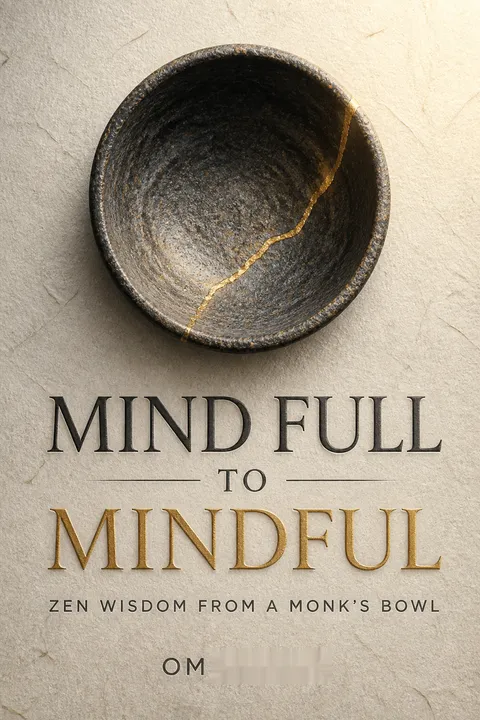
Mind Full to Mindful is a practical introduction to Zen built around one repeated move: notice what is happening before habit, comparison, or emotion takes over. Its storytelling gives abstract ideas handles. The lute represents balance, the flower makes impermanence visible, the tea ritual turns attention into an ordinary act, and the wounded swan makes compassion concrete. The book's method is deliberately modest. Instead of promising a dramatic new self, it asks readers to practice awareness while eating, walking, speaking, resting, and making choices.
Its distinctive strength is joining meditation to conduct. Sitting quietly is not presented as an escape from relationships or bodily needs. It is meant to make daily responses less automatic, while compassion, humility, discipline, and forgiveness translate inward attention into a way of treating others. The author also resists the assumption that more acquisition, expansion, or activity reliably produces fulfillment. His ideal is not passivity, but a less compulsive relationship with striving.
There are tensions worth keeping visible. The book describes thoughts and life as empty, yet also asks readers to care for bodies, choose responsibilities, and serve others. These ideas can coexist if emptiness means impermanence rather than worthlessness: events change, but their effects still matter. The book's strongest practical claims do not depend on accepting every metaphysical interpretation. A reader can experiment with single-task attention, breath awareness, or a written code without adopting a complete Buddhist philosophy.
The text is less reliable when it turns personal experience into broad health advice, especially around dairy and allergies. Its historical and spiritual stories are also often presented as teachings rather than independently established records. Read as a field guide rather than a medical or historical authority, the book offers a coherent discipline: attend closely, care for the body, question reactive thoughts, and choose a response consistent with the person one wants to be.
Review Summary
Mind Full to Mindful is highly praised for its accessible introduction to Zen philosophy and mindfulness practices. Readers appreciate Om Swami's simple yet profound writing style, practical exercises, and use of humor and stories to convey complex concepts. Many found the book transformative, helping them cultivate inner peace and awareness in everyday life. Some readers noted the book's emphasis on finding mindfulness in ordinary activities particularly valuable. While a few desired more in-depth exploration of Zen philosophy, most found it an excellent starting point for beginners and a refreshing perspective for experienced practitioners.
People Also Read









Glossary
Zazen
Seated Zen meditationZazen is the book's form of seated meditation. The practitioner sits comfortably upright, keeps the eyes open or partly open, and rests attention on breathing and present awareness rather than deliberately building concentration. The posture may be adapted to a chair when sitting cross-legged is uncomfortable.
Kinhin
Walking meditationKinhin is mindful walking. The practitioner moves slowly and attends to each step, including the movement of the feet and the shift of body weight. In the book, it extends meditation beyond sitting and helps make awareness part of ordinary movement.
Chado
Mindful tea ritualChado is the Zen tea ritual described in the book. It involves preparing and drinking tea attentively, noticing the aroma, taste, and physical sensations of each sip. Its purpose is to make a familiar activity a deliberate practice of gratitude and present-moment awareness.
Wall gazing
Steady visual meditationWall gazing is a concentration practice associated in the book with Bodhidharma. The meditator sits comfortably and rests the gaze on a wall, or sometimes a small object, without analyzing it. The author presents it as a way to quiet mental activity when open awareness alone feels difficult.
Osoji
Emotional and household clearingOsoji is a Japanese term the author translates as clean and free. The book adapts the idea of clearing unwanted household possessions into an emotional exercise: identify people and negative feelings that remain mentally present, write them down, reflect on releasing the burden, and discard the paper. The practice is presented as a personal ritual, not a substitute for safety or professional care.
Prajna Paramita
Transcendent wisdomPrajna Paramita is a central term in the Heart Sutra as discussed in the book. The author explains prajna as intuitive insight and paramita as perfection or transcendence. Together, the phrase refers to wisdom that sees experiences as impermanent and not fixed possessions of a permanent self.
five skandhas
Aggregates shaping self-experienceThe five skandhas, or aggregates, are the components the book names as contributing to a person's sense of being: bodily form, sensation, perception, mental formations or memory, and consciousness. In the Heart Sutra discussion, these are described as changing and lacking permanent, independent substance.
Four Virtues of a Zen Practitioner
Four ethical supportsThe book's four virtues are compassion, humility, discipline, and forgiveness. They translate meditation into conduct: treat others with care, avoid self-importance, carry out necessary commitments, and release resentment for the sake of inner freedom. The author presents them as practical supports for a mindful life, especially under pressure.
FAQ
What's "Mind Full to Mindful: Zen Wisdom From a Monk's Bowl" about?
- Zen Philosophy: The book explores Zen philosophy, focusing on achieving mindfulness and inner peace through simple, everyday practices.
- Practical Guidance: It provides practical guidance on how to incorporate Zen teachings into daily life, emphasizing the importance of living in the present moment.
- Personal Transformation: Om Swami shares insights on personal transformation, encouraging readers to let go of conditioning and embrace a state of natural awareness.
- Spiritual Journey: The book is a spiritual journey that combines ancient wisdom with modern-day applications, making it accessible to a wide audience.
Why should I read "Mind Full to Mindful: Zen Wisdom From a Monk's Bowl"?
- Achieve Inner Peace: The book offers tools and techniques to help readers achieve inner peace and reduce mental clutter.
- Practical Application: It provides practical advice that can be easily integrated into daily routines, making mindfulness achievable for everyone.
- Inspiring Stories: Om Swami shares inspiring stories and anecdotes that illustrate the power of Zen practices in transforming lives.
- Comprehensive Guide: It serves as a comprehensive guide to understanding and practicing Zen, suitable for both beginners and those familiar with Zen teachings.
What are the key takeaways of "Mind Full to Mindful: Zen Wisdom From a Monk's Bowl"?
- Mindfulness Practice: Emphasizes the importance of mindfulness in everyday activities, such as eating, walking, and breathing.
- Embrace Emptiness: Encourages readers to understand and embrace the concept of emptiness, recognizing the transient nature of thoughts and emotions.
- Core Virtues: Highlights the significance of core virtues like compassion, humility, discipline, and forgiveness in leading a fulfilling life.
- Zen Principles: Introduces key Zen principles such as sitting quietly, caring for the body, handling pain, and practicing non-violence.
How does Om Swami define "awakening" in the book?
- Realization of Extremes: Awakening is described as realizing the futility of living in extremes, whether in luxury or deprivation.
- Graceful Living: It involves living life with grace and gratitude, acknowledging suffering but responding with serenity.
- Mindful Awareness: Awakening is about achieving a state of mindful awareness, free from conditioning and judgment.
- Inner Calm: It is the ability to maintain inner calm and serenity regardless of life's challenges.
What are the "Four Forms of Zen Meditation" mentioned in the book?
- Zazen: The practice of sitting meditation, focusing on maintaining a natural state of awareness without concentrating on any specific object.
- Wall Gazing: A form of meditation where one gazes at a wall to still the mind and achieve deep concentration.
- Kinhin: Walking meditation that involves mindful walking, paying attention to each step and the shifting of body weight.
- Chado: The Zen tea ritual, which involves preparing and drinking tea with mindfulness and gratitude.
What is the "Zen Tea Ritual (Chado)" and its significance?
- Mindful Preparation: The ritual involves preparing tea with mindfulness, focusing on the aroma, taste, and the act of drinking.
- Gratitude Expression: It begins with expressing gratitude for the opportunity to enjoy a peaceful moment with a cup of tea.
- Present Moment Awareness: Drinking tea mindfully helps in being present in the moment, enhancing the experience of life.
- Sacred Ritual: Chado is considered a sacred ritual that brings calmness and joy, serving as a meditation practice.
How does the book explain the concept of "emptiness"?
- Transient Nature: Emptiness is described as the transient nature of all things, including thoughts, emotions, and physical forms.
- No Self-Existence: It emphasizes that nothing has a self-existence; everything is interconnected and impermanent.
- Freedom from Suffering: Understanding emptiness helps in freeing oneself from suffering by not clinging to transient experiences.
- Perspective Shift: Embracing emptiness leads to a shift in perspective, allowing one to live with less attachment and more peace.
What are the "Four Virtues of a Zen Practitioner" highlighted in the book?
- Compassion: The ability to empathize with others and respond with kindness, even in challenging situations.
- Humility: Maintaining a sense of humility, recognizing one's limitations and the interconnectedness of all beings.
- Discipline: Practicing self-discipline to maintain mindfulness and focus on personal growth and spiritual practices.
- Forgiveness: Letting go of grudges and forgiving others to achieve inner peace and emotional freedom.
What is the "First Zen Transmission" story about?
- Silent Wisdom: The story illustrates the transmission of wisdom without words, where Buddha simply holds a flower to convey a profound message.
- Understanding Emptiness: Mahakashyapa, a disciple, smiles in understanding, recognizing the essence of Zen in the simplicity of the flower.
- Symbolism of the Flower: The flower symbolizes the beauty and impermanence of life, a core teaching in Zen philosophy.
- Direct Experience: The story emphasizes the importance of direct experience and intuitive understanding over intellectual knowledge.
How does Om Swami suggest handling pain according to Zen principles?
- Acceptance: Accept pain as a natural part of life and learn to handle it with grace and mindfulness.
- Breathe and Relax: Use breathing techniques to relax into the pain and reduce self-centeredness around it.
- Decrease Complaining: Reduce complaining and focus on the present moment to alleviate the perception of pain.
- Expand Consciousness: Engage in activities that expand consciousness and help in seeing pain from a broader perspective.
What are some of the best quotes from "Mind Full to Mindful: Zen Wisdom From a Monk's Bowl" and their meanings?
- "I am awake." - This quote signifies the essence of Zen awakening, being fully present and aware in the moment.
- "Life is here. Now." - Emphasizes the importance of living in the present moment, without being burdened by past or future.
- "A single flower blooms, and throughout the world it is spring." - Symbolizes the interconnectedness and beauty of life, even in its simplicity.
- "Gone, gone, gone beyond, way beyond… There is no return…" - Reflects the journey of enlightenment, transcending beyond worldly attachments.
What is the "Zen Way" as described in the book?
- Sit Quietly: Practice sitting quietly to calm the mind and achieve a state of natural awareness.
- Care for Your Body: Emphasize the importance of physical health as a foundation for spiritual practice.
- Learn to Handle Pain: Accept and manage pain with mindfulness, reducing its impact on life.
- Practice Non-Violence: Cultivate non-violence in thoughts, words, and actions, fostering a peaceful existence.
About the Author
Other books by Om Swami








Download PDF
Download EPUB
.epub digital book format is ideal for reading ebooks on phones, tablets, and e-readers.








