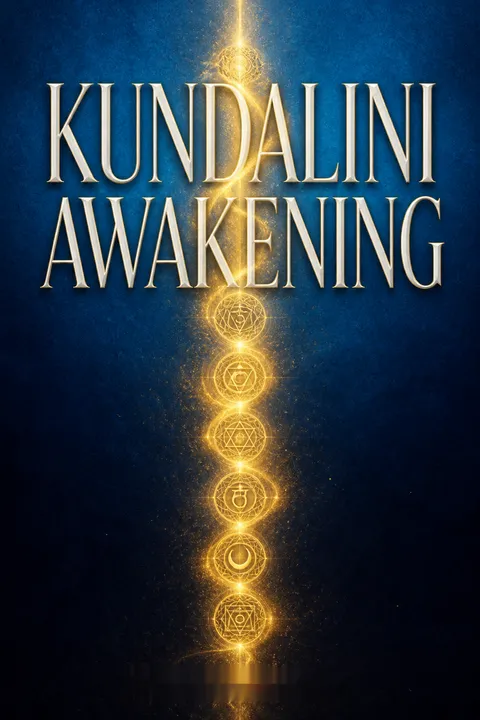


Key Takeaways
Practice kundalini as steady attention, not a contest for spiritual fireworks.
A startling first glimpse. In 1966, Selby stumbled upon a woman meditating at Princeton. Her calm presence and his unusual warmth in the chest stirred his curiosity. After meeting her teacher, he says he felt energy move through his body. He presents this as the beginning of his kundalini path, a personal experience rather than evidence that everyone will feel the same thing.
A practical interpretation. In the book's spiritual vocabulary, kundalini is latent life force that can be experienced through meditation. Selby argues that practice should develop awareness gradually, not chase a dramatic breakthrough. His aim is not to escape the body or ordinary life, but to feel more present, energized, and compassionate within them.
The opening story gives an abstract spiritual idea a human scale: a stranger's presence prompts curiosity, practice, and a search for meaning. Its strongest invitation is experiential. Readers can test whether attention changes their felt sense of the body without having to accept a metaphysical explanation first. That distinction matters because intensity is not proof of a universal energy system. A meaningful private experience can be real as experience while remaining open to different interpretations.
Begin with breathing, then widen attention until the whole body is present.
Use breath as an anchor. Selby's first exercise asks readers to notice air at the nostrils without changing its rhythm. Attention then broadens to movement in the chest and belly, the heartbeat or pulse, and the body's effort to stay balanced under gravity. He calls this a route into whole-body awareness, the foundation for the chakra exercises.
Notice contraction, too. The book treats fear as a common cause of narrowed awareness: a threatening scene may tighten breathing, while a peaceful one may loosen it. The point is not to control every reaction, but to notice habitual shifts and return attention to present sensations. Selby also notes that play, walking, dance, and singing can bring people into absorbed, vivid states without formal meditation.
This sequence resembles a basic attentional skill: moving from one sensation to a wider field while remaining grounded in immediate experience. In contemporary terms, it can be understood as interoceptive attention, awareness of internal bodily signals, without requiring belief in subtle energy. The useful test is practical: does noticing the breath create more room to respond, rather than simply intensifying self-monitoring? For some people, close attention to bodily sensations can feel uncomfortable, so a flexible, nonjudgmental approach is important.
Treat seven chakras as one living circuit, not seven separate destinations.
A map of human concerns. Selby describes seven centers along the body's central axis: the root relates to grounding and survival, the sexual center to creativity and desire, and the navel to will and action. The heart represents love, the throat expression, the brow intuition, and the crown spiritual unity. These are the book's spiritual meanings, not established anatomical structures.
Balance matters more than ascent. Selby resists treating the chakras as steps to climb and leave behind. He describes energy moving upward from the earth and downward from above, with the heart as their meeting point. In this view, a focus on one center affects the whole system. Readers are encouraged to attend to each center and then sense them together, rather than fixating on a single ideal state.
The chakra map works well as a vocabulary for noticing different dimensions of experience: security, desire, agency, care, expression, insight, and transcendence. Its integrative value may survive even for readers who view the centers as symbols rather than literal vortices. The map becomes less useful if its categories are treated as diagnoses or fixed personality types. Human motives overlap, and the same sensation can carry several meanings. The model is best used to prompt inquiry, not to replace it.
Keep the heart central, where grounded power meets spiritual insight.
Hold earth and heaven together. Selby recalls being torn between a yogic teacher who prized ascent beyond bodily concerns and a therapist who emphasized grounding in the body. Alan Watts offered a way to hold both views: each could be meaningful without forcing a choice between them. Selby carries this synthesis into his chakra practice, valuing both the lower centers of bodily life and the upper centers of thought and spirit.
Make love the pivot. The heart is the fourth center, midway between root and crown. Selby treats it as the place where survival, sexuality, and will can be integrated with intuition, communication, and spiritual aspiration. This is why his approach centers compassion rather than a dramatic push toward the crown. Spiritual development, in this account, should deepen participation in life, not disdain for earthly needs.
The heart-centered model offers a useful counterweight to spiritual systems that equate transcendence with leaving the body behind. It also avoids the opposite reduction, where groundedness means ignoring reflection or wonder. The book's most persuasive move is to make integration the aim rather than ranking one side as superior. Still, compassion needs more than inward feeling: in public life, it also requires judgment, boundaries, and effective action. A heart-centered ideal is strongest when it informs conduct.
Train attention through bodily focus, breath, sound, and visual images.
Four ways to focus. Selby's method combines awareness of bodily sensations and breath with attention to a chakra's location, vocal sounds, and visual forms. The sounds are mantras, repeated syllables used to focus attention. The images are yantras or mandalas, geometric designs associated with particular centers. Selby and artist Zachary Zelig use these methods together so that practice is not only conceptual.
Let each sense contribute. For visual meditation, Selby suggests noticing whether an image is still, then attending to its shapes, colors, and the space between the image and the viewer. A reader may use the book's chakra paintings or remember them with eyes closed. The sequence is not a test of visualization skill. Its purpose is to gather attention and make meditation an embodied activity rather than another chain of thoughts about spirituality.
The mix of breath, sound, bodily attention, and image gives practitioners several points of entry. This is a thoughtful design choice because concentration varies: one person may settle through humming, another through observing a picture or sensing the feet. The methods can also reinforce one another, making attention less dependent on a single technique. Their traditional symbolism deserves cultural care, however. A modern adaptation can be accessible without implying that distinct Hindu, Buddhist, and other practices are interchangeable.
Let sexual energy nourish awareness instead of chasing a temporary rush.
Treat desire as part of practice. Selby connects the root and sexual centers, presenting bodily and sexual vitality as potential sources of energy for the rest of the system. He recommends solitary meditation as the foundation, rather than using erotic fantasy to provoke a strong sensation. He also argues that ejaculation is not a prerequisite to spiritual progress and advises moderation rather than rigid sexual rules.
Keep the aim wider than sex. In his account, desire can be noticed, steadied, and allowed to inform affection, creativity, and attention beyond the genitals. The book's discussion often relies on traditional claims about masculine and feminine energies, and it generalizes about differences between men and women. Those claims should be read as the author's framework, not as requirements for practice or reliable descriptions of every person's experience.
The useful contribution is its refusal to split sexuality from contemplative life or treat desire as automatically shameful. It also warns against confusing stimulation with sustained awareness. The gendered account is a clear limitation: describing intuition or emotional capacity as inherently feminine can turn cultural expectations into spiritual rules. A more inclusive reading keeps the central point, bodily desire can be observed and integrated, while letting individuals define their own experience without prescribed gender roles.
Progress gradually, and resist breathwork or practices that push toward extremes.
Avoid the spiritual sprint. Selby warns that sudden, overwhelming experiences can be frightening and disruptive, especially when someone feels unprepared. He recounts his own unexpected surges of energy and describes clients who experienced severe distress. His alternative is a gradual practice that returns attention to the whole body and keeps the heart central, rather than trying to force a permanent altered state.
Use balancing methods. The book includes energizing exercises such as the Breath of Fire and breath retention, alongside calmer breathing patterns intended to settle attention. Selby's broader instruction is to keep effort moderate, adapt practice to personal capacity, and stop treating intensity as success. His promise that the program avoids danger is stronger than any manual can establish; the practical principle is caution, not a guarantee of safety.
This emphasis on pacing is one of the book's most responsible instincts. It recognizes that contemplative intensity is not automatically beneficial and that a person's stability matters. At the same time, the text offers forceful breathing and retention exercises while claiming a safe approach, a tension readers should notice. The sensible lesson is not to self-diagnose spiritual energy or push through distress. Strong discomfort is a reason to pause and seek appropriate support, not evidence of progress.
Use seven deliberate breaths to carry meditation into an ordinary day.
Make the sequence portable. Selby's Seven-Breath Meditation condenses the chakra practice into a short routine, with one breath devoted to each center. Each breath combines a shift of attention with the center's mantra; the sequence moves from grounding and bodily vitality toward the heart, insight, and the crown. The full version can also include visualization. Selby presents it as a brief practice for moments when a long session is unrealistic.
Keep a longer practice too. He recommends regular quiet sessions, often around 20 to 60 minutes, while also suggesting short pauses during daily activities. The brief routine is meant to make awareness available at work, while walking, or during a wait, not to turn every moment into a performance. Repetition is supposed to make the sequence familiar enough to use without consulting the book.
The short routine translates a sprawling spiritual system into a memorable unit, which is a genuine strength of the book's practical design. A brief ritual can serve as a reset between activities, especially when each step points attention toward a concrete bodily location. Its value depends less on completing a perfect sequence than on whether the pause improves presence. Readers should avoid turning the hourly suggestion into another obligation that produces guilt instead of attention.
Measure awakening by compassion expressed in daily life, not private bliss.
The inner teacher matters. After losing access to his first meditation teacher, Selby felt cut off from spiritual progress. Alan Watts challenged that dependence, encouraging him to look for guidance within. Selby does not reject outside help: he sees books, teachers, and fellow practitioners as useful prompts, while insisting that personal discernment remains central.
Bring insight back to people. The book's end point is not an isolated peak experience. Selby urges readers to carry whatever clarity meditation brings into relationships and ordinary responsibilities. He recommends meeting with a supportive meditation group, sharing experiences, and practicing together. In this account, awakening matters because it changes how a person lives among others. Bliss may be welcome, but compassion in action is the more grounded measure of the path.
This emphasis keeps spiritual practice accountable to ordinary relationships. An experience that feels profound but leaves conduct unchanged may still matter privately, yet it cannot by itself demonstrate greater care or wisdom. The inner-teacher idea also usefully balances authority with autonomy, though it should not be taken to mean that all outside guidance is unnecessary. Communities can offer perspective and safety when private interpretations become rigid or overwhelming. The best version of self-trust remains open to correction.
Analysis
Selby's book is a hybrid of spiritual memoir, meditation manual, and interpretive map of the body. Its narrative begins with an encounter that feels like evidence to the author: a meditating woman appears peaceful, and his own body responds. He uses that story to invite readers into practice before requiring doctrinal commitment. This is the book's most effective rhetorical choice. It makes a subtle tradition approachable through ordinary acts of attention, breathing, vocalizing, and looking.
The central framework is integrative rather than ascetic. Energy is imagined as rising from the earth and descending from above, with the heart mediating between bodily life and spiritual aspiration. The model's practical consequence is clear: do not treat survival, sex, will, love, communication, intuition, and transcendence as competing departments. Attend to the whole person. The short Seven-Breath Meditation is the clearest expression of this practical ambition, translating a long sequence into a portable daily ritual.
The book's explanatory confidence exceeds its evidence. It presents chakras as energetic realities linked to nerve centers and glands, and sometimes borrows the language of physics to support claims about cosmic energy. Contemporary science does not establish chakras as measurable energy vortices or validate the proposed glandular correspondences. Breath awareness and humming may still shape subjective attention and bodily state, but those effects do not prove the metaphysical account. The most careful reading treats chakras as a spiritual or phenomenological map, not a substitute for anatomy or medicine.
The work also compresses diverse traditions into a modern Western program and occasionally relies on gendered generalizations. Its openness to cultural adaptation is valuable, but adaptation should not erase differences among traditions or turn symbolic claims into universal facts. Read with those limits in view, the book offers a distinctive practice ethic: keep experience gradual, balance rather than conquer, and judge spiritual development partly by how it supports life with other people.
Review Summary
Readers find Kundalini awakening useful for meditation and personal growth. Some praise its methodical approach to chakra meditations, pranayama, and mantras, while others appreciate the breathing and visualization exercises. The book receives high marks for its potential to radically change one's life through spiritual growth. However, some readers find certain sections long-winded, particularly when connecting energy centers to physics. Overall, the book is well-received, with an average rating of 4.02 out of 5 based on 122 reviews.
People Also Read


Glossary
Kundalini
Latent spiritual life forceIn the traditions Selby draws on, kundalini is a latent life force associated with the base of the spine. Meditation is said to awaken and guide this force through the body's chakras. Selby interprets the process as a route to expanded awareness and spiritual communion, while emphasizing gradual practice integrated with ordinary life.
Chakra
Subtle energy centerA chakra is one of seven centers in the book's spiritual map of the body, arranged from the base of the spine to the crown of the head. Each is associated with qualities such as survival, desire, will, love, communication, intuition, or spiritual unity. Selby treats them as interdependent parts of one system.
Prana
Life-sustaining subtle energyPrana is a Sanskrit term used for vital energy associated with breath and life. Selby uses it experientially, inviting readers to attend to breathing as a source of vitality. He also links prana to oxygen and physical energy, but these are interpretive comparisons, not scientific proof that prana is a measurable substance.
Mantra
Repeated meditative soundA mantra is a sound or syllable repeated silently or aloud to focus attention and support meditation. Selby's program assigns different seed sounds to different chakras, including LAM for the root and OM for the brow center. He presents chanting as both a concentration practice and a felt bodily vibration.
Yantra
Meditative geometric imageA yantra is a symbolic visual design used to focus attention during meditation. In this book, artist Zachary Zelig's chakra images use shapes and colors associated with particular energy centers. Selby suggests attending to stillness, shape, color, and surrounding space, then using the image to support inward concentration.
Ida and Pingala
Paired subtle energy channelsIda and Pingala are described in the book as two channels carrying complementary, traditionally feminine and masculine, currents of kundalini energy along the spine. Selby says they intertwine through the lower centers and merge at the brow center. This is a traditional spiritual model, not a pair of anatomical structures established by modern science.
Kumbhaka
Breath-retention practiceKumbhaka is a pranayama technique involving pauses after inhalation or exhalation. Selby presents several timed patterns, describing them as ways to energize, balance, or calm attention across the chakra system. Because the exercises involve deliberate breath retention, his advice to proceed gradually is important; the book's claims of safety are not guarantees.
Breath of Fire
Rapid energizing breath exerciseThe Breath of Fire is a rapid breathing exercise in Selby's program, driven by forceful abdominal exhalations followed by quick inhalations. He associates it with activating the navel or power center and advises increasing practice cautiously. It is presented as one technique among several, not as a necessary or universally appropriate exercise.
Seven-Breath Meditation
Brief seven-center practiceThe Seven-Breath Meditation is Selby's compact routine for moving attention through all seven chakras in a short session. Each breath is paired with a shift of focus and, in the fuller version, a center-specific mantra or image. It is designed to make the book's longer meditation program usable amid ordinary daily activities.
About the Author


Download PDF
Download EPUB
.epub digital book format is ideal for reading ebooks on phones, tablets, and e-readers.








