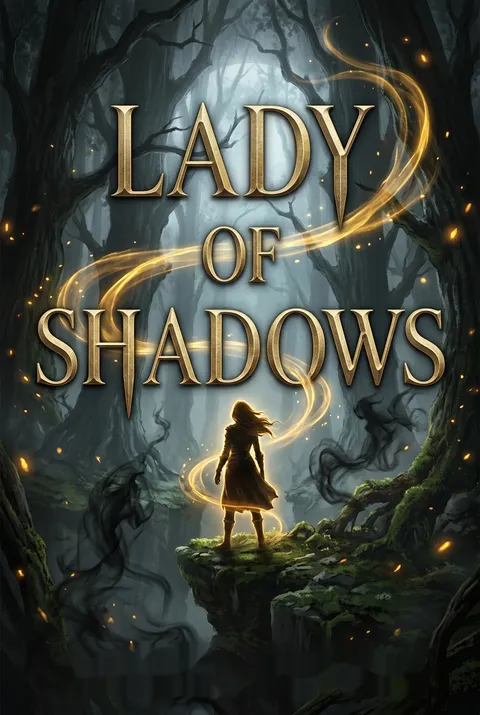


Plot Summary
Atara Vanishes Before Dawn
Before dawn, Caelia kneads bread in her father's manor, grateful for kitchen work that lets her escape the corseted duties of a lord's daughter. Lord Daydon insists she return to respectable clothes, while village gossip circles a secret they are both guarding.
Joy, their servant, asks him to hear her claim that Harben, a tavernkeeper, owes her family for a goat. Before the dispute can be settled, shouts announce that Atara, Caelia's closest friend, has vanished into the Forbidden Forest.
Her father refuses to let grieving townspeople enter the trees, where girls disappear and none return. When Atara's father urges pursuit, Daydon instead orders a sacrificial offering for that evening. Mal and other young men challenge him, but he threatens them with punishment.
The opening binds private shame to public authority. Caelia's plain clothes and desire to work mark a small bid for self-direction, while her father's command reminds her that even ordinary choices are governed by rank. Atara's disappearance then exposes the cost of Hamel's accepted order: its leaders can name the danger but answer it with ritual instead of rescue. Joy's debt claim briefly introduces a competing model of justice, one grounded in obligations between neighbors. Caelia's distress is therefore not only grief for a friend. It is the first pressure against a community whose rules preserve appearances more readily than lives.
Lanterns Against the Forest
At twilight, the village carries lanterns to the river for Atara. The druid Rimoth praises a gentleness Caelia never recognized in her loud, irreverent friend, who had once urged them to leave Hamel for Cordova and begin again. Caelia sends her lantern downstream beside the others, then watches Rimoth kill the spring goat Bane raised and leave its body at the forest edge.
The townspeople drink and dance after the offering, treating the ritual as both mourning and payment. Bane admits that other children call Caelia a murderer, and his promise to defend her makes her feel the cost her hidden past has placed on him. Across the fire, Mal courts a farmer's daughter. Caelia abandons the celebration and slips into the dark.
The lanterns turn grief into something the village can perform together, but the sacrifice reveals the harder bargain beneath that ceremony: Hamel tries to purchase safety with another creature's life. Caelia cannot share the crowd's relief because she sees how easily remembrance becomes a reason to resume drinking. Bane's loyalty offers a quieter counterweight. He recognizes that public accusation is harming his sister and chooses protection, even though he is young and vulnerable to the same social pressure. Mal's attention to someone else sharpens Caelia's isolation, but it also propels her away from the communal fire and toward the truths she has kept buried.
Joy's Last Debt
Mal follows Caelia into an orchard, where she rejects his attempt to resume their closeness and remembers that he stayed away during her two-month fever. She leaves him and reaches the willow where her infant son is buried, confronting the wish she once wrote on a Curse Tree ribbon: that the child would be taken.
Nearby, Harben shoves Joy during an argument over the goat debt. Caelia cradles Joy, but the woman dies from the fall. Harben threatens Caelia and her family to keep her silent, then attacks when she runs for help.
Trapped between him, the river, and the forest, Caelia chooses the trees over Harben. The forest's stirring assaults her with shifting, monstrous faces; she survives its attack, but emerges deeper inside, injured and lost.
Three forms of vulnerability converge here: Caelia's abandoned love, the concealed memory of her child, and Joy's exposure to a violent debtor. The grave makes the town's rumor tangible for Caelia, but Harben's threat turns silence from a habit of shame into immediate coercion. Her choice to enter the forest is not a sudden embrace of danger; it is the only remaining route away from a man who intends to control what she can say and whether she can live. The stirring externalizes that passage with bodily terror. Survival begins when Caelia acts without waiting for the town's permission.
The Forest's False Beast
After the stirring stops, Caelia follows an uncanny melody, loses her footing, and falls into a hot pool filled with huge, lizardlike gilgads. One bites her leg as she climbs the eroded bank, and venom begins to numb her body. Gendrin, a traveling enchanter, hears her cries and lowers himself over the drop to pull her to safety.
When the gilgads find another route upward, he plays a harsh tune that drives them back. Caelia learns that these creatures are not the beast that takes Hamel's girls. Gendrin carries her away before the real predator can follow the sound of her screams. Her rescue leaves her alive, but paralyzed, poisoned, and dependent on a stranger whose music can affect what she feels.
The rescue overturns Caelia's inherited map of danger. The creatures are terrifying, yet they are not the source of the village's disappearances; knowing the difference matters because fear has made every threat in the forest seem like one undivided monster. Gendrin's physical risk and music give Caelia a reason to trust him, but his power also complicates that trust. He can change her emotional state, while she cannot even move her limbs. The scene sets the relationship's central ethical question early: care can steady a person, but it must not replace her capacity to choose.
Music in the Canopy
Gendrin gives Caelia an antidote, then uses a rope to lift her into a hammock-like pod high in a tree, where the gilgads cannot reach them. Unable to move or defend herself, she resents how completely she must rely on him. Gendrin explains that he heard her in time to run for help, then shares his blanket and plays a softer melody.
The tune eases Caelia into sleep with the remembered comfort of her mother and the child she lost. By morning, some movement has returned. Gendrin tells her that the men of his homeland have magic and women do not, though he cannot explain why. He cleans her wound and feeds her, while Caelia begins to understand that his music is both a tool and a power she has reason to question.
The tree pod makes dependence literal: Caelia is suspended above danger and cannot act without Gendrin's hands. Yet the scene does not reduce care to rescue. His antidote and wound care address her body, while music gives temporary shape to memories she has been unable to approach directly. Its comfort is ambivalent, since the same enchantment can influence emotion without ordinary consent. The revelation that magic belongs to men in Gendrin's homeland echoes the gendered limits Caelia knows in Hamel, but his sadness suggests he does not regard that arrangement as harmless. The quiet night establishes both closeness and caution.
A Grief Shared
As Gendrin treats her leg, Caelia asks to leave Hamel behind and travel with him to the Alamant, the extraordinary place he says lies beyond the forest. He warns that its law will prevent her from returning.
She explains that her infant son was born too early to live, that she once wished him gone, and that Hamel's judgment has left her with nowhere she wants to go. At her request, Gendrin uses his music to reveal the birth memory. He then tells her that he froze during a beast attack and allowed another companion to bear blame for a friend's death.
His guilt sent him away from home; now he is going back. When he asks what her son was called, Caelia cannot answer, because she never named him. Gendrin urges her to give the child a name, and she agrees to travel with him.
The exchange changes disclosure from confession to reciprocal recognition. Caelia names the shame she has carried without excusing the wish that preceded her loss; Gendrin answers with his own failure, not with judgment or easy reassurance. His song initially opens her memory, but the decision to leave remains hers. Naming the child becomes a small act of repair: Caelia cannot undo the silence around his birth, yet she can refuse to keep him unnamed. The Alamant offers escape, but its irreversible law gives that escape a cost. Her choice is therefore neither simple freedom nor flight without consequence.
Shelter Above the Storm
Traveling deeper into the forest, Gendrin teaches Caelia to distinguish birds, edible plants, and danger by sound, helping her move with less fear. A storm catches them before nightfall, so he raises his pod high in a tree, beyond the beasts' reach. The cramped shelter and cold force them to share warmth; Caelia realizes her embrace has become more than practical comfort, then pulls back, wary after Mal's betrayal.
Gendrin accepts the boundary instead of pressing her. Later, she asks how a beast can be killed. He explains that it takes a team and that, as far as he knows, no woman has done it. When Caelia wakes under gray clouds, she mistakes the hour for safe morning, leaves the tree, and encounters a presence before sunrise.
The storm shifts the pair from emergency dependence toward negotiated intimacy. Caelia's attraction does not cancel her caution, and Gendrin's willingness to stop matters more than the closeness itself: trust is built through restraint, not merely through heroic protection. His account of beast hunting also defines the limits imposed on her by received knowledge. No woman has succeeded, but that claim is presented as the edge of his experience, not as a law of nature. Caelia's mistaken descent before sunrise converts a domestic need into renewed danger, showing how thin the boundary is between shelter and exposure.
The Wraith Breaks
A wraith rises from the shadows and attacks Caelia, who has left the tree before sunrise. Gendrin charges between them, but the creature's sword breaks his shield and disarms him. Caelia refuses to watch another person die while she hides. She takes Gendrin's sword and knife, draws the wraith's attention, and stabs it from behind.
Its shadowy blood weakens her, but Gendrin keeps fighting and drives the knife into its body. As Caelia regains enough strength to move, she retrieves the sword and thrusts it through the wraith. It collapses into ash. The victory leaves Gendrin injured and Caelia poisoned by contact with the creature, but ends the immediate pursuit that has haunted Hamel's missing girls.
Caelia's decisive change is not fearlessness. She still feels fear and physical weakness, but no longer treats those feelings as commands to disappear. The fight also literalizes the teamwork Gendrin described: his defense creates an opening, her attack exposes the wraith, and both remain necessary to finish it. The wraith's shadow enters the hollow Caelia associates with bereavement, making the danger intimate rather than merely spectacular. Yet she keeps acting through its assault. Her victory answers the earlier promise to avenge Atara while revising its meaning: courage is not solitary mastery, but choosing to participate despite injury and dependence.
Beyond the White Gate
After the fight, Gendrin carries Caelia onward as the gilgad wound swells and fever takes hold. She drifts in and out of awareness, grieving for her son as he pushes toward the Alamant.
At last, they cross into a city built among enormous trees, where luminous branches and vividly colored water confirm that Gendrin's impossible description was real. He takes her to healers, and she sleeps for days while her fever fades. When she wakes, Gendrin is beside her.
Looking out at the great opalescent tree, Caelia finally gives her son a name: Dayne, honoring her father and brother. She then initiates a kiss. Gendrin hesitates because she is recovering, but she makes clear that the choice is hers; he accepts her closeness, and they face the unfamiliar city together.
The arrival answers the story's recurring tension between escape and belonging. The Alamant is not merely a fantasy that distracts Caelia from grief; its existence gives her a future in which grief can be carried openly. Naming Dayne beside the luminous tree links remembrance to continued life, rather than treating healing as forgetting. The final kiss makes agency physical: Caelia initiates it, and Gendrin's hesitation reflects concern about taking advantage of her vulnerability. Their intimacy is not a cure for loss, nor a promise that danger has ended. It is a choice made after Caelia has regained the ability to choose.
Analysis
Lady of Shadows makes social shame and supernatural danger echo one another without confusing their causes. The forest is genuinely lethal, but Hamel's customs do not protect its girls; sacrifice, rumor, and enforced silence chiefly preserve the village's existing order. Caelia's hidden grief is sharpened by the fact that her community treats an unwed mother's pain as evidence against her, while Harben's violence shows how readily male authority can claim the right to control both household and witness.
The novel's recurring hollowness gives this pressure a bodily shape. Caelia experiences loss as an emptiness that others cannot see, and the wraith's shadows make that absence feel invasive. Yet healing does not arrive as a simple erasure. Gendrin's music permits memory to surface, but its emotional power demands restraint; his care matters because he recognizes that comfort without consent can become another form of control. Their shared grief creates trust, not instant rescue from sorrow.
Caelia's agency develops through concrete acts: she leaves the fire, flees Harben, accepts help without surrendering judgment, chooses the Alamant despite its irreversible law, and joins Gendrin against the wraith. Her courage is relational rather than solitary. At the end, naming Dayne restores a place for the child in her life, while choosing intimacy with Gendrin signals a future not founded on pretending the past never happened. The story's answer to silence is neither public vindication nor forgetting. It is the difficult work of telling the truth, accepting support, and deciding what to carry forward.
Review Summary
Lady of Shadows is a prequel novella to the Forbidden Forest series, focusing on Caelia's backstory. Reviews praise its engaging narrative, world-building, and character development, though some find it too short. Readers appreciate the insight into Caelia and Gendrin's relationship, as well as the fairy-tale atmosphere. Most recommend reading it after the main series for better context. The novella is described as a page-turner with magic, intrigue, and romance, leaving many readers eager to explore the full series.
Characters
Caelia
Grieving lord's daughterCaelia is Lord Daydon's daughter, raised to manage a household and represent her family, but she finds steadier comfort in breadmaking, gardening, and work that answers to her hands. The village's gossip has taught her to hide pain and anticipate judgment before it arrives. Her attachment to Atara and her protectiveness toward her younger brother, Bane, reveal how deeply she values chosen loyalty. Caelia is not naturally fearless; she often freezes, doubts herself, and recoils from dependence. What distinguishes her is her ability to act while afraid, especially when another person's safety is at stake. Her story asks whether a person shaped by shame can recover agency without pretending the past did not happen.
Gendrin
Enchanter on the runGendrin is a capable traveler and enchanter whose pipes can alter emotion and drive dangerous creatures away. His training makes him decisive in a crisis, but he carries private guilt and avoids explaining the homeland he left. He protects Caelia without treating her as simply helpless, offering practical care while asking before using music to affect her feelings. His reserve can make him difficult to read; his actions, particularly his willingness to place himself between danger and another person, reveal a strong sense of responsibility. Gendrin's central tension is between fleeing the consequences of an old failure and choosing to face home again. He offers Caelia safety, but not an easy answer to the grief they share.
Lord Daydon
Caelia's guarded fatherLord Daydon governs Hamel and tries to protect his children through caution, authority, and careful management of scandal. He expects Caelia to perform the duties of a noble daughter, even when she longs for work that feels useful and unconfined. His response to the forest threat reflects a ruler who believes containment is safer than defiance. He cares for Caelia, but the secret they share has narrowed the ways he knows how to show it. His relationship with her holds both tenderness and distance, shaped by a wish to shield his family from a community that punishes women through rumor.
Bane
Caelia's loyal brotherBane is Caelia's younger brother, still caught between boyhood and the adult role his family expects him to inherit. He is energetic, stubborn about small indignities, and openly affectionate when grief breaks through his embarrassment. His defense of Caelia shows a moral courage that is less polished than his father's authority but often more direct. He also forms attachments to animals and friends, which makes the village's rituals and cruelties especially difficult for him. Bane's loyalty gives Caelia a powerful reason to worry about what her choices may cost the people she loves.
Atara
Caelia's fearless friendAtara is Caelia's closest friend, a blunt, lively young woman whose humor and refusal to behave demurely make her an easy target for Hamel's judgment. She sees the town's narrowness clearly and encourages Caelia to imagine a life beyond it. Rather than offering comfort through politeness, Atara asks difficult questions and treats escape as a practical possibility. Her friendship gives Caelia a rare experience of being understood without first being approved. Atara's directness and appetite for a wider life continue to shape Caelia's sense of what she might deserve.
Joy
Household's steady heartJoy serves the Daydon household, where her cooking, practical wisdom, and warmth have helped Caelia endure the death of her mother. She treats work as a source of dignity rather than a marker of rank, and she is willing to challenge Lord Daydon when compassion requires it. Joy's relationship with Caelia is maternal without being possessive: she offers guidance, makes space for competence, and sees the pain behind formal manners. Her claim for payment from Harben reflects a belief that ordinary promises matter, even in a village accustomed to treating the vulnerable as expendable.
Mal
Caelia's unreliable suitorMal is a handsome young man whose confidence and charm once drew Caelia close. He wants to prove himself through bold gestures, especially when the town's fear frustrates him, but his attention can be more self-directed than caring. His reaction to Caelia's illness and his changing attachments leave her questioning what their relationship meant. Mal represents the difference between being desired and being genuinely supported. He matters less as a romantic rival than as an early lesson in how easily charisma can resemble commitment.
Harben
Threat behind the debtHarben runs the village tavern and owes Joy's family for a goat, but he resists the obligation with the entitlement of a man accustomed to making others absorb his failures. He drinks heavily and lashes out when challenged, especially when his authority over his household is questioned. His claims of powerful ancestry suggest a grandiose self-image poorly matched to the consequences of his behavior. Harben's conflict with Joy shows how debts become dangerous when a man treats accountability as an insult and assumes that fear can silence anyone who witnesses his actions.
Rimoth
Forest's village mediatorRimoth is Hamel's druid, the official intermediary between the villagers and the Forbidden Forest. He oversees rituals meant to placate the forest and speaks with the authority of someone who interprets its danger for the town. His formal ceremonies give frightened people a way to act together, but his certainty also helps keep them within familiar boundaries. Rimoth's role is less that of a conventional villain than that of a custodian of the village's fearful traditions, including the belief that sacrifice is safer than investigation.
Maisy
Rimoth's silent daughterMaisy is Rimoth's pale, quiet daughter, known in Hamel for unsettling behavior and ominous predictions. She rarely explains herself in ordinary terms, which makes the villagers dismiss her as strange rather than consider what she may perceive. Her presence ties the druid's household to the forest's mysteries and gives the town's folklore a human, uneasy face.
Kenjin
Atara's grieving fatherKenjin is Atara's father, a man whose grief makes the village's cautious response intolerable. He presses Lord Daydon to pursue the missing girls and speaks from the urgency of a parent rather than the measured distance of an official. His anger exposes how little the established ritual can offer a family facing loss.
Pennice
Trusted village healerPennice is a village woman who helped care for Caelia during a severe illness and is trusted in matters of bodily suffering. Her practical competence contrasts with Hamel's appetite for rumor: she responds to need through attentive work. Caelia remembers her as one of the few people who remained present when illness left her unable to care for herself.
Plot Devices
The Curse Tree
Curses disguise wishesHamel's villagers tie ribbons to a tree at the forest's edge, writing apparent curses that are meant as blessings. The practice allows people to express fear and desire through an accepted ritual, while disguising the words they truly mean. Caelia's ribbon carries a private wish connected to her hidden past, making the tree both a communal custom and a record of her self-condemnation. The ribbons help establish how the village handles danger indirectly: it gives the forest symbolic offerings instead of seeking knowledge or confronting the people who cause harm.
The Stirring
Forest turns fear physicalThe stirring is the Forbidden Forest's hostile force, which attacks intruders through disorientation, shifting shapes, and sensations that seem to tear at the body. Hamel's inhabitants treat it as proof that entry is fatal, and Caelia encounters it while escaping Harben. Its assault makes crossing the forest a physical trial rather than a simple journey through dangerous woods. Surviving it also reveals that the forest's apparent boundaries do not make every threat identical: Caelia emerges from the stirring only to meet another danger beyond it.
Gendrin's Pipes
Music alters emotionGendrin's pipes give his music magical force. A harsh tune can drive creatures back, while gentler melodies can soothe fear and carry a listener into vivid memories. This power helps him rescue and protect Caelia, but it also raises questions about consent because he can influence feelings she cannot simply command. Gendrin's restraint and willingness to ask before using the music matter as much as its usefulness. The pipes connect practical survival with emotional intimacy, allowing Caelia and Gendrin to approach grief while keeping the power imbalance between them visible.
Gilgad Venom
Bite creates urgent dependenceGilgads are large, lizardlike creatures with dangerous teeth and venom that numbs Caelia's body after one grazes her leg. Their attack makes her physically helpless and requires Gendrin to provide an antidote, carry her, and tend the wound. The venom establishes that surviving the forest involves more than avoiding its famous predator. It also sets up the fever and worsening injury that threaten Caelia after the later confrontation. Their presence is important precisely because they are not the beast Hamel fears, forcing Caelia to distinguish between several kinds of danger.
The Wraith
Shadow makes grief attackThe wraith is the shadow-cloaked predator associated with the girls taken from Hamel. It carries a sword, moves through the forest with lethal force, and can infect Caelia with shadow and sickness when she comes into contact with it. Its presence gives the village's fear a concrete source, but killing it requires Caelia and Gendrin to fight together. The wraith's shadows also echo Caelia's remembered grief, turning the external battle into a direct confrontation with the pain she has tried to bury.

Download PDF
Download EPUB
.epub digital book format is ideal for reading ebooks on phones, tablets, and e-readers.








