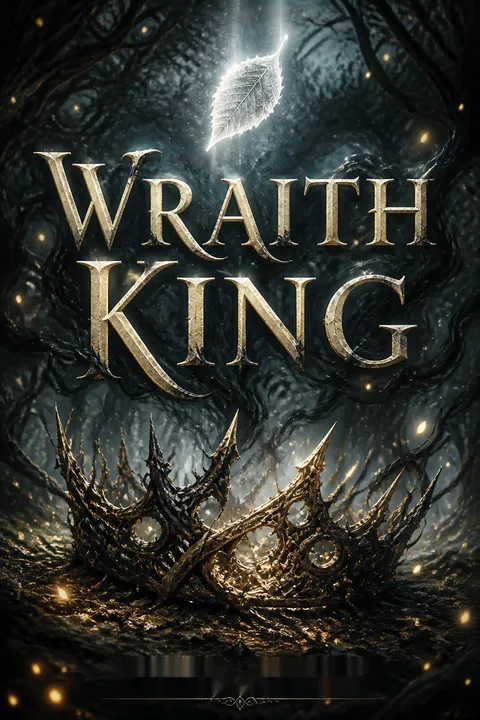


Plot Summary
A Crown Beside the Font
Larkin, once a poor Idelmarchian girl and now Denan’s wife, prepares for an embedding ceremony where the White Tree will grant magic to three hundred visiting druids. Her grandmother Iniya wants the ceremony to restore her own claim to the Idelmarchian throne; Larkin wants the pipers and druids to cooperate against the wraiths.
King Netrish publicly challenges Denan’s succession and blames Larkin for past deaths, but Denan defends her and keeps the ceremony on course. Larkin’s friend Alorica helps her steady herself as the Black Druids approach, including Garrot, the man who once imprisoned and betrayed her. Then a golden leaf falls from the White Tree. The tree has never shed one before, and Larkin recognizes that the source of their magic is failing.
The opening binds private insecurity to public danger. Larkin’s difficulty inhabiting the title of princess is not merely self-doubt: the court’s contempt, Iniya’s political bargain, and Netrish’s accusation all make her authority conditional. The dying leaf quietly changes the stakes from ceremonial diplomacy to survival. Denan’s defense offers Larkin emotional shelter, but his appeal to necessity also recalls the coercive logic that shaped their marriage. Her challenge is to exercise power without repeating the justifications that once deprived her of choice.
The King Falls
When Garrot reaches the font, the White Tree refuses him magic, sensing darkness in him that has not yet won. Before the druids can react, an unseen assassin shoots King Netrish twice.
Larkin nearly kills Garrot, but her five-year-old sister Sela raises ancient protective magic that prevents either side from hurting the other. Netrish dies in his family’s arms, and Denan becomes king. Away from the crowd, Sela shows Larkin and Denan that a White Tree branch has died because the old enchantments consume more magic than the tree can replace.
It may last less than a year, and the barrier protecting the Alamant will fail with it. Sela says Larkin must learn to repair that barrier, while Denan concludes they must destroy the Black Tree in Valynthia.
The attack makes uncertainty politically explosive: Larkin’s suspicion of Garrot is understandable, but Sela’s reading of his intent prevents grief from becoming immediate civil war. Sela’s power also carries a cost, so the apparent solution to violence is not free. Denan inherits the crown at the moment the kingdom’s central protection begins to die. His new authority therefore offers little security; it makes him responsible for a deadline he cannot command away.
Blood Inside the Hometree
As guards lock down the royal hometree, butler Unger attacks Alorica and wounds her badly. Larkin breaks his neck before he can strike again, then sees black blood spilling from his mouth.
Unger had blended into their household for months, and he claims that he and others are connected to Larkin’s ancestor, the Curse Queen. Before the family can understand him, another infiltrator attacks Sela in their mother’s room. Sela destroys the attacker with a blast of ancient magic, then shields her family until Denan arrives.
The violence leaves Sela feverish and distant, while Alorica’s wound causes her to lose the baby she had not yet told Tam about. Alorica survives, but Larkin realizes that the enemy can hide among the people she trusts and is targeting her family.
Unger’s familiar domestic role turns safety itself into a trap. Larkin’s response is decisive, yet killing a servant who had cared for her family leaves her with guilt rather than triumph. Sela’s power saves lives while making her seem less like the sister Larkin remembers, and the attack exposes how protection can demand an unbearable price from a child. Alorica’s loss further prevents the episode from becoming a clean victory: the household survives, but its injuries are intimate, concealed, and not undone by magic.
The City Under Test
Denan orders blood tests across the Alamant after learning that black-blooded infiltrators can pass as ordinary people. At Copperbill Island, an assassin kills Varcie, one of General Aaryn’s best enchantress commanders, before Varcie manages to kill him in return.
The search uncovers more hidden ardents, so Denan and Larkin must secure the druids’ cooperation before granting them magic. In the middle of this emergency, Larkin visits the dying Iniya. Denan refuses to promise the old woman a throne, but sends her a letter formally granting the title before she dies.
Larkin also speaks gently with her father Harben, acknowledging his effort to change without excusing his past abuse. She offers to begin their relationship again through letters, choosing a cautious opening rather than either easy forgiveness or permanent hatred.
The investigation asks the community to treat trust as something verifiable, yet every test also risks turning neighbors into suspects. Varcie’s death shows that the infiltrators can reach leadership before the new safeguards take hold. Against that public crisis, Larkin’s encounters with Iniya and Harben become a smaller test of judgment: she can recognize suffering without granting it unlimited power over others. Her response to her father is measured rather than sentimental, suggesting a form of reconciliation that leaves responsibility intact.
Nesha Behind the Door
With Denan sick and the druids still untested, Larkin follows a young page to the room where her older sister Nesha has been kept. Nesha is caring for baby Soren, whose father is Larkin’s dead first love, Bane.
Larkin offers to take her sister and the baby home, but Nesha initially refuses: she loves Garrot and believes he has been kind to her. The choice changes when she learns Garrot concealed their mother’s letters and made her think her family had abandoned her.
Garrot arrives before Nesha can leave, and Caelia, Bane’s sister, knocks him unconscious rather than kill him. Larkin gets Nesha and Soren out without starting a battle, then gives Garrot’s men a chance to keep the peace. Nesha returns to a family she has missed, though she remains torn about Garrot.
Nesha’s decision resists the tidy logic of rescue: she is not simply waiting to be liberated, because attachment and deception have become entangled. Larkin has to protect her sister’s agency even when she distrusts the choice Nesha makes. Garrot’s concealment of the letters is a concrete violation that clarifies the difference between affection and control. Caelia’s restraint matters too. She has reason to hate Garrot, yet she chooses incapacitation over revenge, preserving a fragile political truce.
The Funeral Accusation
At Netrish’s funeral, Larkin openly challenges the former queen Jaslin’s demand that Nesha be sacrificed for political convenience. Their clash makes Larkin’s authority visible, but another crisis interrupts the procession: Harben arrives saying his wife Raeneth has disappeared.
Caelia recognizes him as the man who killed Joy, her family’s beloved servant. Harben admits he shoved Joy during an argument over money, then fled when Caelia threatened to expose him. Denan condemns him to serve at dangerous Ryttan instead of ordering his execution.
Before Larkin can investigate Raeneth’s disappearance, an ardent reveals himself as her stepmother and uses her body to speak for the Wraith King. He kills an enchantress hostage and gives Larkin until the next sunset to come to the forest. Harben’s crime and Raeneth’s fate leave Larkin’s family fractured on both sides.
The funeral forces Larkin to act publicly while grief is already shaping the court’s judgment. Harben’s confession breaks her inherited picture of him: his violence was real, but so were the shame and collapse that followed his crime. Denan’s sentence refuses both vengeance and absolution, turning punishment into service. The wraith’s use of Raeneth then makes the family story part of a larger strategy. Larkin is not only being threatened; the enemy is learning which personal wounds can be made into political leverage.
The Weir’s Hidden Cost
Larkin traces a pattern in the murdered enchantresses and realizes they are the women whose magic helped her build the weir containing Denan’s blight. The assassins are weakening that protection one death at a time.
She races to the healing tree, where ardents attack Alorica and the druids are holding the passage. Larkin helps drive off the attackers and finds Maisy, the strange woman who has repeatedly helped and misled her, fighting inside Alorica’s room. Larkin wounds Maisy, who escapes into the lake, then runs to Denan and rebuilds his failing weir.
The strain leaves him near death, and the corruption remains dangerous. Larkin’s earlier mercy toward Maisy now feels like a costly mistake, but she has saved Alorica and bought Denan time as the enemy’s attacks intensify.
The murders acquire a technical logic: the women are not selected at random but because their combined magic sustains Denan’s protection. This revelation makes care itself part of the battlefield. Larkin must connect the deaths to a system she helped create, which complicates her impulse to treat each attack as an isolated emergency. Maisy’s escape sharpens that conflict. Larkin’s mercy may have preserved a threat, but the text does not let her reduce the choice to a simple error; trust, uncertainty, and incomplete knowledge have been manipulated against her.
The Wall Gives Way
The wraiths send thousands of mulgars against the Alamant’s wall before Denan’s army is prepared. Larkin helps direct the defense, using lampent blossoms to illuminate the water so the catapults can target creatures beneath the surface.
The lethan rises from the lake and tears apart the enemy raft, but the assault still overwhelms the tower. Page Farwin dies protecting Larkin, and the White Tree’s remaining magic suddenly goes dark. Its barrier collapses, leaving the city exposed. Denan’s own protection fails, and the blight turns him into a mulgar.
Rather than let the wraiths keep him, Larkin accepts their demand that she go with them. She draws Denan’s corruption into herself, then reaches for the shadows throughout the invading horde. The act saves him, but the flood of darkness overtakes her.
The battle converts the novel’s slow deadline into immediate bodily loss. Larkin’s clever use of lampents briefly gives the defenders sight, but ingenuity cannot substitute for the tree’s failing power. Farwin’s death makes the costs of command personal, while Denan’s transformation presents Larkin with the most intimate version of the war’s central choice. By taking the blight into herself, she saves her husband through an act that also threatens to erase her own judgment. Love is both her motive and the opening through which the enemy can reach her.
The Wraith’s First Memory
Larkin awakens in the fallen city of Valynthia with no clear memory of herself. A memory of a murdered mother and infant nearly drives her to kill the woman she believes responsible, but Ramass, the Wraith King, pulls her back and explains that the Black Tree has twisted human souls into shadows.
Larkin discovers that the wraiths cannot be killed by ordinary weapons, even after she cuts off Ramass’s head and watches him heal. He leads her to an amber coffin containing Eiryss, the legendary Curse Queen, who is alive but trapped.
When Larkin breaks the coffin, Eiryss wakes and identifies Larkin as her descendant through her unborn child with Ramass, not through King Dray. The family revelation reframes the curse’s history and gives Larkin a reason to seek a way beyond simple destruction.
Larkin’s first experience as a wraith makes memory an instrument of violence: she is pushed toward judgment before she can distinguish an inherited scene from her own life. Ramass’s explanation complicates the enemy without excusing the harm it has caused. His inability to die confirms that the wraiths are not the root mechanism. Eiryss’s survival then shifts the story from a hunt for a legendary relic to a confrontation with living history. Larkin inherits not a clean lineage, but a family whose choices helped shape the catastrophe.
Thorns Beneath the Skin
Eiryss explains that the Black Tree has been forcing thorns into her descendants, while Larkin’s unusual blood may let her resist its control. With help from Ramass, Hagath, and Ture, Larkin takes seven Black Tree thorns into her body, gaining access to the magic needed to challenge it. The first night, the tree uses her to cross the water and infect the dead White Tree, opening a path for shadows into the Alamant.
Larkin’s possessed body attacks Nesha, Sela, and their family, but memories of her sister loosen the tree’s grip long enough for her to warn them. Alorica stabs Larkin to stop the attack, sending her back to Valynthia. The experience shows that Larkin can resist possession, but cannot yet control when the Black Tree takes her.
The thorns offer power through the same mechanism that created the catastrophe, so empowerment arrives inseparable from contamination. Larkin’s attack on her family makes the cost immediate: her body can be turned into a weapon against the people she means to save. Yet love provides a point of resistance, not a complete cure. Alorica’s intervention is brutal and protective at once. The episode refuses to romanticize self-sacrifice, showing that Larkin’s willingness to suffer does not automatically make her safe or effective.
The Queen Comes Back
When Denan and his companions reach the Black Tree, they find Larkin in wraith form. Denan believes she has become the creature that killed his wife and stabs her; Eiryss shields Larkin and the others before he can strike again.
Larkin cannot immediately persuade him that she is still herself, but Talox recognizes the cost of possession and steps through the barrier to comfort her. Sela arrives with Garrot, revealing that the White Tree’s consciousness shares her body and has guided events toward this confrontation.
Larkin and Denan reunite, but the revelation does not undo the injuries or mistrust. With the White Tree dead and shadows beginning to threaten the Alamant, they must work with the Valynthians, the very people they once fought, to reach the Black Tree’s heart.
Denan’s attack is emotionally legible because he has been made to witness the consequences of Larkin’s transformation without understanding her choices. Their love cannot simply erase that rupture. Talox’s recognition offers a different kind of trust, grounded in his own experience of being used by the enemy. Sela’s dual identity expands the story’s question of consent: she and the White Tree have acted together, but their bond has not been fully transparent to Larkin. Alliance now depends on accepting imperfect knowledge from people who have all been shaped by coercion.
The Last Night’s Cost
Eiryss begins drilling into the Black Tree while Larkin and the others fight the wraiths across the platform. Larkin breaks free of the Black Tree’s control, but the battle takes West and Atara from the group. Garrot, now trying to repair the harm he caused, saves Larkin from Hagath by dragging the wraith over the branch edge with him.
The others keep fighting long enough for Sela to reach the tree’s heartwood. When the wraiths fall back, they discover the Black Tree is too damaged to heal Vicil, proving its power can be weakened. Eiryss and Hagath prepare a final orb, while Larkin understands she must enter the tree herself. The fight has bought them a chance, but only by costing the lives of people who came to bring her home.
The battle denies Larkin a clean redemption: she can resist the Black Tree, but resistance does not return West or Atara. Garrot’s sacrifice matters because it is an action that repairs rather than merely regrets, though it cannot cancel his earlier choices. The discovery that Vicil no longer heals converts violence into evidence that the Black Tree is vulnerable. Sela’s work and the warriors’ defense form one shared effort, but Larkin’s final role remains solitary. The group can create an opening; they cannot take her final risk for her.
The Black Tree Breaks
As shadows overwhelm the group’s protective dome, Larkin enters the Black Tree’s heartwood with the ahlea amulet. The tree offers her immortality, power, and a future beside Denan, but only if she accepts its plan to end humanity.
Larkin instead recalls the kindnesses that survived even the worst memories: her mother’s protection, Tam’s humor, Talox’s loyalty, and Denan’s love. She channels the amulet’s light through the trapped souls, releasing them from the tree’s hatred.
Then she combines her warrior and barrier magic into a spiral of scythelike blades and pulses them through the heartwood. The Black Tree shatters into silver fragments. Larkin survives the fall inside a dome, and Denan finds her alive. The curse ends, though the White Tree and the old magic are gone.
The final choice opposes two ways of accounting for human life. The Black Tree uses remembered cruelty as a total verdict; Larkin refuses to let the worst acts erase every remembered tenderness. Her light is not innocence but selective, active attention to evidence the tree excludes. By freeing the dead before destroying the heartwood, she makes liberation part of victory rather than a byproduct. The ending remains costly: the old source of magic cannot be restored. Survival means accepting an altered world, not returning to the one that existed before the curse.
Epilogue
A year later, Larkin and her family float lanterns for the dead, including West, Atara, Maisy, Harben, Raeneth, and Garrot. The shadows killed many people, especially in the Idelmarch, and their loss remains part of the survivors’ daily lives.
At the old meeting place between the forests, Larkin and Denan join their sigils and grow a new sacred tree from silver and opalescent seeds. Sela tends the seedling as its first leaves open. The survivors begin rebuilding their homes and choosing what kind of relationship people and trees will have this time.
The lantern ceremony refuses to make victory synonymous with restoration. Larkin and the others name the dead rather than folding their losses into a triumphant account of survival. The new tree offers possibility, not a return to the old bargain: the survivors must decide how magic, memory, and power should be shared. Larkin and Denan’s role in its growth makes intimacy political, but their plan includes rules and mutual responsibility. The fragile seedling suggests that a future can be built only by remembering what unchecked power cost.
Analysis
Wraith King makes the struggle against evil inseparable from the question of who gets to define a person. The curse turns memory into a weapon: the Black Tree collects cruelty and treats it as proof that humanity deserves extinction. Larkin’s decisive act is not to deny those crimes, but to refuse the conclusion that they are the whole story. She recalls specific acts of care alongside brutality, and that fuller record lets her resist the tree without pretending harm can be erased.
The novel also distinguishes protection from control. Denan, Larkin, Sela, and the ancient trees all attempt to save others, yet those attempts can conceal information, impose burdens, or take away choice. Larkin’s own sacrifices are not automatically virtuous; becoming a wraith nearly makes her a danger to the people she loves. The story gives weight to consent and accountability by making rescue depend on listening, trust, and shared action rather than power alone.
Its political conflicts mirror its intimate ones. The Alamant needs the druids but distrusts their leadership; Larkin needs Garrot’s cooperation while refusing to excuse his past. Her response to Harben similarly separates explanation from absolution. Across these relationships, reconciliation is not a return to innocence. It is a decision to acknowledge injury and judge what a person does next.
The ending rejects a simple restoration. The old trees and their magic are gone, and the survivors cannot undo the dead or the destruction of the Idelmarch. Growing a new tree becomes an ethical experiment: its gifts must be governed differently if the old bargain is not to repeat itself. Hope, in this novel, is not confidence that people will stop causing harm. It is the harder belief that memory, responsibility, and chosen care can still interrupt harm’s inheritance.
Review Summary
Wraith King received mostly positive reviews, with an average rating of 4.14 out of 5. Readers praised the book's intense action, emotional depth, and satisfying conclusion to the series. Many found the plot engaging and unpredictable, with well-developed characters and a richly imagined fantasy world. Some readers noted the darker tone compared to previous books, with themes of sacrifice and hopelessness. A few reviewers felt the pacing was slow at times, but most agreed the ending was worth it.
Characters
Larkin
Reluctant warrior queenLarkin grew up poor in the Idelmarch, where her father’s violence taught her to mistrust power and defend herself. Her scars and untamed nature contrast with the polished image her grandmother wants her to present. She is a skilled enchantress, a protective sister, and Denan’s wife, yet she often doubts whether she can lead people who blame her for their losses. Larkin’s strength lies in her willingness to question easy answers, even when grief or anger urges her toward vengeance. She is learning to claim authority without surrendering her compassion or letting other people decide what a queen must look like.
Denan
Piper king and steadfast partnerDenan is a disciplined Alamantian prince who becomes king just as his kingdom’s protections begin to fail. He is a capable commander, a careful planner, and a tender husband whose steadiness helps Larkin find her footing. His instinct is to contain fear and keep working, a useful discipline that can also leave the people closest to him unaware of how much pain he carries. Denan values duty, but his affection for Larkin is not merely protective: he recognizes her judgment and wants her to lead beside him. His challenge is to let others share responsibility rather than trying to absorb every burden himself.
Sela
Child with ancient knowledgeSela is Larkin’s five-year-old sister, a quiet child whose connection to the White Tree gives her memories and abilities far beyond her age. She can speak for the tree and wield forms of ancient magic that adults have forgotten. This knowledge makes her valuable to the kingdom, but it also distances her from ordinary childhood and from Larkin, who wants to protect the little sister she remembers. Sela’s stillness can look like coldness, though fear and affection remain beneath it. Her relationship with Larkin is shaped by both love and the difficult question of how much responsibility a child should bear.
Tam
Joking guard and loyal friendTam is Denan’s oldest friend and a captain of the king’s guard. He uses teasing and irreverence to keep fear from swallowing the people around him, especially when a crisis leaves no room to grieve. Beneath the jokes is a dependable soldier who will follow Larkin into danger and stand beside Denan through painful decisions. His marriage to Alorica grows from a relationship that began in coercive circumstances and became a chosen partnership. Tam’s humor is not a denial of suffering so much as a practiced way of remaining present through it.
Alorica
Enchantress and Larkin’s allyAlorica is an enchantress, a skilled guard, and one of the first women in the Alamant to become Larkin’s real friend. She is confident, sharp-tongued, and unwilling to mistake gentleness for weakness. Her alliance with Larkin grows out of shared danger and a mutual recognition of what it means to be underestimated. She loves Tam, but maintains her independence and insists on being useful in her own right. Alorica’s practical courage often cuts through Larkin’s spirals of doubt, while her own experiences with healing have taught her the cost of protecting others.
Nesha
Larkin’s fiercely devoted sisterNesha is Larkin’s older sister, a new mother whose clubfoot and careful temperament have often made others underestimate her resolve. She loves her family deeply, but she is also capable of stubbornly choosing a path others think unwise. Her attachment to Garrot complicates her return to Larkin and their mother, because affection, dependence, and deception have become tangled. Nesha’s story asks whether a person can remain compassionate without surrendering judgment. She is devoted to her son and wants him to know his family, even when doing so requires her to challenge the people who claim to protect her.
Garrot
Black Druid with a troubled conscienceGarrot leads the Black Druids of the Idelmarch, a political and military order that has concealed its knowledge from ordinary people. He is disciplined, ambitious, and accustomed to treating danger as justification for hard choices. His past with Larkin gives her strong reasons to distrust him, while his love for Nesha exposes a more vulnerable side. Garrot’s defining tension is the gap between believing himself a protector and recognizing the damage his decisions cause. He is not easily reduced to villain or victim; his choices matter, and so does his capacity for remorse.
Maisy
Cryptic figure between sidesMaisy is a strange young woman whose help arrives in fragments, often through cryptic rhymes and unsettling warnings. She has appeared at pivotal moments in Larkin’s life, sometimes seeming to protect her and sometimes making events harder to understand. Her knowledge of the curse is extensive, but her motives are difficult to read, even to Larkin. Maisy’s mix of loyalty, secrecy, and dangerous choices makes her a figure of uncomfortable ambiguity. She invites the question of whether good intentions can survive when a person is being used by forces larger than herself.
Ramass
Wraith King with a buried pastRamass is the feared ruler of the wraiths, yet his memories reveal a person shaped by grief, love, and centuries of entrapment. He is connected to Eiryss and to the history behind the curse, though the familiar story of his role is incomplete. Ramass’s restraint and sorrow complicate the image of the monster the kingdoms have feared. He hopes Larkin can change the fate of the Valynthians, but he does not simply control her choices. His character tests whether understanding an enemy’s suffering can coexist with accountability for the harm done.
Eiryss
The living Curse QueenEiryss is the legendary queen whose actions are associated with the creation of the curse. History has made her a distant figure of blame, but she is also a woman whose choices were shaped by love, loss, and responsibility to her people. She understands forgotten forms of magic and carries knowledge that can help Larkin confront the Black Tree. Eiryss is warm and perceptive, but her decisions have lasting consequences for descendants she could not know. Her presence forces Larkin to distinguish inherited history from the people who actually lived it.
Hagath
Healer and ancient enchantressHagath is Ramass’s twin sister, a healer and a wielder of barrier magic. She is practical, protective, and blunt, with a deep affection for Eiryss and an uneasy understanding of the curse’s cost. Hagath has spent centuries enduring losses that the outside world can barely imagine. She shares knowledge carefully, often because the wrong choice could endanger everyone. Her bond with Ture offers a glimpse of tenderness surviving inside an ancient conflict.
Ture
Hagath’s battle-worn husbandTure is Hagath’s husband and one of the Valynthians who has endured the curse for centuries. His grief often comes out as anger, especially when he believes Larkin’s choices endanger the few survivors he has left. He is a capable fighter, but his caution reflects a history in which hope has repeatedly been punished. As he encounters Larkin, his hostility begins to make room for respect. Ture shows how survival can harden into suspicion without extinguishing loyalty.
West
Mustached guard seeking atonementWest once guarded Larkin as her jailer, but he has since become one of the people she trusts most. Missing fingers prevent him from fighting as he once did, and he trains with his other hand rather than giving up his place among the soldiers. West’s protectiveness comes from guilt over his earlier role in Larkin’s captivity. That guilt can make him overstep, because he sometimes treats keeping her safe as more important than listening to her.
Aaryn
General and steady commanderAaryn is Denan’s mother and the general who commands the Alamantian enchantresses. She balances military discipline with the domestic work and creative habits that remain important to her, including knitting and weaving. Aaryn expects people to take responsibility for their decisions and does not confuse kindness with leniency. She recognizes Larkin’s abilities even when the court does not, and her steady presence gives the young queen a model of authority that does not require imitation.
Harben
Larkin’s wounded fatherHarben is Larkin’s father, a former farmer whose drinking and violence damaged the family. He was not always cruel, and his attempts to face his past leave Larkin with feelings more complicated than simple hatred. Harben’s shame and grief help explain some of his behavior but do not excuse it. His relationship with Larkin turns on the difficult possibility of change: she is willing to make room for a beginning, but not to pretend that the past did not happen.
Caelia
Commander with a brother’s griefCaelia is an enchantress commander, Gendrin’s wife, and Bane’s sister. Her grief over her brother gives her a personal stake in Larkin’s history with the Black Druids. She can be severe and proud, but her loyalty to the women she serves is unmistakable. Caelia’s feelings toward Garrot are shaped by both his political choices and his role in her family’s losses. She often has to decide whether justice means punishment, protection, or restraint.
Gendrin
General and Denan’s oldest allyGendrin is a respected military commander, Denan’s longtime friend, and the son of King Netrish. He is grieving when he must take command, yet he is disciplined enough to place the army’s needs above his own immediate feelings. His view of Larkin is shaped by concerns about whether the Alamant will accept a queen with so much influence. Gendrin’s honesty makes him a useful ally, even when his doubts are difficult for Larkin to hear.
Mytin
Arbor and Denan’s fatherMytin is Denan’s father and the Arbor responsible for overseeing the White Tree’s rites. He is patient, thoughtful, and more interested in maintaining peace than winning a public argument. His role gives him knowledge of the old ceremonies and the authority to negotiate with the druids. Mytin’s kindness is not passivity; he understands that preserving a fragile alliance sometimes requires setting firm limits.
Magalia
Healer in the crisisMagalia is a skilled healer who treats the wounded across the Alamant, including members of Larkin’s household. She is direct about what medicine can and cannot do, refusing to promise comfort when she cannot guarantee it. Her history with Garrot and Nesha gives her personal reasons to care about the Idelmarchians, but she keeps her attention on the patient before her. Magalia’s practical honesty offers a counterweight to the characters’ repeated wish to bargain with death.
Netrish
The contested Alamant kingNetrish is the reigning king when Denan and Larkin return to the Alamant. He is protective of his authority and openly distrustful of Larkin, whom he associates with military losses and political instability. His resistance to Denan’s succession reveals the kingdom’s divided loyalties. Netrish is also Gendrin’s father and Jaslin’s husband, so his rule is bound to family relationships as much as formal law.
Plot Devices
White and Black Trees
Source of magic and curseThe sacred trees grant magic through thorns that take root in human skin, creating sigils with their own developing awareness. The White Tree protects the Alamant and supports its barrier, while the Black Tree is tied to the curse and the wraiths. Each tree is also a living consciousness with needs and limits, not simply a storehouse of power. The White Tree’s decline puts the kingdom’s defenses on a deadline, and its death forces Larkin to confront the larger cost of humanity’s bargain with magic.
Weirs
Containment for the blightA weir is a magical barrier Larkin creates around the corruption in an infected person, preventing it from spreading and turning them into a mulgar. Denan’s survival depends on the weir she makes, and the enchantresses who help weave it become targets. The device turns several apparently unrelated murders into one strategic attack. It also reveals Larkin’s unusual gift for shaping magic directly, rather than relying only on the songs and sigils used by other practitioners.
Dampener Amulets
Protection from enchanted musicRare leaf amulets reduce the effect of the pipers’ music, which can calm or influence listeners. Larkin wears one because she needs to remain alert during tense ceremonies and negotiations. The amulets also mark the difference between music as comfort and music as control: Larkin can choose when to accept its influence. This distinction echoes the larger struggle over agency, as enchantments and curses repeatedly try to steer people’s thoughts and actions.
The Ahléa Amulet
A link to ancient lightThe ahlea amulet is connected to the White Tree and carries a light that the Black Tree cannot easily corrupt. It first appears as a source of comfort and as a focus for Larkin’s visions. Its importance grows as Larkin learns to combine barrier magic with warrior magic. The amulet ultimately gives her a way to reach the trapped souls inside the Black Tree, making memory and compassion active forces rather than abstract virtues.
The Curse Queen’s Song
A prophecy hidden in traditionA song attributed to Eiryss carries clues about the future without explaining them plainly. Its imagery of a cursed queen, a threatened child, shadows, and enduring light echoes events in Larkin’s life. The song is passed down as part of cultural memory, so its meaning survives even when the history behind it is distorted. Larkin gradually recognizes that the lyrics concern her and Sela, but interpreting them does not remove the need to make difficult choices herself.
About the Author
Other books by Amber Argyle

Download PDF
Download EPUB
.epub digital book format is ideal for reading ebooks on phones, tablets, and e-readers.








