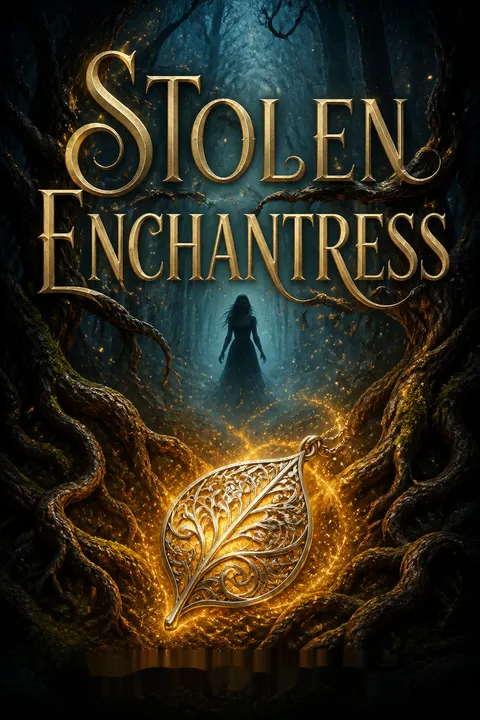


Plot Summary
Sela Crosses the Boundary
Larkin, a poor farm girl from Hamel, is meant to watch her four-year-old sister while their mother helps at a birth. Instead, she discovers Sela’s footprints leading into the Forbidden Forest, where the villagers believe a beast takes girls as sacrifices. No one will risk entering to retrieve her, so Larkin goes alone.
The forest’s violent stirrings batter her with illusions and pain until she finds Sela safe in a flower-filled meadow. Sela’s touch seems to lift the forest’s hatred from Larkin and awaken an unfamiliar vitality. Before Larkin can get them home, a gigantic lizard attacks. A stranger named Denan kills it with bow and ax, then offers to guide the sisters through the trees.
Larkin’s first defining choice is not a bid for adventure but an act of care in a place where poverty has made every person seem expendable. Her father and neighbors treat a missing child as a loss already accounted for; Larkin refuses that arithmetic. Sela’s apparent power over the forest complicates the villagers’ belief that it is simply hostile. The episode also establishes Larkin’s instinctive courage as relational: she endures the forest because abandoning her sister would be worse than entering it.
Denan's Captive Song
After killing the lizard, Denan plays panpipes whose melody draws Larkin into a vision of a silver tree and makes her follow him without remembering the journey. A wound in her palm brings her back to herself, and she flees with Sela. Denan catches Larkin with a venomous dart that paralyzes her, but Sela escapes to summon help.
Even as her body fails, Larkin manages to prick Denan with one of his own darts. He hides her beneath leaves and retreats, leaving her conscious but unable to move. Bane, her childhood friend and the lord’s son, hears Sela’s alarm and enters the forest despite its illusions. He finds Larkin and carries her home before the beast can reach her.
The rescue turns coercion into the story’s central moral problem. Denan saves Larkin from a literal predator, then uses a different kind of predation to claim control over her. His music makes desire and obedience difficult to distinguish, while the dart reduces her to a body she cannot command. Larkin’s small counterattack matters because it preserves agency under near-total helplessness. Bane’s rescue offers a contrasting form of protection, but his willingness to risk himself does not erase the village’s gendered indifference to Larkin’s peril.
The Amulet's First Vision
Larkin wakes after a day unable to move, then learns the town has already begun treating her as one of the Taken. At a public sacrifice, Crazy Maisy predicts that forest magic has marked her, while Black Druid Garrot arrives to investigate. Garrot takes Larkin to the forest’s edge, where the group finds Denan’s opal amulet.
When Larkin touches it, she sees a vision and cannot release it until her sister Nesha pulls it away. Garrot then reveals a giant lizard’s skull, confirming that the gilgads are real, but orders Larkin to conceal Denan and his music. Nesha confides that she loves a man whose family may forbid their marriage, adding another hidden conflict to Larkin’s dangerous new life.
The amulet gives Larkin evidence that her experience exceeds rumor, but the authority figures immediately try to control what that evidence can mean. Garrot’s skepticism yields only when a physical skull supports the existence of the gilgads; Larkin’s own testimony remains less persuasive than an object. Meanwhile, Maisy’s apparent madness contains knowledge the town cannot comfortably acknowledge. Nesha’s secret romance mirrors Larkin’s own constrained choices, establishing that the sisters face different forms of social captivity even before either understands how closely their lives are entangled.
A Crucible for Larkin
Denan returns at night and tries to draw Larkin into the forest again, but a surge of power throws him against an invisible barrier. Larkin escapes with the amulet still in his possession, only to find the Black Druids and the town interpreting her survival as proof that she is cursed. Garrot declares that she must undergo the crucible, an old test that leaves girls chained at the forest’s edge.
Bane protests, but the druids overpower him and take Larkin from her family. Bound to stakes in the rain, she receives unexpected warmth and soup from Venna, a servant who risks punishment to help her. When Denan comes to release her, he vows not to force her into the forest if she retrieves the amulet.
The crucible makes communal fear tangible: Larkin is physically displayed as a possible threat so that Hamel can feel protected without confronting the men who control its dangers. Garrot’s ritual is presented as public safety, yet its method is sacrifice without proof. Venna’s quiet help offers a different ethic, grounded in imagining herself in another girl’s place. Denan’s bargain also shifts the power balance slightly. He still sets the terms, but Larkin’s ability to negotiate and delay gives her a foothold that she lacked when his music first overruled her will.
A Ring and a Flood
Larkin retrieves the amulet from Garrot’s room with Maisy’s help, and she and Bane claim to be expecting a child so the druids will release them. Garrot gives Larkin two days before the forest can claim her. Bane then offers marriage, promising a secure home and protection from her abusive father. Larkin accepts, though she hides the amulet and cannot silence the forest’s pull.
Her family fractures further when Nesha resents the arrangement and Harben beats her for revealing Larkin’s meetings with Denan. During Pennice’s labor, a flood destroys the bridge and traps the family. Larkin takes their coracle into the current, is swept into the forest, and uses the amulet’s vision to survive until Denan pulls her from the river.
Bane’s proposal is loving, but it is also shaped by a world where marriage functions as one of the few available forms of female safety. Larkin accepts a shelter she wants while concealing a force she does not understand. The flood then makes dependence impossible: she must risk herself because the coracle cannot carry everyone. Her rescue by Denan unsettles the simple division between Bane as safety and Denan as danger. The amulet, first a contested object, becomes a practical instrument that links Larkin’s survival to the very forest she fears.
The Night Takes Two
After the flood, Larkin returns to Bane’s manor, where his father plans to send her family away because the town has turned against her. That night, Larkin sees Alorica, a proud girl who resents her, walking toward the forest in a trance. Venna follows, and Larkin cannot wake Bane or the sleeping townspeople.
Denan appears and admits the girls are being drawn by the heartsong. The following day, the villagers blame Larkin for the disappearances and demand her death. Bane helps her escape the mob, but the druids pursue them. When Hunter threatens to kill her, Denan shoots him, and Larkin chooses to enter the forest with Denan rather than return to the people who have condemned her.
The nighttime abductions expose how little protection Larkin’s engagement or the lord’s household can actually provide. She tries to intervene, yet the same music that once caught her has already taken two other girls beyond her reach. The village responds by blaming the survivor, converting helplessness into accusation. Larkin’s decision to follow Denan is therefore not a simple acceptance of him; it is a refusal to submit to a mob that has made her expendable. Her departure marks the point when home ceases to be a place she can safely return to.
Venna's Poisoned Foot
Denan leaves Larkin, Alorica, and Venna with the pipers Tam and Talox while he misdirects the druids. Alorica repeatedly tries to escape, convinced her family will protect her, and Venna eventually joins her. Their flight brings them face-to-face with wraiths, corrupted beings that emerge from shadows and wield poisoned blades. Larkin uses the amulet to block one attack, but a wraith cuts Venna’s foot.
The poison spreads in black lines, and Venna becomes a mulgar, a creature controlled by the wraiths. Talox refuses to abandon her, carrying her toward a river crossing, but Venna turns on Larkin and then throws herself into the ravine rather than let the corruption consume her. The survivors cross by rope as the wraiths close in.
The forest’s danger changes from an inherited village story into a visible, specific threat, and Larkin’s earlier warnings gain painful weight. Venna’s injury forces the group to confront a limit that courage cannot overcome: the poison transforms its victims, and love cannot reverse it. Talox’s willingness to carry her reveals a tenderness that the pipers’ military discipline usually conceals. Larkin’s attempt to protect Venna also establishes her emerging role as a leader, but leadership here means witnessing a death she cannot prevent, not simply mastering a new weapon.
The Alamant's Golden Wall
After days of travel, the pipers bring Larkin and Alorica through a magical barrier into the Alamant, a settlement built among enormous trees over a lake. Larkin recognizes Caelia, Bane’s sister, among the women there, alive and married with children. Caelia explains that the pipers took women because none had been born to their people since women’s magic vanished centuries earlier.
Larkin is forced through a wedding ceremony with Denan, a prince, and bound to him by White Tree thorns. At a second rite, a thorn is placed beneath her skin to test for magic. Larkin resists the idea that beauty and comfort justify the pipers’ abductions, but the Alamant’s people, including Caelia, complicate the picture she brought with her.
The Alamant overturns the village’s monster story without absolving the pipers. The Taken are alive, and many have built meaningful lives, yet those lives began through coercion. Caelia’s contentment cannot retroactively make the abduction consensual; her experience instead challenges Larkin’s belief that only one response to captivity is possible. The White Tree’s thorn makes that conflict bodily, binding Larkin to Denan before she has chosen him. The settlement’s beauty therefore operates as both genuine refuge and a persuasive architecture of confinement.
The White Tree Weakens
Larkin discovers that the White Tree is sick and that the barriers protecting both the Alamant and the Idelmarch are failing. A vision suggests that the tree needs a new seed planted deep in the water.
When fire destroys the tree where Denan’s family lives, Larkin’s developing magic shields her and Wyn from falling branches; she dives with the boy and escapes the collapsing structure. She learns that someone deliberately set the fire, then discovers her thorn has begun to form a protective sigil.
Denan trains her to fight and explains that women’s magic once created barriers, while men’s music can influence feelings. Larkin begins to see that her power could help repair the failing protection, though she still wants to return to her family.
The fire converts the abstract crisis of a dying tree into immediate bodily peril. Larkin’s shield protects Wyn before she fully understands how to summon it, making her capacity visible through action rather than prophecy alone. The discovery that both societies depend on the same failing protection gives her a reason to remain that is larger than Denan’s desire. Yet her motive remains personal: she wants her family safe. The book’s central tension sharpens here, because the path to protecting home may require Larkin to stay in the place she never chose.
Bane Breaks the Barrier
Bane secretly reaches the Alamant and persuades Larkin to escape with him, convinced the pipers have enchanted her. He sets fire to a tree to draw the sentinels away, nearly killing Denan’s family and forcing Larkin to help cut through the barrier. In the lake, a lethan attacks them with red tentacles. Denan and the pipers rescue Larkin, while Bane survives and is captured.
At King Netrish’s hearing, magical music compels Bane to admit he started the fire and intended to return with an army. Larkin pleads for him, but Netrish sentences her to confinement and withholds Bane’s punishment. The attempt exposes Bane’s desperation and his willingness to endanger strangers, while Larkin recognizes that affection cannot make his choices harmless.
Bane’s return initially resembles the rescue Larkin has long imagined, but his methods reveal the danger of treating love as entitlement. He assumes Larkin’s changed understanding must be enchantment and burns a home to force an opening. The lethan attack gives that decision a direct physical cost. At the hearing, the truth-producing music makes Bane’s motives public, yet it does not settle the moral conflict: he remains someone Larkin loves and someone who has endangered others. Her divided loyalty becomes a problem of judgment, not merely romantic preference.
Caelia Opens the Way
While Larkin is confined, Caelia and Alorica help her and Bane escape. Caelia refuses to leave her husband and children, while Alorica chooses to remain in the Alamant and train as a healer. Larkin and Bane slip through the barrier and travel downriver, but a waterfall wrecks their boat and leaves them exposed to mulgars.
They reach Hamel and reunite with Pennice and Sela. Larkin demonstrates her magic and explains that the pipers are not the only danger, but she plans to return to the Alamant. Bane tells Garrot where she is, believing the Black Druid will protect her. Garrot arrives at the family’s home and takes Larkin away, claiming he can secure her family’s safety if she cooperates.
The escape is a genuine act of choice, but its emotional consequences are uneven. Caelia’s refusal to abandon her children demonstrates that belonging can become real without erasing the coercion that began it. Alorica’s decision similarly reflects a future she now values. Larkin, by contrast, returns to Hamel because family remains her deepest obligation, only to find that Bane’s trust in Garrot exposes her to another captor. Her return does not restore the old home; it reveals that the old power structure is still waiting to use her.
Nesha's Hidden Grievance
Garrot promises Larkin’s family money and security in exchange for intelligence about the Alamant, then tells families of the Taken that their daughters are alive. Larkin shares what she can, while concealing details that could help the druids attack.
She discovers that Nesha is pregnant by Bane and believes Larkin knowingly took the man she loved. Nesha has been working with Garrot and confirms Larkin’s meetings with Denan, helping the druids discredit her.
Garrot uses Nesha and the younger girls as leverage, then arranges a wedding between Larkin and Bane to present her as loyal to the Idelmarch. Larkin learns that Bane had relationships with both Nesha and Alorica before choosing her, and their friendship breaks under the weight of his omissions.
The sisters’ rupture is not a sudden turn from loyalty to cruelty; it grows from secrets, scarcity, and unequal access to marriage. Nesha believes Larkin has taken the future she wanted, while Larkin has never known the relationship that preceded her own engagement. Bane’s silence allowed both sisters to make decisions from incomplete knowledge. Garrot exploits those injuries as political instruments, offering protection while tightening control. The wedding plan turns intimate betrayal into public theater, forcing Larkin to confront how easily a woman’s body and reputation become currency.
The Wedding Turns to War
As the forced wedding ceremony begins, Denan’s music puts the town to sleep and the pipers enter Hamel. Larkin reaches for her mother and sisters, but the rescue becomes a battle when druids attack. Nesha refuses the dampener Larkin offers and runs toward Garrot, while Pennice and the younger girls leave with the pipers.
Larkin raises a shield over her family and the fighters nearest her, but the effort exhausts her. At the gate, Garrot’s forces overpower the escaping group. Larkin and Denan are captured, while Tam, Pennice, and the children reach the forest. Bane is left among the attackers. Larkin has chosen the Alamant, but the choice does not reunite her family or end the war.
Larkin’s choice is made under pressure, yet it is not simply the result of Denan’s music: she has already seen what Garrot’s rule costs her family. Her shield extends protection beyond herself, an important change from the girl who once had to rescue Sela alone. But the battle demonstrates the limits of individual power. She can save some people and not everyone; Nesha’s departure remains her own decision, however painful. The ending of the wedding is therefore not romantic closure but a new political separation, with family divided across opposing sides.
Maisy Names the Beast
Imprisoned with Denan in a cellar, Larkin hears Maisy recite the old rhyme and realizes its beast is the wraiths, not the pipers. Maisy reveals that druids once took her to the wraith city, where she was enslaved and scarred. Denan explains that a corrupted king and the Silver Tree created the curse that silenced women’s magic and bound everyone’s tongues.
Garrot takes Denan away and threatens Maisy to force Larkin to reveal Alamant defenses. Maisy guides Larkin through a concealed passage, and they escape after Maisy kills a guard who attacks Larkin. Larkin blows Denan’s distress whistle. When pipe music begins luring girls from their homes, she and Maisy join Tam and Talox, then race to the town’s edge to free Denan from the crucible.
The rhyme that once frightened Larkin becomes a map of hidden history. Maisy’s trauma makes clear why her knowledge has appeared as fragments and songs rather than orderly testimony; the town called her mad instead of asking what had happened to her. The curse is not only a barrier to communication but a political technology, preventing the people most affected from naming their captors or coordinating resistance. Larkin’s escape with Maisy reverses their earlier antagonism: she now treats the girl as a witness and ally, not an inconvenience.
A Shield Against the Arrows
Larkin cuts Denan free, and the group races toward the town wall as the druids pursue them. Her magic deflects arrows, but it drains her strength. Bane unexpectedly helps the pipers hold the crossing and urges Denan to carry Larkin to safety. The druids capture Bane as the others escape into the forest. Larkin wakes among the pipers and learns her mother and younger sisters are safe.
Soon Sela wanders away; Larkin follows her footprints into an ancient grove and finds her beneath a vast tree, surrounded by light. Sela speaks again and insists the trees are their friends. Larkin and Denan resolve to find a way to plant a new White Tree, restore women’s magic, and break the curse, though the war and Bane’s fate remain unsettled.
The final flight brings the book’s competing loyalties into one action. Bane helps Larkin escape even after she has chosen Denan, complicating any simple division between a discarded past and a chosen future. His capture leaves their relationship unresolved rather than neatly severed. Sela’s return to speech and her ease among the trees echo the story’s opening, but the forest now appears capable of connection as well as violence. Larkin’s next task is consequently larger than survival: she must turn newly recovered power into a shared future before the barriers fail.
Analysis
Stolen Enchantress builds its fantasy conflict from a social arrangement that initially looks like folklore. Hamel’s people believe the forest takes girls as sacrifices, while the druids preserve that explanation because fear keeps the town governable. The revelation that the Taken are being abducted by pipers does not make the villagers’ fear imaginary; it shows how incomplete stories can still contain real danger, and how powerful institutions benefit when no one can compare accounts.
Larkin’s central struggle is not simply choosing between two men. Bane offers the protection of a familiar hierarchy, but his desire to save her becomes possessive when he dismisses her knowledge and risks other people to retrieve her. Denan’s care is equally compromised by the fact that he abducts and magically influences her. The novel asks whether good intentions can repair coercion, and its answer is deliberately unsettled: Denan changes in response to Larkin’s resistance, but his change does not erase what he did. Larkin’s feelings for him matter most when they become choices she can make outside the heartsong’s immediate pull.
The sisters provide a parallel study of constrained agency. Larkin and Nesha misread each other because marriage, disability, pregnancy, and scarce security turn intimate relationships into scarce resources. Their conflict is intensified by secrecy, then exploited by Garrot, whose political strategy depends on dividing people who might otherwise resist him. Maisy’s fragmented testimony shows another consequence of this system: when a survivor cannot speak in an accepted form, a community may label her irrational instead of investigating her injuries.
Magic becomes meaningful as Larkin learns to use it for protection rather than escape alone. Her shield saves Sela, Wyn, and those nearest her, but it cannot save everyone, and its power does not settle the conflict. The weakening White Tree makes the ethical scale larger than personal survival. The ending therefore offers commitment without resolution: Larkin has chosen a side and recovered a voice, but she must still confront the curse, the war, Bane’s fate, and the task of renewing the tree.
Review Summary
Stolen Enchantress received mixed reviews, with an average rating of 3.96 out of 5. Many praised its unique blend of fairy tales, imaginative world-building, and captivating storyline. Readers enjoyed the character development, particularly the protagonist Larkin and her love interest Denan. However, some found Larkin frustrating and the plot predictable at times. The book's dark themes and complex magic system were appreciated by many, while others criticized the romance and pacing. Overall, most readers found it an engaging fantasy read with a few shortcomings.
People Also Read







Characters
Larkin
Relentless older sisterA poor farm girl in Hamel, Larkin has learned to protect her mother and sisters from hunger, danger, and their father’s violence. Her first instinct is practical care, but beneath it lies a fierce desire to choose her own life. She is wary of authority because authority has repeatedly failed her, and she can confuse self-denial with responsibility. Her loyalty is profound, though it sometimes keeps her tied to people who conceal the truth from her. As the story unfolds, her courage grows from endurance into leadership, especially when she discovers that protecting others may require her to question the loyalties she once considered unquestionable.
Denan
Piper prince and captorA skilled piper and warrior from the Alamant, Denan enters Larkin’s life by saving her from a gilgad and then attempting to take her with him. His music can alter emotions, a power he treats as necessary but that Larkin experiences as a violation. He is disciplined, protective of his people, and accustomed to making decisions for others under the pressure of an inherited crisis. His restraint and compassion coexist uneasily with his willingness to use force. Through Larkin’s resistance, he must face the difference between believing he knows what is best for someone and allowing that person meaningful choice.
Bane
Larkin's childhood protectorThe lord’s son and Larkin’s oldest friend, Bane has offered her warmth, food, and protection since childhood. He is brave and deeply attached to the people he loves, but he also assumes that his intentions make his choices justified. His family history, especially the loss of his sister, shapes his fear of losing Larkin and his distrust of the pipers. He wants to protect Larkin from a world that has repeatedly harmed her, yet he struggles to accept that she may understand her own needs differently. His devotion is genuine, but so are the omissions and possessiveness that strain their bond.
Nesha
Larkin's injured sisterLarkin’s older sister is beautiful, intelligent, and physically disabled by a clubfoot. In Hamel, the marriage laws restrict her future, while her family expects her to train as a midwife. Nesha wants a home and children of her own, not simply a life of service to others. She has often relied on Larkin, but dependence also sharpens her resentment when she believes Larkin receives the choices denied to her. Her guardedness and pride hide a powerful need to be seen as a woman with desires of her own, rather than as a burden or an object of pity.
Pennice
Protective mother and midwifeLarkin’s mother is a midwife who has spent years holding together a family weakened by poverty and Harben’s abuse. Practical and observant, Pennice often acts before she explains herself, which keeps her children safe but leaves them with painful gaps in what they know. She understands that women rarely get freedom without choosing among constraints, and she tries to secure options for her daughters within a restrictive society. Her tenderness is not passivity: when her children are threatened, she confronts men with a confidence built through years of caring for the town’s families.
Sela
The youngest sisterLarkin’s four-year-old sister is small, trusting, and drawn to flowers and the forest. Her innocence does not make her merely helpless; she notices things the adults have learned to fear or dismiss. Sela’s closeness to Larkin gives the older girl a reason to risk herself, while her comfort around the trees unsettles Hamel’s stories about the forest. She is still too young to understand the political dangers around her, but her way of seeing the natural world suggests that the village’s inherited fears may not tell the whole truth.
Alorica
Proud rival and survivorA wealthy, sharp-tongued girl from Hamel, Alorica resents Larkin and expects her family’s status to protect her. Beneath her vanity and confidence is a fierce concern for her own future and a history of attachment to Bane. She is quick to make plans and slow to admit when she is wrong, especially when fear threatens her sense of control. Her pride can endanger the people beside her, but it also gives her the nerve to demand a life beyond the role her town assigned her. She is more complicated than either Larkin’s enemy or ally.
Venna
Kindhearted servant and friendA quiet young servant in Bane’s household, Venna is thoughtful, observant, and accustomed to being overlooked. She risks herself to comfort Larkin during the crucible because she recognizes that any girl might be placed in the same position. Her kindness is not naïveté; she understands the danger and chooses to act anyway. Venna’s growing friendship with Larkin offers the latter a bond not founded on childhood obligation or rank, but on reciprocal care.
Garrot
Strategic Black DruidA Black Druid with influence over Hamel, Garrot is calculating, disciplined, and adept at turning fear into political leverage. He sees himself as a guardian of the Idelmarch, but his methods routinely treat individual women as expendable pieces in a larger struggle. His controlled manner makes his violence seem procedural rather than impulsive. Garrot understands more about the Forbidden Forest than he tells the townspeople, and he uses selective truth to preserve his authority. His conviction that necessity excuses cruelty makes him a dangerous counterpart to Denan, who also acts from duty but is increasingly challenged by Larkin’s objections.
Crazy Maisy
Unheeded witnessMaisy, daughter of the local druid, is treated by Hamel as a mad girl whose songs are frightening but convenient to ignore. Her speech arrives in rhymes and fragments, and her behavior can turn suddenly from playful to violent. Beneath that erratic presentation is a witness shaped by experiences the town refuses to name. Maisy recognizes patterns in the forest that others cannot or will not see. She is defensive, sharp, and difficult to trust, but her knowledge makes her indispensable when Larkin begins questioning the stories that hold Hamel together.
Harben
Abusive fatherLarkin’s father is a poor farmer whose drinking, gambling, and violence make home another place his daughters must survive. He measures his children by their usefulness to the household and treats his authority as unquestionable. His conduct helps explain Larkin’s instinct to absorb pain rather than ask for help, as well as her determination to protect her sisters. Harben’s failures are personal and material, but the community’s tolerance of his abuse shows how custom can shield men even when their families are visibly suffering.
Lord Daydon
Bane's ailing fatherThe lord of Hamel and father of Bane and Caelia, Daydon carries authority with more restraint than many men around him. He is weakened by illness and grief, and his decisions are shaped by the disappearance of his daughter. He sometimes protects Larkin when doing so costs him politically, though he cannot resolve the town’s deeper injustices. His affection for his children sits beside his fear of losing them, making him both a source of help and a symbol of how limited even local power can be.
Druid Rimoth
Fearmongering village druidRimoth is Hamel’s local druid and Maisy’s father. He claims authority over the forest’s will and uses ritual, superstition, and social rules to make villagers dependent on his guidance. His interest in power is matched by a contempt for women he considers unreliable or inferior. Rimoth’s public piety masks a willingness to exploit vulnerable people, while his treatment of Maisy suggests that the danger inside a household can be as real as the danger beyond its walls.
Caelia
Bane's missing sisterCaelia is Bane’s older sister, whose disappearance has shaped the grief of her family and the choices of her father. Larkin remembers her as spirited and vivid, a young woman whose absence has become part of Hamel’s collective fear. Caelia represents the unknown lives of the Taken and the painful possibility that a person can belong to more than one home. Her relationship with Bane remains central to his understanding of family, even when neither sibling can easily grasp the other’s changed circumstances.
Talox
Steadfast piper warriorA powerful, measured piper, Talox is a skilled protector who speaks little and takes his duties seriously. His calm presence contrasts with Tam’s humor and Denan’s command, but he is not emotionally distant. Talox believes loyalty means accepting risk for the people entrusted to him, and his compassion can bring him into conflict with strict military orders. He treats the women in his care as people, even while participating in their forced removal from Hamel.
Tam
Quick-witted piper scoutA nimble piper and scout, Tam uses humor to soften fear and to disguise how carefully he watches those around him. He is loyal to Denan and capable in a fight, but his lightness does not prevent him from recognizing the cost of the pipers’ mission. His relationship with Alorica begins in conflict, and he must navigate her mistrust without demanding that she accept him. Tam’s wit makes him easy to underestimate, though he is often quick to act when danger arrives.
Aaryn
Denan's resourceful motherAaryn is Denan and Wyn’s mother, a former captive who has made a life in the Alamant. She is a skilled weaver, affectionate with her sons, and prepared to challenge them when they are careless. Her perspective is shaped by the pain of separation from her birth family and by the possibilities she found in her adopted home. She offers Larkin a model of a woman whose present happiness does not erase the injustice of how she was brought there.
Arbor Mytin
Keeper of the White TreeMytin is Denan’s father and the religious steward of the White Tree. He is thoughtful and measured, concerned with the survival of his people and the tree they defend. His position gives him knowledge that ordinary Alamantians lack, though the curse restricts what he can explain. He is devoted to Aaryn and his sons, and his quiet authority contrasts with King Netrish’s political command.
King Netrish
Reluctant rulerNetrish rules the Alamant while Denan waits to inherit the crown. He is protective of the laws and defenses that have kept his people alive, but his authority rests on decisions that appear unjust to those brought into the Alamant by force. His formal manner conceals anxiety about the future and about the political consequences of Bane’s intrusion.
Atara
Alorica's healer sisterAtara is Alorica’s older sister and a healer in the Alamant. She is practical, welcoming, and attentive to injuries, offering Larkin help without demanding trust in return. Her profession provides Alorica with a path into a life she had not imagined in Hamel.
Wyn
Denan's determined brotherWyn is Denan’s young brother, energetic, competitive, and fiercely attached to his family. He resents the attention Denan gives Larkin, but his blunt questions reveal a child trying to understand the social order he is expected to inherit. His eagerness to become a warrior coexists with a need for reassurance and affection.
Plot Devices
The Forbidden Forest Barrier
Separates and protectsThe forest’s stirring distorts perception and disorients people who try to cross it, while its boundaries help keep the gilgads and other dangers away from Hamel. The villagers interpret the barrier as proof that the forest is hostile and that the druids alone can manage its demands. Larkin’s experience shows that the stirring is an illusion rather than a straightforward physical attack. Later, the Alamant’s own magical wall reveals that protection and confinement can be the same structure, depending on who controls the passage through it.
Piper Music and Heartsong
Bends feeling and attentionThe pipers’ instruments can draw girls toward the forest, quiet resistance, create visions, or shift a listener’s emotional state. The heartsong feels intimate and persuasive, which makes it difficult for Larkin to distinguish her own longing from magic. Other melodies can soothe pain or compel truth, and the pipers themselves are affected by aspects of their music. These effects are powerful but not identical: Larkin can sometimes resist through pain, magic, or the amulet. The songs drive the abductions and rescues while raising the question of whether a feeling remains authentic when magic helps call it forth.
The Opal Amulet
Unlocks women's magicDenan’s rare amulet resembles a tree with interwoven roots and branches. When its thorns pierce Larkin’s skin, it triggers visions, helps her pass through magical barriers, and eventually forms a shield against attacks. It also draws Denan to her when she is in danger. The amulet is important because the pipers cannot use women’s magic themselves, and Larkin initially has no clear way to access her own power. Its function changes from a disputed token in Denan’s bargain to the first practical instrument through which Larkin discovers what she can do.
The Wraith Curse
Silences shared historyA curse associated with the wraith king and the corrupted Silver Tree affects both the Alamant and the Idelmarch. It restricts what people can say about the past, helping keep the true history of the Taken and the forest concealed. Wraith blades carry a poison that can transform a wounded person into a mulgar, a creature controlled by dark magic. The curse also connects the loss of women’s magic to the weakening barriers that protect both peoples. Its effects make personal knowledge difficult to communicate and turn the recovery of history into a necessary part of survival.
The White Tree and Its Seed
Ties magic to survivalThe White Tree is the source and center of the Alamant’s life, its magic, and the barriers that also protect the Idelmarch. Its health is failing, and Larkin receives a vision suggesting that a seed must be planted deep in the water. The tree grants visions and supports the sigils that allow Larkin to channel women’s magic without repeatedly using the amulet. Its decline turns the conflict from a struggle over individual captivity into a shared existential crisis. The seed remains an unresolved task, giving the ending its forward drive.

Download PDF
Download EPUB
.epub digital book format is ideal for reading ebooks on phones, tablets, and e-readers.








