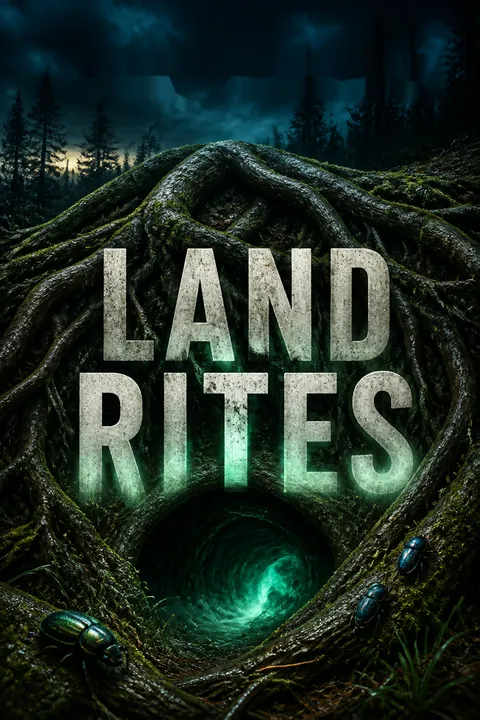


Plot Summary
A Hand in the Sett
On a country walk, biology teacher Polly Evans watches her terrier, Murphy, drag a severed hand from a badger sett. Detective Inspector Henry Ford reaches the field and finds a body hidden in pieces beneath the earth. To recover the head, he squeezes into the narrow tunnel himself, fighting panic by thinking of Sam, his sixteen-year-old son.
Tattoos on the remains identify the dead man as Tommy Bolter, youngest brother in Salisbury's violent Bolter family. The discovery also reopens Ford's private wound: his wife, Lou, drowned after a climbing accident when he left her to seek help. He has spent years turning that loss into guilt, and the sight of Tommy's body forces him back into the work that both attracts and sickens him.
The opening makes detection a bodily ordeal rather than an abstract puzzle. Ford literally enters the place where the killer tried to erase evidence, while his own memory insists that another death cannot be neatly classified as past. The contrast between his professional calm and his panic in the tunnel establishes his central contradiction: he can read a killer's mind more readily than he can forgive himself. Sam's presence in his thoughts is not incidental comfort. It reveals that Ford's grief has become a form of vigilance, shaping how he protects the living as much as how he investigates the dead.
The River Gives Up Owen
While Ford's team begins tracing Tommy's last movements, Ruth Long reports her seventy-year-old husband Owen missing. A retired vicar, Owen had left home in a Prius and failed to return from a planned trip. Days later, heavy rain swells the River Ebble and blocks a drainage sluice on farmer Tom Adlam's land. When Adlam hooks the obstruction free, a naked body tangled in vegetation rolls into view.
Ford sees no sign that the man drowned and suspects the pond has concealed a second killing. The body lies near the first crime scene, on land connected to the same rural estate, but its identity and its link to Tommy remain uncertain. For Ford, coincidence is already beginning to look like a poor explanation.
The second body shifts the investigation from a single act of concealment to a pattern that may have been designed to mislead. Water initially hides the corpse, then weather and farm work expose it, making the landscape an active participant in the case rather than a neutral backdrop. Owen's absence first appears through Ruth's domestic fear, which gives the discovery a human cost before police procedure can name it. Ford's suspicion that the killings connect shows the difference between evidence and intuition in his method: the proximity is not proof, but refusing to treat it as meaningful would also be a choice.
Two Bullets, One Estate
Post-mortem findings give Ford the first hard links between the deaths. Tommy was killed by a long-range .308 rifle round, then carefully dismembered with a large knife and a saw. The older man from the pond was shot beneath the chin with a .22, and someone stabbed his vital organs after death to keep the body submerged.
Jools Harper searches the missing-person database and finds Owen Long through his distinctive Gaia tattoo. Ruth confirms the identification. Owen's environmental campaigning gives Ford a possible reason he might have been targeted, while Tommy's tattoos and criminal associations point toward a very different world. Both men were shot, both were left on land around the Alverchalke estate, and Ford now has to discover what joined them.
The forensic contrast prevents the investigation from collapsing too quickly into a single neat theory. The weapons, methods, and victims differ, but the shared geography asks Ford to look for a relationship deeper than a repeated signature. The bodies carry different social meanings: Tommy belongs to local criminal networks, while Owen's tattoo marks an ecological worldview. Their juxtaposition suggests that conflicts over land can draw people from separate classes into the same fatal space. The chapter also establishes forensic science as a discipline of limits. It can reconstruct how the men died, but not yet explain why.
The Manor's Open Gun Cabinet
Ford visits Alverchalke Manor, where landowner Philip Martival, known as Lord Baverstock, recalls Tommy as a poacher who had recently punched his gamekeeper, Joe Hibberd. Joe is an ex-soldier who manages the estate's game and firearms. Baverstock's children, Stephen and Lucy, also shoot, and the family's rifles include both calibres used in the murders.
Joe denies killing Tommy and says his guns are properly licensed, but his evasive manner and the fight give Ford reason to keep him in view. At Tommy's inquest, Ford sees Joe arrive with Gwyneth Pearce, a young woman connected to Tommy. JJ Bolter attacks Joe, and Ford separates them before the family feud spills further into public view.
The manor introduces a hierarchy that complicates the usual division between respectable property and criminal threat. The Bolters may be notorious, but the estate's weapons and authority are distributed among people whose social standing can shield them from suspicion. Joe's role makes him both a plausible suspect and a subordinate bound to a powerful employer. Meanwhile, JJ's public violence turns grief into a claim of jurisdiction: he behaves as though the family can decide who deserves punishment. Ford must work inside official authority while recognizing that others are already asserting their own.
A Farmhouse False Lead
Jools notices that Tom Adlam appears both on Mick Tanner's list of trained butchers and in the gun shop's .308 ammunition records. Adlam also owns a .22, and he was the farmer who found Owen's body. Jools interviews him at home and borrows both rifles for comparison.
The test rounds do not match either murder bullet, weakening the case against him, while Ford's questions about the pond reveal that Adlam found the body without knowing it was there. At the same time, Ford learns that Owen opposed development on the estate, and the landowner's plans give the killings a possible political and financial context. Every clue broadens the suspect pool instead of closing it.
Adlam's near-match demonstrates how circumstantial evidence can look conclusive when several independent facts happen to converge. Training, ammunition, weapon ownership, and discovery of the corpse all invite suspicion, yet ballistic comparison separates correlation from physical proof. The episode also exposes a structural tension in rural investigations: the same small community that makes everyone traceable creates overlapping roles and access. A farmer may be a witness, a weapons owner, and a trained butcher without being a killer. Ford's restraint matters because it prevents the investigation from mistaking a tidy narrative for a defensible one.
A Son Wants the Mountains
Sam asks permission to join a school trip to the Brecon Beacons, where climbing will be part of the activity. Ford refuses because Lou died in a climbing accident, and the argument exposes how much his fear has narrowed his son's choices. Hannah Fellowes, the forensic deputy who has befriended Sam, has researched climbing risks for him; Ford is angry that they discussed it without him, then recognizes that his refusal is driven by guilt as much as safety.
Sam tells his father he cannot spend his life trying to prevent another loss. Ford relents and signs the permission form. Their reconciliation is imperfect but real, and the decision begins to loosen the protective grip Ford has kept on his son.
The family conflict translates Ford's unresolved grief into a concrete decision with consequences for Sam's independence. His refusal sounds protective, but it also asks his son to organize his adolescence around the possibility of his father's worst memory recurring. Sam's research is not simply adolescent defiance. It is an attempt to reclaim risk as something that can be understood and chosen, rather than inherited as a prohibition. Hannah's involvement unsettles Ford because it bypasses his authority, yet it also gives Sam an adult ally who can speak in evidence rather than fear.
The Golden Ticket
At Tommy's wake, Ford speaks with Gwyneth, who says Tommy had been planning to make money through hare-coursing. She explains that he returned from a trip to Alverchalke excited because he had seen an armed person arguing with an older man; a struggle followed, a gun fired, and the older man fell. Tommy planned to use what he had witnessed to demand money.
Gwyneth had been in his truck, though not at the exact location. Her account gives Ford a reason for Tommy's murder and ties his death directly to Owen's. Before Ford can press further, JJ attacks him outside the pub and threatens Sam. Ford leaves with the case clarified, but his family now sits inside the danger he is investigating.
Gwyneth's disclosure transforms Tommy from a victim selected for unknown reasons into a witness whose knowledge has market value. His blackmail plan repeats the Bolters' own economy of coercion, but it also reveals a younger brother trying to escape his place at the bottom of the family hierarchy. The wake makes that ambition painfully visible: Tommy is mourned as a brother while his private scheme becomes the key to understanding his death. JJ's threat collapses the boundary between professional duty and paternal fear. Ford can no longer treat the case as something contained by procedure.
A Photograph Finds the Hill
Hannah enlarges the selfie Tommy sent Gwyneth and identifies the distant figure as Owen through his clothes and Gaia tattoo. By calculating the sun's position from the photograph's date and time, she and Ford locate the exact hillside where Tommy watched Owen. At the site, they find cigarette ends in a hollow tree that could have concealed him.
Ford also watches Owen's online videos and discovers that the activist planned to film the estate's proposed housing development. The combination of the photograph, landscape, and posts makes Tommy's account plausible and shows why Owen had come to the estate. A camera recording of the confrontation could reveal who held the rifle, but no one has found Owen's GoPro.
This turning point joins scientific precision to interpretive imagination. Hannah turns light, shadow, and pixels into a location; Ford understands why Tommy hid there and what he hoped to do. Neither mode is sufficient alone. The photograph becomes a witness because its incidental details survive the moment that produced it, while the hollow tree gives those details a physical address. Owen's activism also complicates the landscape: the contested land is not merely a backdrop to violence but the object around which competing claims of ownership and public responsibility gather.
Rye Finds Sam
Rye Bolter follows Sam on his walk home and warns him that Ford must find Tommy's killer. Sam records the encounter, but Ford is furious that his son confronted a man capable of serious violence. Rather than wait for another threat, Ford secretly arranges police protection and goes to the Bolters' home.
He forces the gate, incapacitates Rye with a Taser, and warns JJ that any approach to Sam will bring a personal response. The act protects Sam in the immediate moment but crosses a line Ford knows he should not cross. Meanwhile, Mick's marriage is breaking down, and Ford's suspicion that someone inside the station is feeding information to JJ continues to grow.
Ford's response reveals how quickly professional restraint can be overtaken when the threatened person is his son. He uses police equipment and authority in a private confrontation, making his promise of protection inseparable from intimidation. The scene mirrors the Bolters' logic even as Ford opposes them: both men claim that family justifies action outside ordinary rules. Mick's vulnerability adds an institutional dimension, since personal desperation may create openings for corruption. The case is no longer testing only whether Ford can identify a murderer; it is testing what he is willing to become while trying to stop one.
The Rabbit's Bullet
Ford realizes the rabbit Stephen gave him was shot with Joe's borrowed .22, so he asks pathologist George Eustace to recover the bullet from the frozen carcass. Hannah compares it with the round taken from Owen's skull and finds a ballistic match. The result puts the murder weapon in Joe's hands, while military records show that Joe served under Baverstock, who once saved his life in Afghanistan.
Ford authorizes a heavily armed arrest. Joe meets the officers carrying a shotgun but surrenders without resistance. In his cottage, Ford finds a carefully prepared confession claiming Joe killed both men, blamed post-traumatic stress, and acted alone. The note appears to settle the case, but its tidy absolution of the estate makes Ford uneasy.
The rabbit bullet is an elegant but dangerous form of evidence: it connects a weapon to a death without proving who fired it during the murder. Ford's decision to act is shaped partly by the urgency of protecting Sam from the Bolters, so the arrest carries both evidentiary and emotional pressure. Joe's confession offers the police a complete story while shielding everyone above him. Its neatness is precisely what makes it suspicious. The chapter asks readers to distinguish between a confession's emotional authority and its factual reliability, especially when loyalty and debt can make self-sacrifice look like truth.
A Confession Built to Break
In interview, Joe describes Owen's shooting and Tommy's execution, but his account shifts whenever Ford asks how he moved, stabbed, or dismembered the bodies. He invokes PTSD to explain every missing detail, though records show no diagnosis or treatment. Ford also realizes Joe's supposed suicide scene makes little sense for a man who loved his dogs and kept his cottage immaculately ordered.
Forensic searches find no blood on Joe's knives or saws, while Tommy's blood and a short brown hair turn up in Joe's Land Rover. Gwyneth recalls Tommy saying the killer claimed the land had belonged to his family for generations. Joe is protecting someone, but Ford still lacks proof of whom.
The false confession dramatizes the gap between explanation and evidence. Joe's story has the shape of a defense prepared to exploit public recognition of trauma, but it does not behave like a memory anchored in experience. The clean cottage and the dogs expose the story through practical contradictions rather than a dramatic slip. Ford's methods improve when he stops treating confession as resolution and tests it against the ordinary details of a person's life. Yet the new clues still leave ambiguity: loyalty points toward Baverstock, while the family land phrase could implicate more than one Martival.
The Cloud Keeps Witness
Ford finally reasons out the password to Owen's hidden GoPro account by connecting the man's favorite biblical passage with the name of his environmental blog. The Cloud contains a single recording from Alverchalke. It shows Lucy Martival confronting Owen with a rifle after he refuses to leave the estate. Owen grabs the barrel, Lucy tries to pull it away, and the weapon fires beneath his chin.
Lucy then drags his body into Joe's Land Rover. Several minutes later, Tommy enters the frame and sees Owen dead. Ford now understands that Lucy killed Owen, apparently during a struggle, and Tommy became a dangerous witness. The recording confirms the connection but leaves the later killing for the people involved to explain.
The recovered video changes the case because it preserves action without interpretation. Ford no longer has to infer the confrontation from wounds or hearsay; he can watch the sequence that turns trespass into death. Yet the footage does not settle moral or legal responsibility. Lucy's finger is on the trigger, but the struggle is real, and the recording shows panic after the shot rather than a planned execution. Tommy's silent arrival makes the next crime legible before it is explained: witnessing creates leverage, and leverage creates a motive for someone determined to protect the family.
A Horse Escape
Ford and Sandy revise their arrest plans after the video identifies Lucy as Owen's shooter. Police teams surround Alverchalke Manor while another unit follows Baverstock's Bentley from London. When officers call Lucy to surrender, she bolts on horseback without a saddle. The horse rears near a police dog and throws her onto the stone terrace, leaving her badly injured.
On the drive, officers stop Baverstock and take him into custody without a shot. At the hospital, Lucy wakes under sedation and tells Ford that her father shot Tommy after Tommy demanded money for witnessing Owen's death; Joe helped move and conceal the body. JJ reaches the ward intending revenge, but Ford restrains him before he can reach Lucy.
The simultaneous arrests embody two different forms of flight. Baverstock submits when the police stop his car, while Lucy's attempt to escape becomes a physical fall that nearly kills her. Her injury interrupts the fantasy that status and family protection can control every consequence. At the hospital, her account turns the investigation from a question of who fired each shot into a family system of complicity and loyalty. JJ's arrival shows that even with the state finally in control, private vengeance remains close enough to enter the hospital corridor.
The Family's Price
In interview, Baverstock first refuses to answer, but Ford tells him that Lucy is alive and threatened by the Bolters. Baverstock then admits he shot Tommy to stop the blackmail and helped Joe dispose of both bodies.
Lucy's shooting of Owen, he insists, was accidental; he presents his actions as service to the family and estate. Ford calls Ruth and JJ with the news and ends the murder investigation, though JJ privately refuses to abandon revenge.
He also reveals that Mick has been leaking police information under blackmail, leaving that corruption unresolved. Hannah invites Ford to dinner, carrying research into Lou's accident that she has not yet shared. Ford accepts Sam's climbing trip and offers to buy him gear, choosing trust over fear.
Baverstock's confession gives the crimes a motive larger than money but no less self-serving: he treats the estate's continuity as a moral law that can outrank the lives of outsiders. His paternal protection of Lucy becomes another form of ownership, one that recruits Joe and erases Tommy. Ford's closing choice with Sam offers a counter-model. Love does not require eliminating risk; it requires allowing another person agency. The final reveal about Mick prevents procedural closure from becoming moral comfort. Ford has solved the murders, but the institution remains vulnerable, and his private grief is only beginning to be discussed honestly.
Analysis
Land Rites treats land ownership as a structure of power that makes violence appear legitimate to the people who benefit from it. Owen sees the estate as a shared ecological inheritance; Philip sees it as a duty transmitted across generations; Tommy sees it as a possible source of money and status. Each man approaches the same landscape with a different moral vocabulary, but the consequences are not equal. The inherited owner can describe his choices as stewardship, while the outsider's protest is treated as trespass and the criminal's ambition as disposable. The novel's central irony is that Philip's language of service conceals an insistence that his family may decide whose lives matter.
The procedural plot tests how easily evidence can be made to support a convenient story. Joe's weapon links him to Owen's death, and his confession seems to close the case, but access to the gun, the implausible suicide scene, and the absence of forensic traces expose the difference between a fact and its interpretation. Ford's intuition is valuable precisely when he keeps testing it. Yet the pressure to protect Sam nearly makes him accept a premature solution. The book therefore treats good detection as an ethical practice, not merely a talent for pattern recognition.
Family is both the novel's refuge and its most dangerous justification. Ford's love for Sam initially becomes restriction, while Philip's love for Lucy becomes concealment and murder. JJ uses family loyalty to demand vengeance, and Joe's debt to Philip makes obedience feel like gratitude. These relationships show how care can turn coercive when a person claims the right to choose for another. Ford's decision to let Sam climb marks a modest but meaningful alternative: love can acknowledge danger without trying to abolish another person's agency.
The ending resolves the murders but refuses to certify the institution as clean. Mick's coercion by JJ leaves a continuing breach inside the police, while Hannah's unfinished effort to help Ford confront Lou's death points toward an emotional reckoning beyond the case. Justice arrives, but neither grief nor corruption is made simple by a confession.
Review Summary
Land Rites is a compelling police procedural featuring DI Ford investigating two murders near an aristocratic estate. Readers praise the well-developed characters, particularly Ford and forensic expert Hannah, and the intricate plot with its twists and connections. The book explores themes of power, influence, and family relationships. While some found the pacing slow initially, many enjoyed the suspenseful second half. Critics appreciate Maslen's layered writing and realistic portrayal of police work. Overall, it's considered a strong sequel that leaves readers eager for the next installment.
People Also Read

Characters
Henry Ford
Grieving murder detectiveA Wiltshire detective inspector, Ford builds cases by combining forensic evidence with an ability to imagine how violence unfolded. He is devoted to his son Sam and carries persistent guilt over the climbing accident that killed his wife, Lou. Music, especially blues guitar, gives him a private language for feelings he struggles to discuss directly. His empathy with killers makes him effective, but it also draws him toward moral danger when those he loves are threatened. Ford is not simply a rational investigator learning to feel; he already feels intensely. His deeper challenge is to distinguish care from control, and justice from the private punishments his grief and anger make tempting.
Sam Ford
A son seeking independenceSam is Henry and Lou's teenage son, bright, funny, and increasingly determined to make choices that belong to him. His interest in climbing brings him directly into conflict with his father's fear, while his curiosity about police work lets him connect with Henry on unfamiliar terms. Sam is not merely a child to protect: he notices his father's grief and can name its effect on their relationship. His quick wit covers a real need to fit in with friends and be treated as capable. He wants his father close, but not at the cost of being wrapped away from ordinary risks.
Lou Ford
The absent climbing partnerLou is Henry's late wife and Sam's mother, remembered as an experienced climber who loved the mountains and shared a strong marriage with Henry. Her death remains the central private wound in Henry's life, shaping his reactions to crime scenes and his instinct to restrict Sam's choices. Lou is present through memory rather than action, but she is more than a symbol of loss: Henry recalls her humor, warmth, and appetite for adventure. The life she shared with him makes his guilt complicated, since his memories contain both profound love and the unanswered question of what he could have done differently.
Hannah Fellowes
Forensic pattern-finderHannah is the deputy chief forensic officer, a highly knowledgeable scientist whose attention to detail can turn a photograph, a bullet, or a trace of blood into a new line of inquiry. She is autistic and often speaks with directness that others mistake for coldness, though she is capable of deep loyalty and affection. Her friendship with Henry and Sam grows through her willingness to share expertise and her need for honest, clear relationships. Hannah trusts evidence more readily than intuition, yet she is curious about the emotional histories that shape people. Her care often arrives as practical help, even when she has not yet found the right words for it.
Joe Hibberd
The estate's ex-soldierJoe is Alverchalke's gamekeeper, a former army sergeant and experienced firearms user who manages the estate's wildlife and security. His work keeps him close to the land and to the Martival family, whose household provides his livelihood and home. Joe is disciplined, private, and more comfortable with practical tasks than emotional disclosure. His military history binds him to Philip Baverstock, while his temper and complicated personal relationships make him difficult for Henry to read. Joe's sense of loyalty is powerful, but the story asks whether devotion to a rescuer can become an obligation that overrides a person's own judgment.
Philip Martival
The landed estate ownerPhilip Martival, Viscount Baverstock, runs the Alverchalke estate and is accustomed to seeing himself as its steward rather than merely its owner. A former Grenadier Guards officer decorated for bravery, he is courteous and apparently informal, yet carries the authority of inherited land and military command. Family continuity, responsibility for estate workers, and the legacy of his ancestors shape how he understands duty. His past also includes the painful death of his first wife, Sasha, and a second marriage to Coco. Philip's self-image rests on service and sacrifice, making it difficult for him to see when protecting the estate or his family becomes a claim to rule over others.
Lucy Martival
The manor's bold horsewomanLucy is Philip's adult daughter, a confident horsewoman who lives at Alverchalke and handles powerful animals with ease. She is physically capable, quick-witted, and comfortable in the family's rural world of riding and shooting. Her nickname, Loopy, reflects the informal intimacy of the household, while her relationships with her father and brother reveal a family accustomed to teasing one another. Lucy's self-assurance can make her appear careless of other people's boundaries, but she is also emotionally intense and protective of her own independence. Her place in the estate's hierarchy gives her privileges that sit uneasily beside her desire to make private choices.
Thomas Tommy Bolter
The youngest Bolter brotherTommy is the youngest of the three Bolter brothers, younger than JJ and Rye and less powerful within the family's criminal operation. Attractive and socially confident, he moves easily among women and local offenders, but he wants more independence than his brothers allow. His interest in poaching and hare-coursing reflects both the family's criminal habits and his desire to make money on his own terms. Tommy is not simply a junior copy of JJ: he is still testing who he can become outside the family hierarchy. That ambition makes him unpredictable to those who assume he will remain in his assigned place.
Owen Long
The activist former vicarOwen is a retired Church of England vicar who redirected his energy toward environmental activism. He campaigns against development he sees as destructive and shares his arguments through online videos. His religious background gives his activism a moral and almost pastoral urgency, though his public manner can be fervent and uncompromising. Owen's marriage to Ruth has lasted for decades, but his increasingly independent activism means he keeps parts of his work from her. He believes the natural world deserves protection beyond private ownership. That conviction brings him into conflict with people who understand the same land through inheritance, employment, or economic survival.
JJ Bolter
The family crime bossJJ is the eldest surviving Bolter brother and the calculating head of the family's local criminal business. He combines physical confidence with a strong instinct for leverage, using threats, reputation, and personal information to pressure people. His grief over Tommy is genuine, but it quickly becomes a demand for control over the investigation and its timetable. JJ thinks in terms of family loyalty and consequence rather than legal procedure. He is intelligent enough to recognize that official systems can be slow, and ruthless enough to make that slowness feel dangerous. His relationship with Rye is marked by authority, while Tommy's place in the family has always been more dependent.
Rye Bolter
The family's physical enforcerRye is the middle Bolter brother, a bulky, volatile man who serves as the family's physical threat. He is less strategic than JJ and more likely to act through intimidation, but his aggression is tied to fierce loyalty toward his brothers. Rye's threats expose the danger Henry's family faces when the Bolters believe the police are failing them. He is capable of being directed by JJ, yet not always controlled by him. That mixture of dependence and impulsiveness makes him a particularly unstable presence around Sam and the investigation.
Ruth Long
Owen's worried wifeRuth is Owen's wife, a former professional ballet dancer who now teaches young students. When Owen disappears, she goes to the police despite being brushed off at first. Her fear is sharpened by years of knowing his habits and by the gap between the husband she loves and the activist life he has recently embraced. Ruth is precise, self-possessed, and deeply attached to Owen, yet she cannot always tell what his public commitments have drawn him into. Her grief is expressed through practical decisions as well as emotion, including her wish to stay close while police investigate.
Jools Harper
Ford's capable detectiveJools is a detective constable and Henry's trusted bagwoman, responsible for supporting investigations and pushing promising lines of inquiry. Her prior military-police experience gives her steadiness under pressure, while her dry humor helps her work alongside colleagues with very different temperaments. Jools spots important overlaps in records, asks incisive questions, and is willing to challenge assumptions without making the work about herself. She also reads people well, particularly when they are frightened or trying to conceal something. Her loyalty to Ford is practical rather than deferential: she helps him, but she is not afraid to point out when his judgment is clouded.
Mick Tanner
The seasoned sergeantMick is an experienced detective sergeant who knows Salisbury's criminal networks and has worked with Henry for years. His instincts are grounded in long service, but his abrasive humor and pride can create friction with younger officers such as Olly. At home, his marriage is collapsing and his access to his daughters is becoming painfully limited. Mick tries to keep that distress hidden behind the persona of a hard, capable copper. His personal crisis makes him vulnerable at precisely the moment the investigation needs sound judgment, while his local knowledge remains valuable to the team.
Olly Cable
The ambitious young detectiveOlly is a recently transferred detective constable with a criminology degree and a strong desire to prove himself. He is diligent, eager to contribute, and sometimes too conscious of demonstrating his intelligence. His academic language and designer clothes set him apart from older officers, especially Mick, who sees him as untested. Olly's work nevertheless produces useful timelines and background research. He is learning that investigation requires more than formal knowledge, while Ford is learning to recognize the value beneath Olly's need for approval.
Sandy Monroe
Ford's commanding superintendentSandy is the detective superintendent who supervises Ford and balances operational judgment against budgets, public scrutiny, and police procedure. Her colleagues call her the Python, a nickname that reflects her ability to remain composed while exerting pressure. She has a dry sense of humor and a strong sense of responsibility for her team. Sandy can rein in Ford when instinct threatens to outrun evidence, but she also understands when an unconventional approach is necessary. Her leadership is shaped by constant institutional demands, not by a lack of commitment to solving crime.
George Eustace
The forensic pathologistDr Georgina Eustace, known to Henry as George, is Salisbury's forensic pathologist and a longtime friend. Her post-mortem examinations establish the causes and likely timing of the deaths, giving the investigation its most reliable physical framework. She is brisk, exacting, and capable of meeting grim work with professional composure. Her friendship with Henry has grown through mutual support during painful periods in their lives, although neither treats that history as a reason to blur professional judgment. George's clear-eyed approach gives Ford facts he can trust when instinct is pulling him in several directions.
Gwyneth Pearce
Tommy's frightened confidanteGwyneth is a young woman from Tommy's social circle who has been romantically involved with him and is connected to Joe Hibberd as well. She is expressive, sociable, and often affected by alcohol, which makes her testimony easy for others to underestimate. Beneath that, she is frightened of the Bolters and understands that speaking to police could bring consequences. Her memories are incomplete, but details she shares can redirect the investigation. Gwyneth is not an expert witness or a polished informant; her importance lies in the ordinary, intimate access she had to Tommy's plans.
Tom Adlam
The farmer who finds OwenTom Adlam is a working farmer whose land borders the estate country around Salisbury. He discovers the body in his drainage pond while clearing a storm blockage and gives police a concise account of what happened. His farming background includes butchery training and licensed firearms, facts that make him a plausible suspect before testing clears him. Tom is practical, protective of his work, and unsettled by finding a dead person where he expected to find a blocked sluice.
Polly Evans
The dog-walking witnessPolly is a former inner-city biology teacher walking her border terrier, Murphy, when he pulls a human hand from the badger sett. Her training helps her remain methodical in a frightening moment, and she promptly calls police rather than disturbing the scene further. Polly gives Ford a clear account of what she saw and what she did not see. Her ordinary walk becomes the accidental beginning of the investigation.
Coco Martival
Philip's second wifeCoco is Philip's second wife and Lucy and Stephen's stepmother. She presents herself informally despite her title, and she is attentive to the household and its public responsibilities. Her first instinct is to protect her family, especially when the police arrive at the manor or Lucy is hospitalized. Coco also carries the memory of Sasha, Philip's first wife, whose death shaped the family long before the murders.
Stephen Martival
The manor's auctioneer sonStephen is Philip and Sasha's son, a country-house heir who works as a specialist valuer for an auction firm. He is socially confident, irreverent, and accustomed to the privileges of the estate. Stephen shoots and hunts with ease, but also has professional interests beyond Alverchalke. His banter with Lucy suggests the relaxed intimacy of siblings raised together, while his relationship with his father includes the ordinary friction of a family living under one roof.
Martin Peterson
The intrusive police commissionerMartin Peterson is Wiltshire's police and crime commissioner, a political figure who monitors the murder investigation because of its likely effect on the city's public image. He favors polished manners and visibility, often intruding where detectives would prefer to work privately. Ford sees him as self-important and overly concerned with publicity. Peterson represents the institutional pressure surrounding the case, where a troubling crime is also treated as a reputational problem.
Connor Dowdell
A Bolter associateConnor is a member of Tommy's wider criminal circle, a source of secondhand information who tries to trade what he knows for help with his own court case. He is opportunistic rather than dependable, but his connection to Tommy gives him access to gossip that the police cannot easily obtain elsewhere. Ford has to weigh the value of Connor's information against the possibility that he is exaggerating to improve his position.
Plot Devices
The badger sett
A burial place that failsThe sett conceals Tommy's dismembered remains, while its size and location suggest that whoever used it knew the countryside. The choice initially makes the corpse difficult to find, but animal activity exposes a hand and the subsequent excavation yields the rest of the body. It becomes a material clue to the killer's knowledge and method. The sett also contrasts with the river used to hide Owen, showing that the two deaths were disposed of in different ways even though they belong to the same chain of events.
The Cloud recording
A camera becomes a witnessOwen's GoPro software automatically uploads a recording to cloud storage, preserving footage even after the physical camera is destroyed. The account is protected by a separate password, and Ford must infer it from Owen's religious references and naming habits. Once opened, the video documents the confrontation on Alverchalke, identifies Lucy as the person holding the rifle, and shows Tommy arriving afterward. The footage transforms Ford's reconstruction into direct visual evidence, although it does not record every later act in the murders.
The rabbit bullet
A round links gun to deathFord remembers that Stephen gave him a rabbit shot by Joe's borrowed .22 rifle. He asks George to recover the bullet from the frozen animal, then has Hannah compare its markings with the bullet removed from Owen. The match ties the rifle to the fatal shot and gives police a powerful lead toward Joe. Because multiple people can access the estate's guns, the match does not independently prove who fired the rifle. That distinction becomes central when Joe accepts blame for crimes his evidence does not securely establish.
The estate gun cabinet
Access obscures the shooterPhilip keeps a range of rifles and shotguns in a safe whose key is available to several family members and estate workers. The .22 and .308 calibres correspond to the two killings, while Joe's role gives him both practical familiarity and a plausible motive. However, the loose security means a weapon's presence in Joe's hands cannot settle who used it at a particular moment. The cabinet makes the estate's hierarchy part of the forensic puzzle: weapons, land, and responsibility are shared, while accountability is easier to shift downward.
JJ's deadline
Private vengeance speeds the caseJJ gives Ford a deadline to identify Tommy's killer and backs it with threats against Ford's career and family. The pressure pushes Ford to prioritize the Bolter investigation and contributes to his dangerous decision to confront Rye himself. It also makes a fast arrest feel urgently necessary, even when evidence remains incomplete. JJ's demands expose the competing justice systems in the novel: official investigation, criminal-family retaliation, and Ford's own temptation to protect Sam by using force outside procedure.
DI Henry Ford Series
About the Author
Other books by Andy Maslen

Download PDF
Download EPUB
.epub digital book format is ideal for reading ebooks on phones, tablets, and e-readers.








