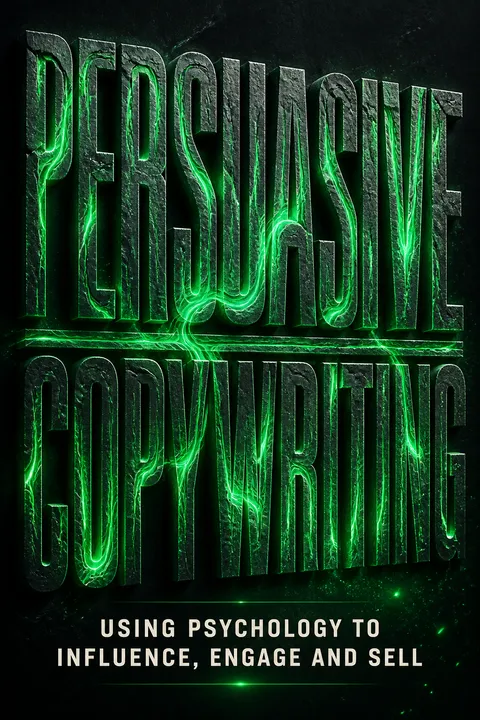


Key Takeaways
Sell the changed life, not the object sitting in your catalogue
Feeling moves choice. Maslen’s central claim is that people rarely choose by weighing facts alone. Emotions mark what matters and help a person choose; information then helps assess or explain that choice. A neurological example in the book comes from patients with damage to emotion-related brain systems: they could reason about options but struggled with simple decisions, such as choosing an ice-cream flavour. For copywriters, the practical point is to show what life feels like with a product, not merely describe its specifications.
Keep the brain model modest. The book uses the limbic system as a practical way to think about emotion and decision-making, while acknowledging that brain functions do not map neatly onto isolated regions. A conference, for instance, competes not just with its ticket price but with time at home, comfort, and other personal priorities.
What's useful here is the distinction between information and motivation. Decision research broadly supports the idea that preferences are not formed by detached calculation alone, though the book's brain-based explanation can sound more settled than neuroscience warrants. Emotion is not a shortcut around thought; it helps assign importance to choices, while evidence can still revise them. The ethical question is whether copy helps readers notice a genuine benefit or magnifies a desire they may regret. Strong persuasive writing earns its influence by making the promise both emotionally legible and factually defensible.
Map the reader's present feeling to a credible emotional destination
Name the starting point. Maslen calls the reader's current feeling about a problem the steady-state emotion, and the feeling the copy aims to create the target emotion. The pair gives a writer a concrete planning task: identify how the customer feels now, then decide what reassurance, hope, confidence, or urgency would help them act.
Look beyond the agenda. To sell a conference, a list of speakers and sessions may be less compelling than the actual sacrifices involved: time away from family, familiar surroundings, or a chance to impress a boss. The copy can then address the other side of that emotional balance, such as a break, new contacts, or career opportunity. Readers may feel several things at once, so the job is to find the dominant emotion tied to the problem, not pretend people are emotionally simple.
This pairing resembles a basic tool in motivational interviewing, where a practitioner first understands a person's present concerns and then supports movement toward a self-endorsed goal. That is a more respectful model than treating persuasion as a verbal shove. It also improves relevance: the same conference can mean escape to one prospect and professional risk to another. A useful discipline is to ask whether the desired emotional destination belongs to the customer or only to the campaign. If it is not genuinely plausible, emotional targeting becomes projection.
Promise a meaningful outcome, then give curiosity a reason to continue
Lead with the result. A feature says what a product contains; a benefit says how that feature helps. A promise reaches further by describing a desired change. A spade's comfortable handle may prevent blisters, but the larger appeal could be a garden the owner feels proud of. The promise creates a reason to keep reading, while leaving room for the reader's natural question: how will this happen?
Use curiosity honestly. Maslen also discusses secrets and withheld information as attention hooks. Their pull comes partly from the appeal of scarce knowledge and insider status. But a hook creates an obligation: the copy must deliver what its opening implies. Promises should be specific enough to matter and credible enough to keep. Guarantees or a clear explanation of what happens if results fall short can make the offer more trustworthy.
A compelling promise works like an information gap: it gives readers enough to recognize a valuable possibility, but leaves a question unresolved. Curiosity can sustain attention, yet it is fragile. If a headline manufactures mystery without delivering useful substance, readers learn to distrust the source. The most durable promise is therefore not the most extravagant one. It is the outcome a customer can picture, supported by a believable route and a fair account of uncertainty. That combination respects both attention and agency.
Let a customer's story explain what a feature list cannot
Give the reader a human route in. A sales story can be built around a person, a specific problem, what happened, and how the problem was resolved. Maslen describes a fundraising letter for Salisbury Hospital's charity that opened with the experience of a real patient, Charlie Ross. The letter sought donations toward a CT scanner and produced a 5.6% response rate, with a reported return on marketing investment of 4,216.7%.
Make the details do the selling. The strongest stories show a recognizable person facing a concrete difficulty, rather than announcing that a company is innovative or customer-focused. Keep the action moving, use details that make the experience imaginable, and connect the resolution to the product or service. A story should not be entertainment detached from the offer. Its purpose is to help readers understand the difference the offer can make.
A well-chosen customer story reduces abstraction. In narrative psychology, readers often understand a situation by following a person through cause and consequence, rather than processing a detached list of attributes. That makes stories especially useful for unfamiliar or technical services. The reported campaign result is striking, but a single case cannot establish that storytelling alone caused the response; audience, offer, timing, and distribution also matter. Stories are strongest when treated as evidence with context, not as a substitute for evidence.
Write to one real problem, even when your audience numbers thousands
Personal beats merely personalized. Adding a name or job title to a generic message is personalization, not proof of understanding. Maslen recommends creating a detailed customer persona, an imagined but research-informed individual who represents the audience. The writer should ask what that person worries about, values, and wants others to think of them.
Start where the pain lives. A company selling a better mousetrap should focus on the customer's wish to be rid of mice, not on the trap's engineering. The book's example of a one-word arthritis headline illustrates the same principle: the reader notices the problem before the proposed remedy. Customer interviews, observation, and speaking a draft aloud can reveal the language people use for that problem. A persona guides empathy, but it should not harden into a stereotype.
The shift from demographic description to a felt problem is a practical form of user-centered design. It asks what people are trying to accomplish, not merely what category they belong to. Personas can help teams share an audience picture, but they can also turn into confident fiction when unsupported by interviews or behavior. The strongest persona is a revisable hypothesis. Customer language is particularly valuable because it exposes the gap between a company's preferred product vocabulary and the words that make a problem recognizable.
Combine credibility, emotional relevance, and reasons to believe
Build a complete argument. Aristotle's rhetorical model gives copywriters three kinds of persuasion: ethos, the speaker's trustworthiness; pathos, the emotional appeal; and logos, the reasoning or evidence. A copy message can use all three. A trader describing how a market-information service fits a real workday establishes relevant experience, shows the pressure of making timely decisions, and explains what the service provides.
Do not mistake facts for the whole case. Features and proof matter, but they may not explain why the offer matters to this reader. Emotion without credibility can feel manipulative; credibility without relevance can feel dull; emotion and authority without evidence can be empty. The practical test is whether the reader can answer three questions: why trust this source, why care, and what supports the claim?
This classical model remains useful because it treats persuasion as a relationship among speaker, audience, and argument. Modern trust research likewise suggests that expertise alone is not enough: perceived goodwill and understandable evidence shape whether a claim seems credible. The framework also guards against a common imbalance in business writing, where technical detail crowds out human consequence. Still, the elements are not interchangeable. A warm voice cannot repair weak proof, and impressive credentials do not establish that a product works as promised.
Make the next step feel like the natural ending of the promise
Do not drop the emotional thread. A reader may be ready to act after a persuasive story, only to meet a cold form or an awkward instruction. Maslen recommends treating the call to action as part of the customer experience, not administrative cleanup. Write it from the reader's perspective and keep attention on the promised outcome rather than the seller's need for money.
Remove hesitation, not choice. A conditional opening such as asking whether someone might want to order can make the writer sound unconvinced. A clearer request, paired with relevant reassurance such as a trial or refund promise, makes the next step easier to understand. The book's example of a Motor Sport magazine leaflet uses an invitation to join, a respected subscriber's endorsement, and a money-back assurance. The action is direct, but the reader retains an exit.
A call to action is also an interface. Behavioral design distinguishes motivation from friction: a person may want an outcome but still fail to act when the next step is vague, risky, or cumbersome. Clear language and reassurance reduce that friction. Yet urgency and assumptive phrasing can cross from clarity into pressure, especially where the choice is consequential. Good closing copy makes the action visible and manageable while preserving a genuine opportunity to decline.
Make reading pleasurable without making the writer the star
Use craft in service of clarity. Rhythm, sentence variety, sound, sensory detail, and surprise can make copy easier to stay with. Reading a draft aloud helps reveal where the pace drags or the language becomes awkward. A travel description of clear, warm water invites a reader to imagine an experience more readily than grand but abstract praise.
Treat grammar as a tool. Maslen argues that errors matter most when they confuse the message or distract the reader. Deliberate rule-breaking can suit a slogan, but accidental mistakes can undermine trust. The same test applies to jokes, puns, and elaborate metaphors: if the language draws more attention than the customer's problem or the offer, cut it. Pleasurable copy is not a performance by the writer; it is a smoother path to understanding.
This is a valuable distinction between style and display. Fluency research suggests that language that is easy to process can feel more comfortable, although comfort should not be confused with truth. A polished sentence can make a weak claim seem persuasive, so readability needs an evidentiary check. The advice on grammar is similarly functional: conventions matter when they protect meaning and credibility, not as rituals for signaling status. The reader's likely interpretation is a better guide than a contest over abstract correctness.
Treat social media as conversation, then judge it by business purpose
The medium changes the shape, not the audience. Maslen argues that online readers remain human beings with familiar needs, even when they use phones or social platforms. Short posts require compact, front-loaded language; social channels also reward a more conversational voice and genuine replies. A business should decide what each platform is for rather than posting simply because competitors do.
Do not confuse attention with value. Likes, followers, and clicks can provide quick feedback, but they are not the same as profitable relationships. Content can help deepen a connection by offering useful information, while social posts can direct people toward it. Images may attract attention, and concise text can help on small screens, but both need to support the message. Keep claims truthful and make the content fulfill the expectations created by its opening.
Social platforms combine public performance with rapid feedback, which can make visible approval feel like the goal. That feedback is useful for learning, but it can reward novelty or controversy without indicating trust, retention, or revenue. The book's insistence on commercial purpose is a needed corrective to metric chasing. At the same time, not every valuable interaction produces an immediate sale. A sound measurement plan distinguishes relationship-building signals from business outcomes instead of pretending either one tells the whole story.
Give ideas better raw material, then change your working conditions
Creativity begins before the blank page. Maslen recommends learning the product well enough to explain it simply, trying it where possible, and gathering ideas from books, stories, language, and everyday observation. For a conference celebrating its twenty-first year and linked to a billion dollars in deals, he connected those facts with a familiar film title and the idea of coming of age. The resulting subject line outperformed the client's usual approach, according to the marketer's account.
Make room for unexpected connections. The author finds that changing place, time, or writing materials can loosen habitual thinking. Word association, lists of rhymes and opposites, and cultural references provide material to recombine. The aim is not to force a clever line but to create more possibilities, then check that the result remains relevant to the product and audience.
The process resembles incubation in creativity research: people gather material, step away from routine, and allow less obvious associations to surface. Changing tools or surroundings can interrupt a familiar pattern, though no setting guarantees a good idea. The useful principle is to separate idea generation from evaluation. If every possibility is judged immediately, unconventional connections are discarded before they can be tested. The final relevance check matters just as much: surprise attracts attention, but only a meaningful connection helps sell.
Test a clear hypothesis before declaring a clever line a winner
Replace opinion with comparison. Maslen's final discipline is controlled testing. State what change is expected to improve, compare versions at the same time, divide recipients randomly, and change one major factor at a time. A test group should be large enough for results to mean something. Testing half the entire audience before learning whether a version works risks wasting a substantial share of the opportunity.
Measure the outcome that matters. Opens and clicks can help diagnose a message, but they are not automatically sales. The book cites an Economist campaign in which a four-page letter beat a two-page control, challenging the assumption that shorter copy always wins. The lesson is not to prefer long copy. It is to let results, rather than habit or a manager's preference, decide which version performs better.
This is the book's strongest safeguard against copywriting folklore. A/B testing turns taste into a falsifiable prediction, much like experimentation in the sciences. Its discipline is only as good as the design: small samples, multiple simultaneous changes, or a proxy metric can produce confident but misleading conclusions. Testing also cannot tell a team whether a tactic is respectful or whether a short-term lift damages trust. It answers a narrower question: under these conditions, which version achieved the chosen outcome more reliably?
Analysis
Maslen's book is a practical argument against treating copy as a container for product facts. Its real subject is attention: how a writer earns it, sustains it, and converts it into an informed action. The structure moves from motivation and empathy to persuasion, craft, channel adaptation, and testing. That sequence matters. It resists the temptation to begin with headline tricks before understanding the reader's problem.
The book is most distinctive when it translates psychology into planning questions. What is the customer feeling now? What should they understand, feel, and do? What concrete scene makes the offer's value visible? These prompts make abstract empathy usable. The case studies reinforce a practical claim: technical or supposedly dull products become interesting when their consequences for real people are made specific. The advice to interrogate products and speak drafts aloud also counters formulaic writing with observation.
Its main limitation is rhetorical overconfidence around neuroscience. The text acknowledges that brain regions do not map cleanly to individual functions, yet sometimes presents emotion-first decision-making as a simple universal sequence. Contemporary cognitive science describes a more interactive process: emotion, memory, attention, and deliberation influence one another, and their roles vary by task and person. This qualification does not weaken the copywriting advice. It strengthens it by shifting the justification from a single brain story to the observable fact that relevance, trust, and felt consequences affect attention and choice.
The ethical boundary is equally important. Persuasion can clarify a genuine benefit, or use fear, shame, flattery, and scarcity to narrow a reader's sense of choice. Maslen's emphasis on truthful promises, evidence, and fair guarantees offers a standard for separating influence from exploitation. His closing commitment to controlled testing is valuable because it replaces professional folklore with evidence, while leaving judgment about customer welfare in human hands. The book's durable lesson is not that emotion defeats reason, but that effective writing connects a real human concern to a credible offer and an easy-to-understand next step.
Review Summary
Persuasive Copywriting receives mostly positive reviews, with readers praising its engaging writing style, practical exercises, and comprehensive coverage of copywriting techniques. Many find it useful for both beginners and experienced writers, highlighting its insights into psychology and persuasion. Some criticize examples that resemble clickbait or contradict earlier points. Overall, reviewers appreciate the book's blend of theory and practice, considering it a valuable resource for anyone looking to improve their persuasive writing skills in marketing, advertising, and general communication.
People Also Read






Glossary
Steady-state emotion
Current problem-related feelingMaslen's term for how a customer feels about the problem before encountering a piece of copy. Identifying it helps the writer understand the reader's starting point, including concerns, hopes, or frustrations connected to the offer. It is a planning concept, not a claim that a person experiences only one emotion.
Target emotion
Desired post-reading feelingMaslen's term for the feeling a writer hopes the reader will have after reading the copy. It might be confidence, curiosity, reassurance, or urgency, depending on the situation. The target emotion gives the writer a way to check whether the message creates the intended response rather than merely presenting information.
Point of pain
Customer's salient problemThe specific difficulty or dissatisfaction that makes a product relevant to a prospective customer. Maslen uses the term to redirect copywriters from describing their product toward explaining the problem it can solve. The problem should be concrete and connected to the offer, rather than a vague appeal to discomfort.
Somatic Marker Theory (SMT)
Emotion guides practical choiceAntonio Damasio's theory, as presented in the book, proposes that bodily and emotional responses help people evaluate options and guide decisions. The book describes states such as anxiety or joy as markers that make some choices feel more or less advantageous. It uses the theory as a conceptual aid, while noting that brain-function research remains complex.
Ultra-Brief Copy (UBC)
Copy for tight spacesMaslen's term for very short writing used in formats such as social posts, subject lines, captions, and image alt text. UBC requires the writer to prioritize meaning, put important words early, and remove unnecessary language. It adapts the amount and presentation of copy to the space without assuming that online readers have different human needs.
Ethos, pathos, logos
Character, feeling, argumentAristotle's three modes of persuasion. Ethos concerns the speaker's credibility and character, pathos concerns the audience's emotions, and logos concerns the reasoning or evidence in the message. Maslen applies the model to copywriting, arguing that a strong sales argument gives readers reasons to trust, reasons to care, and reasons to believe.
KFC
Know, feel, commitMaslen's copy-planning mnemonic asks writers to decide what readers should know, feel, and commit to after encountering a message. It helps keep planning focused on the reader and the intended outcome, rather than on the information the company happens to possess. The mnemonic is a planning prompt, not a fixed template for every piece of copy.
FAQ
What's Persuasive Copywriting about?
- Psychological Principles: The book delves into how psychological principles can be leveraged in copywriting to effectively influence, engage, and sell.
- Emotional Engagement: It emphasizes the power of emotional connections over logical arguments in persuading readers.
- Practical Techniques: Andy Maslen provides actionable strategies and exercises, making it useful for both novice and seasoned copywriters.
Why should I read Persuasive Copywriting?
- Enhance Writing Skills: The book offers insights into crafting compelling copy that resonates with readers, boosting marketing efforts.
- Science-Based Approach: Maslen uses psychological research to explain the effectiveness of certain techniques, providing a solid foundation for persuasive writing.
- Real-World Applications: The strategies are applicable across various platforms, including social media, email marketing, and traditional advertising.
What are the key takeaways of Persuasive Copywriting?
- Emotions Drive Action: Emotional engagement is crucial for persuasion, as it drives action more effectively than logic.
- Three Persuasion Components: Aristotle's ethos, pathos, and logos are introduced as essential elements for effective communication.
- Practical Exercises: Each chapter includes exercises to practice the techniques, reinforcing learning and application.
What are the best quotes from Persuasive Copywriting and what do they mean?
- "Emotion drives action.": This underscores the book's central theme that emotional appeal is more effective than logical reasoning in persuasion.
- "You need to find an emotional connection with the customer, not with the product.": Highlights the importance of understanding customer emotions over product features.
- "Flattery will get you everywhere.": Suggests that compliments and positive reinforcement can effectively engage readers and prompt action.
How does Andy Maslen define emotional copywriting in Persuasive Copywriting?
- Harnessing Emotions: Emotional copywriting involves tapping into the reader's feelings to motivate action.
- Effective Language Use: The book provides a list of words and phrases that trigger specific emotions, aiding in crafting resonant messages.
- Mapping Emotions: Writers are encouraged to identify the audience's steady-state and target emotions to tailor their copy.
What is the TIPS method in Persuasive Copywriting?
- Tempt: Capture the reader's attention with an enticing promise or hook.
- Influence: Engage the reader's emotions and build rapport, creating a connection with the message.
- Persuade: Present compelling arguments and evidence to convince the reader to take the desired action.
What role does storytelling play in Persuasive Copywriting?
- Engaging the Reader: Storytelling is a powerful tool for capturing attention and making the message relatable.
- Building Emotional Connections: Stories evoke emotions and create a deeper connection, making the message memorable.
- Structuring the Narrative: Techniques for crafting compelling stories that highlight product or service benefits are provided.
How can I apply the techniques from Persuasive Copywriting to social media?
- Be Authentic: Maintain a genuine voice that resonates with the audience on social media platforms.
- Engage with Emotions: Use emotional appeals and storytelling to connect with followers and encourage interaction.
- Utilize Flattery: Complimenting your audience can enhance engagement and foster a sense of community.
What are the five Ps of effective copywriting according to Persuasive Copywriting?
- Personal: Writing should feel personal and relatable, making the reader feel valued.
- Powerful: The message should be strong and impactful, leaving a lasting impression.
- Productive: The copy should drive action, encouraging the reader to take the next step.
- Pitch: A clear and compelling pitch guides the reader towards the desired action.
- PS: A postscript can reinforce the message or add an incentive for action.
How does Persuasive Copywriting suggest handling objections in copywriting?
- Identify Objections: Anticipate potential objections and address them directly in the copy.
- Use Emotional Appeals: Tap into emotions to alleviate concerns and create urgency or desire.
- Provide Reassurance: Guarantees or testimonials can build trust and reduce perceived risk.
What is the significance of testing in copywriting according to Persuasive Copywriting?
- Data-Driven Decisions: Testing different versions of copy helps determine what resonates best with the audience.
- Controlled Experiments: Conducting A/B tests ensures results are statistically significant and reliable.
- Iterative Improvement: Testing is a continuous process that refines skills and improves writing based on feedback.
What are some common pitfalls in copywriting that Andy Maslen warns against in Persuasive Copywriting?
- Overly Complex Language: Avoid jargon or complex language that can alienate readers and obscure the message.
- Ignoring the Reader's Perspective: Write from the reader's perspective, addressing their needs and concerns.
- Neglecting Emotional Appeal: Failing to connect emotionally can lead to ineffective copy.

Download PDF
Download EPUB
.epub digital book format is ideal for reading ebooks on phones, tablets, and e-readers.








