

Key Takeaways
Treat creativity as a skill every student can practice, not a personality type.
Creativity takes many forms. The book challenges the idea that creativity belongs only to artists or unusually gifted students. A teacher can create by inventing fresh lessons, improving a system, solving a practical problem, challenging an unfair rule, or arranging conditions that help others do good work. These approaches are different, not ranked. In Apollo 13, for example, engineers with varied expertise collaborated to adapt available materials into a device that helped remove carbon dioxide from the spacecraft.
Make room for difference. A classroom that recognizes only polished artistic work overlooks students who think through data, systems, practical fixes, or teamwork. The authors argue that creative capacity grows through practice and that students benefit when teachers notice and use varied strengths.
The valuable shift is from asking who counts as creative to asking what kinds of contribution a task requires. This resembles cognitive diversity in team research: groups benefit when members bring different ways of framing and solving a problem, not merely different biographies. Still, categories can become new labels if treated as fixed identities. A student who likes systems today may want to make art tomorrow. The strongest use of these distinctions is to broaden recognition and invite experimentation, not to sort children into permanent types.
Use constraints to provoke invention instead of waiting for perfect tools.
Start with what is available. The book argues that creative classrooms do not require expensive equipment or a dedicated makerspace. Students can build with cardboard, tape, paper, and ordinary classroom supplies. In the Apollo 13 emergency, engineers had to adapt mismatched equipment using items on hand. In another example, young Caine built a cardboard arcade from packing materials and improvised games, then invited passersby to play.
Limits can focus thought. A short classroom challenge with a small supply box sometimes gave students useful boundaries and pushed them to try unconventional approaches. But the authors do not present scarcity as a prerequisite. They urge teachers to treat constraints as design conditions, while using the minds, interests, and experiences already present in the room.
A constraint can narrow the search space, making a problem easier to enter. That is why a small set of materials or a clear design brief can spark action where an unlimited blank page stalls. The caution is important: celebrating ingenuity must not become a rationale for underfunding schools. A cardboard prototype can teach experimentation, but it cannot always substitute for specialized tools, accessible materials, or expert instruction. Constraints are productive when they focus learning, not when they deny students opportunities.
Start with what students notice, wonder about, or want to change.
Awareness comes first. A project does not need to begin with a teacher-assigned problem or a fully formed solution. It can start with observing a phenomenon, following a question, noticing an injustice, understanding a particular audience, or exploring a personal interest. In one class, students learned about ongoing human rights abuses and chose to build an awareness campaign instead of completing the usual position paper. They produced media and events that reached thousands of young people.
Choice creates investment. The authors also describe a class project that gave students a portion of learning time to pursue interests, research them, make something, and share it. Students explored topics from sign language to music. The key is not unlimited freedom, but a genuine starting point students care about.
This approach aligns learning with intrinsic motivation: people tend to persist more readily when they see personal relevance and some control over the task. It also shifts students from recipients of problems to interpreters of their surroundings. That shift needs thoughtful facilitation. A topic that matters to students may involve painful experiences or groups they do not understand. Teachers can protect agency while helping students investigate respectfully, check assumptions, and avoid turning another person's hardship into a classroom prop.
Let research answer real questions, not fill out a worksheet.
Research is active learning. In the book, research means finding and evaluating information that helps answer a question. It can involve reading, watching media, collecting data, interviewing people, or experimenting hands-on. When one author's young daughter became curious about singing, her family explored rehearsals, performances, lessons, and recordings rather than simply supplying answers.
Match the method to the question. Students might study causes and effects, learn about an audience, compare existing products, understand how a process works, or practice a skill. They also need to judge whether a source is relevant, reliable, and biased. A photograph or video is not automatically more truthful than text, and online searches can surface misleading material. The purpose is not to gather facts mechanically, but to understand enough to design responsibly.
The expanded definition connects inquiry to real methods of knowledge-making. A student testing a model, reading a report, and interviewing a community member is learning that evidence depends on the question and the method. This is a stronger form of media literacy than memorizing a checklist because it asks learners to compare perspectives and verify claims. The challenge is that open research can overwhelm novices. Curated sources, modeling, and language supports can provide access without turning exploration back into a predetermined scavenger hunt.
Separate idea generation from judgment so quieter voices shape the design.
Give ideas room to grow. Fast, loud brainstorming can reward the most confident speakers and push quieter students toward silence. The authors recommend beginning with individual thinking, then sharing in pairs or groups. Students can add ideas without immediate evaluation, combine unlikely suggestions, and even propose deliberately impractical options to loosen the grip of obvious answers.
Then choose deliberately. Once a group has a broad set of possibilities, it can identify missing details, combine related ideas, and agree on what a successful design must accomplish. Students can compare their strongest options for originality, usefulness, feasibility, available materials, and time. The movement from open exploration to selection matters: judging too early suppresses possibilities, while never narrowing leaves a group without a workable direction.
The sequence protects both divergent thinking, which generates possibilities, and convergent thinking, which evaluates them. Quiet individual work is more than a courtesy; it changes who can contribute before social influence takes hold. This matters especially when students differ in language confidence, status, or processing speed. Yet a silent-first routine is not automatically equitable. Groups also need norms for listening, crediting ideas, and resolving disagreement, or the same influential students may still dominate once discussion begins.
Turn a promising idea into a plan with users, roles, and tests.
Make the concept workable. Before building, students clarify what they intend to make, who will use or experience it, what responsibilities each person will take, what tasks and materials are required, and why the design addresses the problem. A sketch or flowchart can show how the idea works, while a short explanation makes its purpose explicit.
Planning is part of creation. In a school project to develop an original play, students and teachers connected writing with history, mathematics, and science. Students contributed to the script, set, and effects, then performed for families and other students. A clear plan helps teams coordinate this kind of complex work. It should remain flexible, however, because research or early construction may reveal that the audience, design, or schedule needs to change.
This planning stage makes collaboration visible. In the language of distributed cognition, thinking is not located only in an individual's head; it also lives in sketches, timelines, shared materials, and conversations. Explicit roles can reduce confusion and make overlooked labor easier to see. They can also harden into narrow assignments that deny students new skills. A useful plan therefore clarifies accountability without making every role permanent, and treats revision of the plan as evidence of learning rather than proof that planning failed.
Give making enough time for confusion, tedium, and second attempts.
Creative work is work. Students may enjoy beginning a project, then hit frustration when their skills do not yet match their ambitions. The authors describe early video editing as painfully slow and first bridge models as likely to collapse. Fear, boredom, and team conflict are common parts of making, not automatic signs that a project is broken.
Support persistence without taking over. Time, meaningful goals, accessible tutorials, templates, clear material routines, and opportunities to ask for help can keep students moving. Short design challenges can also work: one class used a 45-minute block for quick builds with limited supplies and no grade attached. The purpose students find in a project can help them continue when the initial excitement fades.
The book resists the fantasy that creativity is effortless inspiration. That is useful because learners often interpret early awkwardness as evidence of low ability, when it may simply signal that a skill is new. Psychological safety and deliberate practice offer a helpful pairing: students need permission to make imperfect attempts and enough structured repetition to improve. Still, persistence should not mean pushing through every obstacle unchanged. Teachers must distinguish productive struggle from inaccessible instructions, exhausted students, or a design brief that needs reconsideration.
Treat feedback as evidence for the next version, not a verdict.
Build a revision loop. Students need clear criteria for assessing what works and what does not, then time to improve their prototypes and test them again. A father and son spent about 90 minutes adjusting a homemade ball-run until a small change made it work. The lesson is not that every failure resolves quickly, but that small observations can guide meaningful changes.
Make critique specific and usable. Feedback might come from testing a bridge, reviewing a film, comparing drafts, or listening to peers. The book describes a structured exchange in which a student presents a project, answers clarifying questions, receives focused feedback, restates what was heard, and identifies next steps. This separates criticism of a design from judgment of its maker and gives revision a concrete purpose.
This is formative assessment in its most useful sense: evidence arrives while there is still time to act on it. A score after completion often labels performance; a targeted observation during the work can change it. The authors' emphasis on strengths as well as weaknesses also reduces the deficit framing that makes critique threatening. Still, feedback quality is not guaranteed by a protocol. Students need practice noticing specific features, supporting comments with evidence, and deciding which suggestions fit their goals.
Send student work to real audiences, then learn from their response.
Finish by sharing beyond the teacher. A classroom assignment becomes more consequential when an intended audience can encounter or use it. High school students who made a World War II documentary saw a veteran's story reach the veteran's family after his death. Caine's cardboard arcade gained a much larger audience after a filmmaker documented it and invited people to visit.
Plan the route to the audience. The book treats promotion as an ethical way to connect a useful creation with people who may want it, not as permission to manipulate them. Students can choose where to present or publish their work, explain its value honestly, and notice who responds. The authors report that one Global Day of Design involved more than 450 schools and 40,000 students in 13 countries, showing how sharing can extend a classroom project's reach.
An authentic audience changes the standards of the work: clarity, usefulness, and responsibility matter because someone beyond the classroom may respond. It also gives students experience with public communication and rejection, not just production. The ethical distinction is crucial. Promotion should help people judge whether a creation suits them, not exploit attention or pressure them. Public sharing also raises questions of privacy, consent, and unequal exposure. Teachers can preserve the learning value by letting students choose appropriate audiences and boundaries.
Analysis
The book's central argument is that creativity is not a decorative enrichment activity. It is a way to organize learning around questions, evidence, making, revision, and public use. The LAUNCH Cycle makes that argument practical by giving students a repeatable path from noticing something to sharing a response with an audience. Its most distinctive move is to treat public release as part of the learning process, not as an optional celebration after the supposedly serious work is done.
The framework also corrects two persistent myths: that creativity requires special talent, and that structure suffocates originality. Its examples show how varied creative strengths can contribute to one shared effort, and how limits can make action possible. Equally important, the book refuses to romanticize the process completely. Making is slow, revision can hurt, and students need routines, time, and support. Teacher facilitation remains essential even when students own the questions and decisions.
The strongest caution is that student choice alone does not guarantee deep learning or fairness. A compelling project still needs disciplinary knowledge, accessible materials, explicit standards, and evidence that students learned what the curriculum intended. Authentic audiences can add purpose, but they can also introduce privacy concerns or unequal pressure to perform. The authors acknowledge that design thinking does not guarantee better test scores, a useful restraint amid claims that innovation solves every educational problem.
The enduring value of the book is its practical account of agency: students become makers not through motivational slogans, but by repeatedly doing the work of understanding a real situation, making a defensible choice, testing it, improving it, and communicating it to others. The teacher's role shifts from delivering every answer to designing conditions in which that work can happen. The cycle is most persuasive when treated as a flexible guide, not a new script imposed in the name of freedom.
Review Summary
LAUNCH receives generally positive reviews, with readers praising its practical approach to implementing design thinking in classrooms. Many find it useful for project-based learning and fostering creativity. Some criticize its length and oversimplification of educational challenges. Teachers appreciate the actionable ideas and framework provided, though a few feel it lacks depth in certain subjects. Overall, reviewers see it as a valuable resource for educators looking to incorporate creative processes and design thinking into their teaching methods.
People Also Read







Glossary
LAUNCH Cycle
Student design processA flexible, seven-part framework for student design work. Learners first notice a subject or need, develop questions, investigate the issue, explore possible solutions, make a prototype, evaluate and improve it, and share it with an authentic audience. The stages can overlap or repeat rather than functioning as a rigid recipe.
Creative Chasm
Gap between creating and consumingThe authors' term for the divide between people who mainly consume media or products and those who create and share them. They argue that conventional schooling can deepen this divide when students mostly receive information rather than make knowledge, products, services, or creative work of their own.
Wonder Day
Student-led inquiry practiceA classroom activity in which students begin with a question they genuinely want to answer, research it, summarize what they learn, and generate further questions. It gives students repeated practice in inquiry and research, often using a topic they already find interesting.
20% Time
Time for self-directed projectsA classroom adaptation of a workplace practice in which students use a portion of class time to pursue an interest, research it, create something connected to their learning, and share the result. In the example described, the teacher set aside one fifth of class time to support student-directed projects.
Product-market fit
Match between product and audienceThe alignment between what a product offers and what a particular audience wants or needs. In the book's classroom context, students refine their understanding of who may use their creation and communicate its value honestly, rather than assuming that every person will respond positively.
Creative Approaches
Different modes of creatingThe book's broad typology for recognizing that people contribute creatively in different ways. Some invent from scratch, examine and improve systems, design structures, solve practical problems, challenge rules that fail students, or create opportunities for a group. The categories are intended to value difference, not rank people or fix their identities.
FAQ
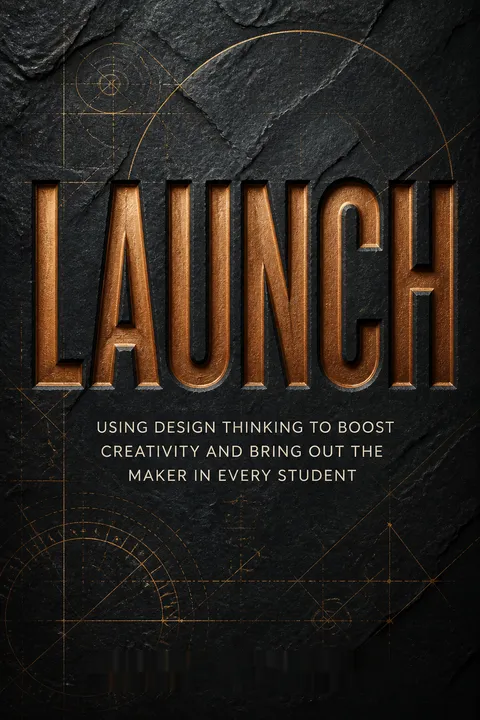
1. What is "Launch: Using Design Thinking to Boost Creativity and Bring Out the Maker in Every Student" by John Spencer and A.J. Juliani about?
- Book Focus: "Launch" is a practical guide for educators on integrating design thinking into classrooms to foster creativity, innovation, and a maker mindset in students.
- Core Framework: The book introduces the LAUNCH Cycle, a student-friendly, step-by-step process for creative problem-solving and project-based learning.
- Audience: It is written for teachers, school leaders, and anyone interested in transforming education to be more student-centered and creativity-driven.
- Purpose: The authors aim to empower teachers to help students become creators, not just consumers, and to make learning more engaging, meaningful, and authentic.
2. Why should educators read "Launch" by John Spencer and A.J. Juliani?
- Practical Strategies: The book offers actionable steps, lesson plans, and real classroom examples for implementing design thinking, making it accessible for teachers at any experience level.
- Addresses Common Barriers: It tackles challenges like lack of resources, time constraints, and fear of failure, providing solutions and encouragement for teachers to take creative risks.
- Student Empowerment: "Launch" emphasizes student choice, ownership, and voice, helping educators shift from traditional, compliance-based teaching to fostering genuine engagement.
- Inspiration and Support: The book is filled with motivational stories, quotes, and a supportive tone, encouraging teachers to see themselves and their students as inherently creative.
3. What is the LAUNCH Cycle in "Launch" by John Spencer and A.J. Juliani, and how does it work?
- Definition: The LAUNCH Cycle is a seven-phase framework for guiding students through the design thinking process in a classroom setting.
- Phases: The steps are: Look, Listen, and Learn; Ask Tons of Questions; Understand the Process or Problem; Navigate Ideas; Create; Highlight and Improve; and Launch.
- Student-Friendly: Each phase is designed to be accessible and memorable for students, with practical activities and sentence stems to support inquiry and creativity.
- Iterative Process: The cycle encourages ongoing revision, feedback, and authentic launching of student work to real audiences, making learning dynamic and meaningful.
4. How does "Launch" by John Spencer and A.J. Juliani define design thinking, and why is it important in education?
- Design Thinking Defined: Design thinking is presented as a flexible, empathy-driven approach to problem-solving that values creativity, iteration, and real-world application.
- Educational Value: The authors argue that design thinking helps students develop critical 21st-century skills like collaboration, communication, and resilience.
- Beyond STEM: While often associated with STEM, the book shows design thinking can be applied across all subjects and grade levels, from art to social studies.
- Empowerment: Design thinking shifts the focus from passive consumption to active creation, helping students see themselves as makers and innovators.
5. What are the main phases of the LAUNCH Cycle, and what happens in each phase?
- Look, Listen, and Learn: Students build awareness of a problem, phenomenon, or area of curiosity, often through observation, empathy, or personal interest.
- Ask Tons of Questions: Learners generate as many questions as possible, fueling inquiry and setting the stage for deeper research.
- Understand the Process or Problem: Students conduct research—reading, interviewing, experimenting—to gain a thorough understanding of the topic or challenge.
- Navigate Ideas: This is the brainstorming and planning phase, where students ideate, combine, and refine possible solutions or products.
- Create: Students build prototypes, write drafts, or otherwise make their ideas tangible, embracing the messiness and challenges of creative work.
- Highlight and Improve: Through feedback and testing, students identify strengths and weaknesses, revising their work in iterative cycles.
- Launch: The final product is shared with an authentic audience, and students reflect on the impact and feedback, often leading to new cycles of improvement.
6. What practical advice does "Launch" by John Spencer and A.J. Juliani offer for teachers with limited resources or time?
- Resourcefulness Over Resources: The book emphasizes that creativity does not require expensive technology or makerspaces; simple materials like cardboard and duct tape can be powerful.
- Time Management: Design thinking is presented as a way to integrate creativity into existing curriculum, not as an add-on, and can be adapted for short or long-term projects.
- Start Small: Teachers are encouraged to pilot the LAUNCH Cycle with a single class or project, gradually building confidence and support.
- Embrace Constraints: The authors argue that limitations can actually boost creativity, pushing students and teachers to think "inside the box" and innovate with what they have.
7. How does "Launch" by John Spencer and A.J. Juliani address common myths and fears about creativity in the classroom?
- Myth-Busting: The book dispels the idea that only certain people are "creative types," emphasizing that all teachers and students have creative potential.
- Failure as Learning: It reframes failure as a natural and necessary part of the creative process, encouraging a growth mindset and risk-taking.
- Structure Supports Creativity: Contrary to the belief that creativity is chaotic, "Launch" shows that structure (like the LAUNCH Cycle) actually enables deeper creative work.
- Inclusivity: The authors highlight that creativity is not limited by age, subject, or background, and provide strategies for supporting all learners.
8. What are the different types of creative teachers described in "Launch" by John Spencer and A.J. Juliani?
- The Artist: Loves to create from scratch, values autonomy, and sees creativity as natural and messy.
- The Geek: Enjoys tweaking systems, values data and research, and finds creativity in order and frameworks.
- The Architect: Designs new systems and structures, often working behind the scenes to enable creativity in others.
- The Engineer: Focuses on practical problem-solving, iterating and refining existing ideas for better solutions.
- The Hacker: Subverts or repurposes systems, finding new uses and challenging the status quo for creative improvement.
- The Point Guard: Creates opportunities and experiences, often facilitating collaboration and dynamic teamwork.
- Collaboration Value: The book stresses that schools need all types of creative teachers, and that collaboration among these types leads to richer learning environments.
9. How does "Launch" by John Spencer and A.J. Juliani recommend fostering student inquiry and question-asking?
- Encourage Wonder: Teachers are urged to create a classroom culture where curiosity and questioning are valued and celebrated.
- Model Inquiry: The book suggests modeling deep, open-ended questions and sharing personal curiosity with students.
- Provide Supports: Sentence stems, group brainstorming, and structured activities help students who struggle to ask questions.
- Practice Regularly: Inquiry should be a regular part of classroom routines, not just reserved for special projects, to build students' confidence and skill in questioning.
10. What role does launching student work to an authentic audience play in the LAUNCH Cycle and in "Launch" by John Spencer and A.J. Juliani?
- Essential Final Step: Launching is presented as the crucial, often-missing piece in creative projects, giving real purpose and motivation to student work.
- Authentic Feedback: Sharing with a real audience provides meaningful feedback, helping students see the impact of their creations and learn from the experience.
- Builds Confidence: The act of launching helps students develop creative confidence, resilience, and a sense of accomplishment.
- Marketing Skills: The book argues that learning to market and present work ethically is a vital life skill, and launching teaches students about persuasion, empathy, and communication.
11. How can teachers align the LAUNCH Cycle and design thinking with curriculum standards and assessment, according to "Launch" by John Spencer and A.J. Juliani?
- Flexible Integration: The LAUNCH Cycle is designed to fit within existing curriculum frameworks, not replace them, and can be mapped to standards in any subject.
- Standards-Based Assessment: The book provides tools like standards-based grids to help teachers assess both the process and the product of student work.
- Chunking and Connecting: Teachers are encouraged to group related standards and connect them to meaningful projects, ensuring depth and relevance.
- Self and Peer Assessment: Reflection, self-assessment, and peer feedback are integral to the process, supporting mastery and continuous improvement.
12. What are the key takeaways and best quotes from "Launch" by John Spencer and A.J. Juliani?
- Key Takeaways: All students and teachers are creative; structure enables creativity; failure is part of learning; launching work is essential; and design thinking can transform classrooms into spaces of innovation and engagement.
- Best Quotes:
- “If you assign a project and get back thirty of the exact same thing, that’s not a project. That’s a recipe.” — Chris Lehmann
- “Creativity is as much an attitude as it is an action. It is a decision to persist, to show up and do the work, even when you don’t feel like it.”
- “Making without launching is like cooking a four-course meal and eating it alone.”
- “Design thinking isn’t the answer. You are the answer. You are the one who can make it happen.”
- Meaning: These quotes encapsulate the book’s philosophy: creativity is for everyone, real learning is messy and meaningful, and teachers have the power to inspire lasting change.
Download PDF
Download EPUB
.epub digital book format is ideal for reading ebooks on phones, tablets, and e-readers.








