

Key Takeaways
Lead by lowering status and making service visible
Humility changes the signal. Before becoming pope, Jorge Mario Bergoglio rode public transport and lived simply. After his election, he declined the raised platform used for his first appearance and asked the crowd to pray for him. These choices communicated that authority did not place him above other people. The book argues that humility is not meekness. It is a way to make leadership more credible and attentive to those being led.
Service gives power direction. Francis described leadership as responsibility for others, especially those with the least protection. For a manager, that might mean removing status barriers, spending less on executive perks, and making time to hear employees directly. A humble gesture matters most when it changes how people are treated, not merely how a leader appears.
What's striking is how much leadership is communicated before a formal message is delivered. A shared workspace or an open conversation can lower the social cost of speaking honestly. Research on psychological safety, the sense that people can raise concerns without humiliation, supports the importance of those cues. Yet visible modesty is not proof of fair leadership. A leader can reject ceremony while keeping decision-making closed. The stronger test is whether humility redistributes attention, access, and credit.
Enter the daily world of the people you lead
Proximity reveals the work. As a bishop in Buenos Aires, Bergoglio spent time in poor neighborhoods and backed local efforts against paco, a dangerous, inexpensive cocaine. Priests built rehabilitation programs, farms, and apprenticeships that gave young people alternatives. When a priest leading anti-drug work was threatened, Bergoglio publicly supported him and spent time in the neighborhood. His presence helped show that the mission was not a slogan issued from a safe distance.
Make contact routine. The book points to Tesco's TWIST program, in which head-office managers spend a week doing store jobs, and recommends informal conversations and time on the front line. Such contact reveals obstacles that reports may hide. But immersion must include the people most affected, not just the most convenient or photogenic group.
This is a practical case for situated knowledge: people often understand a system differently when they experience its routines, constraints, and consequences directly. In organizations, that can expose workarounds that formal process maps miss. The lesson is not that a brief visit makes an executive an expert. Power differences remain, and employees may perform for a visiting leader. Repeated contact, careful listening, and visible follow-through make immersion more than workplace tourism.
Assess performance without reducing people to a verdict
Separate dignity from evaluation. Francis's response to questions about gay people distinguished condemning a person from assessing a situation. Leaders still need to evaluate work, but should do so through specific behavior, evidence, and dialogue rather than assumptions about someone's identity or worth. The book urges leaders to listen before deciding and to extend trust unless a person gives a concrete reason not to.
Build on demonstrated strengths. Citing research by John Zenger and Joseph Folkman involving 20,000 leaders, the book reports that managers seen as having no clear strengths ranked in the bottom third, while those seen as having one strength reached the 68th percentile and those with three reached the 84th. The practical point is to develop distinctive capabilities, not spend every review cataloguing flaws.
The distinction between judging a person and evaluating conduct helps prevent bias from masquerading as management. Frequent, specific feedback also gives employees a chance to respond and improve. Strength-based development can increase motivation and help people contribute where they are most capable. It should not mean ignoring deficiencies that create risk or block essential duties. Effective assessment pairs respect for the person with clear standards for the work.
Make inclusion a leadership practice, not a slogan
Change the posture first. Francis wanted the Church to be a home for people beyond its most observant members, including those who had left or felt unwelcome. He urged clergy to accompany people facing difficult circumstances instead of treating doctrine as a substitute for personal care. His early statements opened discussion about divorce and same-sex civil unions, though they did not themselves establish formal doctrinal changes.
Go looking for the absent. Inclusion, in this account, means more than leaving the door open. Leaders should seek out people who do not attend meetings, use a service, or feel represented. Francis asked church leaders to meet people where they were, listen to the reasons for their distance, and respond with patience. That can make an institution more relevant without pretending every disagreement is resolved.
Inclusion becomes credible when it changes access, voice, and treatment, not simply the language of a mission statement. The book is persuasive in emphasizing welcome as an active responsibility. It also helps to distinguish interpersonal hospitality from policy reform: a warm reception does not settle every institutional dispute. Leaders can still make meaningful progress by reducing unnecessary exclusion, explaining constraints honestly, and ensuring affected people participate in decisions about change.
Borrow outside ideas before your organization grows blind
Insularity blocks learning. The book describes the not-invented-here syndrome: an organizational habit of dismissing ideas, research, or products because they originated elsewhere. It can turn past success into arrogance. The author uses General Electric as an example of a celebrated company whose scale and confidence were associated with bureaucracy and inward focus.
Treat change as evidence. Intel faced powerful competition in memory chips and shifted toward microprocessors, while companies that cling to yesterday's strengths can lose relevance. Andy Grove called a major discontinuity a strategic inflection point. Francis's parallel was a Church that had become too focused on its own internal concerns. Leaders can counter this by consulting outsiders, connecting departments, and testing unfamiliar approaches. Borrowing is not copying blindly; it is admitting that useful knowledge may exist beyond the organization.
External input is valuable because organizations are often least informed about the assumptions they take for granted. Customers, competitors, and frontline staff can reveal changes that internal dashboards miss. The risk is treating a successful practice elsewhere as a universal recipe. Context matters: incentives, regulation, and capabilities differ. A healthy organization imports questions and experiments as readily as it imports solutions, then checks whether the adaptation works in its own setting.
Slow consequential decisions, then make their meaning visible
Process communicates priorities. Bergoglio later said that his earlier habit of making quick, unilateral decisions caused problems. He came to favor taking time, considering alternatives, and seeking counsel. After becoming pope, he formed an advisory group of eight cardinals from different regions. They advised him, while final authority remained his.
People choices carry strategy. Francis selected Pietro Parolin as secretary of state, a pivotal role in the Vatican. The book emphasizes that appointments communicate what a leader intends to change, just as a decision's public appearance can shape how it is understood. The lesson is not to perform decisions for optics. It is to consider who is affected, what a choice signals, and whether the process reflects the values behind the decision.
Deliberation can reduce the distortions of overconfidence, especially when a decision is difficult to reverse. Consultation also improves the information available to a leader, provided advisers can disagree safely. But consultation can become theater if leaders solicit views and ignore them without explanation. The useful balance is clear: gather challenge, decide with accountability, and communicate the reasoning. Optics matter because people infer institutional priorities from repeated choices, not just stated intentions.
Treat urgent human needs before bureaucratic refinement
Triage before paperwork. Francis compared the Church to a field hospital near a battle: its first task is to treat wounded people, not begin with an abstract checklist. He meant emotional and spiritual wounds as well as physical hardship. Poverty, bereavement, family conflict, and isolation call for immediate attention before institutional procedure takes over.
Bring authority closer to action. The metaphor also points toward mobility and decentralization. A field team must respond where need arises rather than wait for distant approval on every step. Applied to business, this can mean visiting customers directly, supporting employees who face urgent problems, and giving trained local teams room to act. Decentralization depends on capable people and clear responsibilities; it is not simply a leader stepping away.
The field-hospital image offers a useful priority rule: stabilize the urgent problem before optimizing the system around it. In service organizations, long procedures can become a way to protect the institution from discomfort rather than help the person in front of it. Still, triage is not a substitute for prevention or consistent standards. Fast local action works best when teams have training, resources, and a route to escalate cases beyond their expertise.
Move to the frontier where reality corrects your assumptions
Experience changes judgment. Francis used frontier to mean the difficult edge of ordinary work, where people meet problems directly rather than study them from a distance. He recalled a nun who cared for him during a serious lung illness and recognized that his condition required an intervention beyond the doctor's initial prescription. The story illustrates how repeated contact with patients had given her practical knowledge.
Choose useful discomfort. The frontier is not necessarily a remote place or a heroic assignment. It can mean learning the tools employees use, meeting customers face-to-face, or taking on work outside one's usual comfort zone. In the book's terms, leaders should encounter the conditions they want to change. Experience does not guarantee sound judgment, but it can expose where abstract plans fail against lived reality.
The idea connects to situated expertise: knowledge is often built through repeated interaction with the details of a task, not only through formal analysis. Leaders who spend time at the point of service can ask better questions and notice friction earlier. The anecdote should not be read as a general license to disregard professional protocols. Experience is strongest when combined with evidence, accountability, and respect for specialized expertise.
Name serious failures early, then build accountable remedies
Adversity can teach, but evasion compounds harm. Bergoglio's childhood combined school and factory work, and he later faced a grave lung illness. The book presents those hardships as sources of discipline and perspective. It also shows a sharper test of leadership in the Church's sexual abuse crisis. Francis initially made a defensive public statement about the Church's record, which drew criticism for shifting attention away from victims.
Acknowledge the damage. He then created an advisory commission that included a survivor and several women, and publicly asked forgiveness for abuse committed by clergy. The book's lesson is that a leader must confront serious problems directly, not wait for the story to fade. Apology matters, but it must be joined to safeguards, consequences, and transparent follow-through.
This is among the book's most important tests of its leadership portrait. Humility is not only a personal style; it is a willingness to let an institution's self-image yield to evidence of harm. Crisis communication cannot repair a failure if it centers reputation over those affected. A commission and apology are beginnings, not proof of resolution. Trust depends on whether investigation, accountability, and protection become durable practice.
Ask noncustomers what loyal customers cannot tell you
Look beyond the familiar. Peter Drucker used noncustomers to mean people who do not currently buy from or participate in an organization. The book reports his observation that much institutional information comes from inside, even though major shifts may first appear among people an organization does not serve. Their reasons for staying away can expose changing needs, failed assumptions, or new competitors.
Listen across the boundary. Francis sought to reach lapsed Catholics and people outside the Church, using personal outreach as well as social media. The book reports that attendance at papal weekly audiences rose from about 5,000 under Benedict XVI to about 85,000 during Francis's first year. Those figures describe attention, not necessarily lasting participation. Businesses can similarly use interviews, events, and digital channels to learn from people they have not yet reached.
Noncustomers can reveal demand that existing users have learned to work around or no longer notice. Their absence is data, though not a complete diagnosis: some may have no need for the service, while others face barriers the organization can change. The audience figures in the book capture a surge of attention, but attention is not the same as sustained engagement. Leaders should pair reach metrics with follow-up evidence about who returns and why.
Analysis
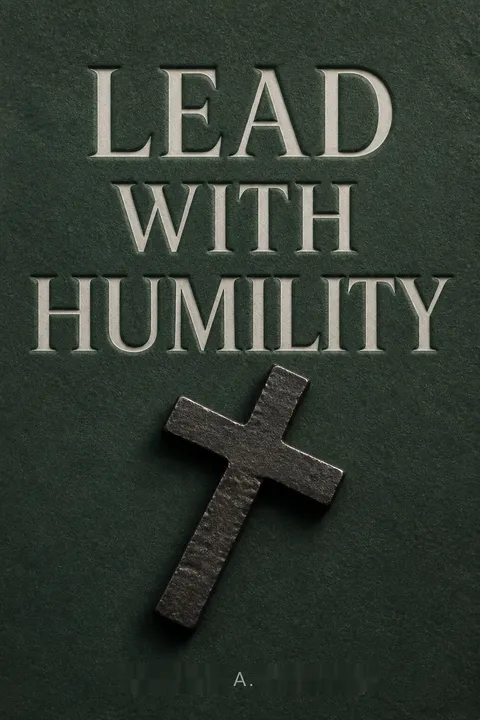
Lead with Humility is a leadership book built around a distinctive case: Jeffrey Krames reads Pope Francis's early papacy as a practical model for leading a large, tradition-bound institution. Its narrative moves from Bergoglio's formation and work in Buenos Aires to twelve lessons for organizational life. The central claim is not that humility replaces authority, but that authority gains legitimacy when it is exercised in service, close to people's circumstances, and open to correction.
The strongest parts of the argument are concrete. Francis's modest public choices make status visible and contestable. His neighborhood work demonstrates why leaders need contact with the people affected by their policies. His initial defensiveness around clergy abuse also supplies an important counterexample: an admired leadership style does not guarantee good judgment, and reputation cannot stand in for accountability. That tension makes the book more useful than a simple celebration of a charismatic figure.
The transfer from a religious institution to a company is illuminating but incomplete. A pope's moral authority, organizational role, and relationship with followers differ from those of a corporate executive. Likewise, a symbolic gesture can invite trust without changing resource allocation or policy. The book is most persuasive when it treats Francis's actions as prompts for organizational questions: Who is missing from the conversation? What does the decision signal? Which problems are visible only at the front line? It is less conclusive when it presents early popularity or reported business examples as proof of lasting effectiveness.
The result is a valuable set of leadership tests rather than a universal formula. Humility is demonstrated by access and listening. Inclusion is measured by who can participate. Pragmatism means adapting to reality without discarding core purpose. And courage includes admitting institutional harm. The durable insight is that leaders should remain close enough to be corrected by the people and conditions they claim to serve.
Review Summary
The reviews for Lead with Humility: 12 Leadership Lessons from Pope Francis are generally positive, with readers praising its insightful leadership principles derived from Pope Francis's example. Many appreciate the book's unique perspective, combining religious leadership with business applications. Readers found the content thought-provoking and applicable to various leadership roles. Some noted that while the ideas weren't entirely new, the Pope's approach offered a fresh perspective. A few reviewers mentioned the author's non-Catholic background as adding credibility to the observations. Overall, the book is seen as a valuable resource for leaders seeking to incorporate humility into their style.
People Also Read







Glossary
smell like your flock
Stay close to those servedA leadership principle meaning that a leader should spend meaningful time among the people being led or served. Direct contact with their routines, problems, and working conditions can reveal facts that reports and formal meetings miss. In the book, Bergoglio's work in poor neighborhoods and Tesco managers' store assignments illustrate this kind of immersion.
not-invented-here syndrome
Rejecting ideas from outsideAn organizational tendency to dismiss existing products, research, methods, or knowledge because they originated elsewhere. It can arise from institutional pride, internal turf conflicts, or reluctance to understand unfamiliar work. The book links this inward focus to insularity and argues that leaders should test useful outside ideas rather than assume their own organization has all the answers.
TWIST
Executives work in storesTesco Week in Store Together, a program described in the book in which office executives and managers spend a week performing store roles. Participants experience tasks such as receiving deliveries, stocking shelves, working checkouts, and serving customers. The stated aim is to strengthen understanding of store operations and improve knowledge-sharing across the organization.
strategic inflection point
A decisive market disruptionA term associated in the book with Andy Grove's account of major changes that can fundamentally alter a company's direction. Such a shift may make an established product or strategy much less viable. Intel's response to competitive pressure in memory chips, including its move toward microprocessors, illustrates why leaders must recognize discontinuities and adapt.
field hospital
Urgent care near needFrancis's metaphor for an institution that goes where people are hurting and addresses immediate needs before turning to less urgent questions. The book applies the image to the Church's care for people facing spiritual and material hardship, and extends it to organizations that respond quickly, stay close to customers, and empower capable teams near the problem.
frontier
The edge of lived experienceFrancis's term for the difficult, practical edge where people encounter problems directly. It refers less to geography than to proximity, experience, and willingness to act outside familiar routines. A leader on the frontier learns from people living with the issue rather than relying only on distant analysis or abstract plans.
Manage by Walking Around (MBWA)
Informal workplace visitsA management technique in which leaders regularly move through the workplace and speak informally with employees. The book recommends that these visits be frequent, unaccompanied, and focused on learning rather than criticism. The purpose is to gain a more immediate sense of morale, daily obstacles, and practical ideas from people doing the work.
noncustomers
People not currently servedPeter Drucker's term for people who do not currently buy from, use, or participate in an organization. Their reasons for staying away can reveal unmet needs, changing conditions, or weaknesses that current customers may not identify. The book argues that leaders should seek these perspectives alongside feedback from existing customers.
Download PDF
Download EPUB
.epub digital book format is ideal for reading ebooks on phones, tablets, and e-readers.








