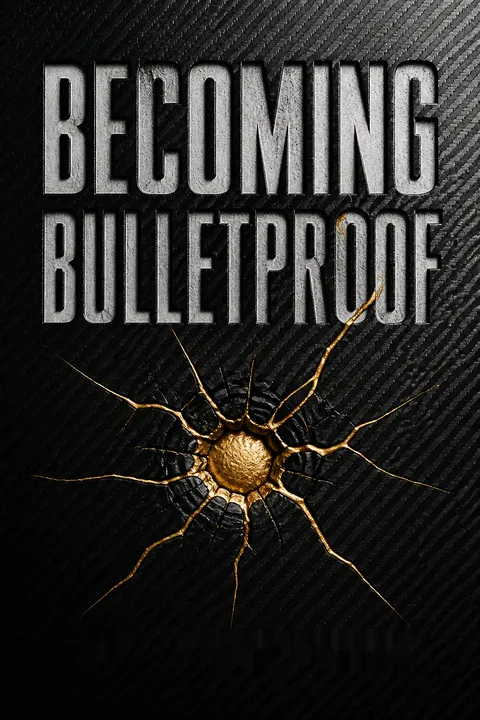


Key Takeaways
Become harder to stop by building layers, not chasing invulnerability.

Armor has limits. On September 11, 2001, Secret Service agent Evy Poumpouras was working in World Trade Center 7 when the towers were struck. As one tower collapsed, she sheltered beneath a metal table, choking in the dust and believing she might die. Her badge and training could not make her invulnerable. After surviving, she and other agents returned to help people escape and receive medical care. Civilians helped too, including a building worker who cleaned ash from her eyes and a child who offered her a drink.
Strength is layered. Poumpouras uses a bulletproof vest as a model for preparedness: each layer adds protection, but none covers every vulnerability. Mental control, practical preparation, awareness of other people, and compassion work together. The aim is not to eliminate fear or guarantee safety, but to improve the odds of thinking and acting when life turns dangerous.
The vest metaphor is powerful because it treats resilience as a system, not a personality trait. Safety engineering works similarly: reliable protection usually comes from several imperfect safeguards, since any single barrier can fail. The 9/11 story also places service at the center of the book, rather than celebrating toughness for its own sake. One necessary boundary: courage should not become an expectation that people expose themselves to danger. Preparation can support agency, but responsibility for violence belongs to perpetrators, not to those who were harmed.
Learn your fear response before a crisis chooses your next move.

Fear is information. Poumpouras describes the Fight, Flight, or Freeze response, abbreviated as F3, as the body's rapid reaction to perceived danger. In a home burglary, her mother froze while the teenage Poumpouras charged after the intruder. Their different reactions show why people should not assume everyone responds to threat in the same way. The book distinguishes fear, which can alert and prepare a person, from panic, which can make deliberate thought harder.
Know your pattern. Recall three moments of fear or conflict and notice what happened: did you confront, withdraw, or become stuck? The answer is not a permanent label or a judgment of character. It is a clue about which reactions may come quickly, and which alternatives may need conscious practice before a high-pressure moment.
This framework turns an abstract subject into a question people can examine in their own history. It also usefully removes shame from involuntary reactions: freezing is not a moral failure, and fleeing can be the safest choice. Modern stress research likewise treats defensive responses as variable and context-sensitive, not as fixed personality types. The practical limit is that retrospective self-assessment cannot predict every crisis. Familiar patterns are a starting point for preparation, not a script for how someone must behave.
Train your mind with small, repeated doses of discomfort.

Practice before the stakes rise. The Hormetic Effect is the idea that manageable doses of stress can prompt adaptation. Poumpouras describes training that gradually added demands until agents could make decisions amid physical exertion and confusion. In ordinary life, the same principle can mean rehearsing a presentation with a small audience before addressing a large one, or using practice interviews before applying for a dream job.
Make exposure deliberate. The book proposes a cycle: choose a manageable challenge, notice your reactions, adjust one behavior, and repeat. Poumpouras used extra running after falling behind during police academy training. The goal was not to enjoy the discomfort, but to discover she could remain engaged with it. Small challenges make the first encounter with a feared situation less likely to happen when the consequences are greatest.
The bridge between physical conditioning and psychological practice is intuitive: repeated, controlled exposure can make a situation more familiar and reduce its novelty. In learning science, rehearsal also gives people feedback they can use to correct specific errors. The dosage matters, however. Stress does not automatically make people stronger; overwhelming or repeated uncontrollable stress can deepen avoidance or distress. Useful practice needs a realistic level of difficulty, a sense of choice, and room to recover.
Prepare exits and fallback routes before you need them.
Plan while calm. In the Secret Service, the Advance team prepared for threats before the president arrived, while the Shift team stood ready to respond if prevention failed. Poumpouras applies that distinction to everyday safety. At a familiar venue, identify two ways out, notice what might provide cover, and consider where help is available. She recommends knowing routes to safe locations rather than relying entirely on a phone, which may be unusable during an emergency.
Notice the setting. The book's 3 P's for a potentially higher-risk public event are People, Place, and Press: a large crowd, a concentrated venue, and media attention. The framework is not a reason to avoid ordinary public life. It is a prompt to notice how a setting changes one's options. Home preparation, a travel plan, and a stocked emergency bag can reduce decisions made under pressure.
Advance planning is a form of cognitive offloading: decisions made before an emergency leave more attention available for the emergency itself. The advice is most useful when scaled to actual surroundings, such as learning exits in a crowded venue or agreeing on a family meeting place. Risk checklists can also create false confidence or feed excessive vigilance. They should increase practical options, not encourage people to interpret every unfamiliar person or busy public space as a threat.
Let the long game govern your response to conflict.
Compare the consequences. Poumpouras calls her decision tool the Gaming Framework: distinguish the long-term result someone wants from the short-term moves that might help or hurt it. While interviewing a suspect accused of harming a child, she felt the impulse to strike him. Instead, she focused on collecting information that could support a case and protect others. A moment of emotional satisfaction could have undermined the larger purpose.
Choose the useful move. The same logic applies to a provocative message, a hostile colleague, or a pointless argument. Pause, consider the likely consequences of replying, and ask whether leaving, waiting, or answering briefly better serves the goal. The book does not equate restraint with passivity: physical confrontation may sometimes be unavoidable, but it should not be confused with defending one's pride. Escaping danger is often wiser than winning an argument.
This is a practical form of self-regulation: a person evaluates an action against a valued outcome instead of obeying the strongest immediate impulse. It connects to implementation planning, where people decide in advance how they want to respond to predictable triggers. The framework also needs care. Long-term goals are not automatically virtuous, and endurance is not always wise when a situation is abusive or unsafe. Sometimes the best long game is leaving, seeking help, or setting a firm boundary.
Treat body-language shifts as questions, never proof.
Start with a baseline. A baseline is an understanding of how a person usually speaks and moves in a low-stress conversation. Poumpouras advises noticing clusters of changes rather than relying on one gesture. In a job interview, for instance, an applicant's leg began bouncing when questioned about drug use, stopped when the topic changed, and bounced again when it returned. That shift gave the examiner a reason to ask more, not a verdict by itself.
Look for corroboration. Speech patterns can also prompt follow-up. A rehearsed-sounding story, a sudden change in tense, or an answer that skirts the question may deserve clarification. The book recommends letting people explain events, then checking details that can be verified. A polygraph records bodily arousal, not truth directly, and visible anxiety may reflect fear, embarrassment, confusion, or other pressures rather than deception.
The strongest insight here is methodological: compare behavior with the person's own ordinary pattern, then investigate a change rather than imposing a universal code. That resembles signal detection, in which an observation updates a hypothesis but does not settle it. The caution is essential. Nonverbal behavior is shaped by culture, disability, personality, and context; nervousness is not evidence of guilt. Polygraph results are also contested because physiological arousal has many causes. These techniques are best used to guide fair questions and independent verification.
Ask open questions, then listen long enough to hear the real story.
Invite a narrative. Poumpouras uses TED to remember three open prompts: Tell, Explain, and Describe. Asking someone to describe a meeting tends to invite more information than asking whether it went well. She warns against leading questions, which smuggle in assumptions, and compound questions, which bundle several issues into one confusing prompt. A direct question can be useful later, once the speaker has had room to explain.
Let silence work. In an interview about an injured child, Poumpouras asked a nanny to recount the day and listened as she described mounting frustration. The nanny eventually disclosed what had happened. The interviewer did not need to dominate the room; careful listening revealed context that a rapid sequence of accusations might have shut down. In ordinary conversations, attention, patience, and follow-up questions can expose what matters to the other person.
Open-ended questions are useful not because every speaker will be accurate, but because they reveal what the speaker chooses to emphasize and how they understand the situation. Active listening also improves ordinary relationships by reducing the pressure to answer before fully understanding. The interview example involves a serious allegation, where skilled questioning must be paired with evidence and procedural safeguards. A vivid narrative can be mistaken, incomplete, or influenced by the interviewer, so listening should open inquiry rather than replace verification.
Influence through attention, dignity, and choice, not coercion.
Build trust deliberately. Poumpouras defines rapport as a sense of connection that grows when people feel understood and attended to. She recalls President Bill Clinton asking ordinary guests about their lives, even when time was short. In interviews, she recommends removing distractions, respecting privacy, and avoiding public humiliation. These gestures lower the social cost of speaking honestly and communicate that the other person is being treated as a person, not merely a problem to solve.
Leave room for agency. Influence, in the book's account, means guiding a specific interaction without trying to remake someone's entire character. Offering choices about small matters, such as where to sit or when to meet, can give a person more control. Empathy and subtle matching of speech or posture may support connection, but the purpose should be understanding, not disguising pressure as friendship.
The account links persuasion to basic interpersonal needs: attention, respect, and a measure of autonomy. Research on self-determination similarly suggests that people respond differently when they experience meaningful choice rather than control. Still, rapport is not proof of trustworthiness, and a warm interviewer can influence what a person says. The ethical test is whether the other person retains genuine agency and whether the interaction serves a legitimate purpose, rather than using empathy as camouflage for extraction.
Don't let your inner critic reject you before the opportunity does.
Apply before deciding. Poumpouras grew up amid real family fears about crime and safety, then chose law enforcement despite discouragement. She entered the police academy, struggled with running, and later accepted a chance to train for the Secret Service. Her experience illustrates self-editing: ruling oneself out before receiving an actual decision. The theory of possible selves, developed by psychologists Hazel Markus and Paula Nurius, describes how people imagine both who they hope to become and who they fear becoming.
Use regret as evidence. Poumpouras argues that people can carry lasting regret about opportunities they never tried, because the imagined alternative remains unresolved. That does not mean every ambition should be pursued at any cost. It means separating a genuine assessment of barriers from an automatic belief that failure is certain. An application, rehearsal, or first attempt can provide information that speculation cannot.
The useful distinction is between a constraint and a prediction. A person may face real barriers, but fear often turns uncertainty into a premature verdict. Applying can produce information, skill, and clearer choices even when the outcome is rejection. At the same time, this memoir cannot establish that everyone who persists will succeed; stories of achievement naturally foreground survivors. The most defensible lesson is not to ignore risk, but to make decisions from evidence rather than reflexive self-exclusion.
Use courage to protect people, not to perform toughness.
Courage has a purpose. The book ends with Poumpouras confronting her father's terminal illness and recalling the massacre her father once showed her at a monastery in Greece. Those experiences clarify the limits of control: preparation cannot prevent every loss, and courage cannot make grief painless. The author returns to the choices available even when circumstances cannot be changed: face reality, remain present, and care for people.
Make strength useful. Her models of leadership include Clinton's attention to strangers, George H. W. Bush's gratitude to staff, George W. Bush's consistency, Laura Bush's patience, and Barack Obama's restraint toward a critic. These are not tales of physical dominance. They show how character appears in everyday decisions, including how someone treats people with less power. In the book's final measure, protective skill matters most when it is used in service of others.
The ending reframes resilience as more than recovery or self-sufficiency. It includes accepting limits and continuing to act with care, a view that resonates with existential psychology and traditions of virtue ethics. The leaders' examples make abstract qualities observable in small interactions. There is also a needed distinction between compassion and self-erasure: helping others is meaningful, but a person cannot be responsible for rescuing everyone. Courage can include seeking support, setting limits, and grieving openly.
Analysis
Becoming Bulletproof is part memoir, part practical guide, organized around protection, reading people, and influence. Its strongest organizing idea is that capability is layered. Mental rehearsal, environmental planning, conversational skill, physical competence, and ethical purpose are not substitutes for one another. The opening account of September 11 gives that framework moral weight: the point of readiness is not to feel invulnerable, but to retain some ability to act amid uncertainty and to help where help is possible.
The book is most persuasive when it turns experience into a modest procedure: identify a habitual response, rehearse a manageable challenge, notice changes in a conversation, ask a clearer question, or plan an exit. Those practices make preparedness concrete without requiring elite training. Its stories also complicate simplistic ideas of bravery. Leaving a conflict can be strategic; listening can be more effective than force; a small act of kindness can matter more than a credential.
The most important caution concerns reading deception. The text sometimes gives body language and verbal patterns more diagnostic force than they can reliably bear. A shifting posture, pause, or change in eye contact may signal stress, but stress has many causes. Polygraphs measure physiological responses, not lies themselves. Accordingly, the best version of the book's advice is to treat cues as prompts for open questions and corroboration, never as stand-alone evidence or grounds for accusation. The same caution applies to safety: awareness should expand choices rather than turn ordinary life into a permanent threat assessment.
Taken critically, the book is less a literal manual for becoming bulletproof than an argument for practiced agency. It asks readers to face risk without worshipping fear, and to develop strength without confusing dominance for courage. Its most durable contribution is this pairing: become more capable of protecting oneself, while keeping that capability accountable to empathy, judgment, and the needs of others.
Review Summary
Becoming Bulletproof receives mostly positive reviews, with readers praising Poumpouras's personal stories and practical advice on safety, lie detection, and influencing others. Many appreciate her unique perspective as a former Secret Service agent. Some criticize the book for being too self-help oriented or containing obvious information. Readers generally find the author's experiences fascinating, though some wanted more behind-the-scenes stories. The book is seen as empowering and thought-provoking, offering valuable insights into personal safety and human behavior.
People Also Read








Glossary
Fight, Flight, or Freeze response
Automatic defensive reactionsThe body's rapid responses to perceived threat. Fight involves confronting a danger, Flight involves trying to escape it, and Freeze involves becoming temporarily unable to act. Poumpouras uses F3 as a practical way to examine habitual reactions, while emphasizing that no single response is correct for every situation.
Possible selves
Imagined future identitiesA psychological concept developed by Hazel Markus and Paula Nurius. It describes the future identities people imagine for themselves, including hoped-for selves they want to become and feared selves they want to avoid. These imagined futures can shape present choices, motivation, and the risks a person is willing to take.
Hormetic Effect
Adaptation to manageable stressThe book's term for the idea that low, controlled doses of stress can prompt adaptation. Poumpouras applies the concept to mental as well as physical training: gradually practicing an uncomfortable task may improve a person's ability to function under pressure. The stress must remain manageable; exposure alone does not guarantee beneficial learning.
Mental armor
Psychological protection from harmA psychological buffer that helps a person decide which criticism, hostility, or hardship to take in and which to resist. Poumpouras describes it as a skill, not an impenetrable wall. Its purpose is to preserve agency and confidence while still allowing connection with others.
Gaming Framework
Compare actions with goalsA decision tool that contrasts a short-term response with the longer-term result a person wants. The user weighs the immediate benefits and costs of an action, then checks whether it moves toward or away from the larger objective. Poumpouras uses it to interrupt impulsive reactions during emotionally charged situations.
Get Off the X
Move away from dangerA tactical lesson from firearms training: avoid staying still in a dangerous location when movement toward safety is possible. Poumpouras extends the idea beyond physical danger to situations that are escalating or emotionally harmful. Leaving, changing position, or reducing contact can prevent further exposure.
3 P's
Crowd, place, mediaA checklist for noticing features that may increase the vulnerability of a public event: People, meaning a large crowd; Place, meaning a concentrated venue; and Press, meaning media attention. The framework is intended to increase situational awareness, not to imply that every crowded or well-known location is unsafe.
TED
Tell, Explain, DescribeA mnemonic for asking open-ended questions. Prompts beginning with Tell, Explain, or Describe invite a person to provide a narrative rather than a brief yes or no. Poumpouras recommends them for gathering information before using narrower questions to clarify specific details.
Verbal economics
Spend words strategicallyA metaphor for treating words as resources whose value depends on how they are used. In Poumpouras's account, purposeful, audience-aware language is more likely to advance a communication goal than careless or excessive speech. The concept encourages speakers to consider the effect of their words on listeners.
Proxemics
Study of interpersonal distanceThe study of how physical distance between people communicates social meaning. Drawing on Edward Hall's framework, the book distinguishes intimate, personal, social, and public space. Distance norms vary by culture and setting, so movement closer should be guided by the other person's comfort and signals.
Third-Person Solution
View your problem from outsideA perspective-taking technique for getting distance from a personal dilemma. The person imagines that a friend is facing the same problem, then asks what advice they would offer that friend. The shift can reduce emotional entanglement and reveal options that are harder to see when the problem feels personal.
Ringelmann Effect
Reduced effort in groupsA named effect associated with research on group performance. In the book's example, participants exerted less force when pulling a rope as part of a group than when pulling alone. Poumpouras uses the finding to argue that solitude can sometimes support effort and focus, while recognizing that group work can be valuable for other tasks.
FAQ
What's Becoming Bulletproof about?
- Personal Empowerment Focus: The book emphasizes mental resilience and self-protection strategies, drawing from the author's experiences as a Secret Service agent.
- Fear Management: It teaches readers to recognize and manage fears, transforming them into tools for personal growth rather than obstacles.
- Reading People: The book delves into understanding body language and nonverbal cues to assess trustworthiness and intentions.
Why should I read Becoming Bulletproof?
- Real-Life Experiences: Evy Poumpouras shares firsthand experiences from her Secret Service career, offering unique insights into fear and protection.
- Practical Strategies: Readers gain actionable strategies for personal safety, mental resilience, and effective communication.
- Empowerment: The book encourages taking control of one's life, fostering empowerment and confidence in facing adversities.
What are the key takeaways of Becoming Bulletproof?
- Mental Attitude is Key: Mastering your mental attitude is crucial for overcoming fear and adversity.
- Preparation is Essential: Knowing your surroundings and having a plan can significantly reduce vulnerability.
- Trust Your Instincts: Listening to your gut feelings can alert you to potential dangers before you consciously recognize them.
What are the best quotes from Becoming Bulletproof and what do they mean?
- “The will to survive is fundamental to us all.”: Highlights the innate human instinct for self-protection and resilience.
- “Fear is relative to the situation you’re facing.”: Emphasizes that fear varies with context and understanding it aids in management.
- “You are the hero you’ve been waiting for.”: Encourages readers to recognize their potential and take charge of their lives.
How does Evy Poumpouras suggest we read people effectively?
- Observe Nonverbal Cues: Pay attention to body language, facial expressions, and gestures for insights beyond words.
- Establish a Baseline: Understanding a person's typical behavior helps identify deviations indicating stress or deception.
- Ask Open-Ended Questions: Encourages detailed responses, revealing underlying emotions or truths.
What techniques does Becoming Bulletproof offer for detecting deception?
- Cognitive Overload: Liars often struggle with inconsistencies due to cognitive overload when fabricating stories.
- Spontaneous Corrections: Truthful individuals are more likely to self-correct, indicating genuine recollection.
- Quotations and Complications: Including direct quotes and complications in a story can signal truthfulness.
How can I manage my fear according to Becoming Bulletproof?
- Preparation and Planning: Having a plan for various scenarios reduces anxiety and increases confidence.
- Practice Mindfulness: Staying grounded through mindfulness practices helps during stressful situations.
- Embrace Discomfort: Gradually facing fears builds resilience and diminishes their power over you.
What is the significance of situational awareness in Becoming Bulletproof?
- Proactive Safety Measure: Being aware of your surroundings helps avoid dangerous situations before they escalate.
- Mental Preparedness: Assessing your environment and identifying exits prepares you for emergencies.
- Empowerment Through Knowledge: Understanding your environment reduces vulnerability and enhances safety.
How does Becoming Bulletproof define a "bulletproof" mindset?
- Resilience and Strength: A bulletproof mindset withstands adversity and bounces back from challenges.
- Self-Accountability: Taking responsibility for actions fosters personal growth and learning from mistakes.
- Empowerment: Recognizing personal power and agency helps navigate challenges with confidence.
What role does self-worth play in Becoming Bulletproof?
- Cultivating Self-Respect: Valuing oneself and prioritizing self-care builds confidence and resilience.
- Authenticity: Being true to oneself fosters self-worth independent of external validation.
- Empowerment Through Self-Care: Self-care practices reinforce self-worth and maintain well-being.
What is the Fight, Flight, or Freeze response according to Becoming Bulletproof?
- Natural Reaction to Threats: The F3 response prepares the body to confront, escape, or become immobilized by danger.
- Individual Variability: People respond differently; understanding your response helps manage it better.
- Importance of Awareness: Recognizing your F3 response aids in preparing for threats and coping with fear.
How can I build rapport according to Becoming Bulletproof?
- Show Genuine Interest: Actively listening and engaging in conversation builds trust and encourages openness.
- Use Empathy: Understanding others' feelings fosters deeper connections and influences behavior.
- Mirror Body Language: Subtly mirroring body language creates a sense of connection and comfort.
Download PDF
Download EPUB
.epub digital book format is ideal for reading ebooks on phones, tablets, and e-readers.








