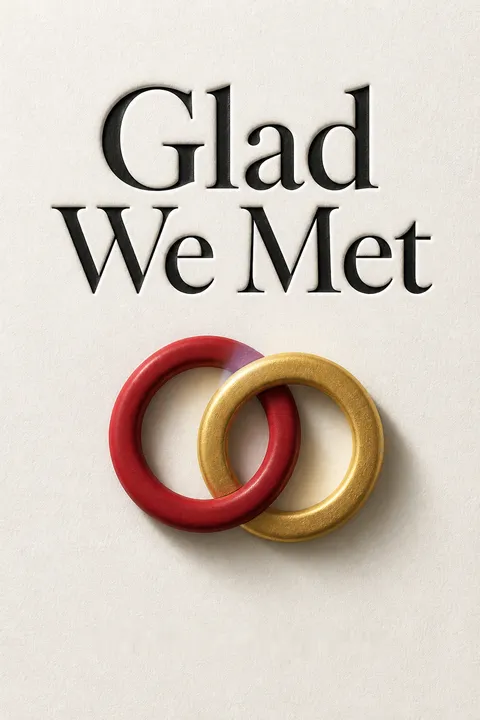


Key Takeaways
Treat each 1:1 as leadership work, not calendar clutter
A costly missed opportunity. Rogelberg estimates that 200 million to 500 million one-on-ones happen worldwide each day. Yet his early research found that nearly half were rated suboptimal by employees. These recurring conversations are meant to address both work needs, such as priorities and obstacles, and human needs, such as feeling respected and supported. Team meetings, informal chats, and an open-door policy do not reliably provide the same private, dedicated attention.
The returns can be broad. Gallup data cited in the book found that only 15% of employees whose managers did not meet with them regularly were engaged. Regularly meeting employees was associated with nearly triple that engagement level. Effective 1:1s can also support performance, retention, development, trust, and more useful performance reviews.
The argument is strongest when a 1:1 is treated as an investment in communication, not as a ritual whose existence guarantees value. The distinction matters: a meeting can consume time while leaving the employee unheard. The engagement figures make a compelling case for regular contact, but they are associations, not proof that meetings alone cause engagement. Workload, manager quality, and organizational conditions also shape the outcome. The practical test is therefore not whether the meeting occurred, but whether it helped the person do better work and feel safe enough to speak honestly.
Set a shared cadence before bias decides who gets your attention
Make access predictable. Without a plan, managers may meet more often with people they perceive as similar, or with employees they happen to see more frequently. The book names these tendencies the similarity-attraction bias and the propinquity effect. A recurring schedule makes access less dependent on affinity, visibility, or who asks most insistently.
Weekly is a useful default. In a survey of nearly 4,000 employees across France, Germany, the UK, and the US, the average desired frequency was four 1:1s a month. A 25-week study of technology workers found that employees with weekly meetings rated their managers nearly 10% more favorably on average than those meeting biweekly. New, remote, or less experienced employees may especially benefit from weekly contact. Team size, employee preference, tenure, and other communication channels can justify adjusting the plan.
A cadence is more than calendar hygiene. It functions as a fairness mechanism because it reduces the influence of informal access, which often tracks visibility and social similarity. At the same time, identical frequency is not identical support: a new employee and a seasoned colleague may need different amounts of guidance. The useful design is consistent enough to prevent neglect, but flexible enough to respect real differences. Managers should ask whether a less frequent schedule reflects the employee's preference or merely their own convenience.
Protect focus when scheduling, and choose meeting spaces with the direct
Make the logistics work. Clustering meetings can create longer uninterrupted periods for focused work, while scattered appointments force repeated task-switching. The book recommends short breaks between clustered meetings and protecting the focus blocks they create. If a manager must cancel, rescheduling promptly matters; even a shorter call can communicate that the employee remains a priority.
Choose for comfort and candor. A private office or conference room was favored by about half of respondents in Rogelberg's location survey. Walking meetings and coffee shops appealed to some, but were unfavorable to roughly 30%, making preference and privacy important. In-person meetings were slightly preferred, but virtual meetings were also broadly acceptable. The right setting is one where both people can focus, speak freely, and handle sensitive topics without being overheard.
The surroundings are part of the conversation because they influence attention, disclosure, and power dynamics. A walk can reduce the formality of sitting across a desk, but it is not automatically inclusive: mobility, weather, privacy, and personal preference can make it a poor fit. Likewise, a well-clustered calendar benefits the manager only if it leaves room for recovery and preparation. Good meeting design is not a single ideal room or schedule. It is a deliberate reduction of friction for both participants.
Let the direct shape the agenda, then reserve room for the future
Build the meeting together. The book describes two lightweight agenda methods. In the listing approach, each person brings topics, then the pair agrees what to cover, usually starting with the employee's items. In the core-question approach, the manager offers broad prompts, such as asking what is difficult or what support would help, while the employee directs the discussion. Rogelberg's data found higher value ratings when the employee or both parties created the agenda, rather than the manager alone.
Do not become a status report. The status update trap occurs when every meeting is consumed by immediate tasks and deadlines. Reserve a few minutes in each meeting, or dedicate one meeting periodically, to career goals, development, and longer-term concerns. Begin with connection and follow-up from the last meeting, and end by agreeing on next steps.
Shared agenda-setting is a practical form of autonomy: the employee has influence over what gets attention, while the manager contributes structure. It also counters a common organizational distortion, where urgent work crowds out important but nonurgent development. Still, employee ownership should not become a burden to perform or prepare a polished case for help. Managers can make participation easier by offering prompts, sharing their own proposed topics in advance, and making clear that the agenda can change when something more important emerges.
Solve work problems while making the person feel heard and respected
Two needs, one conversation. Rogelberg distinguishes practical needs, the support required to clarify, prioritize, and complete work, from personal needs, including respect, trust, inclusion, and feeling valued. A meeting that solves a project problem but leaves the employee diminished is incomplete. So is a warm conversation that never helps with the work.
Use five relational behaviors. Listen with empathy, communicate honestly, involve the employee appropriately, offer support and kindness, and show measured vulnerability. For example, a manager can ask how a proposed change looks from the employee's position before offering a solution. Vulnerability can include admitting a mistake or asking for help, but should not become oversharing that shifts attention onto the manager. Accountability and kindness can coexist.
This balance connects task-focused leadership with relationship-focused leadership. In practical terms, it prevents two familiar failures: the manager as efficient problem-solving machine who ignores the person, and the manager as friendly listener who cannot help remove obstacles. The personal side is not decorative. People are more likely to raise risks and ask for support when they expect respect rather than humiliation. Yet empathy should not be confused with agreement, and support should not mean taking over work the employee can own.
Listen before advising, and let employees help design the solution
Use a flexible conversation arc. The book's integrated 1:1 model moves from preparation and a positive opening into the main discussion, then closes with a clear conclusion. In the heart of the conversation, the manager invites the employee to explain, asks questions to understand causes, explores possible responses, and agrees on next steps. The stages can overlap; understanding the problem may reveal the solution.
Ask why before choosing how. In the book's orange illustration, two people both want one orange. Asking why reveals that one needs the fruit and the other needs the peel, so both can get what they need. In a 1:1, probing motives can uncover options that a quick compromise would miss. Employees should generally speak 50% to 90% of the time. If their workable idea differs slightly from the manager's, giving it a chance can build ownership.
The model resembles good diagnosis in medicine and collaborative problem-solving: gather the person's account before prescribing a fix. The orange story illustrates a useful shift from defending positions to uncovering interests. That shift can prevent managers from solving the wrong problem with confidence. However, employee ownership does not remove the manager's responsibility to intervene when risks are serious or the proposed approach is not viable. The skill lies in distinguishing a genuine safety or quality concern from a mere preference for the manager's own solution.
Turn each conversation into clear commitments, then revisit them
Write down the agreement. Commitments fail for many reasons besides unwillingness: people may interpret the task differently, forget it, lack time or authority, or encounter new barriers. The book recommends sharing brief notes within 24 to 48 hours, including who will do what and by when. Notes also preserve context for future meetings and can make performance reviews less dependent on recent events.
Make follow-through easier. Agree on specific, achievable, time-bound actions, including what support the manager will provide. Put work time on the calendar, use an accountability partner when helpful, and break a daunting task into an initial small step. If someone misses a commitment, first clarify what happened rather than jumping to a character judgment. If the manager fails to follow through, they should acknowledge it, apologize, and discuss how to repair the gap.
Written commitments act as external memory and shared interpretation, two functions that individual recollection cannot reliably provide. They also reveal an important management principle: accountability is not simply pressure applied after failure. It begins with making the promise concrete, feasible, and mutually understood. Documentation can become counterproductive if it feels like surveillance or is used as a dossier. Its value depends on whether it helps both parties coordinate and learn, rather than merely creating evidence against someone.
Measure success by the employee's experience, not your self-assessment
Managers can misread their own performance. In a study of nearly 4,000 executives, 24% rated their coaching skills above average while their direct reports placed them in the bottom third. Rogelberg argues that a manager's confidence is not a reliable measure of whether a 1:1 is useful. The employee's experience is central because the meeting is designed to meet that person's needs.
Ask, observe, and adjust. Invite specific feedback: What was useful? What should change? What should continue? Reflect on concrete behaviors, such as whether the employee spoke more, whether the manager listened, and whether support and next steps were clear. Teams can also use anonymous feedback. Longer-term signals, including engagement, retention, performance, and career progress, provide context, but many factors besides 1:1s affect them.
This is a strong application of feedback literacy: self-perception is treated as a hypothesis to test, not a verdict. Asking about observable moments is more useful than asking whether a meeting was simply good, because people can point to something that should be repeated or changed. Power differences complicate the process, however. Employees may hesitate to criticize the person who controls assignments or evaluations. Anonymous channels and visible, nondefensive responses can make feedback more credible than a manager's open invitation alone.
Use skip-level meetings for insight without bypassing the manager
Hear from farther down the chain. A skip-level 1:1 is a meeting between an employee and their manager's manager. It can reveal how work is experienced on the ground, build relationships across levels, gather reactions to plans, and offer career counsel. In Rogelberg's survey, 45% of respondents had skip-level meetings, and 57% said they wanted them.
Make the purpose explicit. Tell immediate managers and employees why the meetings are happening, so they are not mistaken for surveillance or a sign of trouble. Use a reasonable rotation, listen for themes, and follow up on promises. If an employee raises an issue involving their manager, ask whether they have discussed it with that manager and why they have or have not. Avoid approving changes or giving instructions that effectively replace the manager's authority.
Skip-level contact can reduce the distance between organizational strategy and day-to-day experience. It also gives employees a channel to be seen beyond their immediate reporting relationship. The danger is that access to a more senior leader carries unusual weight: a casual suggestion can sound like a directive, and candid disclosure can expose the employee to retaliation. Transparency, careful follow-up, and restraint are therefore not administrative niceties. They are conditions for making the channel trustworthy.
Recover meeting time by improving low-value meetings, not abandoning people
Reduce waste with shared rules. Before scheduling a meeting, ask whether its purpose is compelling, whether people need to interact to achieve it, and whether another channel would work better. Audit recurring meetings, trim attendance, and shorten default durations. A 50-minute meeting may accomplish what was previously assigned an hour. For large or virtual meetings, use active facilitation and consider silent written idea generation so more people can contribute.
Protect the purpose of 1:1s. Rogelberg's broader point is not that every meeting should survive unchanged. It is that reducing meetings without reducing priorities can remove collaboration and access rather than solving the real problem. Effective 1:1s are a practical way to enact values such as inclusion, support, and trust. Their worth comes from the quality of attention and follow-through, not from treating a full calendar as proof of leadership.
The book's most useful tension is that meetings can waste time and still be essential infrastructure for coordination and belonging. The answer is selective design, not a blanket meeting purge. Shorter durations and smaller invite lists can return time, but only if decisions and information are not simply pushed into invisible, unpaid work. A leader who makes room for direct conversations while auditing other meetings treats time as a shared resource. That approach links personal attention to organizational design rather than asking managers to solve overload through individual endurance.
Analysis
Glad We Met makes a case for an ordinary management practice by showing how much leadership is enacted in repeated, private conversations. Its central contribution is not a script for perfect meetings, but a disciplined balance: practical help with personal regard, structure with flexibility, and manager guidance with employee agency. The book's evidence draws on surveys, interviews, and organizational studies, which gives it breadth and useful real-world texture. The findings support recommendations such as regular cadence, employee-shaped agendas, active listening, written follow-up, and evaluation from the employee's perspective.
The argument is most persuasive when it treats the 1:1 as a channel for noticing and responding, rather than a cure-all. A recurring meeting can surface roadblocks, make feedback timely, and build trust, but it cannot by itself fix understaffing, unclear strategy, inequitable pay, or poor organizational decisions. Nor does a higher number of meetings automatically mean better management. Frequency is a useful default, while value depends on candor, competence, and whether commitments lead to action. The book acknowledges this through its emphasis on customization and measurement, though readers should keep the limits of correlational findings in view.
The practical framework also has a broader implication: conversation quality is partly a design problem. Cadence, privacy, agenda ownership, speaking time, documentation, and meeting load shape whether people can contribute. That shifts the burden from personality, such as being naturally charismatic, toward learnable practices. The strongest test is straightforward: does the employee leave with greater clarity, appropriate support, and a credible sense that their perspective mattered? If not, the calendar event may have happened, but the leadership work remains unfinished.
People Also Read









Glossary
Practical needs
Work and career supportThe support an employee needs to conduct, prioritize, and complete work, both immediately and over time. In a 1:1, this can include clarifying responsibilities, aligning priorities, removing obstacles, coordinating with others, and discussing development. These needs concern what helps the employee make progress, rather than how the interaction makes them feel.
Personal needs
Respect and relational supportAn employee's need to be treated considerately and to feel respected, trusted, included, supported, and valued. The book treats these needs as essential alongside practical work support. A manager can address them through empathy, honest communication, appropriate involvement, kindness, and measured vulnerability.
Status update trap
Meetings stuck in task updatesA pattern in which 1:1s focus almost entirely on immediate project details, deadlines, and progress reports. This leaves little room for relationship-building, employee concerns, career development, or strategic issues. The book recommends reserving time for longer-term topics, dedicating some meetings to them, or using an agenda that makes them visible.
Integrated 1:1 model
A flexible meeting sequenceThe book's approach to conducting a 1:1 combines preparation, a constructive opening, a flexible central discussion, and a clear close. The central conversation includes expressing concerns, clarifying and understanding them, developing solutions, agreeing on next steps, and monitoring the agenda. Relational behaviors, including empathy and respect, should shape every stage.
Feedforward
Advice for future behaviorA technique that asks for suggestions about improving a future behavior instead of reviewing a past mistake. The person seeking input names a goal, asks for ideas, listens without debating the suggestions, and decides what to try. Because it focuses on future possibilities rather than blame, it can make advice easier to request and give.
Skip-level 1:1s
Meetings across one management layerA conversation between an employee and their manager's manager. These meetings can build relationships across organizational levels, gather firsthand insight, and share information or career counsel. They should be introduced transparently and conducted without replacing or undermining the employee's immediate manager.
Pygmalion effect
Expectations shape treatmentThe tendency for expectations about another person's behavior to influence how they are treated, making the expected behavior more likely. The book applies this idea to preparation for 1:1s: assuming an employee can learn and develop may prompt more supportive, collaborative behavior, while low expectations can produce interactions that reinforce underperformance.
Download PDF
Download EPUB
.epub digital book format is ideal for reading ebooks on phones, tablets, and e-readers.








