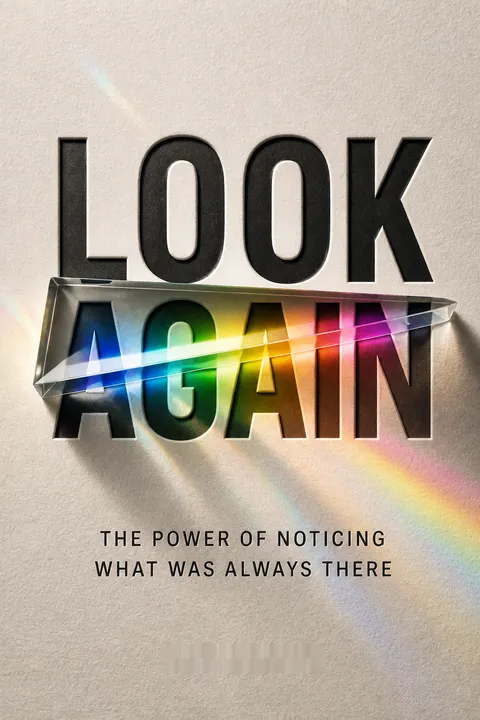


Key Takeaways
Your brain rewards novelty and mutes the familiar, good or bad.
The brain filters repetition. Habituation is the decreasing response to a repeated or predictable stimulus. It helps organisms save attention for what changes: bacteria alter their movement when nutrients shift, and people stop noticing steady background noise. In a visual illusion studied by physician Ignaz Troxler, a fixed image can seem to fade when the eyes remain still, then reappear when the eyes move. The same filtering reaches beyond sensation. A barking dog that once startled a neighbor becomes expected, and eventually barely registers.
A survival feature with costs. The brain prioritizes change because a new signal may mean danger or opportunity. That efficiency also dulls appreciation of good circumstances and awareness of persistent harms. Repetition makes life manageable, but it can also make the remarkable ordinary and the unacceptable seem normal.
What's striking is that attention behaves less like a camera than a change detector. This connects the book's everyday examples to predictive processing: perception is shaped by expectations, and mismatches earn more attention than confirmations. That helps explain both why familiar pleasures fade and why gradual harm can escape notice. The analogy has limits, however. Sensory filtering, emotional adjustment, and social normalization are related but not identical processes. Treating them as one mechanism risks obscuring important differences in cause and remedy.
Break up pleasures, but finish necessary discomforts in one sitting.
Use interruption strategically. In one study, volunteers who heard enjoyable music with short breaks liked it more than those who heard it continuously, even though nearly all expected the interruptions to spoil the experience. They were also willing to pay more to hear the music in concert. Breaks interrupt habituation, letting pleasure rise again when the enjoyable activity resumes.
Let unpleasantness fade. The reverse can work for an unpleasant task. People who experienced an irritating sound with a break found the whole experience worse than those who heard it without interruption. The pause allowed their response to the sound to return. The authors apply the same logic to vacations: reported enjoyment peaked around 43 hours after arrival, suggesting several shorter getaways may preserve more fresh starts than one long stay.
This is a useful correction to the intuition that comfort should be uninterrupted. In behavioral economics, timing and sequence can shape the total experience even when the ingredients stay the same. The principle may help with leisure planning and dull chores, but it is not a universal prescription: some unpleasant tasks require breaks for safety, fatigue, or accessibility. The practical question is whether a pause restores the person or merely restarts the irritation. Small experiments with one activity can answer that better than relying on prediction.
Choose novelty for learning, not just for a short-lived mood lift.
A good life has several aims. Happiness and meaning matter, but psychologist Shigehiro Oishi and colleagues describe a third aspiration: a psychologically rich life, filled with varied experiences and perspectives. A new job or city may initially feel rough, then become familiar; that adjustment does not prove the change was a mistake. Economist Steven Levitt invited people already considering major changes to use a coin toss. Those assigned heads were 25 percent more likely to change, and the changing group reported greater happiness six months later, though not everyone followed the toss.
Change can unlock ideas. Dick Fosbury struggled with conventional high-jumping, then developed a backward technique that won Olympic gold. A new landing surface and his engineering knowledge helped him rethink the familiar approach. Novelty can bring learning and creativity, not merely a burst of pleasure.
The distinction between happiness, purpose, and experiential variety is valuable because it resists turning wellbeing into a single score. A choice can be worthwhile because it expands skill or perspective, even if it adds temporary stress. The coin-toss result is suggestive, not a universal mandate to act: participants were already contemplating change, and some ignored the result. The deeper lesson is to judge a transition after allowing for adjustment, while also asking whether it opens a kind of learning that the familiar option cannot provide.
Take a break from constant feeds to measure their hidden cost.
A constant irritant can hide itself. The authors compare social media to a low-level buzzing device that stays present long enough to become hard to notice. In a study, users paid to deactivate Facebook for a month reported greater happiness and life satisfaction, and less depression and anxiety. They gained about an hour a day on average, often using it for reading, music, or time with other people. Research tracking Facebook's gradual arrival at universities also found declines in student mental health.
The tradeoff is real. Some participants felt cut off and learned less about news and politics. Many returned to Facebook after the experiment, but with direct experience of the alternative. A temporary reduction can reveal whether a platform's benefits outweigh its effects on attention, mood, sleep, and comparison with others.
The strongest part of this argument is its experimental spirit: when a constant influence is difficult to evaluate, alter exposure and compare. This resembles a personal crossover study, in which someone tests different conditions rather than trusting memory alone. Still, platform effects vary with purpose and user. A feed used for community support is not equivalent to one dominated by social comparison or harassment. The useful unit of analysis is not screen time in isolation, but what the person sees, how they feel afterward, and what the platform displaces.
Redirect attention after setbacks instead of repeatedly rehearsing them.
Recovery rates differ. In a study of students receiving exam results, both students who did well and those disappointed by their grades experienced a mood drop. Students without depression returned to baseline faster than students reporting depressive symptoms. The authors connect slower recovery to rumination, the repeated mental replay of a distressing event. Attention redirected toward other tasks and relationships can help a setback lose its grip.
Adaptation needs support. During COVID-19 lockdowns, many people returned to earlier levels of happiness within months, while people with existing mental health difficulties often adjusted more slowly. Some reorganized their homes, routines, and activities to fit the new conditions. Exposure therapy applies a related principle to phobias: carefully controlled, gradual encounters with a feared object can reduce fear. Adaptation is not automatic, and people who struggle may need resources, not blame.
This section usefully separates the initial impact of adversity from the speed of recovery. That distinction matters clinically: two people can face the same event and need different levels of support. Attention practices can help interrupt rumination, but they should not be mistaken for a cure or a moral test. Depression, trauma, and material hardship can constrain a person's ability to shift focus. The strongest practical reading is compassionate: build routines and safe, graded exposure where appropriate, while treating persistent distress as a signal for help.
Interrupt small dishonesties before moral discomfort wears away.
The first lie can lower the barrier. In a laboratory experiment, one participant advised another about jars of coins while secretly earning more when the partner overestimated the contents. Many participants began with small deceptions and increased them over repeated trials. Brain activity associated with emotional response to lying declined as deception grew. The participants could estimate accurately when their incentives changed, suggesting the rising errors were deliberate, not inability.
Make boundaries visible early. The authors connect this pattern to people whose small falsehoods gradually expand into serious fraud. They argue that households and organizations should address minor transgressions clearly, rather than treating them as harmless exceptions. The proposed mechanism is habituation: repeated misconduct becomes less emotionally uncomfortable, making the next step easier. Lies told solely to help another person did not escalate in the study, while self-serving lies did.
The experiment makes ethical drift concrete: incentives and repetition can shape conduct even when people begin with ordinary moral standards. This fits organizational research on normalization of deviance, where small departures from rules become routine if no immediate consequence follows. The warning should not be stretched into a claim that every minor lie predicts major fraud. Context, power, incentives, and accountability matter. The practical value lies in designing systems where questionable acts are discussable early, before silence is mistaken for acceptance.
Debunk false claims with accurate facts, not repeated falsehoods.
Familiarity can masquerade as truth. The illusory truth effect is the tendency to judge a repeated statement as more accurate. It has been observed across topics and among people with different levels of education and analytical ability. Repetition makes information easier to process and more familiar, while people may forget its original source or whether it was challenged.
Correct without amplifying. If a false post claims that most U.S. inmates are immigrants, repeating that exact claim in a denial can make the wording more familiar. A fact-based correction, such as stating that most inmates were born in the United States, avoids rehearsing the false association. In an experiment, people were more likely to share statements they had seen twice, partly because repetition increased perceived truth. Prompting users to consider accuracy and rewarding trustworthy posts are possible countermeasures.
The section explains why correcting misinformation is not simply a matter of supplying more information. Memory often preserves the claim better than its source or correction, a problem made worse by fast, repeated feeds. Accuracy prompts are promising because they redirect attention toward verification at the moment of sharing. Yet silence is not always safer: harmful claims may need a public response. Effective correction depends on audience, timing, and repetition, with the verified account made more memorable than the false framing.
Reset risk perception before routine makes danger feel harmless.
Success can distort judgment. Risk habituation is the tendency to feel less alarmed by a repeated risky action when previous attempts ended safely, even though the underlying danger remains. Escape artist Joe Burrus survived an earlier burial stunt, then attempted a more dangerous version involving a plastic coffin and cement. He died when the coffin collapsed. Repeated survival had not made the next stunt safe.
Make hazards noticeable again. Sweden's 1967 switch from left-side to right-side driving briefly made road use unfamiliar. Motor insurance claims fell by about 40 percent, then returned toward normal over the next two years as drivers adapted. Rotating safety warnings and varying workplace routines can likewise restore attention. Simulations can help, but repeated simulated danger may itself become familiar. Rules such as helmets and safety limits protect people even when caution fades.
The account clarifies a crucial distinction between learning and overconfidence. A run of harmless outcomes is evidence, but often too little evidence to estimate rare catastrophic risks accurately. Safety engineering addresses this by changing the system instead of demanding perfect vigilance from each person. That is especially important where workers or drivers face repeated exposure. Novel warnings can help, but attention is finite, and novelty wears off; layered protections are more dependable than alarms alone.
Measure environmental danger instead of trusting what feels normal.
Pollution can become background. In a study of students arriving at UCLA, newcomers from cleaner places noticed smog more readily than students raised in Los Angeles. Long exposure changed what seemed ordinary, and long-term residents were less likely to identify pollution as a community problem. In controlled rooms, people also reported less odor after only minutes, whether the source was body odor or tobacco smoke.
Use instruments, not just impressions. People may stop noticing worsening air or gradually changing temperatures, even when measurable conditions remain harmful. The authors compare this to flying in poor visibility: pilots rely on instruments rather than trusting their senses. Environmental monitoring can reveal trends that intuition misses. Clean-air spaces may temporarily restore sensitivity, but objective measures are needed to guide policy before habituation makes polluted conditions seem acceptable.
The central implication is epistemic as much as environmental: subjective comfort is not a reliable proxy for exposure. This aligns with public-health practice, where measurement can reveal invisible risks such as particulate pollution or toxic contaminants. The comparison to instrument-guided flight is apt because it makes uncertainty legible. A limitation is that data also needs interpretation and public trust. Monitoring is most useful when measurements are transparent, locally relevant, and connected to decisions people can understand and influence.
Treat political erosion as a sequence, not a sudden event.
Normalization happens stepwise. Accounts of ordinary Germans under Nazism describe restrictions and violence increasing gradually while people continued with work, meals, friendships, and daily routines. Each new violation could seem only slightly worse than the previous one. Some people also hid their real views, so neighbors could not tell how many others were alarmed. The result was less shared resistance and a growing sense that the altered conditions were normal.
Notice early departures from principle. The authors connect this gradualism to Stanley Milgram's obedience experiments, where many participants continued delivering increasingly painful shocks after each small increase. The laboratory is not equivalent to political terror, but it illustrates how incremental steps can reduce resistance. Paying attention to early restrictions, speaking openly, and making private concern visible can interrupt the process before each new step becomes the next accepted baseline.
This is a sobering account of how ordinary life can coexist with political danger. It shifts attention from exceptional villains to the social processes that make resistance difficult: distraction, fear, conformity, and uncertainty about others' beliefs. Historical analogy requires care, since contexts differ and not every policy change signals authoritarianism. Its value is not prediction by slogan, but alertness to cumulative changes in rights, enforcement, and public accountability.
Name normalized discrimination so others can finally see it.
Make the hidden pattern visible. A Red Cross pool-safety poster labeled children of color as uncool while presenting white children as cool. Many viewers missed the pattern until Margaret Sawyer pointed it out publicly. Once named, the bias became difficult to ignore. The authors call people who make overlooked norms newly visible dishabituation entrepreneurs.
Change expectations as well as minds. John Howard Griffin's account of traveling through the segregated South while passing as Black exposed readers to discrimination they might not encounter directly. Virtual reality has also been used to let people experience situations from another racial perspective, with studies finding reductions in implicit bias. Publicly tracking representation, as one neuroscience website does for conference speakers, can make unequal patterns visible and create pressure to correct them.
The section shows that noticing is partly social: one person's description can reorganize what a group sees. This resembles consciousness-raising practices in social movements, where private experiences become recognizable as patterned rather than isolated. Perspective-taking can help, but simulations cannot reproduce the full history or ongoing costs of discrimination. Durable change also requires institutional measures, including fair procedures and accountability, so that awareness is not mistaken for remedy.
Judge harm by lost capabilities as well as emotional distress.
Feeling better is not the whole measure. Courts sometimes award money for pain, suffering, and lost enjoyment after an injury. But people adapt, so a plaintiff who loses a physical ability may report good moods again over time. That emotional recovery does not mean the injury caused no harm. Someone who can no longer walk, play a sport, or use a sense has lost real options, even if daily happiness returns.
Avoid the focusing illusion. This is the tendency to exaggerate the importance of whatever occupies attention at the moment. A jury concentrating on one injury may overestimate its lasting emotional effect, while underestimating chronic pain or persistent limitations that do not fade. A fair assessment should consider both experienced distress and diminished ability to function, rather than treating either mood or adaptation as the whole story.
This argument extends the book's account of adaptation into a question of justice: wellbeing cannot be reduced to reported mood. Capability-based approaches in ethics and economics similarly ask what people are actually able to do, not only how content they say they feel. That offers a more complete measure of injury. It also complicates compensation, since judges must avoid both assuming permanent misery and treating resilience as proof that a loss is insignificant.
Analysis
The book's unifying claim is that repetition changes what people notice, feel, and treat as normal. Its force comes from carrying that insight across unusually different domains: a fading song, a dishonest choice, a polluted city, a political restriction, and an injury. That range makes the book memorable, but it also invites a useful distinction. Sensory habituation, emotional recovery, belief through familiarity, risk normalization, and social conformity are not a single process. They share a pattern of reduced response to repeated input, yet each has distinct mechanisms and requires different interventions.
The practical lesson is not to fight all habituation. Filtering stable input is essential to attention, and emotional adaptation can protect people from distress. The question is which signals should remain vivid. For pleasure, interruption can restore appreciation. For routine hazards, systems should compensate for declining vigilance. For injustice, public naming and comparison with alternatives can renew moral attention. For mental illness, slow recovery calls for support rather than pressure to adapt faster. This target-specific approach prevents the book's central idea from turning into a simplistic demand for constant novelty.
The authors are especially persuasive when they pair behavioral experiments with institutional examples. A laboratory result about repeated lies becomes more consequential when considered alongside workplace incentives; a finding about social media becomes actionable when framed as a personal trial. Still, evidence varies in strength. Some claims derive from controlled experiments, others from observational data or historical interpretation. Readers should distinguish a demonstrated effect from a plausible application, particularly when the stakes are political or medical.
The deepest contribution is ethical: what becomes familiar is not necessarily acceptable, and what no longer hurts emotionally may still matter materially. Looking again is therefore more than a route to gratitude. It is a method for auditing one's standards, environments, and institutions, while deciding where familiarity is a gift and where it has become a blindfold.
Review Summary
Look Again received mixed reviews, with an average rating of 3.66 out of 5. Some readers found it insightful and captivating, praising its exploration of habituation and its impact on daily life. Others criticized it as repetitive and lacking depth, suggesting it would have been better as an essay. The book's scientific approach and real-life examples were appreciated by some, while others found the personal anecdotes and political undertones distracting. Several reviewers noted that the book's main ideas could have been conveyed more concisely.
People Also Read








Glossary
Habituation
Reduced response to repetitionHabituation is the decline in a behavioral, neural, or emotional response when a stimulus is repeated or remains predictable. It allows attention to move toward new information. In the book, the process explains why people stop noticing background sounds, lose some pleasure in familiar experiences, or become less alert to recurring harms.
Dishabituation
Renewed response through changeDishabituation is the restoration of sensitivity after a change interrupts an established pattern. A break, altered setting, new perspective, or unexpected event can make a familiar stimulus noticeable again. The book applies this idea both to recovering appreciation for good experiences and to making neglected risks or injustices salient.
Adaptation level
Current emotional reference pointAn adaptation level is the reference point at which a stimulus, such as income or social status, no longer feels especially good or bad. It shifts with recent experience and expectations. The book argues that comparison with other people's apparent circumstances can move this reference point even without changing one's own situation.
Psychologically rich life
Life varied in experienceA psychologically rich life is one valued for diverse experiences, people, places, and perspectives, not only for happiness or meaning. The term, associated in the book with psychologists Shigehiro Oishi and Erin Westgate, describes a legitimate aim that may involve uncertainty or discomfort while expanding a person's understanding and knowledge.
Rumination
Repeated mental replayRumination is the recurring mental rehearsal of distressing thoughts or events. Rather than resolving a setback, a person repeatedly revisits and may magnify it. The book links rumination to slower emotional recovery, particularly among people with depressive symptoms, who may find it harder to redirect attention.
Risk habituation
Fading fear of repeated risksRisk habituation is the tendency to feel less alarmed by a risky behavior after repeated attempts that ended safely. The objective danger may remain unchanged, but emotional caution fades. The book connects this process to escalating gambling, workplace accidents, unsafe driving, and the fatal choices of escape artist Joe Burrus.
Illusory truth effect
Repetition makes claims seem trueThe illusory truth effect is the tendency to judge a statement as more credible after encountering it repeatedly. Repetition makes information feel familiar and easier to process, which can be mistaken for evidence of accuracy. The effect appears across subject areas and among people with varying levels of education and analytical ability.
Truth bias
Default assumption of honestyTruth bias is the tendency to assume that another person is telling the truth. Trusting ordinary communication makes social life possible, but the default can leave people vulnerable to fraud and misinformation. The book describes cases in which this assumption persisted despite suspicious circumstances or even explicit warnings.
Metacognitive myopia
Underweighting accuracy warningsMetacognitive myopia is the tendency to attend more to primary information, such as a claim about an event, than to information evaluating whether that claim is accurate. A correction may therefore receive less attention than the claim itself. This helps explain why repeating a falsehood while debunking it can reinforce familiarity with the false wording.
Adaptive preferences
Desires adjusted to deprivationAdaptive preferences arise when people adjust their desires and expectations to what seems available. Someone denied freedom or opportunity may gradually want it less or stop recognizing the deprivation as unusual. The adjustment can reduce immediate distress, but it can also weaken motivation to challenge harmful conditions.
Preference falsification
Concealing private views publiclyPreference falsification occurs when people publicly express views or preferences different from their private beliefs, often because of social norms, pressure, or threats. When people hide their concerns, others may mistakenly believe that a harmful status quo is widely accepted, making collective resistance harder to organize.
Dishabituation entrepreneurs
People who expose normalized harmsDishabituation entrepreneurs are people who identify a condition others have stopped noticing and make it salient through speech, action, or a new frame. Examples in the book include Margaret Sawyer, who drew attention to a biased pool poster, and Rosa Parks, whose refusal challenged the apparent inevitability of segregation.
Focusing illusion
Overweighting what is salientThe focusing illusion is the tendency to exaggerate the importance of a factor when attention is fixed on it. In the book's discussion of legal damages, a jury may dwell on a specific injury and overestimate its lasting effect on happiness, or overlook persistent pain and limitations that are less visible.
Experiments in living
Testing alternatives through experienceExperiments in living are encounters with different ways of thinking and acting that help people assess their own customs and assumptions. The idea, adapted from John Stuart Mill, holds that firsthand experience, travel, stories, and contact with unfamiliar perspectives can reveal both the strengths and the shortcomings of what once seemed natural.
FAQ
What's "Look Again: The Power of Noticing What Was Always There" about?
- Exploration of Habituation: The book delves into the concept of habituation, explaining how humans become desensitized to repeated stimuli, both good and bad, and how this affects our perception and behavior.
- Restoring Amazement: It explores methods to overcome habituation, allowing individuals to regain sensitivity and notice what they have become accustomed to, thereby enhancing happiness and creativity.
- Impact on Various Aspects of Life: The authors discuss how overcoming habituation can improve relationships, work, and community engagement, and how it can help address societal issues like discrimination and misinformation.
- Scientific Insights: The book uses research from psychology, neuroscience, and economics to explain why we habituate and how we can counteract this natural tendency.
Why should I read "Look Again: The Power of Noticing What Was Always There"?
- Practical Applications: The book offers practical advice on how to break free from the monotony of habituation, which can lead to a more fulfilling and aware life.
- Scientific Backing: It provides a well-researched perspective, drawing on studies from various fields to support its claims and suggestions.
- Broad Relevance: The concepts discussed are applicable to personal development, professional growth, and societal change, making it relevant for a wide audience.
- Engaging Narrative: The authors use engaging stories and examples to illustrate complex ideas, making the book both informative and enjoyable to read.
What are the key takeaways of "Look Again: The Power of Noticing What Was Always There"?
- Habituation is Universal: Everyone experiences habituation, which can dull our perception of both positive and negative aspects of life.
- Overcoming Habituation: By introducing change, taking breaks, and altering environments, we can dishabituate and regain our sense of wonder and awareness.
- Impact on Creativity and Innovation: Slow habituation can lead to greater creativity, as it allows individuals to see what others overlook.
- Societal Implications: Addressing habituation can help combat issues like discrimination and misinformation by making us more aware of biases and falsehoods.
How does "Look Again" explain the concept of habituation?
- Definition and Examples: Habituation is described as the process by which we become less responsive to repeated stimuli, such as a song or a job, which initially excited us.
- Biological Basis: The book explains that habituation is a fundamental characteristic of life, present in all animals, and is linked to neural processes that filter out constant stimuli.
- Emotional Habituation: It discusses how our emotional responses diminish over time with repeated exposure, affecting our reactions to both positive and negative experiences.
- Implications for Daily Life: Habituation can lead to a lack of appreciation for the good things in life and a tolerance for the bad, impacting our overall well-being.
What methods does "Look Again" suggest for overcoming habituation?
- Introduce Change: The book suggests making small changes in routine or environment to break the cycle of habituation and regain sensitivity.
- Take Breaks: Regular breaks from routine activities can help refresh our perspective and increase enjoyment and awareness.
- Engage in Novel Experiences: Seeking out new experiences and challenges can stimulate the brain and counteract the effects of habituation.
- Mindful Reflection: Practicing mindfulness and reflecting on daily experiences can help individuals notice and appreciate the details they might otherwise overlook.
How does "Look Again" relate habituation to creativity?
- Slow Habituation and Creativity: The book posits that individuals who habituate more slowly are often more creative, as they continue to notice details that others overlook.
- Change as a Catalyst: Introducing change, even in small ways, can stimulate creative thinking by forcing the brain to adapt and reassess.
- Cross-Disciplinary Insights: It highlights how exposure to different fields and perspectives can lead to innovative ideas and solutions.
- Examples of Creative Breakthroughs: The authors provide examples of how creative individuals have used their ability to see things differently to make significant contributions in various fields.
What societal issues does "Look Again" address through the lens of habituation?
- Discrimination: The book discusses how habituation to societal norms can lead to the acceptance of discrimination and how dishabituation can help combat it.
- Misinformation: It explores how repeated exposure to false information can lead to its acceptance as truth and suggests ways to counteract this effect.
- Environmental Awareness: Habituation to pollution and environmental degradation can lead to complacency, and the book suggests methods to increase awareness and drive change.
- Tyranny and Authoritarianism: The gradual habituation to oppressive regimes is examined, with insights into how awareness and action can prevent the erosion of democratic values.
What are the best quotes from "Look Again" and what do they mean?
- "We must learn how to be surprised. Not to adjust ourselves." This quote emphasizes the importance of maintaining a sense of wonder and curiosity, rather than becoming complacent and accepting the status quo.
- "A thousand things that had seemed unnatural and repulsive speedily became natural and ordinary to me." This highlights how quickly we can become accustomed to our surroundings, losing sight of what once stood out as remarkable or concerning.
- "Resilience is our ability to bounce back from life’s challenges and unforeseen difficulties." It underscores the role of resilience in overcoming habituation and adapting to change, both personally and societally.
- "Without change there is no innovation, creativity, or incentive for improvement." This quote encapsulates the book's message that change is essential for growth and progress.
How does "Look Again" suggest we can combat misinformation?
- Avoid Repetition of Falsehoods: The book advises against repeating false information, even to debunk it, as repetition can lead to belief.
- Promote Accurate Information: Encouraging the sharing of accurate information and rewarding reliability can help counteract the spread of misinformation.
- Increase Awareness of Biases: Understanding cognitive biases, such as the truth bias and the illusory truth effect, can help individuals critically evaluate the information they encounter.
- Use Technology Wisely: Leveraging technology to highlight accurate information and flag falsehoods can aid in reducing the impact of misinformation.
What role do dishabituation entrepreneurs play according to "Look Again"?
- Challenge the Status Quo: Dishabituation entrepreneurs are individuals who notice and challenge societal norms and practices that others have become accustomed to.
- Raise Awareness: By highlighting issues that have been overlooked, they help others see and address problems such as discrimination and injustice.
- Drive Change: Their actions can lead to social movements and reforms by making the unseen seen and prompting collective action.
- Inspire Others: They serve as catalysts for change, inspiring others to question and reassess their own beliefs and behaviors.
How does "Look Again" address the concept of risk habituation?
- Definition and Examples: Risk habituation is the tendency to perceive a behavior as less risky the more it is repeated, even if the actual risk remains the same.
- Impact on Behavior: This can lead to increasingly risky behavior, as individuals become desensitized to the potential dangers.
- Overcoming Risk Habituation: The book suggests methods such as changing environments, simulating negative outcomes, and using virtual reality to reset risk perceptions.
- Balancing Risk and Progress: While risk habituation can lead to dangerous behavior, it also allows for progress and innovation by reducing fear and encouraging exploration.
What future possibilities does "Look Again" explore for dishabituation?
- Technological Advances: The book envisions a future where technology, such as virtual reality, can be used to create dishabituation experiences that broaden perspectives.
- Global Connectivity: Increased global travel and online interactions can expose individuals to diverse cultures and ideas, promoting dishabituation.
- Personal Growth: By embracing change and seeking new experiences, individuals can continually refresh their perspectives and enhance their understanding of the world.
- Societal Change: As more people become aware of the effects of habituation, there is potential for widespread societal change and progress in addressing global challenges.
About the Author
Other books by Tali Sharot
Download PDF
Download EPUB
.epub digital book format is ideal for reading ebooks on phones, tablets, and e-readers.








