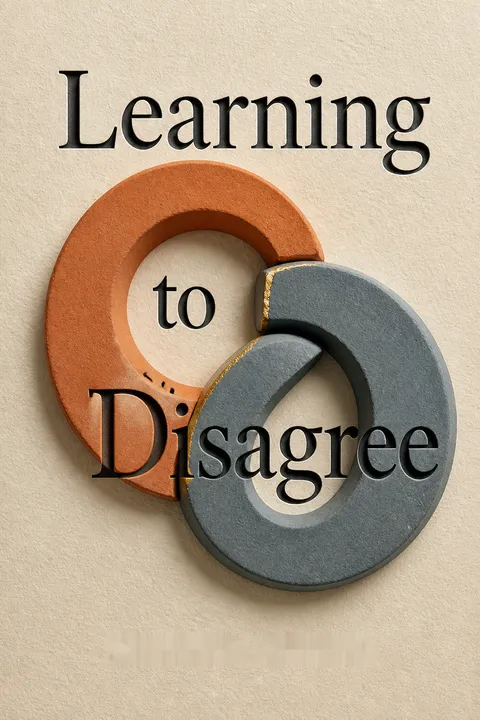


Key Takeaways
Practice empathy before verdict, especially when experience is missing
Start with what you cannot know. In a famous shipwreck case, three starving sailors killed and ate a fourth. Students can condemn them from the comfort of a classroom, but they cannot know how they would act after days without food or rescue. One student suggests that the ordeal itself may already have punished them. The point is not to excuse the killing. It is to slow judgment when someone faces circumstances far outside ordinary experience.
Understanding sharpens disagreement. Inazu argues that empathy means asking what motivates another person and how their reasoning works. That matters online, where colleagues arguing about abortion can become caricatures on a screen. It matters in law, too: understanding an opponent’s strongest argument makes it easier to challenge accurately rather than dismissing it as foolish.
What's useful here is empathy as a discipline of inquiry, not a demand to approve. Social psychology suggests that people often explain their own behavior through circumstances but explain others' behavior through character. Reconstructing context can correct that asymmetry. Still, perspective-taking has limits: a vivid account of hardship can eclipse the person harmed, and some arguments are made in bad faith. The practical test is whether understanding improves the accuracy of judgment while keeping consequences visible. Empathy should widen the evidence considered, not erase responsibility.
Treat fairness as a judgment shaped by context, not a self-evident fact
Circumstances change blame. A reckless driver who kills someone may be treated differently from a man who kills a friend during Russian roulette, even though neither intended the death. A student asks whether the distinction is fair, especially if a person’s background shaped what risks seemed normal. Another case concerns Jennifer Axelberg, who drove drunk to escape a husband attacking her. Her conduct cannot be understood without her motive and danger.
Privilege changes the experience, too. Inazu goes to traffic court expecting a fine, but the prosecutor dismisses his ticket after a brief conversation. He recognizes that his suit, education, and comfort around police helped him navigate a system that can overwhelm or endanger others. Fairness requires facts, judgments about responsibility, and attention to who bears the cost.
The chapter captures a central problem in legal and moral reasoning: equal rules do not guarantee equal treatment or equal consequences. Context-sensitive judgment can prevent rules from punishing people without regard to coercion, intent, or vulnerability. Yet contextual exceptions can also become inconsistent, favoring people who tell persuasive stories or resemble decision-makers. Procedural safeguards matter precisely because intuition is uneven. A fairer system needs both attention to individual circumstances and transparent standards that limit arbitrary discretion.
When compromise fails, contest the outcome without abandoning the rules
Some decisions have winners and losers. A law school can hire only a limited number of faculty, and a court cannot declare a killing both murder and not murder. In a domestic abuse case, Judy Norman killed her sleeping husband after years of severe abuse. The legal standard for self-defense required an imminent threat, leaving little room to recognize the danger shaping her choice. The case shows why some conflicts resist a comfortable middle ground.
Law resolves conflict through force. Courts and officials can enforce decisions because law ultimately carries the threat of coercion. That power can restrain private violence, but it also makes legal choices consequential. When a policy or ruling goes against someone’s convictions, Inazu recommends continuing to argue and persuade within the system rather than assuming that its destruction will produce a better one.
The insight resists a common false choice: either celebrate every legal result or reject the system altogether. Legal institutions can contain conflict while still producing outcomes that deserve challenge. Political theory calls attention to this tension between order and legitimacy. But preserving the process cannot be an excuse for treating every existing rule as acceptable. The more coercive the decision, the stronger the case for scrutiny, appeal, and reform. Staying engaged is most valuable when it includes a willingness to change the rules, not merely defend them.
Build trust before raising the conversation that could break it
Timing is part of honesty. When a student made a victim-blaming remark during a class on sexual assault, the professor had to correct the analysis without humiliating the student or letting the comment pass as acceptable. Continuing relationships make follow-up possible. Inazu advises against treating every hurtful statement as proof of someone’s settled character, especially when the conversation can continue in a more thoughtful setting.
Family can raise the stakes. Inazu ignored his own advice and had a painful disagreement with his father that ended their contact for years. They reconciled when his father was dying of lung cancer. The experience taught him that hard conversations sometimes need to happen, but not every relationship or moment is the right starting point. Trust built through ordinary time gives people more room to hear difficult truths.
This is a useful corrective to the idea that speaking up immediately is always the most courageous response. Conflict research distinguishes between raising an issue and choosing a setting where it can be heard; safety, trust, and power all shape the result. Deferring a conversation can be wise, but it can also become avoidance, especially when someone vulnerable needs immediate support. A practical distinction is whether delay creates a better chance of repair or simply protects the comfort of the person with more power.
Meet the person behind the paperwork, position, or irritating mistake
Routine systems hide human stakes. Looking for an old property record, Inazu encounters confusing signs, multiple lines, and a clerk who finally helps him find the right document. Ms. J. treats his search as a real need, not an interruption. His students experience similar confusion when assigned to observe criminal court. A routine form or late hearing can determine whether a defendant spends the night free or in jail, while lawyers and staff may have seen the same procedure hundreds of times.
Efficiency can obscure care. Inazu recalls telling his wife that an argument had cost them money because he had been billing his time. The comment exposed how readily he turned a relationship into a calculation. He suggests asking a friendly question and remembering that a brief encounter reveals little about another person’s life.
The chapter connects ordinary courtesy to institutional design. Human-centered design asks whether a process works for the person encountering it for the first time, not only for the staff who know its hidden rules. That lens makes confusing court systems more than an inconvenience: confusion can distribute risk unevenly. Personal kindness helps, but it cannot repair every structural failure. The strongest response combines humane attention with simpler procedures, clear instructions, and meaningful feedback for people who depend on the system.
No classroom or law is neutral, so make its values visible
Every rule favors some priorities. A Tennessee court restricted snake handling at religious services, while the Supreme Court allowed Amish families to educate teenagers outside conventional schools. Inazu argues that these decisions cannot be explained by neutrality alone. They rest on judgments about risk, parental authority, religious freedom, and the role of government. Even a school curriculum makes choices about what to teach and what counts as a reasonable argument.
Belief is not limited to religion. A case involving a small church that treated drugs as sacraments raises the question of who gets to decide whether a faith is sincere. From outside any tradition, its beliefs may sound strange. The same is true of moral and political commitments. Because no institution can avoid values, Inazu urges people to name their assumptions, examine opposing arguments fairly, and try to persuade rather than present judgments as neutral facts.
The argument is strongest when it separates neutrality from objectivity. A curriculum or legal rule can have a point of view and still be more or less accurate, fair, and open to correction. This distinction helps avoid two traps: pretending values are absent, and concluding that truth is therefore arbitrary. Deliberative democracy offers a useful standard: expose the reasons behind a decision, permit informed dissent, and revise claims when evidence warrants it. The hard question is who defines reasonable dissent, particularly when institutional power is unequal.
Call views wrong without turning every opponent into evil
Condemnation can erase important distinctions. In the nineteenth century, the federal government prosecuted Mormons for polygamy, restricted their ability to teach or belong to their church, and seized church property. Inazu describes this as persecution, even though many people considered polygamy morally wrong. The distinction matters: deciding that a practice is wrong does not automatically justify treating its adherents as enemies who must be driven from public life.
Disagreement needs concrete limits. In debates over same-sex marriage, religious objections, and equal access to services, people often assume the other side is either hateful or hostile to faith. Inazu argues for examining the actual setting and harm, such as the difference between several available bakeries in a city and the sole provider in a small town. He reserves the language of evil for grave acts, not every contested moral or political position.
This distinction can lower the temperature without flattening moral stakes. Dehumanizing opponents makes persuasion harder and can make coercion seem righteous. At the same time, describing a view as merely mistaken may understate its effects when it denies people safety or equal participation. The useful question is not only what a person intends, but what a policy does and to whom. Moral restraint should reduce casual demonization while preserving the ability to name serious harm and demand accountability.
Forgiveness begins with honest accounting, not pretending harm did not happen
Repair needs more than a demand to move on. During a dispute over a professor reading a historical racial slur in class, the professor agreed not to repeat it, yet protests continued. Inazu questions whether punishment without a path to repair can teach anything beyond fear. He does not argue that every offense should be excused; he asks what accountability is meant to accomplish when someone has acknowledged a mistake and changed course.
Forgiveness can coexist with memory. Inazu visits Manzanar, where his Japanese American grandparents were imprisoned during World War II. Decades later, the government formally apologized and provided restitution. His grandmother accepted the apology and forgave, although neither apology nor money could restore the years taken from her family. Forgiveness is difficult and may be partial, but it begins by recognizing both the wrong and the possibility that people can change.
Forgiveness is often confused with reconciliation, absolution, or abandoning consequences. These are distinct acts. A person can release some desire for retaliation while still naming an injustice, seeking restitution, or maintaining protective boundaries. Restorative justice practices make this distinction explicit by asking what happened, who was harmed, and what repair is possible. The chapter's examples also caution against prescribing forgiveness to victims. Its moral force lies in describing a choice people may make, not imposing an obligation on those who have suffered.
Make friendship from ordinary time, not agreement on every issue
Shared activity creates room for trust. Inazu brings his church friend Jack and his law-school colleague Gary together for golf. Their politics and backgrounds differ, but an afternoon of jokes, mishit shots, and celebration when Jack scores a hole in one gives them a shared memory. Friendship, Inazu suggests, needs both serious conversation and unremarkable time together. Constant debate is no more sustaining than a relationship that never goes below small talk.
Proximity can correct caricature. During a week offline at the beach, Inazu notices that he knows more about nearby families than about political strangers online. Their ordinary lives make it easier to assume complexity rather than malice. Not everyone can take a technology-free vacation, but the lesson is practical: create recurring, low-stakes moments with people who differ, and let familiarity grow before demanding agreement.
This is a social account of pluralism: durable relationships are built through repeated contact, not just well-run arguments. Research on intergroup contact finds that interaction can reduce prejudice under favorable conditions, especially when people meet as equals and cooperate toward shared aims. A golf outing is one model, not a universal solution; access, status, and unresolved harm shape who can safely socialize. The deeper point is that friendship gives disagreement a human context, while shared activity can make that context possible.
Analysis
Learning to Disagree is a memoir-shaped argument about the habits required to live with convictions in a plural society. Its organizing structure is not a single formula but a year of classroom and everyday encounters: the shipwreck case tests empathy, traffic court exposes unequal experience, religious-liberty disputes reveal hidden values, and family and friendship show how relationships survive disagreement. The professor's stories make abstract legal dilemmas vivid because they repeatedly turn the question back on the reader: what would seem fair, reasonable, or tolerable if the people involved were known personally?
The book’s central contribution is its insistence that disagreement is a practice, not a performance. Understanding an argument before criticizing it, choosing the right moment for a hard conversation, distinguishing a mistaken view from an evil person, and making room for forgiveness are learnable forms of civic character. Its legal examples also keep the message from collapsing into niceness. Law settles conflicts that conversation cannot, and those settlements carry coercive power. That makes persuasion and humility important, but it also makes accountability and institutional scrutiny indispensable.
The approach has limits. Familiarity and empathy do not guarantee justice; a persuasive story can bias judgment, and calls for patience can burden people already harmed by unequal power. The book is most compelling when empathy means better understanding rather than equal validation, and when forgiveness remains a possibility rather than a demand. Its practical invitation is not to avoid judgment, but to judge more carefully: identify the facts, admit the values involved, hear the strongest opposing case, and keep relationships open where doing so is safe and worthwhile.
The final image is deliberately modest. Offline at the beach, the author has fewer arguments and more contact with the people nearby. The world does not become less divided, but strangers become particular. That small shift captures the book's larger claim: civic life improves not through a magical consensus, but through repeated acts of attention that resist turning people into symbols, problems, or enemies.
Review Summary
Learning to Disagree receives mostly positive reviews, with readers appreciating its unique approach to navigating differences in a pluralist society. Many found the book's memoir-like structure and law school setting effective in demonstrating real-world examples of disagreement. Readers valued the emphasis on empathy, respect, and open-mindedness when engaging with differing viewpoints. Some critics felt the book lacked concrete strategies for resolving conflicts or didn't provide enough new ideas. Overall, reviewers found the book thought-provoking and relevant to today's polarized climate.
People Also Read





Glossary
First Amendment hero
Provocative speech without judgmentInazu's label for someone who treats legal permission to speak as a reason to say whatever is most provocative or offensive. The phrase criticizes speech used to demonstrate a principle or score a partisan point without considering persuasion, responsibility, or the people affected. It applies across political ideologies, not only to one side.
Fighting the hypo
Rejecting hypothetical factsA law-school response in which a student resists a professor's stipulated scenario by adding complications or changing its facts. Inazu uses the teaching technique to expose where a student's moral or legal reasoning leads when distractions are removed. The exercise is meant to clarify a principle, not to claim that real cases lack context.
Procedural fairness
Fairness through consistent rulesA focus on whether people follow consistent procedures, such as rules governing who may speak and when. In the book, procedural fairness can help institutions manage disagreement even when members do not share a settled account of what is good or just. It does not by itself establish that an outcome is substantively right.
Substantive fairness
Fairness of outcomesJudging whether a decision or outcome is good or just, rather than only whether the required procedure was followed. Inazu contrasts this with procedural fairness through examples such as punishment for unpaid court fees. A process can be orderly and consistently applied while still producing an outcome that deserves moral criticism.
The Middle
The broad average grade groupInazu's informal name for the large cluster of law students whose exam results are neither among the strongest nor the weakest. He emphasizes that this group can still consist of capable students at a highly selective school. The label illustrates how students accustomed to excelling may experience an ordinary ranking as a personal failure.
Civic responsibility and civic grace
Speak honestly, treat others kindlyInazu's paired standard for public disagreement. Civic responsibility means expressing sincere views and taking the consequences of speech seriously. Civic grace means treating people with care, including those whose beliefs are unpopular or offensive. The pairing rejects both reckless provocation and silence imposed by fear of social disapproval.
Reconciliation
Restored relationship after harmInazu uses reconciliation to mean the restoration of a relationship between parties. In his discussion of pandemic conflict, he connects it with both forgiveness and repentance: people must be willing to acknowledge harms and consider releasing resentment. He notes that reconciliation can be difficult, incomplete, and more actionable in personal relationships than in national politics.
FAQ
What is "Learning to Disagree" by John D. Inazu about?
- Year in the Life: The book follows a year in the life of a law professor, using stories from law school, family, and community to explore how we navigate disagreements.
- Navigating Differences: It focuses on how to engage with people who hold different, even opposing, beliefs with empathy, respect, and nuance.
- Practical and Personal: Through personal anecdotes and classroom vignettes, Inazu illustrates the challenges and rewards of practicing empathy, fairness, and forgiveness in a polarized society.
- Beyond Law: While rooted in legal education, the book’s lessons apply broadly to everyday life, relationships, and civic engagement.
Why should I read "Learning to Disagree" by John D. Inazu?
- Timely Relevance: The book addresses increasing polarization and the need for better ways to handle deep differences in society.
- Practical Tools: Inazu offers actionable advice and real-life examples for having difficult conversations and building empathy.
- Nuanced Perspective: The book avoids simplistic answers, instead encouraging readers to embrace complexity and ambiguity in disagreements.
- Personal Growth: Readers are challenged to reflect on their own biases, assumptions, and approaches to conflict, making it valuable for personal and professional development.
What are the key takeaways from "Learning to Disagree"?
- Empathy is Essential: Understanding others’ perspectives, especially those we disagree with, is foundational to healthy dialogue and relationships.
- Fairness is Complicated: Our sense of fairness is shaped by personal experience, and the law often reflects ambiguity and human judgment rather than clear-cut answers.
- Compromise Isn’t Always Possible: Some conflicts are zero-sum, but even then, we can engage with humility and seek understanding.
- Difficult Conversations Matter: Productive disagreement requires patience, humility, and the willingness to see people, not just problems or positions.
- Forgiveness and Friendship: Forgiveness is possible and necessary for reconciliation, and genuine friendships can form across deep differences.
How does John D. Inazu define and teach empathy in "Learning to Disagree"?
- Seeing Through Others’ Eyes: Empathy is described as “seeing with the eyes of another, listening with the ears of another, and feeling with the heart of another.”
- Law School as Training Ground: Inazu uses law school cases and discussions to push students to empathize with people in extreme or unfamiliar situations.
- Everyday Practice: Empathy is not just theoretical; it’s practiced in daily interactions, from classroom debates to family disagreements.
- Limits and Challenges: The book acknowledges that empathy has limits, especially when our experiences are vastly different from others, but encourages slowing down judgment and seeking understanding.
What does "Learning to Disagree" say about fairness and how we determine what’s fair?
- Fairness is Contextual: Our judgments about fairness are influenced by our backgrounds, experiences, and cultural assumptions.
- Law’s Ambiguity: Legal cases often reveal that fairness is not always clear-cut; the law relies on human judgment and is sometimes inconsistent.
- Procedural vs. Substantive Fairness: The book discusses the tension between following fair procedures and achieving just outcomes, especially in diverse institutions.
- Empathy and Fairness: The ability to empathize with others can shape and sometimes challenge our sense of what is fair.
How does "Learning to Disagree" address situations where compromise isn’t possible?
- Zero-Sum Conflicts: Some issues, like certain legal cases or policy debates, have winners and losers with no room for compromise.
- Law’s Role: The law often resolves these conflicts through rules backed by coercive force, highlighting the seriousness of legal authority.
- Navigating Loss: Inazu encourages readers to keep engaging and persuading, even after losing, rather than resorting to cynicism or calls for revolution.
- Empathy in Defeat: Even when compromise fails, understanding the other side’s motivations can lead to more constructive future engagement.
What practical advice does John D. Inazu offer for having difficult conversations in "Learning to Disagree"?
- Context Matters: Start with relationships and shared experiences before diving into contentious topics, especially with family or close friends.
- Charitable Engagement: Be as charitable as possible, ask good follow-up questions, and avoid taking offense too quickly.
- Distinguish People from Ideas: Separate individuals from their beliefs, recognizing shared humanity even when disagreeing strongly.
- Timing and Readiness: Not every moment is right for a hard conversation; sometimes it’s better to wait or focus on common ground.
How does "Learning to Disagree" explore the concept of neutrality, especially in law and education?
- Neutrality is a Myth: The book argues that true neutrality is impossible—every law, policy, or curriculum reflects underlying values and judgments.
- Case Studies: Examples like snake handling and Amish education show how legal decisions are shaped by nonneutral, value-based reasoning.
- Embrace Nuance: Recognizing the lack of neutrality should lead to more nuanced, persuasive arguments rather than dogmatic assertions.
- Persuasion over Pronouncement: Inazu advocates for open dialogue and persuasion, rather than pretending to be objective or above the fray.
What does "Learning to Disagree" say about the difference between being wrong and being evil?
- Wrong vs. Evil: The book distinguishes between people who are wrong (even deeply wrong) and those who are truly evil, cautioning against labeling all opponents as evil.
- Changing Standards: What is considered evil can shift over time, as seen in historical legal cases about polygamy and marriage.
- Presumption of Good: Inazu encourages starting with the assumption that most people are not evil, even when we strongly disagree with them.
- Practical Exercise: Readers are challenged to find something good in those they most disagree with, as a way to humanize opponents.
How does "Learning to Disagree" approach the topic of forgiveness?
- Forgiveness is Difficult: The book acknowledges that forgiveness, especially after deep harm or injustice, is challenging and often messy.
- Essential for Reconciliation: Forgiveness is presented as necessary for restoring relationships, both personally and societally.
- Examples of Forgiveness: Stories from history (e.g., Japanese American internment, Charleston church shooting) illustrate the power and complexity of forgiveness.
- Openness to Change: True forgiveness requires recognizing our own faults and being open to both giving and receiving grace.
What role do friendship and ordinary interactions play in "Learning to Disagree"?
- Friendship Across Difference: The book highlights the importance of forming friendships with people who hold different views, as a foundation for empathy and understanding.
- Ordinary Moments Matter: Shared activities and small talk are as important as deep conversations in building trust and connection.
- Balancing Deep and Shallow: Real friendships blend meaningful engagement with everyday interactions, making space for both.
- Opportunities for Growth: Cross-generational and cross-perspective friendships challenge and enrich our lives, shaping what we value most.
What are some of the best quotes from "Learning to Disagree" and what do they mean?
- “Empathy is seeing with the eyes of another, listening with the ears of another, and feeling with the heart of another.” — Highlights the core of the book’s approach to understanding others.
- “People don’t always get what they deserve in this world.” — Reminds us of the complexity and imperfection of fairness.
- “If you start a conversation with the assumption that you are right or that you must win, obviously it is difficult to talk.” — Emphasizes the need for humility in dialogue.
- “Each of us is more than the worst thing we’ve ever done.” — Encourages seeing the full humanity in others, not reducing them to their mistakes.
- “If we really want to love, we must learn to forgive.” — Underlines the necessity of forgiveness for genuine connection and healing.
What is the overall method or philosophy that John D. Inazu advocates in "Learning to Disagree"?
- Embrace Complexity: Inazu urges readers to resist oversimplification and to accept the ambiguity and nuance inherent in disagreements.
- Practice Empathy and Charity: The book’s central method is to approach others with empathy, seeking to understand before judging.
- Engage in Good Faith: Recognize that people can disagree strongly and still be acting in good faith, without surrendering one’s own convictions.
- Build Civic Virtue: By practicing these habits in daily life, readers can contribute to a healthier, more pluralistic society where disagreement leads to growth rather than division.
Download PDF
Download EPUB
.epub digital book format is ideal for reading ebooks on phones, tablets, and e-readers.








