

Plot Summary
The Drop's Brutal Arithmetic
At the Drop, a crate of scarce food and tools sends the Ledge’s starving villagers into a brawl. Dawsyn fights through the crowd and leaves with only flint and cloth, then returns to chopping wood and carving a table for Hector, her childhood friend. A blizzard traps her in his cabin, where their familiar, hurried intimacy briefly eases the loneliness they rarely discuss.
Hector is grieving the anniversary of his father’s capture, and he expects to stand in his father’s place at the coming Selection to protect his mother. He asks Dawsyn to stand behind his household. She refuses, unwilling to abandon her family’s cabin, and admits that the thought of another Selection has begun to feel almost like a release.
Scarcity shapes not only what Dawsyn can eat, but what kinds of relationships she can afford. Her gift of a table is an act of solidarity, yet the intimacy with Hector remains deliberately unpromised, a brief shelter against isolation rather than a shared future. Selection turns family loyalty into a public calculation: Hector offers himself to protect his mother, while Dawsyn insists on facing danger alone. Her exhaustion is already becoming dangerous because it makes survival feel less like a choice than a sentence.
The Den of Girls
Dawsyn’s memories reveal how her family was pared down: her father fell into the Chasm, her grandmother Valma died of illness, and her sister Maya was taken by the Glacians when Maya tried to reach their mother during Selection. Briar, Maya’s mother and Dawsyn’s guardian, kept functioning for a time, but grief hollowed her out.
On a later Selection Day, Briar walked with Dawsyn to the Chasm, spoke of the family they had lost, and then stepped over its icy edge. Dawsyn survived, but the cabin became a home with no one left to protect or remember her. At the next Selection, she approaches the Chasm alone, already weary of the life it has left her.
Dawsyn’s family history makes solitude more than a personality trait. Each loss teaches her that attachment can be taken without warning, while Briar’s suicide makes even love feel capable of abandoning her. Yet the memories also show how care survives in practical forms: lessons in fighting, work shared around a hearth, and stories that preserve the dead. Dawsyn’s toughness is not an absence of grief. It is a method for carrying grief without letting it decide every action.
Taken Across the Chasm
Before Selection, Josiah Redmond corners Dawsyn near the Chasm and threatens her with a knife. She knocks him unconscious with her hatchet, then pushes his body onto the ice and watches him slide into the abyss. At dusk, the Glacians descend and choose Dawsyn from the waiting villagers. Their talons tear into her shoulders and carry her across the Chasm, away from Hector and the only home she knows.
At Glacia, human prisoners chain her beside five other captives. Dawsyn recognizes people from the Ledge among the slaves, including Page and Gerrot, who now obey the Glacians. She is stripped of her weapons and thrown into a cell, where the prisoners’ wounds bleed and the cold makes survival uncertain.
Dawsyn’s violence toward Redmond is presented as an extension of the Ledge’s survival code, but it also leaves her confronting what that code permits her to become. Her capture turns the danger she has lived beside into a system that reaches across the Chasm and claims people by force. The familiar social world is inverted: former neighbors now serve their captors, and a weapon that once guaranteed some control is taken from her. Her first response to captivity is not acceptance, but a renewed search for leverage.
The Pool's Price
In the cell, the medicine woman Mavah tends Dawsyn’s wounds, while Carl dies after a Glacian bite spreads poison through him. When the captors bring food and lead the prisoners to King Vasteel’s banquet hall, Dawsyn sees human servants with blank faces and learns what the glowing Pool of Iskra does: it takes a person’s inner self and leaves an ageless, obedient shell.
The King offers the prisoners the pool or a run down the mountain for the court’s amusement. Mavah refuses the pool and cuts her own throat; the Glacians throw her body in anyway. Dawsyn rejects the same fate and chooses the slopes. The King appoints hunters, including Ryon, a dark-skinned winged Glacian who had warned her away from fighting him.
The Pool of Iskra converts exploitation into a false offer of mercy. The King frames erasure as relief from suffering, while the blank-eyed servants reveal the actual cost: life preserved by removing agency. Mavah’s refusal is tragic because the captors deny her even the dignity of choosing her own end. Dawsyn’s decision to run therefore asserts a narrower but crucial freedom, the right to risk death rather than surrender the self. The choice also places her inside the court’s spectacle, where her resistance is meant to entertain.
A Hunter Turns
Dawsyn bolts down the mountain with her hatchet and knife, but Ryon catches her beneath a tree and disarms her. He does not hand her to the other hunters. Instead, he returns her weapons and explains that he also needs to reach the valley. When two hunters find them, Dawsyn kills one and Ryon kills the other; Ryon then rejects his brother Phineas’s plea to return to Glacia.
He tells Dawsyn that he is half-Glacian, despised in the palace and raised in the mixed-blood Colony, and that his parents were punished for their relationship. The pure-blooded court depends on human souls because its own numbers are dwindling. Ryon plans to escape now and someday return to destroy King Vasteel’s rule.
Ryon first appears as a possible captor, but his actions complicate the simple categories Dawsyn relies on to survive. He can still be part of the machinery that takes human souls, yet he refuses to continue serving it. His rescue is not presented as innocence: he admits complicity and speaks of revenge as well as reform. Dawsyn’s distrust is therefore rational, not merely defensive. Their alliance begins as a bargain between people with overlapping needs, each watching the other for the moment self-interest might take over.
The Valley Below
As Dawsyn and Ryon descend, they face storms, a mountain cat, hunger, and the risk of being found by Glacian hunters. Ryon carries Dawsyn when her strength fails, and she finally accepts flight despite her fear of heights. From the air, she sees forests, rivers, fields, and an ocean, landscapes that had existed only in her grandmother’s stories.
They reach the ruined Fallen Village, where Dawsyn sees the remains of the settlement her ancestors lost. At an inn, she wakes to warmth, food, and clean bandages. Ryon explains how money works and gives her coins, while the innkeeper Salem welcomes her without demanding payment. Dawsyn plans to leave, but when Ryon offers to guide her, she chooses to see the Mecca first.
The valley’s abundance does not erase Dawsyn’s deprivation; it makes the deprivation newly visible. Grass, running water, and ordinary food arrive as sensory shocks because her body has been trained to treat every resource as scarce. The Fallen Village complicates wonder with inheritance: the beautiful world below is also the world from which her family was removed. Ryon’s care gives her room to experience that shock without deciding her future for her. Her choice to continue with him is a small but meaningful departure from survival by isolation.
The Queens Remember
Ryon leads Dawsyn through the Mecca, where she encounters crowded streets, shops, horses, and food she has never tasted. She insists on seeing Terrsaw’s rulers and forces her way through the palace entrance, fighting a guard before the others restrain her.
Queen Alvira recognizes Dawsyn as Valma Sabar’s granddaughter and introduces her wife, Queen Cressida. Dawsyn explains that Glacians took her from the Ledge and that she refused the Pool of Iskra. Alvira welcomes her and offers shelter, while Cressida doubts her account.
From the palace balcony, Alvira points out the Fallen Woman monument and describes Terrsaw’s memorial prayers for the people lost to the mountain. Dawsyn rejects the comfort of a shrine and leaves without accepting the Queens’ hospitality.
Dawsyn’s first encounter with Terrsaw’s power is both a homecoming and an accusation. She does not enter as a grateful refugee; she forces the palace to receive testimony from someone its history has kept at a distance. Alvira’s recognition connects Dawsyn to a past she does not yet understand, while the monument reveals how remembrance can coexist with political inaction. The Queen’s offer is sincere, but it cannot answer Dawsyn’s central question: what did Terrsaw do, or fail to do, while the Ledge suffered?
Want Without Safety
Dawsyn and Ryon explore the Mecca together, arguing over his plan to destroy Glacia and her disbelief that one rebel can change a kingdom. At a tavern, grief and liquor loosen Dawsyn’s restraint; she kisses Ryon, and he carries her back to the inn when she becomes ill. The next evening, she watches another woman approach him and intervenes with a kiss of her own.
Ryon returns her desire, then stops and warns that closeness between a human and a Glacian carries danger. Dawsyn presses him about the harm his people have caused, and Ryon leaves rather than answer with easy comfort. Their attraction has become undeniable, but it does not cancel the history between them or the mistrust that first brought them together.
Their romance develops through conflict over agency rather than through a simple conversion from hostility to trust. Dawsyn initiates contact on her own terms, while Ryon’s withdrawal reflects a fear rooted in the actual violence of his people, not just personal hesitation. The scene also exposes a tension in Dawsyn’s survival strategies: she can separate physical need from emotional attachment with Hector, but Ryon makes that separation less reliable. Desire creates a new form of vulnerability without resolving the political and moral questions that divide them.
The River Takes Her
Glacian hunters raid Salem’s inn, smashing the rooms while Dawsyn and Ryon hide in a cellar. After they emerge, Dawsyn leaves alone, unwilling to keep hiding while Ryon pursues his private war. In the forest, she falls into a fast river and cannot swim; Ryon reaches her and drags her onto the bank. Six Glacians arrive, including Phineas, who refuses to help Ryon.
Dawsyn and Ryon fight together, killing several attackers, but Dawsyn is cut in the side. Baltisse, a powerful mage, heals her at the inn. When Dawsyn wakes, she confronts Ryon with a fire poker until he admits that he leads a mixed-blood rebellion and that Queen Alvira once traded the Fallen Village to Vasteel for Terrsaw’s safety.
The raid makes Ryon’s personal war a danger to everyone sheltering him, and Dawsyn’s departure is an attempt to recover control over her own exposure. The river defeats her practical independence, but Ryon’s rescue does not erase her choice to leave. Their joint fight marks a shift from reluctant cooperation to demonstrated trust under pressure. The revelation about Alvira changes the meaning of Terrsaw’s memorial: public mourning is not the whole story. Dawsyn now has a concrete betrayal to investigate, and Ryon’s earlier silences become part of the conflict.
A Princess in Stone
After recovering, Dawsyn returns to the Mecca with Ryon and finds the monument to the Fallen Woman. Its bowed posture and closed eyes anger her; she imagines the woman represented as someone more defiant. Ryon identifies the statue as Valma, Dawsyn’s grandmother, and reveals that Valma had been Terrsaw’s crown princess.
The discovery recasts Dawsyn’s family history and the Queens’ immediate recognition of her. She returns to the palace seeking a fuller account of the bargain that sent her ancestors to the Ledge. The guards admit her, and Alvira begins explaining the years of Glacian raids that preceded the deal. Dawsyn listens, but the account will test whether Terrsaw’s survival can excuse the sacrifice it demanded.
The statue makes history physically present, but its posture has turned a woman’s suffering into an image of defeat. Dawsyn’s instinct to revise that image shows her resistance to being defined by victimhood, even when the victim is her own grandmother. The revelation of Valma’s royal identity also alters the scale of the story: Dawsyn’s family was not merely among the abandoned, but connected to the political center that made the choice. The monument’s public honor now sits uneasily beside the private cost it commemorates.
The Bargain's Witness
Queen Alvira recounts how Glacian raids once terrorized Terrsaw and killed families across the kingdom. After the king rejected negotiation and Vasteel killed him, Alvira offered the village nearest the mountain in exchange for leaving the rest of Terrsaw alone.
The court approved the bargain; Valma alone opposed it, then fled to the village and was captured with its people. Dawsyn condemns Alvira and attacks the guards when the Queen’s defense becomes unbearable.
Ryon stops her from killing the Queens and carries her out through the palace ceiling. On the coast, Dawsyn accuses him of knowing her ancestry and hiding it. Ryon admits he knew her name, but explains that his mother, Farra, had been a close friend of Dawsyn’s biological mother, Harlow Sabar.
Alvira’s account gives political compromise its real moral shape: a choice made under terror can protect many people and still make a particular group expendable. Dawsyn refuses to let necessity become innocence, especially because the decision’s cost was inherited by generations who never consented. Her attack is grief and judgment fused into action, while Ryon’s rescue prevents that judgment from becoming irreversible violence. His connection to Harlow offers intimacy, but also confirms that he withheld information capable of changing how Dawsyn understood herself.
Mothers Across the Chasm
Ryon tells Dawsyn that Farra spoke often of the Sabar family and that he recognized Dawsyn’s name at Glacia. He had helped her partly because she carried a living connection to the mother he never knew. Dawsyn, furious that he kept this from her, finally accepts that his motive was not a plan to use her as a royal claimant.
They reconcile in a cave, where Ryon hears the story of Maya and the hard lessons of life on the Ledge. Dawsyn chooses not to flee with him beyond the sea; she will not abandon those still trapped above. Ryon shares his rebellion’s purpose, and Dawsyn agrees to help overthrow Vasteel and free the Ledge. They become lovers and prepare to return to Glacia.
The maternal connection does not absolve Ryon’s omissions, but it gives them an emotional origin beyond strategy. Both characters are shaped by mothers they lost before they could fully know them, and each has inherited fragments of the other’s family through stories and survival. Dawsyn’s decision to stay is not a rejection of intimacy; it is an insistence that love cannot require forgetting the people left behind. Their partnership becomes political because neither will ask the other to carry the cost alone.
Into the Iskra
Dawsyn and Ryon return to Glacia with weapons gathered for Ryon’s mixed-blood rebels. They reach the Colony, meet its elder Adrik, and join the uprising’s plan. To enter the palace, they allow Glacian guards to capture them and carry them through the hidden slave tunnels. Before the court, Vasteel reveals that Ryon’s mother died giving birth to him, then claims his father knowingly risked her life.
The revelation breaks Ryon’s focus. Vasteel orders him thrown into the Pool of Iskra, and Dawsyn jumps in after him. The pool tries to lull her into surrender, but she resists its call, breathes its magic, and forces some of it into Ryon. The guards haul them out as blank-eyed shells and lead them to the Chasm to be discarded.
The capture is a tactical surrender, but Vasteel turns the palace into a psychological trap by attacking Ryon’s deepest uncertainty before the rebellion can begin. His revelation weaponizes the difference between biological responsibility and deliberate cruelty, leaving Ryon unable to distinguish guilt from inherited blame. Dawsyn’s choice to enter the pool after him repeats her refusal to accept survival without selfhood. By breathing the pool’s magic into Ryon, she turns a mechanism of extraction into a possible means of return, though the price is that both appear defeated.
Wings Beneath the Chasm
As Vasteel’s court throws them into the Chasm, Ryon’s wings return and he catches Dawsyn in midair. He carries her above the palace and calls the mixed-bloods to battle. The rebels storm Glacia while Dawsyn leads one group through the tunnels. When the first enchanted portcullis burns an attacker, she discovers that she can command the pool’s magic and open it.
She fights beside the Izgoi in the palace, where Ryon and the rebels defeat the pure-blood guards. A Glacian bites Dawsyn and poisons her, but the magic inside her destroys the poison and saves her life. Vasteel escapes with several nobles; the remaining pure-bloods are imprisoned, the human slaves are freed, and the mixed-bloods claim Glacia without a king.
The rebellion’s reversal is literal: the people once confined to the Colony cross into the pure-blood district, while the pool’s power passes from the ruling court into the hands of those it exploited. Dawsyn’s new ability makes her indispensable, but it also complicates liberation because the same force that enabled control remains dangerous and unexplained. Victory is therefore substantial but unfinished. Vasteel’s escape and the unresolved pool prevent the fall of the palace from becoming a clean moral ending.
A Knife at Court
Dawsyn and Ryon return to Terrsaw to arrange the Ledge’s evacuation and propose an alliance between humans and the newly freed mixed-bloods. They first help free the human slaves from Glacia, including Gerrot, whose wife Mavah died in captivity. At the Terrsaw palace, Dawsyn tells the Queens that Vasteel has fallen and asks them to help bring the Ledge’s people home.
Alvira appears ready to cooperate, then reveals that she had made a separate bargain with Ryon: he promised to kill Dawsyn in exchange for Terrsaw’s support. Ryon denies intending to carry it out, but Alvira stabs him through the chest. The guards seize Dawsyn and lock her away. As she is dragged from his blood, the pool’s magic stirs inside her and calls for release.
The ending turns liberation into a test of whether old political habits survive the fall of an old ruler. Alvira’s renewed bargain treats Dawsyn as a usable instrument, repeating the logic that sacrificed Valma’s village, even while claiming to repair the harm. Ryon’s concealed promise damages the trust the couple had rebuilt, regardless of his intention not to fulfill it. Dawsyn’s capture leaves the practical work of liberation unfinished, and the magic’s final summons makes her power feel less like a gift than another force demanding a choice.
Analysis
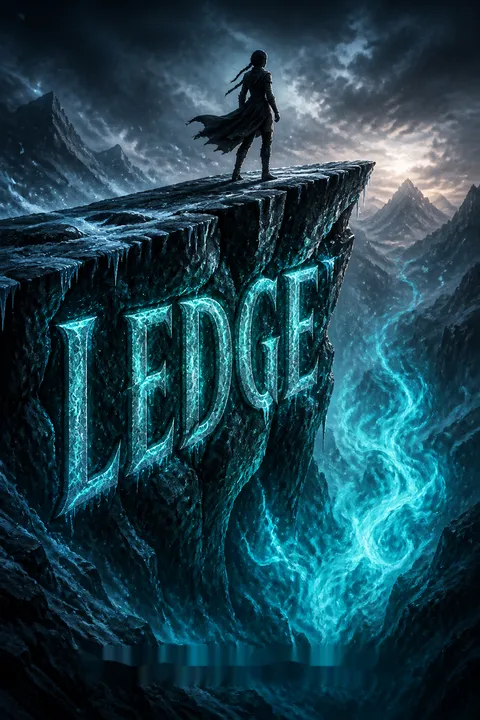
Ledge builds its political conflict from the bodily routines of survival. Dawsyn’s labor, hunger, warmth, and fear are not atmospheric details; they show how a community adapts when an outside power makes deprivation ordinary. The Drop and the Selection appear as opposite transactions: one provides too little to live on, the other takes people away. Together they turn human life into a managed resource.
The novel’s central moral problem is not simply whether rebellion is justified. It asks what happens when rulers defend sacrifice as the price of protecting everyone else. Alvira’s bargain is intelligible within the terror she describes, but its consequences fall on people excluded from the decision. Dawsyn’s anger refuses to let a successful outcome erase those costs. At the same time, the story does not make her anger automatically wise: it can expose a lie, but it can also drive her toward violence before she has heard the whole account.
Dawsyn and Ryon’s relationship develops alongside this political question. Both are trained by loss to treat dependence as danger. Dawsyn uses self-sufficiency to avoid being abandoned; Ryon uses secrecy to control the risks around his rebellion. Their intimacy grows when each begins to recognize the other’s right to choose, not when either gives up a history or identity. Their connection is therefore not a cure for political violence. It becomes a way to share responsibility for confronting it.
The Pool of Iskra concentrates the book’s concerns in one image: power secured by taking the self from another. Dawsyn’s discovery that its magic can be redirected offers a possibility of transformation, but not a clean escape from the old system. Vasteel is defeated, yet he escapes; the mixed-bloods win the palace, yet must decide what to do with the pool; the Ledge remains unfree, and Terrsaw repeats its bargain-making. The ending insists that defeating a tyrant is only the beginning of repairing the arrangements that made tyranny possible.
Review Summary
People Also Read


Characters
Dawsyn Sabar
Ledge-born survivorDawsyn has spent her life chopping wood, rationing food, defending her cabin, and preparing for the Glacians’ seasonal selections. Her bluntness and physical confidence protect her in a place where hesitation can mean hunger, assault, or death. She is also capable of giving generously, though she hides tenderness beneath practical action and sharp humor. Family losses have taught her to expect abandonment, so she treats self-reliance as both skill and armor. Her central struggle is not learning to be strong, since she already is, but deciding when survival demands solidarity and when trust can be risked without surrendering her independence.
Ryon Mesrich
Half-Glacian rebelRyon is a powerful, winged man of mixed human and Glacian ancestry who has learned to move between communities that distrust him. The pure-blooded court grants him proximity without belonging, while the Colony looks to him as a possible instrument of change. He is strategic, guarded, and accustomed to making decisions alone; his humor and flirtation often conceal how intensely he controls what others are allowed to know. His history gives him a personal grievance against Glacia, but his political ambitions also arise from witnessing the system’s treatment of mixed-bloods. Dawsyn challenges his habit of treating secrecy as protection and forces him to imagine liberation as shared work.
King Vasteel
Glacia's ruling tyrantVasteel rules through inherited privilege, spectacle, and the controlled distribution of the Pool of Iskra’s power. He regards pure-blooded Glacians as a resource to preserve and humans as a supply to exploit. His authority depends on making violence appear inevitable and dissent appear foolish or treacherous. He is particularly skilled at identifying private wounds and turning them into instruments of control. Vasteel’s polished court manners never soften the cruelty beneath them; he treats the lives of humans and mixed-bloods as pieces in a political economy that exists to keep his rule intact.
Queen Alvira
Terrsaw's burdened rulerAlvira governs Terrsaw with the composure of someone who has spent decades defending a terrible decision as necessary. She is intelligent, politically experienced, and capable of genuine affection, especially in her memories of Valma. Her remorse is real, but it does not automatically make her willing to surrender the power built on the bargain she made. Alvira thinks in terms of kingdoms, populations, and survivable outcomes; this makes her effective in crisis and dangerous to people she classifies as expendable. Her conflict with Dawsyn centers on whether responsibility for a past sacrifice can be separated from the benefits it secured.
Briar
Dawsyn's steadfast guardianBriar is Dawsyn’s aunt and Maya’s mother, a fiercely protective woman who kept their household safe after her husband was lost to the Chasm. She guarded the cabin with a knife, worked to provide food and warmth, and taught Dawsyn to defend herself. Her strength is practical rather than invulnerable; grief after Maya’s selection gradually overwhelms her. To Dawsyn, Briar represents both the courage required to keep a family alive and the terrible cost of surviving losses that cannot be repaired.
Maya
Defiant younger sisterMaya is Briar’s spirited daughter and Dawsyn’s younger sister. She is impulsive, loud, curious, and determined to act for herself, even when her family begs her to stay safe. Her boldness is a source of delight and danger in the tightly confined life of the Ledge. Dawsyn remembers Maya not only through the circumstances of her loss, but through her appetite for games, her songs, and her refusal to become small simply because the world around her is cruel.
Valma Sabar
Grandmother and storytellerValma raised Dawsyn with stories, practical lessons, and a clear-eyed understanding of what survival demands. She taught Dawsyn to fight, to notice danger, and to resist despair by shaping the mind as carefully as the body. Her stories preserve fragments of the world beyond the Ledge, giving Dawsyn an inheritance larger than the prison in which she was born. Valma’s warmth and discipline coexist: she understands both the need to protect others and the cost of letting them take what a family needs.
Hector
Dawsyn's oldest friendHector grew up beside Dawsyn on the Ledge and shares her knowledge of its scarcity, violence, and seasonal terror. Their relationship offers familiar companionship and physical comfort, but neither treats it as a promise of marriage or escape. Hector is more vulnerable to grief and self-reproach than Dawsyn, especially after losing his father and struggling to protect his mother. He represents the life Dawsyn knows: intimate, constrained, and shaped by the constant work of enduring another season.
Queen Cressida
Alvira's guarded wifeCressida is Queen Alvira’s wife and a watchful presence in Terrsaw’s court. She is more skeptical and openly defensive than Alvira, questioning Dawsyn’s account and weighing the risks of welcoming a stranger from the Ledge. Cressida’s loyalty to the Queen is strong, though it does not make her a passive observer. Her guardedness reflects the palace’s instinct to protect its stability, particularly when a visitor’s presence could revive old political claims.
Phineas
Ryon's mentor and guardianPhineas is an older pure-blooded Glacian who helped raise Ryon and secure his unusual place near the royal court. He taught Ryon to fight and fly, and his history with Ryon’s father gives him a complicated investment in the younger man’s future. Phineas believes he understands the limits of what can change within Glacia and urges caution where Ryon sees the need for rupture. His relationship with Ryon blends affection, authority, and political disagreement.
Mavah
Ledge healer and motherMavah is a medicine woman from the Ledge, practiced at treating injuries in a place with little equipment and fewer supplies. Her dry humor keeps fear from dominating every conversation, and her care for the wounded is immediate even when she herself is suffering. Her marriage to Gerrot is marked by a history of hardship and affection. Mavah’s stubbornness makes her difficult to command and difficult to dismiss.
Gerrot
Silenced human servantGerrot is a former Ledge villager who survives in Glacia as a servant to the ruling class. He is Mavah’s husband and is forced into a role that places him near newly captured humans while limiting his ability to help them. His silence and guarded gestures carry the strain of someone who has endured years of coercion. His presence shows how the Glacians turn familiar people into instruments of the system that enslaves them.
Baltisse
Sharp-tongued mageBaltisse is a formidable mage whose healing abilities and unusual perception make her both useful and unsettling. She speaks with blunt confidence, resists being categorized by others, and rarely softens her manner to make people comfortable. Beneath that abrasive exterior is a capacity for care, especially toward those who have already suffered too much. Her connection to Terrsaw’s older history gives her a perspective that neither Dawsyn nor the Queens can easily dismiss.
Salem
Innkeeper with a conscienceSalem runs a modest inn near the Fallen Village and offers food and shelter to people who need them, even when he complains about the cost. His rough manners hide a steady sense of responsibility toward the small community around him. He knows more about Terrsaw’s past than he initially says and carries unease about the compromises made by its rulers. His friendship with Ryon rests on long familiarity, practical aid, and mutual tolerance.
Esra
Flamboyant ally and traderEsra is a bold, theatrical regular at Salem’s inn who refuses to be confined by conventional expectations of gender or decorum. His jokes and dramatic entrances can make him seem frivolous, but he is attentive to people’s pain and willing to provide material help. He trades in goods beyond liquor and becomes an important connection between Ryon and the supplies needed for resistance. Esra’s exuberance is a form of self-definition in a world eager to decide what people should be.
Adrik
Colony elder and organizerAdrik is a formidable elder in the mixed-blood Colony, where he helps coordinate resistance to Glacia’s ruling class. He is skeptical, blunt, and accustomed to treating plans as matters of survival rather than ideals. His age gives him a long view of failed hopes, but he has not stopped organizing for change. He respects courage while remaining wary of anyone who might endanger the people depending on the rebellion.
Tasheem
Rebel council memberTasheem is a mixed-blood rebel who helps organize the Colony’s uprising. She is direct, composed, and willing to assess Dawsyn as a potential comrade rather than dismiss her as a human outsider. Her calm authority helps steady a group whose hopes have been deferred for years.
Ruby
Terrsaw guard captainRuby commands the guards who protect Terrsaw’s palace. She is disciplined and alert, treating unfamiliar claims with suspicion until she has reason to believe them. Her responsibility is to the Queens and the security of the court, but she can recognize when an event exceeds ordinary protocol.
Josiah Redmond
Predatory Ledge neighborRedmond is a violent man on the Ledge who uses scarcity and isolation to threaten women. He treats other people’s vulnerability as an opportunity and mistakes Dawsyn’s solitude for helplessness. His conduct illustrates how danger on the Ledge comes not only from weather and the Chasm, but from people who exploit the absence of refuge.
Plot Devices
The Ledge's Selection
Seasonal human reapingAt the start of each season, Glacians cross the Chasm and take a person from the Ledge. Families present a household head in the hope that the captors will spare everyone else, turning each ceremony into a public calculation of sacrifice. The practice explains why Dawsyn and Hector anticipate Selection as both a regular threat and a family duty. It also links the isolated village to Glacia’s larger system of human capture, making the ordinary rhythms of the Ledge inseparable from the violence of the kingdom beyond it.
The Pool of Iskra
Soul-powered ruleThe luminous pool absorbs the inner life of people submerged in it, leaving them physically alive but emptied of independent thought. Glacians also drink its magic to gain longevity and magical abilities. The King presents the pool as a route to eternal peace, disguising how it converts living beings into resources. Its apparent sentience, and the possibility that it can be made to give as well as take, shape the book’s climax and connect personal survival to the political struggle over who controls magic.
The Drop
Scarcity delivered from aboveA crate of provisions and tools is dropped onto the Ledge at irregular intervals. The villagers must fight over whatever survives the fall, so even a small supply of food can produce injury and conflict. The Drop establishes the material conditions that shape Dawsyn’s reflexes: she moves quickly, guards what she claims, and understands generosity as a costly decision. It also contrasts with the abundance of Terrsaw, where markets sell food and household goods that Dawsyn has never encountered.
The Chasm
Prison wall and graveThe Chasm separates the Ledge from Glacia and the human kingdom below, making movement between places appear impossible. Its icy edge also kills people who fall or are pushed into it, and villagers understand it as both a physical boundary and a shared grave. The plot repeatedly overturns the belief that the Chasm is impassable: Glacians cross it, Dawsyn is carried over it, and Ryon later uses his wings to save them from a fall. Its presence makes escape a question of power, not merely courage.
The Glacian Trilogy Series

About the Author


Download PDF
Download EPUB
.epub digital book format is ideal for reading ebooks on phones, tablets, and e-readers.








