


Plot Summary
Prologue
A year before the main events, Brom, then hiding in New York under the name Abe, wakes from a nightmare in which a headless figure promises to restore Kat if he lets it inside. He has fled Sleepy Hollow after a forbidden relationship with Pastor Ross and fears the town will punish him if the truth becomes known.
At an opium den, Ichabod Crane offers him a bath and shelter. Their attraction gives Brom a rare sense of being wanted, but the shadows following him make safety feel temporary.
The nightmare turns Brom’s deepest fear into a bargain: the safety he longs for may require surrendering himself to something monstrous. His flight from Sleepy Hollow is not simply an escape from social punishment. It is also an attempt to control what Kat might learn about him. Crane’s shelter offers a different kind of refuge, one grounded in recognition rather than respectability, but Brom accepts comfort without revealing the full danger pursuing him. The prologue therefore makes intimacy double-edged from the start. Being desired can restore Brom’s sense of worth, yet the need to be protected leaves him vulnerable to possession.
Brom Returns Possessed
After Crane shoots Brom to stop him attacking Kat in the form of the Headless Horseman, he heals the shoulder wound and restores Brom’s memories. The three ride back to Sleepy Hollow Institute with the spirit still bound to Brom and able to seize him after dark. Kat is shaken by what Brom did while possessed, while Brom carries shame and confusion about his lost years.
Crane keeps Brom close, places Kat in the room beside his own, and restrains Brom with leather tack for the night. A severed head left in the library suggests the horseman has already killed again. Crane believes a blood-and-sex ritual may break the bond, but none of them knows what the rite will demand.
The return makes physical proximity a form of both care and containment. Crane protects Kat by keeping Brom within reach, yet his restraints turn Brom into a danger to be managed rather than a lover to be trusted. Brom’s restored memories do not restore his former self; they give him a clearer view of the harm committed through his body. Kat’s fear also complicates the old friendship, since knowing that possession caused the attack cannot immediately erase what she experienced. The proposed ritual offers hope, but it binds the trio’s emotional repair to a procedure that may demand more vulnerability than any of them can yet offer.
The Bedroom Breaks Open
Crane’s anger over Brom’s attack on Kat erupts into a punishing confrontation in his room. The encounter draws Kat from her separate room, where she sees how strongly Crane and Brom remain drawn to each other, even as violence and humiliation complicate their desire. She chooses to stay and participates in the charged exchange, discovering that her own longing can coexist with anger at both men.
The danger soon becomes literal: Brom breaks free and the horseman takes control, attacking Crane and nearly strangling him. Kat bursts from the locked bathroom and uses a surge of magical force to pin Brom against the wall. She collapses from the effort, but her intervention saves Crane and proves her power can interrupt the possession.
The bedroom scene refuses to separate desire from power, which makes the characters’ choices emotionally legible but ethically uneasy. Kat’s willingness to witness and participate is not the same as forgiving Brom; her anger remains present, especially over his abandonment and the attack. Her magic changes the balance of the scene. Until now, Crane has acted as protector and interpreter, while Kat has been treated as someone whose safety must be arranged. By stopping the possessed Brom herself, she becomes an active defense rather than the object around which the men struggle. The exhaustion afterward marks the cost of that new agency.
A Ghost in the Bath
The next morning, Crane’s former wife Marie appears in Kat’s bath, drags her beneath the water, and accuses Crane of violating her memories. Kat escapes and tells Crane and Brom what she saw, forcing Crane to acknowledge that his past remains dangerous and unresolved. When Kat later faces her mother, Sarah, she asks for a way to prevent pregnancy and resists the marriage everyone expects her to accept.
Sarah refuses, insists Brom is Kat’s intended husband, and reacts with contempt when Kat admits her relationship with Crane. Kat’s anger releases a burst of power that knocks Sarah down. Rather than fearing her daughter’s magic, Sarah recognizes it as something she can exploit, leaving Kat alarmed at what her mother has wanted from her.
Marie’s attack makes Crane’s private history an immediate threat to Kat, not merely a source of guilt he can disclose later. The warning about memory-reading also complicates the intimacy between Crane and Kat: his ability to enter another person’s mind can be protective, but it can equally become coercive. Sarah’s response to Kat’s emerging magic is more revealing than her claims of maternal concern. She reads her daughter’s power as a resource and her future as an arrangement already made. Kat’s burst of force is therefore both defense and discovery. The same capacity that makes her valuable to her family may be the means by which she resists them.
Leona Tightens the Web
Sister Leona summons Crane and orders him to end his relationship with Kat, threatening to dismiss him if he refuses. She speaks of Goruun as the coven’s deity and describes the school as a web, making clear that she sees its people as pieces in a larger design. She also claims Kat belongs with Brom and uses Crane’s guilt over Marie to keep him compliant.
Meanwhile, Brom and Crane reconnect, but jealousy and distrust remain between them. In class, Crane teaches students how to strengthen or disrupt magical power, a lesson that will later give them tools to defend the school. Kat, isolated in her new dorm, struggles to understand whether she can love both men while the coven tries to dictate whom she may choose.
Leona’s threat joins romantic control to institutional control: Crane’s job, Kat’s future, and Brom’s supposed destiny are treated as parts of one enforceable order. Her web metaphor is not abstract decoration; it describes a school where authority can shape what people know, whom they trust, and whether they are free to leave. Crane’s decision to keep teaching rather than abandon his students exposes a genuine conflict in him. His loyalty is partly moral and partly bound up with guilt, making it easier for Leona to manipulate. The classroom lesson quietly resists that system by giving students a practical vocabulary for defending their own agency.
Lotte Falls from the Roof
During Crane’s lesson on magical defense, a student named Lotte appears on the cathedral roof and jumps before anyone can reach her. As she dies, Crane senses that the school has helped drive her there; her final mental message warns that the institute is built on bones. Kat, Brom, and Crane ride into Sleepy Hollow to report the death, but the constable refuses to investigate once he learns it happened at the Institute.
Their attempt to continue toward Pleasantville fails when a huge tree blocks the road and their horses refuse to approach it. The obstruction leaves them with the growing sense that the town itself may be closing around them, while the Sisters remain free to control the story of Lotte’s death.
Lotte’s death converts the school’s atmosphere of threat into visible consequence. Crane’s lesson prepares students to defend themselves, but it cannot protect someone already crushed by the institution’s pressures. His grief carries the memory of Marie’s death, yet Lotte’s message demands more than private remorse: it points toward a structure that consumes vulnerable people. The constable’s refusal shows how jurisdiction and reputation can function as instruments of silence. The fallen tree extends that silence into the landscape, turning escape into a physical problem. Together these events make the Institute feel less like a school with sinister leaders than a closed system that controls both evidence and exit.
The First Ritual Fails
On the dark moon, Kat, Crane, and Brom meet in a forest glen to attempt the ritual that might expel the horseman. Crane places crystals and salt around them, and Kat agrees to remain in the circle even if fear overwhelms her. Blood, magic, and their shared desire create a bond, but the elixir also opens their senses to spirits gathering beyond the circle.
Kat sees Crane as a shadow creature and Brom as the headless horseman, then recognizes them through their voices and trust. The ritual ends without freeing Brom. He and Crane suspect the spirit remains attached, while Kat’s ordeal leaves the trio more closely bonded but no nearer to safety. Brom privately begins to believe he can bargain with the horseman.
The first rite succeeds emotionally before it fails mechanically. Kat, Crane, and Brom establish a deliberate form of trust, but the ritual makes trust difficult by turning familiar bodies into frightening images and requiring Kat to stay inside the circle. Her choice to recognize the men despite what she sees is a meaningful act, not passive endurance. The failure exposes a key distinction between intimacy and liberation: a powerful bond can help the trio withstand the supernatural, but it cannot undo a pact they do not yet understand. Brom’s emerging bargain offers the most dangerous alternative, because control seems to promise what the ritual has failed to deliver.
The Horseman Takes a Price
After the failed rite, Brom dreams of the horseman’s violence and wakes beside Crane hiding how much he has begun cooperating with the spirit. The horseman’s next victim is Constable Kirkbride, who had dismissed the report of Lotte’s death.
Brom eventually admits that he directed the killing, believing a chosen sacrifice could keep the spirit from harming Kat and Crane. A history lesson adds a larger explanation: two rival covens may have made a bargain with a demon, promising a child in exchange for safety and immortality.
When Brom confronts Crane about Marie, Crane admits he shoved her during an argument and tried to revive her after she fell and died. His account confirms that Leona can weaponize his guilt, but it does not erase his responsibility.
Brom’s confession marks the cost of replacing helplessness with negotiated power. He is no longer merely a victim of the horseman; he has helped choose who will suffer, and he frames that choice as protection. The logic resembles the coven’s own transactional morality, where people become acceptable prices for someone else’s survival. Crane’s confession runs in parallel. His attempt to revive Marie arose from panic and grief, but his earlier invasion of her memories and his forceful act remain violations he must own. These disclosures prevent either man from claiming moral purity. Their capacity for love matters, but it does not cancel the harm they have caused.
Famke Gives Kat a Shield
Famke hides a protective pendant and a note inside Kat’s favorite pastry, prompting Kat to seek answers from Ms. Choi and later from Famke herself. Ms. Choi offers laudanum for Kat’s menstrual cramps and describes recurring dreams of being opened on the cathedral altar.
At a family supper, Famke explains that Sarah has been siphoning magic from others to prolong her own life and that Kat’s father feared his daughter would become the next source. Kat also visits Mary, bringing a trusted friend into the circle around her.
At the family barn, Brom apologizes for leaving years earlier and reconnects with Kat, who admits she still loves him. Their reunion deepens the bond among the three, but pregnancy remains dangerous because the coven wants a child for its own purposes.
The pendant is a small object carrying a large change in allegiance: Famke acts against Sarah’s control to preserve Kat’s ability to choose. Her explanation reframes the mother-daughter relationship as extraction disguised as care, while Ms. Choi’s nightmares suggest the school’s violence may be more literal than its leaders admit. Brom and Kat’s reunion offers tenderness without restoring the past. His apology cannot undo four years of silence, but it gives Kat a reason to imagine a future with him again. The scene’s emotional warmth sits beside the pregnancy threat, showing how even love and family-making have been politicized by the coven.
The School’s Bone Room
As teachers Ms. Choi and Ms. Wiltern disappear, Crane, Kat, and Brom follow the ghost of Vivienne Henry through a hidden stairway beneath the faculty dormitory. A mysterious key opens an iron door into a chamber laced with enormous spiderwebs and human bones. The discovery confirms that the school has a concealed place where people are kept or consumed.
Soon afterward, the horseman kills Professor Daniels, and Sister Sophie privately warns the trio that the coven plans to use Brom and Kat in a binding ceremony. She reveals that Brom is tied to the old coven bargain and that a full-moon ritual in water, with Kat brought near death, may drive out the horseman. She urges them to act before Samhain, when the coven intends to force the union.
The chamber gives physical form to Lotte’s warning. The bones make institutional secrecy impossible to treat as rumor, while the key suggests that someone inside the school has chosen to expose what its leaders conceal. The missing teachers and Daniels’s murder show that the danger is not confined to students or to the past. Sophie’s warning complicates the picture by making her both an insider and a potential ally; she knows the machinery of the coven but cannot simply dismantle it. Her instructions establish the next ritual’s stakes, especially the deliberate approach to death. The trio must use the same boundary between life and death that the school exploits.
The Moon Refuses Brom
Under the full moon, the trio performs the second rite in the lake, drawing spirits close while Crane and Brom use blood and magic to bind themselves to Kat. The ceremony reaches its most dangerous point when Crane brings Kat near death, but Brom later declares that it failed.
He believes the horseman gives him the power he lacks and refuses to let the spirit go, convinced he can use it to protect the people he loves. Kat argues that his choice is not protection if it leaves him open to the coven’s control.
Crane, terrified of losing Brom, turns instead toward a future he can still shape: he tells Kat he wants to father her child and asks her to marry him. She accepts, even as Brom’s refusal leaves their three-person bond painfully uncertain.
The ritual’s failure is also a conflict over what counts as strength. Brom experiences possession as an answer to lifelong powerlessness, so Crane’s insistence that the spirit is manipulating him cannot easily reach him. Kat sees the danger more clearly, but she cannot choose for Brom without repeating the coercion that has shaped their lives. Crane’s proposal is loving and strategic at once: he wants Kat, but he also hopes a child conceived outside the coven’s plan could frustrate its design. The scene shows the trio making a future together while one member is moving toward a solitary bargain. Their intimacy cannot substitute for shared consent.
The Cathedral Burns
That night, Kat finds Sarah bathing in blood at the school and learns that the Sisters intend to complete their ceremony immediately. Leona and Ana discover Sarah’s defiance and burn her alive. Kat escapes notice through shadow magic, then finds Crane and learns the Sisters have taken Brom to the cathedral.
They drug Kat and strap her to an altar, but Brom is secretly in control of the horseman and communicates with Crane through the voice. When Goruun appears, a spider-like demon, Brom fakes the required conception and signals the attack.
The horseman decapitates Goruun, and Brom and the others fight the Sisters. A second spider seizes Kat and pins Crane to the wall, but Kat and Crane ignite it while Brom cuts it apart. The cathedral catches fire as Brom falls through the burning rafters.
The climax turns the coven’s ritual against its authors, but it does not make the trio’s survival clean or cost-free. Sarah’s death comes after she tries to protect Kat, complicating Kat’s understandable anger with grief for a mother who was both exploitative and capable of defiance. Brom’s apparent submission is a tactical performance, built on the bargain he concealed from Crane and Kat. His agency finally becomes useful when directed against Goruun, yet the battle still takes him to the edge of death. The fire destroys the coven’s carefully controlled setting, but its immediate cost is the possible loss of the person the other two have spent the novel trying to save.
Sleepy Hollow Falls Away
Crane and Kat leap from the cathedral roof, and Paul uses his newly strengthened magic to lower them safely. Students trained by Crane enter the burning building and carry out Brom, while Martha heals his injuries.
Crane finds no pulse and uses his own magic to revive him, breaking the rule he had learned through Marie’s death because he cannot let Brom go. The Hessian’s bargain is fulfilled: the spirit wanted a true death on its own terms, and its end releases Brom. With the coven’s power broken, Famke and Mary arrive with constables who can finally enter the grounds.
Crane, Kat, and Brom leave Sleepy Hollow with jewels taken from the cathedral. Later, Kat marries Crane and then Brom during their Atlantic crossing, pregnant with Crane’s child, as the three build a shared life abroad.
The rescue completes a change that began in Crane’s classroom: students use what he taught them to act collectively rather than wait for the Sisters to define what is possible. Crane’s revival of Brom is not a simple rejection of his earlier lesson. He knows the danger of crossing death’s boundary, but chooses responsibility for the living person in front of him, accepting the risk rather than treating the rule as absolution. The Hessian’s release depends on its own desire for an end, not on the coven’s claim over it. Leaving Sleepy Hollow then becomes more than escape from a haunted institution. It is the trio’s refusal to let bloodline, prophecy, or law define their family.
Epilogue
Three months after escaping, Kat is pregnant with Crane’s child and marries him aboard a ship bound for England. She then marries Brom during the crossing, making their commitment official to one another even if the wider world cannot recognize their shared marriage.
Five years later, the three live in London with twin sons, Baltus and Johnathan, and Famke as part of their household. At a gathering hosted by Dorian Gray, Crane introduces the family to a society of mystics that includes witches and vampires. Their home is no longer a school or a coven’s scheme. It is the life they have made together.
The epilogues answer the novel’s central question of who gets to define a family. Kat’s two marriages cannot fit conventional law, so she and her partners use ceremony, witnesses, and mutual vows to make their commitment legible to themselves. The pregnancy also reverses the coven’s intended use of reproduction: a child is no longer a promised offering but part of a chosen household. Five years later, the twins and the mystic society widen that household into a community, though the outside world still requires disguises such as Brom being presented as an uncle. Safety is therefore not a return to innocence. It is the durable, imperfect shelter they build through honesty and shared allegiance.
Analysis
Legend makes the Gothic haunted school a machine for converting private vulnerabilities into institutional leverage. Leona does not control people only through spells. She relies on shame, family expectation, and uncertainty about memory, so that her victims often police themselves before she has to act. Brom’s possession is the sharpest version of this mechanism: the spirit offers the strength he lacks, then encourages him to believe that dependence is agency. Kat’s growth challenges that logic. Her magic becomes most useful when she chooses how to deploy it, whether restraining Brom, hiding from the Sisters, or helping defeat Goruun. Power is not presented as inherently liberating; it becomes liberating when joined to self-knowledge and chosen allegiance.
The romance follows the same tension between care and control. Crane’s instinct is to protect through rules, restraints, and possession, while Brom seeks safety by escaping or making bargains alone. Kat’s refusal to let either man define her choices forces their relationship to become a shared practice rather than a contest for ownership. The trio’s devotion remains imperfect: jealousy persists, both men have harmed others, and love does not erase responsibility. Their most consequential acts of intimacy are therefore not simply sexual. They are acts of truth-telling, consent, and returning to one another after conflict.
The school’s bones, missing teachers, erased memories, and sealed gates give that intimate struggle a political shape. The Sisters treat reproduction and education as resources to be managed, while students are cultivated for their magic and kept from outside scrutiny. Against this, Crane’s classroom teaches transferable skills, and the students eventually use them to intervene in the climax. The ending does not restore the old order or make the world harmless. It offers a chosen household and a wider community as alternatives to bloodline destiny. The book’s strongest claim is that belonging becomes real not through inheritance or prophecy, but through the repeated decision to protect one another without claiming ownership of one another.
Review Summary
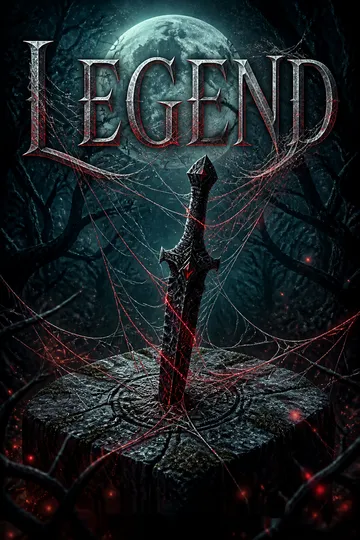
Legend by Karina Halle receives mixed reviews (3.72/5) as the second book in her Sleepy Hollow retelling duology. Many readers praise the exceptionally spicy MMF romance and gothic atmosphere but criticize the plot-to-spice ratio. Common complaints include excessive explicit content overshadowing storyline, underdeveloped resolutions, and pacing issues. Positive reviews highlight the chemistry between characters Kat, Brom, and Crane, dark academia vibes, and satisfying twists. Several readers note the book works better for those prioritizing romance over plot development, with the ending receiving polarized reactions.
People Also Read



Characters
Katrina Van Tassel
The rising witchKat is a young witch raised under her mother’s authority and expected to accept a future arranged around Brom. Her sheltered upbringing leaves her unsure how to name desire, danger, or power, but she is more perceptive than others assume. She loves Brom, is drawn to Crane, and gradually refuses the idea that she must choose according to family or coven rules. Her magic emerges most strongly when she acts to protect herself and the people she loves. Kat’s central drive is not simply romantic attachment; she wants the freedom to decide what her relationships, body, and future mean.
Ichabod Crane
The haunted professorCrane is a teacher and witch whose intelligence, curiosity, and practiced composure conceal volatile guilt. His attraction to both Kat and Brom is inseparable from possessiveness, and he must learn that protecting someone is not the same as controlling them. The death of his former wife, Marie, has left him wary of his own powers and desperate to make amends through care for others. He stays at the Institute partly because he believes students need him, even when its leaders threaten his position. His generosity and his capacity for harm coexist, making self-knowledge more difficult than mere confession.
Brom Bones
The hunted runawayBrom, also known as Abraham Van Brunt and once as Abe, is Kat’s childhood companion and Crane’s former lover. He has spent years fleeing Sleepy Hollow, carrying shame about forbidden desire and the belief that he is unworthy of affection. His physical confidence masks an old fear of being powerless, unwanted, or treated as a useful body rather than a person. His bond with the Headless Horseman intensifies that conflict by offering a dangerous form of strength. Brom wants to protect Kat and Crane, but his instinct to disappear or act alone repeatedly threatens the trust he longs to regain.
Sarah Van Tassel
Kat’s controlling motherSarah is Kat’s mother, a frail-seeming witch whose concern for her daughter is entangled with the coven’s plans and her own survival. She regards marriage and motherhood as transactions, not private choices, and expects Kat’s future to serve a larger purpose. Her authority has shaped Kat’s fear of disobedience, while her hunger for power makes her difficult to read as simply protective or simply cruel.
Famke
Kat’s steadfast protectorFamke is the Van Tassel household’s longtime housekeeper and a trusted figure in Kat’s life. Though she has no magic, she observes the family closely and chooses loyalty to Kat over obedience to Sarah. Her practical care, quiet warnings, and willingness to take risks give Kat a connection to ordinary affection outside the coven’s supernatural bargains.
Sister Leona Van Tassel
The coven’s strategistLeona is one of the Sisters who governs Sleepy Hollow Institute. She speaks in the language of destiny and divine order, using threats, secrecy, and other people’s guilt to keep control. Her ageless appearance and shifting face unsettle those who question her. Leona’s view of people is fundamentally instrumental: she measures their value by what their power, bloodlines, or bodies can provide.
Sister Sophie
The uneasy insiderSophie is a Sister with ties to Brom’s family and access to the coven’s history. Unlike the most openly controlling leaders, she shows conflict about the bargains that shaped the Institute. She understands that the trio is in danger, yet her ability to oppose the coven is limited. Her divided loyalties make her warnings valuable but never entirely reassuring.
Sister Ana
Leona’s coven allyAna is one of the Sisters who helps Leona maintain the Institute’s authority. She stays close to the coven’s rituals and reinforces its power, presenting an outwardly composed face over a more frightening nature.
Sister Margaret
The ritual’s enforcerMargaret is a senior Sister associated with the school’s ceremonies and its control over students. Her role reflects the coven’s willingness to turn ritual practice into coercion rather than protection.
Marie Crane
Crane’s unresolved pastMarie is Crane’s former wife, whose strained marriage left him with guilt and unanswered questions about his own conduct. Her presence in the story forces him to confront the difference between claiming that an act was accidental and taking responsibility for the choices surrounding it. She remains an emotionally charged figure in his history.
The Headless Horseman
Brom’s bound spiritThe Hessian is a headless spirit associated with Sleepy Hollow’s legend and bound to Brom through magic. Its possession gives Brom terrifying strength while threatening to erase his autonomy. The spirit’s apparent connection to Brom’s emotions makes it difficult to distinguish influence from intent, and its history reaches back beyond the present conflict.
Goruun
The coven’s dark deityGoruun is the deity revered by the coven and invoked as the source of its promised future. Most characters know the name before they understand what, if anything, answers it. The deity’s presence gives the Sisters’ political ambitions a supernatural scale and turns a family arrangement into a threat with consequences beyond Sleepy Hollow.
Narae Choi
The generous alchemy teacherNarae, Kat’s alchemy teacher, offers practical kindness when Kat needs clothes and later medicine. She has traveled beyond the Institute and knows something of its strange rules, though the school’s influence reaches into her memory and well-being. Her willingness to help Kat makes her one of the few adults who treats her as a person rather than a family asset.
Professor Daniels
The skeptical colleagueDaniels is one of Crane’s fellow male teachers at the Institute. His dry manner and skepticism initially make him seem detached from the supernatural tensions around them, but he notices when staff disappear and becomes increasingly concerned about the school. He represents the limited but important resistance of an ordinary observer who begins asking the wrong questions.
Paul
The resourceful studentPaul is a reliable student who volunteers for Crane’s magical demonstrations. He is earnest, attentive, and willing to test skills he has only recently learned. His trust in Crane’s teaching later gives him confidence to use his own ability under pressure.
Mary Wilson
Kat’s townside friendMary is Kat’s friend outside the Institute, with a practical independence and a willingness to help even when she does not know every detail. Her presence reminds Kat of a life beyond the coven and provides a human connection to the town the Sisters try to isolate from the school.
Lotte
The doomed studentLotte is a student whose death exposes the fear and secrecy surrounding the Institute. Crane and Kat see her as a person in distress rather than a problem to be concealed, and her final warning focuses their attention on what the school is built upon.
Constable Kirkbride
The town’s dismissive constableKirkbride is the Sleepy Hollow constable who resists investigating events connected to the Institute. His deference to the Sisters’ domain leaves the trio without the outside help they seek.
Simon
The watchful stableboySimon cares for the Institute’s horses and speaks guardedly about his mother living beneath the school. His brief appearance hints at hidden parts of the campus and the people who may be kept there.
Pastor Ross
Brom’s first forbidden loverPastor Ross was an older spiritual authority in Brom’s childhood town. Their relationship taught Brom that desire could bring comfort and danger at the same time, shaping the shame that drove him to flee.
Raymond De Haro
Crane’s former neighborRay, a neighbor in San Francisco, becomes entangled in Crane and Marie’s failing marriage. His brief relationship with Crane exposes desires Crane has long suppressed and becomes part of the history Leona later uses against him.
Plot Devices
The Hessian’s possession
A dangerous borrowed powerThe Headless Horseman can take control of Brom after nightfall, lending him supernatural strength while threatening to overwhelm his identity. Its presence connects present violence to Sleepy Hollow’s legend and makes every night a test of containment. Brom gradually discovers that his feelings can influence the spirit, which tempts him to treat possession as a partnership. The bond is therefore both supernatural threat and psychological temptation: it offers power to someone who has spent his life feeling powerless, while making that power answerable to the coven’s purposes.
Blood and sex rituals
A bond tested by dangerCrane believes that blood magic, sex magic, and a shared bond among Kat, Brom, and himself can expel the horseman. Their first attempt in a salt circle during the dark moon draws spirits close but fails. A second rite under the full moon uses the lake and brings Kat near death, as Sophie advises, yet Brom’s refusal to release the spirit prevents success. The rituals externalize the trio’s struggle to trust one another, but they also risk turning intimacy into another form of coercion if one person’s consent is treated as expendable.
The coven’s bargain
A family future weaponizedThe Sisters’ devotion to Goruun links their authority to an old bargain involving rival covens, a promised child, and the hope of immortality. Brom and Kat’s expected marriage is not simply a family arrangement; the coven treats their union and possible child as instruments in a supernatural plan. This device turns questions of romance, pregnancy, and inheritance into matters of bodily autonomy. It also gives the plot an antagonist larger than any single Sister: a system that claims the right to decide who must bear the cost of its survival.
The Institute’s wards
A school turned trapThe Institute’s magical barriers separate it from the outside world, regulate who can enter or leave, and help the Sisters keep events from becoming public knowledge. The wards make escape difficult when the trio tries to report Lotte’s death, and later the school goes into lockdown. Teachers and students also experience memory loss or confusion that limits what they can carry beyond the grounds. As a result, the Institute’s Gothic setting has a practical function: architecture and magic collaborate to isolate potential witnesses and keep authority concentrated inside the school.
The key and ghost trail
A clue through hidden corridorsA dead snake marked with a key and the recurring ghost of Vivienne Henry draw Crane, Kat, and Brom toward a locked underground chamber. The physical key opens an iron door beneath the school, where enormous webs and human bones reveal that the Institute conceals more than abandoned rooms. The clue gives the haunting a narrative purpose: the dead are not only frightening the living but directing them toward evidence. It also joins Crane’s personal haunting to the institution’s buried violence.
A Gothic Shade of Romance Series Series

Download PDF
Download EPUB
.epub digital book format is ideal for reading ebooks on phones, tablets, and e-readers.








