

Plot Summary
The Schoolhouse Lesson
At a Cambridge cafe, doctoral student Jamie realizes she may lose her chance to know her mother while Serena is still alive. Serena has spent years alone in a tiny schoolhouse, and Jamie has barely visited.
She drives there and takes Serena into the woods, where she explains a practice she discovered as a teenager: in places abandoned between human construction and wild growth, she leaves an object representing a deep desire and a small offering. Jamie uses a letter announcing a cut to her graduate stipend, dandelions, and a cow heart.
She cannot know whether the ritual affects events, but she trusts the process enough to share it. Later, her department restores the stipend, and Serena thanks her for revealing something she had long wondered about.
The lesson begins as an effort to repair a relationship, but Jamie offers a method before she can offer emotional fluency. Magic gives her a way to expose desire without having to translate it into a vulnerable conversation. The ritual also establishes the story's central uncertainty: material changes may follow a working, yet no one can prove whether magic caused them. That ambiguity matters psychologically. Jamie can act without claiming mastery, while Serena is invited to want something again. Their first shared step is therefore not belief in a supernatural system, but permission to take their own needs seriously.
Mae's Hat, Wrong Wish
Weeks later, Jamie finds Serena collapsed on the schoolhouse floor. Serena has tried the practice herself, placing Mae's old hat and smoked salmon at a lonely, overgrown road because she misses her dead wife. The working brings the stench and memories of Mae's final illness into the house. Jamie realizes that a longing for someone who has died cannot simply summon the life they shared; Serena's offering has fixed on absence and pain.
After they become lost in the dark woods, Jamie understands that the ritual needs a forward-looking desire. She takes Serena to a ruined shrine, where her mother leaves a small bundle and chocolate. The deathbed smell disappears overnight, and Jamie resolves to supervise Serena's next attempts more carefully.
Serena's first working turns grief into a literal environment, making the past impossible to ignore. The foulness is not punishment for loving Mae; it is the consequence of an undefined desire that collapses memory into the worst period of illness. Jamie's correction reveals both the promise and the danger of her teaching. She wants to help her mother move forward, but she is also assuming authority over what Serena ought to want. The episode makes care ethically complicated: guidance can open a future, yet it can also become a subtle attempt to manage another person's grief.
A Lady Behind Emily
As Serena's crisis unsettles her, Jamie's dissertation on the eighteenth-century novel stalls. Her advisor, Ariella Zhang, warns that Jamie's argument about the obscure novel Emily may be a scholarly dead end.
Jamie finds a scrap of publisher Andrew Millar's correspondence in a rare book and notices a teasing reference to a learned woman. She connects it to Arthur Collier, who taught classical languages to Sarah Fielding and his sister Jane. The clue suggests that Jane, not Sarah, may have written Emily.
Jamie's conviction gives her a new direction: Emily's virtuous heroine seems to gain unusual control over courtship, while its story of a shape-shifting actor hints at a more subversive life beneath the respectable plot. Her research becomes personal as well as academic.
Jamie treats archival scholarship much as she treats magic: intuition directs her toward a neglected clue, then sustained attention tests what it might mean. Her attraction to Emily is not simply the pleasure of solving authorship. She recognizes in its heroine a struggle between socially approved virtue and a less legible wish for freedom. That recognition gives Jamie intellectual energy, but it also exposes a recurring risk: she can mistake the force of a compelling interpretation for proof. The novel links her work and her family life through this shared problem. Both require her to remain curious without forcing uncertainty into a tidy answer.
Serena and Mae Build Home
Years earlier, Serena Decker met Mae Sandthorn at a club, where their attraction began in a bathroom and deepened through protests, music, and long conversations. Serena, a restless journalist with a reputation for leaving relationships, gradually committed herself to Mae.
They built a household, chose to have a child, and raised Jamie in a queer community that offered support their own childhoods had lacked. Their family was loving, but not effortless. When Serena attended law school in San Francisco, Mae carried much of the childcare while juggling several jobs.
Serena's ambition and defensiveness strained their partnership until she recognized the imbalance and changed to part-time study, work, and more parenting. Their ability to name and repair a conflict becomes part of the family legacy Jamie later struggles to recover.
This history complicates the idea of a naturally harmonious chosen family. Serena and Mae built intimacy through deliberate commitments, but love did not make their labor equal or their fears disappear. Serena's drive to help vulnerable people could reproduce the very hierarchy she opposed at home, leaving Mae with the cost of her ambition. Their repair depended less on declarations than on redistributed work and honest limits. The contrast matters in the present: Jamie remembers her mothers as a secure unit, but their family was made through repeated negotiation. Reconnection requires her to see the labor beneath the childhood shelter she took for granted.
JawBone Breaks the Family
After the family returned to Massachusetts, Serena became a housing-rights lawyer and Mae worked at a feminist bookstore and as a dominatrix. Serena's former colleague Greg warned her to stay quiet, while their daughter Jamie was finding her way through adolescence and coming out as a girl.
Then McAllister Bushwick's right-wing group, JawBone, used an undercover intern and edited recordings to portray Serena as dangerous and expose Mae's sex work. Serena lost her job and the family was publicly disgraced.
Around the same period, Mae's worsening stomach pain was dismissed by her doctor, and Serena, overwhelmed by work, also reassured her instead of pressing for better care. Mae was diagnosed with advanced cancer. She chose hospice rather than ruin her family with debt, and died. Serena retreated from the world, carrying the conviction that she had failed Mae.
The family is damaged by two forms of institutional failure: political actors weaponize selective evidence, and medical professionals dismiss Mae's pain. Serena's guilt attaches to both, but especially to the moment she repeated the doctor's reassurance instead of using her own advocacy skills. That guilt is understandable without making her responsible for the cancer or its late diagnosis. The distinction becomes crucial later, because self-blame can look like moral seriousness while actually preventing repair. Serena's retreat also shows how public disgrace converts a person's identity into a hostile story, leaving her unable to imagine a future outside the version imposed on her.
Back Toward the Living
After the ruined shrine clears the smell from her home, Serena begins considering a life beyond the schoolhouse. Jamie takes her back into the woods and explains the practice more openly, then leaves an offering connected to her own teaching work.
Serena admits she wants a modest job helping people who have been discarded by powerful institutions. An old contact tells her about a vacancy at Spectacles, the feminist bookstore where Mae once worked, and Serena applies. She gets the job and starts planning to move closer to Boston.
Mother and daughter also join in a working for Teena Wash, a stranger facing crushing medical costs; donations surge after a celebrity shares the fundraiser. Their growing confidence leads to a working against Rugby College's funding cuts, but the energy tempts them toward a more dangerous target.
Serena's return does not begin with a dramatic cure. It begins with a specific, attainable desire: useful work and a life among other people. The job matters because it reconnects her to a community and to a place associated with Mae, without pretending that it restores the past. The working for Teena offers a model of magic directed toward someone's welfare rather than against an enemy. Yet the college ritual shows how quickly solidarity can blur into power-seeking. Jamie and Serena are discovering that intention is not automatically benevolent just because it grows from love or justice.
The Kazoo Curse
Serena asks whether magic can be used against McAllister Bushwick and JawBone, whose harassment ruined her career and harmed many others. Jamie warns that anger could twist a working, but she also hates Bushwick and agrees to try.
At an abandoned trail, Serena places a promotional kazoo from JawBone beside a melted doll, and Jamie smears mud on it. Together they focus on wanting Bushwick to face consequences. The intensity exhilarates them, and afterward Serena admits she once thought Jamie might blame her for the family's collapse.
Jamie insists she had seen Serena as a hero, not the cause of Bushwick's attack. She drives home shaken, deciding she should stop, then recognizes that she wants to continue. Their shared power has become an intoxicating bond.
The curse is a turning point because Jamie crosses her own ethical boundary while feeling most connected to Serena. The ritual does not separate justice from vengeance; it fuses them in a moment of shared exhilaration. Jamie's love for her mother and hatred of Bushwick are both real, which makes a pure motive impossible to claim. Her later anxiety is not evidence that the curse objectively caused every consequence, but it correctly registers that she has entered unfamiliar territory. The episode also reverses their roles: Serena is no longer only a student, and Jamie's authority cannot contain the risk she helped unleash.
Moonlight Swallows Ro
Jamie tries to demonstrate her practice to Ro, her spouse and closest confidant, but she has hidden it from them for years. Before she can find a suitable place, Ro vanishes into a shaft of moonlight.
Lost and terrified, Jamie leaves a photograph and handmade earrings at an abandoned campsite, pleading for Ro's return. Ro reappears, shaken by an experience they cannot explain. Jamie finally admits that she practices magic.
When the couple confront Serena, her evasions give way to a confession: she had focused on keeping Jamie safe and concealing her magic from anyone who might discover it. She had not intended to target Ro, but the working treated discovery itself as danger. Ro survives, but their trust in Jamie and Serena is badly damaged.
Ro's disappearance makes the cost of secrecy tangible. Jamie had treated her silence as protection for a fragile practice, but it also withheld a major part of her life from the person most entitled to understand its risks. Serena's intention was maternal, not malicious, yet protective love became coercive when it acted on someone without consent. The event exposes the gap between motive and impact that the novel repeatedly tests. Ro's return does not undo the violation. Their response insists that intimacy requires more than being loved; it requires being included in decisions that can alter one's safety and reality.
A Dangerous Archive Discovery
While keeping distance from Serena and Ro, Jamie travels to Philadelphia for an academic conference and notices a car following her. She takes refuge in a used bookstore, where a marked early edition of Charlotte McCarthy's The Fair Moralist contains handwritten lines from Emily.
McAllister Bushwick finds her there and threatens to circulate a dossier about her teaching. After he leaves, Jamie discovers letters hidden in the book. They show Sarah Fielding describing her fascination with actor Charlotte Charke, who lived and performed in men's clothing, and Jane Collier's attempt to comfort Sarah when scandal threatened her.
Jane appears to promise help through an unnamed intervention. Jamie now suspects Emily's fairy tale encodes a real story of friendship, danger, and sacrifice, linking her academic mystery to the perilous magic she has practiced.
The archive turns Jamie's scholarly hunch into a question of lived consequence. Sarah's letter suggests that a woman could be endangered not only by misconduct but by association, while Jane's response offers care without a conventional means of changing the public record. Jamie sees a historical parallel to her own exposure, though the correspondence cannot yet tell her what Jane did. Bushwick's presence in the bookstore makes interpretation itself feel unsafe: Jamie is studying how reputations are manufactured while becoming a target of that machinery. The rare book is both evidence and refuge, a fragile record that survives the people who tried to control its story.
A Circle Without Leaders
Jamie meets Delia, another practitioner, and learns that Serena has been gathering a small network of witches who share techniques and companionship. Jamie attends a meeting at Bee's home, where the group discusses mindfulness and place-finding rather than plotting grand spells.
The ordinary warmth reassures her, though she remains wary of Serena's influence. Meanwhile, Jamie performs small workings for Ro without permission, hoping to ease their life and help their research.
Ro recognizes the improbable run of good fortune and tells Jamie that kindness without consent is still a violation. They ask her to stop casting spells that involve them and move out of their shared apartment while they decide what the relationship can become. Jamie leaves, afraid their marriage may be over.
The witch group offers a corrective to solitary power: shared practice can create accountability, but only if members retain independent judgment. Jamie's suspicion that Serena is forming a cult reveals how much the earlier curse has changed her trust, yet the meeting itself is modest and plural. Her more immediate failure is with Ro. She mistakes benevolent outcomes for permission, repeating the same paternal logic she criticized in Serena. Ro's boundary is not a rejection of love; it is a demand that love stop substituting for consent. Jamie's departure forces her to experience care as something she cannot control through ritual.
Online Smear, Old Debt
Bushwick's edited video of Jamie spreads online, presenting fragments of her teaching and activism as evidence of danger. Rugby College opens a conduct inquiry while withholding meaningful support. At a cafe, Jamie tells Serena that their curse may have helped invite the retaliation, and asks her mother to stop using curses.
Serena agrees, but later sees the attacks intensify and fears Jamie is being destroyed because of her. She offers treasured keepsakes, including her marriage certificate and law diploma, in repeated workings meant to erase the harassment.
The abuse disappears from the internet, but Serena sends Jamie an email warning that she has discovered a costlier kind of magic. Meanwhile, Jamie deciphers Emily's scattered clues and realizes Jane Collier left instructions about sacrifice, forgiveness, and a possible way to reverse its damage.
The smear campaign and Serena's response mirror each other: both try to control what can be known about a person. Bushwick edits Jamie into a threat; Serena tries to erase the threat by sacrificing pieces of her own history. Her love is genuine, but secrecy again blocks the possibility of shared judgment. Jamie's discovery in Emily matters because it offers more than a magical recipe. The coded passages make repair depend on reciprocal clemency, not simply on spending something precious. The novel contrasts deletion with reconciliation: an online record can vanish, but the injuries and relationships shaped by it still demand attention.
Rescued From the Ruins
Jamie, Ro, Delia, and Paola search for Serena among the abandoned places where she has left offerings. Jamie follows the map hidden in The Fair Moralist and finds her mother nearly absorbed into a mound of roots, soil, and fungus.
Serena reveals the guilt she has carried since Mae's death: she dismissed Mae's pain and believes she should have forced doctors to listen sooner. Jamie recognizes that her own attempt to rescue Serena had also avoided her unresolved grief for Mae.
She tells Serena she forgives her and asks for a fresh start, offering Horatio, the small stuffed koala her mothers gave her as a child. Serena joins the working. The earth loosens, and Jamie pulls her free. Ro stays beside Jamie, choosing to remember what happened rather than have the harm magically erased.
The rescue succeeds through a change in the emotional terms of the relationship, not through a stronger counterspell. Jamie names her own grief and responsibility without accepting Serena's distorted belief that she caused Mae's death. Forgiveness becomes an action she chooses, not a verdict that Serena has earned or a demand that Ro must share. Horatio is powerful because it carries an ordinary history of being cared for; it is not a transaction designed to buy an outcome. Ro's choice to keep the memory preserves accountability. A fresh start here means living with the truth differently, rather than pretending the past never happened.
Love With New Boundaries
Serena recovers and begins rebuilding her life, admitting that she wants to live rather than merely endure. Jamie completes her dissertation but turns toward publishing for a wider readership instead of pursuing an academic career at any cost.
Serena resumes legal work against JawBone, while the witch network develops a more careful practice of blessing people targeted by harassment. Jamie and Ro rebuild their partnership without returning to their old arrangement: they live separately, date other people, and recommit to one another with clearer boundaries.
Serena leaves New England for a fresh start, but remains connected to Jamie and the group. Jamie takes a break from magic, then returns to it with friends and a shared purpose. Her family is no longer repaired by pretending nothing broke.
The ending refuses restoration as a return to the original arrangement. Jamie's career changes, her partnership changes, and Serena's next home lies elsewhere; continuity comes from negotiated connection rather than fixed roles. The witch network's collective blessing redirects magic toward supporting targets instead of punishing adversaries, a practical lesson drawn from the harm of the curse. Jamie's pause from magic also matters: growth is not measured by constant use of power. The novel's final ethic is relational. Desire needs self-knowledge, but self-knowledge needs other people who can challenge, refuse, and remain present without surrendering their own boundaries.
Analysis
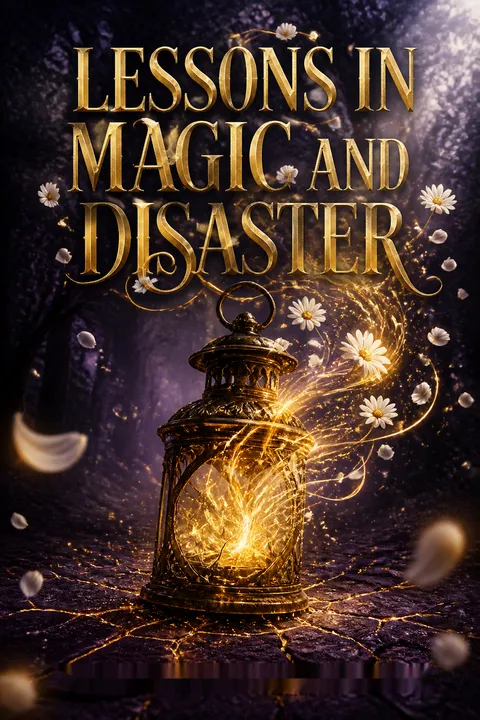
Lessons in Magic and Disaster asks whether power can be used without turning care into control. Jamie's magic begins as an intimate practice of recognizing desire in places that conventional life has abandoned. It helps her approach Serena, whose grief has narrowed her world, but the lesson cannot be reduced to a technique. Serena's first working shows what happens when longing remains fixed on loss. Later, her protective spell makes Ro disappear, while Jamie's unauthorized blessings violate the same principle from a gentler direction. The book therefore refuses to equate benevolent intention with ethical action. Consent, self-knowledge, and accountability matter precisely because people can harm one another while trying to help.
The novel's archival plot deepens that argument. Jamie investigates Emily, a fictional eighteenth-century novel whose authorship and coded fairy tale make literary interpretation part of the action. Jane Collier and Sarah Fielding's imagined correspondence reflects the risks women faced when reputation was controlled by hostile observers. Their story echoes the modern harassment campaign against Serena and Jamie, where edited recordings manufacture a public identity. Across both periods, narrative is not neutral: a story can preserve a life, distort it, or make a person socially disappear.
Yet the answer is not simply to seize a stronger weapon. The curse against Bushwick grows from genuine anger at injustice, but it entangles Jamie and Serena in the very logic of domination they oppose. Their eventual work shifts toward blessing targets of harassment and building a community capable of questioning its members. The ending also declines to restore the old family arrangement. Jamie and Ro renegotiate their partnership, Serena begins again elsewhere, and Jamie changes her professional ambitions. Repair means neither forgetting harm nor returning to a supposedly intact past. It means making room for truth, boundaries, grief, and a future that no one person gets to dictate.
Review Summary
People Also Read








Characters
Jamie Sandthorn
The searching witchJamie is a trans woman, literature scholar, teacher, and reluctant practitioner of a private form of magic. She is drawn to neglected places and obscure texts because both seem to preserve possibilities that dominant accounts overlook. Her quick intelligence often becomes a defense: she can analyze a feeling before admitting she has one, or turn care into a project with herself in charge. Jamie values justice, curiosity, and intimacy, but struggles to distinguish help from control. Her relationships with Serena, Ro, and her research force her to examine how secrecy and good intentions can still injure people. She is most alive when discovery leads not to mastery, but to a more honest connection with others.
Serena Decker
The guarded motherSerena is Jamie's mother, a former journalist and housing-rights lawyer whose forceful wit once helped her challenge powerful institutions. She is resourceful, politically committed, and fiercely protective, but her confidence can harden into control when she is frightened. Years of loss and public humiliation leave her withdrawn from the world, while the habits that once served her as an organizer become difficult to use in private life. Serena has a complicated relationship with vulnerability: she can defend other people more easily than she can acknowledge her own needs. Her history with Mae shapes how she understands family, justice, and the danger of wanting a future after profound loss.
Mae Sandthorn
The generous other motherMae is Jamie's other mother and Serena's longtime partner. A creative, sociable person with a talent for making strangers feel included, she moves among community work, performance, bookselling, and other forms of expressive labor. Her warmth does not make her endlessly confident; she can be shy about conflict and reluctant to burden the people she loves. Mae values pleasure, mutual care, and the freedom to live outside respectable expectations. She helps shape Jamie's childhood and Serena's understanding of partnership, offering a model of family built through attention rather than conventional roles. Her influence remains present in the memories and choices of the people closest to her.
Ro
The loving reality checkRo is Jamie's spouse, a nonbinary economics scholar who uses they/them pronouns. Practical, funny, and intellectually rigorous, they are alert to the ways people hide power inside benevolent language. Their care for Jamie is expressed through attention, shared routines, and a willingness to challenge her when she crosses a boundary. Ro's comfort with analysis contrasts with Jamie's instinct to preserve magic through silence, which makes their relationship both intellectually lively and vulnerable to secrecy. They value autonomy as much as closeness and expect their needs to count in decisions that affect them. Their skepticism is not a lack of imagination; it is a form of ethical self-protection.
Delia
The careful fellow witchDelia is a witch Jamie meets through a sex-positive shop and later encounters within Serena's growing circle. She is perceptive, self-possessed, and thoughtful about the limits of magical practice. Her experience has taught her to distinguish helping someone from manipulating them, and she encourages accountability rather than obedience to a charismatic leader. Delia is also a therapist, which gives her a practical interest in emotional awareness and consent. Her easy warmth draws Jamie toward friendship, but she does not mistake attraction or shared identity for automatic intimacy.
Paola
The restless young witchPaola is a queer young adult in Serena's witch network, balancing unstable work, housing pressure, and hopes for further education. She is curious and energetic, and she readily imagines magic as a tool for changing circumstances. Her openness makes her a valuable companion, but her early interest in curses also reveals how easily frustration can make retaliation seem practical. Paola's presence keeps the group connected to material problems such as money, school, and shelter.
Markus Vance
The steadfast organizerMarkus is a transmasculine sociology graduate student and Jamie's colleague in campus activism. They combine warmth with a clear sense of collective struggle, reminding Jamie that no one person's stamina can carry a whole movement. Markus offers Jamie a place to stay during a crisis and helps her remain connected to people when she is tempted to isolate herself. Their steadiness makes them a practical ally rather than a symbolic one.
Ariella Zhang
The anxious advisorAriella is Jamie's dissertation advisor, a scholar who cares about her student's work but cannot shield her from the institutional pressures surrounding academia. She pushes Jamie to produce a defensible argument while worrying that the subject may not sustain a career. Ariella's own investment in the university makes her both mentor and representative of a system under strain. She offers support even when she cannot promise Jamie the future she once hoped to provide.
McAllister Bushwick
The harassment strategistBushwick leads JawBone, a right-wing operation that manufactures damaging stories about activists through surveillance, selective editing, and public pressure. He understands that a weak allegation can still produce serious consequences when repeated through the right channels. His polished manner disguises an appetite for turning other people's private lives into weapons. He represents a machinery of reputational harm, not merely one cruel individual.
Jane Collier
The hidden literary guideJane Collier is an eighteenth-century writer and Sarah Fielding's close friend. Jamie studies her work and surviving traces for signs that she may be connected to the anonymous novel Emily. Jane's interest in moral cruelty and women's constrained lives gives Jamie a way to think about power, reputation, and friendship. The historical record around her is sparse, making her both a real subject of scholarship and a figure onto whom Jamie must be careful not to project too much.
Sarah Fielding
The searching novelistSarah Fielding is an eighteenth-century novelist whose writing examines kindness, tyranny, and the difficulty of finding trustworthy companionship. Jamie's research follows the possibility that Sarah's life intersected with Charlotte Charke in ways that conventional literary accounts have obscured. Sarah's work offers Jamie a vocabulary for thinking about virtue without assuming that respectable appearances reveal a person's true character.
Charlotte Charke
The boundary-breaking performerCharlotte Charke is an actor and writer who performed men's roles and often dressed in men's clothing. Her life unsettles the social categories that governed public respectability in her time. In Jamie's research, Charlotte represents both theatrical daring and the risks faced by people who refuse conventional gender expectations. Her presence helps illuminate why a private association could become dangerous in a culture eager to punish women.
Gavin Michener
The classroom provocateurGavin is one of Jamie's students, a bright young man who uses argument to derail discussions and test how much disruption he can cause. He often treats other people's experiences as material for debate, while presenting himself as a defender of open inquiry. His conduct shows how institutional permission for debate can be exploited by someone more interested in attention than understanding.
Bee
The welcoming hostBee hosts one of the witch group's meetings in a warm, book-filled home. They help make the circle feel like a community gathering rather than a secretive hierarchy, offering the kind of ordinary hospitality that lets cautious people participate.
Yvette
The practical circle memberYvette is a straight member of Serena's witch network. She brings a grounded, practical presence to the group and explores gentle ways of focusing attention. Her inclusion demonstrates that the circle is not limited to people who share one identity, though it is shaped by queer community.
Martha
The mindful practitionerMartha is an Asian lesbian in Serena's circle who shares mindfulness practices that help members clarify their needs. She approaches magical work carefully, emphasizing attention and self-understanding over grand promises.
Hettie
Mae's difficult coworkerHettie works with Mae at Spectacles and makes the bookstore workplace increasingly uncomfortable for her. Her small acts of blame and disruption show how hostility can operate through deniable routines rather than open confrontation.
Emily
The virtuous heroineEmily is the heroine of the mysterious novel at the center of Jamie's scholarship. Raised to embody perfect virtue, she faces the problem of seeking love and freedom within rules designed by others. Her story gives Jamie a literary mirror for questions of agency and desire.
Toby Langthrope
The reforming suitorToby is a rakish suitor in Emily who becomes her student as he tries to prove himself worthy. His role complicates the period's expected gender dynamic: he must learn, while Emily judges and instructs him.
Lady Sagacious
The loyal fairy-tale friendLady Sagacious is the princess's trusted companion in the tale embedded within Emily. Her loyalty and willingness to intervene make the fable a story about friendship tested by sacrifice, not merely a diversion from the novel's courtship plot.
Plot Devices
Neglected places
Where desire takes shapeJamie finds that magic is most available in places caught between human purpose and nature: abandoned gardens, decaying structures, forgotten trails, and ruins. A practitioner identifies a desire, chooses an object or image to represent it, leaves an offering, and then tries not to control the result. These locations are not simply atmospheric backdrops. Their unfinished histories make them receptive to wishes, while their visible decay reminds characters that no human plan remains permanent. The practice gives Jamie a way to act on feelings she has trouble discussing, but its uncertain rules make it dangerous when she or Serena mistakes conviction for self-knowledge.
Offerings and intention
Desire becomes a workingObjects connect an inward want to the outside world. A stipend letter, a dead partner's hat, a pay stub, a kazoo, or a cherished keepsake can stand for what the practitioner hopes to change. The offering does not function as a precise payment to a supernatural being; the story keeps causality uncertain and emphasizes the practitioner's own desire. This ambiguity lets magic reveal character as much as it alters events. When Serena's grief and fear distort what she wants, her workings produce frightening consequences. When characters focus on care without trying to dominate others, the practice becomes less destructive.
Emily's hidden annotations
An archive becomes a mapJamie finds evidence about Emily in rare books, correspondence, and markings hidden in an early edition of another novel. The annotations link Jane Collier, Sarah Fielding, and Charlotte Charke, then direct Jamie toward passages in Emily that appear to form a secret account of magical practice. This device braids scholarship into the present-day plot: Jamie's reading does not merely explain the past, it helps her understand the danger Serena faces. The evidence remains mediated by interpretation, so Jamie must distinguish a compelling pattern from an easy certainty. The marginalia rewards attention to neglected material and gives the novel's literary mystery a concrete role in the climax.
The princess's bargain
A fable teaches repairEmily contains a fairy tale about a princess, a shape-shifting actor, and the princess's devoted friend, Lady Sagacious. The tale first appears to be a courtship-adjacent diversion, but its curse, bargain, and threatened separation echo the dangers Jamie encounters in her own magical life. As the story unfolds, the princess finds a way to use the terms of the bargain to protect her friend rather than surrender her. Jamie eventually reads the fable alongside Jane Collier's coded notes and recognizes a principle of reciprocal forgiveness. The embedded story is both a clue and a rehearsal for choosing connection over self-erasure.
Edited public narratives
Reputation becomes a weaponJawBone and its allies use recordings, selective edits, and repeated accusations to transform private fragments into public scandal. The method links Serena's earlier ruin to the campaign against Jamie, showing how a person can be injured by a story that is distorted yet difficult to disprove. Jamie's scholarship on novels and reputation gives her tools to recognize the construction, but recognition does not shield her from its effects. This device also parallels magical intention: both edited media and spellwork can redirect how others experience a person, although one operates through human institutions and the other through uncertain ritual.
Download PDF
Download EPUB
.epub digital book format is ideal for reading ebooks on phones, tablets, and e-readers.








