

Key Takeaways
Learn to see ordinary life as charged with consequence, not disposable.
Faith changes the view. Weigel calls Catholic perception a habit of being: a learned way of seeing ordinary life within a story of creation, failure, redemption, and hope. He recalls growing up in Baltimore, where parish, school, feast days, and shared rituals made faith part of daily identity. Flannery O’Connor’s fiction gave him language for what that upbringing conveyed: a world without ultimate meaning can make even goodness and cruelty seem trivial. Catholic faith, by contrast, insists that people and their choices matter because the world is created and redeemed.
Roots enable reach. Local customs can form a person for a wider community, rather than imprisoning them in a closed identity. The question is whether inherited practices prepare people to meet other lives without losing their own moral bearings.
What's distinctive is the claim that belief is not merely a list of propositions. It is also a trained perception, formed by ritual, community, and memory. This resembles moral psychology, where repeated practices shape what people notice and what they consider worth protecting. A tradition can make distant suffering feel morally near. Yet formation is not automatically virtuous: tightly bonded communities can also deepen exclusion. The useful test is whether particular loyalties enlarge responsibility toward strangers, as the book's idea of catholicity requires, or turn belonging into a boundary against them.
Treat faith as rooted in history, not merely as a comforting idea.
The faith has a place. Beneath St. Peter's Basilica, archaeologists found an ancient burial ground and a shrine associated with Peter's grave. The evidence is not mathematical proof, and Weigel acknowledges that archaeology yields probabilities. Its force lies in making Christianity tangible: its central claims concern people who lived, acted, failed, and died in history. The Gospels preserve Peter's cowardice as well as his leadership, presenting faith as transformation rather than flawless character.
Commitment costs something. Peter's journey from Galilee to Rome becomes Weigel's image of being seized by a truth that demands a whole life. The Church, too, remains a flawed human community. Its leaders' failures do not erase its claims, but neither should those claims be used to excuse institutional wrongdoing.
The emphasis on historical embodiment counters a common mistake: treating religion as private sentiment detached from public facts. It also reflects a broader feature of human knowledge. People assess the past through converging evidence, not certainty of the mathematical kind. The restraint about archaeological probability is therefore important. Still, a physical site can support historical continuity without establishing every theological conclusion attached to it. The strongest argument here is not that a tomb settles belief, but that Christianity asks to be judged as a claim about real events and accountable communities.
Let material beauty become a doorway, not a distraction.
Matter can mediate meaning. Weigel calls the sacramental imagination the conviction that God works through material things, not by rescuing people from physical life. In Christian worship, water, oil, bread, and wine are not disposable props. The defense of icons made a related claim: because Christians believe God became human in Jesus, depicting the human form need not be idolatry. An icon is meant to direct attention through an image toward the reality it represents.
Beauty gives the claim a body. At Chartres Cathedral, stained glass, stonework, and images of ordinary donors turn a building into a shared account of faith. The Sistine Chapel's painted bodies make physical humanity central to its religious vision. Such works invite attention, wonder, and prayer, making the abstract visible without reducing it to an explanation.
Beauty can function as a form of attention training. A carefully made object slows perception, invites interpretation, and can make a community's values legible across generations. That is a powerful complement to argument, especially when religious claims concern embodied life. But aesthetic force is not proof: beauty can persuade people toward incompatible beliefs, and impressive architecture can conceal unequal power or institutional failure. The book's strongest point is narrower and more durable: physical beauty need not compete with spiritual seriousness. It can help people attend to what they might otherwise overlook.
Seek truth as received and tested, not customized to preference.
Belief involves judgment. John Henry Newman opposed what he called liberal religion: the idea that religious claims are only personal tastes, with no objective truth to seek. He did not oppose inquiry. He argued that mature belief can arise from multiple converging considerations, even when no single consideration amounts to a formal proof. He named this practical capacity the illative sense. Edith Stein's conversion illustrates it: reading Teresa of Avila's autobiography convinced Stein that the experience described pointed toward a truth she had to acknowledge.
Questioning can deepen fidelity. Newman understood faith as a journey through uncertainty toward a commitment, not as a refusal to think. His distinction is between honest development in understanding and reducing religion to whatever an individual finds useful. For him, receiving a truth carries obligations as well as comfort.
Newman's account resembles reasoning under uncertainty: people often reach justified conclusions through the cumulative weight of evidence, experience, and testimony rather than a single decisive demonstration. That is how much practical knowledge works. The same model also needs safeguards. A powerful convergence of impressions can be mistaken, especially when identity or community rewards one conclusion. The value of Newman's approach is not that conviction becomes infallible, but that it can be rational without being reducible to a geometry proof. Serious inquiry should remain open to correction even after commitment.
Practice trust by answering your vocation without an escape plan.
Mary models consent. In the Gospel story of the Annunciation, Mary accepts a calling whose consequences she cannot fully control. Weigel reads her response as the pattern of discipleship: trust is not passivity, but a willing commitment to a good beyond immediate self-protection. At Cana, her counsel directs attention away from herself and toward Jesus. Her role, in this account, is to lead others toward her son, not to replace him.
A calling is more than a job. The rosary's repeated prayers invite reflection on moments in Christ's life, including the public ministry highlighted by the Luminous Mysteries added in 2002. Weigel presents such prayer as a way to discern a particular responsibility. Commitment can feel risky, especially in a culture shaped by betrayal, but keeping every option open can also prevent a person from becoming dependable.
Vocation offers a useful alternative to treating identity as an endless sequence of consumer choices. Long commitments let people build skills, relationships, and obligations that short-term preference cannot sustain. Trust, however, should not mean surrendering judgment to an authority or remaining in harmful circumstances. The book's account is most compelling when commitment is a considered response to a good, rather than obedience for its own sake. The practical question is not simply whether to commit, but how to distinguish a demanding, life-giving responsibility from a demand that exploits trust.
Let imperfect loves teach you how to love beyond possession.
Love grows through limits. In Evelyn Waugh's Brideshead Revisited, Charles Ryder first finds belonging through his friendship with Sebastian Flyte, then pursues a passionate relationship with Sebastian's sister Julia. Both relationships matter, but neither can provide the lasting fulfillment Charles seeks. As the characters confront their choices and the death of Lord Marchmain, Charles and Julia recognize that their love cannot simply replace moral responsibility or God.
Grace works through real affection. Weigel reads the novel as an ascent from partial, sometimes selfish loves toward a fuller love of God. The characters do not become good by pretending their failures never happened. They must face those failures, seek forgiveness, and accept that a genuine love may require separation rather than possession. The story resists the idea that every desire becomes good merely because it feels intense.
The novel's insight connects with a familiar account of moral development: relationships teach people what care requires, but affection alone does not guarantee ethical conduct. Love becomes more mature when it recognizes the other person's independent good and accepts limits. This is a fruitful reading of Charles and Julia's painful decision. It should not be turned into a formula that treats human partners as disposable rungs on a spiritual ladder. Their worth is not merely instrumental. The book's more careful claim is that finite loves can be genuine while still revealing the need for a deeper source of fulfillment.
Make self-giving, not self-assertion, the measure of embodied freedom.
The body expresses relationship. In John Paul II's theology of the body, being embodied as male or female is part of personal identity, not a detachable shell. The Law of the Gift names the claim that people find fulfillment through freely giving themselves in love. Weigel applies this to sexual ethics: desire becomes loving when it recognizes another person as a person, not an instrument of gratification. Chastity, in this framework, is not simply restraint; it is the capacity to love without using.
Promises give intimacy a form. The book presents marriage as a covenant in which sexual love expresses a lasting mutual commitment. It argues that pornography and sex without such promises can train people toward consumption rather than communion. These are demanding theological claims about sexuality, grounded in the author's account of human dignity and the Incarnation.
The distinction between desire and use has force beyond religious ethics. In relationships, consent is necessary but does not by itself guarantee care, reciprocity, or freedom from manipulation. A moral vocabulary of self-gift can therefore ask questions that a narrow focus on permission misses. At the same time, the book's account of sex and gender is a contested theological position, not a neutral description accepted by all traditions or disciplines. Its strongest contribution is the demand for mutual dignity and responsibility. Its specific conclusions require engagement with the lived diversity of bodies and relationships.
Worship shapes belief; give prayer a durable place in your week.
Ritual teaches attention. At St. Mary's in Greenville, a new pastor restored the tabernacle to the center of the church and rebuilt the liturgy around Scripture, music, chant, and congregational participation. The parishioners responded with sustained engagement, even during a Mass lasting nearly two hours. Weigel links this to lex orandi lex credendi, the principle that the way a community prays shapes what it believes. Practices of Eucharistic reverence, he argues, help sustain belief in Christ's real presence.
Prayer begins as response. The Gospel meeting between Jesus and a Samaritan woman presents prayer as an encounter initiated by God, who seeks relationship before the person knows how to ask. Weigel also recommends structured daily prayer, including the Liturgy of the Hours, a cycle of Scripture, psalms, and prayers at set times. Regularity gives spiritual attention a place in ordinary life.
Ritual is not just a container for ideas. Repeated gestures, music, and shared language help groups remember what they value and make abstract commitments emotionally available. This is consistent with research on embodied cognition, the influence of bodily action on thought. The principle does not prove that one form of worship produces one fixed theology, however. Belief also depends on teaching, family, and personal experience. The parish story is most useful as a reminder that worship has intellectual consequences, and that design choices can direct attention toward either the congregation's performance or the object of its devotion.
Choose vocation over career; quiet fidelity can redirect history.
A calling becomes public. Jerzy Popiełuszko was a modest priest assigned to minister to Warsaw steelworkers. Under martial law, he began celebrating monthly Masses that drew thousands and urged nonviolent resistance to lies and oppression. Secret police murdered him in 1984. His grave became a gathering place for Solidarity supporters, and his example helped sustain resistance without turning it toward revenge.
History moves beneath headlines. Karol Wojtyła, later Pope John Paul II, first imagined a life in theater and literature. Nazi occupation, underground study, work, prayer, and mentorship helped clarify his priestly vocation. Weigel argues that the cultural confidence strengthened in such settings contributed to Poland's peaceful political transformation. He urges readers to think of vocation as a way of being, not simply a job title, and to learn from people whose lives embody it.
These lives show how political change depends on more than elections and institutions. Shared moral language, trusted networks, and courageous examples can make resistance possible when formal channels are blocked. This aligns with the study of civil resistance, which emphasizes organization and disciplined noncooperation rather than spontaneous heroism alone. Still, no single priest or papal visit explains the fall of communism. Economic pressures, geopolitical shifts, and organized labor also mattered. The more defensible lesson is that personal vocation can strengthen the civic capacities through which larger historical forces become politically consequential.
Train freedom toward excellence before asking democracy to protect it.
Freedom needs practice. John Carroll's Baltimore Cathedral was designed to join Catholic heritage with the promise of American religious liberty. Weigel links that vision to older Catholic ideas: government is not absolute, communities matter beyond the state, and rights carry responsibilities. The moral habits of citizens are therefore part of democracy's foundation.
Choice is not the whole of freedom. Drawing on theologian Servais Pinckaers, the book distinguishes freedom for excellence from freedom understood as mere ability to choose anything. Learning piano or a language requires rules and practice; mastery eventually makes richer action possible. Applied to public life, freedom requires virtues that help citizens pursue goods together. The book argues that a politics detached from shared moral standards risks replacing persuasion with power, though it does not claim that medieval society was a modern democracy.
The distinction between freedom as choice and freedom as developed capacity is valuable in political theory and education. A person who can act well, communicate, and cooperate has more meaningful options than someone left alone with formal permission. The historical argument needs qualification: medieval institutions also excluded people and enforced hierarchies, so they cannot simply be equated with modern democratic norms. Their relevance lies in the intellectual resources they supplied, such as limits on rulers and the importance of intermediate communities. Democratic life needs moral formation, but also rights, pluralism, and safeguards against coercion.
Face suffering and death through solidarity, not fantasies of control.
Suffering can be offered. Frank Parater, a young seminarian who died of rheumatic fever in Rome in 1920, had written a prayer offering his life for the people of Virginia. Weigel uses his story, alongside that of Jeanne Hyde, to explain redemptive suffering: the Christian belief that suffering joined to Christ's suffering can become an act of love for others. The idea is not that pain is pleasant, but that it need not be meaningless.
Mortality gives urgency. Weigel draws on Leon Kass's challenge to the pursuit of indefinite life: an unlimited lifespan might not bring fulfillment and could weaken the urgency that gives choices their weight. Christian hope rests instead on resurrection, not endless earthly continuation. The book also recalls the many Christians killed for their faith in the twentieth century, presenting their courage as evidence that commitment remains possible.
Meaning-making can help people endure illness, grief, and uncertainty, while shared care protects them from isolation. That does not make suffering intrinsically good or justify leaving preventable pain untreated. The distinction matters: a person may find purpose in suffering without anyone else having the right to impose it. Likewise, mortality can sharpen priorities, but it is not a reason to oppose medical progress or deny the value of longer, healthier lives. The strongest ethical insight is solidarity: care for vulnerable people should accompany any account of suffering, hope, or the limits of human control.
Analysis
Letters to a Young Catholic is structured as a pilgrimage rather than a textbook. Each stop, from a Baltimore childhood to Peter's grave, Chartres, and Kraków, gives a physical setting to a theological claim. This method suits the book's central premise: faith is not only a set of propositions but a way of perceiving bodies, places, history, and obligation. The narrative makes ideas memorable because readers encounter them through specific lives, including Peter's failures, O'Connor's artistic vision, and Popiełuszko's resistance.
The book's most integrated concept is sacramentality. Matter, ritual, beauty, sexuality, and political life are treated as connected because the Incarnation makes the visible world consequential. From that premise follow its arguments about worship, vocation, art, and freedom. This unity gives the book unusual coherence across subjects that are often separated into theology, aesthetics, ethics, and politics.
Its strength is also its main interpretive risk. Weigel reads varied evidence through a confident Catholic framework, so a tomb, a painting, a liturgy, and a historical revolution can all appear to confirm the same worldview. For readers who do not share its premises, these examples may illustrate the faith's internal logic more readily than prove its truth. Several historical and social claims also invite qualification: Poland's transition had multiple causes, and the medieval inheritance was neither uniformly democratic nor egalitarian. The account of sexuality presents a specific moral theology that remains disputed.
The most productive way to read the book is neither as neutral religious sociology nor as a substitute for argument. It is an invitation to test a way of seeing: Does treating material life as meaningful increase attention, responsibility, and solidarity? Can tradition form people for engagement rather than retreat? The book's strongest challenge is that beliefs become credible not only through defense, but through the kinds of lives and communities they make possible.
Review Summary
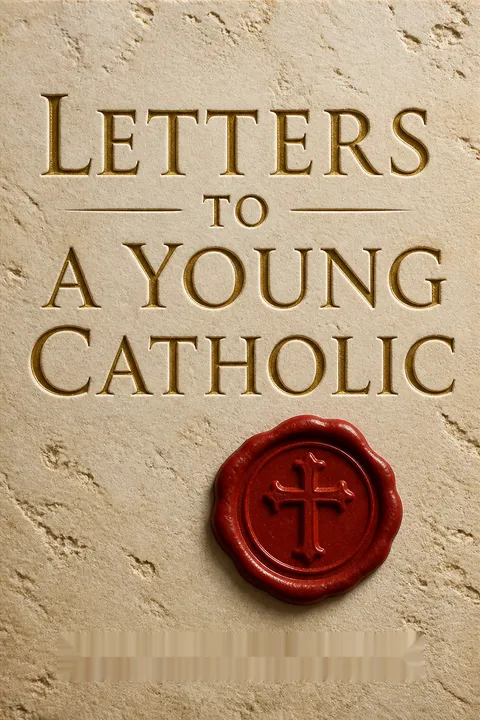
Letters to a Young Catholic receives high praise from readers for its insightful exploration of Catholicism through various locations and historical figures. Many find it intellectually stimulating and spiritually enriching, appreciating Weigel's ability to connect Catholic teachings to everyday life. Readers commend the book's depth, engaging writing style, and its relevance to both young and mature Catholics. Some reviewers note its potential to inspire and challenge readers in their faith journey. While a few found certain sections challenging or disconnected, the overall reception is overwhelmingly positive.
People Also Read
Glossary
habit of being
faith-shaped perceptionA formed spiritual sensibility that perceives ordinary events within a larger drama of creation, sin, redemption, and sanctification. In the book, Catholic practices and community teach this way of seeing. It counters the sense that life is merely a sequence of transient experiences with no lasting moral consequence.
sacramental imagination
the divine through matterA way of understanding the material world as capable of conveying God's presence and action. Physical things are not distractions from spiritual reality. In Catholic worship, water, oil, bread, and wine have sacramental roles; art, bodies, and ordinary places can also disclose meaning beyond themselves.
illative sense
judgment from converging evidenceJohn Henry Newman's term for the practical ability to weigh multiple considerations and recognize when their combined force warrants assent. The judgment may be compelling without functioning like a formal mathematical proof. Weigel uses the term to explain how mature religious conviction can involve reason, experience, and interpretation together.
Law of the Gift
fulfillment through self-givingJohn Paul II's account of the human person as made for freely giving and receiving love. Weigel applies it to relationships and sexuality: a person is respected as a subject, not used as an object for another's gratification. Self-giving, rather than self-assertion, is presented as a path to human fulfillment.
lex orandi lex credendi
prayer shapes beliefA Latin theological principle meaning that the Church's way of praying expresses and helps form its belief. Weigel applies it to Catholic liturgy, arguing that repeated practices such as Eucharistic reverence can sustain doctrine across generations. Worship is therefore not merely decorative or private expression.
freedom for excellence
freedom through practiced virtueA concept associated in the book with moral theologian Servais Pinckaers. It describes freedom as the developed ability to choose and do what is good, rather than mere permission to select among options. Like mastery of a musical instrument or language, moral practice expands a person's capacity for meaningful action.
redemptive suffering
suffering joined to loveThe Christian belief that suffering united with Christ's suffering can become an offering for the good of others. In Weigel's account, pain is not desirable in itself and is not simply explained away. Its possible meaning comes through solidarity, self-giving, and participation in Christ's saving work.
Liturgy of the Hours
daily cycle of prayerThe Church's structured sequence of prayers distributed across the day, including morning and evening prayer, psalms, Scripture readings, hymns, and intercessions. Weigel presents it as a way to sanctify time and give daily prayer a reliable shape for clergy, religious communities, and laypeople.
FAQ
What's Letters to a Young Catholic by George Weigel about?
- Exploration of Catholic Identity: The book is an epistolary exploration of what it means to be a Catholic in the modern world, focusing on the challenges and opportunities of this identity.
- Personal Journey: Weigel shares his experiences growing up in a vibrant Catholic culture, emphasizing community, tradition, and the sacramental nature of life.
- Cultural and Historical Context: It delves into significant Catholic sites and figures to illustrate the richness of Catholic heritage and its relevance today.
Why should I read Letters to a Young Catholic by George Weigel?
- Insightful Guidance: Weigel offers reflections that help readers navigate their faith amidst contemporary challenges, blending personal anecdotes with theological insights.
- Cultural Relevance: The book addresses the complexities of living a Catholic life in a secular world, encouraging deep and authentic engagement with faith.
- Encouragement of Exploration: Readers are invited to explore the beauty and mystery of Catholicism, appreciating the traditions and teachings that have shaped the Church.
What are the key takeaways of Letters to a Young Catholic by George Weigel?
- Understanding Catholic Culture: Weigel emphasizes the importance of understanding the cultural and historical context of Catholicism, which enriches one’s faith.
- The Sacramental Imagination: The book highlights seeing the divine in the ordinary, allowing Catholics to appreciate beauty and meaning in everyday life.
- The Importance of Truth: Catholicism is presented as a truth that demands a response, encouraging readers to seek a deeper understanding of their relationship with God.
What are the best quotes from Letters to a Young Catholic by George Weigel and what do they mean?
- “Catholicism is a body of beliefs and a way of life.”: This quote emphasizes that faith is not just intellectual assent but also a lived experience, inviting integration of beliefs into daily life.
- “The habit of being is a way of seeing things.”: Suggests that Catholicism offers a unique lens to view the world, recognizing the interconnectedness of faith, reason, and experience.
- “Everything that is, is for a reason.”: Reflects the Catholic belief in divine providence, asserting that all aspects of life have purpose and meaning.
How does Letters to a Young Catholic by George Weigel address the challenges of modernity?
- Engagement with Secular Culture: Weigel discusses the tension between Catholic beliefs and secular values, encouraging thoughtful engagement with contemporary issues.
- The Role of Tradition: Tradition is emphasized as a source of strength and guidance, providing clarity and direction in navigating modern challenges.
- Faith as a Journey: Portrays faith as a dynamic journey, encouraging readers to embrace questions and uncertainties as part of spiritual growth.
What is the significance of the sacramental imagination in Letters to a Young Catholic by George Weigel?
- Seeing the Divine in the Ordinary: The sacramental imagination allows individuals to perceive God’s presence in everyday life, fostering wonder and appreciation for creation.
- Connection to Tradition: It is deeply connected to Catholic tradition, valuing the material world as a means of encountering the divine.
- Encouragement of Spiritual Growth: Cultivating a sacramental imagination encourages a deeper relationship with God and seeing life as part of a larger narrative of faith.
How does George Weigel use personal anecdotes in Letters to a Young Catholic?
- Illustrating Key Concepts: Personal stories from Weigel’s upbringing illustrate the richness of Catholic culture and the importance of community.
- Connecting with Readers: Sharing his experiences creates intimacy and connection, inviting readers to consider their own faith journeys.
- Highlighting the Journey of Faith: Anecdotes reflect the struggles and triumphs of living a Catholic life, emphasizing faith as a journey filled with challenges and growth.
What role do historical and cultural sites play in Letters to a Young Catholic by George Weigel?
- Tangible Connections to Faith: Visits to significant Catholic sites illustrate the historical depth of the faith, serving as reminders of the Church’s rich heritage.
- Experiencing the Mystery of the Church: Exploring these locations encourages engagement with the Church’s mystery in a sensory way, deepening understanding of Catholicism.
- Cultural Context: These sites provide context for understanding the development of Catholic beliefs and practices, essential for appreciating the faith today.
How does Letters to a Young Catholic by George Weigel define the relationship between faith and reason?
- Complementary Aspects: Weigel asserts that faith and reason complement each other, encouraging intellectual engagement in understanding faith.
- The Role of Tradition: Catholic tradition values the interplay between faith and reason, enriching both personal belief and communal understanding.
- Encouragement of Inquiry: Readers are invited to ask questions and seek understanding, suggesting that genuine faith is strengthened through intellectual exploration.
What is the significance of the Sistine Chapel in Letters to a Young Catholic by George Weigel?
- Art as Theology: Michelangelo's work in the Sistine Chapel is discussed as visual theology, conveying profound truths about creation, humanity, and redemption.
- Cultural Impact: The chapel is a cultural landmark reflecting the Catholic Church's influence on art and society throughout history.
- Spiritual Encounter: Experiencing the chapel can lead to a deeper spiritual awakening, challenging modern secular views of existence.
How does Letters to a Young Catholic by George Weigel address the concept of freedom?
- Freedom for Excellence: Weigel distinguishes between "freedom of indifference" and "freedom for excellence," finding true freedom in living virtuously.
- Moral Responsibility: Emphasizes that freedom involves responsibilities towards oneself and others, not just personal choice.
- Connection to Democracy: Links Catholic understanding of freedom to democracy's foundations, suggesting a moral framework is essential for a healthy society.
What is the overall message of Letters to a Young Catholic by George Weigel?
- Invitation to Explore Faith: Readers are encouraged to explore the depths of their Catholic faith, engaging with its teachings and traditions.
- Emphasis on Community: Highlights the importance of community in the Catholic experience, strengthening individual faith through shared beliefs and practices.
- Call to Authenticity: Urges authenticity in living out one’s faith, embracing the challenges and joys of being Catholic, and fostering a deep, personal relationship with God.
Download PDF
Download EPUB
.epub digital book format is ideal for reading ebooks on phones, tablets, and e-readers.








