

Key Takeaways
Step outside a familiar faith to see its actual shape
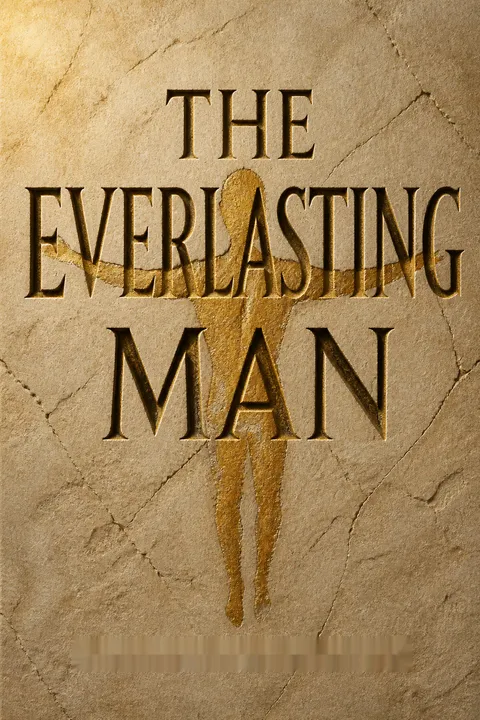
Distance can clarify. Chesterton opens with a boy who leaves his hillside home, then looks back and sees that the farm below him forms part of a giant figure. The image captures his method: a tradition can be too close to understand, while a genuinely distant perspective may reveal its distinct outline.
He argues that many critics of Christianity are not detached observers but people still caught in reaction against it. He recommends imagining Christianity as a distant, unfamiliar tradition, much as one might approach a Chinese temple, rather than judging it through inherited irritation. His claim is that impartial comparison may explain why Christians regard their faith as unique.
Defamiliarization is a useful tool in anthropology and literary criticism: making the familiar strange can expose assumptions that ordinary familiarity hides. The method also has limits. Distance can encourage fair comparison, but it can just as easily turn another culture into an exotic backdrop. Chesterton's strongest point is methodological: critics should understand a tradition before dismissing it. His weaker move is treating his own ability to imagine impartiality as evidence that he has achieved it.
Treat human art as evidence of a mind, not a beastly stereotype
The cave holds clues. Chesterton challenges the popular image of the cave-man as a violent brute, noting that the evidence he discusses consists of cave paintings of animals. The drawings, he argues, show observation, skill, and delight in representation. They tell us that someone made art, not that prehistoric people lived exactly like modern stereotypes suggest.
He treats art as a sign of a distinctively human capacity: people can make images of the world, while the animals depicted do not leave comparable pictures. From this, he argues that human beings cannot be understood as merely another animal species differing only by degree. For him, the human story contains a qualitative break, even if the biological path that produced people remains unknown.
The argument rightly separates what an artifact shows from what a modern story wants it to show. A painted animal is evidence of representation, but not a complete record of the painter's society or motives. Comparative studies of animal cognition also complicate any simple boundary between human and animal abilities. That nuance does not erase the distinctive scale of human symbolic culture, but it makes the cave painting a suggestive clue rather than decisive proof of a metaphysical divide.
Keep archaeological fragments separate from confident stories about prehistory
Fragments invite overreach. Chesterton objects to turning a few bones into detailed portraits of prehistoric people. He cites the Java remains then associated with Pithecanthropus: a skull fragment, a thigh bone, and teeth were used to imagine a whole creature, complete with a face and habits. His point is that sparse evidence cannot support such confident reconstructions.
He makes the same case about claims that ancient people lacked clothing, religion, or complex social life. Perishable clothes leave little trace, and animal paintings do not reveal everything their makers believed. Egypt and Babylon, the earliest well-documented societies in his account, already show developed cities, writing, government, and agriculture. The record begins amid civilization, not at a clearly observed starting line.
This is a durable lesson in the logic of historical inference: absence of evidence is not automatically evidence of absence, especially when materials decay unevenly. Modern archaeology addresses such gaps by combining artifacts, environmental data, and competing explanations. Chesterton anticipates the need for caution, but sometimes replaces unsupported certainty with his own speculative alternatives, such as imagining primitive democracy. Skepticism improves history only when it applies equally to favored and disfavored hypotheses.
Read myths as imaginative longing, not failed scientific reports
Stories do different work. Chesterton treats myth as a form of popular imagination, not a primitive attempt at physics or a coherent creed. A story about a creature swallowing the sea, or a hero carrying the stars in a box, can be judged as expressive storytelling rather than tested as a scientific claim. He warns against reducing every tale to one explanation, such as sun worship or fertility ritual.
He sorts pagan experience into four broad strands: an intuition of one ultimate God, stories about many gods, practical appeals to dangerous spirits, and philosophical attempts to explain reality. These strands can coexist in one culture. In his view, myths preserve people's longing to find personality and meaning in nature, but their poetic power does not make them equivalent to a historical religious claim.
The distinction between a story's imaginative function and its literal truth is valuable. Folklore can express fears, social norms, and hopes without behaving like a scientific theory. Chesterton's resistance to single-cause explanations also resembles modern interpretive approaches that attend to context and multiple meanings. Yet calling myths primarily imaginative risks underplaying their practical roles in ritual and political life. A story may be poetry to one audience and a serious account of reality to another.
Explain wars through the world people defend, not economics alone
Motives exceed material interests. Chesterton argues that economic conditions explain what makes life possible, but not necessarily what makes people risk it. A soldier may fight for home, loyalty, or resistance to an enemy's way of life, rather than for a trade route or policy objective. To understand conflict, he proposes a kind of psychological history: attention to what ordinary people believed they were defending.
He dramatizes the point through Rome and Carthage. In his account, Roman civic and household traditions faced a Carthaginian society whose public worship included child sacrifice to Moloch. Rome's persistence against Hannibal, even when military prospects looked bleak, becomes a moral and religious struggle, not merely a contest over commerce. Chesterton sees Rome's victory as preserving a more humane inheritance for the world.
The distinction between a government's strategic goals and a population's lived motives remains important in political history. People can endure costs for identity and moral commitments that do not appear in official documents. Chesterton's narrative makes that inner dimension vivid, but its Rome-versus-Carthage contrast is highly selective and turns a complex war into a moral pageant. His method is strongest when it asks what people felt, and weakest when that answer is treated as settled without comparable scrutiny of both societies.
See Christianity's central claim as an event, not another religious analogy
A new kind of claim. For Chesterton, Christianity is not simply one more myth, philosophy, or moral code. Its defining assertion is that the maker of the world entered human history as a particular person. The birth in Bethlehem's cave makes the paradox concrete: the divine appears not as a mature hero emerging from stone, but as a dependent infant born to a mother.
The shepherds and Magi represent two human ways of seeking meaning: popular imagination and learned inquiry. Herod represents threatened power. Chesterton reads the scene as bringing these forces together around an event that claims to fulfill, rather than merely resemble, humanity's earlier stories and philosophical questions. The distinction between resemblance and identity is central: a symbolic parallel, in his view, does not make two claims the same.
The distinction between analogy and identity is crucial in comparative religion. Similar images can serve very different purposes, and resemblance alone cannot establish that two traditions make the same claim. Chesterton's account is compelling as an explanation of Christian self-understanding: incarnation is a historical assertion, not just a recurring symbol. But uniqueness is not proof of truth. The argument clarifies what is being claimed, while leaving the reader to assess the historical and theological evidence for that claim.
Read the Gospels as a disturbing portrait, not a tidy ethics manual
The familiar image is partial. Chesterton argues that readers often remember Jesus chiefly as gentle and compassionate, while the Gospel narratives also present anger, stern rebukes, enigmatic silences, and startling demands. A first-time reader, he suggests, would encounter a figure who is difficult to reduce to a pleasant moral teacher. The stories contain sayings and actions whose meaning is not immediately clear.
He also argues that Jesus' teachings do not simply mirror the social assumptions of his time. The Gospel account of marriage, for example, advances a demanding ideal rather than an easy accommodation to contemporary custom. And the narrative gives Jesus a deliberate path toward death, unlike the wandering philosopher who treats death as an interruption. Chesterton sees the combination of wisdom, mystery, and an extraordinary claim about identity as a challenge to ordinary explanations.
Reading primary texts without inherited summaries can reveal tensions that devotional or hostile retellings both smooth over. Chesterton's attention to the Gospel's less comfortable details is therefore productive. Still, complexity does not settle the question of who Jesus was. A difficult portrait may reflect literary construction, historical memory, or both. His comparison with other teachers exposes the limits of reducing Jesus to a single ethical theme, but it does not by itself establish the supernatural interpretation he favors.
Test a church by the doctrines it refuses as well as adopts
Boundaries preserve identity. Chesterton uses a key as an image for the Christian creed: its particular shape matters because it must fit a particular lock. He argues that early Christianity was already an organized Church, with doctrine, ritual, and authority, rather than a vague ethical movement later distorted by institutions.
The Church's disputes with Manichaeans, who treated the material world as evil, and Arians, who held a different account of Christ's divinity, show how it defined itself by rejecting ideas it considered incompatible with its core. Chesterton invokes Athanasius's resistance to imperial pressure and the later return of paganism under Julian to argue that Christianity was not simply an official fashion imposed by Rome. In his telling, doctrine helped the Church remain distinct from rival movements.
Institutions often become legible through the boundaries they draw. In sociology, shared commitments and rules help a group persist across generations, and doctrinal disputes can reveal what members consider non-negotiable. Chesterton usefully challenges the assumption that organization must be a late corruption. But institutional continuity can also reflect political power and social adaptation. The survival of a creed helps explain its historical force, yet survival alone cannot distinguish theological truth from successful institution-building.
Expect Christianity to return as conviction, not merely survive as custom
Survival is not the whole story. Chesterton argues that Christianity has repeatedly appeared to decline, sometimes retaining its public institutions while losing the allegiance of many people. He points to episodes such as Arian dominance, medieval doubts, Renaissance upheaval, and the decline associated with the Enlightenment. In his account, each apparent ending is followed by renewed commitment rather than simple continuation of old habits.
He treats the Oxford Movement and Catholic revival in France as examples of faith returning with fresh energy after confidence in its disappearance had grown. The central historical claim is not that Christianity stayed unchanged, but that it repeatedly regained force across changing political and intellectual eras. Chesterton interprets this pattern as evidence of a distinctive vitality, not merely the inertia of an old institution.
The distinction between institutional survival and renewed conviction is analytically useful: a tradition can persist on paper while losing its capacity to shape lives. Religious revivals also show how generations reinterpret inherited beliefs under new conditions. Chesterton's pattern, however, is selective and written from a Catholic perspective in 1925. Revival demonstrates adaptability and continuing appeal, not necessarily divine origin. Its strongest contribution is to resist easy predictions of disappearance and to ask what makes a tradition newly compelling.
Analysis
The Everlasting Man is a Catholic historical argument built as a two-part narrative. First, Chesterton portrays humanity as an exception within nature; then he portrays Christ as an exception within religious history. The structure is not a neutral survey. It is an attempt to make Christianity appear more distinct when compared with the widest possible backgrounds: animal life, prehistoric societies, pagan myth, philosophy, empire, and rival religious traditions.
Its most durable method is attention to categories and evidence. A painting in a cave does not establish the painter's domestic arrangements. A mythic resemblance does not make two traditions identical. An official religion is not necessarily a living faith. These distinctions remain useful well beyond theology. So does Chesterton's demand that history account for motives, imagination, and ordinary experience, not only institutions or material incentives.
The book's weakness is closely related to its strength. Chesterton attacks speculative reconstructions with sharp skepticism, then builds broad counter-narratives from limited evidence. His contrasts between Rome and Carthage, Christianity and Asia, or myth and revelation are rhetorical and theological as much as historical. In particular, his generalizations about Asian cultures compress immense variation into a foil for Europe. His own declared Catholic commitments matter: the book argues toward a conclusion rather than testing all possibilities symmetrically.
That does not make the work useless as history. It means readers should distinguish its questions from its answers. Chesterton asks whether gradual development is being used to make major differences disappear, whether religious parallels are being mistaken for equivalence, and whether claims about the past outrun their evidence. Those questions are powerful. His answers are best read as a vivid interpretation of Christian history, not as a substitute for contemporary archaeology or comparative religion. The lasting value lies in the friction between his disciplined suspicion of easy explanations and his own unapologetically dramatic account of a world transformed by the Incarnation.
Review Summary
The Everlasting Man receives mostly positive reviews, with readers praising Chesterton's wit, insight, and apologetic approach to Christianity. Many find the book thought-provoking and intellectually stimulating, though some critics note its dated language and Eurocentric perspective. Readers appreciate Chesterton's unique writing style and his ability to challenge conventional thinking about religion and history. The book is often compared favorably to C.S. Lewis's works and is considered a influential piece of Christian apologetics.
People Also Read





Glossary
psychological history
History from lived motivesChesterton's term for studying what events meant to ordinary people, rather than relying only on official statements, political decisions, or economic explanations. It asks what soldiers, citizens, and communities felt they were defending, and how their ideas about life, death, home, and loyalty shaped historical action.
Church Militant
The Church as active witnessChesterton's description of the Christian Church as a community that actively proclaims and defends its faith in the world. It emphasizes the Church's organization, shared doctrine, and sense of conflict with ideas it rejects, rather than portraying Christianity as only a private ethic or a passive survival from the past.
God; the Gods; the Demons; the Philosophers
Four strands of pagan thoughtChesterton's psychological classification of religious life outside the Christian Church. God represents a sense of one ultimate divine source; the Gods represent mythic and imaginative stories; the Demons represent appeals to feared or coercive spiritual powers; and the Philosophers represent intellectual attempts to explain reality. He argues that these strands may coexist within one society or person.
the presence of the absence of God
A felt, distant divinityChesterton's phrase for what he sees as a recurring pagan awareness of a higher divine reality that feels distant or withdrawn. Pagan literature, in his reading, can express a sense that something greater exists beyond the gods, even when people do not worship or clearly describe that reality.
philosophy of stories
A worldview shaped as narrativeChesterton's description of Christianity as a framework that treats reality as a meaningful story rather than a fixed cycle or abstract system. It combines particular events, moral choice, and an intended end. In his argument, this gives narrative form to philosophical questions while presenting the Christian story as historical truth.
the five deaths of the Faith
Repeated crises and revivalsThe idea, developed in Chesterton's account of Christian history, that Christianity has repeatedly seemed close to extinction during periods of doctrinal compromise, skepticism, or social upheaval. He names several apparent endings, including Arian controversy, medieval challenges, Renaissance change, and modern decline, and argues that renewed conviction followed each.
About the Author
Other books by G.K. Chesterton

Download PDF
Download EPUB
.epub digital book format is ideal for reading ebooks on phones, tablets, and e-readers.








