

Key Takeaways
Question the promise before a persuasive lie becomes a practiced habit.
Deception begins plausibly. DeMoss reads the Genesis story of Eve as a model of how false beliefs take hold. The serpent questions what God said, casts doubt on God's goodness, and promises independence and knowledge while denying the danger of disobedience. The fruit looks desirable, so the choice seems reasonable in the moment. The consequences, in the book's account, are shame, separation, and lasting harm.
Beliefs shape repeated choices. The proposed progression is simple: listen to a falsehood, dwell on it, believe it, then act on it. Repeated actions form a pattern that can become bondage, the book's term for being mastered by a harmful behavior or way of thinking. DeMoss urges readers to examine the messages they absorb and ask what they imply, whether they are true, and what following them may cost.
The model is memorable because it puts attention on the moment before a decision hardens into routine. It also resembles cognitive approaches that examine how interpretations influence behavior: a belief can make an impulsive choice feel justified. But the claim that every problem begins with a lie is too broad if read literally. Trauma, illness, poverty, and other constraints can shape behavior without being reducible to a mistaken belief. The framework is most useful as a prompt for reflection, not as a universal explanation or a reason to blame people for hardships they did not choose.
Read pain through God's character, not as proof that you are unloved.
Trust is tested by loss. The book argues that disappointment can make a person suspect God is indifferent, unkind, or withholding something good. DeMoss describes learning of her father's sudden death when she was twenty-one. She grieved deeply, but recalled a biblical conviction about God's goodness as a source of steadiness. The story does not present faith as a way to erase grief; she says she still missed her father.
A flawed father is not the measure. DeMoss warns that an absent, harsh, or abusive earthly father can distort a person's picture of God. She points readers toward the biblical portrait of God and Jesus, rather than assuming human fathers represent God accurately. She also rejects the idea that faith guarantees problems will be fixed: suffering may remain, while faith offers companionship, purpose, and hope within it.
The distinction between grief and despair is valuable: trust need not require emotional numbness. In psychological terms, a stable source of meaning can help people endure loss without pretending that loss is harmless. The book's account is strongest when it describes God's goodness as a conviction that sustains someone through unanswered questions. It is less persuasive if interpreted to mean every painful event is itself good or easily explained. A compassionate faith can affirm divine love while making room for lament, anger, uncertainty, and practical help.
Anchor your worth in grace, not appearance, applause, or romantic attention.
Worth is not a popularity contest. DeMoss reports that 42 percent of women in her survey identified with the belief that they were worth little. She describes how insults, rejection, or comparisons can become a false verdict about a person's value. Her Christian answer is that worth rests in God's regard, not in beauty, achievement, or other people's approval. She argues that the cultural instruction to learn self-love can turn attention inward, while receiving God's love should free people to care for others.
Beauty is not the whole person. The book does not call physical attractiveness sinful; it objects to treating it as more important than character. It also cautions against demanding that a spouse, career, or possession satisfy every longing. Such expectations can fuel comparison, discontent, and harmful choices. DeMoss presents contentment as learning to receive human love and good things without making them the foundation of identity.
The book offers a powerful counterweight to cultures that tie women's value to youth, thinness, desirability, or constant achievement. Its emphasis on worth that does not depend on performance can loosen shame and perfectionism. Still, rejecting self-love as a remedy risks blurring self-absorption with healthy self-respect. Compassion toward oneself can support responsibility rather than compete with it, and boundaries can protect relationships rather than signal selfishness. The useful distinction is not between caring for oneself and serving others, but between dignity that enables care and validation-seeking that makes approval the measure of a life.
Trace harmful patterns to beliefs, then replace them with actionable truth.
Start beneath the behavior. DeMoss compares a recurring problem to a plant: removing visible fruit is temporary if its roots remain. She tells of a woman who had struggled for years with a destructive habit despite prayer, study, and accountability. With help from an older Christian, the woman identified false beliefs beneath the behavior, turned away from them, and began to change. The book's method is to examine not only what someone does, but what they believe that makes the action seem necessary or harmless.
Use a three-step inquiry.
1. Identify the behavior or area where freedom is missing.
2. Ask what belief may be feeding it.
3. Replace that belief with a truth, then act accordingly.
The method also calls for personal responsibility. Other people and circumstances can influence choices, but the book insists they do not make every choice on a person's behalf.
This approach usefully connects insight to action. In behavior change, identifying triggers and assumptions can reveal why a pattern persists, while changing the environment or adding support can make a new response more achievable. The book emphasizes repentance and spiritual truth, which gives the process a clear moral and relational direction for Christian readers. A limitation is that insight alone rarely changes entrenched behavior. Addiction, trauma, and compulsive habits may also require structured treatment, social support, or changes in circumstances. A root-cause question should expand the options for help, not narrow them.
Respect your feelings without treating them as reliable verdicts.
Feelings are real, not always accurate. DeMoss argues that feeling abandoned does not prove God has abandoned someone, and feeling unable to cope does not establish that coping is impossible. Emotions can respond to sleep, health, hormones, relationships, and major losses, so she encourages readers to compare their interpretations with the convictions they hold about God and Scripture. She distinguishes having an emotion from letting it dictate behavior.
Depression needs careful attention. The book suggests that depression can involve physical factors and can also be connected to grief, guilt, anger, or conflict. It says medication may ease symptoms, but may not resolve spiritual or relational problems when those contribute. It encourages prayer, Scripture, and support from trusted people in the church. This is the author's pastoral position, not a diagnosis for every reader or a substitute for professional assessment.
The distinction between emotional experience and factual conclusion is useful, and it aligns with cognitive therapy's practice of examining automatic interpretations rather than accepting them as objective evidence. The caution is that this book gives spiritual explanations substantial weight, particularly for depression. Contemporary clinical understanding treats depression as multifactorial, involving biological, psychological, and social influences. Depression is not proof of weak faith or hidden sin. Professional care, including medication or therapy when appropriate, can complement spiritual support. Severe or persistent symptoms deserve qualified assessment, and thoughts of self-harm call for immediate help.
Let hardship reveal your responses without calling suffering easy or deserved.
Circumstances expose inner habits. DeMoss challenges the thought that a different home, spouse, job, or season would automatically make someone patient or content. She uses the example of a mother who believed she was never impatient until she had twins. In the book's interpretation, demanding circumstances revealed a tendency that had been less visible before. DeMoss draws on Paul's account of learning contentment in both scarcity and plenty.
Pain is not promised away. The book presents suffering as part of life in a fallen world and as something that can shape character and deepen dependence on God. It also insists that a person's suffering is not endless in the ultimate Christian hope, and that divine grace can sustain people through what they cannot control. These beliefs are offered as resources for endurance, not as a guarantee that every situation will improve during one's lifetime.
The idea that pressure reveals patterns can help a person respond to difficulty with curiosity instead of simply blaming the setting. Yet circumstances do more than reveal character: abuse, discrimination, illness, and deprivation can actively injure people and restrict their choices. Treating every hardship as a lesson risks turning preventable harm into a spiritual assignment. The book's strongest contribution is its insistence that pain does not have to erase agency or hope. That claim works best alongside efforts to relieve suffering, seek safety, and change unjust conditions where possible.
Set priorities by your responsibilities, not every voice demanding your time.
A full calendar is not a calling. DeMoss says many women feel they cannot finish everything they are supposed to do. Her answer is to distinguish God's assignments from other people's expectations and from a self-imposed ideal of doing everything. She points to Jesus, who completed the work he understood his Father had given him, rather than satisfying every demand around him. The book also urges consistent time for Scripture and prayer, which it sees as the foundation for discernment and dependence on God.
The book makes a traditional claim. DeMoss argues that marriage and motherhood are central callings for most women, and that a wife's primary attention should be directed toward home and family. She allows that paid work can be appropriate if it does not displace those priorities. For unmarried women, she emphasizes service to the church and others. This is a specific Christian view of gender roles, not a neutral description of every woman's vocation.
The distinction between assigned work and accumulated expectations is practical, especially for people caught in overcommitment. It invites an honest inventory of obligations and makes saying no a moral choice rather than a failure. The book's account of women's calling, however, assumes a particular interpretation of scripture and a particular family structure. Women's paid work may be essential for economic survival, and care can be shared in many ways. The principle of deliberate priorities is broadly useful; the claim that one gender role should define women's highest calling requires theological debate and should not be used to diminish other vocations.
Build marriage around covenant and service, while protecting voice and safety.
Marriage is not a happiness machine. DeMoss argues that expecting a spouse to meet every emotional need or to change on demand leads to disappointment and resentment. She encourages a wife to focus on her own conduct, prayer, and service rather than trying to manage her husband's spiritual life. The book presents marriage as a covenant meant to reflect faithful love, not merely a route to personal fulfillment.
Submission is the book's contested prescription. DeMoss supports a hierarchical model in which a wife submits to her husband's leadership, while saying this does not make her inferior or silence her counsel. She explicitly acknowledges that a wife may need to leave the immediate setting if she or her children face physical danger, and advises seeking trusted help. Her emphasis remains on fidelity and restoration, even in difficult marriages, so readers should distinguish this teaching from a blanket instruction to endure abuse.
The emphasis on service, forgiveness, and resisting scorekeeping can help couples avoid turning ordinary conflict into a contest over who owes whom. But the book's gender hierarchy gives the husband authority while assigning the wife much of the burden of accommodation. That asymmetry can be dangerous when a relationship includes coercion or abuse, even if the text recognizes physical danger. Healthy partnerships require mutual respect, accountability, and safety. No spiritual principle should be used to prevent someone from seeking protection or qualified support.
Shape a child's environment without claiming ownership of the child's choices.
Parents set a climate. DeMoss argues that parents influence children through example, teaching, discipline, and the influences they allow into the home. She favors protecting young children from harmful media and values, then preparing them to engage the wider world with a strong faith. Stories of Eli, whose sons acted wickedly, and Lot, whose family absorbed the surrounding culture, illustrate the book's warning that parental example and inaction matter.
Influence is not control. The book rejects both the claim that parents have no responsibility and the opposite claim that every child's outcome is entirely the parents' fault. It also warns against assuming a child is a Christian solely because the child once prayed a prayer. DeMoss says a continuing pattern of rejecting faith should prompt serious concern. Her balance is that parents must nurture and guide, while each person remains responsible for their own choices.
The emphasis on modeling values is consistent with developmental research showing that children learn through observation, relationships, and repeated routines, not just instruction. The distinction between parental influence and a child's agency is also important: it avoids both fatalism and total parental blame. Protection, however, works best when paired with gradual opportunities to practice judgment. A tightly controlled environment can leave young people unprepared to navigate disagreement or risk. Parents can offer guardrails and a secure relationship without assuming that every exposure to the wider world is corrupting.
Turn truth into repeated choices, not a comforting slogan.
Practice matters more than agreement. DeMoss's closing method asks readers to make belief concrete. In recurring chapter exercises, she invites them to:
1. Agree with what they understand as God's truth.
2. Accept responsibility for their own response.
3. Affirm the relevant truth through Scripture.
4. Act in a specific way that reflects it.
5. Ask God for help.
She illustrates the process with a personal conflict. After being hurt by someone's words, she noticed resentment and thoughts of retaliation taking over. Reading biblical teachings about mercy and forgiveness led her to choose forgiveness before she felt ready. Her emotions did not change instantly, but repeated choices to release the offense and rebuild the relationship gradually altered her response. For DeMoss, truth is both Scripture and the person of Jesus.
This ending avoids treating insight as a one-time cure. The conflict story shows a familiar gap between deciding what is right and feeling ready to do it. In psychological terms, acting according to a considered value can sometimes shift emotion over time, especially when paired with reflection and support. The method also makes room for dependence rather than self-sufficiency. Its safeguard is careful interpretation: a person should not use a text about forgiveness to deny harm, avoid accountability, or rush reconciliation. Forgiveness, restored trust, and renewed contact are not identical decisions.
Analysis
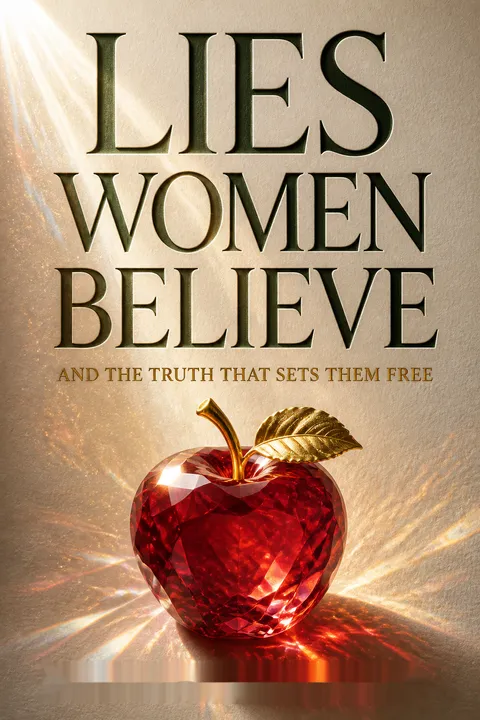
Lies Women Believe is a Christian pastoral argument organized around a strikingly simple causal story: a persuasive falsehood distorts a person's view of God, self, or duty; belief shapes action; repetition can become captivity. The Eden narrative gives the book a continuous plot, while testimonies make abstract claims feel close to ordinary life. Its practical strength is diagnostic. Instead of treating overeating, resentment, overwork, or marital conflict as isolated defects, it asks what belief makes the behavior appear reasonable, then offers reflection, Scripture, prayer, and action as a route toward change.
The argument is also more specific than a generic message about positive thinking. Truth is not merely an accurate proposition in this book. It is God's revealed Word and, ultimately, Jesus. That gives the method coherence for Christian readers, but it also sets a boundary: readers who do not share the book's account of biblical authority will not accept its conclusions simply because the reasoning is organized. Even among Christians, passages on gender, divorce, contraception, and women's work are contested. The book presents one conservative complementarian interpretation as settled truth, rather than showing the reader how responsible Christians reach different conclusions.
Its moral language can restore agency when someone is minimizing choices or blaming everyone else. The same language can injure when it recasts trauma, depression, or structural barriers as personal unbelief. The book recognizes physical factors and danger in some settings, but repeatedly privileges spiritual explanations and submission. Modern clinical practice instead treats mental health through interacting biological, psychological, and social factors. Spiritual practice may be deeply supportive, but it should not replace medical care, safety planning, or professional treatment when needed.
The most durable reading is therefore both receptive and discerning. The book offers a useful invitation to test beliefs, anticipate consequences, and align behavior with cherished convictions. Its claims about responsibility are most humane when paired with compassion for limits, careful attention to power, and recognition that a person's suffering is not proof of personal failure.
Review Summary
Lies Women Believe received mixed reviews, with many readers finding it problematic due to its conservative views on gender roles, marriage, and motherhood. Critics argue that the author's lack of personal experience with marriage and children undermines her authority on these topics. Some readers appreciate the book's biblical foundation and challenging perspectives, while others find it oppressive and potentially harmful, particularly regarding submission in abusive relationships. The book's stance on birth control, women's rights, and career choices outside the home also drew criticism. Overall, opinions are deeply divided.
People Also Read




Glossary
the progression from deception to bondage
How false beliefs become habitsDeMoss's account of how a destructive pattern develops: a person hears a falsehood, dwells on it, comes to believe it, and acts on it. Repeated choices can form a pattern that feels difficult to escape. The book proposes identifying the behavior, uncovering the belief beneath it, and replacing that belief with biblical truth.
bondage
Being mastered by a patternA spiritual and behavioral condition in which a person is no longer experiencing freedom in an area of life. DeMoss applies the term to patterns such as resentment, compulsive eating, fear of rejection, or habitual sin. She connects bondage to beliefs and repeated actions, and presents truth, repentance, obedience, and God's help as a path toward freedom.
flesh
Natural pull toward sinIn the book's Christian vocabulary, the flesh refers to human inclinations that pull a person away from obedience to God. DeMoss describes it as remaining active even in believers, in conflict with the Spirit's direction. The term does not mean the physical body itself is evil; it describes a tendency to choose self-directed or sinful responses.
Coram Deo
Life lived before GodA Latin phrase meaning before the face of God. DeMoss uses it to describe a life lived consciously in God's presence, under God's authority, and for God's glory. The phrase summarizes the book's alternative to a self-centered life: a person's choices, relationships, work, and suffering are understood in relation to God.
Making It Personal
A five-step reflection practiceA repeated exercise in the book that moves readers from agreement to practice. It asks them to acknowledge what they believe, accept responsibility for how those beliefs shape behavior, affirm relevant biblical truth, choose a concrete action, and ask God for help. The sequence is designed to make reading and reflection lead to changes in daily life.
FAQ
What's Lies Women Believe: And the Truth that Sets Them Free about?
- Focus on Deception: The book explores the lies women often believe about God, themselves, and life, leading to various forms of bondage.
- Biblical Foundation: Nancy DeMoss Wolgemuth uses Scripture to expose these lies and provide truths that can set women free.
- Empowerment through Truth: It aims to empower women to replace deceptions with biblical truths for a more fulfilling life.
Why should I read Lies Women Believe?
- Addressing Common Struggles: It offers insights for women feeling overwhelmed or confused about their identity and purpose.
- Biblical Guidance: Provides a solid biblical framework for overcoming lies that hinder spiritual growth.
- Practical Application: Includes practical steps and reflections for personal growth and transformation.
What are the key takeaways of Lies Women Believe?
- Identifying Lies: Helps readers identify specific lies like “I’m not worth anything.”
- Countering with Truth: Each lie is countered with biblical truths, such as “God is good.”
- Freedom through Understanding: Embracing these truths can lead to emotional and spiritual freedom.
What are the best quotes from Lies Women Believe and what do they mean?
- “You and I have been lied to.”: Highlights the book's premise of unrecognized lies leading to bondage.
- “The Truth is that God is good.”: Reinforces the idea of God’s inherent goodness.
- “Every act of sin is an act of rebellion against God.”: Stresses the seriousness of sin and personal responsibility.
What lies about God does [Author] address in Lies Women Believe?
- “God is not really good.”: Counters the lie with the truth of God’s goodness and beneficial actions.
- “God doesn’t love me.”: Affirms God’s unconditional and infinite love.
- “God is just like my father.”: Clarifies that God is a perfect Father, unlike any human being.
How does Lies Women Believe address the concept of sin?
- Understanding Sin’s Nature: Emphasizes sin's dangerous and destructive nature.
- Personal Responsibility: Stresses personal accountability for actions, crucial for spiritual growth.
- Victory Over Sin: Encourages belief in victory over sin through Christ.
What practical advice does [Author] offer for overcoming these lies?
- Identify and Acknowledge Lies: Recognize specific lies and their manifestations in life.
- Replace Lies with Truth: Actively replace lies with biblical truths using Scripture.
- Seek God’s Help: Emphasizes prayer and time in the Word for spiritual growth.
How does Lies Women Believe address the topic of priorities for women?
- Cultural Pressures: Discusses societal pressures leading to inadequacy and exhaustion.
- God’s Agenda: Encourages focusing on God’s calling rather than others’ expectations.
- Time Management: Urges prioritizing responsibilities according to God’s will.
What does [Author] say about marriage in Lies Women Believe?
- Misconceptions about Happiness: Addresses the lie that a husband is needed for happiness.
- Role of Submission: Clarifies biblical submission as a partnership, not inferiority.
- Responsibility in Marriage: Encourages focusing on personal responsibilities for a healthier dynamic.
How does Lies Women Believe define submission in marriage?
- Biblical Perspective on Submission: Describes submission as respect and support for the husband.
- Trusting God's Authority: Emphasizes trusting God’s authority and design for marriage.
- Empowerment through Submission: Argues that submission empowers women to influence positively.
How does Lies Women Believe address emotional struggles?
- Feelings vs. Truth: Warns against letting feelings dictate beliefs and actions.
- Control Over Emotions: Encourages choosing responses to emotions, promoting obedience to God.
- Healing through Truth: Suggests healing comes from embracing God’s truth.
How can I apply the truths from Lies Women Believe in my daily life?
- Daily Reflection: Reflect on lies and replace them with truths from Scripture.
- Prayer and Accountability: Engage in prayer and seek accountability for focus on truths.
- Intentional Living: Make choices aligning with embraced truths, shaping actions and relationships.
Download PDF
Download EPUB
.epub digital book format is ideal for reading ebooks on phones, tablets, and e-readers.








