

Key Takeaways
Make fresh plant foods the center of meals, not decorative sides
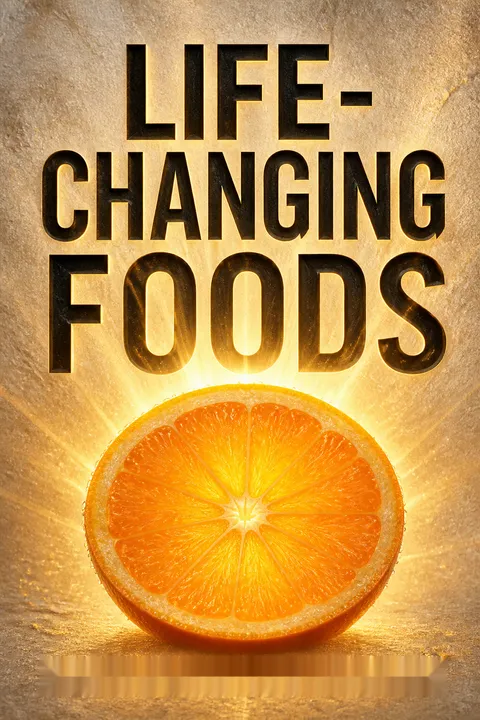
The book’s central bet. William organizes his food guide around the Holy Four: fruits, vegetables, herbs and spices, and wild foods. He argues that eating them regularly can support the body through modern health challenges. The book profiles more than 50 foods, linking each to physical benefits, emotional themes, spiritual lessons, and recipes. Wild blueberries are its emblem: William points to their survival after fires as a model of resilience, while potatoes represent grounding and hidden potential.
A practical food map. The profiles make unfamiliar produce easier to use, from celery juice to steamed artichokes and fruit-based snacks. William also promotes raw, lightly rinsed produce as a source of “elevated biotics,” his term for microorganisms on plant surfaces that he says support vitamin B12 production. He presents his health information as coming from Spirit, not from cited studies.
The strongest practical idea is not that any one fruit cures a condition, but that produce should be a regular part of actual meals rather than a garnish. A food-by-food guide can lower the effort required to shop and cook, especially when recipes make unfamiliar ingredients approachable. The book’s structure also gives eating a sense of meaning, which can help habits feel less like chores. That usefulness should be separated from its medical promises: the spiritual symbolism and the claims about elevated biotics are not established simply because they are presented with confidence.
Question food fears without replacing them with new certainties
Challenge the familiar warnings. The book pushes back against fear of fruit because it contains sugar, and against blanket avoidance of nightshades or cruciferous vegetables. William argues that whole fruit is different from refined sweets, and that foods such as potatoes, tomatoes, broccoli, and cauliflower have been unfairly blamed for health problems. He also questions popular pH testing, vitamin D megadoses, and other nutrition trends.
Keep the skepticism balanced. The useful habit is to examine whether a food claim distinguishes the food itself from how it is prepared or what accompanies it. William’s own counterclaims, however, are also presented without supporting studies. A reader can take the invitation to question food rules without treating his alternative explanations as proven facts or abandoning clinical advice.
Food advice often becomes a contest of confident prohibitions. The book usefully exposes how a single ingredient can become a scapegoat while preparation, portion, and overall eating pattern disappear from view. But skepticism is not a reliable method by itself: rejecting one unsupported claim does not establish its opposite. A sound reader keeps the question open, asks what kind of evidence supports each claim, and avoids making sweeping exclusions or additions on the strength of a persuasive story alone.
Let nourishing food comfort you without turning eating into a test
Food has emotional meaning. William rejects the choice between indulgent comfort food and joyless eating treated only as fuel. Familiar foods may soothe briefly, he says, but he encourages turning to fruits and vegetables for comfort that does not leave the eater feeling depleted. Grapes, for example, are his suggested response to disappointment, while sweet potatoes are presented as a comforting choice during hard times.
A spiritual layer. The author proposes that fresh plant foods contain two kinds of water: hydrobioactive water for physical nourishment, and “cofactor water,” which he says supports emotional and spiritual well-being. He also recommends gardening and simple food rituals as ways to feel connected to meals. These ideas are part of his spiritual framework, not established nutritional findings.
This framing resists a familiar trap: treating food choices as proof of virtue or failure. The emotional associations of meals are real parts of ordinary life, and a less judgmental approach can make dietary changes more sustainable. The distinction between comfort and escape is useful, even if the proposed spiritual properties of food are not verifiable from the book’s account. A practical test is whether a routine offers nourishment and pleasure without increasing shame, rigidity, or distress.
Reduce health blame by looking beyond genes, in the author’s model
A proposed cause map. William calls radiation, toxic heavy metals, viruses, and DDT the Unforgiving Four. He argues that these threats can combine, contribute to chronic illness, and be passed through family lines, making some illnesses look genetic. He also claims that excess adrenaline and environmental pressures add to the burden. His core reassurance is that illness is not evidence of personal failure or negative thinking.
Separate compassion from diagnosis. This framework gives readers a story for symptoms that feel unexplained, and it urges prevention through lower exposure and more plant foods. Yet the book explicitly provides no scientific citations, and its explanations of diseases and inheritance are the author’s claims, not settled medical conclusions. Persistent or serious symptoms still require qualified medical assessment; food choices cannot identify or treat their cause.
The emotional force of this section comes from relieving shame. People who are ill can be harmed by being told that attitude or character caused their condition. That humane correction does not require accepting the book’s specific causal theory. Complex illness can have many contributors, and replacing genetic fatalism with a single toxin or pathogen narrative risks a different kind of oversimplification. Compassion is strongest when it accompanies careful diagnosis, uncertainty, and access to appropriate care.
Treat stress as information, then guard your recovery time
Life at high speed. William calls the present era the Quickening, a period when technology and daily demands accelerate faster than people’s ability to adapt. He describes “adrenication” as relying on adrenaline so often that a person begins to seek stimulation and struggles to settle. His metaphor is a car using a short-lived boost: useful in an emergency, costly when treated as an everyday fuel.
Make room for steadier rhythms. The book suggests viewing stress as a signal rather than an enemy, protecting sleep, and eating small snacks between meals. William specifically recommends grazing every one and a half to two hours, arguing that it prevents blood sugar dips from straining the adrenals. That physiological explanation is his own. The broader practical message is to notice overload, build recovery into the day, and avoid glorifying constant urgency.
The book captures an important cultural tension: productivity can be mistaken for well-being, while rest gets treated as a reward that must be earned. Reframing stress as information can help distinguish a challenge from a verdict about personal inadequacy. Still, not all stress signals purpose, and some circumstances need to change rather than be reinterpreted. The snack schedule is also not a universal prescription. The more durable principle is to notice what supports an individual’s energy and sleep, then adjust without turning self-care into another performance target.
Translate cravings into needs before choosing what to eat
Look beneath the urge. William says cravings may reflect emotional associations, habit, or a need for energy, rather than a precise message about a particular food. He describes someone rejected for a work assignment who craves a bacon cheeseburger. In his account, the burger recalls comfort from childhood, while grapes offer a lighter alternative and natural sugars for the brain.
Respond without moral drama. The book also interprets a craving for sweets as a possible request for glucose, and suggests whole fruit, dates, or coconut water instead of candy or pastries. During what he calls detox, William says old cravings can signal that stored toxins are being released. That explanation is not established by the text’s evidence. The more grounded exercise is to ask whether hunger, emotion, routine, or context is driving the urge, then choose deliberately.
The “need beneath the craving” is a useful pause because it separates the desire for a food from the desire for comfort, energy, or reassurance. That distinction can widen a person’s choices without condemning the craving itself. The book becomes less reliable when it assigns a specific biological cause, particularly its detox interpretation, without evidence. Cravings can have many explanations, and a simple reflective question is safer than assuming the body is revealing a hidden toxin or deficiency.
Support fertility broadly, but don’t treat a food list as treatment
The battery metaphor. William describes the reproductive system as a battery that can be depleted and recharged. He connects fertility with stress, nutrition, and what he calls a history of avoiding pregnancy, and recommends fruit, vegetables, herbs, and wild foods. He also offers a visualization exercise in which a person imagines directing energy toward the reproductive organs.
A personal success story. The book tells of Monica, who experienced repeated miscarriages. William says Spirit identified a viral issue, and that after following his guidance she gave birth to a son and later a daughter. The account is presented as an anecdote, not controlled evidence. The chapter also discusses male fertility and possible dietary factors, but it should not replace medical evaluation or individualized fertility care.
The battery metaphor offers a compassionate alternative to self-blame, and the story recognizes how painful infertility and pregnancy loss can be. Yet fertility is medically complex, and a successful personal narrative cannot establish either a cause or an effective treatment. The book’s claims about birth control, stress, foods, and fertility should not be used to delay evaluation or alter prescribed care. Its most defensible contribution is emotional: people deserve support without being told that a difficult outcome reflects a personal failure.
Make food rituals acts of care, not proof of purity
Care through ordinary acts. William encourages growing food, handling produce mindfully, sharing meals, and using recipes to make plant foods enjoyable. He extends that sense of care into a spiritual account of “life-changing angels,” who he says protect crops, pollinators, and the food supply. He names angels associated with provision, abundance, food harmony, and other forms of help.
The human conclusion. The book closes by defining compassion as understanding suffering without treating care as a transaction. Its story of Amelia, who struggled with bingeing and restriction, describes her asking the Angel of Harmony for help and feeling less judged around food. Whether taken literally or symbolically, the episode emphasizes asking for support and replacing shame with patience.
Ritual can make an ordinary meal feel attentive rather than automatic, while gardening and sharing food can create connection beyond nutrition. The angel narrative gives spiritual language to dependence, care, and hope; readers need not accept it literally to recognize those human needs. The story of food distress also complicates any simplistic message about eating perfectly. A helpful practice should make a person’s relationship with food more flexible and compassionate, not more rule-bound or fearful.
Analysis
Life-Changing Foods is best read as a spiritual nutrition guide, not as a conventional evidence-based medical text. Its architecture is memorable: modern illness is framed as a convergence of environmental threats, stress, and poor food choices, while fruits, vegetables, herbs, spices, and wild foods become both nourishment and symbolic teachers. The unusual emotional and spiritual profiles give ordinary ingredients narrative force. A blueberry is not merely a berry in this account, but a model of renewal; a potato becomes a lesson in overlooked potential. This storytelling can make plant foods more appealing and make the reader feel less alone.
The book’s strongest practical contribution is its repeated invitation to make whole plant foods more central, to prepare them in enjoyable ways, and to avoid treating eating as punishment. Its compassion-centered language also pushes back against blaming sick people for their symptoms. Those ideas can be retained without adopting the book’s explanations of disease.
The central limitation is epistemic. William says his claims come from Spirit and supplies no research citations, yet makes highly specific assertions about pathogens, toxins, infertility, cancer, neurological disease, and the therapeutic effects of individual foods. The confident language can blur the line between a spiritual belief, a plausible general nutrition point, and a medical claim. The book’s arguments against some dietary fears do not validate its own replacement theories. Nor can an anecdote, including Monica’s reported fertility outcome, establish cause and effect.
A careful reader can keep the low-risk, broadly useful practices, such as eating more produce, cooking with herbs, and finding pleasure in meals, while treating disease-specific promises as unverified. The book itself says it does not provide medical advice. That warning matters: food can be part of health, but symptoms, diagnoses, fertility decisions, and treatment belong in conversation with qualified clinicians. The most durable lesson is therefore both nutritional and ethical: nourishment can be joyful, and compassion should accompany uncertainty rather than conceal it.
Review Summary
Life-Changing Foods receives polarized reviews. Supporters praise its comprehensive information on healing properties of fruits, vegetables, herbs, and wild foods, with many reporting improved health from following William's recommendations. Critics object to the lack of scientific backing, as the author claims information comes from "Spirit" rather than research. Many find the spiritual elements—like talking to produce and sleeping with bowls of fruit—excessive or odd. Skeptics note claims that nearly every food cures most ailments. Even critics acknowledge the basic message of eating more fruits and vegetables has merit.
People Also Read






Glossary
Holy Four
Four plant-food groupsWilliam’s name for fruits, vegetables, herbs and spices, and wild foods. He treats these categories as the book’s central sources of physical nourishment and as aids to emotional and spiritual well-being. The term organizes the food profiles and recipes. Its claimed disease-preventing or disease-treating effects are the author’s assertions, not established by the book’s cited evidence.
Unforgiving Four
Four proposed health threatsWilliam’s label for radiation, toxic heavy metals, viruses, and DDT. He argues that these factors can combine, persist in the environment, and contribute to chronic illness, sometimes across generations. The term provides the book’s main account of modern health risks. The proposed causal links and the scale of their effects are presented without scientific citations in the book.
Quickening
Era of accelerating changeWilliam’s name for modern life as shaped by rapidly advancing technology, rising demands, and constant stimulation. He argues that society’s pace can exceed people’s ability to adapt, intensifying stress and reliance on adrenaline. The term frames his recommendation to build steadier routines around nourishment, sleep, and recovery.
adrenication
Reliance on adrenalineWilliam’s term for using the body’s adrenaline as a repeated means of coping with pressure and stimulation. He describes this reliance as potentially habit-forming, with a person seeking more urgency and finding calm uncomfortable. The book’s account of its physical effects is the author’s model; the term is not presented with clinical evidence or a medical diagnostic definition.
elevated biotics
Plant-surface microorganismsWilliam’s term for microorganisms he says live on the surface of fresh, raw plant foods. He argues that these organisms can survive digestion and support the body’s production of vitamin B12. He recommends produce from trusted, chemical-free sources. The book does not provide research citations establishing this term or its proposed role in B12 production.
cofactor water
Proposed emotional food-waterWilliam’s name for one of two kinds of water he says are present in fresh plant foods. He proposes that cofactor water carries nutrients and information that support emotional and spiritual health, distinct from hydrobioactive water, which he associates with physical hydration. This is a spiritual and nutritional claim in the book, not a scientifically established category of water.
low reproductive system battery
Proposed depleted fertility capacityWilliam’s metaphor for a reproductive system he believes lacks the energy or resources needed for conception. He connects this condition with stress, nutrition, and past efforts to avoid pregnancy, and suggests that food and visualization can help restore it. The phrase is not a clinical diagnosis, and the book’s proposed causes should not replace fertility assessment.
life-changing angels
Angels guarding foodWilliam’s name for spiritual beings he says support people through the food supply. He describes them as protecting crops and pollinators, directing food to those in need, and helping people form healthier eating habits. He names individual angels for tasks such as abundance, provision, and harmony. These claims belong to the book’s spiritual worldview.
About the Author
Other books by Anthony William
Download PDF
Download EPUB
.epub digital book format is ideal for reading ebooks on phones, tablets, and e-readers.








