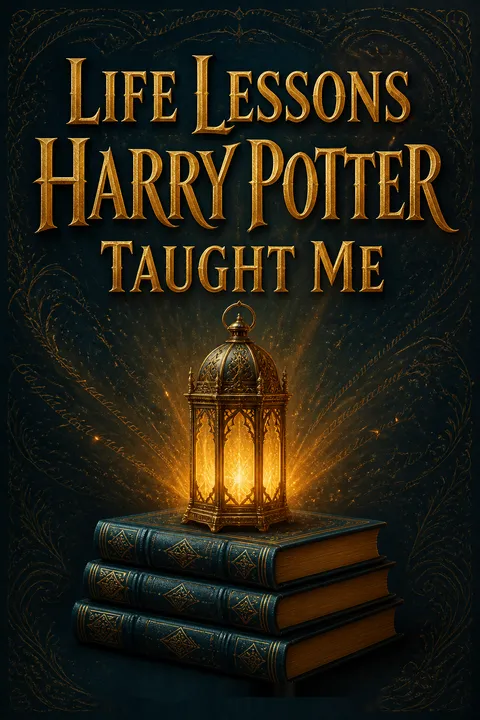


Key Takeaways
Practice curiosity before familiarity turns the ordinary into background.
Wonder is a habit. The author remembers hoping toys might move by themselves, then finding a richer kind of magic in Harry’s first discoveries: hidden shops, enchanted objects, and Hogwarts. The lesson is not to stay a child, but to keep noticing. Arthur Weasley, an adult fascinated by everyday Muggle objects, shows how curiosity can make familiar things vivid again. Dumbledore’s willingness to admit he does not know every secret of Hogwarts models the humility curiosity needs.
Curiosity includes people. Harry regrets never asking Neville about his parents. Their lives shared painful similarities, and Neville eventually became a crucial ally. Curiosity can reveal the unexpected in people who seem ordinary, but it requires admitting that another person’s experience is not already understood.
What's striking is how curiosity functions here as both attention and humility. Research on expertise often distinguishes knowing facts from remaining open to what a situation does not yet reveal; the latter helps prevent confident misreadings. That applies to relationships as much as to discovery: asking a thoughtful question can uncover needs that familiarity obscures. Curiosity is not automatically harmless, however. Questions about painful history require tact and permission. The point is not to demand disclosure, but to resist treating silence as proof that there is nothing more to learn.
Make home through care, not through permanence or perfect circumstances.
Care makes a place home. Harry’s cupboard and the Dursleys’ meager meals keep him alive without making him feel wanted. At Hogwarts, shared feasts offer the opposite: food signals that students belong and deserve care. Molly Weasley extends that welcome through cooking, laundry, and a home open to Harry and the Order. Her work enables others to face danger, though the family often takes it for granted. Harry learns from her, sending food to Sirius when he is isolated and hungry.
Belonging can be built. When Harry and his friends camp without Molly’s care, food becomes a source of conflict and loneliness. Yet a shared meal can still offer comfort in grief. Home is temporary, the author argues, so people must make it through relationships, familiar rituals, and care for one another.
The connection between food and belonging is powerful because care is bodily before it becomes an idea. A meal can communicate safety and recognition when language feels inadequate. The chapter also draws attention to the invisible labor that sustains communities, much of it performed by women and treated as natural rather than skilled work. That insight invites a practical question: who is doing the feeding, planning, and emotional tending? Celebrating generosity should not turn unequal care into an obligation or make appreciation a substitute for sharing the work.
Listen to the young, and let inherited stories become revisable.
Age can miss what youth sees. Adults repeatedly dismiss Harry’s warnings, including his claim that Sirius is innocent and his report of Voldemort’s return. Their refusal leaves the young people with partial information and makes danger harder to address. When Harry sees Arthur Weasley being attacked in a vision, McGonagall believes him and gets help. Listening is not indulgence; it can be a way to improve everyone’s understanding.
The past is not a script. Harry first treats his parents as flawless heroes, then learns that James could be cruel and that Dumbledore made serious mistakes. He can honor them without letting their choices define his. Snape, Sirius, and Lupin show how childhood injuries and loyalties can persist into adulthood. Growing up means seeing earlier generations as human, and seeing young people as more than unfinished adults.
This insight has particular force in families, schools, and institutions where authority controls what information counts. A young person may lack context, but adults can lack access to what is happening on the ground. Listening allows those perspectives to correct one another. The chapter also resists a simplistic model of maturity in which adulthood means escaping childhood. Earlier selves can preserve empathy and memory, though they can also keep old resentments alive. The useful task is neither to erase the past nor obey it, but to examine what it teaches.
Stay loyal to people without surrendering truth or moral judgment.
Loyalty gives support. Hagrid stands by Harry when others doubt him, and Hermione stays with Hagrid when Buckbeak faces punishment. Luna and Ernie publicly believe Harry’s warning about Voldemort when doing so is unpopular. Their faith gives him support when proof is scarce. The Fidelius Charm, which hides a secret inside a trusted person, serves as a metaphor for the responsibility involved in keeping faith with someone.
Loyalty has limits. Believing that Sirius betrayed his parents, Harry nearly acts on rage and revenge. He pauses long enough to hear Sirius’s account and discovers he was wrong. The story distinguishes loyalty to a person from blind obedience, and love from retaliation. Sirius’s willingness to die for friends is moving, but the author questions whether self-sacrifice should be the only measure of devotion. Loyalty can change when truth changes.
Loyalty is most valuable when it offers someone the security to speak honestly, not when it shields them from scrutiny. In social psychology, group belonging can encourage cooperation, but it can also intensify conformity and out-group hostility. The story’s distinction between fidelity and vengeance helps contain that risk. Support can begin before certainty, as long as it remains open to evidence. This approach avoids two easy failures: abandoning people at the first sign of difficulty, and treating commitment as permission to excuse harm.
Choose your actions even when fate and luck stay unknowable.
Prophecy does not make choices. A prediction marks Harry as Voldemort’s rival, but Voldemort’s response helps bring the prediction about. Harry still chooses to protect people, pursue danger, and resist Voldemort. His character is expressed through those decisions, not simply assigned by fate. The prophecy’s ambiguity also leaves open the possibility that Neville could have been its subject.
Consequences are hard to predict. Harry spares Pettigrew, then blames himself when Pettigrew helps Voldemort return. Yet that choice later contributes to Pettigrew’s moment of mercy toward Harry. The outcome could not have been known in advance. The lesson is to take responsibility for what can be chosen without assuming every later consequence was foreseeable or entirely one person’s fault.
This is a useful account of agency under uncertainty: people choose within conditions they did not create, and those choices can have consequences no one can fully calculate. It avoids both fatalism and the fantasy of total control. The distinction matters in real life, where structural forces, chance, and other people’s decisions shape outcomes. Responsibility should attach to what a person could reasonably know and choose, not to every downstream event. The story offers a moral compass, not a guarantee that good choices produce painless results.
Build chosen community; even Harry's destiny depends on others.
Friendship changes the burden. Harry, Ron, and Hermione begin as children thrown together by circumstance, then keep choosing one another through arguments, separations, and danger. Each experiences loneliness differently: Harry lacks parents, Ron feels overshadowed in a large family, and Hermione is an outsider in the wizarding world. Their friendship does not erase those differences, but gives each person support and a place to return.
Community protects. The author cites studies in which older people with larger friendship networks were 22% less likely to die during the study, and women with breast cancer and few friends were four times as likely to die as those with ten or more friends. Another experiment found that students standing with friends judged a steep hill as less steep. Dumbledore’s Army turns support into practical help, including in the final fight.
The hill experiment neatly illustrates social support as a change in perceived difficulty, not a magical removal of obstacles. Friendship can also shape health and resilience, though the cited associations do not prove that friends alone cause better outcomes. People with strong networks may differ in other important ways, and connection cannot replace medical care or material support. The broader point remains: community is infrastructure. It distributes knowledge, effort, and emotional load, making challenges more manageable without pretending anyone can be rescued from every loss.
Challenge prejudice early, before ordinary rules make cruelty look normal.
Hierarchy hides in custom. The wizarding world ranks people by blood, magical ability, wealth, and species. House-elves perform essential labor without freedom or pay, while many witches and wizards barely notice them. Ron repeats prejudice about giants that seems casual until it contributes to real exclusion. The author argues that oppression is not only the work of obvious villains; everyday assumptions help normalize it.
Resistance starts small. Hermione speaks up for house-elves, and Dumbledore objects when a student uses a slur, even while facing mortal danger. Arthur Weasley uses the relative safety of his status to challenge abuse of Muggle-born wizards. Their actions show how people can use their voice or social position to interrupt harm. The book’s treatment of house-elves remains unresolved, which underscores that individual concern is not the same as changing an unjust system.
The chapter is strongest when it follows prejudice from an ideology into routine habits: who is presumed intelligent, who is heard, and whose work disappears. This resembles the way institutional inequality can persist without every participant intending harm. Individual intervention matters because it contests the norm in public, but it cannot substitute for changing the rules and distributions of power that reproduce inequality. The unresolved house-elf question makes that tension visible. Kind intentions may improve one person’s treatment while leaving the structure that limits them intact.
Choose kindness that notices need, and set limits where harm persists.
Kindness requires attention. The author remembers a yoga instructor noticing her distress and offering a quiet reassurance. Hagrid’s care for dangerous creatures and Hermione’s concern for people who have harmed others show different forms of empathy. Arthur Weasley treats the hostile Dursleys with courtesy, but becomes direct when their treatment of Harry needs to change. Kindness is therefore more than appearing pleasant; it means noticing who needs care and what the moment requires.
Care changes direction. As the young characters grow up, they begin looking after adults: Hermione steadies Molly, and Harry supports Dumbledore when he is weakened by a potion. Such care can be uncomfortable and demanding. The author emphasizes that kindness need not mean endless accommodation. When one person is harming another, care may require a boundary or a clear demand for better treatment.
This account separates compassion from compliance. Empathy helps identify another person’s needs, while boundaries determine what forms of help are sustainable and what behavior cannot be accepted. That distinction is especially important in care work, where social expectations often reward self-erasure, particularly among women. A gentle gesture can matter, but kindness is not a universal obligation to remain available to someone who causes harm. Its ethical value depends partly on whether it protects dignity, including the dignity of the person offering care.
Name fear, tell the truth, and use humor to loosen its grip.
Words shape what can be faced. Harry grows up forbidden to speak freely at the Dursleys’ house. In the wizarding world, many avoid saying Voldemort’s name, while Harry and Hermione use it to confront fear rather than pretend it is absent. Naming a danger cannot remove it, but it can make discussion and action possible. The author also recalls how one teacher’s careless description of her writing stayed with her for years, evidence that language can wound as well as empower.
Laughter gives breathing room. Fred and George use jokes, pranks, and inventions to disrupt Umbridge’s control of Hogwarts. Their humor offers relief, but it also becomes a form of resistance. Even in danger, the trio’s jokes restore connection and perspective. Humor does not make grief or oppression unreal; it can interrupt fear long enough for people to keep acting together.
Naming is a basic tool of collective action: a problem that cannot be discussed is difficult to challenge, while a shared vocabulary can make private confusion legible. Humor can also loosen the authority of fear by showing that it is not the only possible response. Neither tool is automatically liberating. Naming can stigmatize, and jokes can deflect pain or target the vulnerable. Their value depends on direction: whether language clarifies harm and humor restores solidarity, rather than silencing someone who needs to be heard.
Become an ordinary hero by facing your faults and choosing restraint.
Heroes are human. Harry loses his idealized picture of his parents and Dumbledore as he learns about their failures. He also recognizes his own capacity for anger, jealousy, and revenge. His goodness is not purity; it lies in repeatedly choosing what to do with those impulses. He favors disarming an opponent over using lethal force, and he tries to show mercy even to people who have hurt him.
Courage takes many forms. Dumbledore and Snape must confront damaging choices in their pasts. Hermione, Luna, and Neville risk standing apart from the crowd. Harry’s final sacrifice is one example of bravery, but the wider lesson is not that people should seek martyrdom. Ordinary heroism means facing uncomfortable truths, asking for help, and choosing the action that protects others without abandoning moral judgment.
The most persuasive model here is moral practice rather than heroic identity. A person can have harmful impulses without being reducible to them, but self-knowledge matters only when it changes conduct. Restraint is particularly significant in conflict because it interrupts the familiar cycle of injury followed by retaliation. Sacrifice can be meaningful, yet celebrating it too readily risks making preventable suffering seem noble. Courage also includes protecting oneself, sharing responsibility, and refusing to let a grand cause excuse cruelty.
Analysis
This book is a memoir-inflected reading of Harry Potter, not a general self-help system. Its structure moves through themes such as wonder, home, loyalty, prejudice, and courage, with the author’s own memories providing a bridge from fictional scenes to ordinary life. That method suits the subject: the series has become a shared imaginative vocabulary through which readers can discuss grief, belonging, and moral choice without beginning from abstraction.
The strongest chapters resist the simplest interpretation of the novels. Harry’s world is not divided neatly into heroes and villains; adults can fail children, admired mentors can have troubling histories, and prejudice can live inside characters readers otherwise love. The discussion of house-elves is especially useful because it notices a gap between the story’s moral ambitions and its depiction of an exploitative system. Similarly, the author’s attention to Molly Weasley and Hermione makes visible the planning and caretaking that adventure narratives often under-credit.
The adaptation’s main limitation is also inherent in its approach. A fictional resolution can make collective action look cleaner than it is in life, where institutions, resources, and unequal risks matter. A spell, a battle, or a single brave intervention can symbolize resistance, but cannot stand in for long-term political work. Nor do friendships guarantee health or safety, even when they provide real support. The book is most persuasive when it treats stories as rehearsal rather than proof: readers can practice noticing, questioning, and choosing through characters before carrying those habits into less dramatic settings.
Its central argument is that love is not merely a feeling that saves Harry. Love appears as food, attention, truth-telling, loyalty, humor, and the willingness to protect people outside one’s immediate circle. Those acts do not abolish loneliness or uncertainty. They make both more bearable, and they give people reasons to keep resisting harm. The result is an accessible ethical reading of a beloved series, grounded in the author’s vulnerability and sharpened by her recognition that goodness is never automatic.
Review Summary
Readers generally praise Life Lessons Harry Potter Taught Me for its insightful analysis of the Harry Potter series, connecting themes to real-life experiences. Many found it thought-provoking, nostalgic, and well-organized. Fans appreciated the personal anecdotes and fresh perspectives on familiar stories. Some readers felt inspired to reread the Harry Potter books. Critical reviews mentioned repetitive writing and over-reaching analogies. Overall, the book resonated strongly with Harry Potter enthusiasts, offering a deeper understanding of the series' impact and life lessons.
People Also Read




Glossary
Fidelius Charm
Secret entrusted to a personA magical charm that hides a secret inside a trusted living person, who becomes its keeper. In the book, the charm serves as an image of loyalty and confidentiality: trust makes someone responsible for protecting what another person has placed in their care. The story also shows that trust can be betrayed.
Patronus
Protective charm against DementorsA defensive charm that produces a guardian shaped by the caster’s focused positive memory. A Patronus can repel Dementors, creatures associated with despair and emotional cold. The book connects Harry’s successful casting to thoughts of his friends, using the charm to illustrate how love and community can help someone resist isolation.
Horcrux
Object containing a soul fragmentA dark magical object containing a fragment of its maker’s soul, created by splitting the soul through murder. Voldemort uses Horcruxes to try to escape death. In the book’s interpretation, they represent his refusal of mortality and his isolation from other people, while Harry’s connection to one reflects the darkness he must recognize within himself.
Deathly Hallows
Three objects tied to deathThree legendary magical objects: the Elder Wand, the Resurrection Stone, and the Invisibility Cloak. Together, they are said to offer mastery over death. The book treats the Hallows as a temptation toward power and escape from loss, and contrasts Harry’s interest in them with his decision to continue protecting others.
Dumbledore's Army
Student-led defense groupA group of Hogwarts students who meet secretly to learn practical defensive magic when their official instruction under Dolores Umbridge is inadequate. Hermione helps organize the group, and Harry teaches its members. In the book, the group represents a community formed across school divisions, turning shared concern into skill, solidarity, and resistance.
Download PDF
Download EPUB
.epub digital book format is ideal for reading ebooks on phones, tablets, and e-readers.








