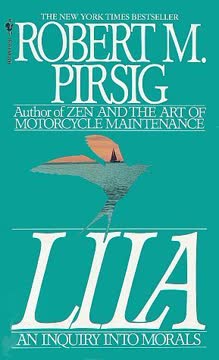
Plot Summary
Autumn Night, Fateful Encounter
On a cold autumn night, Phædrus, a solitary, introspective sailor, finds himself sharing a berth with Lila, a troubled woman he met in a riverside bar. The encounter is charged with both physical attraction and a sense of melancholy, as Phædrus reflects on the randomness of their meeting and the patterns of his own loneliness. The night is filled with memories, dreams, and the subtle realization that their lives, like the river, are moving toward unknown destinations. The world outside is changing—leaves falling, boats abandoned, the air thick with the sense of endings and beginnings. This night marks the start of a journey, both literal and philosophical, that will challenge Phædrus's understanding of morality, value, and the nature of reality.
The Metaphysics of Slips
As dawn breaks, Phædrus contemplates his life's work: a vast collection of slips—notes and ideas for a book on the Metaphysics of Quality. He describes his method of organizing thought, using random access to avoid the rigidity of sequential logic. The slips represent years of intellectual struggle, categorized into topics, programs, grit, tough, and junk. This system is both a reflection of his mind and a metaphor for the way value and meaning emerge from chaos. The slips are not just a tool for remembering but for forgetting, for making space for new ideas. Phædrus's struggle with organization mirrors his search for a metaphysical structure that can accommodate both the static and the dynamic, the known and the unknown.
Dusenberry and the Indian Way
Phædrus recalls his friendship with Verne Dusenberry, an eccentric professor devoted to the study of American Indians. Dusenberry's refusal to accept objectivity as the sole criterion for anthropology sets him apart from his peers. He believes that true understanding comes from caring, from being accepted by the people one studies. Through Dusenberry, Phædrus is introduced to the Native American Church and the peyote ceremony—a direct, participatory experience that challenges the boundaries between observer and participant. Dusenberry's insights into Indian religion, language, and values reveal the deep influence of Native American culture on the American psyche, especially the ideals of freedom, directness, and equality.
Peyote Vision and American Identity
During a peyote ceremony on the Northern Cheyenne reservation, Phædrus experiences a profound shift in perception. The boundary between self and other dissolves, and he feels a sense of coming home to a place he has never been. He observes the directness and simplicity of Indian speech and action, recognizing in them the origins of the American style. The vision reveals that American values—freedom, anti-snobbery, and plain-spokenness—are deeply rooted in Indian culture. This insight challenges the conventional narrative of American identity and suggests that the conflict between European and Indian values is a central fault line in American history and in Phædrus's own divided self.
Anthropology's Wall and Value
After Dusenberry's death, Phædrus attempts to write a book about Indians but is stymied by the rigid empiricism of academic anthropology. He encounters the "cultural immune system" that rejects any approach not grounded in scientific objectivity. Frustrated, he turns to philosophy, seeking a metaphysical foundation that can accommodate values as real phenomena. He recognizes that the field's refusal to address values has left it sterile and unable to provide meaningful guidance. The solution, he concludes, lies not in anthropology itself but in a new metaphysics—one that places value, or Quality, at the center of reality.
The Problem of Morals
Phædrus grapples with the paradox of defining Quality, which by its nature resists definition. He explores the limitations of both scientific positivism and mysticism, each of which rejects metaphysics for opposite reasons. Science denies the reality of values; mysticism sees metaphysical definitions as obstacles to direct experience. Phædrus argues that values are empirical, immediate, and foundational—more real than the objects or subjects to which they are assigned. The Metaphysics of Quality, he proposes, can bridge the gap between science and mysticism, uniting them in a value-centered understanding of reality.
Breakfast with Rigel
Over breakfast, Phædrus faces a moral challenge from Richard Rigel, a lawyer and fellow sailor. Rigel warns him against Lila, whom he sees as a person of "very low quality." The conversation becomes a debate about the nature of Quality, morality, and the role of individual judgment versus social codes. Rigel defends traditional values and the authority of law, while Phædrus questions the basis of moral condemnation and the legitimacy of social ostracism. The exchange exposes the deep divide between static social patterns and the dynamic, personal pursuit of value—a divide that will haunt Phædrus throughout his journey.
Sailing South, Inner Storms
As Phædrus and Lila sail down the Hudson, the physical journey mirrors their psychological states. The river is both beautiful and desolate, lined with abandoned mansions and haunted by the ghosts of Victorian morality. Phædrus reflects on the legacy of the Victorians, their obsession with status and propriety, and the moral vacuum left in their wake. The tension between social conformity and personal freedom intensifies, both in the landscape and in the relationship between Phædrus and Lila. The journey becomes a meditation on the nature of morality, the dangers of static patterns, and the necessity of dynamic change.
Static and Dynamic Quality
Phædrus develops the central insight of his philosophy: the division of Quality into static and Dynamic components. Static Quality encompasses the established patterns—biological, social, intellectual—that provide stability and order. Dynamic Quality is the cutting edge of experience, the source of creativity, change, and freedom. The interplay between static and Dynamic Quality explains the evolution of life, the emergence of cultures, and the tension between conformity and innovation. Through examples from music, art, and morality, Phædrus illustrates how Dynamic Quality disrupts static patterns, leading to growth and transformation.
Lila's Descent
Lila's psychological state deteriorates as the journey continues. She becomes increasingly erratic, haunted by memories, regrets, and a sense of alienation. Her interactions with Phædrus oscillate between intimacy and hostility, vulnerability and aggression. The river becomes a metaphor for her inner turmoil—a place of both possibility and danger. As Lila spirals into crisis, Phædrus is forced to confront the limitations of intellectual analysis and the necessity of compassion, ritual, and healing. The boundaries between sanity and insanity, reality and delusion, become blurred.
Crisis on the River
The journey reaches a breaking point when Lila, in a state of confusion and fear, attacks a friend and accuses Phædrus of trying to kill her. The incident forces Phædrus to flee the marina, casting off into the river with Lila in a catatonic state. The episode crystallizes the dangers of unchecked Dynamic Quality—chaos, violence, and the breakdown of social order. Phædrus is left to care for Lila, uncertain of how to help her or himself. The crisis exposes the fragility of both individual and cultural patterns and the ever-present threat of dissolution.
Evolution and Patterns
As Phædrus sails toward the open sea, he reflects on the evolutionary hierarchy of patterns: inorganic, biological, social, and intellectual. Each level is both independent and interdependent, with higher levels emerging from and sometimes opposing lower ones. The Metaphysics of Quality provides a framework for understanding morality as the preservation and enhancement of higher patterns. The struggle between Dynamic and static forces is seen as the engine of evolution, driving both individual growth and cultural change. Phædrus's insights offer a new way to resolve perennial philosophical dilemmas—mind and matter, free will and determinism, science and ethics.
The Giant and the City
Arriving in New York, Phædrus is overwhelmed by the city's complexity and energy. He envisions the city as a "Giant," a superorganism that consumes individual lives for its own purposes. The city embodies both the highest achievements of social and intellectual evolution and the dangers of alienation, celebrity, and moral paralysis. Phædrus explores the dynamics of fame, the role of intellectuals, and the collapse of traditional values. The city becomes a microcosm of the broader cultural crisis—a place where Dynamic Quality can flourish but also where static patterns can become deadly traps.
Lila's New York Odyssey
Alone in New York, Lila wanders the city in a state of confusion and despair. She loses her money, is rejected by old friends, and is haunted by memories of her past. The city's indifference mirrors her own sense of worthlessness and abandonment. Lila's journey becomes a descent into the underworld—a confrontation with the darkest aspects of herself and her culture. Her struggles highlight the limits of both social and intellectual patterns and the need for new forms of healing and integration.
The Philosophy of Insanity
Phædrus delves into the nature of insanity, drawing on anthropology, psychiatry, and his own experiences. He argues that insanity is not merely a biological or intellectual defect but a breakdown in the static patterns that hold a culture together. Ritual, he suggests, is the bridge between static and Dynamic Quality—a way of integrating new experiences without losing stability. The healing of insanity requires not just conformity or medication but the creation of new rituals and patterns that can accommodate Dynamic change. The chapter culminates in a symbolic burial of Lila's doll, representing the letting go of old patterns and the possibility of renewal.
Ritual, Dharma, and Healing
Drawing on the concepts of rta and dharma from Indian philosophy, Phædrus explores the role of ritual and order in sustaining both individuals and cultures. He traces the evolution of ritual from its origins in cosmic order to its degeneration into empty formality, and its potential for renewal through Dynamic Quality. The balance between ritual and freedom, stability and change, is seen as the key to both personal healing and cultural evolution. Phædrus's reflections offer a path beyond the impasses of modernity—a way to integrate the wisdom of the past with the demands of the present.
Letting Go, Moving On
With Lila gone, Phædrus is left alone on his boat, contemplating the meaning of their journey. He recognizes that the patterns of the past—karma, static morality, cultural expectations—must be let go to make space for new possibilities. The story ends not with closure but with openness, as Phædrus prepares to sail on, carrying with him the lessons of both suffering and insight. The Metaphysics of Quality remains unfinished, a living philosophy that must be continually revised in the light of new experience. The journey continues, guided by the interplay of static and Dynamic Quality, order and freedom, tradition and innovation.
Characters
Phædrus
Phædrus is the protagonist and philosophical center of the narrative—a solitary, introspective sailor and writer obsessed with understanding the nature of reality and morality. He is both a character and a stand-in for the author, Robert Pirsig, carrying the scars of past mental illness and the burden of intellectual isolation. Phædrus's relationships are marked by distance and longing; he is drawn to Lila's chaos as both a challenge and a mirror of his own divided self. His psychoanalysis reveals a mind caught between the need for order (static patterns) and the lure of freedom (Dynamic Quality). Over the course of the story, Phædrus evolves from a detached observer to a reluctant participant in the messy, unpredictable world of human relationships, ultimately recognizing the necessity of compassion, ritual, and the acceptance of uncertainty.
Lila
Lila is a troubled, drifting woman whose life is marked by loss, addiction, and a desperate search for meaning. She is both a catalyst for Phædrus's philosophical inquiry and a symbol of the dangers and possibilities of Dynamic Quality. Lila's relationships are fraught with conflict—she is both victim and perpetrator, seeking connection but sabotaging it through anger and self-destruction. Her psychological instability is both a personal tragedy and a reflection of broader cultural breakdowns. Lila's journey through madness, memory, and ritual becomes a test case for Phædrus's theories, forcing him to confront the limits of reason and the necessity of healing through compassion and new patterns.
Richard Rigel
Rigel is a lawyer, sailor, and old acquaintance of Lila's, representing the voice of conventional morality and social authority. He is critical, judgmental, and deeply invested in maintaining the boundaries of respectability. Rigel's psychoanalysis reveals a man both principled and rigid, whose need for order masks deeper insecurities and unresolved conflicts. His relationship with Lila is ambivalent—part protector, part antagonist—and his interactions with Phædrus expose the limitations of static morality in the face of dynamic change. Rigel's development is marked by increasing anxiety and a final, ambiguous act of "rescue" that may be more about control than care.
Verne Dusenberry
Dusenberry is a professor and anthropologist whose devotion to American Indian culture sets him apart from his academic peers. He rejects objectivity in favor of caring and participation, believing that true understanding comes from love and respect. Dusenberry's psychoanalysis reveals a man alienated from both his own culture and the one he studies, yet deeply committed to bridging the gap. His influence on Phædrus is profound, providing both a model of intellectual courage and a cautionary tale of isolation and failure. Dusenberry's death marks the end of an era and the beginning of Phædrus's own quest for a new metaphysics.
Jamie
Jamie is an old friend and sometime lover of Lila's, representing the world of hustlers, outsiders, and those who live by their wits. He is both charming and dangerous, embodying the adaptability and amorality of those excluded from mainstream society. Jamie's relationship with Lila is transactional but also marked by a kind of rough loyalty. His psychoanalysis reveals a man shaped by hardship, distrustful of authority, and skilled at reading the intentions of others. Jamie's presence in the story highlights the limits of both social and intellectual patterns in addressing the needs of the marginalized.
Bill Capella
Capella is a fellow sailor and occasional crewman for Phædrus, providing a counterpoint to the protagonist's introspection. He is practical, good-natured, and adaptable, representing the virtues of camaraderie and common sense. Capella's psychoanalysis reveals a man comfortable with ambiguity and change, able to navigate both the literal and metaphorical storms of the journey. His relationship with Phædrus is marked by mutual respect and a willingness to engage in philosophical banter without losing sight of practical realities.
The Giant (New York City)
The city itself is personified as a living entity—a Giant that consumes individual lives for its own purposes. It embodies both the highest achievements of social and intellectual evolution and the dangers of alienation, celebrity, and moral paralysis. The Giant's psychoanalysis reveals a system that is both creative and destructive, offering opportunities for Dynamic Quality but also enforcing conformity and exploiting the vulnerable. The city's relationship to the characters is ambivalent, providing both a stage for transformation and a trap for those unable to adapt.
William James Sidis
Sidis is a historical figure referenced in the narrative—a child prodigy whose intellectual brilliance leads to isolation, ridicule, and obscurity. His psychoanalysis reveals the dangers of excessive intellectualism divorced from social and biological patterns. Sidis's fate serves as a warning to Phædrus and a symbol of the costs of failing to integrate the different levels of value. His unpublished work on the influence of Indian democracy on American institutions becomes a touchstone for Phædrus's own inquiries.
The Brujo (Zuni Shaman)
The brujo is a figure from Ruth Benedict's anthropology—a shaman who challenges the static patterns of his tribe and becomes both outcast and leader. His psychoanalysis reveals the role of the contrarian in driving cultural change, embodying the tension between static and Dynamic Quality. The brujo's story becomes a parable for Phædrus's own struggles and a model for the integration of individual and collective transformation.
The Idol (Lila's Doll)
The doll rescued and later buried by Phædrus becomes a powerful symbol of Lila's lost innocence, the failure of ritual, and the possibility of renewal. Its psychoanalysis reveals the ways in which objects can become repositories of meaning, embodying both the pain of the past and the hope for healing. The doll's journey from river debris to ritual burial mirrors the larger themes of the narrative—the necessity of letting go, the power of ritual, and the ongoing interplay of static and Dynamic Quality.
Plot Devices
The Journey as Metaphor
The literal journey down the Hudson River and into New York serves as a metaphor for the characters' psychological and philosophical journeys. The changing landscape, weather, and encounters with other travelers reflect the evolving states of mind and the shifting balance between static and Dynamic Quality. The journey structure allows for episodic encounters, digressions, and the gradual unfolding of both personal and metaphysical insights.
The Metaphysics of Quality
The central plot device is Phædrus's development of the Metaphysics of Quality—a value-centered philosophy that seeks to reconcile the conflicts between science and mysticism, subject and object, static and Dynamic patterns. The philosophy is both a narrative engine and a lens through which all events are interpreted. Its evolution is mirrored in the organization of Phædrus's slips, the structure of the narrative, and the resolution of key conflicts.
Contrasting Characters and Worldviews
The story is driven by the interplay of contrasting characters—Phædrus and Lila, Rigel and Capella, Jamie and the Giant—each representing different patterns of value. Their debates, confrontations, and misunderstandings serve to dramatize the central philosophical questions and to test the limits of both static and Dynamic Quality. The use of foils and doubles (e.g., Lila and the Idol, Phædrus and Sidis) deepens the exploration of identity and transformation.
Ritual and Symbolism
Rituals—both formal and improvised—play a crucial role in the narrative, serving as bridges between static and Dynamic Quality. The burial of the doll, the peyote ceremony, and the daily routines of sailing and survival are all invested with symbolic significance. Objects such as the slips, the doll, and the city itself become repositories of value, embodying the tensions and possibilities of the characters' journeys.
Foreshadowing and Recursion
The narrative is structured to echo its own themes, with events and insights foreshadowed and revisited in new contexts. The interplay of past and present, memory and anticipation, creates a sense of recursion—patterns repeating at different levels of scale. The use of dreams, visions, and philosophical digressions blurs the boundaries between literal and metaphorical, static and Dynamic, sanity and insanity.
Analysis
Lila: An Inquiry Into Morals is a profound meditation on the nature of value, morality, and the human condition in the modern world. Through the intertwined journeys of Phædrus and Lila, Robert Pirsig explores the limitations of both scientific objectivity and social conformity, arguing for a new metaphysics that places Quality—understood as the dynamic interplay of order and freedom—at the center of reality. The novel challenges readers to reconsider the sources of meaning in their own lives, questioning the adequacy of inherited patterns and the dangers of unchecked innovation. Pirsig's narrative is both a philosophical treatise and a deeply human story, grounded in the messy realities of love, madness, and loss. The lessons of the book are both timely and timeless: that healing and growth require the courage to let go of static patterns, the humility to embrace uncertainty, and the creativity to forge new rituals and relationships. In an age of moral confusion and cultural fragmentation, Lila offers a vision of integration—one that honors both the wisdom of the past and the possibilities of the future, and that insists on the centrality of value in all human endeavors.
Last updated:
Review Summary
Lila: An Inquiry into Morals is a philosophical novel that explores Pirsig's Metaphysics of Quality. Readers find it thought-provoking but less engaging than its predecessor, Zen and the Art of Motorcycle Maintenance. The book interweaves a narrative about Phaedrus' boat journey with a woman named Lila and philosophical discussions on morality, evolution, and the nature of reality. While some praise Pirsig's ideas and writing style, others criticize the book's structure and find the philosophical content challenging. Overall, opinions are mixed, with some considering it a worthy sequel and others finding it disappointing.
Phaedrus Series
Similar Books