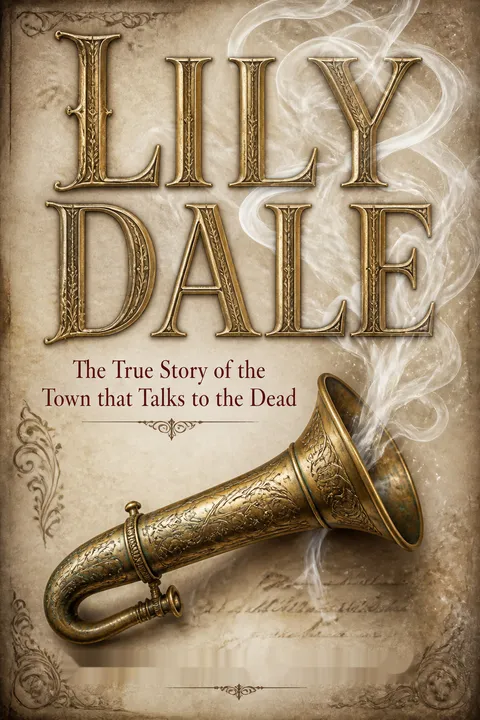


Key Takeaways
Judge Lily Dale by what belief does, not only by whether spirits exist.
A reporter's real question. Religion journalist Christine Wicker arrives at Lily Dale, a Spiritualist community founded in 1879, asking whether mediums can communicate with the dead. She stays for three years, watching public readings, interviewing residents, and testing claims against her own experience. The mediums say that death is a transition and that spirit contact is an ordinary human ability, not a rare miracle.
Measure the human effect. Wicker borrows a practical question associated with philosopher William James: how does a belief shape the life of the person who holds it? That approach does not settle whether spirits exist. It does reveal what the belief offers: consolation, confidence, community, and sometimes a new way to act.
The book separates two questions that are often collapsed: whether a claim is true, and whether believing it changes someone's life. That distinction is useful well beyond religion. A story can organize grief or restore agency without its supernatural explanation being established. But usefulness cannot serve as proof. Effective rituals, supportive communities, and even false beliefs can produce real effects. The strongest reading therefore keeps both ledgers open: what the belief does for people, and what evidence supports the explanation they give for it.
Don't demand that consolation prove the afterlife.
A widow's evidence. Carol Lucas comes to Lily Dale three months after her husband Noel dies. Medium Martie Hughes describes private golf lessons Noel used to give Carol, including a distinctive way he demonstrated how she should stand. Carol sees this as evidence that the medium has reached her husband. A second medium's reading includes further details, among them an unexplained reference to Noel's near-crisis in November.
Relief is still real. Carol leaves believing Noel continues to exist and feeling able to live without him. Pat Naulty, a mother grieving her son, also finds comfort in messages that speak to her guilt. Wicker cannot verify the afterlife claims, but she shows that the comfort and changed outlook are consequential whether or not the explanation is correct.
Bereavement often involves a continuing inner relationship with the person who died. That bond can help mourners carry love forward rather than treating recovery as erasure. Lily Dale gives this experience a shared language and, for Carol, unusually personal details. The distinction matters: emotional benefit does not validate mediumship, but skepticism need not dismiss the benefit. The ethical pressure is greatest when mourners are vulnerable. Comfort should not require people to accept a medium's certainty, pay for repeated reassurance, or make major decisions on unverifiable messages.
Treat medium readings as signal mixed with noise, never as a verdict.
Specific hits, many misses. Wicker's reading with Sherry Lee Calkins produces several striking details. Afterward, Wicker checks family history and learns that her grandfather's name began with the letter Sherry Lee identified, and that he had three children, including one who died young. Other parts of the reading are wrong, vague, or difficult to interpret. Wicker counts five details she cannot explain through ordinary means, but she does not claim the rest of the reading was accurate.
Fraud is part of the history. The Fox sisters, whose knocks helped launch Spiritualism, later admitted that they had made the sounds themselves. Investigator Hereward Carrington also exposed slate-writing tricks used by medium Pierre Keeler. Such cases do not prove every medium cheats, but they make careful testing essential.
A memorable hit can outweigh a dozen misses in memory, especially when a message arrives during grief or uncertainty. Researchers call attention to base rates, selective recall, and information leakage because a detail that feels impossible may have an ordinary route into the reading. At the same time, a genuine anomaly should not be dismissed merely because fraud exists. The fair standard is to record hits and misses alike, check what the medium could have learned, and distinguish an unexplained result from proof of a particular cause.
Use ritual to give grief a shape when language fails.
A private act of release. Pat Naulty blames herself for not being with her teenage son before he died. On the first anniversary, she goes alone into the woods, sings a song for him, buries photographs she could not bear to look at, and writes the apology she had never finished. As she leaves, a breeze passes through the trees and she experiences it as her son's presence. The event cannot establish what happened beyond her perception, but the ritual gives her grief a form and marks a change in her relationship to her guilt.
Meaning made with the body. Pat's actions involve movement, sound, objects, and a place, not just an explanation. They let her say goodbye in a way ordinary conversation had not made possible.
Ritual can make an emotional transition tangible. A letter, a song, or a repeated gesture gives grief a beginning and an end point, even when sorrow itself does not obey a schedule. This is one reason rituals appear across religious and secular life: they coordinate private feeling with public symbols. Pat's experience remains hers to interpret. Its psychological force does not depend on proving that the breeze was supernatural, and the book is careful to preserve that uncertainty rather than flattening the moment into either a miracle or a mistake.
Let intuition point toward evidence, not replace it.
A warning becomes a search. Marian Boswell begins as a successful woman who believes she has a perfect marriage. After a stranger in Lily Dale tells her she will lose what she knows, Marian starts noticing troubling inconsistencies. A sense that she should inspect her husband's computer leads her to messages from other women. She finds hidden debts and financial records, then consults a lawyer and gathers further documentation.
The outcome is mixed. Marian loses the marriage and much of her financial security, but she believes facing the truth saved her from remaining in a dangerous and deceptive relationship. She interprets her inner warnings spiritually. Wicker reports the verifiable discoveries separately: the emails, debts, and other records. The story shows how an intuition can prompt investigation without becoming evidence by itself.
Intuition is often most useful as a generator of questions, not as a substitute for checking answers. Marian's suspicion sends her toward documents that can be examined by other people. That is a stronger route than treating a voice or feeling as a final authority. The distinction also matters in safety situations: an uneasy sense may justify caution and fact-finding, even when its origin is unknown. The book does not establish that Marian's intuitions came from spirits, but it shows how attention to them helped her notice evidence she had been overlooking.
Give people a room to practice being more than their old roles.
A different audience. Shelley Takei's home becomes a gathering place for women from her New Choices classes. Some had endured abuse, left school early, or been told that their ambitions were unrealistic. In Lily Dale, they encounter people who welcome them without demanding that they prove their worth or fit a familiar role. At first, this freedom is unsettling: one woman says she did not know how to act when nobody expected her to behave a certain way.
Encouragement becomes opportunity. Shelley urges women to consider college, and she helps them enroll and find funding. Several earn degrees and academic honors. Their progress is not produced by praise alone. It grows from a setting where they can imagine a different future and receive practical help pursuing it.
Identity is partly social: people learn what they can attempt from the expectations around them. A welcoming group can interrupt the feedback loop in which low status is mistaken for low ability. New Choices offers more than affirmation because the women receive help accessing education and other concrete options. That combination is important. Encouragement without resources can become a pleasant slogan, while resources without belonging may never feel available to someone who has been repeatedly dismissed.
Remember that spirit authority once gave women a public voice.
A narrow opening in public life. In nineteenth-century America, women had few routes to public authority. Spiritualist mediums could claim that a spirit, often a man, was speaking through them. That explanation made audiences more willing to hear women lecture, advise, and perform, even when those same audiences might have rejected a woman speaking on her own behalf.
Lily Dale's reformist roots. The community supported women's rights and divorce reform, and it provided a platform for speakers including suffragist Susan B. Anthony. Wicker also describes the limits of the arrangement: women were often expected to present themselves as passive channels, with the knowledge and authority credited to spirits rather than to their own minds.
This history shows how an institution can both constrain and enable. Spiritualist women gained access to audiences by working within a story that preserved conventional ideas about female weakness. Yet the practical result was public speech, income, and influence. The pattern resembles other forms of strategic self-presentation in which marginalized people use accepted roles to secure room for action. The gains were real, but so was the cost: authority remained easier to grant when it was attributed to someone else.
Test spectacular claims in daylight before naming them miracles.
The table dances. In a development class, Wicker joins other students trying to tip a table. It rocks, spins across the room, and falls onto its side. With the group still singing and pressing lightly against it, the table rises again after medium Anne Gehman places her hands on it. The participants do not seem to be deliberately forcing it.
Then the spell breaks. Later, Wicker returns alone and experiments with the same pedestal table. By moving her hands and applying slight pressure, she can make it rock and travel on its own momentum. That explains much of what she saw without requiring a conscious trick. She cannot account for every movement, especially the table rising from its side, so the experience leaves a residue of uncertainty rather than a clean answer.
The episode captures why intention and mechanism are not the same thing. People can influence an outcome without noticing how their small movements add up, particularly when a group is focused and excited. Recreating part of the event changes the interpretation, but it does not explain every observation. A disciplined investigation preserves both facts: the table moved, and ordinary pressure could produce much of its motion. That is more informative than choosing between total fraud and total miracle.
Leave room for anomalies, but make them earn belief.
The white crow. Philosopher William James used the image of an unusual white crow to describe evidence that, if sound, challenges a sweeping rule. Wicker applies the idea to her own reading with Sherry Lee: five details appear difficult to explain, while several predictions and other claims are wrong or uncertain. The mixture unsettles her, but it does not justify accepting every claim made in Lily Dale.
Research remains contested. Wicker recounts telepathy experiments and other investigations that produced intriguing results, including studies that were difficult to reproduce or showed small effects. She also describes a test in which medium Anne Gehman scored substantially above control participants. The book presents such findings as reasons to keep investigating, not as settled scientific proof of communication with the dead.
Good skepticism is not reflexive disbelief. It asks what a result would mean if it survived careful replication, while resisting the temptation to make one striking case carry an entire worldview. The same standard applies in the other direction: a failed experiment does not erase every report, but an unrepeated result cannot bear unlimited weight. Wicker's most productive posture is provisional. She lets anomalous details matter without allowing them to excuse errors, fraud, or weak methods.
In Lily Dale, the most tangible miracle was being believed in.
Care beyond the séance. Lily Dale's residents help one another with practical problems, include older neighbors, and rally around people facing illness or a difficult new responsibility. When skeptic Murry King takes on the community cafeteria, residents support him even though he is anxious and short on money. The place's appeal is not only the possibility of spirits. It is also the experience of being noticed, encouraged, and welcomed.
A lesson with limits. Lynn Mahaffey teaches Shelley to trust her own good sense and follow what feels right. Wicker finds this freeing, yet she questions the claim that people can safely do whatever they want: harmful desires and real-world suffering complicate that confidence. The book's clearest practical lesson is not unquestioning trust, but the power of care to help people feel more capable.
Social support is the book's most observable force. People lend help, offer recognition, and make room for one another, effects that do not depend on proving supernatural intervention. Lynn's optimism also exposes a genuine tension: self-trust can free people from shame, but desire is not automatically wise or harmless. The strongest version of her lesson pairs inner permission with attention to consequences. Lily Dale's community may not solve the mystery of spirits, but it demonstrates how being treated as capable can change a person's next move.
Analysis
Lily Dale is part reporting, part history, and part memoir of a reporter whose evidence repeatedly refuses to settle into a single explanation. Its structure follows Wicker's changing relationship to the community: she arrives as an observant skeptic, tests readings and physical manifestations, grows briefly more receptive, recoils from claims she finds untenable, and ends with a qualified openness. The narrative's engine is not a proof of the afterlife. It is the collision between experiences that feel specific and meaningful, and standards of evidence that those experiences do not consistently meet.
The book is strongest when it lets that collision remain visible. Carol's golf story and Wicker's unexplained family details have emotional and evidential force, while the misses, fraud histories, and failed demonstrations prevent easy endorsement. The accounts of Pat, Marian, and the New Choices women widen the inquiry: belief is not merely an answer to a metaphysical question, but a force that can reshape grief, self-understanding, and action. Lily Dale's social world is itself part of the story, particularly its history of giving women a platform and its contemporary welcome to people who have been underestimated.
The method has limits. Personal testimony cannot reliably distinguish spirit contact from inference, coincidence, memory, or information learned indirectly. A striking hit is not the same as a controlled result, and a beneficial belief is not thereby true. Wicker knows this, and her candor about her own susceptibility is a strength, though it cannot remove those limits.
The book's most defensible conclusion is therefore neither that mediums talk to the dead nor that every experience is delusion. It is that human beings make meaning under conditions of uncertainty, and that care, ritual, and permission can have real consequences even when their explanations remain contested. Its lasting challenge is to keep those consequences in view without confusing them with proof.
Review Summary
Lily Dale receives mixed reviews, with ratings ranging from 1 to 5 stars. Readers appreciate the author's balanced approach to spiritualism and the town's history. However, many criticize the book's disjointed structure and excessive focus on the author's personal experiences. Some found the anecdotes about Lily Dale's residents and visitors engaging, while others desired more historical content. The book's exploration of belief, skepticism, and the nature of spiritualism resonated with some readers, but others felt it lacked depth and coherence.
People Also Read




Glossary
Spiritualism
Religion of spirit communicationA religious movement that teaches that human life continues after bodily death and that the living can receive messages from spirits through mediums. In Lily Dale, mediumship is treated as an accessible human ability. The community's beliefs are varied, but many Spiritualists reject traditional ideas of eternal damnation and emphasize personal growth, healing, and the continuing presence of spirit.
serving spirit
Giving messages from spiritsA Spiritualist practice in which a medium offers messages believed to come from deceased people or other spirits. At Lily Dale's public services, mediums address visitors in the audience, often describing a person or relationship and relaying a message. The services typically focus on communication rather than a sermon or collection.
Summerland
Spiritualist afterlifeThe name some Spiritualists use for the afterlife. Accounts in the book describe it not as a conventional heaven of streets of gold, but as a place where people continue living, working, and developing. Lily Dale residents differ over details such as whether spirits reincarnate, how long they remain in contact, and what age they appear to be.
cold reading
Inference from gathered cluesA method critics believe some mediums use to produce seemingly personal messages. The medium gathers or infers information from a client's words, appearance, reactions, or other available clues, then offers statements that the client may recognize or refine. Lily Dale restricts questions at public services partly to reduce this possibility.
thin place
Place between perceived realitiesA term Lily Dale residents use for a location where the boundary between ordinary human experience and spiritual reality is thought to be unusually permeable. Visitors describe sensing energy or encountering spirits there. The term expresses a belief about the place, not an independently established property of its geography.
psychomanteum
Mirror-based spirit viewingA darkened setting arranged to encourage visions of deceased people in a mirror. In Shelley Takei's version, a seated person faces a slightly tilted mirror in low light, with candles nearby. Some participants report seeing a spirit, while the book's experiment to contact Chapman Clark produces no clear apparition.
white crow
An anomaly challenging a ruleWilliam James's image for a single unusual case that, if genuine, challenges a broad claim that such a thing never occurs. Wicker uses it for evidence that resists her ordinary explanations, including specific details in a medium's reading. The metaphor does not mean one case proves every related claim.
eye-rolling threshold
Personal limit of beliefA phrase used by sociology professor Charles Emmons for the point at which an individual stops accepting a Spiritualist claim. Different residents draw that line in different places. One medium may believe in spirit messages but reject reincarnation, while another accepts visions but dismisses a story about mysterious teeth.
Download PDF
Download EPUB
.epub digital book format is ideal for reading ebooks on phones, tablets, and e-readers.








