

Key Takeaways
Test the possibility that awareness reaches beyond the body, without taking it on faith.
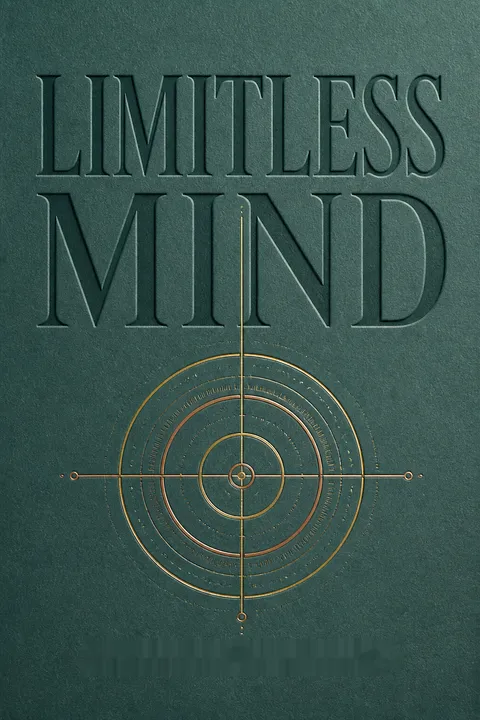
A physicist's wager. Russell Targ began investigating remote viewing at Stanford Research Institute in 1972 with fellow physicist Hal Puthoff. Remote viewing means trying to describe a hidden object or distant location without ordinary sensory access. Targ argues that successful experiments point to awareness that is not confined by the viewer's body or by ordinary ideas of distance and time. He connects that possibility to meditation and the experience of a more spacious, loving awareness.
More than a psychic trick. The book's deeper purpose is not to teach readers to find objects or predict markets. Targ sees such exercises as a way to question the narrow, fearful self people take themselves to be. His interpretation is ambitious: the reported results suggest limitless awareness. The distinction between experimental results and that larger spiritual conclusion matters.
What's compelling is the invitation to treat a startling experience as a question rather than a creed. That stance makes room for curiosity without requiring readers to accept Targ's metaphysics. A successful description in a controlled trial, even if reliable, would establish an unexplained result before it established a theory of consciousness. The book sometimes moves quickly from reported performance to nonlocal mind. Readers can preserve its spirit of inquiry by keeping those steps separate: first ask what the data show, then what explanations survive testing.
Describe raw impressions before memory turns them into confident guesses.
Notice the first fragments. Targ calls analytical overlay, or AOL, the mental noise produced when a viewer labels an impression using memory, imagination, or reasoning. A vague shape may arrive first; deciding too quickly that it is a particular object can replace observation with a guess. Viewers are encouraged to say what they sense, draw simple forms, and explain what led them to a label rather than insisting the label is accurate.
Make room for revision. Targ describes viewers who report shapes, movement, texture, or feeling before they can identify a target. In one example, a viewer's impressions of spirals and a shell-like form matched a curled leaf hidden in a container. The practical lesson is to record impressions before interpreting them, take short breaks, and return for fresh details.
This method has a useful parallel with separating observation from interpretation in clinical interviews and field research. Writing down an initial impression creates a record that later confidence cannot quietly rewrite. It also helps expose how readily a vivid guess can feel like perception. The limitation is that raw impressions are still ambiguous: a sketch can fit many targets after the fact. Independent judging and pre-set scoring rules are essential if the exercise is meant to test more than the viewer's ability to find a match.
Train with blind targets, immediate feedback, and an interviewer who never leads.
Protect the signal. In Targ's practice method, one person selects and hides an object while the viewer describes impressions without knowing the target or the possible choices. An interviewer keeps the viewer focused with open questions, records words and sketches, and avoids suggesting what the object might be. The viewer's task is to perceive; the interviewer's task is to help capture the report without interpreting it.
Close the learning loop. After the session, the viewer sees the target and compares it with the recorded impressions. Targ recommends feedback because it lets novices learn which kinds of impressions were useful. He suggests sessions of roughly ten to fifteen minutes, with relaxation, breathing, breaks, and drawings. Knowing the possible targets in advance can seed memory and imagination, making it harder to distinguish a fresh impression from a familiar image.
The protocol's strongest feature is its attention to contamination. A well-meaning interviewer can shape a report with tone, facial expression, or leading questions, while advance knowledge gives the viewer a ready supply of plausible images. This resembles good experimental practice in any field where expectations can influence observation. Feedback has a tradeoff, however: repeated exposure can teach people what evaluators reward, not necessarily what produces accurate perception. The cleanest learning design separates practice feedback from the later trials used to assess performance.
Weigh repeated blinded trials more heavily than spectacular psychic anecdotes.
Look for patterns across trials. Targ reports that an early Ganzfeld research program tested telepathic impressions under sensory-isolation conditions. In the later automated studies he describes, receivers listened to their impressions, then selected which of four video clips matched the sender's target. Across 354 sessions with 240 participants, the reported match rate was 32 percent, compared with 25 percent expected by chance. Targ says this result was more than 500 to 1 against chance.
Anecdotes illustrate, not settle. He also recounts SRI viewers describing distant sites, including a first session in which Pat Price reportedly drew a nearby swimming-pool complex with substantial accuracy. Such stories make the research vivid, but the book's stronger case depends on repeated trials, blinded judging, and results that can be evaluated across a series rather than celebrated one by one.
The distinction between a striking case and a repeatable pattern is crucial in research on unusual claims. A single impressive match can be shaped by selective memory or flexible interpretation; a protocol that limits those pathways is more informative. Statistical significance, though, is not a verdict on what caused an effect. Trial selection, scoring choices, publication practices, and independent replication all affect how persuasive a reported result should be. The fairest reading is neither automatic dismissal nor instant acceptance, but scrutiny of methods and replication.
Quantum entanglement is an analogy for connection, not an explanation of ESP.
Separate physics from interpretation. Targ uses quantum nonlocality to challenge the assumption that distant events must always be independent. Experiments with entangled particles show correlations between measurements, but, as he notes, they do not provide a known faster-than-light messaging system. He explicitly says that these physics results are not themselves an explanation for mind-to-mind connections.
Treat models as provisional. Targ and physicist Elizabeth Rauscher proposed complex Minkowski space as a possible geometrical model for psychic experiences. The book presents it as an attempt to describe how awareness and a distant target might be connected, not as a settled mechanism. Targ acknowledges that the model could be replaced. His broader proposal is that, if remote viewing occurs, its explanation may require a better account of space-time rather than a simple mental signal traveling across distance.
This distinction protects both physics and parapsychology from an easy but misleading association. A physical theory can make a familiar picture of reality less intuitive without automatically supporting every claim that sounds similarly nonlocal. Correlation, information transfer, and conscious experience are different explanatory problems. The geometrical proposal is interesting as a research prompt, but mathematical language does not validate a phenomenon by itself. Its value depends on whether it makes precise predictions that outperform competing explanations and can be tested independently.
Treat precognition as a revisable forecast, not a fixed prophecy.
Information about what comes next. Targ describes precognition as apparent awareness of a future event. He cites a review of 309 experiments conducted by 62 investigators, involving more than 50,000 participants and over two million trials. In that review, 30 percent of studies were reported as statistically significant, compared with 5 percent expected by chance; Targ reports an overall result exceeding 100 to 1 against chance.
Turn outcomes into images. In associative remote viewing, a target object stands for a future outcome. Targ's group mapped different objects to possible changes in silver prices, asked a viewer to describe the object before the market result was known, and reported nine successful forecasts in one series. A later attempt was less successful after the protocol changed. Targ treats a forecast as information about a possible course, not an unchangeable decree; acting on it could alter what happens.
The forecasting examples make the idea testable in principle: specify the outcome, record the prediction, and compare it with what follows. They also expose a familiar risk in decision-making under uncertainty. A vivid hit can dominate attention while failures, altered protocols, and the number of attempted forecasts fade from view. The book's own contrast between the successful and less successful market series underlines why procedures must be fixed before results arrive. A forecast is useful only when its accuracy can be assessed without hindsight.
Let intuitive impressions trigger medical attention, never replace diagnosis.
Treat impressions as prompts. Targ argues that intuitive medical diagnosis may feel easier than describing an unfamiliar object because illness involves a meaningful living person and recognizable body systems. He recounts sensing a problem in a friend's arm after she asked for help; she later reported a thorn injury and numbness, and sought emergency care. He also describes learning basic anatomy so that impressions could be associated with organs and bodily systems.
Check the whole picture. The book presents medical intuitives who scan the body, sometimes using the seven chakras, or traditional energy centers, as an organizing map. Targ cites a telephone series in which Caroline Myss's assessments were reported as 93 percent accurate across 50 cases. These reports are intriguing, but the book does not establish intuitive reading as a dependable clinical test. Its safest practical implication is to seek qualified care when an impression raises concern.
The most defensible use of intuition here is as an attention signal: a reason to ask questions, seek an examination, or notice a concern that might otherwise be ignored. That preserves its potential without granting an unverified impression the authority of a diagnosis. The reported accuracy figures would be more informative if the target conditions, scoring rules, and independent evaluation were specified in advance. In health care, the cost of a false reassurance can be high, so intuitive impressions should not delay established testing or treatment.
Separate the comfort of prayer from proof that prayer changes disease.
A controlled healing claim. Targ describes a study by his daughter, psychiatrist Elisabeth Targ, and colleagues involving men with advanced AIDS. In the replication study, 40 patients were matched into pairs and assigned to a healing or control group. Forty experienced healers, working from different traditions, directed intentions toward assigned patients for six days. Neither patients nor clinicians knew who was receiving the distant intervention, and participants continued standard medical treatment.
Reported clinical differences. The healing group had fewer outpatient visits, 185 compared with 260; fewer hospital days, 10 compared with 68; and lower illness-severity scores, 16 compared with 43. Targ also cites other clinical studies and a review of prayer research. He presents these findings as evidence that distant healing may have effects, while acknowledging that the results challenge conventional explanations of how mind and body interact.
The study's double-blind structure and concrete outcomes make it more informative than testimonials alone. The numbers also invite careful questions: how outcomes were chosen, how many comparisons were made, and whether later teams using the same protocol would find similar differences. Those questions do not erase the result; they define what stronger evidence would look like. Prayer may provide meaning and social comfort regardless of whether it changes disease biology. Keeping those benefits distinct from claims of medical efficacy respects both patients and evidence.
Use stillness to loosen the self-story that keeps fear in charge.
A personal change of direction. Targ writes as a scientist whose work on remote viewing led him toward Buddhist teachings, meditation, and self-inquiry. He describes moving from a life shaped by career pressure and resentment toward greater gratitude and a less defended sense of self. In this account, remote viewing is not the spiritual destination. It is one experience that can unsettle the assumption that identity is limited to the body, personal history, and social role.
Practice attention, not belief. Targ recommends quieting mental chatter, noticing judgments, and examining the stories attached to past injuries. He recounts forgiving a former coworker who had harmed his career, a step that helped him release a long-held grievance. His spiritual conclusion is that love and awareness are not prizes to acquire from other people, but qualities uncovered when fear and attachment loosen.
The book's emotional center is not a laboratory result but Targ's search for a way to live with less fear, intensified by grief over his daughter Elisabeth's death. That context gives the scientific inquiry personal stakes without proving its metaphysical conclusions. Stillness and self-observation can be valuable even for readers who do not accept a limitless mind: they create room between an event and the story built around it. The more expansive claim, that awareness is universal or timeless, remains a spiritual interpretation rather than a result of the exercises alone.
Analysis
Limitless Mind is part research history, part how-to manual, and part spiritual memoir. Its narrative begins with Targ's work as a physicist at SRI, where hidden-target experiments invite a radical question: might awareness operate beyond ordinary sensory limits? The book then moves from laboratory claims to training instructions, precognition, diagnosis, healing, and finally self-realization. Its organizing movement is from information arriving from the world to intention directed outward, then inward toward the question of identity.
The most useful contribution is practical and methodological. Targ repeatedly stresses blind targets, careful recording, interviewer restraint, sketches, feedback, and the separation of impressions from interpretation. These rules are valuable even to a skeptical reader because they expose how easily expectation can shape perception. The reported studies and anecdotes are not equally strong evidence. Repeated trials with controls deserve more attention than memorable individual stories, while statistical departures from chance do not by themselves establish a mechanism or settle whether effects replicate reliably.
The book's central intellectual tension is between its experimental caution and its metaphysical confidence. Targ says the mechanism of remote viewing is unknown and warns that quantum correlations do not themselves explain ESP. Yet he often treats reported psi results as strong evidence for a nonlocal consciousness, then connects that consciousness to ancient spiritual teachings. Those ideas may form a meaningful worldview, but each inference adds a new claim. Quantum nonlocality is not a shortcut from particle correlations to telepathy, precognition, or universal awareness.
The most balanced reading preserves both the challenge and the boundary. The research asks whether present models of perception explain every reported result; the spiritual chapters ask whether loosening attachment can change how a person lives. The first question requires transparent methods and independent replication. The second can be explored through practice without accepting paranormal claims. Elisabeth Targ's research and death give the book an intimate gravity: its inquiry is also a father's effort to understand connection, healing, and loss. That human dimension is compelling, but it should deepen attention to the claims rather than substitute for evidence.
Review Summary
Limitless Mind receives mixed reviews, with an average rating of 4/5. Readers appreciate Targ's scientific approach and fascinating insights into remote viewing and psychic phenomena. Some find the book enlightening and spiritually enriching, praising its exploration of nonlocal consciousness. However, others criticize the lack of in-depth remote viewing techniques and feel it skims over various topics. The book's blend of science, spirituality, and personal anecdotes resonates with many, while some readers desire more practical guidance on developing psychic abilities.
People Also Read








Glossary
Remote viewing
Describing hidden targetsA practice in which a person attempts to describe an object, location, or event that is inaccessible to ordinary senses. In Targ's experiments, a viewer typically receives only a target reference or a general instruction, records impressions and sketches, and is later shown the target. The term names both the experimental task and the skill the book teaches readers to practice.
Analytical overlay
Interpretive mental noiseA term used in remote-viewing practice for a viewer's analysis, labeling, or guessing about an impression. A vague shape may be identified too quickly as a familiar object, mixing memory and imagination with the original perception. Targ recommends recording the raw impression first and asking what sensory details produced a guess, rather than treating the guess itself as reliable information.
Associative remote viewing
Forecasting through target symbolsA precognitive method in which each possible future outcome is paired with a distinct object or image. The viewer describes the object before the outcome occurs, and the object is revealed as feedback after the event. Targ describes using this method to forecast changes in silver prices, allowing a viewer to report an image instead of trying to perceive a future number or market symbol.
Ganzfeld
Sensory-reduction ESP testA laboratory procedure for testing whether a receiver can identify a target being viewed by a distant sender. In the version described by Targ, the receiver rests in a quiet room with visual and auditory distractions reduced, reports impressions, and later chooses which of four video clips was the target. The design aims to limit ordinary sensory information while providing a measurable chance baseline.
Direct Mental Interactions with Living Systems
Distant mind-body interaction studiesThe term William Braud uses for experiments in which one person's intention is associated with changes in a distant living system. The studies described by Targ include measures such as skin response, blood volume, animal activity, and the breakdown of red blood cells. The term avoids assuming that the person directing attention is literally exerting a force or causing the measured change.
Conditioned awareness
Perception filtered by habitA spiritual and psychological term Targ uses for perception shaped by personal history, learned judgments, fear, and habitual interpretations. Rather than encountering an event freshly, a person assigns meaning through familiar expectations and emotional reactions. Targ connects the concept to remote-viewing practice, where memory and analysis can obscure initial impressions, and to self-inquiry, where noticing these filters may loosen their hold.
Presentiment
Anticipatory bodily responseA term for an apparent bodily response that occurs before a person encounters a future stimulus. Targ discusses experiments in which physiological measures, such as skin response, reportedly changed before participants saw emotionally intense images or heard a loud noise. The proposed interpretation is that the body registers an upcoming event in advance, though the interpretation and mechanism remain matters for testing.
Era III medicine
Medicine including nonlocal mindLarry Dossey's framework, summarized by Targ, divides healing approaches into three broad eras. Era I focuses on physical interventions, while Era II includes effects of a person's mind on their own body. Era III proposes that mind is not restricted to one body or the present moment, making distant healing and other noncontact effects possible. It is a conceptual framework, not a clinical finding by itself.
Honorton-Ferrari precognition analysis
Review of precognition experimentsA review by Charles Honorton and Diane Ferrari of 309 precognition experiments conducted between 1935 and 1987 by 62 investigators. As reported by Targ, the studies included more than 50,000 participants and over two million trials. The review assessed whether participants could anticipate future targets and found more statistically significant studies than chance alone would predict, according to the authors' analysis.
FAQ
What's "Limitless Mind" about?
- Exploration of Remote Viewing: "Limitless Mind" by Russell Targ is a comprehensive guide to understanding remote viewing, a practice that allows individuals to perceive distant or unseen targets using extrasensory perception (ESP).
- Transformation of Consciousness: The book delves into how remote viewing can lead to a transformation of consciousness, expanding one's awareness beyond the physical limitations of space and time.
- Scientific and Spiritual Integration: Targ integrates scientific research with spiritual teachings, suggesting that psychic abilities are natural human capabilities that can be developed for self-realization and understanding of the universe.
- Personal and Scientific Journey: The author shares his personal journey and scientific experiments conducted over decades, providing evidence and insights into the potential of the human mind.
Why should I read "Limitless Mind"?
- Scientific Perspective on ESP: The book offers a scientific perspective on extrasensory perception, backed by decades of research and experiments conducted by the author and his colleagues.
- Practical Guidance: It provides practical guidance on how to practice remote viewing, making it accessible to readers interested in exploring their psychic abilities.
- Spiritual Insights: Readers gain spiritual insights into the nature of consciousness and the interconnectedness of all things, which can lead to personal transformation and a deeper understanding of oneself.
- Inspiring Personal Stories: Targ shares inspiring personal stories and experiences that illustrate the profound impact of remote viewing and expanded consciousness on his life and work.
What are the key takeaways of "Limitless Mind"?
- Nonlocal Awareness: The book emphasizes the concept of nonlocal awareness, suggesting that consciousness is not confined to the physical body and can access information beyond space and time.
- Potential of Remote Viewing: Remote viewing is presented as a natural human ability that can be developed and used for practical purposes, such as problem-solving and self-discovery.
- Integration of Science and Spirituality: Targ advocates for the integration of scientific research with spiritual teachings, proposing that both can coexist and enhance our understanding of reality.
- Self-Realization and Love: The ultimate goal of exploring psychic abilities is self-realization and the experience of love and interconnectedness with the universe.
How does Russell Targ define remote viewing?
- Perception Beyond Senses: Remote viewing is defined as the ability to perceive and describe distant or unseen targets using extrasensory perception, beyond the limitations of the five senses.
- Nonlocal Mind: Targ describes it as a demonstration of the nonlocal nature of consciousness, where the mind can access information from anywhere in space and time.
- Practical Application: It is presented as a practical skill that can be developed through practice and used for various purposes, including problem-solving and personal growth.
- Scientific Validation: The book provides scientific evidence and experiments that validate the existence and potential of remote viewing as a real phenomenon.
What are the best quotes from "Limitless Mind" and what do they mean?
- "Consciousness is a singular of which the plural is unknown." This quote by Erwin Schrodinger, included in the book, emphasizes the interconnectedness of all consciousness, suggesting that separation is an illusion.
- "The data from remote viewing research show, without a doubt, that our mind is limitless." This statement highlights the book's central theme that the human mind has the potential to transcend physical boundaries and access information beyond the ordinary.
- "We are the flow of loving awareness that is available to us whenever we are quiet and peaceful." This quote reflects the spiritual aspect of the book, encouraging readers to find peace and love within themselves through expanded awareness.
- "The purpose of life is to become one with the universal, nonlocal, loving consciousness that is available to us." This encapsulates the book's message that self-realization and unity with the universe are the ultimate goals of exploring consciousness.
How can I practice remote viewing according to "Limitless Mind"?
- Quiet the Mind: Begin by quieting the mind and entering a relaxed state, free from distractions and mental chatter, to enhance focus and receptivity.
- Focus on the Target: Use a target object or location, either known or unknown, and focus your attention on perceiving its details through mental imagery.
- Record Impressions: Write down or sketch any impressions, images, or sensations that come to mind, without analyzing or judging them.
- Feedback and Practice: Regular practice and feedback on accuracy are essential for improving remote viewing skills and learning to distinguish between psychic impressions and mental noise.
What is the significance of nonlocal awareness in "Limitless Mind"?
- Beyond Physical Limits: Nonlocal awareness suggests that consciousness is not limited by physical boundaries and can access information from any point in space and time.
- Scientific and Spiritual Implications: This concept bridges scientific research and spiritual teachings, offering a new understanding of reality and the interconnectedness of all things.
- Practical Applications: Nonlocal awareness can be applied to remote viewing, healing, and other psychic phenomena, demonstrating the potential of the human mind.
- Personal Transformation: Embracing nonlocal awareness can lead to personal transformation, self-realization, and a deeper connection with the universe.
How does "Limitless Mind" integrate science and spirituality?
- Scientific Research: Targ presents decades of scientific research and experiments that provide evidence for the existence of psychic abilities and nonlocal consciousness.
- Spiritual Teachings: The book incorporates spiritual teachings from various traditions, emphasizing the interconnectedness of all things and the potential for self-realization.
- Unified Perspective: Targ advocates for a unified perspective that combines scientific inquiry with spiritual exploration, suggesting that both can enhance our understanding of reality.
- Practical Insights: Readers gain practical insights into how scientific and spiritual principles can be applied to develop psychic abilities and achieve personal growth.
What role does self-realization play in "Limitless Mind"?
- Ultimate Goal: Self-realization is presented as the ultimate goal of exploring psychic abilities and expanded consciousness, leading to a deeper understanding of oneself and the universe.
- Experience of Love: Through self-realization, individuals can experience the flow of loving awareness and interconnectedness with all things, transcending fear and separation.
- Path to Freedom: The book suggests that self-realization offers a path to freedom from conditioned awareness and the limitations of the ego, allowing for a more peaceful and fulfilling life.
- Integration of Mind and Spirit: Self-realization involves integrating the mind and spirit, recognizing the nonlocal nature of consciousness, and embracing one's true essence.
How does "Limitless Mind" address the concept of time?
- Timeless Awareness: The book suggests that consciousness is timeless and can access information from the past, present, and future, challenging conventional notions of time.
- Precognition and Retrocausality: Targ explores phenomena like precognitive dreams and retrocausality, where future events can influence the present, illustrating the fluidity of time.
- Scientific Evidence: Experiments and research presented in the book provide evidence for the nonlocal and timeless nature of consciousness, supporting the idea that time is an illusion.
- Personal Implications: Understanding the timeless nature of consciousness can lead to personal transformation, freeing individuals from anxiety about the future and regrets about the past.
What are the practical applications of remote viewing in "Limitless Mind"?
- Problem-Solving: Remote viewing can be used to solve problems, make decisions, and gain insights into situations that are not immediately accessible through ordinary means.
- Personal Growth: Practicing remote viewing can lead to personal growth, self-discovery, and a deeper understanding of one's own consciousness and potential.
- Healing and Well-Being: The book explores the potential for using remote viewing and nonlocal awareness in healing practices, enhancing well-being and spiritual development.
- Everyday Use: Targ suggests that remote viewing can be applied in everyday life, from finding lost objects to making informed choices, demonstrating its practical value.
How does "Limitless Mind" redefine the concept of psychic abilities?
- Natural Human Abilities: Psychic abilities are presented as natural human capabilities that can be developed and refined through practice and understanding.
- Beyond the Supernatural: The book demystifies psychic phenomena, framing them as extensions of consciousness rather than supernatural occurrences.
- Scientific Validation: Targ provides scientific validation for psychic abilities, offering evidence and experiments that support their existence and potential.
- Path to Self-Realization: Psychic abilities are seen as tools for self-realization and personal transformation, helping individuals connect with their true essence and the universe.
About the Author


Download PDF
Download EPUB
.epub digital book format is ideal for reading ebooks on phones, tablets, and e-readers.








