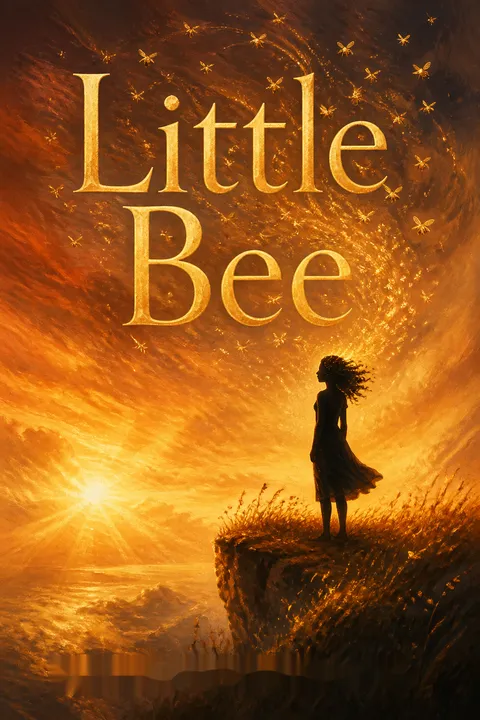


Plot Summary
Released Without Papers
After two years in Black Hill detention centre, sixteen-year-old Little Bee is released with three other women and a plastic bag of possessions. The Jamaican Yevette can joke through danger; a woman in a yellow sari speaks no English; another carries official papers but seems unable to act. Little Bee gives Yevette the centre’s name, then calls a taxi and Andrew O’Rourke, the Englishman she met in Nigeria.
She tells Andrew she is coming, though he is frightened by the call. To persuade the taxi controller to take them, she claims the women are cleaners heading to Surrey. When she mistakenly calls the driver a crude word she has just learned, he insults them and drives away. The four women leave on foot.
The release looks like freedom but supplies none of its practical conditions: no papers, transport, money, or reliable support. Little Bee’s command of English gets the women through the phone queue, yet the misunderstanding with the driver shows how fluency cannot erase the power imbalance between speaker and listener. Her call to Andrew makes the past an immediate destination. She is not simply seeking shelter; she is moving toward the people connected to the violence she survived, carrying both need and accusation.
The Farm's Fifth Bed
When the women cannot prove their legal status, farmer Mr. Ayres refuses to send them back to detention and lends them an empty seasonal workers’ barn for a week. Yevette admits that a Home Office official altered the release list after she submitted to sex with him; all four women have been released without their asylum cases being approved.
The unnamed woman, overwhelmed by memories and imagining her dead daughter among the chickens, hangs herself from a roof chain that night. Little Bee finds her, resists taking the woman’s official papers for herself, and leaves before police arrive. Yevette and the sari-wearing woman remain at the farm. Little Bee walks toward London, guided by Andrew’s address and the city’s glow.
The barn offers shelter without security, exposing the gap between personal kindness and institutional protection. Ayres can grant a week, but he cannot grant legal belonging. Yevette’s bargain reveals how a system nominally designed to assess asylum can make release depend on an official’s private power. The unnamed woman’s death makes trauma visible as more than memory: it alters what she can perceive and endure. Little Bee’s refusal to steal her papers matters because survival tempts her to take another person’s verified history, yet she will not counterfeit the dead woman’s experience.
Batman at the Graveside
Andrew dies by suicide five days after Little Bee’s call. On the morning of his funeral, she reaches Sarah O’Rourke’s house after walking from the detention centre and hiding nearby. Sarah, widowed and numb, lets her in just before the undertaker arrives. She takes Little Bee and her four-year-old son, Charlie, to the church.
Charlie, convinced he is Batman and unable to understand death, falls into his father’s open grave while trying to reach the coffin. The mourners freeze; Little Bee climbs down and helps lift him out. Sarah thanks her, then brings her into the family home. The child’s rescue breaks through Sarah’s emotional paralysis, while Little Bee’s arrival makes the buried history of Nigeria impossible to keep at a distance.
The funeral joins two kinds of loss without making them equivalent. Charlie encounters death as a physical problem Batman should be able to solve, while Sarah has not yet found a language for her husband’s absence. Little Bee acts where the English mourners hesitate, a reversal that complicates the familiar division between host and rescued stranger. Her presence does not repair the family, but it interrupts the rituals Sarah uses to contain grief. The grave becomes both literal danger and an opening through which Sarah’s carefully postponed responsibility returns.
A Holiday to Mend
Two years earlier, Sarah was editing the glossy women’s magazine Nixie while her marriage to Andrew cooled after Charlie’s birth. She began an affair with Lawrence Osborn, a Home Office press officer she met while reporting on government policy. When Andrew discovered the affair, the couple tried to repair their marriage with a holiday.
Sarah accepted a free trip to Ibeno Beach in Nigeria, despite warnings about unrest in the region. The couple left Charlie with Sarah’s parents and went south, believing they were taking an ordinary beach break. Sarah’s later recollections show how her private choices and professional distance from foreign crises carried them into a conflict they did not understand.
The trip begins as an attempt to treat intimacy like a damaged household fixture: identify the fault, change the setting, resume ordinary life. Sarah’s affair is not a simple explanation for everything that follows, but it shapes the conditions of the holiday and deepens her later guilt. Her magazine work has taught her to package difficult realities for readers, while Andrew’s journalism has encouraged him to judge the world from a distance. In Nigeria, both habits fail. The novel places private betrayal beside geopolitical violence without pretending they have the same scale.
The Finger on the Sand
On the beach, Little Bee and her older sister Nkiruka hide from armed men hunting survivors of an oil-company-backed attack on their village. They have chosen new names, Kindness and Little Bee, to obscure their origins. Sarah and Andrew first mistake their plea for a scam, but a young soldier warns them that the danger is real.
When the hunters catch up, their wounded leader kills the soldier and demands money, then a finger in exchange for the girls’ lives. Andrew cannot bring himself to cut off his own. Sarah takes the machete and removes her middle finger. The leader lets Little Bee live, but takes Nkiruka away with him. Andrew’s sobbing begins a guilt that neither he nor Sarah can later contain.
The demanded finger makes moral responsibility grotesquely measurable. Andrew’s failure is not that he feels no compassion; he reaches for reasons the sacrifice may be futile, then discovers that principled language cannot undo his refusal. Sarah acts, but her courage cannot save both sisters, which prevents the scene from becoming a clean redemption story. The exchange also exposes the unequal costs of looking away: the visitors can leave the beach, while the girls remain within the violence. The missing finger becomes a bodily record that Sarah’s public explanations cannot erase.
The Boat in the Sand
After the men take the sisters, they force Little Bee beneath an overturned boat and rape and kill Nkiruka nearby. The wounded leader, who had demanded Sarah’s finger, walks into the sea and disappears. When the remaining men sleep, Little Bee escapes, retrieves Andrew’s wallet from the dead soldier’s body, and keeps his driving licence and business card.
She hides in the jungle, then stows away on a British cargo ship carrying tea. British officials detain her for two years, despite her being a child, and her fear of abuse shapes every day. She makes herself unattractive to avoid male attention, studies English from newspapers and books, and imagines ways to die until the habit of planning survival begins to return.
Little Bee’s escape does not end the violence; it changes its form. The sea carries her away, while detention converts refuge into another enclosure, managed through rules she cannot control. Her deliberate clothing, bound chest, and studied language are strategies for reducing exposure, not signs that the trauma has passed. Learning English gives her a way to address British people directly, but also reveals the limits of assimilation: she can master their vocabulary without gaining the documents that make her claims legible. Her chosen name preserves a self she can carry when other forms of identity have been stripped away.
A Family Made Uneasy
At home, Sarah asks Little Bee to explain the beach and hears the full account of Nkiruka’s death. Both women carry guilt: Sarah over her marriage and the finger she sacrificed, Little Bee over surviving when her sister did not. Lawrence arrives, uncomfortable that Sarah has taken in an undocumented refugee, while Sarah begins investigating Little Bee’s legal options.
Charlie’s grief erupts at nursery after staff remove his Batman costume; Little Bee sits beside him until he can leave the corner and return to Sarah. On the walk home, she offers to become a sister to Charlie and a daughter to Sarah. Sarah hesitates, then agrees that they can try to help one another.
Care here is reciprocal before it is comfortable. Sarah has money, a home, and access to institutions, but Little Bee can steady Charlie when Sarah’s own grief overwhelms her. The proposed family bond is not sentimental escape: Little Bee knows she may be deported, and Sarah does not yet know what she can promise. Charlie’s costume functions as a small technology of control; when it is taken, his distress exposes the helplessness beneath his heroic role. Their shared vulnerability creates kinship through concrete acts, not through a claim that their histories are interchangeable.
The Secret in the Garden
After Sarah’s funeral, Little Bee admits to Lawrence that she hid in the garden before arriving at the house. She watched Andrew’s depression worsen, then saw him prepare to hang himself in his study.
When she approached, Andrew believed she was a ghost connected to the beach and asked whether Nkiruka had survived. Little Bee lied that her sister was safe. Andrew stepped from the chair; Little Bee tried to lift him, then chose not to call for help because police might expose her illegal presence.
She explains that she wants to care for Sarah and Charlie partly to atone. Lawrence considers reporting her, but realizes that would destroy Sarah and his relationship with her. He agrees to keep silent and threatens deportation if Little Bee exposes his affair.
This revelation refuses the comforting division between victim and perpetrator. Little Bee’s decision is shaped by terror and self-preservation, yet she knows it helped leave Andrew to die. Her lie offers him a moment of hope while withholding the truth she cannot bear to speak. Lawrence’s choice to conceal the confession is also compromised: compassion, fear of scandal, and his desire to keep Sarah all pull together. The scene makes accountability difficult without making it impossible. Little Bee’s wish to repair the harm is psychologically understandable, but the novel leaves open whether service can ever balance a life withheld.
The Bat Cave Disappears
While Sarah and Little Bee try to make sense of Andrew’s papers on the South Bank, Sarah says she may continue his research into immigration detention. She has already resigned from Nixie, hoping to do work that matters. During an argument between Sarah and Lawrence, Charlie slips away and hides inside a drainage tunnel, his private Bat Cave.
The adults search the riverbank in panic until Lawrence finds him alive. When police arrive, Little Bee fears they will expose her status and take her back into detention. She gives the officer her only name, Little Bee, and runs, but he catches her. At the station, Sarah visits with Charlie and vows to prevent deportation, while Little Bee tells her she was present when Andrew died.
The disappearance forces Sarah to see how divided attention has become: she is reaching toward public purpose while her child is still trying to understand his father’s death. Charlie’s hiding place turns his fantasy refuge into a real danger, but also gives his grief a motive the adults can finally hear. Little Bee’s flight from police shows that rescue and threat can wear the same uniform. By disclosing the truth to Sarah after arrest, she relinquishes some control over her future; honesty becomes not absolution, but a risk she chooses to take.
Across the Deportation Flight
Immigration officers remove Little Bee from Britain and put her on a flight to Abuja. Sarah and Charlie discover the flight details through Lawrence and board the same plane, refusing to let Little Bee return alone.
In Nigeria, Sarah’s presence as a British journalist discourages military police from arresting Little Bee immediately, though they follow the family and watch their hotel. Sarah spreads out Andrew’s research and proposes collecting accounts from other villagers targeted by oil interests, so Little Bee’s experience will not stand alone.
She bribes the police to let them travel, and Little Bee finds witnesses while Sarah records their testimony. They drive through the southeast in an old Peugeot, gathering stories under the threat of being watched.
The flight reverses the usual direction of asylum: the British family enters the country Little Bee fled, while her safety still depends on who can witness and publicize what happens. Sarah turns journalism from a profession of selecting angles into a practice of accumulating testimony. Her strategy recognizes that an isolated account can be dismissed more easily than a pattern, though bribing officials shows that evidence alone does not neutralize power. The family’s temporary protection remains contingent, not triumphant. Their work offers solidarity a method, but no guarantee.
Udo at the Waterline
After weeks of collecting testimonies, Little Bee dreams of Nkiruka and asks Sarah to take her to the coast. There she says farewell to the idea of returning to the life she lost, while Sarah offers to keep seeking a way for her to live in Britain. Little Bee falls asleep on the beach. When soldiers approach, Sarah sends her toward local women to hide, but Charlie runs toward her and a soldier fires into the sand beside him.
Little Bee rushes back to protect him. She tells Charlie her real name, Udo, and explains that it means peace. Charlie removes his Batman costume and joins the local children in the surf. Soldiers seize Little Bee as Sarah struggles against them. Little Bee watches Charlie play, laughing as he runs free.
The ending grants neither legal safety nor a neat rescue. Little Bee is captured, but her final action interrupts the inherited logic of abandonment: she turns back for Charlie even when hiding might preserve her own chance of escape. Giving him the name Udo creates a different inheritance from trauma, one rooted in the possibility of peace and truthful naming. Charlie’s discarded costume marks a brief release from the belief that he must remain Batman to keep his father alive. The children’s shared play does not undo political violence, but it gives the novel a living image that violence has not wholly claimed.
Analysis
Little Bee examines the gap between being physically released and being permitted to belong. Its asylum seekers can be outside a detention centre yet remain vulnerable to arrest, deportation, and exploitation. Their survival depends on documents, language, money, and the willingness of others to risk something on their behalf. The novel makes this machinery intimate: a taxi refusal, a missing caseworker, a request for sanitary supplies, or an official’s altered computer entry can shape a person’s entire future.
The central relationships resist simple moral accounting. Sarah’s sacrifice on the beach is courageous, but it cannot save Nkiruka. Andrew’s public commitments do not prevent his failure in a crisis, and his later depression grows from the distance between what he believed and what he did. Little Bee, meanwhile, is both a survivor and someone who makes a choice she cannot forgive herself for. Her presence challenges the comforting idea that trauma produces moral purity. Responsibility persists even when fear makes every available action dangerous.
The book also studies the stories people use to remain intact. Charlie wears Batman because a hero’s identity gives him a way to imagine control; Little Bee learns formal English because speech may help her cross borders; Sarah hides the beach behind a false holiday accident. Each strategy has a cost. Masks protect, but they can also delay recognition. The story’s movement toward testimony does not promise that exposure will defeat political power. Rather, collecting many accounts makes denial harder and gives the vulnerable a shared record.
At the end, Little Bee’s capture prevents the ending from becoming a tidy rescue. Yet her choice to return for Charlie, and his willingness to remove the costume, create a smaller and more credible hope: care can cross national and familial boundaries, even when it cannot abolish danger. The book’s moral demand is not that individuals solve structural violence alone, but that they stop treating its victims as abstractions once those victims have names and faces.
Review Summary
Little Bee received mixed reviews. Many praised its powerful storytelling, compelling characters, and exploration of refugee experiences. The alternating perspectives of Little Bee and Sarah were generally well-received. Some found it emotionally impactful and thought-provoking, while others felt it was overrated or relied on clichés. Criticisms included unrealistic plot elements, underdeveloped characters, and an unsatisfying ending. Despite divided opinions, most agreed the book tackles important themes of immigration, globalization, and human rights.
People Also Read








Characters
Little Bee
The displaced storytellerA Nigerian girl who adopts the name Little Bee after fleeing violence in her village, she is observant, intellectually quick, and alert to the small rules that decide who is believed. She learns formal English during detention because language may help her survive, yet she knows that fluency cannot substitute for legal papers or social acceptance. Her humor lets her examine British habits without pretending they make sense, while her private readiness for danger reveals how deeply fear has shaped her. Little Bee is not defined only by victimhood: she makes choices, judges other people, and wants a future in which she can belong without hiding her origins.
Sarah O'Rourke
The conflicted rescuerA successful magazine editor and Charlie’s mother, Sarah is clever, energetic, and accustomed to controlling the frame around difficult subjects. Her marriage to Andrew has cooled, and her affair with Lawrence reflects both dissatisfaction and a hunger to feel newly alive. She is capable of decisive courage, but also of avoidance: she tries to make the beach a closed chapter and her grief a manageable obligation. Little Bee’s arrival unsettles that arrangement. Sarah’s defining tension is between the practical life she has built and the demands of responsibility that cannot be made tidy or safely distant.
Andrew O'Rourke
The troubled journalistSarah’s husband, Charlie’s father, and a columnist for The Times, Andrew is principled, articulate, and often forceful in his judgments about public life. Before his marriage deteriorates, his conviction gives Sarah a reason to admire him; later, the same intensity turns inward as guilt and depression take hold. He struggles to reconcile his written ideals with his conduct in a moment of danger, and his silence leaves Sarah and Charlie without an easy account of what happened. Andrew’s character links public argument to private conscience, showing how a person may understand injustice clearly yet remain unable to live comfortably with his own failures.
Charlie O'Rourke
The small masked heroSarah and Andrew’s four-year-old son, Charlie lives inside the Batman identity with the seriousness of a child who needs the world to have clear heroes and villains. His costume gives him a role when adult grief is impossible to understand, and his games let him turn fear into something he can fight. He struggles to accept that his father is dead and that his own presence could not have prevented it. Little Bee meets him at this vulnerable point and becomes a steady companion. Charlie’s questions expose the limits of adult euphemism, while his play keeps possibility alive.
Lawrence Osborn
The compromised loverA Home Office press officer, Lawrence is Sarah’s lover and a man who knows how government systems work from inside. He is witty and perceptive, but his self-deprecation can conceal a strong appetite for security and emotional importance. Sarah’s choices draw him into conflict between his professional obligations, his family, and his attachment to her. He tends to describe compromise as realism, though he is not entirely numb to moral pressure. His relationship with Little Bee reveals how easily concern for Sarah can become a defense of his own place in her life.
Nkiruka, later Kindness
Little Bee's brave sisterLittle Bee’s older sister, Nkiruka is beautiful, affectionate, and protective, with a name that evokes a bright future. During their flight from danger, she chooses the alias Kindness to conceal their origins. She comforts Little Bee, shares memories of their village, and carries the confidence of someone who has long taken responsibility for her younger sister. Her presence remains central to Little Bee’s understanding of home, family, and the life that was interrupted.
Yevette
The laughing survivorA Jamaican asylum seeker, Yevette is bold, funny, and quick to improvise when official systems leave people stranded. Her jokes are not evidence that she has escaped hardship; they are a way of keeping fear from taking the whole room. She helps Little Bee and the other women after their release and insists that survival sometimes requires action before anyone has explained the rules. Her closeness with Little Bee offers warmth without sentimentality.
Mr. Ayres
The farmer who sheltersA practical English farmer, Mr. Ayres encounters the released women on his land and recognizes their vulnerability even though their legal status is unclear. He gives them temporary shelter in the seasonal workers’ barn, drawing a boundary around what he can offer while refusing to treat them as a problem to be sent away. His decision is modest but consequential, a local act of responsibility within a system that has failed to arrange safe release.
The unnamed refugee mother
The grieving detaineeOne of the women released with Little Bee, she carries a thick file documenting the violence that drove her from home. Her silence and distress make clear that possessing official evidence does not guarantee the strength to navigate freedom. She is a mother whose grief overwhelms her sense of the present, and her story exposes the human cost concealed by bureaucratic paperwork.
Clarissa
Sarah's editorial confidanteSarah’s longtime friend and features editor at Nixie, Clarissa understands the commercial pressures that have shaped their magazine. She is sharp, fashionable, and willing to challenge Sarah, even when concern for her friend blurs with worry about the business. Clarissa represents the professional world Sarah has built: lively and capable, but often inclined to treat difficult public issues as a risk to readership.
The wounded rebel leader
The beach's armed threatA dying commander among the armed men hunting survivors in the Nigerian oil region, he is volatile and calculating. He demands payment from Sarah and Andrew, then makes their willingness to protect the sisters the measure of his power. His presence exposes how political violence can turn human lives into currency.
Albert
The farmer's blunt handA large farm worker employed by Mr. Ayres, Albert initially unsettles the released women with his size and rough manner. He follows his employer’s instruction to take them to the empty barn and help settle them there, offering practical assistance without pretending to understand their histories.
Plot Devices
Little Bee's assumed name
Identity under pressureLittle Bee and Nkiruka take new names while fleeing their village, hoping to conceal the ethnic and regional histories that could expose them to pursuers. In Britain, Little Bee’s chosen name becomes both a shield and a challenge to systems that demand documentary proof before recognizing a person. Her ability to speak polished English complicates the expectation that refugees should sound unfamiliar, but it does not make her legally secure. The return to her real name, Udo, connects identity to a future that can be spoken rather than hidden.
Batman's costume
A child's protective maskCharlie wears his Batman costume so constantly that it becomes more than play. It gives him a role in which danger can be identified and defeated, especially when his father’s death makes adult explanations inadequate. At the funeral, the costume accompanies him into the grave; at nursery, its removal triggers a breakdown. The costume helps Little Bee reach him because she understands what it means to need a survival identity. Its final removal makes room for Charlie to act as a child rather than a permanent hero.
Sarah's missing finger
A bodily record of choiceSarah loses her middle finger on the Nigerian beach after Andrew cannot make the demanded sacrifice. The injury remains visible, affects her daily work as an editor, and draws questions she answers with a false story about an accident. Its persistence makes denial physically difficult: the event is not merely a memory but a loss carried into her marriage, grief, and relationship with Little Bee. The finger also turns moral action into an imperfect measure. Sarah chooses to act, but the sacrifice saves one sister and cannot prevent the other’s fate.
Asylum papers and stories
Proof against erasureThe women’s papers determine whether officials can recognize their claims, yet paperwork is unevenly distributed and can be altered, withheld, or rendered useless. Little Bee has no documents of her own, while the unnamed mother’s stamped file cannot protect her from despair. Andrew’s research and Sarah’s later collection of testimony develop the countermeasure: gather many accounts so that violence cannot be dismissed as one person’s unsupported story. Evidence becomes a form of protection, though the novel never treats it as a guarantee against state power.
The Thames and the sea
Routes between refuge and dangerWater marks the major crossings in Little Bee’s life: she hides by the Nigerian shore, escapes by ship, encounters the Thames as a newcomer to London, and returns to the coast with Sarah and Charlie. These waters suggest movement, but movement alone does not provide safety. The sea carries her out of immediate danger and into detention; the river offers a moment of human belonging before police capture her; the coast becomes the site of a final confrontation. Water joins distant places without making their risks interchangeable.
FAQ
Synopsis & Basic Details
What is Little Bee about?
- Intertwined lives, global issues: Little Bee tells the story of a young Nigerian refugee and a British magazine editor whose lives become inextricably linked after a violent encounter on a Nigerian beach. The novel explores themes of trauma, guilt, and redemption.
- Survival and identity: The narrative follows Little Bee's journey from a detention center to England, where she seeks refuge and a new identity, while Sarah grapples with the aftermath of her husband's death and her own complicity in past events.
- Clash of cultures and classes: The story examines the stark contrasts between the privileged lives of the British characters and the harsh realities faced by refugees, highlighting the complexities of global inequality and the human cost of conflict.
Why should I read Little Bee?
- Emotional depth and complexity: The novel offers a deeply moving and thought-provoking exploration of trauma, grief, and the human capacity for both cruelty and compassion, prompting readers to confront uncomfortable truths.
- Unique narrative perspective: The dual narrative structure, alternating between Little Bee's and Sarah's perspectives, provides a nuanced and multifaceted view of the events, challenging readers to consider different viewpoints and experiences.
- Social commentary and relevance: Little Bee tackles important contemporary issues such as immigration, asylum, and the impact of global conflicts, making it a timely and relevant read that encourages critical reflection on the world we live in.
What is the background of Little Bee?
- Nigerian oil conflict: The novel is set against the backdrop of the ongoing oil conflict in the Niger Delta region of Nigeria, highlighting the violence, corruption, and human rights abuses associated with the exploitation of natural resources.
- British immigration system: The story also exposes the harsh realities of the British immigration system, particularly the detention centers where asylum seekers are held, revealing the dehumanizing conditions and the bureaucratic obstacles they face.
- Cultural and class divides: The novel explores the cultural and class divides between the privileged lives of the British characters and the experiences of refugees, highlighting the power dynamics and prejudices that shape their interactions.
What are the most memorable quotes in Little Bee?
- "To survive, you must look good or talk even better.": This quote encapsulates the harsh reality faced by refugees in detention centers, where appearance and eloquence are often seen as the only means of gaining favor and avoiding deportation.
- "A scar does not form on the dying. A scar means, I survived.": This quote highlights the resilience and strength of the human spirit, reframing scars not as marks of shame but as testaments to survival and endurance.
- "We are all trying to be happy in this world.": This quote, spoken by Little Bee, underscores the universal human desire for happiness and the shared struggles we all face in its pursuit, despite our different backgrounds and experiences.
What writing style, narrative choices, and literary techniques does Chris Cleave use?
- Alternating first-person narration: Cleave employs a dual first-person narrative, switching between Little Bee's and Sarah's perspectives, which allows for a deeper exploration of their individual experiences and the complex relationship between them.
- Vivid and evocative language: The author uses rich, sensory language to create a vivid and immersive reading experience, bringing the settings and characters to life with striking detail and emotional resonance.
- Symbolism and metaphor: Cleave incorporates recurring symbols and metaphors, such as the British pound coin and the color gray, to enhance the thematic depth of the novel and to explore the characters' inner states and struggles.
Hidden Details & Subtle Connections
What are some minor details that add significant meaning?
- The red nail varnish: Little Bee's red nail varnish, hidden under her heavy boots, symbolizes her hidden femininity and her refusal to be completely defined by the harsh conditions of the detention center, representing a small act of rebellion and self-preservation.
- The see-through plastic bags: The see-through plastic bags carried by the girls upon their release from the detention center highlight their vulnerability and the lack of privacy and dignity afforded to them, emphasizing their status as refugees.
- The broken watch: Andrew's broken watch, mentioned in passing, foreshadows his own brokenness and his inability to cope with the trauma he experienced, symbolizing his internal struggle and the disintegration of his life.
What are some subtle foreshadowing and callbacks?
- The mention of the Puffin: Charlie's imaginary villain, the Puffin, foreshadows the real-life dangers and threats that Little Bee faces, highlighting the blurred lines between childhood fantasy and the harsh realities of the world.
- The description of the sea: The recurring descriptions of the sea, both beautiful and dangerous, foreshadow the turbulent journey that Little Bee undertakes and the emotional depths that the characters must navigate.
- The use of the word "scum": The taxi driver's use of the word "scum" to describe refugees foreshadows the prejudice and dehumanization that Little Bee and others face, highlighting the systemic issues of racism and xenophobia.
What are some unexpected character connections?
- The shared trauma of Sarah and Little Bee: Despite their different backgrounds, Sarah and Little Bee are connected by their shared trauma and guilt, creating a bond that transcends cultural and class differences, highlighting the universality of human suffering.
- The parallel between Andrew and Little Bee: Both Andrew and Little Bee are haunted by their past actions and struggle with feelings of guilt and responsibility, creating a parallel between their experiences and highlighting the destructive power of trauma.
- The connection between Charlie and Little Bee: Charlie's innocent and unconditional acceptance of Little Bee contrasts with the prejudice and fear she encounters from others, highlighting the importance of empathy and understanding in a world marked by division.
Who are the most significant supporting characters?
- Yevette: Yevette, the Jamaican girl who befriends Little Bee in the detention center, provides a contrasting perspective on survival and resilience, highlighting the different ways people cope with trauma and oppression.
- The detention officer: The detention officer, who is initially portrayed as indifferent, shows a moment of unexpected kindness when he wishes the girls luck upon their release, revealing the complexity of human nature and the potential for empathy even in the most dehumanizing environments.
- Mr. Ayres: Mr. Ayres, the farmer who offers the girls temporary shelter, represents a rare instance of compassion and understanding, highlighting the importance of individual acts of kindness in a world marked by indifference and prejudice.
Psychological, Emotional, & Relational Analysis
What are some unspoken motivations of the characters?
- Sarah's guilt and need for redemption: Sarah's actions are driven by her deep-seated guilt over her role in the events that led to Andrew's death and her desire to make amends by helping Little Bee, revealing her struggle with her conscience.
- Lawrence's fear of losing Sarah: Lawrence's attempts to control Sarah's actions and his jealousy of Little Bee stem from his fear of losing her and his own insecurities about his place in her life, highlighting his vulnerability and his need for validation.
- Little Bee's desire for belonging and acceptance: Little Bee's journey is driven by her longing for a place where she belongs and where she can be accepted for who she is, revealing her deep-seated need for connection and her struggle with her identity.
What psychological complexities do the characters exhibit?
- Little Bee's survival mechanisms: Little Bee's constant planning for suicide and her detachment from her emotions are coping mechanisms developed in response to the trauma she has experienced, highlighting the psychological toll of violence and displacement.
- Sarah's emotional numbness and self-blame: Sarah's emotional numbness and her tendency to blame herself for Andrew's death reveal her struggle with grief and her inability to process the trauma she has endured, highlighting the complexities of trauma and loss.
- Andrew's depression and guilt: Andrew's depression and his inability to reconcile his actions with his conscience reveal the destructive power of guilt and the psychological toll of moral compromise, highlighting the complexities of human nature.
What are the major emotional turning points?
- Little Bee's decision to tell her story: Little Bee's decision to share her story with Sarah marks a turning point in her journey, as she begins to confront her past and to reclaim her voice, highlighting the power of storytelling in healing and self-discovery.
- Sarah's realization of Andrew's research: Sarah's discovery of Andrew's research on the oil conflict and the immigration system forces her to confront the reality of his suffering and her own complicity in his death, leading to a shift in her perspective and a renewed sense of purpose.
- The encounter with the soldiers on the beach: The encounter with the soldiers on the beach forces Little Bee and Sarah to confront the immediate dangers they face, highlighting the fragility of their hope and the ever-present threat of violence and oppression.
How do relationship dynamics evolve?
- The bond between Sarah and Little Bee: The relationship between Sarah and Little Bee evolves from a fragile connection based on shared trauma to a deep bond of friendship and mutual support, highlighting the transformative power of human connection and empathy.
- The tension between Sarah and Lawrence: The relationship between Sarah and Lawrence is marked by tension and conflict, as their different perspectives on Little Bee and their own insecurities create a rift between them, highlighting the challenges of navigating complex relationships in the face of trauma and loss.
- Charlie's role as a catalyst: Charlie's innocent and unconditional love for both Sarah and Little Bee serves as a catalyst for their healing and growth, highlighting the importance of family and the transformative power of childhood innocence.
Interpretation & Debate
Which parts of the story remain ambiguous or open-ended?
- The true nature of Andrew's guilt: The extent of Andrew's guilt and his responsibility for the events on the beach remain ambiguous, leaving readers to grapple with the complexities of moral responsibility and the impact of trauma on human behavior.
- The long-term impact of the events on the characters: The novel leaves the long-term impact of the events on the characters open-ended, prompting readers to consider the lasting effects of trauma and the challenges of rebuilding a life after loss.
- The possibility of true justice and redemption: The novel raises questions about the possibility of true justice and redemption in a world marked by violence and inequality, leaving readers to grapple with the complexities of moral responsibility and the limitations of human action.
What are some debatable, controversial scenes or moments in Little Bee?
- Sarah's decision to cut off her finger: Sarah's decision to cut off her finger to save Little Bee is a controversial moment that raises questions about the limits of self-sacrifice and the complexities of moral decision-making in extreme circumstances.
- Little Bee's role in Andrew's death: Little Bee's presence at Andrew's suicide and her decision not to intervene raise questions about her responsibility and the complexities of moral agency in the face of trauma and despair.
- Lawrence's actions and motivations: Lawrence's actions and motivations are often ambiguous, leaving readers to question his true intentions and the extent of his commitment to Sarah and Little Bee, highlighting the complexities of human relationships and the challenges of trust.
Little Bee Ending Explained: How It Ends & What It Means
- Little Bee's transformation and self-acceptance: The ending of Little Bee sees her embrace her true name, Udo, and her identity as a storyteller, signifying her journey towards self-acceptance and her decision to use her voice to advocate for change.
- The power of shared stories and human connection: The ending emphasizes the power of shared stories and human connection to transcend cultural and geographical boundaries, highlighting the importance of empathy and understanding in a world marked by division and loss.
- A bittersweet ending with hope for the future: While the ending is bittersweet, with Little Bee facing an uncertain future, it also offers a glimmer of hope, suggesting that even in the face of overwhelming challenges, the human spirit can endure and find meaning through connection and shared experiences.
Download PDF
Download EPUB
.epub digital book format is ideal for reading ebooks on phones, tablets, and e-readers.








