

Plot Summary
The Mirror Sees an Army
At the Feast of Gullveig, Loki, a prince whose gift for sorcery is unwelcome at court, stands beside his golden-haired brother Thor and tries to hide his boredom. Amora, Karnilla’s bold young apprentice, has become Loki’s closest friend and the first person to teach him magic without shame. Their private mischief stops when Odin activates the Godseye Mirror, a relic that shows Asgard’s future.
A violent vision makes the king break from the ceremony, his face drained of composure. He tells no one what he saw, but his gaze lingers on his sons. The feast resumes under a cloud of anxious speculation, while Loki senses that the vision has somehow placed him and Thor inside a future neither understands.
The opening makes political inheritance feel less like a prize than a test administered before Loki knows the rules. The Mirror appears to offer knowledge, but Odin’s refusal to explain his vision turns that knowledge into a private judgment. Loki’s closeness to Amora supplies an alternative source of recognition: she treats his magic as a capacity to develop, not a defect to conceal. That contrast matters because the prophecy arrives in a court already organized around visible masculine power, where Thor looks like a king and Loki is taught to distrust the qualities that make him distinct.
A Brother Names the Traitor
Loki disguises himself as a servant and enchants a goblet to carry sound from Odin’s chambers. Thor catches him eavesdropping, but joins him when the message reveals that Odin saw one of his sons leading an army of the dead against Asgard. Odin fears the vision may signal Ragnarok and orders greater protection for the Norn Stones, while Frigga argues that prophecy should not become a sentence.
Thor says the danger seems to point to Loki, the brother already regarded as the less trustworthy prince. Their argument turns the prediction into a wound between them. Loki leaves to seek Amora, who agrees that they should look into the Mirror themselves before the only chance to use it closes.
Loki’s theft of the conversation is more than youthful curiosity. He has learned that official explanations arrive only after decisions have been made, so he seeks knowledge through the methods available to someone excluded from authority. Thor’s suspicion wounds precisely because it echoes the court’s existing hierarchy: Thor can imagine himself as Asgard’s defender, while Loki is made to occupy the role of threat. The prophecy gains force through these reactions. Rather than simply predicting a future, it begins to shape how the brothers interpret each other, making fear a social fact before any betrayal has occurred.
The Mirror Breaks
Loki and Amora enter the royal vault in disguises and use Odin’s stolen gloves to open its magic-locked door. When Amora channels power into the Godseye Mirror, Loki instinctively adds his own, and the artifact shatters before its vision becomes clear. The broken shard strikes the nearby Tuning Fork, summoning the Lurking Unknown, a monster that grows stronger as its victims panic.
Loki and Amora fight it through the vault and corridors; the beast kills one of Loki’s sword instructors before Karnilla destroys it with a spell. Odin arrives to find the Mirror ruined. Amora claims responsibility for the break, shielding Loki, and Odin orders her arrested. Loki admits he helped, but his father refuses to punish him alongside her.
The Mirror’s destruction is the first time Loki experiences his power as undeniable, and the thrill of that discovery immediately curdles into fear when Odin sees what he can do. The Lurking Unknown literalizes the danger of panic: the more the palace soldiers fear the creature, the larger it becomes. Yet Loki’s own fear does not make him monstrous; it makes him vulnerable and uncertain. Amora’s choice to take the blame is protective, but it also reinforces the unequal cost of their actions. She can act boldly and absorb consequences, while Loki is left to wonder whether his power has made him dangerous to love.
Amora Is Sent Away
Before Amora’s judgment, Frigga tends Loki’s injuries and tells him that Odin’s vision showed a son leading the dead, not proof of which son would do it. She admits she should have taught Loki to control his magic and promises to train him in secret. At the hearing, Karnilla does not defend her apprentice, and Odin banishes Amora to Midgard, where magic is scarce and her strength will drain away.
Loki stays silent as the guards take her. Odin then warns him that recklessness will cost him his title as well as his freedom. Loki concludes that his father already sees him as the future traitor, so he must master his power quietly and never reveal how much he learns.
Frigga’s decision to teach Loki privately exposes a fracture inside the royal family: care for her son does not mean agreement with the king. Odin’s punishment of Amora, meanwhile, converts a magical offense into a slow exile, making separation itself the instrument of control. Loki’s silence at the hearing is not indifference. It is a survival response formed by a court where speaking up may confirm the danger others already suspect in him. His new secrecy can become discipline, but it can also harden into the belief that trust is a liability and that power must be hidden until it can be used without permission.
A Diplomatic Mission Fails
Years later, Loki travels with Thor to Alfheim to address the theft of five Norn Stones, magical amplifiers guarded by Karnilla. Prince-General Asmund uses the crisis to demand that other realms receive a share of the Stones, and Thor’s blunt diplomacy worsens the dispute.
Loki steals a guard’s keys and persuades Thor to test the Ice Court’s defenses by breaking into its central Prism chamber. The brothers are trapped in rising ice and captured before they can escape.
Back in Asgard, Thor shifts blame onto Loki, who accepts responsibility. Odin leaves Thor in the search for the Stones and sends Loki to London to assist the human SHARP Society with unexplained deaths. The assignment is also a punishment: Loki cannot return until Odin approves.
The Alfheim episode gives Loki the chance to demonstrate the cleverness that Asgard undervalues, but his solution reproduces the same coercive logic he resents in his father. He sees a political threat and chooses a secret breach rather than continued negotiation. Thor’s retreat from shared responsibility deepens their rivalry, while Odin’s response makes the unequal standards of judgment explicit: Thor remains on a royal mission, Loki is removed from the field. The London assignment therefore begins with humiliation, not curiosity. Loki arrives primed to dismiss human concerns because he reads the mission as another verdict on his usefulness.
The Prince in a Coffin
Loki reaches industrial London in the rain and finds the SHARP Society through Theo Bell, a limping young antiquities enthusiast who leads him into a museum storeroom. Theo knocks Loki unconscious with a drugged powder and delivers him to Mrs. Sharp and Gem, who restrain his magic with Asgardian cuffs.
They explain that people across London are dying without wounds and remaining strangely unspoiled. At a Southwark display morgue, Loki sees the bodies and recognizes that ordinary illness cannot explain them.
Later, while examining a new victim through Theo’s spell-detecting spectacles, Loki touches the man and briefly makes his body move. The man falls still again, but the incident links Loki’s magic to the mysterious deaths and the prophecy’s army of the dead.
The first contact between Loki and the SHARP Society reverses the expected hierarchy. The Asgardian prince arrives as an official representative, yet humans drug, bind, and investigate him because they cannot afford to trust his status. Their caution is both comic and rational: Loki’s power is real, but so is their vulnerability. His contempt for London initially protects him from caring about its people. The moment the corpse moves breaks that distance. He has not solved the mystery, but he has touched the boundary between death and animation himself, making the human investigation uncomfortably personal.
The Enchantress Returns
At the Inferno Club, Loki recognizes the veiled performer called the Enchantress as Amora, the friend he has not seen since her exile. She explains that Midgard nearly drained her magic, so she has learned to siphon human life force to keep herself alive and capable of small spells. The victims’ still, unspoiled bodies are the result.
Their reunion rekindles their intimacy, and Loki promises to help her escape the realm before the SHARP Society or Odin discovers what she is doing. Amora insists she cannot survive much longer without taking energy from people. Loki knows the deaths are real, yet his relief at finding her again makes him delay acting against her.
Amora’s return makes affection and moral judgment collide before Loki has the resources to separate them. Her survival strategy is not an abstract temptation; it depends on the bodies he has already seen displayed in public. Still, Loki’s longing gives him a reason to treat the violence as a problem he can manage rather than one he must stop. Amora’s performance as a spiritualist also mirrors the social roles both characters have learned to inhabit: she turns theatrical authority into a means of survival, while Loki disguises his fear as cleverness. Their reunion restores his sense of being understood, but not his ability to see clearly.
A Convenient Explanation
Loki persuades Mrs. Sharp and Theo that the deaths are caused by a magical epidemic, then claims Amora is its source and can help stop it. His plan is to have her use a staged séance to reassure a victim’s parents that their daughter is dead, allowing an autopsy and burial. The explanation conceals the truth that Amora has been draining people, and Loki hopes the bodies’ removal will buy her time to leave London.
Theo backs Loki despite his doubts, while Mrs. Sharp remains wary. At the Inferno Club, Amora uses her trick board to give Žydrė Matulis the confirmation she needs. Rachel Bowman, a protest leader convinced the victims remain alive, disrupts the séance and accuses Amora of fraud.
Loki’s fabricated epidemic is a morally revealing compromise. He does not merely lie to protect Amora; he borrows the Society’s trust and turns its humanitarian purpose into cover for his private rescue plan. Yet his proposal also meets a genuine human need: the Matulis family wants permission to mourn, while the city’s spectacle of unburied bodies keeps grief suspended. Rachel’s interruption exposes a further danger in certainty. She is wrong about the séance’s mechanics, but her resistance arises from fear that an irreversible burial could destroy a chance to save the dead. The story refuses to make concern itself foolish, even when its evidence is mistaken.
Rachel Vanishes into the Thames
After Rachel disrupts the séance, Amora leaves the club and finds her alone in a London street. She drains Rachel’s life force, then dismisses the dead woman as insignificant. Loki arrives too late to stop her and helps carry the body to the Thames, where they hope it will look like a drowning. Their alliance fractures, though Loki still shields Amora.
Three days later, Žydrė Matulis permits an autopsy, and the newspaper confirms the victims are dead; the bodies are scheduled for burial at Brookwood. The result clears the way for Loki’s cover story to appear successful, but Rachel’s death has shown that Amora’s restraint is unreliable and that Loki’s assistance has become complicity.
Rachel’s death changes the moral scale of Loki’s involvement. Until this point, he can tell himself he is postponing consequences while searching for a safer solution. Helping dispose of her body makes that self-description untenable. Amora’s casual dismissal of Rachel reveals how survival has narrowed her moral field: people become obstacles or sources of energy. The autopsy brings a limited civic resolution, but it cannot undo the private violence required to achieve it. Loki’s growing recognition that Amora may be dangerous arrives alongside his determination to protect her, showing how attachment can preserve loyalty long after it has stopped being innocent.
The Villain in Theo’s Book
When Theo leaves the room, Loki opens the book of Norse myths he had seen him reading and finds himself described as deceitful, cruel, and villainous. Theo admits that the Society judged Loki through those stories before meeting him. Feeling condemned by both Asgard and Midgard, Loki lashes out at Theo and storms away.
He goes to Amora with the five stolen Norn Stones, revealing that he has taken the relics from Karnilla. He and Amora agree to raise the bodies from the scheduled burial train and use them as an army against Asgard. Loki tells himself he is reclaiming what his family denied him, but the plan turns his father’s vision into something he is now choosing to enact.
The mythology book functions as an identity trap. Loki encounters not a description he can simply reject, but an inherited narrative that other people use to interpret him before he acts. Theo’s confession confirms the social cost of that story, and Loki responds by embracing the role rather than risking another failure to disprove it. His theft of the Norn Stones is not only an instrument of rebellion; it is a bid to force the world to acknowledge his power. The tragedy is that the prophecy’s apparent accuracy now depends on choices made in response to being treated as inevitable.
Blood on the Morgue Glass
Loki and Amora sneak into the morgue to carve runes onto the bodies, preparing them for resurrection with the Norn Stones. Mrs. Sharp discovers Loki disguised as her and tries to reach him through the glass. Amora strikes her from behind and kills her while Loki watches without intervening.
The act removes the last person who might have challenged their plan directly, and Loki cannot claim he was unaware of its cost. On the morning of the burial, Theo confronts Loki at the station and stages a robbery to keep him from boarding openly. The police pull Loki away from the train, so he hides inside a coffin and rides among the dead.
Mrs. Sharp’s murder is a threshold because Loki’s silence becomes an action with consequences, not merely a failure of courage. He has already helped conceal Rachel’s death; now he watches Amora kill someone who has treated him as a potential ally and does not stop her. His disguised presence also makes the scene intimate in a disturbing way: he has borrowed Mrs. Sharp’s appearance while allowing her actual body to be destroyed. Theo’s intervention at the station interrupts the plan long enough to show that trust and suspicion can coexist. He tries to stop Loki, but still puts himself in the path of danger.
The Dead Train Turns
Inside the moving train, Loki meets Theo, who was smuggled aboard for Mrs. Sharp’s funeral. Amora has begun raising the bodies and demands the Stones, but Loki refuses, having realized she wants the throne for herself. He gives the Stones to Theo, then uses a disguise spell to deceive Amora and strike back.
When she threatens Theo, Loki turns the illusion around, wounds Amora with the Stones’ power, and tries to keep her from being consumed by it. She lets go and disappears from the train. Loki then helps Theo uncouple the passenger cars from the dead. He sends Theo to safety with the living, breaking his promise to bring him to Asgard, while the corpse-filled cars continue toward the Bifrost.
The climax tests Loki’s loyalties through actions rather than declarations. He refuses Amora’s demand, but his first response is not clean heroism: he has joined the plan, stolen the Stones, and allowed deaths to accumulate. Giving Theo the relics signals a hard-won trust, while the illusion lets Loki use deception in defense rather than simply as a weapon of self-advancement. His choice to separate the living passengers from the dead army saves them, but his promise to Theo is sacrificed to that choice. The story leaves the cost intact. Doing the right thing does not erase the fact that he has betrayed someone he cares about.
The Prophecy Comes Home
The dead train crashes across the Bifrost into Asgard, placing Loki at the head of the army Odin once saw in the Mirror. Thor meets him with soldiers and raises Mjolnir, but also helps Loki to his feet.
As the corpses advance toward the capital, Loki could seize the throne, yet instead channels the Norn Stones and collapses the undead force. He returns the Stones to Odin and admits that his choices were his own. Odin condemns his conduct, declares Loki unfit to rule, and announces that Thor will inherit the throne.
Loki recognizes that no prophecy compelled him, but rejection and resentment helped shape his decisions. He ends by choosing to embrace the feared identity everyone has assigned him, determined to learn everything and serve himself.
The ending completes the prophecy literally while denying it the power of an excuse. Loki arrives with the army, but the decisive choice is what he does when he has the power to command it. He destroys the dead rather than use them to take the throne, yet cannot convert that choice into forgiveness or recognition from Odin. Thor’s offered hand complicates their rivalry without resolving the unequal expectations that shaped it. Loki’s final self-definition is both agency and surrender: he rejects the claim that others can dictate his nature, then chooses the very role they feared. The book ends with that contradiction still alive.
Analysis
The novel treats destiny not as a supernatural command but as a social story that becomes powerful when people organize their behavior around it. Odin sees Loki leading the dead and begins to manage him as a threat. Thor interprets the same vision through the court’s preference for his own familiar heroism. Loki, denied instruction and recognition, comes to see his future as already assigned. The prediction becomes more likely not because magic compels him, but because suspicion narrows his routes toward belonging.
The book gives this problem a second register through human mythology. Theo’s Norse book has preserved a version of Loki as a villain, so the Asgardian prince encounters his reputation in a culture that has never met him and believes it knows him. That recognition is painful because it seems to confirm the judgment already present at home. Yet Theo’s insistence that identity remains a choice offers no easy absolution. Loki does make choices, and some of them are selfish, cruel, and dangerous. The point is not that society makes him innocent, but that its labels can become alibis if he uses them to stop choosing.
The relationships sharpen that ethical question. Amora offers the recognition Loki craves, but her refusal to accept limits turns mutual understanding into mutual permission. Theo offers a different intimacy, one built on disagreement and the possibility of trust. Mrs. Sharp’s insistence that intention does not erase harm gives the story its firmest moral measure. Loki’s final rejection of the army is meaningful, but it does not restore the dead, undo his betrayal of Theo, or win Odin’s approval.
Power, then, is not simply the ability to command magic or inherit a throne. It is the capacity to act while refusing the comforting fiction that someone else made the choice. Loki ends with a new self-description, but the reader has seen how unstable that choice remains. He has escaped prophecy as compulsion, not as consequence.
Review Summary
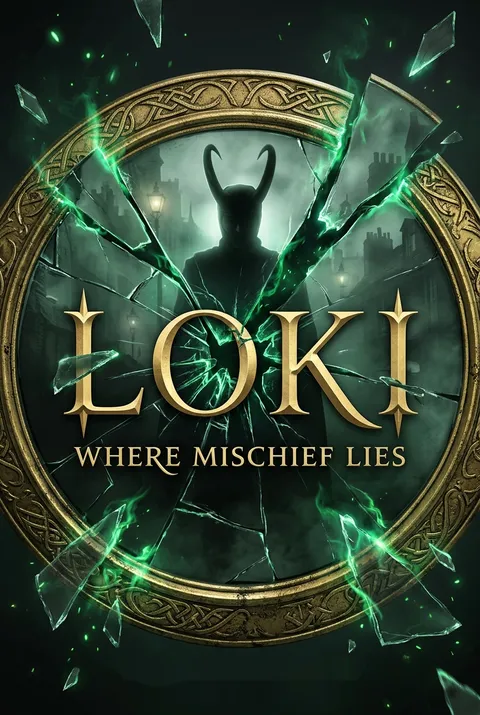
Loki: Where Mischief Lies received mixed reviews. Many praised the humor, characterization, and LGBTQ+ representation, while others found it shallow and inconsistent with Marvel canon. Fans appreciated Lee's portrayal of Loki's mischievous nature and inner struggles. Some criticized the predictable plot and lack of depth in supporting characters. The Victorian London setting was divisive, with some enjoying the historical elements and others finding it underdeveloped. Overall, readers were split on whether the book successfully captured Loki's essence and expanded on his backstory.
People Also Read

Characters
Loki
The overlooked sorcererA younger Asgardian prince and gifted shapeshifter, Loki is clever, observant, vain about his clothes, and far more emotionally vulnerable than his wit lets him appear. He has been raised to compete with Thor in a court that prizes strength and martial skill, while his own magic is treated as a danger. Amora is the first person outside his family to recognize his sorcery as a talent worth developing. Loki wants his father’s approval and a chance to rule, but he also resents the assumptions that make Thor seem destined for power. His humor protects him from humiliation; his appetite for recognition can draw him toward choices that confirm the suspicions he wants to escape.
Amora
The defiant enchantressAn orphan from Nornheim adopted and trained by Karnilla, Amora is a formidable sorceress who refuses to make herself small for the comfort of the court. She is daring, theatrical, and perceptive, with a sharp understanding of how status and power are enforced. Her friendship with Loki grows from their shared experience of being treated as strange, though they respond differently: Loki hides his abilities and doubts himself, while Amora displays her strength and dares others to object. She values independence and despises being controlled, but her certainty can make compromise feel like surrender. Her bond with Loki combines intellectual kinship, attraction, and the desire to be understood without restraint.
Theo Bell
The wounded investigatorA young Londoner with a badly healed leg, an engineering mind, and an appetite for books, Theo works with the SHARP Society despite having few protections in a hostile society. His curiosity about other realms makes him eager to meet Loki, but he is not naïve about the danger an Asgardian visitor may pose. Theo’s humor is quieter than Loki’s and often carries a plea to be taken seriously. Having experienced exclusion himself, he recognizes how damaging it is to be defined by other people’s stories. His growing connection with Loki rests on a difficult balance of attraction, skepticism, and the hope that someone can choose to become more than their reputation.
Odin
The fearful kingKing of Asgard and father to Loki and Thor, Odin rules through experience, military authority, and a conviction that threats must be anticipated. The Godseye Mirror has taught him to treat visions as warnings, but his fear of what he sees can narrow his ability to judge his sons fairly. He values Thor’s familiar warrior virtues and regards Loki’s magic with deep suspicion. Odin is not simply a distant tyrant: he believes that controlling Loki’s access to sorcery will protect both his son and the realm. That protective rationale, however, leaves Loki feeling condemned before he has acted and makes paternal care difficult to distinguish from political mistrust.
Thor
The golden heirLoki’s older brother is a powerful warrior whose confidence, physical strength, and easy authority make him the court’s natural model of a future king. Thor cares about Loki, but often assumes that loyalty means trusting Odin and defending the established order. His bluntness can wound his brother even when he later tries to make amends. Unlike Loki, Thor moves comfortably through a world that rewards visible force, though he is not free of mistakes or fear. Their relationship combines genuine affection with a rivalry created by unequal expectations. Thor’s instinct to act openly stands in sharp contrast to Loki’s preference for strategy and concealment.
Frigga
The quiet magic teacherAsgard’s queen and Loki and Thor’s mother, Frigga is a practiced sorceress who has learned to keep her power understated at court. Her gentleness does not mean passivity: she questions Odin’s reliance on prophecy and recognizes the cost of withholding magical instruction from Loki. She offers him a private education in control, while refusing to pretend that the king’s decision is hers to command. Frigga’s care is attentive and concrete, expressed through tending injuries as well as teaching. She represents a form of authority that does not need to dominate the room in order to shape what happens within it.
Mrs. Sharp
The stubborn field agentA British archaeologist and co-founder of the SHARP Society, Mrs. Sharp investigates otherworldly threats despite official ridicule and the gender barriers of Victorian London. Her husband once shared the work, and her grief has not erased her commitment to it. She is practical, sharp-tongued, and willing to confront both police officers and powerful visitors when she believes people are at risk. Mrs. Sharp understands that good intentions do not cancel harmful consequences, a principle that makes her a demanding ally for Loki. She approaches the supernatural with the habits of a field researcher: gather evidence, challenge assumptions, and keep working.
Karnilla
The guarded royal sorceressQueen of the Norns and Asgard’s royal sorceress, Karnilla trains Amora and is responsible for guarding the Norn Stones. Her disciplined command of magic contrasts with Amora’s appetite for testing limits. Karnilla’s place at Odin’s side gives her real influence, but her authority is bound up with the same institutions that restrict her apprentice. She expects training to produce control and service, while Amora sees those expectations as a form of confinement. Karnilla’s relationship with her student mixes genuine investment with stern judgment, making their conflict a struggle over whether power should be cultivated, contained, or shared.
Gem
The Society’s inside manA large, good-natured police officer, Gem quietly assists the SHARP Society from inside the force. His loyalty to Mrs. Sharp and Theo matters more to him than the approval of colleagues who dismiss their investigations. Though his size suggests brute force, he often acts with practical restraint and reads people more generously than Loki expects. Gem’s plainspoken view of character challenges the habit of judging someone from reputation alone. He provides the Society with access and muscle, but his real value is his steady willingness to help people whose work is neither recognized nor protected.
Prince-General Asmund
The Ice Court negotiatorThe Ice Elf leader in Alfheim, Asmund uses the missing Norn Stones to press for a redistribution of magical power among the realms. He is composed and politically astute, allowing Thor’s breaches of etiquette to expose Asgardian arrogance. Asmund’s position is not merely obstructionist: he questions whether one realm should keep dangerous amplifiers under its control. His encounter with the princes turns a routine diplomatic visit into a test of Asgard’s claim to protect the wider cosmos.
Rachel Bowman
The burial-rights campaignerA determined protest leader, Rachel Bowman urges families to resist autopsies and burial because she believes the apparently dead may still be alive. Her certainty can make her disruptive, but it comes from a sincere fear that the city is making an irreversible mistake. She challenges the authorities, the SHARP Society, and Loki’s plans, insisting that the bodies be treated as more than a public spectacle. Rachel represents the human cost of acting under uncertainty, especially when families are desperate for hope.
Žydrė Matulis
A grieving motherŽydrė Matulis is a bereaved London mother searching for certainty about her daughter, one of the unexplained dead. She attends Amora’s séance because she wants to know whether her child has passed on and whether burial is the right choice. Her grief gives the mystery its human scale: the dispute is not only about magic or public order, but about a family unable to mourn without evidence.
Theo’s brother, Paul
A hostile police officerPaul is a London police officer and Gem’s brother. He distrusts the SHARP Society and treats its investigations as a nuisance, reflecting the institutional hostility that leaves the group without official support. His antagonism is personal as well as professional, and his behavior puts Gem in the position of balancing family ties against his commitment to the Society.
Detective Ashford
The dismissive detectiveA Scotland Yard detective who oversees one of the strange-death investigations, Ashford sees Mrs. Sharp and her associates as intruders rather than useful investigators. His skepticism gives the Society little room to examine crime scenes, even when the evidence resists ordinary explanations. He represents the police response that can observe a mystery without being willing to admit what it might mean.
Detective Baines
The bullying detectiveBaines works alongside Ashford and treats the SHARP Society with open contempt. He mocks Theo and Mrs. Sharp, then uses his authority to intimidate them at a crime scene. His conduct shows how official power can compound the Society’s difficulty: the investigators must pursue a dangerous mystery while also defending themselves from people who refuse to take them seriously.
Heimdall
The Bifrost’s gatekeeperHeimdall watches the Bifrost, the passage that connects Asgard with other realms. Loki expects him to answer when he tries to return from Midgard, but the failed summons demonstrates that travel between worlds is controlled by forces beyond Loki’s immediate reach. Heimdall’s role is brief but important to the sense that Loki cannot simply escape the assignment or the consequences of his choices.
Plot Devices
The Godseye Mirror
A future made visibleAn Asgardian relic that can be activated once each decade to show a possible future to the king. Odin treats its visions as reliable warnings, so what he sees shapes his decisions about Loki before Loki has made the choices that might fulfill it. When Loki and Amora try to use it, their combined magic destroys the artifact before they can identify the figure in its vision. The Mirror drives the conflict between prophecy and agency: it does not force Loki to act, but its interpretation changes how his family and court treat him.
The Norn Stones
Power magnified into dangerFive magical stones amplify the abilities of whoever wields them, enabling enormous feats of spellcraft. They are meant to be guarded by Karnilla, but their theft becomes the subject of the princes’ diplomatic mission and later gives Loki and Amora the means to raise an army from the dead. The Stones also make Loki’s final choices materially consequential: he can use them to seize power, or to stop the force he helped unleash. Their function links the political struggle over who controls magic with the personal question of how Loki will use his own.
The SHARP Society
Human eyes on magicA small London organization that monitors visitors and threats from other realms, the SHARP Society connects Asgard’s political crisis to the unexplained deaths in Victorian London. Mrs. Sharp, Theo, and Gem investigate with limited resources, improvised tools, and little help from the police. Their work forces Loki to confront a world he initially dismisses as insignificant. The Society’s suspicion of him is shaped partly by old Norse stories, making it both an investigative force and a mirror for the reputations imposed on him by other people.
The Necropolis Railway
A funeral becomes a battlefieldLondon’s railway for carrying the dead to Brookwood provides the route for the final plan. The bodies of the mysterious victims are scheduled to travel together, allowing Amora to use runes and the Norn Stones to animate them as soldiers. The train also carries living mourners and passengers, forcing Loki to decide whether to protect them or keep faith with the scheme he helped create. Its physical layout turns the climax into a moving contest across coffin cars, passenger compartments, and the gap between the living and the dead.
Runes and Bifrost
A bridge between realmsRunes direct magical energy into specific spells, allowing sorcerers to shape power beyond their ordinary reach. Amora explains how to combine symbols for death and liberation, then uses the method to prepare the bodies for animation. The Bifrost, meanwhile, is the bridge between Asgard and the other realms, normally watched by Heimdall. With the Norn Stones, Loki can open that passage without Heimdall’s aid. Together, these mechanisms make the planned invasion possible and establish how the dead army can cross from Midgard into Asgard.
FAQ
Synopsis & Basic Details
What is Loki: Where Mischief Lies about?
- Loki's struggle for identity: The story follows Loki, the adopted son of Odin, as he grapples with his identity and place in Asgard, overshadowed by his brother Thor.
- A prophecy and a mission: A vision from the Godseye Mirror foretells one of Odin's sons leading an army against Asgard, leading to Loki's banishment to Earth and a mission to investigate mysterious deaths.
- Unlikely alliances and self-discovery: On Earth, Loki forms an alliance with the SHARP Society and grapples with his own powers and destiny, while also confronting his feelings for Amora.
Why should I read Loki: Where Mischief Lies?
- Complex character study: The novel offers a deep dive into Loki's psyche, exploring his motivations, insecurities, and the internal conflict between his desire for acceptance and his mischievous nature.
- Intriguing blend of genres: It seamlessly blends elements of fantasy, mythology, and mystery, creating a unique and engaging narrative that keeps readers guessing.
- Exploration of moral ambiguity: The story challenges traditional notions of good and evil, presenting characters with complex motivations and blurring the lines between hero and villain.
What is the background of Loki: Where Mischief Lies?
- Asgardian mythology: The story is rooted in Norse mythology, drawing on the established lore of Asgard, its gods, and its magical artifacts, such as the Godseye Mirror and the Norn Stones.
- Political intrigue: The novel explores the political dynamics of Asgard, including the power struggles between Odin and his sons, and the tensions between Asgard and other realms.
- Victorian London setting: The Earthly setting of the story is Victorian London, with its industrial grime, class divisions, and burgeoning interest in spiritualism, providing a stark contrast to the opulence of Asgard.
What are the most memorable quotes in Loki: Where Mischief Lies?
- "I hate feast days.": This quote, uttered by Loki at the beginning, encapsulates his rebellious nature and disdain for Asgardian traditions, setting the tone for his character arc.
- "You're not a soldier. You're a magician. And someone ought to teach you how to be one.": Amora's words to Loki highlight his true potential and the path he should be on, contrasting with Odin's expectations.
- "You cannot live to fulfill or avoid what may come to pass.": Frigga's advice to Loki encapsulates the theme of destiny vs. free will, urging him to live in the present rather than be controlled by the future.
What writing style, narrative choices, and literary techniques does Mackenzi Lee use?
- Witty and sarcastic tone: Lee employs a sharp, witty, and often sarcastic tone, particularly through Loki's internal monologue and dialogue, creating a distinct and engaging voice.
- Character-driven narrative: The story is primarily driven by the complex relationships and internal conflicts of its characters, rather than relying solely on plot-driven events.
- Foreshadowing and symbolism: Lee uses subtle foreshadowing and recurring symbols, such as the Godseye Mirror and the Norn Stones, to create a sense of unease and hint at future events.
Hidden Details & Subtle Connections
What are some minor details that add significant meaning?
- Loki's boots: Loki's love for his black, heeled boots is a recurring detail, symbolizing his desire for individuality and his rejection of Asgardian norms, and later, his connection to Amora.
- The color green: The color green is associated with Loki, from the ribbing on his coat to Amora's observation that it makes his eyes look like jewels, subtly hinting at his magical nature and his connection to her.
- The shape of the Great Hall: The description of the Great Hall's ceiling as being "bowed and curved in places designed to amplify sound" foreshadows the way Loki's actions and words will echo throughout Asgard.
What are some subtle foreshadowing and callbacks?
- The slug trick: Loki's initial use of the slug trick to annoy Thor foreshadows his later, more powerful use of magic, and also his connection to Amora, who is intrigued by it.
- The talking rouge pot: Loki's childhood spell connecting a rouge pot to an inkwell foreshadows his later use of a goblet to eavesdrop on his parents, highlighting his consistent desire for information.
- Amora's comment about tight-fitting clothes: Amora's comment about tight-fitting clothes foreshadows Loki's later adoption of Midgardian fashion, and also hints at her own preference for such styles.
What are some unexpected character connections?
- Loki and Amora's mirrored traits: Despite their different approaches, Loki and Amora share a similar sense of being outsiders, a desire for power, and a willingness to defy authority, creating a complex and compelling dynamic.
- Loki and Theo's shared sense of otherness: Loki and Theo, despite their different backgrounds, connect through their shared sense of being outsiders, their intelligence, and their desire to understand the world around them.
- Gem and Paul's brotherhood: The reveal that Gem and Paul are brothers adds a layer of complexity to their interactions, highlighting the personal connections that exist even within the rigid structure of the police force.
Who are the most significant supporting characters?
- Theo Bell: Theo's role as a guide and confidant to Loki on Earth is crucial, challenging his assumptions about humanity and offering a different perspective on his own identity.
- Mrs. S.: Mrs. S. serves as a mentor and foil to Loki, representing the human perspective on interdimensional threats and challenging his views on power and responsibility.
- Karnilla: Though not a major presence, Karnilla's role as the royal sorceress and Amora's mentor highlights the power dynamics within Asgard and the dangers of unchecked magic.
Psychological, Emotional, & Relational Analysis
What are some unspoken motivations of the characters?
- Odin's fear of Loki: Odin's actions are driven by a deep-seated fear of Loki's potential for destruction, stemming from the vision in the Godseye Mirror, which leads him to suppress Loki's magical abilities.
- Loki's desire for recognition: Loki's actions are often motivated by a desire to prove his worth to his father and to be seen as more than just Thor's shadow, even if it means resorting to mischief and rebellion.
- Amora's yearning for power: Amora's ambition is driven by a deep-seated desire for power and control, stemming from her own experiences as an orphan and her desire to be more than just Karnilla's apprentice.
What psychological complexities do the characters exhibit?
- Loki's internal conflict: Loki's internal struggle between his desire for acceptance and his mischievous nature creates a complex and compelling character, torn between his love for his family and his desire for power.
- Amora's fear of weakness: Amora's fear of weakness and vulnerability drives her to seek power and control, often at the expense of others, highlighting her own insecurities and past traumas.
- Odin's burden of leadership: Odin's actions are driven by the weight of his responsibilities as king, leading him to make difficult decisions that often come at a personal cost, revealing his own internal struggles.
What are the major emotional turning points?
- Amora's banishment: Amora's banishment to Midgard is a major emotional turning point for Loki, as he grapples with guilt and the loss of his closest friend, setting him on a path of self-discovery.
- Loki's conversation with Frigga: Loki's conversation with Frigga reveals his deep-seated insecurities and his desire for his mother's approval, highlighting the emotional impact of his father's rejection.
- Loki's betrayal by Amora: Amora's betrayal on the train roof is a major emotional turning point for Loki, forcing him to confront the darker aspects of his nature and the consequences of his choices.
How do relationship dynamics evolve?
- Loki and Thor's complex bond: The relationship between Loki and Thor evolves from sibling rivalry to a more complex bond, as they navigate their individual paths and the expectations placed upon them.
- Loki and Amora's codependency: The relationship between Loki and Amora is marked by a codependent dynamic, as they both seek validation and power through each other, ultimately leading to betrayal.
- Loki and Theo's unlikely friendship: The relationship between Loki and Theo evolves from initial hostility to a genuine friendship, as they challenge each other's assumptions and find common ground in their shared sense of otherness.
Interpretation & Debate
Which parts of the story remain ambiguous or open-ended?
- Loki's true nature: The novel leaves open the question of whether Loki is inherently good or evil, allowing readers to interpret his actions and motivations in different ways.
- The nature of destiny: The story raises questions about the nature of destiny and whether it is possible to change one's fate, leaving readers to ponder the extent to which free will can overcome predetermined paths.
- The future of Asgard: The ending leaves the future of Asgard uncertain, with Loki's decision to embrace his role as the God of Mischief setting the stage for future conflicts and challenges.
What are some debatable, controversial scenes or moments in Loki: Where Mischief Lies?
- Loki's use of magic on humans: Loki's use of magic to manipulate and control humans, particularly in the scene where he gets money from the drunk, raises questions about the ethics of his actions and his disregard for human agency.
- Amora's murder of Mrs. S.: Amora's murder of Mrs. S. is a controversial moment, highlighting the darker aspects of her character and the consequences of her unchecked ambition.
- Loki's decision to leave Theo: Loki's decision to leave Theo behind on Earth, despite his promise to take him to Asgard, raises questions about his capacity for empathy and his willingness to prioritize his own goals over others.
Loki: Where Mischief Lies Ending Explained: How It Ends & What It Means
- Loki embraces his villainous role: The ending sees Loki embracing his role as the God of Mischief, rejecting the path laid out for him by his father and choosing to forge his own destiny, even if it means becoming the villain.
- The cycle of prophecy: The ending suggests that the prophecy of Loki leading an army against Asgard may be self-fulfilling, as his attempts to avoid it ultimately lead him to embrace the role he was destined to play.
- Ambiguous future: The ending leaves Loki's future uncertain, with the possibility of both redemption and further descent into darkness, highlighting the ongoing nature of his internal conflict and the complexities of his character.
About the Author
Other books by Mackenzi Lee

Download PDF
Download EPUB
.epub digital book format is ideal for reading ebooks on phones, tablets, and e-readers.








