

Plot Summary
A Tour on Probation
On the morning he leaves Cheshire, Henry Montague, called Monty, wakes beside Percy Newton, his oldest friend and secret love, with no memory of the previous night. Monty hopes their Grand Tour will give them one last year together before Percy goes to law school and Monty is forced into estate management.
His father makes the stakes explicit: return sober and respectable or lose his inheritance and place in the family. He assigns Mr. Lockwood to supervise the trip, restricts drinking and sex, and sets a route through Paris, Marseilles, and Italy.
Monty’s sharp-witted younger sister, Felicity, must travel with them as far as school in Marseilles. As the carriage rolls out, Monty treats the year as borrowed freedom, while Percy sees room for more than mischief.
The Tour begins as both privilege and probation. Monty can cross borders, but his father controls the money, itinerary, and definition of a successful return. That arrangement makes his apparent freedom dependent on pleasing the man who has taught him to distrust himself. His humor and drinking are not merely youthful color; they are tools for evading shame and the uncertainty of what he wants. Percy’s steady companionship offers a different kind of safety, yet Monty interprets their closeness through desire he cannot safely name. The trip’s central conflict is therefore established before the adventure begins: Monty must choose whether to inherit a life built for him or risk seeking one of his own.
Paris Turns Intimate
In Paris, Lockwood fills the days with galleries, lectures, concerts, and introductions to Monty’s father’s acquaintances. Monty feels trapped by the schedule and increasingly unsure what he wants beyond Percy’s company. One evening, the two slip away to a boxing match and music hall.
Percy turns a teasing verse about Monty into an unexpectedly tender moment, and Monty kisses him. Percy kisses him back, then stops when Monty cannot say whether the encounter matters to him. Hurt, Monty pretends it was only a joke and shoves Percy away.
They spend the following days avoiding each other. Monty drinks to blunt the rejection, while Percy keeps his distance, leaving their familiar affection newly charged with the fear that honesty could cost them their friendship.
The kiss changes the emotional meaning of gestures that had once seemed effortless. Monty wants intimacy but protects himself by denying the significance of the very thing he most desires. His retreat is not indifference; it is an attempt to avoid being refused while already exposed. Percy’s question asks for emotional clarity, not simply permission to continue physically, and Monty answers with the defense that has served him elsewhere: make the moment seem unserious before anyone can judge him. Their separation shows the cost of that strategy. The relationship is not endangered by attraction alone, but by their unequal ability to speak plainly about what it means.
Versailles Goes Bare
At a Versailles ball, Monty clashes with Lord Ambassador Worthington and the Duke of Bourbon, who uses Monty’s reputation and his friendship with Percy to humiliate him. Percy asks Monty to treat people more carefully; Monty responds with a cutting remark about Percy’s race, and Percy withdraws.
Angry and drunk, Monty follows Jeanne, a courtier, into Bourbon’s private rooms. He steals an unusual box, then flees through a window when Bourbon catches them together, emerging naked before the assembled guests.
Back in Paris, Lockwood orders Monty home early, with Percy bound for Holland and Felicity for school. The humiliation has practical consequences: Monty’s last chance to prove himself is already collapsing, and the stolen box will soon make the journey far more dangerous than any of them expects.
Monty’s public disgrace is partly the result of other people’s prejudice and partly the consequence of his own habits. Worthington and Bourbon treat Percy as an outsider, while Monty’s attempt to defend him turns cruel when it ignores the unequal risks Percy faces. The scene forces Monty’s romantic jealousy, class entitlement, and racial blind spots into the same room. His theft is an impulsive bid to reclaim control after being made small, but the box converts private spite into a plot with real stakes. Being expelled from the Tour also exposes the weakness of Monty’s usual performance: charm can win an audience, but it cannot repair trust once his actions harm the people closest to him.
The Box Draws Blood
On the road south, masked attackers stop the travelers and demand a missing box. When their leader threatens Felicity, Percy strikes him with his fiddle case; Felicity fights back, and Monty lands his first clumsy punch. The three escape into the forest, leaving their carriage and luggage behind.
Felicity realizes the men were searching for Monty’s stolen prize, which he had forgotten was in his coat. Walking toward Marseilles, they argue over Monty’s recklessness and learn more about one another: Felicity has secretly studied medicine, while Monty admits that his father beat him after Eton expelled him for a relationship with another boy. At a seaside fair, Monty recognizes the attackers’ leader as the Duke of Bourbon. Before they can decide what to do, Percy collapses in a seizure.
The attack turns Monty’s private misbehavior into shared danger. The others do not simply rescue him; they act with capacities he has overlooked, Percy using his treasured instrument as a weapon and Felicity responding with practical skill. Their survival begins to rearrange the family roles Monty assumed were fixed. His confession about his father explains why confrontation and vulnerability are so difficult for him, but it does not excuse the harm he has caused Percy. Meanwhile, Bourbon’s presence reveals that the theft is connected to a powerful pursuit, not ordinary banditry. The box now links Monty’s impulsiveness to a threat that can reach all three travelers, whether or not they understand what it contains.
Percy’s Falling Sickness
An apothecary named Pascal takes the exhausted travelers onto his canal boat and helps Percy recover. The next morning, Percy tells Monty he has epilepsy and has concealed it for two years. His guardians plan to send him to a Dutch asylum rather than let him attend law school, because they misunderstand his condition and treat it as evidence of madness.
Monty is furious that Percy kept the truth from him, then realizes Percy feared becoming another burden for a friend already struggling with alcohol and despair.
Felicity explains that she has secretly studied medicine and recognizes the seizure as a medical condition, not possession. Pascal’s fellow travelers identify the box as a rare alchemical puzzle box belonging to Professor Mateu Robles. Hoping the alchemist might know a treatment for Percy, Monty persuades the others to travel to Barcelona.
Percy’s disclosure reframes the journey’s emotional stakes: Monty is not merely afraid of losing a friend to distance, but to a system that would define Percy by a misunderstood illness. Yet Monty’s first response centers his own hurt at being excluded, showing how easily care can become possessiveness. Felicity’s knowledge offers a needed counterweight to the period’s superstition, although medical understanding cannot promise a cure. The choice to pursue Robles grows from genuine concern, but also from Monty’s inability to accept uncertainty. He imagines that saving Percy means making him well, an assumption the rest of the journey will force him to examine.
Barcelona’s Sealed House
With money scarce, Monty uses his charm at a Marseilles bank to obtain a small withdrawal against his father’s account, then the trio rides toward Barcelona. At the narrow, shuttered home of the Robles family, Helena lets them in only after seeing the box.
Her anxious brother Dante confirms that their father, Mateu, is dead, and that the box belonged to him. The household is crowded with relics, books, and instruments tied to his studies. Felicity recognizes his work on panaceas, while Monty notices that Helena and Dante avoid answering questions about the box.
Helena invites them to stay, but Monty finds a letter bearing the Duke of Bourbon’s seal. It mentions the Lazarus Key, suggesting the duke and the Robles family have a history they have not disclosed.
The Robles house introduces a different kind of confinement from Monty’s father’s estate. Its dark rooms and preserved objects make the siblings’ life feel organized around an absence they cannot openly discuss. Dante’s discomfort and Helena’s control are not simple signs of guilt; both are protecting a fragile family history, though their methods differ. Monty’s suspicion is sharpened by the Bourbon seal, but his instinct to investigate also repeats the same boundary-crossing behavior that created the danger. Felicity’s interest in medicine gives the visit a purpose beyond curiosity, while the siblings’ evasions make the possibility of help inseparable from the question of trust.
A Cipher in the Prison
Felicity and Monty search for answers while Percy grows close to Dante, who asks him to play his late father’s music. A bookshop leads the trio to a connection between the Lazarus Key, Venice, and the biblical story of Lazarus.
At the opera, Monty learns from the city prison’s warden that Mateu Robles is alive, jailed for opposing the Bourbons. Dante admits that his father’s alchemical experiment made a panacea from his mother’s heart, leaving her neither alive nor dead in a tomb beneath a Venetian island. Monty visits Mateu in prison by arranging his own arrest.
Mateu refuses to give up the heart but provides a musical cipher. Monty lies about receiving it, then opens the box that night and hides the key in Percy’s fiddle case. Helena catches him, injects him with a drug, and beats him until Percy knocks her unconscious.
The revelation makes the promised cure morally inseparable from a human cost. Mateu’s experiment has produced something that could heal, but only by preserving the violation of his wife’s body and denying her a clear death. Monty sees the heart first as a possible escape from Percy’s asylum sentence, while Mateu and Percy recognize that a cure can become another form of harm. Monty’s lie and theft reveal how fear has narrowed his ethics: he treats Percy’s future as his to manage. Helena’s assault makes that control physical, echoing Monty’s history with his father. The key now carries not only a solution, but a question of who has the right to choose.
A Stowaway’s Bargain
Monty, Percy, and Felicity flee Barcelona with the key, but they lack money and passage. They stow away on a merchant ship after its boatswain refuses to let Percy aboard because he is Black. Barbary corsairs attack at sea and take the travelers as hostages.
Their captain, Scipio, is not truly a pirate: he and his African crew were formerly enslaved sailors who escaped after an English employer abandoned them in prison. When a French navy frigate approaches, Monty disguises the group as wealthy Scottish passengers and prevents Scipio’s crew from being seized.
Percy proposes that his uncle, an Admiralty Court official, could secure the men letters of marque. Scipio agrees to take them to Venice in exchange for that promise, and the former captives begin sharing the voyage with the crew.
The shipboard episodes widen the novel’s moral field beyond Monty’s family and romance. Scipio’s crew has been denied lawful work, then blamed for the piracy their enslavement helped produce. Their position complicates the simple distinction between criminal and respectable, just as Monty’s noble title fails to make him honorable. Monty’s disguise succeeds because the navy trusts class performance more readily than it questions the crew’s treatment. Yet his defense of Scipio cannot undo the insult or the structural power behind it. The bargain offers the crew a route toward legal independence, while making Monty’s promise matter to people whose freedom is not a metaphor.
Venice, Then the Choice
The crew reaches Venice, where Scipio confirms that the island holding the Robles tomb is still above water but guarded. A notice identifies Monty, Percy, and Felicity as thieves, so the group must move carefully.
During the city’s masked festival, Monty and Percy hold hands and kiss in a quiet alley. Percy then proposes they leave their expected futures behind and make a life together. Monty hesitates because he fears losing his title and money.
The argument sharpens when Percy says he will not use the alchemical heart: he will not take a woman’s life to cure his epilepsy, and he does not believe illness makes him unfit for happiness. Monty throws the key at him and walks away. He drinks heavily, leaving Percy hurt and their journey together uncertain.
The romantic breakthrough arrives beside a more difficult recognition: love does not give Monty authority over Percy’s body or future. Monty has treated a cure as proof that their life together can be made safe, but Percy experiences the same plan as a demand to erase part of himself. His refusal exposes Monty’s wish to solve the threat of separation without confronting the cost of choosing a life beyond privilege. The argument also reverses their habitual roles. Percy proposes risk; Monty retreats into caution. Their kiss is sincere, but sincerity cannot substitute for listening. The relationship can progress only if Monty understands that devotion means accepting Percy’s decisions, not arranging a rescue on his behalf.
Bourbon Takes Monty
After Monty drinks alone in the festival crowd, Venetian soldiers seize him and Scipio. The Duke of Bourbon and Helena have arranged the capture; Bourbon keeps Monty as leverage and sends Scipio to tell Percy and Felicity to bring the key to the island.
While Monty sobers in the Doge’s Palace, Helena asks about her father. Monty tells her Mateu is alive and wants his wife protected. At dawn, Bourbon takes Monty and Helena by gondola to the flooded sanctuary, where they wait for the others.
To break Monty’s confidence, Bourbon reveals that Monty’s father once abandoned a French wife after ruining her, then built his English life on the concealment. Monty is shaken, but he does not give Bourbon the key’s location or betray Percy and Felicity.
Captivity strips away Monty’s usual means of steering a scene. He cannot drink his way out, charm the duke, or decide what the others should do; he can only hold information and endure the wait. Bourbon’s revelation about Monty’s father attacks the authority that has shaped Monty’s self-image. The contrast matters: the father who condemns his son’s conduct has concealed his own, yet the truth does not make Monty’s inherited privilege disappear. Helena’s question about Mateu suggests that family loyalty still complicates her alliance with Bourbon. In the flooded sanctuary, all three characters are caught between intimate obligations and political power, with no clean way to satisfy both.
The Heart Goes to Fire
Percy and Felicity arrive with the key, and Bourbon forces Percy to open the Robles vault. Inside lies Mateu’s wife, preserved with a glowing, alchemical heart. Bourbon demands that Helena remove it. Felicity performs the extraction, but when Helena asks Percy whether he wants the heart, he refuses. Helena chooses to burn it rather than let Bourbon seize it.
The fire triggers the failing sanctuary’s collapse. Bourbon lunges after the heart and is left amid the flames as the others flee through the bone-lined tunnels. On the way back to the ship, Bourbon shoots Monty in the head; the blast destroys one ear. The Eleftheria takes the survivors aboard, where Felicity treats Monty’s wounds and Percy stays at his side.
The climax resolves the cure’s central ethical conflict through a choice rather than a discovery. Percy’s refusal gives the decision back to the person whose illness Monty had tried to manage, while Helena’s destruction denies Bourbon the power to turn one woman’s body into political leverage. Felicity’s role in removing the heart makes her knowledge concrete, but the act is not celebrated as victory; it is disturbing and costly. The collapsing island physically closes the possibility of preserving the experiment for later use. Monty survives with permanent damage, a bodily reminder that courage does not mean escaping consequences. The group’s narrow rescue is achieved not by finding a painless solution, but by refusing a cure built on coercion.
A Life Beyond the Route
On Santorini, Felicity tends Monty’s burns and helps him adjust to losing hearing in one ear. Scipio prepares to sail for England and asks Felicity to consider joining his crew as a surgeon.
Monty and Percy walk down to the sea, where Monty tells him that Bourbon’s claim about Monty’s father’s earlier marriage is true enough to ruin the family if exposed. He decides not to use the secret as revenge. Instead, Monty admits that he loves Percy and offers to leave his inheritance behind. Percy tells him he loves him too and wants a life together.
Monty writes to his father that he will not return yet, and that he and Percy will build their future on their own terms. The adventure ends with them together, uncertain of the road ahead but no longer pretending it belongs to someone else.
The resolution does not reward Monty with restored wealth, a cure for Percy, or reconciliation with his father. Instead, he relinquishes the fantasy that safety can be secured by satisfying the family authority that has harmed him. His decision not to expose his father’s secret also distinguishes autonomy from retaliation: he can refuse his father’s control without becoming the instrument of his destruction. Percy’s illness remains part of their shared reality, not a problem love must erase. Felicity’s possible place aboard Scipio’s ship points toward another form of self-determination, though the book leaves that choice open. Monty’s final commitment is less a guarantee of happiness than a willingness to participate in making a life.
Analysis
The novel uses a comic adventure structure to test what Monty believes freedom means. At first, freedom is leisure without supervision: drink, flirt, travel, and delay the future his father has arranged. Yet the journey repeatedly shows that his choices are protected by wealth and rank, while Percy and Scipio face consequences Monty can evade. Their unequal risks make Monty’s good intentions insufficient. He must learn to listen before he can claim to act for someone else.
The alchemical heart gives this lesson a material form. It appears to promise a cure for Percy and, with it, a life together unburdened by illness or institutionalization. But the cure depends on preserving a woman’s body as a resource, while Bourbon wants to convert that body into political leverage. Percy’s refusal rejects the assumption that a disabled life is incomplete until made medically normal. His choice does not deny the hardship of epilepsy; it insists that he, not Monty or his guardians, has authority over what risks are acceptable.
The family plots mirror that struggle over authority. Monty’s father uses inheritance and violence to define his son’s worth, while Mateu’s love for his children exists alongside the damage caused by his obsession. Monty’s final decision not to expose his father is not forgiveness, and his decision to leave is not a cure for trauma. It is the first choice he makes without asking permission from inherited power. By ending with an uncertain future rather than a restored estate or miraculous cure, the story defines love as shared agency: staying beside another person without demanding that they become easier to love.
Review Summary
The Gentleman's Guide to Vice and Virtue receives mostly positive reviews, praised for its humor, LGBTQ+ representation, and engaging characters. Readers appreciate the historical setting, witty dialogue, and adventurous plot. Many enjoy the romantic tension between Monty and Percy, as well as Felicity's strong character. Some criticize the book's length and historical inaccuracies, while others find Monty's character development lacking. Despite these issues, most reviewers recommend the book for its entertaining blend of romance, adventure, and social commentary.
People Also Read










Characters
Henry Montague
The reckless heirMonty is the young heir to an English estate, quick with a joke and quicker to flee discomfort through drink, flirtation, or provocation. His confidence is partly performance, covering the shame and fear left by his father’s violence and rejection. He is deeply attached to Percy, but initially confuses caring for him with deciding what would make him safe. His wit helps him improvise through danger, yet his impulsiveness repeatedly exposes his friends to consequences. Monty’s central struggle is not simply whether to inherit wealth, but whether he can separate his own worth from the judgment of a father who has made him feel perpetually inadequate.
Percy Newton
The steady-hearted friendPercy is Monty’s lifelong friend, a gifted violinist with a quiet steadiness that Monty often mistakes for ease. He has been raised by his aunt and uncle, but his race makes his place in elite society precarious, and he is acutely aware of the risks Monty can afford to ignore. Percy is thoughtful, funny, and capable of firm boundaries. His epilepsy complicates his future in a society that wrongly links illness with madness, yet he does not see himself as reducible to it. He values intimacy and loyalty, but also needs Monty to listen rather than turn affection into a plan for rescue.
Felicity Montague
The unschooled scholarFelicity is Monty’s younger sister, observant, stubborn, and far more intellectually ambitious than her family’s expectations allow. She resists the narrow education planned for her and secretly pursues medical knowledge through books. Her sharp tongue can wound, but it also cuts through Monty’s self-deception when he is too busy performing to notice other people’s needs. Felicity is practical under pressure and protective without being sentimental. Her relationship with Monty moves between rivalry and unexpected solidarity, especially as they learn to treat each other as capable people rather than fixed family roles.
Mr. Montague
The punishing fatherMonty’s father is an English peer who values propriety, inheritance, and obedience. He expects his son to become a sober estate manager and uses financial security as leverage when Monty fails to conform. His judgment has shaped Monty’s shame and his instinct to hide what he wants. He is also Felicity’s father and the husband of Monty’s mother, though the family’s polished standing conceals a less stable history.
Mr. Lockwood
The watchful tutorLockwood is the hired bear-leader responsible for the young travelers’ itinerary and conduct. He believes a Grand Tour should educate as well as entertain, and he tries to impose structure on Monty’s unruly habits. His authority is genuine but limited: he can reprimand the travelers and redirect their plans, yet he cannot make them mature by decree. He is also responsible for delivering Felicity to school.
Pascal
The traveling apothecaryPascal is an apothecary who travels with a floating fair on the Rhône. He helps the stranded travelers when Percy becomes ill and offers shelter aboard his boat. Wary of trouble but moved by genuine need, he becomes a practical link between the travelers and the Catalonian women who recognize the puzzle box.
Ernesta Herrera
The fair’s wise elderErnesta is one of the older Catalonian women in Pascal’s traveling community. She recognizes the box’s origin and insists it be returned to its rightful owner. Her tarot reading gives Monty a language for change and survival, while her actions show that her traditions are paired with hard-earned judgment.
Eva Davila
The quiet expertEva travels with Ernesta and shares her knowledge of the rare puzzle box. She is observant, guarded, and helps establish that the box is not an ordinary container, but a device built to protect something valuable.
Helena Robles
The guarded daughterHelena is Mateu Robles’s daughter and Dante’s sister. She is poised, forceful, and fiercely loyal to her family, but her loyalty is shaped by old grief and a need for security. She manages the household and tries to control what outsiders learn about the Robleses. Her confidence can look like coldness, though it conceals a complicated attachment to the people she fears losing.
Dante Robles
The anxious heirDante is Helena’s younger brother, a bookish and socially anxious young man who struggles to speak comfortably with strangers. He is devoted to his family’s history and to the objects his father left behind. His quietness should not be mistaken for a lack of curiosity; he is fascinated by music and scientific ideas, especially when Felicity engages him as an intellectual equal.
Mateu Robles
The imprisoned alchemistMateu is a Catalonian alchemist and the father of Helena and Dante. His research into panaceas has made his family a target, and his political loyalties have left him isolated from the power surrounding the Spanish and French crowns. He is burdened by past choices and fiercely protective of his work, yet his memories of his children reveal a tenderness that his scientific obsession could not always sustain.
The Duke of Bourbon
The courtly pursuerThe Duke of Bourbon is a former French minister with influence across European courts. He is calculating, politically ambitious, and accustomed to treating people and private knowledge as instruments of power. His polished social standing makes his coercion more dangerous, not less; he can threaten lives while presenting himself as the legitimate authority in the room.
Scipio
The reluctant corsairScipio captains the Eleftheria and leads a small crew of African sailors. His authority rests on practical judgment and a shared sense of responsibility rather than unquestioned command. He has been forced into a life at sea by slavery and exclusion from legitimate work, and he is trying to build a path toward lawful freedom. He recognizes worth in Monty before Monty can recognize it in himself.
Ebrahim
The ship’s strong handEbrahim is one of Scipio’s crew, a powerful sailor who handles the travelers roughly when required but also tends to practical needs. His direct questions expose Monty’s assumptions about class, race, and what it means to be treated as an equal.
King George
The watchful greenhornKing George is the crew’s youngest sailor, called the greenhorn. He is curious about Percy and what it means to be a gentleman, bringing a tentative, observant presence to the ship’s close-knit community.
Plot Devices
The Grand Tour
A year under judgmentThe Tour is both the plot’s route through Europe and the test Monty’s father imposes on him. Its itinerary offers Monty a temporary escape from home, but the threat of disinheritance keeps that freedom conditional. As Lockwood’s cultural program gives way to highwaymen, political intrigue, and piracy, the trip becomes an education in the lives and choices Monty’s inherited privilege has kept distant. Its planned endpoint also pressures Percy and Monty to decide what their future together might be.
The Baseggio Box
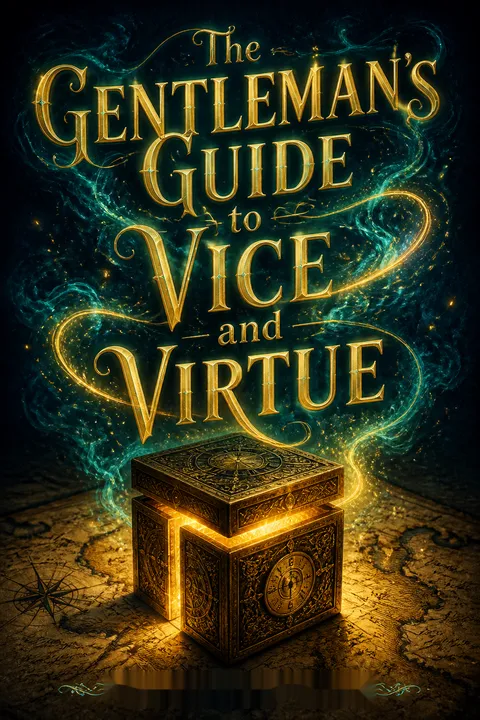
A stolen key’s pursuitMonty steals the puzzle box from the Duke of Bourbon without understanding what it is. Its lettered dials conceal a key, and the box draws the travelers into a pursuit involving the Bourbon court and the Robles family. The device connects the book’s comic opening theft to its central ethical crisis: opening it offers access to an alchemical heart, but that heart is bound to another person’s suffering. The box’s cipher is musical, linking Percy’s violin and the Robles family’s history to the mechanism that unlocks it.
The Lazarus Key
A cure with a human costThe key hidden inside the puzzle box opens the Robles family vault beneath a Venetian sanctuary. Its name draws on the biblical story of Lazarus and the idea of returning from death. Mateu’s experiment has created a panacea in his wife’s heart, but it has left her in a state between life and death. The key therefore promises relief from Percy’s illness while forcing the characters to confront the difference between treating a person and treating that person’s body as a resource.
Percy’s Violin
A bond and a cipherPercy’s violin is a treasured inheritance from his father and a constant symbol of continuity in a life shaped by uncertainty. He uses its case to protect the instrument during the highwaymen’s attack, and later Monty hides the Lazarus Key inside it. Music also provides the code Mateu gives Monty, while Percy’s playing brings him into closer connection with Dante. The violin thus serves as an object of practical survival, family memory, and the trust that Monty repeatedly risks.
The Eleftheria
A refuge built from exileScipio’s ship carries the travelers toward Venice after they become fugitives, but it is more than transport. The crew’s history as enslaved sailors turned privateers parallels the travelers’ struggle to escape lives assigned to them by others. Monty secures their cooperation by helping them evade the French navy, and Percy proposes a bargain that could give them legal standing. The ship’s name means freedom, a goal its crew seeks through collective action rather than individual privilege.
About the Author
Other books by Mackenzi Lee


Download PDF
Download EPUB
.epub digital book format is ideal for reading ebooks on phones, tablets, and e-readers.








