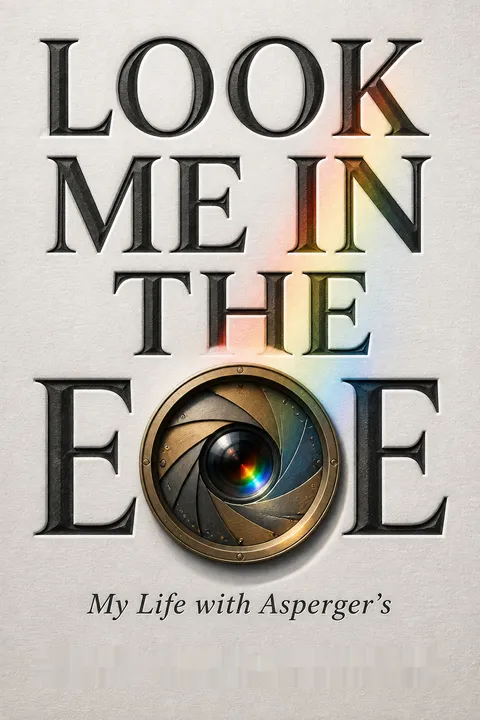


Key Takeaways
Read unusual social signals as differences, not proof of bad character
A gaze is not a confession. As a child, Robison struggled to look people in the eye. Adults treated this as evidence that he was dishonest or dangerous, while he experienced eye contact as uncomfortable and distracting. When he spoke, looking away helped him concentrate. The behavior others interpreted as defiance had a different explanation entirely.
Misreading deepens shame. Repeated accusations made him worry that he was defective, even though he had no wish to harm anyone. A diagnosis at forty finally gave him a framework for understanding the mismatch. His story shows how quickly an unexplained difference can become a judgment about character, especially when authority figures demand behavior without asking what makes it difficult.
What's striking is how a small social convention becomes a moral test. Eye contact can communicate attention in some settings, but it is not a dependable measure of honesty, care, or comprehension. The broader lesson is to separate the signal from the meaning assigned to it. Contemporary autism scholarship sometimes calls reciprocal misunderstanding between autistic and non-autistic people the double empathy problem: each side may misread the other's style. That frame does not erase individual difficulties, but it makes interpretation a shared responsibility rather than a one-way verdict.
Treat social mistakes as missing cues, not missing desire
Good intentions can misfire. At nursery school, Robison tried to befriend Chuckie by patting her head, using the same approach he used with a dog. Later he took her toy truck to demonstrate the correct way to play. He wanted connection, but did not understand that people have different boundaries or that play can have more than one right form. Rejection followed, and he retreated from other children.
Conversation has hidden rules. At nine, he realized that when another child showed him a toy, the expected reply should relate to that toy, not to whatever thought was already in his head. Adults often accommodated his disconnected answers, so peers supplied the clearer feedback. When his son showed similar traits, Robison explained social situations directly, helping him make friends.
The difference between wanting friends and knowing how to build friendships is easy for observers to miss. Social learning often depends on tacit feedback: facial cues, pauses, tone, and other signals that are never formally taught. Explicit explanation can make those rules accessible without demanding that a person guess correctly. The caution is that social coaching should not become a demand to perform normality at any cost. It works best when it increases choice and mutual understanding, rather than teaching a child that their natural way of approaching others is shameful.
Judge empathy by feeling and action, not facial performance
Empathy has different forms. Hearing that a stranger had died in a train accident, young Robison smiled. His smile reflected relief that he and his family were safe, not pleasure at the death. He did not feel grief for people he did not know, though he understood intellectually that their loss mattered. He called this kind of understanding logical empathy.
Care showed up elsewhere. News that his father had been in a crash made him anxious and sent him rushing to the hospital. When his mother's car caught fire, he diagnosed and repaired it, despite finding the dirty interior repulsive. He describes a strong physical response to danger facing close family, and a practical impulse to help when someone he loves has a problem.
The distinction between emotional resonance, understanding another person's situation, and taking helpful action is valuable well beyond autism. These capacities can vary independently, and facial expression is an imperfect window into any of them. Robison's examples make that gap vivid. His suspicion that people who grieve publicly for strangers must be performing is less persuasive: outward emotion cannot prove sincerity, but a restrained response cannot disprove it either. The strongest insight is narrower and more useful: do not use one person's emotional display as the sole measure of their capacity to care.
Turn intense interests into expertise that solves real problems
Attention became a craft. A Christmas electronics kit pulled Robison into studying components, repairing radios, and building circuits. At first, textbook equations did not match how he pictured electrical behavior. He gradually learned to visualize what a circuit would do and connect those imagined patterns to the sounds it produced.
Other people supplied the test. Local musicians described the sound they wanted, and Robison translated their everyday language into technical changes. His modified amplifiers and new effects earned him paid work. Later he built elaborate stage instruments for KISS guitarist Ace Frehley, including guitars that produced dramatic light and smoke effects. The progression was not simply fascination becoming talent. It was intense study joined to repeated experiments, practical feedback, and a real audience for the result.
A special interest can become professional expertise when it meets three conditions: sustained attention, opportunities to practice, and feedback from people who need the skill. Robison's bridge from musicians' descriptions to circuit design is especially revealing. It shows that expertise includes translation, not merely private knowledge. The case should not be turned into a promise that every intense interest leads to a marketable career. Access to tools, mentors, money, and receptive collaborators matters. His story is less a formula for monetizing every passion than a portrait of what becomes possible when a strength has somewhere useful to go.
Choose social worlds where competence outranks conformity
Belonging can start with a role. As a teenager, Robison found acceptance among musicians who valued his ability to repair equipment and improve sound. In that community, eccentricity mattered less than whether he could solve a problem. Joining a band gave him a place, work, and a circle of people who recognized his contribution.
Acceptance has limits. Living with many bandmates could overwhelm him, even while the music scene felt welcoming. Later, corporate settings often treated his bluntness and social differences as shortcomings. The contrast suggests that fitting in is not only a personal skill. It also depends on the rules of a workplace or community, and on whether people value results enough to make room for different ways of communicating.
This is a practical version of person-environment fit: the same trait can be a liability in one setting and an asset in another. A technically focused person may thrive where problems are concrete and expertise is visible, yet struggle where status depends on subtle social performance. That does not mean every unfriendly workplace is simply the wrong fit; people still need fair feedback and workable standards. But it does challenge the reflex to treat exclusion as proof that the excluded person must change. Sometimes the environment is measuring the wrong thing.
Use diagnosis as a map for adaptation, not a verdict or cure
A name changed the story. At forty, Robison's friend, therapist TR Rosenberg, handed him a book about Asperger's syndrome. Its descriptions of eye contact, social interaction, and intense interests matched patterns that had followed him since childhood. The recognition brought relief: he was not simply lazy, arrogant, or secretly dangerous. He had a way of processing social life that other people had not understood.
Understanding enabled choices. Robison began pausing before replying, glancing toward people while speaking, and using familiar conversational openings. These were learned strategies, not proof that his underlying differences had disappeared. The diagnosis did not offer a cure; it made his behavior more intelligible to himself and gave him ways to navigate situations that had once felt arbitrary.
A useful diagnosis does more than attach a label. It can reorganize a person's history, replacing a moral explanation with a more accurate account of difficulty and difference. That shift may reduce shame and make practical support easier to request. At the same time, recognition should not turn into a demand for endless self-monitoring. Social scripts can help when freely chosen, but they can also become exhausting if institutions treat camouflage as the price of participation. A diagnosis is most useful when it expands a person's options, not when it narrows them to one approved performance.
Make closeness practical with clear cues and patient accommodation
Care was made observable. Robison describes his wife, Martha, as someone who learned to notice when he was anxious or sad, explain social cues he had missed, and tolerate his repeated requests for reassurance. She also discovered that gentle touch, such as rubbing his arm or scratching his head, helped him settle when he was restless.
Comfort has a sensory side. Robison had long preferred pressure from pillows or another person nearby when trying to sleep. In marriage, he found that lying close together and sharing touch helped him feel calmer and safer. These details show intimacy not as perfect intuition, but as careful observation and adjustments that work for a particular person. His account presents a relationship built partly through learning what helps, then communicating those needs plainly.
The account makes an often overlooked point: affection is partly logistical. Partners can learn which forms of reassurance, touch, or explanation actually help, rather than relying on generic ideas of romance. In sensory-aware care, the individual's preferences matter more than assumptions about what should feel comforting. There is also a necessary boundary: accommodation should be reciprocal and consensual, not an unspoken job assigned to one partner. The durable model is collaborative experimentation, where both people can name what they need and revise routines that are not working.
Don't mistake a higher title for a better-fitting career
Promotion changed the work. Robison was happiest designing electronics, including a simple fix that stopped static electricity from destroying Milton Bradley's Microvision games. As his corporate career advanced, however, he moved away from hands-on design and toward managing people. He earned more, but his performance reviews repeatedly criticized his communication and teamwork, while the creative work he valued shrank.
Independence had a cost. In 1989, he left corporate engineering to repair and sell European cars. His first deals made money, but later losses left him deeply in debt. Repair work proved a better fit than car dealing: his technical knowledge attracted customers, and he built a specialist business. Success required learning billing, scheduling, and customer relations, not just following his mechanical strengths.
Career advancement often rewards a different skill set from the one that produced early success. Organizations can mistake management for the only legitimate form of growth, pushing excellent practitioners away from the work they do best. Robison's transition also resists the tidy story of simply following passion: the car business brought serious losses, and technical ability alone did not run it. The more grounded lesson is to evaluate work by its daily tasks, incentives, and risks, not by title or prestige. A better fit still demands learning skills that do not come naturally.
Recover good memories without denying the harm that came first
The past held more than injury. Robison's childhood included his father's violence and drinking, his mother's serious mental illness, and years of instability. When his father was dying, Robison feared he could remember no happy times with him. In the hospital, his father recalled taking him to see model trains, teaching him to ride a bicycle, and flying a kite together at Valley Forge. The memories returned with striking detail.
Recollection changed the relationship. Robison began speaking with his mother while writing the memoir. They disagreed about events and corrected some of each other's accounts. He came to understand more about how illness and family history shaped their lives, without pretending the painful experiences had not happened. The book's closing movement is not a clean absolution. It is a fuller picture, in which harm and affection can both be part of the record.
Autobiographical memory is not a perfect recording. It is reconstructed through present understanding, other people's recollections, and the questions a person is finally able to ask. That makes Robison's hospital conversation powerful, but it also counsels humility: recovered memories can deepen a story without settling every historical fact. Most importantly, adding tenderness does not cancel abuse. A more complete account can resist both simplifications, portraying a parent as only a monster or only a victim. Such complexity can support understanding while leaving accountability intact.
Analysis
Look Me in the Eye works as a memoir of reinterpretation. Its plot moves from childhood misreadings, through technical achievement and unstable work, to a late diagnosis that makes the earlier years newly legible. The central revelation is not that Robison lacked feeling or ambition. It is that other people repeatedly treated unfamiliar expression as evidence of bad character, while he lacked access to the social cues that might have helped him explain himself.
The narrative is especially effective when a concrete scene carries the argument: the rejected attempt to befriend Chuckie, the boy who learns how to answer a peer, the musician who turns a sound request into a circuit, and the engineer whose career becomes less satisfying as it becomes more managerial. These episodes prevent the book from becoming a checklist of traits. They show how a person develops through feedback, opportunity, exclusion, and hard-won interpretation.
Its most useful contribution is ecological. The same intense focus can be isolating in a classroom, valuable in a music workshop, and economically useful in a specialist repair business. This challenges a simple division between disability and talent: strengths do not automatically compensate for barriers, and ability does not guarantee a supportive setting. Robison's path also depends on unusually consequential factors, including mentors, collaborators, a willing partner, and access to work that rewards technical skill. It should not be mistaken for a universal route to flourishing.
The memoir is a personal account, not a clinical guide. Robison sometimes generalizes from his own experience, especially when distinguishing his reactions from other people's emotional displays. Those claims are most persuasive as descriptions of his interior life, not as definitive explanations of how all autistic people feel or how non-autistic people behave. That limitation does not weaken the book's central insight. It sharpens it: behavior that looks obvious from the outside may have a different meaning from within, and interpretation should begin with curiosity rather than accusation.
Review Summary
"Look Me in the Eye" is a memoir by John Elder Robison about his life with undiagnosed Asperger's syndrome. The book offers insight into Asperger's and Robison's unique perspective on social interactions and relationships. Many readers found it humorous, educational, and touching, particularly appreciating Robison's candid descriptions of his experiences. Some criticized the writing style and felt the Asperger's aspect was secondary to his life story. Overall, reviewers praised the book for its authenticity and its value in promoting understanding of neurodiversity.
People Also Read



Glossary
Asperger's syndrome
Autistic developmental profileIn the memoir, Asperger's syndrome describes a lifelong pattern involving social and communication differences alongside focused interests and, for some people, notable abilities. Robison presents it as part of the autistic spectrum, not an illness to be cured. The diagnosis gives him language for traits that had been misunderstood throughout his childhood and working life.
Aspergian
Person with Asperger'sRobison uses Aspergian as a name for a person with Asperger's syndrome, including himself. The term lets him speak about a shared way of being without defining it as a disease. In the memoir, it also marks his pride in an identity he once experienced mainly through other people's criticism.
logical empathy
Intellectual understanding of others' painRobison's phrase for recognizing intellectually that unfamiliar people are suffering, while not necessarily feeling a strong bodily or emotional response himself. He contrasts this with his physical anxiety when close family members are in danger, and with his practical impulse to help loved ones. It is his description of his own experience, not a clinical category.
pettee
Person receiving comforting touchRobison's playful term for someone who receives petting, as distinct from a person doing the petting. He uses it to describe how touch from his wife, including light scratching or rubbing, helps him feel calmer. The word captures his personal sensory preferences rather than a general therapeutic technique.
Unit
Numbered family-role labelRobison sometimes numbers his wife's family members according to their positions among siblings, referring to them as Units rather than relying on the names others expect. The labels make family relationships orderly and functional from his perspective. Their bluntness can seem strange or impersonal to outsiders, illustrating how his naming habits differ from social convention.
FAQ
What's Look Me in the Eye: My Life with Asperger's about?
- Personal Journey: The memoir by John Elder Robison details his life with Asperger's syndrome, focusing on his struggles with social interactions and family dynamics.
- Family Dynamics: Robison describes a chaotic childhood influenced by his father's alcoholism and his mother's mental health issues, shaping his understanding of relationships.
- Passion for Engineering: The book highlights his passion for electronics and music, leading to a successful career in sound engineering with famous bands like KISS.
Why should I read Look Me in the Eye: My Life with Asperger's?
- Insight into Asperger's: The memoir offers a personal perspective on living with Asperger's, fostering understanding and empathy by breaking down stereotypes.
- Relatable Experiences: Readers may find Robison's experiences relatable, especially those who have felt like outsiders or faced social challenges.
- Inspiration and Resilience: Robison's journey from misfit to success is an inspiring tale of resilience, encouraging readers to embrace their differences.
What are the key takeaways of Look Me in the Eye: My Life with Asperger's?
- Understanding Asperger's: The memoir emphasizes recognizing Asperger's as a unique way of being, not a disorder needing a cure.
- Value of Passion: Robison's success in engineering and music underscores the importance of pursuing one's passions.
- Family Impact: The book highlights how family dynamics affect personal development and mental health, encouraging reflection on one's own family relationships.
What are the best quotes from Look Me in the Eye: My Life with Asperger's and what do they mean?
- "Look me in the eye, young man!": This symbolizes societal pressure to conform to social norms, like making eye contact, which was uncomfortable for Robison.
- "I was raised without a diagnosis.": Reflects the challenges of growing up undiagnosed, highlighting the importance of awareness of autism spectrum disorders.
- "I hope this book demonstrates... we do have deep emotions.": Counters the stereotype that people with Asperger's lack empathy, emphasizing their emotional complexity.
How does John Elder Robison describe his childhood experiences in Look Me in the Eye: My Life with Asperger's?
- Feeling Different: Robison felt like a misfit, struggling to connect with peers and often misunderstood by adults.
- Family Turmoil: He describes a chaotic home life with a father struggling with alcoholism and a mother facing mental health challenges.
- Social Challenges: Robison shares anecdotes of social interactions that went awry, highlighting difficulties in understanding social cues.
What role does music play in Robison's life as described in Look Me in the Eye: My Life with Asperger's?
- Passion for Sound: Music serves as an outlet for Robison, allowing him to channel creativity and technical skills.
- Connection with Others: Through music, he forms connections with fellow musicians, providing a sense of belonging.
- Career Development: His passion leads to a successful career, demonstrating the importance of following one's interests.
How does Robison's diagnosis of Asperger's affect his relationships in Look Me in the Eye: My Life with Asperger's?
- Struggles with Empathy: His diagnosis impacted his ability to understand and express empathy, leading to relationship misunderstandings.
- Family Relationships: His complex relationship with his parents was marked by love and conflict, affected by a lack of understanding of his condition.
- Friendships: Robison's friendships faced challenges due to social awkwardness, but he found acceptance in the music community.
What insights does Robison provide about Asperger's syndrome in Look Me in the Eye: My Life with Asperger's?
- Unique Perspective: Robison offers a firsthand account, emphasizing Asperger's as a different way of experiencing the world.
- Misunderstandings: He challenges misconceptions, particularly the belief that individuals on the spectrum lack emotions or empathy.
- Need for Awareness: Robison advocates for greater awareness and acceptance of Asperger's in society.
How does Robison's relationship with his brother evolve throughout Look Me in the Eye: My Life with Asperger's?
- Protective Instinct: Robison feels responsible for his younger brother, Varmint, trying to shield him from their parents' tumultuous relationship.
- Shared Experiences: Their shared experiences create a bond, with Robison showing deep care and concern for Varmint.
- Independence: As Varmint asserts his independence, their dynamic shifts, and Robison learns to respect his brother's choices.
What challenges does Robison face in school as described in Look Me in the Eye: My Life with Asperger's?
- Academic Struggles: Robison felt overwhelmed and misunderstood in traditional school settings, leading to declining grades.
- Social Isolation: He experienced bullying and ostracism, exacerbating feelings of loneliness and frustration.
- Dropout Decision: Ultimately, he drops out of high school, marking a turning point that allows him to pursue his interests.
How does Robison's career in engineering and special effects relate to his experiences with Asperger's in Look Me in the Eye: My Life with Asperger's?
- Affinity for Machines: Robison finds comfort in working with machines, which are predictable and non-judgmental.
- Creative Problem Solving: His unique perspective leads to innovative solutions in engineering and special effects.
- Success in the Industry: His intense focus and passion result in significant achievements, like designing effects for KISS.
What specific methods or advice does Robison offer for navigating social situations in Look Me in the Eye: My Life with Asperger's?
- Practice Eye Contact: Robison emphasizes making eye contact to improve social interactions.
- Ask Questions: He advises asking open-ended questions to encourage dialogue and build rapport.
- Be Patient with Yourself: Robison encourages patience and forgiveness as one develops social skills, acknowledging that mistakes are part of the process.
About the Author
Other books by John Elder Robison
Download PDF
Download EPUB
.epub digital book format is ideal for reading ebooks on phones, tablets, and e-readers.








