

Key Takeaways
Put ordinary black family life at the center, not at the margins.
A household becomes history. Lorraine Hansberry’s A Raisin in the Sun places the Younger family in a cramped kitchenette, a subdivided apartment with a tiny cooking area and shared facilities. Their arguments over money, marriage, education, and a better home are not illustrations of an issue. They are the drama. When the play opened on Broadway in 1959, audiences recognized lives that American theater had rarely shown with such complexity. It ran for 538 performances, and Hansberry became the first black playwright to win the New York Drama Critics’ Circle Award.
Specificity creates recognition. Lena Younger buys a house in a white neighborhood because her family needs room and safety, not because she wants to become a symbol. That practical choice gives the story its political force: exclusion shapes private life, while the family remains more than its victimhood.
The play’s achievement lies in making representation a matter of dramatic structure, not a decorative gesture. The Youngers are allowed to be funny, selfish, loving, and mistaken, which gives them the range routinely granted to white characters. Specificity here does not obstruct identification; it makes identification credible. There is a useful caution, however: calling a work universal can obscure the unequal conditions that made its characters unfamiliar to mainstream audiences in the first place. The play’s reach depends on holding both truths together, that the family’s experience is historically particular and that its members are fully human.
A civil-rights victory does not absolve its winners from scrutiny.
The family broke a barrier. In 1937, Carl Hansberry moved his family into Woodlawn, a white Chicago neighborhood protected by restrictive property covenants, private agreements designed to prevent Black families from buying or renting there. The resulting case reached the Supreme Court, which ruled in 1940 that the earlier judgment against Hansberry could not stand. The decision returned the house to him, though it did not invalidate every covenant. A broader ruling against court enforcement came in Shelley v. Kraemer in 1948.
The victory had a cost. Carl was also a real-estate speculator who subdivided apartments into kitchenettes and charged higher rents to people with few housing options. The biography reports that his returns could reach 40 percent, compared with a typical 6 percent. His legal courage and his business practices belong in the same account.
This contradiction makes the housing story more illuminating than a simple account of heroes and villains. Access to property was a civil right, but a market shaped by exclusion could reward Black entrepreneurs for extracting high rents from Black tenants. The distinction matters: exposing exploitation should not erase the significance of challenging a racist barrier, and celebrating that challenge should not excuse the exploitation. The episode also shows why individual success cannot, by itself, repair a system. A legal opening can change who is allowed to participate while leaving the underlying scarcity and unequal bargaining power intact.
Let human conflict carry the politics, not speeches pasted onto characters.
She learned through revision. Hansberry’s early plays often began with an issue, including women’s desire and war, but readers found the characters and endings unconvincing. Her approach changed after seeing Seán O’Casey’s Juno and the Paycock, a tragicomic play about a poor Dublin family whose hopes collide with poverty and political violence. Its ordinary domestic scenes showed her how social pressures could be dramatized through people rather than explained at them. She studied plays closely and built A Raisin in the Sun around a family’s arguments about a life-insurance payment and a home.
The stage is collaborative. Director Lloyd Richards challenged her to make Walter Lee’s coming-of-age the play’s main dramatic line, rather than centering the action only on his mother. Their weekly revisions reshaped the work. Richards’s direction and the actors’ choices helped turn the script into a living performance.
This is a practical lesson in how political art earns an audience’s attention. An argument can be stated and resisted; a character making a costly choice invites the audience to experience the argument from inside. The theater’s collaborative nature strengthens that process because performance tests whether motives feel legible, not merely correct. Yet coherence has its price. Hansberry herself worried that the play’s divided focus weakened its structure. That tension is productive: an artist can gain emotional complexity by refusing a single hero, while also making the plot less tidy. The craft question is not whether to simplify, but what complexity the audience can follow.
Defend freedom without letting a movement dictate what truth permits.
Politics offered belonging. As a student, Hansberry joined the campaign for Henry Wallace and the Young Progressives, then worked in Harlem for Freedom, Paul Robeson’s left-wing newspaper. She wrote about racism, labor, colonialism, and peace, and in 1952 represented Robeson at a peace congress in Uruguay while his passport was withheld by the U.S. government. The causes gave her a community and a language for linking American racism to struggles abroad.
Conviction met evidence. Hansberry’s commitment to socialism did not prevent her from confronting disillusionment. In 1956, Nikita Khrushchev publicly condemned Stalin’s crimes, and Soviet tanks crushed the Hungarian uprising. Hansberry stopped writing for the Daily Worker and began separating her ideals of equality and peace from the party’s claims to embody them.
Political communities can convert private concern into collective capacity: a young writer gains colleagues, assignments, and an audience for issues otherwise ignored. The danger appears when solidarity becomes a test of loyalty and inconvenient facts threaten the group’s identity. Hansberry’s change of course illustrates intellectual independence without requiring a retreat from anticolonial or civil-rights commitments. It also warns against treating every dissenter as proof that collective action is futile. Movements need shared commitments to act, but they remain more trustworthy when members can revise their judgments without being cast out.
Make room for private truths that public respectability cannot hold.
Desire did not fit the script. Hansberry married Robert Nemiroff in 1953, and they remained close collaborators and friends even as their relationship changed. She was also attracted to women. In 1957, she wrote to The Ladder, a lesbian publication, about the pressures of hiding same-sex desire and signed her letters with initials or a pseudonym. Her private writing makes clear that this was not an abstract political question: it concerned what she wanted, what marriage could mean, and how honesty might hurt people she loved.
Visibility involved a choice. When lesbian organizers asked her to identify publicly as a lesbian, she chose to be known first as a black woman playwright. The decision reflected the risks of the period and her sense of which public role mattered most to her work, not an absence of same-sex desire.
Hansberry’s case resists the easy demand that a life be made publicly legible in one definitive label. Concealment can protect a person from danger, but it can also leave later audiences with an incomplete record. Her letters show how identity can be lived intensely even when it cannot safely be announced. This distinction is especially important when assessing historical figures: public silence is not proof of private absence. At the same time, present-day categories should not be imposed as if they erase the person’s own uncertainty, loyalties, or changing understanding of herself.
Root your work in a people without making its experience a boundary.
Her roots crossed borders. Hansberry grew up in an affluent Black Chicago family, but her family history reached back to slavery. Her great-grandfather William Hansberry was enslaved in Virginia, sold to Louisiana, and later became a landowner and community figure after emancipation. At college, Hansberry read about Africa and began asking how heritage, race, and personal identity fit together. Her play also gives Beneatha, the Younger daughter, an African student as a suitor and a reason to question what she has inherited.
Belonging was not assimilation. In a 1959 address to Black writers, Hansberry argued that writers should tell the truth about Black life, including its hardships, without romanticizing or concealing them. She also rejected the choice between abandoning Black roots and withdrawing from America. Her vision joined specific history to a wider claim on citizenship and human freedom.
This position avoids two familiar traps: treating cultural identity as a costume that can be put on at will, and treating it as a sealed inheritance that dictates a person’s whole life. Hansberry’s family history complicates any simple account of belonging, since the same family carried the memory of enslavement, elite social standing, and profit from poor renters. Her insistence on rootedness is strongest when it permits internal disagreement and historical scrutiny. A shared identity can support solidarity, but it becomes brittle when it requires a sanitized story about the community.
Measure the American Dream by dignity, not by the money it promises.
Money governs the play. Walter Lee Younger hopes to invest his father’s insurance payment in a liquor store, believing ownership will give him respect and control. His mother, Lena, uses part of the money to buy a house in Clybourne Park, where the family can have more space. When Walter loses the remaining money to a partner, a white neighborhood representative offers to buy the house back so the Youngers will not move in.
The final decision changes the measure. Walter refuses the offer and tells the representative that his family will move. The choice does not make the Youngers secure or erase racism. It does show Walter rejecting a payment for his family’s exclusion. Hansberry makes the American Dream a test of whether people can pursue a better life without surrendering their dignity to those who set the price.
The plot refuses the comforting idea that money is either pure salvation or pure corruption. The insurance payment can fund education and a home, but Walter’s fixation on a business deal makes his self-worth vulnerable to financial loss. Lena’s purchase is material, yet its purpose is care. The distinction is between acquisition as status and resources as conditions for a livable life. The ending is emotionally affirmative without pretending that one brave refusal changes the housing market. That restraint keeps the family’s win from becoming a false claim that injustice has been solved.
Use public influence without letting celebrity flatten a complicated life.
Success created a new assignment. After A Raisin in the Sun became a Broadway hit, Hansberry was asked to speak as an authority on race, housing, and Black families. She challenged interviewers who treated Black identity as a subject separate from ordinary human life, and she criticized films that relied on racial stereotypes. Yet her upbringing was privileged, and her family faced public accusations of being slumlords because of its rental properties. She would not present herself as a representative of every Black experience.
The public image had limits. Hansberry guarded her private life, including her relationships with women. She chose which causes and personal facts to discuss, knowing that celebrity could make a public figure into a symbol before audiences had heard her actual argument.
A platform can widen the range of voices in public debate, but it can also impose a job description: speak for a group, reassure the audience, and keep personal contradictions out of view. Hansberry’s resistance to that role preserved room for analysis rather than simple uplift. Her own class position further complicates the authority audiences assigned her. Privilege does not automatically invalidate insight, but it changes what a speaker can know firsthand. The most credible public voice is not the one without limits; it is the one that makes those limits visible.
Preserve a writer's work without mistaking an editor's version for her whole voice.
A legacy needed a steward. After Hansberry died in 1965, Nemiroff organized her papers, helped bring unpublished writing to audiences, and assembled To Be Young, Gifted and Black from her words. His work kept her reputation alive beyond the continuing performances of A Raisin in the Sun. He also prepared unfinished material, including Les Blancs, for publication and production, sometimes revising or supplying passages.
Preservation also shapes memory. Nemiroff’s editorial role helped define which parts of Hansberry’s life and writing reached the public. Her queer writing and private correspondence were not central to the image of the celebrated civil-rights playwright. Scholars have questioned the extent of his revisions and influence on certain plays. The biography ends with that unresolved issue: an archive can rescue a writer from disappearance while also framing how readers encounter her.
Literary estates face a genuine problem: unfinished manuscripts may be inaccessible without editorial intervention, yet editing can blur the boundary between the author’s text and a collaborator’s reconstruction. The solution is not to assume bad faith or to treat every published version as definitive. It is to preserve drafts, document changes, and distinguish completed work from posthumous preparation. Hansberry’s case makes that work especially consequential because her executor was also her former husband, collaborator, and public interpreter. Readers benefit when admiration for preservation coexists with attention to editorial power.
Analysis
Shields presents Hansberry through a productive contradiction: she came from a prosperous Black family that fought housing segregation, yet its wealth was partly built by renting overcrowded kitchenette apartments to Black migrants. That inheritance complicates the familiar portrait of a playwright who simply rose from oppression to triumph. Her life shows how racial exclusion and class privilege could coexist in one household, and how political conviction did not automatically resolve that tension.
The biography’s account of her art is equally useful because it treats A Raisin in the Sun as a craft achievement, not merely an emblem. Hansberry began with issue-driven plays, learned from O’Casey’s domestic drama, and revised with Lloyd Richards until the family’s conflicting desires could carry the social argument. The resulting play has an unusually durable balance: it insists that racism structures the Youngers’ choices, while refusing to make them only evidence of racism. Its ending offers moral movement, not structural closure.
Hansberry’s political and personal lives resist tidy categories. She pursued interracial solidarity and socialism, then confronted the damage done by Soviet power. She identified privately with lesbian life while choosing not to make that identity her public credential. Those choices do not make her inconsistent so much as historically situated: she was weighing conviction, affection, safety, and the usefulness of a public platform under severe pressures.
The biography is strongest when it juxtaposes records and recollections to expose these tensions. Its archive is also mediated: Nemiroff preserved and edited much of the material through which Hansberry is known. That fact does not nullify the record, but it makes editorial decisions part of the story. Some interpretations of Hansberry’s motives remain more conjectural than the documented events, and readers should keep that distinction in view. The result is less a portrait of a flawless icon than of an ambitious artist trying to make truthful work inside contradictory institutions, family loyalties, and historical limits.
Review Summary
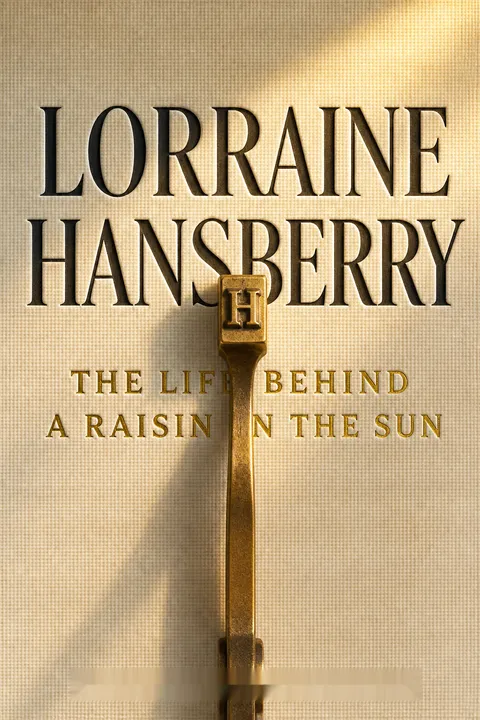
Lorraine Hansberry: The Life Behind A Raisin in the Sun by Charles J. Shields receives generally positive reviews (3.78/5). Readers praise the comprehensive, well-researched biography of the groundbreaking playwright who wrote the iconic Broadway play at age 28 before dying of pancreatic cancer at 34. Most appreciate Shields' thorough exploration of her Chicago upbringing, her father's controversial real estate business, political activism, FBI surveillance, complicated marriage to Robert Nemiroff, and her sexuality. Some criticize the dense writing style or the author's perceived editorial biases, while others find it engrossing and wonderfully readable, illuminating Hansberry's complexities and contradictions.
People Also Read










Glossary
kitchenette
subdivided, cramped apartmentIn the biography, a kitchenette is a small dwelling created by dividing an existing apartment or house into several units, each with minimal cooking space and often shared bathrooms. The conversions let landlords collect more rent from the same building, but they also intensified overcrowding and exposed tenants to poor sanitation, unsafe conditions, and high housing costs.
restrictive property covenants
racially exclusionary deed agreementsThese private agreements, attached to property deeds, barred owners from selling, renting, or leasing homes to specified racial or ethnic groups, especially Black people. They were used to preserve white neighborhoods and were enforced through courts. The Supreme Court’s ruling in Hansberry v. Lee concerned one covenant’s legal application, while Shelley v. Kraemer later barred judicial enforcement of such agreements.
Hansberry v. Lee
Chicago housing covenant caseA 1940 U.S. Supreme Court case arising after Carl Hansberry bought a home in Woodlawn, Chicago, despite a covenant intended to exclude Black residents. The Court reversed the judgment against him because an earlier case did not bind the parties in the same way. The ruling allowed the Hansberry family to keep the house, but did not invalidate all racial covenants.
double consciousness
living with divided social selvesA concept W. E. B. Du Bois used to describe the tension Black Americans face when seeing themselves both through their own experience and through a society that devalues them. Hansberry connects the idea to characters negotiating African heritage and American life. In A Raisin in the Sun, the conflict is not resolved by choosing one identity over the other.
social realism
art grounded in social conditionsA mode of artistic representation that depicts ordinary people and the material circumstances shaping their lives, including poverty, class relations, and political power. Hansberry valued art that showed both oppression and human possibility. She objected to portrayals that romanticized hardship or reduced Black characters to stereotypes, and sought to make social realities legible through credible characters and conflict.
Download PDF
Download EPUB
.epub digital book format is ideal for reading ebooks on phones, tablets, and e-readers.








