

Key Takeaways
Treat rebellion as a defense of shared dignity, not a license to rule
A refusal affirms something. Camus begins with a slave who finally rejects an order that crosses a line. The refusal is not merely personal anger. By saying that some treatment is intolerable, the slave asserts that a human being has a worth that power cannot erase. Even a protest on behalf of someone else reveals this shared standard: the rebel recognizes another person’s fate as connected to his own.
From one to many. Rebellion therefore moves beyond private resentment. It discovers a common dignity, and with it a responsibility to other people. Camus calls this solidarity a basis for action, not a reward delivered after victory. He also notes that the question takes its modern form especially in societies that proclaim equality while maintaining real inequalities.
What's powerful here is the shift from grievance to obligation. Political theories of recognition make a related point: people become agents partly by having their standing acknowledged by others. Camus adds a demanding test. A protest that claims dignity for one group must explain why that dignity stops at its own boundary. Still, solidarity does not arise automatically from shared vulnerability. Groups can identify with one another, or compete over injury. The book offers a moral starting point, but sustaining solidarity requires practices and institutions that make mutual recognition more than a moment of outrage.
If life matters, no ideology can make planned murder coherent
The absurd is a beginning. Camus first considers the absurd: the clash between the human demand for meaning and a universe that gives no clear answer. Taken alone, this outlook seems to make every action equivalent, including murder and compassion. But the person who continues living has already refused one conclusion, suicide. Life remains the ground on which the encounter with the absurd can happen.
Do not reserve life for yourself. Camus argues that a person cannot coherently treat their own life as worth preserving while declaring other lives disposable for a doctrine. Rebellion supplies the missing connection: it identifies a dignity shared across people. That does not eliminate hard moral choices, but it blocks the easy escape of calling calculated killing meaningless, necessary, or innocent simply because an idea demands it.
The argument resembles moral reciprocity: a principle applied to oneself must be tested against others in comparable circumstances. Its force lies in exposing selective ethics, especially when a movement protects its own members while treating outsiders as expendable. There is a philosophical gap, however. Choosing to live does not, by itself, prove that every other life has equal moral status. Camus's conclusion depends on the further experience of solidarity, the recognition that human beings share a condition. That premise is morally attractive, but it is not a deduction from absurdity alone.
Absolute revolt turns human protest into a machinery of domination
From protest to mastery. Camus traces metaphysical rebellion, the protest against human existence and the suffering built into creation. Sade turns that protest into a fantasy of limitless desire, organized inside sealed, coercive worlds. Romantic rebels make suffering and evil signs of exceptional identity. Ivan Karamazov, by contrast, refuses to accept a truth that requires innocent children to suffer. Yet once he rejects every higher standard, the claim that anything is permitted opens the door to the very violence he condemns.
Affirmation can overreach. Nietzsche diagnoses the loss of religious certainty and tries to affirm life without it. Camus respects the effort but warns that saying yes to everything can erase the original protest against injustice. Surrealists also wrestle with the gap between negation and creation. Across these cases, revolt betrays itself when its demand for unity becomes permission to control everyone.
The sequence gives readers a useful diagnostic: ask whether a movement is defending people from domination or building a system that will dominate in their name. Its intellectual history is vivid, though necessarily compressed. Sade, Nietzsche, and the surrealists differ sharply, and later political appropriations do not settle what their work means. Camus's strongest point is not that rebellious thought inevitably produces tyranny, but that absolutes make the turn easier: once one value is treated as unlimited, the people harmed by it become obstacles rather than fellow human beings.
When history becomes a god, its victims become expendable
Revolution changes the scale. Rebellion begins as protest against a particular injustice. Revolution tries to remake society according to an idea of how history should end. Camus follows this shift from the French Revolution, which killed the king as a symbol of divine authority, to systems that claimed to rule in the name of reason, the people, or a future classless society. When leaders treat that future as certain, present suffering can be excused as its price.
Different doctrines, a shared danger. Camus distinguishes fascist rule, which glorifies force and irrational loyalty, from communism, whose stated aims include universal emancipation. He does not equate their purposes. He warns that both can build powerful states that subordinate individuals to an overriding historical mission. In such systems, the state can call terror necessary and treat disagreement as evidence of guilt.
The warning remains relevant wherever leaders claim that current harms will be redeemed by a final social order. Democratic safeguards matter precisely because no political actor can reliably know the whole meaning of history. Camus is especially alert to how emergency powers and ideological certainty reinforce one another. His broad historical arc can understate the differences among revolutions and the material conditions that shape them. But the ethical question survives those distinctions: who can challenge the people acting for the future, and what protection does a victim have now?
The 1905 assassins made violence answerable through personal sacrifice
A bomb with a conscience. Camus contrasts later political violence with Russian revolutionaries who tried to limit the harm they caused. During an attempt on Grand Duke Sergei, Ivan Kaliayev refused to throw his bomb when children were riding in the carriage. He later carried out the assassination and accepted execution. Other members of the group, as Camus presents them, scrutinized targets and risked their own lives rather than treating death as an abstract cost borne by strangers.
Necessary, not innocent. Camus does not make their violence harmless or unquestionably right. Their example matters because they did not claim a future victory could cleanse murder. They understood that killing contradicted the human solidarity they were trying to defend, and they made themselves answerable for that contradiction. Later revolutionary politics, in his account, increasingly replaces this personal responsibility with calculations made on behalf of history.
This episode makes an ethical tension concrete: movements may confront violence already built into a political order, yet their own violence can reproduce it. The assassins' willingness to face consequences distinguishes accountability from the claim that a noble cause excuses everything. It does not prove that assassination is justified, and martyrdom can make political violence seem more beautiful than it is. The enduring value of the story is its refusal of moral outsourcing. Those who authorize force cannot honestly treat its costs as someone else's problem.
Keep justice and freedom joined, or each becomes its opposite
Limits preserve rebellion. Camus rejects both absolute freedom, which lets the powerful do whatever they can, and absolute justice, which can silence people in the name of equality. Freedom without justice protects domination; justice without freedom becomes a command imposed from above. The same tension appears between nonviolence and violence. Neither side can be turned into an unlimited rule without risking a new form of oppression.
Make power answerable. Camus does not demand passivity. He argues for action that treats violence as a grave, bounded risk rather than a permanent tool of government. He even proposes demanding institutions that limit it, including abolishing the death penalty and refusing imprisonment without fixed terms. His measure is not a comfortable midpoint. It is a continuing effort to defend human dignity without claiming the right to sacrifice anyone indefinitely.
This is a politics of constitutional restraint: power needs limits, and those limits must protect the ability to criticize power. The pairing of justice and freedom also anticipates a basic insight of pluralist democracy, namely that no single value can safely govern every case without correction from others. Camus's institutional demands are deliberately severe. Their practical application raises difficult questions about self-defense, public safety, and violent oppression. The framework does not settle those cases, but it insists that necessity be argued openly and that exceptional force remain exceptional.
Use art to refuse reality without erasing what deserves love
Creation selects and reshapes. Camus sees art as a model of rebellion because it both resists the world as it is and remains attached to parts of it. A painter chooses a scene and gives it form; a novelist gives actions and relationships a coherence that ordinary life rarely supplies. This is not simply copying reality or escaping from it. It is a deliberate transformation that preserves something worth seeing.
Beware both extremes. Pure formalism risks retreating from lived experience, while art reduced to political instruction can become propaganda. Camus turns to Proust, whose long novel uses memory to recover fleeting experience and give it lasting shape. The artist's task, in this account, is not to declare the world wholly good or wholly corrupt. It is to make a partial, humanly meaningful order without pretending that suffering has disappeared.
Art's capacity to hold contradiction is politically important. Stories let people imagine lives unlike their own, while form makes chaotic experience intelligible without claiming to solve it. This resembles the role of narrative in moral learning: it can develop attention to particular people, not just abstract categories. Yet aesthetic coherence can also conceal exclusions or make suffering seem inevitable and beautiful. Camus's standard is strongest when applied critically: does a work deepen attention to reality, or smooth reality into a pleasing excuse?
Build change from living communities, not blueprints imposed from above
Start where people work. Camus favors revolutionary syndicalism, a labor movement organized around workers' real occupations and associations, over abstract central control. He points to trade unionism's contribution to the change from the sixteen-hour workday to the forty-hour week. The important contrast is not action versus inaction. It is change built through the people affected by it versus change designed by a distant authority and imposed on them.
Keep institutions close to experience. Camus makes a similar case for the commune, a local political community, as a counterweight to the centralized state. Local organization can let people deliberate, act, and correct mistakes at a human scale. These forms are not perfect or automatically just. Their value, for Camus, is that they make it harder to separate political decisions from the people who must live with their consequences.
This argument connects to subsidiarity, the principle that decisions should be made as close as practicable to the people affected. Local groups often hold knowledge that central planners lack, and participation can make collective action more accountable. Camus's historical example should not be read as proof that unions alone produced shorter hours; social reforms have multiple causes. Nor does local control guarantee inclusion. The useful test is whether an institution gives affected people real influence and a route to challenge decisions, rather than merely shrinking the distance between command and obedience.
Spend yourself on living people, not a promised future
The future cannot excuse everything. Camus ends by returning to the human beings in front of us. No perfected society can prevent every death or erase every injustice, but people can reduce suffering and refuse to add to it. A cause that postpones compassion until history reaches its destination asks actual people to pay for an imagined reward. Rebellion remains alive only when its concern for future generations does not cancel its responsibility to the present.
Love without pretending to save all. Camus links rebellion to a demanding form of love: solidarity with the humiliated, attention to the natural world, and a refusal to become a god over others. This is not optimism that everything will work out. It is a decision to act for justice and human dignity despite limits, uncertainty, and losses that no program can fully repair.
The present-centered ethic is a strong antidote to political movements that turn people into raw material for utopia. It also fits care ethics, which treats dependency and concrete relationships as morally significant rather than secondary to abstract rules. Its limit is that immediate care alone cannot replace long-term policy or structural change. Camus's argument works best as a constraint on reform, not a substitute for it: pursue durable improvements, but do not claim that future benefits make present victims morally invisible.
Analysis
The book's central achievement is to make revolt answer to the value that gives it moral force. A person resists humiliation because human life is not disposable. The moment a movement treats that claim as applying only after victory, or only to the people it represents, it has begun to reproduce the domination it opposed. Camus therefore offers neither pacifism nor revolutionary permission. He offers an ethic of bounded action: resist injustice, but keep the people affected by resistance inside the moral community.
That position is unusually alert to political time. Utopian arguments shift the moral burden into the future, where promised benefits cannot be verified by those who suffer in the present. Camus's insistence on immediate accountability counters this asymmetry. His praise for the Russian terrorists of 1905 is both illuminating and risky. Their willingness to accept death refuses the usual separation between decision-maker and victim, yet self-sacrifice cannot establish that taking another life is just. The episode is best understood as a severe standard of responsibility, not a recipe for action.
The argument also depends on a shared human dignity that cannot be derived from absurdity alone. Camus reaches it through the experience of solidarity, but readers may ask how that solidarity expands across groups divided by ideology, nationality, or unequal power. His focus on Western political history and Mediterranean moderation further limits the universality of his genealogy. Those limits do not undo the book's warning. They clarify its practical demand: no theory of history, justice, or emancipation should be exempt from challenge by the people who bear its costs. Its most useful legacy is less a complete political program than a recurring test of political honesty: does this action preserve the ability of human beings to resist being reduced to instruments?
Review Summary
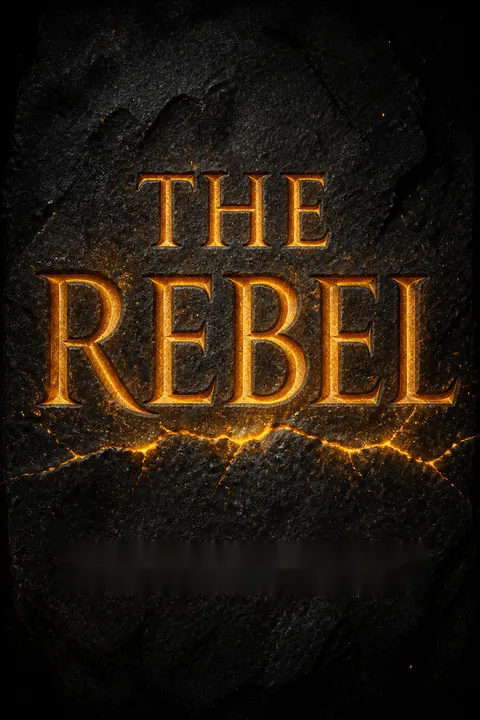
The Rebel is a philosophical exploration of rebellion and revolution by Albert Camus. Readers found it challenging but insightful, praising Camus' analysis of historical rebellions and their consequences. The book examines the relationship between rebellion, nihilism, and morality, criticizing totalitarian ideologies. Many appreciated Camus' courage in challenging contemporary leftist thought. Some found the dense philosophical content difficult to follow, while others considered it a masterpiece. The book's themes of justice, freedom, and human dignity resonated with readers, although some felt it required multiple readings to fully appreciate.
People Also Read







Glossary
Metaphysical rebellion
Protest against human existenceA protest against the human condition itself, including mortality, suffering, and the apparent injustice of creation. Unlike a slave's rebellion against a particular master, metaphysical rebellion challenges the terms of existence. Camus argues that it begins by demanding justice and unity, but risks turning destructive when it decides that human beings must remake the whole world without limits.
Historical rebellion
Revolt expressed through historyThe political form taken when rebellion seeks to change society through historical action. Camus distinguishes it from the initial protest against oppression: historical rebellion can become revolution, an attempt to impose an ideal design on society. Its danger arises when leaders treat the future as certain and use present violence as a supposedly temporary means to achieve it.
Measure
A limit on political excessCamus's principle that rebellion must recognize boundaries in its demands and methods. Measure does not mean moderation as passivity or compromise for its own sake. It means holding justice and freedom, affirmation and refusal, in tension, so that a struggle against domination does not become an unlimited authority over others.
Objective culpability
Guilt assigned by historical judgmentA form of guilt defined by a political authority's interpretation of history rather than by a person's intentions or identifiable actions. In Camus's account of totalitarian rule, someone can be declared guilty because their conduct supposedly obstructs a future historical mission. The idea makes dissent punishable in advance and lets power present its own judgment as objective truth.
Revolutionary syndicalism
Worker-led political organizationA labor movement organized through workers' occupational groups and associations rather than directed entirely by a centralized state or party. Camus values its practical, local basis: people organize around the conditions of their work and can participate in decisions that affect them. He presents it as a political counterweight to abstract, bureaucratic control.
The Empire of objects
People reduced to instrumentsCamus's description of a political order in which human beings are treated as manageable things within a system of production, surveillance, and control. The regime's stated purpose may be collective unity, but personal relationships and independent judgment are subordinated to the apparatus. People become useful or disposable according to their place in the system.
FAQ
What's The Rebel by Albert Camus about?
- Philosophical Exploration: The Rebel is an essay by Albert Camus that delves into the nature of rebellion, examining its philosophical underpinnings and implications for human existence.
- Rebellion vs. Nihilism: Camus contrasts rebellion, which seeks to affirm human dignity and justice, with nihilism, which denies all values and leads to despair.
- Historical Context: The book reviews historical figures and movements, such as the French and Russian Revolutions, to illustrate the complexities of rebellion and its tendency to devolve into tyranny.
Why should I read The Rebel by Albert Camus?
- Insight into Human Nature: Camus provides profound insights into the human condition, exploring themes of freedom, justice, and the search for meaning.
- Relevance to Modern Society: The themes are highly relevant to contemporary issues of justice, power, and individual rights, resonating with ongoing struggles for freedom and equality.
- Philosophical Depth: The book challenges readers to think critically about authority and the moral implications of rebellion, encouraging a deeper understanding of political movements and personal actions.
What are the key takeaways of The Rebel by Albert Camus?
- Rebellion as a Human Condition: Camus posits that rebellion is an essential dimension of humanity, a response to the absurdity of existence.
- Limits of Rebellion: Recognizing limits in rebellion is crucial to avoid descending into tyranny, as rebellion without limits can lead to "unlimited slavery."
- Unity of Humanity: True rebellion affirms the value of human life and dignity, emphasizing solidarity among individuals.
What are the best quotes from The Rebel by Albert Camus and what do they mean?
- "I rebel—therefore we exist.": This quote encapsulates the essence of Camus's argument that rebellion is a fundamental aspect of human existence, affirming one's humanity.
- "Rebellion with no other limits but historical expediency signifies unlimited slavery.": Camus warns against rebellion lacking ethical boundaries, which can lead to new forms of oppression.
- "Justice is the only virtue.": This statement emphasizes the centrality of justice in Camus's philosophy, suggesting that all actions should be measured against the standard of justice.
How does Albert Camus define rebellion in The Rebel?
- Rebellion as Affirmation: Camus defines rebellion as an act of affirmation, where individuals assert their existence and dignity in the face of suffering and injustice.
- Existence of Limits: Rebellion is rooted in the recognition of limits, where the rebel asserts, "there is a limit beyond which you shall not go."
- Moral Foundation: Rebellion is not merely a reaction but a moral stance that seeks justice and recognition, driven by a sense of shared humanity.
What is the difference between rebellion and revolution according to The Rebel by Albert Camus?
- Spontaneity vs. Planning: Rebellion is characterized by spontaneous protest against oppression, while revolution involves organized efforts to change the political structure.
- Outcomes of Each: Revolutions typically lead to new governments, which can become oppressive, whereas rebellion seeks to affirm human dignity without creating new authority.
- Philosophical Implications: Revolutions can betray the original spirit of rebellion by prioritizing power over ethical considerations, often resulting in a cycle of violence and tyranny.
How does The Rebel by Albert Camus address the concept of nihilism?
- Nihilism as a Response: Camus discusses nihilism as a reaction to the absurdity of existence, where individuals may feel that life lacks meaning.
- Rejection of Absolute Values: The book critiques the idea that absolute values can justify actions, arguing that nihilism can lead to moral relativism.
- Path to Meaning: Despite acknowledging nihilism, Camus advocates for rebellion that seeks to create meaning in a chaotic world, affirming existence and solidarity.
What historical examples does Albert Camus use in The Rebel?
- French Revolution: Camus analyzes the French Revolution, highlighting its initial ideals and subsequent descent into tyranny.
- Metaphysical Figures: He references figures like Sade and Nietzsche to illustrate the evolution of rebellion from metaphysical to political contexts.
- Contemporary Context: Camus reflects on the state of Europe in his time, discussing the rise of totalitarian regimes as a consequence of failed revolutions.
How does The Rebel by Albert Camus relate to modern political movements?
- Critique of Authoritarianism: Camus's exploration of rebellion critiques modern political movements that prioritize power over ethical considerations.
- Solidarity and Human Dignity: The book emphasizes the importance of solidarity among individuals, resonating with contemporary social movements advocating for human rights.
- Moral Responsibility: Camus calls for moral responsibility in political actions, suggesting that individuals must consider the ethical implications of their choices.
What is the significance of limits in rebellion as discussed in The Rebel by Albert Camus?
- Recognition of Boundaries: Camus argues that rebellion must recognize limits to avoid descending into tyranny, maintaining its moral foundation.
- Moral Framework: Limits provide a moral framework within which rebellion can operate, preventing it from becoming a justification for violence.
- Sustainable Change: By establishing limits, rebellion can lead to sustainable change that respects human dignity, creating a better world without sacrificing values.
What role do historical figures play in The Rebel by Albert Camus?
- Illustrative Examples: Camus uses historical figures like Bakunin and Pisarev to illustrate the complexities and contradictions of revolutionary thought.
- Critique of Revolutionary Movements: By examining these figures, Camus critiques the outcomes of revolutionary movements, particularly their tendency to devolve into violence and tyranny.
- Lessons for Contemporary Rebels: The historical context offers valuable lessons for contemporary movements, emphasizing the need for ethical considerations in the pursuit of justice.
How does Albert Camus view the relationship between freedom and justice in The Rebel?
- Interconnected Concepts: Camus argues that freedom and justice are deeply interconnected, with each relying on the other for true fulfillment.
- Limits of Freedom: Absolute freedom can lead to tyranny, so it must be tempered by a commitment to justice, ensuring the rights of all individuals are respected.
- Justice as a Foundation for Freedom: A just society creates the conditions necessary for genuine freedom to flourish, allowing individuals to achieve a sense of belonging and purpose.
About the Author
Other books by Albert Camus




Download PDF
Download EPUB
.epub digital book format is ideal for reading ebooks on phones, tablets, and e-readers.








