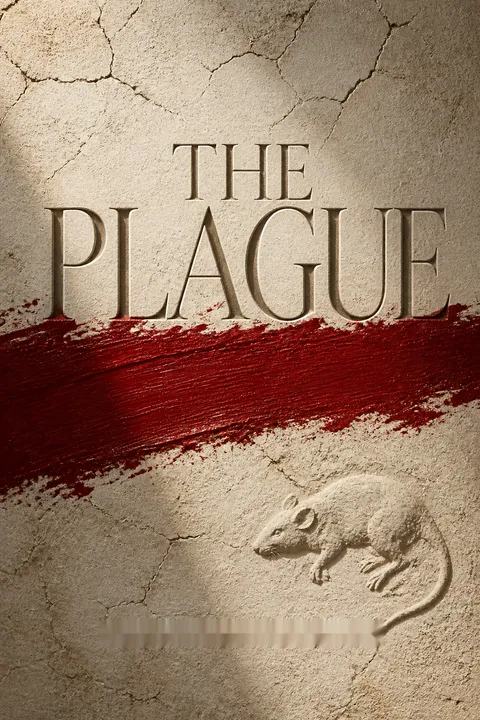


Plot Summary
Rats Break Oran’s Routine
Oran’s business-minded routine is interrupted when Dr. Bernard Rieux finds a dead rat on his landing. More rats spill from cellars and sewers, then die in the streets by the thousands, but the townspeople and officials treat them as a nuisance until the animals abruptly disappear. By then, Rieux’s concierge, Michel, has developed a violent fever, swollen glands, and dark patches on his skin.
The doctor sends him to hospital, where Michel dies. Rieux’s wife has already left for treatment at a sanatorium, and her absence makes his growing burden more private. Meanwhile, municipal clerk Joseph Grand has rescued his neighbor Cottard from a suicide attempt. Cottard, terrified of the police, now depends on Grand’s discretion.
The rat outbreak makes an invisible danger legible before the people of Oran are willing to interpret it. Their first response is not denial in the abstract but practical dismissal: the bodies can be collected, burned, and forgotten. Michel’s death breaks that reassuring sequence. Rieux, meanwhile, is already living with a form of absence, since his wife’s illness has taken her from home. Cottard’s attempted suicide and Grand’s quiet intervention introduce another kind of vulnerability, one produced not by infection but by fear of judgment. The plague will expose both forms of fragility, while the city’s habits initially help conceal them.
The Name They Avoid
After Michel’s death, doctors find more patients with fever and swollen glands, many dying within days. Rieux’s older colleague Castel recognizes the disease as plague, and laboratory findings support him, but municipal leaders resist saying so because an official diagnosis would require severe restrictions.
Rieux argues that the name matters less than preventing further deaths; the authorities nevertheless delay while the death count rises. They post cautious notices, isolate some patients, disinfect homes, and order reports of fever, but hospital beds and serum are scarce.
When daily deaths climb sharply, the Prefect receives the instruction that ends the argument: Oran must be declared plague-stricken and its gates closed. The order turns an outbreak affecting individual households into a crisis that confines the entire population.
The officials’ hesitation is a recognizable form of institutional self-protection. They treat certainty as a prerequisite for action, although the consequences of waiting are already visible in the wards. Rieux instead reasons from the cost of delay: even an imperfect diagnosis can justify precautions when lives are at stake. The closure of the gates transforms the disease from a medical problem into a political and social condition. It also marks the point at which personal plans become subject to collective rules. The town does not simply learn that plague exists; it discovers that the authorities’ language and timing can shape how much danger everyone must endure.
A Town Becomes a Prison
The gates close before many residents have time to prepare. Letters are banned, telephone calls sharply restricted, and telegrams reduced to brief fragments, leaving separated families and lovers with little way to know how the other is faring.
Paris journalist Raymond Rambert, who came to Oran to report on living conditions, learns that his partner is stranded outside the city. He asks Rieux for a medical certificate that might secure his release, but Rieux refuses to certify what he cannot know or make an exception for one man.
Rambert hears only a defense of rules, while Rieux understands the personal cost but continues his medical work. At the same time, Father Paneloux preaches that the plague is divine punishment, urging the congregation to read catastrophe as a moral reckoning.
The lockdown attacks people through both physical confinement and the erosion of communication. A ten-word telegram cannot carry the texture of a relationship, and repetition gradually strips even familiar expressions of their force. Rambert’s plea is not frivolous: he believes his life with his partner is the life that matters most. Rieux’s refusal shows the collision between particular love and a public emergency, not a lack of sympathy. Paneloux offers another way to make the crisis intelligible by giving it a divine cause. His certainty temporarily supplies order, but it also risks turning sufferers into evidence in an argument about guilt.
Tarrou Organizes Resistance
As deaths accelerate and official measures prove inadequate, Jean Tarrou proposes volunteer sanitary squads. Rieux secures approval, and Tarrou recruits helpers to disinfect buildings, accompany doctors, transport patients, and keep records.
Grand takes on the statistics and administrative work, fitting the effort into evenings already crowded by his municipal job and his private attempt to write a perfect opening sentence. Rieux continues treating patients while confronting families who do not want infected relatives taken away.
The work offers no promise of victory, but it gives residents a practical way to reduce harm. Tarrou and Rieux also begin to understand each other: Tarrou asks why a doctor keeps fighting without religious faith, and Rieux answers through the work of relieving suffering rather than explaining it.
The volunteer squads turn solidarity into a set of repeatable tasks rather than a display of exceptional heroism. Disinfection, transport, and record-keeping are humble forms of action, yet they keep the response from collapsing into good intentions alone. Grand’s role matters because his careful figures connect individual cases to a shared burden; his literary ambition continues alongside, rather than replacing, practical service. Rieux’s answer to Tarrou resists the temptation to justify suffering through a grand theory. He cannot make death meaningful, but he can oppose its immediate effects. Their emerging friendship is built on this refusal to let explanation substitute for care.
Rambert Seeks a Way Out
Unable to persuade officials to release him, Rambert searches for unofficial routes out of Oran. Cottard, whose fear of police attention makes the plague strangely convenient, introduces him to smugglers.
Through Garcia and the footballer Gonzales, Rambert meets two young sentries who offer to help him slip through a gate for a substantial fee. The arrangements repeatedly stall as guard schedules change and districts are sealed for inspection. Meanwhile, Tarrou invites Rambert to join the sanitary squads.
Rambert initially refuses, insisting that his duty is to return to the woman he loves. He keeps working with Rieux while waiting for the next escape attempt, but the repeated delays make the town’s crisis harder to treat as someone else’s concern.
Rambert’s escape plan gives the conflict between private happiness and shared responsibility a concrete shape: a price, a route, and sentries willing to be bribed. The delays matter because they interrupt his ability to keep the plague at a moral distance. Cottard helps him not from public-mindedness but from his own uneasy relationship with the law; the same emergency that confines Rambert protects Cottard from scrutiny. Rambert’s refusal to join the squads is not simple cowardice. He sees love as a real obligation, and fears that service to an abstraction will erase the life he wants. His eventual choice will require a change in how he defines belonging.
Oran Learns the Routine
By midsummer, the plague has spread from poorer districts into the town center, and weekly deaths rise into the hundreds. Heat, rationing, curfews, and patrols narrow daily life; people crowd cafes and cinemas when they can, while some attempt to force their way through the gates.
Fires set by bereaved residents, who believe burning their homes will destroy infection, threaten whole neighborhoods. The authorities answer unrest with martial law. As deaths overwhelm the cemetery, funerals are shortened, coffins reused, and bodies buried in separate pits before mass graves and cremation become necessary.
Families lose the chance to keep vigil or attend the final burial. The epidemic becomes less a sequence of shocks than a grinding system that makes grief, labor, and death follow the same harsh timetable.
The plague’s most profound institutional change is its conversion of intimate rituals into logistical problems. A funeral becomes a sequence of permits, transport, and rapid disposal, because public health cannot accommodate the family’s need to mourn. The machinery is not presented as pure cruelty: it is an attempt to prevent corpses from accumulating and disease from spreading. Yet the same efficiency that saves the living strips the dead of recognizable individual rites. Rebellion, arson, and looting arise within this pressure, not outside it. Camus makes catastrophe frightening through repetition: the town’s routines continue, but their ordinary purposes have been replaced by containment and survival.
A Child Challenges Faith
When magistrate Othon’s young son Jacques contracts plague, Rieux uses Castel’s locally prepared serum, one of the few treatments left to try. Othon and his wife are separated from the boy under quarantine rules, and Rieux, Tarrou, Rambert, Castel, Grand, and Paneloux watch the child endure a long, agonizing decline.
The serum does not save him. Rieux angrily rejects any account that could make the child’s suffering deserved or useful, and Paneloux, shaken by what he has witnessed, changes the emphasis of his preaching.
In his second sermon he speaks as part of the afflicted community and insists that a believer must remain present through suffering rather than explain it away. Soon afterward, he falls ill, refuses ordinary medical help at first, and dies with his diagnosis recorded as uncertain.
Jacques’s death turns an argument about suffering into an event that no rhetorical skill can soften. The child is not an illustration of adult wrongdoing, and Rieux’s anger insists on the moral importance of that distinction. Paneloux responds not by abandoning belief but by giving up the distance that made his first sermon possible. His new position demands that he remain beside the afflicted, even when he cannot reconcile their pain with providence. The uncertain diagnosis at his death preserves the novel’s resistance to neat explanations. What matters is not whether a theory wins, but whether its adherents stay among people whose suffering it cannot resolve.
Tarrou Explains His Fight
After visiting Othon in the quarantine camp, Tarrou tells Rieux how he became committed to opposing death. As a teenager, he watched his father, a prosecutor, seek a man’s execution; later, Tarrou saw an execution himself and recognized that even movements claiming noble aims could make killing acceptable.
He left political allies when their causes demanded such compromises. Tarrou calls this complicity a kind of plague, a human habit that must be resisted through constant attention and sympathy.
He cannot promise peace, but he can refuse to join forces with systems that turn people into victims. After sharing this history, he and Rieux use their passes to swim together in the sea, briefly reclaiming pleasure without forgetting the town’s suffering.
Tarrou’s metaphor grows out of a specific moral injury: he has seen how legal and political language can make killing appear clean, necessary, or distant. His response is not to claim innocence but to practice vigilance, because complicity can survive even good intentions. This makes his ethical position demanding rather than self-congratulatory. The swim with Rieux matters because it does not cancel their labor or offer a cure; it restores a bodily experience beyond the plague’s demands. Their friendship allows a brief form of freedom in which pleasure and moral attention coexist, instead of treating joy as a betrayal of the dead.
Hope Returns Unevenly
As winter approaches, the plague continues, and Rieux’s exhausted colleagues work with little expectation of relief. Othon, released from quarantine, asks to return to the camp as a volunteer because it keeps him close to the memory of his son.
Grand, overwhelmed by fatigue and grief for Jeanne, collapses with symptoms of plague. He asks Rieux to burn the manuscript he has spent years revising, but after receiving serum he unexpectedly recovers and resolves to begin again. Other patients also survive against expectation.
Then the asthma patient reports seeing rats in the neighborhood for the first time since spring. Rieux studies the weekly mortality figures, which show a decline. The signs offer hope, but the town has learned how dangerous it is to mistake improvement for safety.
The first signs of retreat arrive through fragile, specific events rather than a triumphant announcement. Grand’s survival does not restore what he lost with Jeanne, and his decision to restart the manuscript is a modest return to intention, not a grand transformation. Othon’s request to return to the camp shows how grief can redirect a person toward care for others, even when no remedy exists for the original loss. The rats’ return reverses their opening role: their appearance once signaled an approaching disaster, while now it suggests the disease may be receding. Yet the same sign cannot guarantee a clean ending, so hope remains cautious.
Tarrou Loses the Match
The falling death toll brings Oran closer to reopening, but Tarrou becomes feverish just before the gates are due to open. Rieux suspects plague and gives him serum, yet keeps him at home with his mother instead of sending him to an isolation ward. Tarrou asks for the truth, and Rieux gives it as the illness worsens.
Through the night, he and Mme Rieux watch their friend struggle; by midday, Tarrou dies. The loss leaves Rieux with no sense of victory, only the memory of their work and friendship. Soon afterward, he receives a telegram reporting that his wife has died at the sanatorium. She had been ill since before the epidemic, and the news confirms a separation he had endured without knowing its final length.
Rieux’s decision to keep Tarrou at home is an act of friendship that bends the rules he has enforced throughout the epidemic. It cannot alter the disease’s outcome, but it changes how Tarrou faces his last hours: not as an isolated case, but as a person held by people who care for him. Rieux’s professional habits have trained him to act amid uncertainty, yet they cannot make him master the losses closest to him. His wife’s death arrives in the same period as Tarrou’s, collapsing private grief into public deliverance. The victory over the epidemic therefore cannot restore the lives that its duration consumed.
The Gates Open Again
At daybreak in February, Oran’s gates open and trains bring separated families and lovers together. Rambert’s partner arrives, and they embrace, though the months of plague have changed the man who once thought only of escape.
Rieux works through the celebrations, aware that some returning travelers will find no one waiting. In a quieter street, police surround Cottard’s building after he fires at people outside and wounds an officer. They break in and carry him away as the crowds celebrate nearby.
Grand tells Rieux that he has written to Jeanne and is starting his sentence again with fewer embellishments. Later, Rieux visits the old asthma patient, then decides to record the epidemic as its witness. The plague has receded, but its bacillus may lie dormant and return.
The reopening restores movement, not innocence. Rambert receives the reunion he pursued, but he returns changed by the choice to stay and work; his happiness now carries knowledge of others’ losses. Cottard’s violence exposes the private fear beneath his apparent ease during the epidemic, while the crowd’s celebrations continue almost within earshot of his arrest. Grand’s renewed effort to write offers a quieter counterpoint: he cannot repair his marriage by force, but he can attempt communication. Rieux’s chronicle becomes an ethical act of memory. It preserves the ordinary courage of people who resisted the plague without claiming that their labor permanently defeated it.
Analysis
The Plague makes its central moral argument through a town learning, unevenly and under pressure, what it means to act when explanations and victories are unavailable. Oran begins as a place of habit: commerce fills the days, public life follows familiar schedules, and danger seems implausible because it interrupts no established routine. The rats expose the weakness of that confidence, but the authorities’ delay shows that recognizing a threat is not the same as accepting the obligations it creates. Rieux insists on action before certainty becomes comfortable, grounding his ethic in treatment rather than metaphysics.
The novel tests this ethic against competing claims. Rambert’s longing for his partner is legitimate, not a selfish distraction; the crisis becomes ethically serious because helping strangers may cost him a real human good. His eventual participation in the squads does not invalidate his desire to reunite. It marks his recognition that intimacy and responsibility cannot be cleanly separated once the suffering around him has become visible. Tarrou extends this insight into a lifelong suspicion of systems that justify killing. His personal history makes the plague both a disease and a figure for complicity, while his insistence on vigilance avoids the fantasy of moral purity.
The epidemic also changes the meaning of ordinary institutions. Quarantine protects the public and wounds families; mass burial limits contagion and strips away rites; statistics coordinate response but can make individual deaths seem interchangeable. The novel does not resolve these contradictions by declaring all action futile. Instead, it distinguishes success from decency. The squads cannot save everyone, and the reopened gates cannot restore the dead, but their work remains necessary precisely because its results are incomplete.
The ending refuses triumphal closure. Rieux records the townspeople’s endurance while remembering that the bacillus can return. This is not a call to permanent fear; it is a warning against treating relief as proof that danger has disappeared. The lasting achievement is neither mastery nor innocence, but an alert, practical solidarity that can be renewed whenever suffering returns.
Review Summary
The Plague is widely regarded as a masterpiece exploring human nature during crisis. Readers praise Camus' philosophical depth, vivid characters, and relevance to modern pandemics. The novel examines diverse reactions to catastrophe, from heroism to despair. Many find it a poignant reflection on solidarity, morality, and the human condition. While some struggle with its dense prose, most consider it a powerful, thought-provoking work that resonates deeply, especially in light of recent global events.
People Also Read


Characters
Bernard Rieux
The working doctorRieux is a physician in Oran, a practical man whose days are shaped by patient visits, difficult judgments, and an insistence on doing what can be done. He avoids grand explanations because they can turn another person’s pain into an argument. His wife’s illness has already taught him what it means to wait helplessly, even as he continues to treat others. Rieux is neither emotionally untouched nor naturally heroic; he works because people are sick and need care. His restrained manner lets him observe the city without pretending to stand outside it. Through him, the story tests whether decency can remain meaningful when it cannot guarantee success.
Jean Tarrou
The searching organizerTarrou is a thoughtful newcomer with private means, a taste for swimming, and an unusual habit of recording small details about Oran. He watches people closely, including the rituals and cruelties they barely notice themselves. His interest in ethics is not academic: he wants to understand how ordinary people become implicated in harm and how they might resist it. Tarrou is warm without being sentimental, and his attentiveness makes him a natural organizer of the volunteer sanitary squads. His conversations with Rieux bring the novel’s moral questions into a friendship between two men who disagree about belief but share a commitment to reducing suffering.
Raymond Rambert
The stranded journalistRambert is a Paris journalist caught in Oran while his beloved partner remains outside the quarantined city. At first, he sees the crisis as an injustice imposed on a stranger and pursues every legal and illicit route home. His confidence and resourcefulness make him persistent, but his longing is not shallow: he believes a shared life with the woman he loves is more compelling than an abstract claim on his loyalty. Rambert’s changing response to the sanitary squads reflects a genuine conflict between personal happiness and responsibility to people he has come to know. His arc asks whether solidarity can be chosen without denying the importance of love.
Joseph Grand
The modest clerkGrand is a municipal clerk whose humility is matched by an almost painful difficulty expressing himself. He has spent years trying to perfect the first sentence of a literary work, while lacking the confidence to assert his rights at work or explain his needs in marriage. His past with Jeanne reveals how affection can be real and still fail through neglect and silence. During the plague, Grand applies the same patient attention to statistics and volunteer work that he gives to his manuscript. He is neither an obvious leader nor a dramatic rebel. His quiet reliability makes him a portrait of ordinary courage, grounded in small acts rather than self-image.
Cottard
The fearful neighborCottard is Grand’s neighbor, a secretive man who becomes more sociable after Grand saves him from a suicide attempt. His fear of police scrutiny shapes his relationships: he wants witnesses who will think well of him and worries about being isolated from the people around him. The plague’s disruption of normal life gives him unexpected relief from his private anxiety, and he profits from the informal economy created by scarcity. Cottard is not simply malicious or cheerful; he is someone whose sense of safety depends on other people sharing his uncertainty. His responses to the crisis expose the difference between seeking company and accepting responsibility for others.
Father Paneloux
The tested priestPaneloux is a learned Jesuit priest, respected in Oran for his scholarship and forceful public sermons. He begins with confidence that religious doctrine can explain the plague as punishment, addressing the townspeople as if their suffering fits a moral design. Direct exposure to patients, especially a child in agony, complicates that certainty. Paneloux’s response is not a simple abandonment of faith; he struggles to reconcile belief with pain that cannot be justified by the victim’s conduct. His changing sermons make him a serious interlocutor for Rieux, whose medical ethic rejects explanations that might excuse suffering. Paneloux embodies the cost of trying to believe honestly in a world of undeserved pain.
Mme Rieux
Rieux’s steady motherRieux’s mother comes to keep house while his wife is away at a sanatorium. Gentle, composed, and attentive, she gives her son a sense of steadiness without demanding that he explain himself. Her care is expressed through small routines and quiet presence, a contrast to the emergency measures that dominate public life. She also becomes part of the intimate circle surrounding Rieux and Tarrou, offering companionship that does not rely on argument or reassurance. Her calm should not be mistaken for indifference; she understands the danger while continuing to make a home inside it.
Rieux’s wife
The absent belovedRieux’s wife is ill before the epidemic begins and leaves Oran for treatment at a mountain sanatorium. Her separation from Bernard is therefore first a private hardship, then part of the larger isolation imposed on the town. Her telegrams reassure him even as distance prevents him from knowing the full state of her health. Their marriage is presented through gestures of tenderness and an unfinished hope for a fresh beginning. She remains important even while absent, because Rieux’s professional composure exists alongside his longing and worry for her.
Dr. Castel
The experienced diagnosticianCastel is an older physician who has encountered plague before and recognizes its signs before local authorities will accept the diagnosis. His knowledge makes him impatient with euphemism, but he is also a practical scientist who works to prepare a serum using the local strain. Castel’s confidence is not blind certainty; he knows treatment may fail and keeps working anyway. He represents the value of experience when institutions would rather wait for reassurance, and the limits of that experience when a disease behaves unpredictably.
M. Othon
The rigid magistrateOthon is a police magistrate whose stiff manners and formal authority make him seem emotionally remote. He first appears as a man who keeps his family within strict rules and treats public life as an orderly system. The plague subjects him to the same restrictions he once helped administer, including quarantine and the loss of control over his family’s movements. His encounters with Rieux and Tarrou reveal how a person accustomed to judging others responds when rules govern his own grief. Othon’s dignity is genuine, but it is also a defense against feelings he has little practice showing.
Mme Othon
A grieving motherMme Othon is the magistrate’s wife and the mother of Jacques and a daughter. She faces the epidemic through the vulnerability of a parent, trying to comply with quarantine rules even as they separate her from her sick child. Her restrained manner does not lessen her fear; it shows how little room the emergency leaves for protest. Through her, the public rules acquire an intimate cost, measured in the distance between a mother and a hospital bed.
Jacques Othon
The innocent patientJacques is the young son of M. and Mme Othon. His illness brings the adults around him into direct contact with suffering that cannot be explained as punishment or deserved consequence. The boy is too young to understand the medical and religious debates surrounding his treatment. His presence changes how Rieux and Paneloux confront the limits of their respective convictions, making a child’s vulnerable body the moral center of their disagreement.
Gonzales
The footballing fixerGonzales is a footballer whom Cottard connects to Rambert’s escape plan. He knows people who can arrange contact with guards and treats the plan with the practical patience of someone familiar with informal networks. His love of the game gives him common ground with Rambert, while the epidemic deprives him of the ordinary setting in which that passion mattered. Gonzales is a functional ally rather than a political thinker, but his presence shows how everyday skills and relationships are repurposed under confinement.
The old asthma patient
The watchful invalidRieux’s elderly asthma patient spends his days in bed, measuring time by moving dried peas between two pans. Cheerful and skeptical, he watches the plague from a distance that is partly physical and partly chosen. His odd routine gives him a fixed order when the town’s routines collapse, and his remarks often puncture the solemnity of officials and public opinion. He is not a guide to the epidemic’s meaning so much as a reminder that people adapt in singular, sometimes comic ways.
M. Michel
The first fatal warningMichel is the concierge in Rieux’s apartment building. He initially insists that rats do not belong in the building, then becomes one of the first human victims of the outbreak. His position connects the doctor’s private home to the first visible signs of the town’s crisis.
Dr. Richard
The cautious physicianRichard is a prominent local doctor and head of the medical association. He worries about alarming the public and prefers to wait for stronger confirmation before imposing restrictions. His caution is professionally understandable, but it delays decisive action when the epidemic is already worsening.
Plot Devices
The rats
Visible signs of contagionThe rats are the first unmistakable disturbance in Oran’s routine. Their mass emergence and deaths make a hidden biological change visible, while the town’s attempt to treat their bodies as a sanitation problem delays recognition of the danger to people. Their sudden disappearance briefly reassures the population, only for the concierge’s illness and later deaths to show that the threat has changed form rather than vanished. When rats reappear as the plague recedes, the opening image returns with altered meaning. The animal outbreaks frame the epidemic as cyclical and resistant to human confidence, not as a crisis that can be permanently dismissed once its immediate symptoms fade.
The closed gates
Confinement made collectiveThe closure of Oran’s gates turns a medical emergency into a shared condition of exile. It prevents Rambert from returning to his partner and separates residents from families outside the city. Restrictions on letters, calls, travel, and food make the boundary felt in daily decisions, not merely on a map. The gates also force the town to confront a tension between individual claims and collective safety. Rambert’s attempts to escape dramatize that conflict, while the eventual reopening provides a concrete measure of change. Yet the gates cannot restore the time lost or reunite everyone with the people they miss.
Tarrou’s notebooks
A record beyond statisticsTarrou records overheard conversations, habits, minor incidents, and changing details of the town. His notebooks preserve the texture of Oran’s life that official death counts cannot contain, including the hotel cats, the asthma patient’s routines, and the citizens’ shifting responses to fear. The records also give Rieux material for a chronicle grounded in observation rather than invented access to other people’s thoughts. As the epidemic worsens, Tarrou’s entries become more personal, reflecting the pressure that private grief and fatigue place on the observer. The notebooks connect public history to the small, uneven ways individuals endure it.
The sanitary squads
Practical solidarity in actionTarrou’s volunteer squads turn the idea of resistance into organized labor. Their members disinfect homes, help doctors evacuate patients, drive vehicles, and keep records when municipal services lack sufficient people. Grand’s administrative work and Paneloux’s eventual participation show that the effort draws together people with different temperaments and beliefs. The squads do not produce a spectacular cure or promise that participants will survive. Their function is to reduce preventable harm and make responsibility shared. Through their daily work, the novel measures ethical commitment not by declared virtue but by the repeated choice to help in conditions where success is limited.
Castel’s serum
A fragile medical hopeWhen imported serum proves insufficient and the epidemic’s local strain seems unusual, Castel prepares a treatment using the bacillus found in Oran. Its arrival gives Rieux a practical option when most interventions have failed, but it is not presented as a guaranteed solution. The first major test is the treatment of Jacques Othon, whose prolonged suffering exposes the limits of medical effort. Later recoveries, including Grand’s, complicate the sense of defeat without proving that the serum alone has turned the epidemic. The device keeps scientific action active while refusing the comforting idea that expertise can control every outcome.
FAQ
Synopsis & Basic Details
What is The Plague about?
- A town under siege: The Plague tells the story of Oran, an Algerian city, as it grapples with a deadly epidemic. The narrative follows the experiences of various characters as they navigate the challenges of isolation, fear, and death.
- Focus on human response: The novel explores how individuals and the community react to the crisis, highlighting themes of solidarity, resilience, and the search for meaning in the face of suffering. It examines the psychological and emotional toll of the plague on the town's inhabitants.
- More than just a disease: The plague serves as a metaphor for the absurd and often meaningless nature of existence, prompting characters to confront their values and beliefs. It's a story about the human condition, not just a medical crisis.
Why should I read The Plague?
- Timely and relevant themes: The Plague explores universal themes of isolation, fear, and the human response to crisis, making it relevant to contemporary readers. It offers insights into how individuals and communities cope with adversity.
- Complex character studies: The novel features a diverse cast of characters, each with their own motivations and struggles. Readers will find themselves drawn to their stories and the moral dilemmas they face.
- Thought-provoking philosophical questions: Camus's work raises profound questions about the nature of good and evil, the meaning of life, and the role of human agency in a seemingly indifferent universe. It encourages readers to reflect on their own values and beliefs.
What is the background of The Plague?
- Algerian setting: The story is set in Oran, a French port city in Algeria, during the 1940s. This setting provides a backdrop of colonial tensions and cultural diversity, adding layers to the social dynamics of the town.
- Historical context: The novel was written during World War II and reflects the anxieties and uncertainties of that period. The plague can be seen as a metaphor for the Nazi occupation of France and the broader experience of living under oppressive forces.
- Existentialist influences: Camus's philosophical background as an existentialist is evident in the novel's exploration of the absurd, the search for meaning, and the importance of individual action in a meaningless world. The characters' struggles reflect the existentialist belief that life is inherently without purpose, and it is up to individuals to create their own meaning.
What are the most memorable quotes in The Plague?
- "There are more things to admire in men than to despise.": This quote, near the end of the novel, encapsulates the narrator's (Rieux's) final assessment of humanity. It highlights the resilience and capacity for good that can be found even in the face of great suffering.
- "The only way to deal with an unfree world is to become so absolutely free that your very existence is an act of rebellion.": This quote, though not directly from the book, reflects the spirit of Tarrou's philosophy and his desire to live a life of integrity and resistance against the absurd. It speaks to the importance of individual action in the face of oppression.
- "Each of us has the plague within him; no one, no one on earth is free from it.": This quote, spoken by Tarrou, reveals the novel's central metaphor. It suggests that the plague is not just a disease but a symbol of the human capacity for evil and the need for constant vigilance against it.
What writing style, narrative choices, and literary techniques does Albert Camus use?
- Impartial and objective narration: Camus employs a third-person limited perspective, primarily through the eyes of Dr. Rieux, which creates a sense of objectivity and allows the reader to witness the events unfold without excessive emotional manipulation. This style enhances the novel's realism and credibility.
- Focus on concrete details: Camus uses vivid descriptions of the physical environment and the characters' actions to ground the story in reality. This attention to detail makes the plague and its effects feel tangible and immediate.
- Philosophical and allegorical elements: The novel is rich in philosophical themes and allegorical symbolism. The plague serves as a metaphor for the human condition, and the characters' struggles raise profound questions about morality, meaning, and the nature of existence.
Hidden Details & Subtle Connections
What are some minor details that add significant meaning?
- The old man and his cats: The recurring image of the old man spitting at cats on his balcony, then his distress when the cats disappear, and finally his joy when they return, symbolizes the disruption and restoration of normalcy. It highlights the small, everyday routines that are disrupted by the plague and the human need for order.
- Grand's literary pursuit: Grand's obsession with perfecting a single sentence, his struggle with language, and his desire for recognition reveal his longing for meaning and connection. This seemingly minor detail underscores the human need for self-expression and the power of art to transcend suffering.
- The railway directory: The detail of Rieux's father's fascination with the railway directory foreshadows the theme of travel and separation. It also symbolizes the human desire for order and control in a chaotic world.
What are some subtle foreshadowing and callbacks?
- The initial rat sightings: The appearance of dead rats at the beginning of the novel foreshadows the impending plague and the disruption of Oran's routine. This detail serves as a warning sign that is initially dismissed but later proves to be significant.
- Cottard's behavior: Cottard's initial unease and paranoia foreshadow his later descent into madness. His attempts to ingratiate himself with others and his fear of authority hint at his underlying guilt and instability.
- Tarrou's "saint without God": Tarrou's philosophical musings about becoming a saint without God foreshadow his selfless actions and his eventual death. This concept highlights his commitment to moral action and his rejection of traditional religious dogma.
What are some unexpected character connections?
- Rieux and Tarrou's friendship: The bond between Rieux and Tarrou, despite their different backgrounds and beliefs, highlights the power of shared experience and the importance of human connection in times of crisis. Their friendship is a source of strength and mutual understanding.
- Cottard and Rambert's alliance: The unlikely alliance between Cottard and Rambert, driven by their shared desire to escape the town, reveals the desperation and moral compromises that can arise during a crisis. This connection underscores the complex and often contradictory nature of human behavior.
- Paneloux's evolving views: Paneloux's evolving views on faith and suffering, influenced by his interactions with Rieux and his experiences with the plague, demonstrate the transformative power of empathy and the limitations of rigid dogma. His journey highlights the importance of questioning one's beliefs in the face of human suffering.
Who are the most significant supporting characters?
- Joseph Grand: Grand's quiet heroism and dedication to his work, despite his personal struggles, make him a significant supporting character. His literary aspirations and his desire to connect with his lost love add depth to his character and highlight the human need for meaning and expression.
- Old Dr. Castel: Castel's unwavering commitment to developing a serum, despite the odds, makes him a symbol of scientific perseverance and the human desire to find solutions to seemingly insurmountable problems. His character embodies the importance of knowledge and expertise in times of crisis.
- Mme Rieux: Rieux's mother's quiet strength and unwavering support provide a sense of stability and comfort amid the chaos of the plague. Her character highlights the importance of family and the enduring power of love and compassion.
Psychological, Emotional, & Relational Analysis
What are some unspoken motivations of the characters?
- Rieux's sense of duty: Rieux's unwavering commitment to his work is driven by a deep sense of duty and a desire to alleviate suffering. His actions are motivated by a belief in the importance of human agency and the need to fight against the absurd.
- Tarrou's quest for peace: Tarrou's desire to become a "saint without God" stems from his past experiences with violence and his longing for inner peace. His actions are motivated by a need to atone for his past and to find meaning in a world filled with suffering.
- Cottard's fear of normalcy: Cottard's erratic behavior is driven by a deep-seated fear of returning to a normal life where he might face the consequences of his past actions. His motivations are rooted in self-preservation and a desire to avoid accountability.
What psychological complexities do the characters exhibit?
- Rieux's emotional detachment: Rieux's emotional detachment is a coping mechanism to deal with the constant suffering and death he witnesses. His struggle to maintain his composure highlights the psychological toll of the plague and the challenges of remaining human in the face of inhumanity.
- Rambert's internal conflict: Rambert's internal conflict between his desire for personal happiness and his growing sense of social responsibility reveals the complexities of human motivation. His journey from self-interest to solidarity highlights the transformative power of crisis.
- Paneloux's intellectual struggle: Paneloux's intellectual struggle to reconcile his faith with the suffering he witnesses demonstrates the limitations of dogma and the need for empathy and compassion. His evolving views highlight the complexities of religious belief in the face of human suffering.
What are the major emotional turning points?
- Rieux's wife's death: The news of Rieux's wife's death, though expected, is a major emotional turning point for him. It underscores the personal toll of the plague and the limitations of human agency in the face of loss.
- Rambert's decision to stay: Rambert's decision to stay in Oran and help fight the plague marks a significant emotional shift. It represents his transformation from self-interest to solidarity and his acceptance of his moral duty to others.
- Tarrou's death: Tarrou's death, despite his efforts to live a life of integrity and compassion, is a major emotional turning point. It highlights the novel's existential themes and the tragic nature of human existence.
How do relationship dynamics evolve?
- Rieux and Tarrou's friendship: The friendship between Rieux and Tarrou evolves from a professional alliance to a deep bond of mutual respect and understanding. Their shared experiences and philosophical discussions highlight the importance of human connection in times of crisis.
- Rambert and his wife's relationship: Rambert's relationship with his wife is tested by the separation imposed by the plague. His journey to reunite with her reveals the complexities of love and the challenges of maintaining intimacy in the face of adversity.
- The townspeople's collective experience: The shared experience of the plague creates a sense of solidarity among the townspeople, but it also exacerbates existing tensions and inequalities. The novel explores the complex dynamics of community and the challenges of maintaining social cohesion in times of crisis.
Interpretation & Debate
Which parts of the story remain ambiguous or open-ended?
- The nature of the plague: The plague itself remains somewhat ambiguous, serving as both a literal disease and a metaphor for the human condition. The novel does not offer a definitive explanation for its origins or its sudden retreat, leaving readers to ponder its deeper meaning.
- The characters' fates: While some characters' fates are explicitly stated, others are left open-ended, allowing readers to speculate about their future. This ambiguity reflects the uncertainty of life and the limitations of human knowledge.
- The meaning of "saintliness": Tarrou's quest to become a "saint without God" raises questions about the nature of morality and the possibility of achieving spiritual fulfillment outside of traditional religious frameworks. The novel does not offer a clear answer, leaving readers to grapple with these complex issues.
What are some debatable, controversial scenes or moments in The Plague?
- Paneloux's second sermon: Paneloux's second sermon, in which he argues that Christians should accept suffering as God's will, is a controversial moment that challenges traditional notions of faith and morality. It raises questions about the role of religion in the face of human suffering and the limits of human understanding.
- Rieux's rejection of God: Rieux's rejection of God and his focus on human action is a controversial stance that challenges traditional religious beliefs. His perspective highlights the importance of individual responsibility and the need to fight against injustice and suffering.
- The ending's ambiguity: The novel's ending, which suggests that the plague bacillus may return, is a controversial moment that challenges the notion of a final victory. It underscores the cyclical nature of human suffering and the need for constant vigilance against the forces of evil.
The Plague Ending Explained: How It Ends & What It Means
- The plague's retreat: The plague recedes, but not as a result of human intervention. It simply stops, leaving the townspeople to grapple with the aftermath. This ending underscores the limitations of human control and the unpredictable nature of life.
- Rieux's chronicle: Rieux's decision to write the chronicle is a testament to the importance of bearing witness to human suffering and the need to remember the lessons learned from the plague. It highlights the power of storytelling to preserve memory and to inspire future generations.
- The cyclical nature of suffering: The final lines of the novel, which suggest that the plague bacillus may return, emphasize the cyclical nature of human suffering and the need for constant vigilance against the forces of evil. It serves as a warning against complacency and a call to action.
About the Author
Other books by Albert Camus



Download PDF
Download EPUB
.epub digital book format is ideal for reading ebooks on phones, tablets, and e-readers.








