

Key Takeaways
Your overstuffed home and body may be running on the same habits
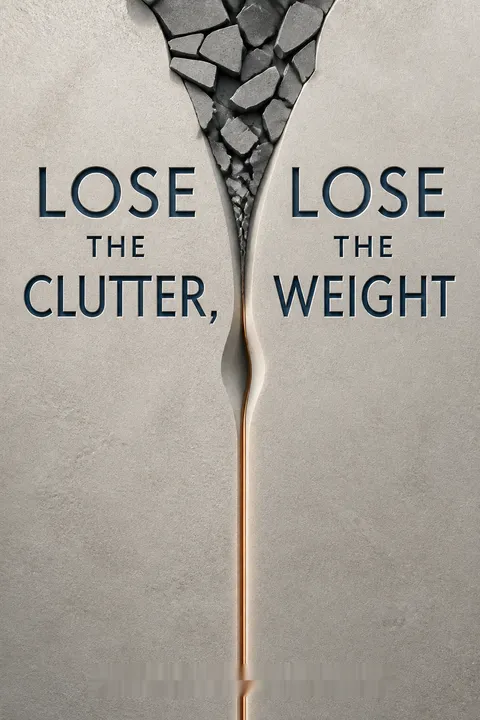
One pattern, two forms. Walsh’s central idea is that excess belongings and excess weight can grow from similar daily choices: taking in more than a home or body can comfortably manage, while removing or burning too little. Stress, distraction, emotional eating, and buying for comfort can feed both patterns. The book does not claim that a cluttered home automatically causes weight gain, only that the problems can reinforce each other.
A revealing example. After joining a month-long organizing challenge, Carol reported losing 8.4 pounds without changing her usual eating or exercise. Walsh suggests that clearing clutter got her moving and relieved the overwhelm that had kept her sedentary. Her experience is compelling, but one person’s result cannot show that decluttering alone caused the weight loss.
The useful reframing is away from character flaws and toward repeatable routines. A crowded counter can make cooking less appealing; fatigue can make both sorting and movement harder; and stress can prompt quick purchases or snacks. That is a plausible feedback loop, not a diagnosis. The distinction matters: people can use the link to find leverage without assuming every household problem has the same cause or that weight is simply a matter of discipline.
Define clutter by whether possessions fit the life and rooms they should serve
Three signs of clutter. In the book’s working definition, clutter is an excess of belongings that are out of place and untidy. A large, carefully arranged book collection may not be clutter; the same books spilling across a room and blocking its use may be. The practical test is not simply how much a person owns, but whether possessions support the intended use of a space.
Ordinary homes can be crowded. UCLA researcher Jeanne Arnold and colleagues studied 32 Southern California homes. In three-quarters of them, the garage was too full for cars. Walsh also recounts a house where more than 300 boxes came from just three rooms. These examples make the point that dysfunction can hide inside what feels normal.
This functional definition is more useful than treating minimalism as a virtue in itself. It permits a room to contain plenty of things when they are chosen, organized, and usable, while asking whether possessions crowd out the room’s purpose. The definition also shifts attention from taste to consequences. Still, standards of tidiness vary, and a busy or accessible home need not resemble a showroom. The key question is whether the space works for the people who live there.
Ask what an object or purchase is soothing before deciding it belongs
Possessions carry emotional jobs. People may buy to feel better, accept gifts to avoid disappointing someone, or keep objects from guilt, fear of waste, nostalgia, or imagined future need. Walsh calls especially harmful possessions malignant clutter: items whose presence repeatedly stirs distress, shame, or painful memories. The object may be valuable to someone else, but its emotional effect in this home matters.
Ownership can distort judgment. The book describes the endowment effect, the tendency to value an item more simply because it belongs to you. In a coffee-mug experiment discussed by hoarding researcher David Tolin, participants asked for more money to sell a mug after they owned it than they had said they would pay to buy it. That bias can make letting go feel like losing more than the object is worth.
The emotional lens helps explain why a seemingly simple sorting task can feel loaded. It also suggests a useful distinction: remembering a person is not the same as preserving every object associated with them. Yet discarding is not always the right response. Grief, trauma, or compulsive saving can call for patience and professional support, rather than pressure to purge. The goal is not to prove detachment, but to choose which possessions genuinely support present life.
Let a craving crest without obeying it immediately
Notice, then choose. Walsh presents mindfulness as paying deliberate, nonjudgmental attention to thoughts, bodily sensations, and the present situation. It creates a pause between wanting and acting. The book’s STOP exercise offers four steps: stop, take a breath, observe what is happening, and proceed with a considered choice.
Desire can pass. UCLA mindfulness educator Diana Winston describes “urge surfing”: noticing a desire to buy or eat without condemning it or satisfying it right away. The urge may intensify, then fade. At a store, the pause can reveal whether an item meets a real need or is an attempt to escape boredom or stress. At a meal, attention to taste and fullness can interrupt eating on autopilot.
The pause is a small but powerful form of choice architecture. It does not require a person to suppress a desire or argue with every thought; it lets the impulse become observable rather than automatic. That distinction can reduce shame, which often worsens avoidance. Mindfulness is not a guarantee against overeating or overspending, however. If distress is severe, or impulses feel uncontrollable, a brief breathing practice is not a substitute for appropriate clinical or financial help.
Give each room a purpose, then let its boundaries set what stays
Start with a vision. Before sorting, decide what you want from a room and how you want to feel in it. A kitchen intended for cooking and shared meals should not be buried under mail and unused gadgets. Then give similar items designated homes and limits. If the dishes do not fit the space allotted, the answer is to reduce the collection, not search endlessly for more storage.
Six weeks, six areas. The program moves from cooking and dining areas to the bedroom, then the closet and bathroom, financial workspace, living areas, and finally storage spaces such as the garage or attic. Walsh puts the emotionally and physically demanding storage spaces last. For paperwork, he proposes three zones: daily-use items within reach, occasional-use materials nearby, and rarely needed records in deep storage.
This approach combines environmental design with decision-making: each room’s purpose becomes a filter, and a physical limit makes that filter concrete. It is often easier to maintain a boundary than to repeatedly debate every item from scratch. The room-by-room sequence also recognizes that clutter is not just a pile, but a set of routines and social agreements. Shared homes complicate the method, so limits work best when residents negotiate them rather than impose them on one another.
Pair a simple food plan with progressively longer walks and strength work
Reduce the planning burden. Walsh’s dietitian-reviewed meal plan offers choices for breakfast, lunch, dinner, and snacks, with portions designed to total about 1,250 to 1,600 calories a day. The book presents this range as suitable for many active or somewhat active women and sedentary men, not as a universal prescription. It discourages calorie counting during the program, recommends planning food ahead, and emphasizes eating without screens or other distractions.
Build movement gradually. The walking plan starts with 5-minute walks two or three days a week and reaches 30 minutes on five days by week six. Strength and flexibility exercises use body weight or household objects, while decluttering adds activity. Walsh cautions that ordinary light chores may not replace deliberate exercise and advises people with health concerns to consult a clinician.
The plan’s strongest design feature is lowering friction: meals are selected from prepared options, and workouts do not require a gym or new equipment. It also makes movement part of ordinary life rather than treating exercise as a separate identity. The calorie range and exercise progression should be read as this book’s program, not individualized medical guidance. Needs vary with health, medications, age, and activity, so a simple plan still requires sensible adaptation.
Treat the pilot’s results as encouragement, not proof of a universal six-week fix
A promising test group. Walsh recruited 22 volunteers to try the program. On average, they lost nearly 10 pounds each, and the group lost almost 219 pounds. Their average score on a clutter questionnaire fell from 41.5 to 21.1, moving from a range associated in the book with hoarding concerns to one closer to the general public average. Participants also described greater energy and confidence.
Progress did not mean perfection. Several people fell behind, struggled to find time, or did not finish decluttering their whole home in six weeks. Walsh advises moving to the next area rather than treating unfinished tasks as failure, then returning to them when possible. The program asks for substantial effort, averaging about an hour a day, so its timeline will not fit everyone.
These results give the book a human story rather than just a set of instructions: participants made measurable changes while confronting real barriers. Their accounts also support a more useful definition of success than a flawless makeover. At the same time, 22 volunteers without a comparison group cannot establish what caused the changes or predict typical outcomes. The evidence is best understood as an encouraging feasibility test, not a controlled demonstration that the program works equally well for everyone.
Keep gains by honoring storage limits and completing small household tasks promptly
Protect the space you reclaimed. Walsh’s maintenance advice begins with remembering what each room is for and respecting how much it can hold. A “one in, one out” rule helps prevent a closet or shelf from quietly expanding again. Routines also matter: deal with mail when it arrives, return items to their homes, and complete a task rather than leaving it half-done. Regular donation collection and planned family decluttering sessions create occasions to remove things, not just acquire them.
Maintain the body, too. The book recommends ongoing activity, meal planning, attention to portions, and regular weighing. It cites research suggesting that people who maintain weight loss often exercise frequently and monitor their weight. The point is not to chase perfection or react to every fluctuation, but to notice changes early and return to the practices that support health.
Maintenance is framed as a balance problem: incoming possessions, calories, and commitments should not steadily exceed what a home or body can manage. Small routines reduce the cost of repeated decisions and make drift more visible. The analogy is useful, but bodies are not storage units, and weight is influenced by many factors beyond personal habits. Monitoring should support informed care, not become a source of anxiety or self-punishment.
Analysis
The book’s central contribution is its treatment of home organization, eating, movement, and emotional habits as parts of one lived environment. Rather than prescribing a standalone decluttering blitz or a restrictive diet, Walsh asks readers to redesign spaces so that desired actions become easier: a usable kitchen supports cooking, a calm bedroom supports sleep, and a cleared living room creates more room to move. The six-week sequence turns this idea into a practical route, progressing from daily-use rooms to storage areas where decisions may be physically and emotionally harder.
Its most durable insight may be the distinction between possessions and the feelings attached to them. Guilt, nostalgia, fear of waste, and hopes about a future self can make objects feel indispensable even when they are unused. Mindfulness offers a way to notice those reactions without instantly obeying them. The approach is compassionate in its rejection of moral blame, and pragmatic in its emphasis on room purposes, limits, routines, and manageable progress.
The evidence needs careful interpretation. The research summarized in the book often identifies associations between clutter, stress, mood, and weight, but association does not establish that clutter directly causes obesity or that tidying will produce weight loss. The 22-person test panel is encouraging, yet it is small and lacks a control group. Its outcomes cannot show which program component mattered most or how typical the results are. Walsh also sometimes speaks more categorically than the evidence warrants, particularly when describing the effects of a messy home on decision-making.
A balanced reading treats the program as a behavioral experiment, not a medical cure. Readers can test whether clearer spaces, planned meals, mindful pauses, and regular movement improve their own routines, while adapting the plan to health needs, household constraints, and emotional readiness. For severe clutter, disordered eating, depression, anxiety, or compulsive acquisition, professional support may be essential. The practical promise is not a perfect home or body, but a better fit between daily choices and the life a person wants to live.
Review Summary
Lose the Clutter, Lose the Weight received mixed reviews, with an average rating of 3.56/5. Readers appreciated the connection drawn between clutter and weight, practical decluttering tips, and motivational aspects. However, some found the content repetitive, basic, or gimmicky. The book's approach to weight loss was considered helpful by some but oversimplified by others. Many readers found value in the decluttering advice but were less interested in the weight loss component. Overall, the book was seen as potentially beneficial for those needing structure in both organizing and healthy living.
People Also Read







Glossary
Malignant clutter
Harmful emotionally charged possessionsThe book’s term for belongings whose presence repeatedly harms a person’s mood, outlook, or sense of well-being. Such items may evoke grief, shame, guilt, or memories of painful events. They are not defined by price or practical usefulness alone. A possession becomes malignant when its ongoing emotional effect interferes with the life or atmosphere a person wants at home.
The Clutter Scale
A continuum of clutter severityWalsh’s way of describing clutter as a range rather than a simple division between tidy people and people with hoarding disorder. As severity increases, possessions become harder to discard, rooms become less usable, and relationships or social life may be more affected. The scale is a conceptual guide, not a clinical diagnosis.
urge surfing
Observe urges until they passA mindfulness technique described by UCLA educator Diana Winston. When a strong desire to buy or eat appears, the person pays attention to it without judgment and does not immediately act on it. The urge is treated as a changing experience that may intensify and then fade, creating room to choose deliberately.
STOP exercise
A pause before actingA brief mindfulness routine for moments of desire or impulsive choice. The letters stand for stop, take a breath, observe what is happening in the mind and body, and proceed. In the book, the exercise helps interrupt automatic shopping or eating so the next action can reflect a considered need rather than a passing impulse.
Saving Inventory-Revised (Modified Format)
A measure of saving and clutterA 23-question self-report questionnaire used in the book to examine three areas: household clutter, difficulty discarding or saving possessions, and acquisition of items. Walsh presents its scores as a way to identify where a person may need attention, not as a diagnosis. A qualified mental health professional is needed to assess hoarding disorder.
Zone 1, Zone 2, and Zone 3
A three-level storage arrangementA system for organizing a home office by how frequently items are used. Zone 1 keeps daily necessities within reach. Zone 2 holds items used regularly but less often, such as active files or research materials. Zone 3 stores rarely needed records and belongings. The arrangement reduces searching and gives each category a defined storage limit.
Download PDF
Download EPUB
.epub digital book format is ideal for reading ebooks on phones, tablets, and e-readers.








