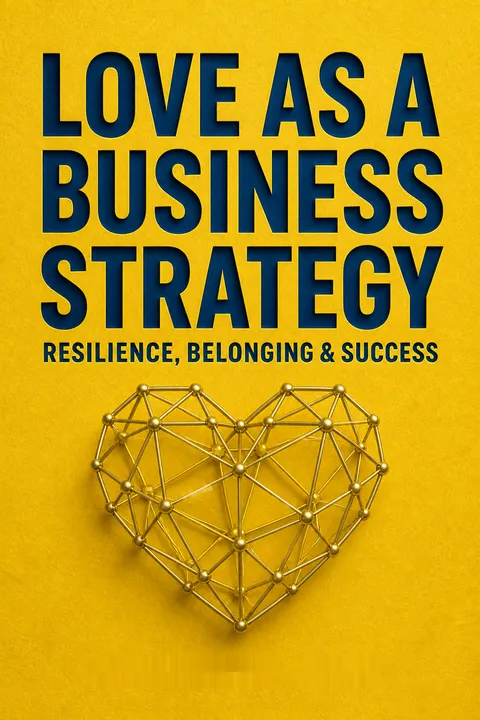


Key Takeaways
Make human care part of the operating model, not a workplace perk.
A crisis exposed the cost. In 2015, Softway laid off about 100 of its 260 employees using a process that barred goodbyes and personal explanations. Founder Mohammad Anwar had followed standard executive advice, but the experience made him question a business focused on results while disregarding the people producing them. Soon after, a University of Houston football team staged an unlikely comeback. Its coach credited the players' genuine care for one another, prompting Anwar to imagine care as a business strategy.
Love means practical care. The book does not mean romance or compulsory affection. It means treating coworkers as whole people, communicating honestly, and designing work so people can contribute and succeed. The case is both ethical and practical: supported employees are more willing to collaborate, take risks, and spot opportunities.
The book's strongest move is turning a warm-sounding word into a testable question: does the way work is organized show that people matter? The layoffs make the issue concrete because a company can follow procedure and still strip people of dignity. Care is most credible when it changes decisions, not when it decorates a mission statement. There is a useful tension, though: treating care as a route to profit can make it seem conditional. The more durable argument is that humane treatment is a responsibility in its own right, while better results are a possible and valuable consequence.
Treat every leader's behavior as a culture-setting decision.
Culture is felt in interactions. Softway's CEO once sent an angry company-wide email about a dirty refrigerator. Employees cleaned it, but the episode also taught them that public scolding was acceptable and that leadership did not trust them. The authors define culture not as office décor or perks, but as the emotional climate built through ordinary behavior: how people handle mistakes, feedback, disagreement, and responsibility.
The example travels. Leaders have an outsized effect because others watch what they reward or tolerate. But culture is not only a senior leader's job. A recruiter in Softway's Bengaluru office helped her HR colleagues support one another, and the team's reputation for mutual help spread to other departments. Small groups can shift the habits around them.
A leader's behavior functions like a public signal. The refrigerator email was not only rude; it clarified which conduct had consequences and which did not. This helps explain why values posters often lose to lived experience. The account also avoids making culture wholly a top-down project: peers reproduce norms, and a supportive team can create a local counterexample. Still, leaders hold more power to set incentives and consequences, so shared responsibility should not become a way to dilute their accountability.
Make candor safe, then make accountability routine.
Silence hides risk. Softway's Frank Danna was once berated by Anwar for missing a meeting he had never been invited to. Instead of retaliating or quietly withdrawing, Frank prepared what he wanted to say, explained the impact, and gave Anwar a chance to respond. Anwar apologized. That exchange showed why a culture needs both psychological safety, the confidence that speaking up or admitting a mistake will not invite humiliation, and accountability for harmful conduct.
Make feedback usable. The book draws on Amy Edmondson's research with medical teams: teams that reported more errors could learn from them rather than repeat them. Feedback works best when it is timely, grounded in what happened, and connected to a possible next step. Candor is not permission to be cruel; it is a way to surface problems while they can still be addressed.
Psychological safety is sometimes misread as comfort or the absence of standards. This section gives it a more demanding meaning: people can name errors, challenge authority, and still be expected to repair harm. That combination is crucial in work where small mistakes can compound. The strongest feedback is specific enough to guide action, rather than a vague judgment about someone's character. Frank's prepared conversation also shows that directness need not be spontaneous or fearless; a person can feel anxious and speak constructively anyway.
Use introspection to interrupt fear before it becomes misconduct.
Trace behavior to its source. The authors distinguish reflection, which asks what happened, from introspection, which also asks why. After Anwar shouted at Frank, he first defended himself by describing his stressful day. Frank's account helped him see the actual harm and take responsibility. The book connects behavior to three layers: mindset, the beliefs shaping perception; attitude, how those beliefs appear to others; and communication, the words and signals people receive.
Notice your default response. It names three workplace attitudes: the Flyer avoids conflict, the Fighter deflects or counterattacks, and the Influencer seeks learning and a constructive path forward. These are changeable responses, not fixed identities. Ask for feedback, focus on your own contribution, and identify a different response for the next similar situation.
This framework is useful because it gives people a pause between feeling threatened and acting on that threat. A fixed interpretation, such as assuming a colleague meant disrespect, can become avoidance or aggression; curiosity creates more options. The model is best used as a prompt for inquiry, not a diagnostic label to pin on coworkers. People often respond differently across power relationships and situations, and a person's outward style may reflect real risk, not simply a mindset that needs correcting.
Design inclusion around who is missing, not just who was hired.
Presence is not belonging. Softway's Indian employees who traveled to Houston were often left to find food, supplies, and company on their own, despite the warm hospitality Houston staff received in Bengaluru. After listening to visitors describe feeling isolated, the company arranged airport pickups, welcome baskets, meals, and time with local colleagues. These changes addressed the practical conditions that made participation harder.
Look beyond headcount. Diversity describes who is present; inclusion concerns whether people can contribute and are taken seriously. Marginalization can follow race, gender, religion, disability, seniority, education, or other differences. Ask who is quiet in meetings and whom colleagues know least well. Then invite their input and advocate for it. Hiring people from varied backgrounds without changing biased processes or everyday interactions leaves the underlying exclusion intact.
This account makes inclusion operational: hospitality, access to information, and everyday invitations can determine whether a person has a real chance to participate. It also usefully expands attention beyond visible demographic categories to less obvious differences, such as education or job status. The challenge is that inclusion cannot depend only on individual kindness. Welcome baskets help with arrival, but fair hiring, promotion, and decision-making systems are needed to make belonging durable rather than dependent on a thoughtful host.
Empathy means changing the conditions that trap people.
Listen for the system problem. In Softway's Bengaluru office, HR manager Sunil had to spend each morning tracking late employees, leaving too little time to recruit. Hiring managers then criticized his team for missing recruiting targets. When Sunil explained the trap to Chris Pitre, Chris did more than express sympathy. He brought Anwar into the conversation, and they changed the recruiting approach and trained managers to understand the workload firsthand.
Enter the problem together. The authors define empathy as understanding another person's emotional experience and moving forward with them. They contrast an apathetic manager, who demands output while ignoring the obstacle, with a sympathetic manager, who feels bad but leaves the obstacle intact. An empathetic leader investigates the person's working reality, then helps remove the barrier without abandoning the business goal.
The key distinction is between caring about someone's distress and changing the conditions producing it. Sunil's problem was not a shortage of motivation; the system assigned his team conflicting duties and judged them on the resulting shortfall. Experiencing a task firsthand can expose unrealistic assumptions that dashboards obscure. This approach also guards against overhelping: a leader should not simply take the work away, but should redesign the constraints and equip the person to succeed.
Show uncertainty, and trust people beyond their résumé.
Vulnerability makes learning visible. Jeff Ma once thought his project managers were the source of dysfunction. After asking for honest feedback, he realized his own dismissive, distant leadership was part of the problem. He met with team members, apologized for specific harms, and explained what he planned to change. His openness gave them room to discuss problems directly and helped the group work together more effectively.
Trust potential, not just precedent. The book contrasts predictive trust, confidence based on someone's familiar past behavior, with vulnerability-based trust, which rests on relationships and allows people to take on uncertain challenges. Frank Danna, who lacked a four-year degree, feared colleagues would judge him as unqualified. When he shared that concern, trusted teammates affirmed his contribution. The authors also adapted a study's 36-question exercise to help colleagues build personal understanding through reciprocal disclosure.
Vulnerability is valuable here because it is paired with responsibility: Jeff names what he did, acknowledges its impact, and commits to specific change. That is different from using personal disclosure to demand reassurance or excuse poor conduct. Trusting beyond a résumé also widens the range of talent an organization can develop. The counterweight is that disclosure should remain voluntary. A workplace can make honesty safer, but it should not treat intimacy as a job requirement or assume that every personal detail belongs in a team conversation.
Give people authority, resources, and room to solve the problem.
Empowerment includes boundaries. When senior leader Frank wanted a headshot during a marketing shoot, project manager Maggie said no because the shoot had different deliverables. Frank tried to get another manager to bypass her, then recognized that doing so would undermine her responsibility. He stepped back and apologized. Empowerment meant respecting Maggie's decision, not merely praising her authority when it was convenient.
Serve rather than control. The authors connect empowerment to servant leadership: leaders put team needs first, clarify outcomes, provide tools and coaching, remove obstacles, and avoid taking over. When Softway had two weeks to prepare a major training pilot, project managers with event experience took ownership. They solved an unexpected food shortage themselves, while leaders acknowledged the mistake and helped make it right.
Delegation without resources is abandonment, while support that constantly overrides the person is control in friendlier clothing. The distinction is especially clear in the project managers' pilot: they had real ownership, useful expertise, and leaders available when a problem arose. That arrangement allowed initiative under pressure. Empowerment still needs boundaries and clear outcomes; otherwise, responsibility can be transferred downward without giving people the authority or capacity to meet it.
Repair harm through accountable apologies, not demands to forget.
Trust had a long memory. Two years into Softway's cultural shift, Anwar asked employees in India whether they trusted him more. Only two of roughly 100 raised their hands. He realized that improving his conduct had not repaired the harm caused by earlier behavior and policies. He apologized publicly, acknowledged the damage, and tore up a contract that charged employees $2,500 if they left before two years. Employees later gave him a book expressing renewed trust and care.
Forgiveness takes action. The authors define forgiveness as continuing a relationship despite remembered harm, not pretending the harm never happened. An apology without changed behavior can make matters worse. On the other side, holding resentment can fuel retaliation, avoidance, or disengagement. Forgiveness may help release that burden, but it does not require tolerating ongoing abuse or removing all consequences.
The contract is the most persuasive part of the apology because it changes a real power arrangement, rather than asking employees to feel differently. The episode also distinguishes forgiveness from institutional amnesia: people can choose to rebuild trust while remembering what happened. That distinction matters in workplaces, where calls to forgive can otherwise pressure harmed people to reconcile prematurely. Repair requires accountability and changed conditions; forgiveness belongs to the person who was hurt.
Redesign systems around humans before adding another control.
A tool carries its purpose. Softway's biometric scanners recorded employees' arrival and departure. The company used the data to dock pay, including when employees had approved leave but had missed a form. HR spent mornings chasing lateness instead of recruiting, and the policy deepened mistrust without solving the underlying attendance problem. The scanners were not inherently harmful; the punitive purpose and process were.
People-first changes showed in results. The authors report that from 2016 to 2019 revenue tripled, EBITDA moved from a 15 percent loss to 28 percent positive, client retention rose from 60 to 90 percent, and attrition fell from above 30 percent to 12 percent. They attribute the turnaround to a broader culture shift, not a single tool. Those outcomes accompanied better hiring, onboarding, collaboration, and client relationships.
The systems lesson is sharper than a general warning about technology: controls encode assumptions about whether people are trusted, and then shape the behavior they measure. A punitive attendance system can consume the capacity needed to do the work it is meant to protect. The reported business gains are substantial, but a single company story cannot isolate culture as the cause; market conditions, strategy, and other changes may also matter. The figures support a plausible case, not a universal guarantee.
Turn the vision into small behaviors, then watch outcomes.
Change needs a human reason. Softway's first two attempts to adopt Agile failed. The first relied on command and control; the second explained the business rationale but ignored employees' memories of the failed rollout and differences among teams. A later attempt paired a clear vision, practical operating principles, leadership modeling, and short, engaging explanations of what would change in daily work. The pandemic's pressure also made the need to adapt unmistakable.
Start small and repeat. The authors recommend connecting a business case to each person's reason to change, then translating values into observable actions. A broad goal such as appreciating colleagues becomes a specific commitment, such as writing a brief thank-you note each day for a week. Leaders should invite feedback, communicate responsibly, and build a network of peers who can explain and reinforce the change.
The Agile episodes show that a sound method cannot overcome a damaged history by explanation alone. People judge a proposed change through their memory of earlier promises, the behavior of leaders, and the practical fit with their work. Micro-commitments lower the distance between a value and a repeatable action, while local advocates help reveal where the rollout is failing. The book's approach is strongest when small actions are linked to structural changes, rather than treated as substitutes for them.
Analysis
The book is a practitioner-led leadership argument built from Softway's near-collapse, its cultural reinvention, and the company's later work coaching other organizations. Its central contribution is not the claim that kindness is pleasant, but that the emotional conditions of work are produced by repeated behaviors and embedded in policies, incentives, and systems. The stories make this mechanism unusually legible: a CEO's refrigerator email signals which conduct is safe; attendance technology turns suspicion into administrative work; an employee's candid account exposes a workload contradiction that metrics conceal.
The Six Pillars give leaders a useful vocabulary for behaviors that are often treated as vague aspirations. More importantly, the book connects them: inclusion depends on listening, trust makes risk possible, empowerment gives people room to act, and forgiveness makes repair possible after inevitable mistakes. This is compatible with established organizational ideas such as psychological safety, procedural justice, and self-determination, but the book's distinctive emphasis is moral as well as instrumental. People are not merely inputs whose comfort can be optimized for output.
Its evidence has limits. The authors report striking improvements in revenue, profitability, retention, and client value after Softway's shift, but this is a retrospective case study, not a controlled test. Strategy, market selection, leadership changes, and company maturity could also explain some gains. The numbers demonstrate that humane practices and strong performance can coexist; they do not prove that the former caused every improvement or guarantee the same return elsewhere.
The most important qualification concerns power. A workplace described as a family can offer belonging, but family language can also blur boundaries or pressure employees to sacrifice for an employer. Likewise, forgiveness must not excuse recurring harm, and vulnerability must not become compulsory disclosure. The book's strongest version avoids those traps by pairing care with accountability, meaningful authority, and humane processes. Its practical test is therefore not whether leaders say they love their people, but whether employees can speak, disagree, do good work, and leave without being punished for being human.
Review Summary
Love as a Business Strategy receives positive reviews for its practical approach to fostering a people-centric work culture. Readers appreciate the authors' honesty in sharing personal failures and successes, making the book relatable and inspiring. The book's emphasis on inclusion, empathy, vulnerability, trust, empowerment, and forgiveness resonates with readers. Many find the real-world examples from Softway's transformation journey particularly valuable. Reviewers recommend the book to leaders, aspiring entrepreneurs, and anyone interested in creating a more humane workplace environment.
People Also Read









Glossary
Culture of love
People-centered way of workingThe book's name for an organizational approach that puts human dignity and care at the center of work. It is expressed through behaviors, relationships, leadership choices, and systems that support inclusion, trust, learning, and contribution. It does not mean romance, constant friendliness, or avoiding hard conversations.
Six Pillars of Love
Six mutually supporting behaviorsThe authors' framework for building a culture of love: inclusion, empathy, vulnerability, trust, empowerment, and forgiveness. The pillars are interdependent rather than separate initiatives. Together they are intended to support belonging, resilience, stronger teams, and better work outcomes.
Psychological safety
Safety to speak and learnA team condition in which people feel able to raise concerns, ask questions, admit mistakes, and offer ideas without expecting humiliation or retaliation. The book draws on Amy Edmondson's research, which connects open discussion of errors with team learning. Psychological safety does not mean low standards or freedom from accountability.
Flyer, Fighter, and Influencer
Three responses to conflictThe book's labels for common workplace attitudes. A Flyer avoids or escapes conflict, a Fighter deflects or counters it, and an Influencer approaches difficulty with curiosity and a focus on learning. These describe responses rather than permanent personality types; a person may shift among them depending on the situation.
Predictive trust
Trust based on past patternsConfidence in someone because their past behavior makes their future actions seem predictable. The book considers this useful but limited: it can keep people confined to what they have already demonstrated and discourage experimentation. It contrasts predictive trust with trust grounded in a relationship that can support uncertainty and growth.
Vulnerability-based trust
Trust that permits uncertaintyA deeper form of trust in which people can reveal concerns, admit limitations, and take on unfamiliar responsibilities without expecting their vulnerability to be used against them. The authors emphasize relationships alongside expertise and consistency. This trust can encourage people to stretch beyond established roles and skills.
Servant leadership
Leadership through supporting othersA leadership philosophy in which leaders prioritize the needs and success of their teams. They listen, coach, provide resources, remove obstacles, and model the work they ask of others. The approach does not mean abandoning standards; it means using authority to help people perform and grow rather than to elevate the leader.
Theory X
Assumption of employee mistrustA management orientation described in the book as assuming employees are likely to avoid work or act in self-interest. It tends to favor surveillance and controls applied broadly. Softway's biometric attendance system is presented as an example of a policy shaped by this assumption.
Theory Y
Assumption of employee good intentA participative orientation that assumes employees can act responsibly and contribute meaningfully. In the book's account, when a policy is abused, leaders address the specific behavior rather than impose punishment on everyone. Softway presents this as a more trust-based alternative to Theory X.
Micro-commitments
Small, specific behavior changesBrief, clearly defined actions that turn a large change goal into something observable and repeatable. For example, a broad wish to show greater appreciation can become a commitment to write one colleague a thank-you note each day for a week. Completing small actions can build momentum and reveal what to do next.
Seneca Leaders
Leadership training and coachingSoftway's training and coaching program, developed from the company's cultural transformation and delivered to leaders at other organizations. It teaches inclusive behaviors and the authors' people-centered approach to leadership. The program grew after clients saw Softway's changes and asked for help applying similar ideas.
Floodlighting
Manipulative personal disclosureA term the book uses for presenting disclosure as vulnerability while using it to manipulate others, seek pity, or create guilt. It differs from honest vulnerability, which aims at understanding and connection rather than control. The authors warn that personal disclosure alone does not make behavior trustworthy.
Download PDF
Download EPUB
.epub digital book format is ideal for reading ebooks on phones, tablets, and e-readers.








