

Plot Summary
The Princess's Last Voyage
When the Aurora’s chef disappears, Captain Reginald Ogilvy hires Colin Hernandez, a gifted cook hiding behind a false identity. The new chef boards with a silenced pistol and a concealed bomb, then serves the former princess and her companions aboard their Caribbean cruise. His assistant, Amelia List, sleeps beside him, unaware of his purpose.
Before dawn, she discovers the weapon and he kills her; he then shoots Ogilvy, steers the yacht toward shipping lanes, and escapes in a Zodiac. The bomb tears the Aurora apart. The princess, her friends, and the crew vanish with the wreck, while the killer watches from the dark water before turning west.
The opening makes hospitality the assassin’s camouflage. The princess is not killed in a dramatic public confrontation but served a meal by a man whose professional competence earns the crew’s trust. The orderly rituals of a luxury voyage become part of the weapon: access, routine, and the captain’s confidence all lower the guard that might have saved them. Amelia’s brief intimacy with the killer sharpens the moral chill. She encounters a human being, while he treats her as an obstacle to eliminate. The violence begins not with a visible enemy but with an identity accepted too readily.
A Face in the Wreckage
After the yacht is found on the seabed, British intelligence concludes that a bomb sank it and searches for the replacement chef. MI6 chief Graham Seymour cannot identify the man, until Israeli intelligence chief Uzi Navot links him to Eamon Quinn, an Irish bomb maker who once carried out the Omagh massacre.
Seymour asks Gabriel Allon, the incoming head of Israel’s intelligence service, to find Quinn and trace who hired him. Gabriel is preparing to leave Rome with his pregnant wife, Chiara, and hopes to restore a stolen Caravaggio before the twins arrive.
He accepts the assignment anyway. Seymour warns that Quinn knows Northern Ireland, so Gabriel needs a guide. The missing guide, Seymour reveals, is alive: Christopher Keller, an English assassin presumed dead.
The investigation begins as a contest over who can interpret an incomplete image. French analysts recognize a bomb, Israeli intelligence recognizes Quinn’s network, and Seymour’s own memory suggests that the killer’s apparent anonymity is a deliberate construction. Gabriel’s decision to leave Chiara is not presented as uncomplicated duty: he is already trying to retire from field work, and fatherhood gives that desire new weight. His acceptance therefore carries a cost before the danger becomes personal. The case also joins institutions with different motives. MI6 wants to answer for a murdered public figure, while the Office has reason to fear Quinn’s international clients.
Keller Comes Home
Gabriel finds Keller on Corsica, where the former SAS soldier works for crime boss Anton Orsati as a contract killer. Keller once infiltrated the IRA in West Belfast under the name Michael Connelly, using a laundry job to gather intelligence.
He fell in love with Elizabeth Conlin, daughter of IRA commander Ronnie Conlin. When his cover broke, Quinn helped capture and torture him; Keller escaped, but Elizabeth was killed. Keller later survived friendly fire in Iraq, deserted, and built a new life with Orsati.
Gabriel shows him evidence that Quinn is behind the princess’s murder. Seymour offers Keller a fresh British identity and a place at MI6. Keller leaves Corsica, trading a protected exile for the unfinished reckoning that began in Belfast.
Keller’s return is driven by more than professional obligation. Corsica gives him wealth, belonging, and a life that seems to have repaired the damage of his military past, but that life rests on an identity built after flight. Quinn is the person who connects his buried history to the present case. Elizabeth’s death gives the pursuit a private charge, while Keller’s willingness to work for MI6 complicates his self-image as a man without allegiance. Gabriel sees the Corsican refuge as a beautiful fiction; Keller knows it is real enough to leave. Choosing the mission means choosing a homecoming he never planned to make.
The Omagh Witness
In Dublin, Gabriel and Keller locate Liam Walsh, a Real IRA veteran now involved in drug trafficking. Keller kills three armed men at Walsh’s house and abducts Walsh to a cottage in Clifden.
After days of isolation and questioning, Walsh confirms that Quinn planted the Omagh bomb in 1998 and deliberately sent police warnings to the wrong location. He traces Quinn’s later career through Libya, Venezuela, Iran, Hezbollah, and al-Qaeda, where the bomb maker sold his expertise to successive patrons.
Walsh also reveals that Quinn has a wife and daughter in Belfast, and that the daughter visited him in Lisbon. Gabriel sketches Quinn’s surgically altered face from Walsh’s description. Keller releases Walsh after securing the information, and the pair cross into Northern Ireland.
Walsh’s account turns Quinn from a national nightmare into a mobile professional whose politics have been eclipsed by the market for violence. The Omagh atrocity shows the consequence of that transformation: Quinn does not merely build a bomb but manipulates the evacuation warning so civilians move toward it. Walsh is valuable because he combines operational knowledge with intimate history, though his information comes from years of loyalty to a man he fears. Gabriel and Keller must use coercion to retrieve it, making the pursuit morally compromised from the outset. The sketch is a practical breakthrough, but the more consequential revelation is that Quinn has kept a family hidden from the intelligence record.
The Lisbon Address
In Belfast, Gabriel and Keller trace Quinn’s wife, Maggie Donahue, and secretly enter her Ardoyne home. Gabriel finds correspondence and money from Quinn, men’s clothing, and a photograph of Quinn beside his teenage daughter, Catherine.
A torn ticket stub matches Lisbon’s public transport system. British travel records confirm that Catherine visited Lisbon, giving Gabriel and Keller a destination. They ask Eli Lavon, an expert tracker, to search the city. Lavon locates Quinn’s apartment in the Bairro Alto, but the watchers wait rather than break in.
Their surveillance catches a woman who uses the flat, travels under a German identity, and heads to Heathrow. Gabriel and Keller follow her onto a London-bound flight, unaware that her arrival will bring a bomb into the city.
The Lisbon trail depends on domestic traces rather than a spectacular intelligence breakthrough. A father’s hidden life leaks through a daughter’s ticket, household cash, and a photograph placed among her books. Gabriel’s entry into the home risks turning an uninvolved teenager into an instrument of the hunt, a boundary he recognizes even as he crosses it. The patient watch in Lisbon then reverses the investigators’ position: they have found Quinn’s dwelling, but a new operative is now leading them toward an event they do not understand. The woman’s composure reads as evidence of training, not innocence. In this story, observation yields facts, but never full control.
Brompton Road Explodes
At Heathrow, the woman boards a blue BMW and drives toward central London. Gabriel and Keller follow as MI5 chief Amanda Wallace, acting on Seymour’s warning, orders police to stop her. Near Harrods, the driver abandons the car and disappears into the crowd. Gabriel recognizes the danger from a coded message and races to clear the street.
He and Keller pull people from a bus, push pedestrians away, and try to free a mother and small child trapped in a car. The bomb detonates before Gabriel can reach them. Fifty-two people die and hundreds are injured. Gabriel is thrown through the blast and presumed dead; Keller survives. The police and intelligence services face public fury, while the bomber vanishes.
The bombing converts a surveillance failure into an immediate test of responsibility. Amanda’s attempt to protect the public produces a police intervention too late to stop the device, while Gabriel and Keller have seconds to choose between concealment and warning strangers. Gabriel keeps returning to the trapped child, a choice that echoes the loss of his own son in Vienna. The dead and wounded cannot be reduced to the tactical language that organized the pursuit. The explosion exposes the limit of intelligence work: a correct suspicion may arrive without enough time, authority, or clarity to prevent catastrophe. Gabriel’s presumed death becomes both a consequence of that failure and a tool for what follows.
The Dead Man's Cover
Gabriel survives and recovers at Wormwood Cottage on Dartmoor, while the public believes he died in the blast. He persuades Seymour to maintain the illusion, hoping the people behind the attack will lower their guard.
Before leaving Britain, Gabriel visits Madeline Hart, the Russian sleeper agent whose defection once humiliated the Kremlin. At his Cornwall cottage, he shows her photographs of the Lisbon woman. Madeline recognizes a scar from their shared childhood in a KGB training program: the woman is Katerina, another girl trained for life in the West.
Madeline explains that Katerina was taught silent killing from an early age. Gabriel realizes the bombing was meant for him, retaliation for his role in Madeline’s defection, and that Russia has made the missing princess part of a larger reprisal.
The apparent death gives Gabriel freedom of movement, but it also places his family inside a lie and forces Chiara to grieve without knowing when he will return. The meeting with Madeline supplies the missing human history behind a seemingly anonymous operative. Katerina is not simply a weapon dispatched from Moscow; she and Madeline were children shaped by the same machinery, then sent toward different lives. That recognition does not erase Katerina’s capacity for violence, but it prevents the story from treating trained obedience as innate cruelty. Gabriel’s revenge mission now intersects with the consequences of his earlier intervention, and the face he seeks has a childhood attached to it.
The Mole's Price
After the false report of Gabriel’s death spreads, Ari Shamron sends him to Vienna with Keller to confront Reza Nazari, the Iranian source whose intelligence first pointed to Quinn. The Office reveals that Nazari has been feeding false information to Israel while serving his own government and coordinating with Russia.
Gabriel stages his return from the dead, threatens Nazari, and learns that Russian operative Alexei Rozanov helped arrange the princess’s murder and the Brompton Road bombing.
Nazari admits the Russian president approved the plot. Gabriel forces him to cooperate, then invents a crisis about stolen radioactive material to make Rozanov seek a meeting. Nazari’s family is moved to safety, giving him a reason to help despite the danger.
The betrayal is not a simple reversal from trustworthy source to enemy. Nazari’s value came from the truth mixed into his lies, which made the Office vulnerable to the very intelligence it believed it had secured. Gabriel responds by turning deception back on him: he is dead to the public, yet very much present in the interrogation room. The operation also shifts from a pursuit of Quinn to a contest with the state sponsor that employed him. Protecting Nazari’s family gives the coercion a limit and a leverage point, though the arrangement remains ethically fraught. Trust is no longer presumed; it is engineered through exposure, threat, and a narrowly defined chance to cooperate.
Rozanov Captured
In Hamburg, Gabriel’s team uses Nazari to meet Rozanov at a restaurant, then follows the Russian when he changes the plan and takes Nazari in a car. Israeli operatives kill Rozanov’s driver and bodyguard, capture him, and extract Nazari. In the woods, Gabriel learns that Quinn and Katerina are preparing a second phase: an attack on Prime Minister Jonathan Lancaster at Guy’s Hospital.
Rozanov also identifies Arthur Grimes, an MI6 personnel officer, as the mole who disclosed Gabriel’s survival. Gabriel kills Rozanov after getting the intelligence, while Nazari is returned to safety. The Russian plan has failed, but Quinn and Katerina remain at large, and the threat has shifted to London.
The Hamburg operation succeeds by exploiting Rozanov’s confidence that he can control the meeting. Yet success does not produce closure: the captured Russian reveals that the plot has already moved beyond the princess and Gabriel. His intelligence names both a prospective target and a leak inside the British service, turning the rescue into a race against institutional compromise. Gabriel’s execution of Rozanov is presented as an answer to mass murder, but it also places him outside ordinary law and leaves the consequences to be managed by others. Nazari’s survival shows that collaboration can be transactional rather than reconciliatory. He has helped, but neither side can mistake that for restored trust.
The Wrong Target
MI6 confirms that Grimes is compromised, but before Seymour can question him, the personnel officer jumps from the Vauxhall Cross terrace and dies. Lancaster refuses to cancel his Guy’s Hospital visit, so Gabriel and Keller join his security detail. The visit passes without an attack.
Meanwhile, Quinn and Katerina have bought hiking gear and reached Cornwall, where Katerina kills Madeline’s guards and helps Quinn abduct her from Gabriel’s cottage. The real purpose of the hospital threat becomes clear: it drew Gabriel and Keller away while the pair struck at Madeline. By the time Seymour learns the cottage is compromised, the kidnappers have left. Four MI6 guards lie dead, and Madeline is being carried toward the sea.
The thwarted hospital attack is a misdirection with human costs, not a harmless feint. Gabriel and Keller are pulled toward the prime minister because the warning is credible, while Quinn uses the same urgency to reach Madeline. Grimes’s death closes off immediate questioning and leaves the British services unsure how deeply the breach extends. Katerina’s participation makes the attack personal in another way: she has been ordered into a mission against the girl who once mattered to her. Yet she follows Quinn’s plan rather than simply carrying out an assigned killing. The result is a rescue crisis in which the apparent target survives, but the person most closely connected to the operation is now a hostage.
Breadcrumbs to Belfast
Gabriel and Keller reach the ruined Cornwall cottage as police search for Madeline. The kidnappers have taken her by boat to Northern Ireland, where former IRA informer Billy Conway collects them. Gabriel returns to Maggie Donahue’s house in Belfast and finds her daughter absent.
Maggie admits Conway pressured her to plant clues that would lead Gabriel to Quinn, including money, clothing, and the Lisbon photograph. Keller confronts Conway, who initially denies knowing Quinn.
Under pressure, Conway reveals that Madeline and Katerina are held on Jimmy Fagan’s farm in South Armagh, in the shed where Keller was tortured decades earlier. He also confesses that he exposed Keller’s love for Elizabeth, leading to her capture. Keller kills Conway after extracting the location and the betrayal’s final truth.
Quinn’s trail is revealed as a deliberately arranged path. The evidence in Maggie’s home did not merely help Gabriel find him; Conway placed it there to draw the pursuers into a geography Quinn understands. Maggie’s cooperation is coerced, which complicates the investigators’ earlier assumption that her household offered a straightforward clue. Conway’s betrayal reaches back to the relationship that defined Keller’s first life in Northern Ireland. Keller does not kill him in a blind burst of anger: he first secures the women’s location and makes Conway acknowledge the harm he caused. But the execution also shows how easily a search for justice becomes private punishment. The road to the rescue is already stained by vengeance.
The Shed in Crossmaglen
Quinn gathers South Armagh veterans at Fagan’s farm and prepares an ambush for Gabriel and Keller. The two men enter across the border at night, using darkness and a diversion by British authorities to approach the property. Gunmen fire from the fields, and Gabriel sees Quinn’s order to kill Madeline arrive on a captured phone.
Inside the locked shed, Katerina frees herself enough to seize a rusted scythe and attack the men entering. She kills them, then fires on Quinn’s shooters to protect Madeline. Madeline escapes toward Gabriel, while Quinn shoots Katerina through the chest and flees the farm. Keller reaches the farmhouse and finds Fagan dead, but Quinn has escaped once more. Madeline survives; Katerina’s final choice costs her life.
The farm’s geography makes the climax a collision between remembered violence and present action. Keller returns to the shed where Quinn once held him, while Gabriel enters a landscape whose old divisions have never entirely disappeared. Katerina’s choice is the scene’s moral hinge. She was sent to kill Madeline, yet when Quinn’s men enter the shed she protects the woman she once loved. Her turn does not absolve her past or undo the killings in Cornwall, but it demonstrates that the conditioning imposed on her has not eliminated agency. Quinn responds by killing her and escaping, preserving the cycle of violence even as his control over the operation collapses.
A Spy Without a Past
The battle leaves eight men dead in South Armagh, and British intelligence hides the operation behind public confusion about feuds and drugs. The Russian connection nevertheless surfaces through investigative reporting and Prime Minister Lancaster’s sanctions against Moscow.
Gabriel’s staged death remains useful, while Keller receives the MI6 identity Seymour promised. Before returning to Israel, Keller visits his elderly parents in London, who have believed him dead since his desertion.
He hesitates outside their house, afraid that the years and his past will make him unwelcome. Gabriel waits as Keller crosses the street and reunites with them. The new job gives Keller a place in Britain again, but he must keep his survival secret from nearly everyone who once knew him.
The political aftermath and Keller’s private return unfold on different scales. Governments answer the Russian operation with sanctions, carefully worded denials, and control of public information; Keller faces a more intimate uncertainty at his parents’ door. His new MI6 identity is not simply a reward for service. It is a negotiated compromise that lets him return to England while preserving the lie that protected his parents from the truth. The reunion matters because Keller’s exile began with a rupture from the life his family expected him to lead. The novel does not erase his history or promise an easy reconciliation. It gives him the chance to stand at the threshold and choose to enter.
The Nursery and the Snow
Gabriel comes back to Jerusalem still officially dead and finds Chiara close to giving birth to twins. Before returning, he visits Leah, his first wife, whose injuries and trauma keep her in a psychiatric hospital. She recognizes him, asks about their dead son Dani, and learns that Gabriel has prepared a nursery for the new children. He tells her he has not fully healed.
At home, he and Chiara reconcile after the month he spent away; he also shares a meal with Ari Shamron and resists an immediate return to leadership, asking for time with his family. Gabriel repaints the nursery clouds and adds a small figure resembling Dani. When Chiara’s doctor orders an early hospital visit, the couple leave together as snow falls.
The family scenes refuse the thriller’s usual promise that survival restores what violence has taken. Gabriel can return to Chiara, but he cannot restore Leah’s health or recover Dani. His visit to Leah makes memory unstable and intimate: she moves between the present and the night of the bombing that changed their lives. The nursery painting lets Gabriel work through the only medium that has remained available to him, yet the child’s likeness makes creation inseparable from mourning. His request for time before becoming chief is an attempt to protect a life outside the service, not a rejection of responsibility. The ending holds joy and danger together without pretending one cancels the other.
Quinn's Final Table
After taking a new MI6 identity, Keller spends months following Quinn’s scattered traces through Europe and beyond. Leads in Ireland, Lisbon, Belarus, Istanbul, Syria, Panama, and Bogotá fail to produce him. A plastic surgeon in Rio points Keller toward Buenos Aires.
There, Keller finds Quinn working as a chef at a restaurant in San Telmo and living nearby under another assumed identity. Quinn’s books, shortwave radio, and fondness for jazz confirm that Keller has located the same man who once vanished from Saint Barthélemy.
Keller waits in Quinn’s apartment, watches him finish dinner across the street, and kills him as he returns home. He leaves no warning or explanation. The two shots settle the debts Quinn created through Elizabeth Conlin and Dani Allon.
The final pursuit returns the story to its opening disguise: a skilled killer working as a chef, a quiet room, and an enemy who believes he has made himself unfindable. Keller’s patience replaces the battlefield’s noise with an intimate, deliberate ending. The two bullets stand for two distinct losses, Elizabeth and Dani, but the symmetry should not be mistaken for repair. Quinn’s death cannot return either person or absolve Keller of the choices he has made. It does end Quinn’s ability to turn other people’s lives into instruments of his contracts. The novel closes not with public justice but with a private act whose emotional necessity and moral cost remain bound together.
Analysis
The English Spy is built around a disturbing exchange between skill and responsibility. Quinn’s technical brilliance makes him employable to states and movements that want violence without owning its consequences. Each sponsor can describe him as a contractor, each service can treat him as a lead, and each institution can distance itself from the civilians his bombs kill. The repeated movement across national borders makes that evasion visible: the machinery of violence is international, while grief remains local, attached to a child in a car seat, a woman in Belfast, or a family waiting for someone who may never return.
The novel’s intelligence services resemble one another most when they justify secrecy as protection. MI5 withholds information, MI6 runs operations outside authorization, the Office manipulates a source, and Russia uses a trained operative as disposable leverage. These tactics sometimes prevent greater harm, but they also create the conditions for betrayal and miscalculation. The story does not pretend that moral purity is available to people who work inside these systems. Instead, it asks whether they can recognize the difference between necessary deception and a convenient excuse.
Gabriel and Keller embody two distinct responses to trauma. Gabriel turns damage into disciplined work, first through restoration and then through intelligence, yet his rescue attempt in London shows that no method can make grief fully manageable. Keller converts exile into competence and avoids dependence until the mission leads him back to his parents. Their bond matters because each recognizes the other’s capacity for violence without confusing it with virtue. The final killing of Quinn provides emotional settlement, not restoration. Elizabeth and Dani remain dead, Leah remains injured, and the political conflict continues. The novel’s most honest promise is narrower: people may stop a particular violence, expose a particular lie, or return to someone waiting at home, but they cannot make the past whole again.
Review Summary
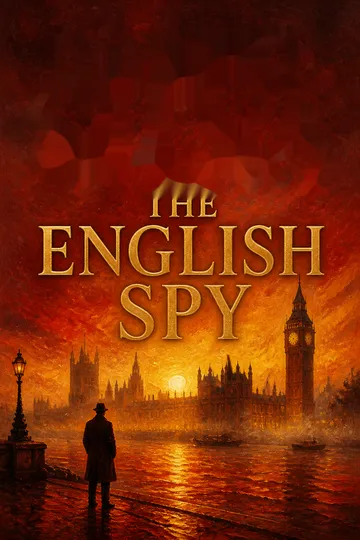
The English Spy, the 15th book in Daniel Silva's Gabriel Allon series, receives largely positive reviews with a 4.22/5 rating. Readers praise the fast-paced, well-crafted espionage thriller featuring Israeli spy Gabriel Allon hunting Irish bomb-maker Eamon Quinn alongside British assassin Christopher Keller. The story involves a murdered princess, IRA connections, and multiple international locations. Reviewers appreciate Silva's authentic portrayal of spycraft, complex characters, and prescient political commentary. Some criticize excessive backstory, political elements, or violence. Most agree Silva's excellent writing keeps readers engaged, though a few found the Irish setting and emphasis on "the Troubles" less compelling than typical Middle Eastern plots.
People Also Read





Characters
Gabriel Allon
Restorer turned spymasterGabriel is an Israeli intelligence officer whose work as a painter and art restorer has never been separate from his capacity for patient observation. He studies people as closely as he studies damaged canvases, looking for the hidden structure beneath what appears to be broken. Loss has made him disciplined, not invulnerable: his son Dani’s death and Leah’s lasting injuries remain present in his marriage, his work, and his fear of becoming a father again. He is approaching leadership in the Office but is most alive in the field, where decisions have immediate human consequences. His central tension is between the duty to protect his country and the private life he wants to preserve with Chiara.
Christopher Keller
The vanished SAS assassinKeller is an English former SAS soldier who has spent years living under false identities and working as a contract killer for a Corsican crime family. He is physically formidable, linguistically gifted, and more emotionally attached than his self-contained manner suggests. His past in Northern Ireland left him with an intimate understanding of both sides of the conflict, as well as the memory of Elizabeth Conlin, the woman he loved while undercover. Keller distrusts institutions because the Army, intelligence services, and his own choices all helped shape his exile. His relationship with Gabriel is built on hard-earned respect, sardonic affection, and a shared familiarity with the cost of violence.
Eamon Quinn
Bomb maker for hireQuinn is an Irish bomb maker and operational planner whose technical skill made him valuable to violent movements and state sponsors across several continents. He is methodical, adaptable, and skilled at using other people’s assumptions against them. His history is rooted in the conflict in Northern Ireland, but his work eventually travels far beyond it. Quinn treats loyalty as a resource to exploit and concealment as a craft, keeping even his family life outside the knowledge of those around him. His intelligence makes him dangerous, but his confidence can harden into arrogance. He is the force that links the novel’s private grief, political retaliation, and international conspiracy.
Graham Seymour
MI6 chief with old debtsSeymour leads Britain’s Secret Intelligence Service with the bearing of a career civil servant and the instincts of a former field officer. His history in counterterrorism has left him carrying responsibility for decisions made during the Omagh bombing, including the failure to stop Quinn. He values loyalty and discretion, yet his position forces him to negotiate with rival services, politicians, and colleagues who may have competing agendas. His relationship with Gabriel is marked by mutual trust and a willingness to make each other uncomfortable. Seymour can be dryly humorous, but beneath that polish sits a man who knows that old operational compromises do not stay buried.
Madeline Hart
Defector seeking a homeMadeline is a Russian sleeper agent raised to pass as English, whose defection leaves her separated from the country and institutions that formed her. She has no secure memory of her biological family and has spent much of her life being shaped for someone else’s purpose. Gabriel gives her shelter in his Cornwall cottage, where she begins to experience the ordinary privacy she has never owned. Her intelligence and careful self-command coexist with a deep desire for belonging. Madeline’s bond with Katerina reaches back to their childhood training, complicating the categories of enemy and friend that define their adult lives.
Katerina Akulova
A trained Russian operativeKaterina was raised in the Soviet intelligence system and trained to function under false identities in foreign countries. Her childhood left her with few ordinary attachments and a demanding relationship to obedience, competence, and survival. She is physically capable, alert to surveillance, and skilled at assessing danger before others see it. Beneath that control are memories of Madeline, the younger girl she once knew in a fabricated English village. Katerina’s work places her inside a world where loyalty is commanded and intimacy can be used as a tool. Her character carries the novel’s question of how much agency can survive a life designed by institutions.
Chiara
Gabriel's pregnant wifeChiara is Gabriel’s wife and an active moral presence in his life, not merely the person waiting at home. Intelligent, affectionate, and direct, she understands the dangers of his work and challenges his habit of treating sacrifice as inevitable. Her pregnancy brings Gabriel’s desire for a family into sharper focus, while the conflict in Israel makes even ordinary travel uncertain. She sees through his fatalism and can name the emotional price of his choices without diminishing her love for him. Chiara represents a future Gabriel wants to inhabit, though she knows that his duties will continue to press against it.
Reza Nazari
Iranian intelligence sourceNazari is a VEVAK officer who becomes a source for the Office, offering access to Iran’s intelligence and nuclear programs. Educated and controlled, he knows how to present himself as a pragmatic bridge between hostile governments. His usefulness depends on the information he supplies, but the novel places that information under growing suspicion. He is also a husband and father, and the safety of his family becomes inseparable from the choices he makes. Nazari’s conduct reveals how espionage can turn a human relationship into an arrangement of leverage, money, and calculated risk.
Eli Lavon
The patient trackerLavon is a former Office operative whose strength is the quiet work of finding people who do not want to be found. His appearance is deliberately forgettable, and his patience lets him notice patterns that more forceful investigators miss. He shares a long professional history with Gabriel and understands the psychological strain of surveillance, sleeplessness, and revenge. Outside intelligence work, he is an archaeologist and scholar, a second vocation that suits his interest in what time conceals. Lavon often acts as the steady friend who reminds Gabriel that the mission is not the only claim on his life.
Ari Shamron
The Office's founding elderShamron is the formidable former head of the Office who shaped its culture and trained Gabriel. He approaches leadership as both a personal bond and a burden carried for a people under threat. Blunt, politically shrewd, and resistant to modern conveniences, he trusts experience over official assurances. His affection for Gabriel is rarely sentimental, but it is unmistakable in the sacrifices he makes and the care with which he thinks about Gabriel’s future. Shamron’s presence connects the current operation to decades of intelligence work and reminds Gabriel that loyalty can sustain a person while also consuming a life.
Liam Walsh
A Real IRA veteranWalsh is a former IRA operative who later works in Dublin’s criminal underworld. He has spent much of his life around men who use ideology to justify violence, and he understands the discipline and danger of their organizations. His knowledge of Quinn’s history makes him crucial to Gabriel and Keller’s search, but fear and loyalty shape what he is willing to reveal. Walsh is not a grand strategist; he is a survivor who has learned how to live beside dangerous people and keep his place among them.
Maggie Donahue
A wife guarding her daughterMaggie lives in Belfast with her daughter Catherine and works long shifts at the Europa Hotel. She has built a narrow, hard-won life around the absence of her husband and the need to protect her child. Her reserve can look like hostility, but it is also a practical defense in a neighborhood where political allegiance and family history carry consequences. Maggie’s choices are constrained by threats from men who expect her silence. Her strongest loyalty is to Catherine, whose ordinary adolescence she tries to preserve amid the dangers that surround their family.
Catherine Donahue
The hidden family linkCatherine is Maggie Donahue’s teenage daughter, a schoolgirl whose travel to Lisbon leaves a trace of her father’s concealed life. She is mostly unaware of the adult networks that have shaped her family. Her photograph and journey become important to the investigation, although her own concerns remain those of a young person growing up in Belfast.
Billy Conway
A Belfast informantConway once supplied information to Keller during the Troubles and has survived by understanding what each side expects from him. He is wary, observant, and shaped by a city where an old allegiance can remain dangerous long after the peace accords. His history with Keller carries both practical trust and unspoken resentment. Conway’s instinct for self-preservation makes him difficult to read, even to someone who once depended on him.
Alexei Rozanov
A Kremlin intelligence operatorRozanov is a senior Russian intelligence officer with access to the Kremlin’s inner circle. He is patient enough to plan retaliation across several countries and politically protected enough to believe that his service can control the people it hires. His relationship with Nazari joins Russian and Iranian interests in the novel’s central conspiracy. Rozanov’s confidence comes from proximity to power, but the operation exposes the risks of treating hired killers and allied sources as obedient instruments.
Amanda Wallace
MI5's embattled directorWallace heads MI5 and has spent decades rising through a service that prizes secrecy and control. She is disciplined, ambitious, and acutely aware of the political consequences of failure. Her rivalry with Seymour is personal as well as institutional, shaped by years of parallel careers and competition for authority. Wallace is not careless, but her decisions under pressure reveal how protecting an organization can conflict with sharing information quickly. She is strongest when the threat is clear and the chain of responsibility can be defined.
Jonathan Lancaster
Britain's crisis-tested prime ministerLancaster is the British prime minister, a political survivor whose private and public lives have both been touched by Russian interference. He shares a close working relationship with Seymour and is accustomed to making decisions under scrutiny. His stubbornness can serve as resolve, but it can also complicate security plans when he refuses to alter his schedule. The threat against him draws the intelligence services into an urgent test of their ability to protect the government without allowing fear to govern it.
Leah
Gabriel's injured first wifeLeah is Gabriel’s first wife, a gifted painter whose life was transformed by the bomb that killed their son and left her profoundly injured. She lives with severe trauma and an unreliable grip on time, sometimes meeting Gabriel in the present and sometimes through memories of their family. Her artistic eye remains part of how Gabriel understands love, loss, and the work of restoration. Their bond persists, but it cannot undo what happened or replace the life Gabriel has built with Chiara.
The Princess
A hunted public iconThe former princess is a globally recognized figure whose public compassion coexists with a history of private distress and a painful royal marriage. She has rejected the palace’s preferred role for her and travels with a small circle of friends and paid security. Her celebrity offers no reliable protection from those who want to use her as a political symbol. The novel presents her through the competing stories told about her by the palace, the press, and the public.
Uzi Navot
The Office's outgoing chiefNavot is the head of Israel’s intelligence service at the start of the operation and an experienced spymaster with strong connections to other agencies. He brings Seymour the intelligence that identifies Quinn and helps set Gabriel’s mission in motion. Practical and politically alert, he understands the danger of sharing human sources too freely. His impending departure from the chief’s position places Gabriel’s personal crisis alongside a change in the Office’s leadership.
Amelia List
The yacht's sous-chefAmelia is the Aurora’s English sous-chef, competent and curious, and one of the few people aboard who works closely with the new chef. Her attraction to him grows from ordinary workplace intimacy, unaware that his identity and intentions are false.
Reginald Ogilvy
The Aurora's strict captainOgilvy is the former Royal Navy officer commanding the Aurora. He runs the yacht with a sailor’s attention to procedure and takes responsibility for the famous guest aboard. His decision to hire a replacement chef keeps the vessel on schedule, though he has no reason to suspect the danger hidden in the galley.
Plot Devices
False identities
Concealment as daily workThe novel’s characters move through the world under constructed names, passports, occupations, and histories. Quinn becomes Colin Hernandez on Saint Barthélemy, while Keller has lived as Michael Connelly and later adopts other covers. The names create access to kitchens, hotels, homes, and borders, but they also fragment personal identity. A cover can protect someone from a past or make them useful to a new employer; it can also place innocent people in danger when investigators mistake a fabricated life for a real one. The device lets the book turn ordinary acts, such as checking into a hotel or ordering food, into tactical decisions.
The planted trail
Evidence that guides pursuitSmall physical traces lead the investigators from Belfast toward Lisbon: a ticket stub, clothing, household money, letters, and a photograph of Catherine with her father. Each clue appears mundane until it is compared with another source, such as travel records or Lavon’s surveillance. The trail gives Gabriel and Keller a credible route to Quinn, but it also allows Quinn’s allies to manipulate what they find. The device makes evidence both a tool for understanding and a possible instrument of deception. Its later importance is that a trail can reveal the target while also leading the hunters into a prepared trap.
The false death
A disappearance used as baitAfter the Brompton Road explosion, Gabriel allows the world to believe he has died. The public report gives Russia confidence that its operation succeeded, while Gabriel uses the cover to move without attracting the same scrutiny. Shamron and Seymour help maintain the fiction through a reported burial and controlled disclosures. The deception also changes Gabriel’s emotional circumstances: Chiara is made to grieve, and Gabriel cannot safely contact her. The device transforms a catastrophic event into an operational advantage, but the advantage depends on imposing real pain on people who love him.
The coded bomb signal
A signature that becomes warningQuinn uses a phrase associated with a bomb being placed to signal that an explosive is ready. It first belongs to the history of the Omagh bombing and later appears in messages connected with the London attack. The signal allows intelligence officers to recognize the meaning of an otherwise cryptic communication, while also identifying Quinn’s deliberate need to mark his work. Its reuse turns an old operational code into an immediate source of dread. The phrase carries no power on its own; its force depends on knowing the history behind it and recognizing that the same bomb maker is active again.
The restoration motif
Art as a language for repairGabriel’s work as an art restorer shapes how he reads damaged lives and damaged evidence. He studies the layers beneath a painting’s surface, removes grime without erasing the original, and understands that some losses cannot be repaired. The Caravaggio he hopes to restore marks the civilian life he wants to keep, while the nursery painting he makes for his children gives grief a visible form. Leah’s paintings connect his present family to the past he cannot undo. Restoration therefore functions as more than characterization: it offers the novel a precise vocabulary for repair, preservation, and the limits of both.
Gabriel Allon Series













About the Author
Download PDF
Download EPUB
.epub digital book format is ideal for reading ebooks on phones, tablets, and e-readers.








