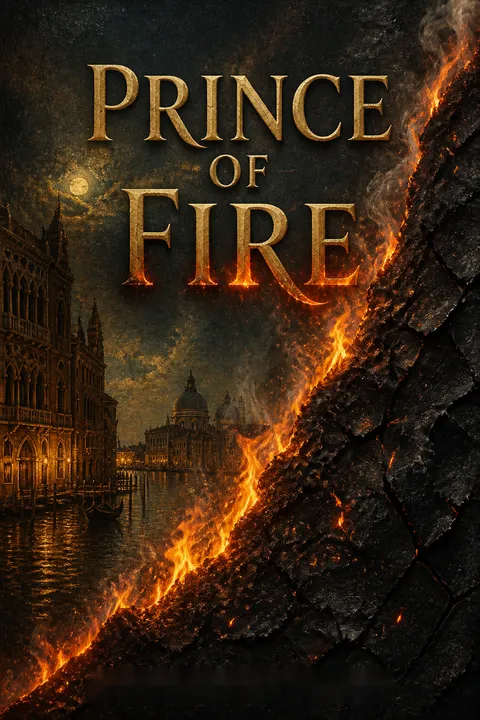


Plot Summary
Rome's Embassy Burns
On a clear March morning, a white truck races toward the Israeli diplomatic compound in Rome and explodes at its entrance. The blast kills guards, visitors, embassy staff, and families inside the nearby residence. A second car arrives through the smoke. Four gunmen fire into the wreckage, killing survivors before escaping.
The attack echoes two earlier strikes on Jewish targets, in Buenos Aires and Istanbul, but its scale and precision suggest a larger operation. Across the street, a Vatican courier survives because he delivered a document minutes before the blast. His witness account reveals the attackers used the explosion as cover for a second wave of killing.
The attack is designed as more than an assassination or a warning. The bomb destroys a diplomatic site, while the gunmen turn rescue into another opportunity for murder. That sequence makes the survivors and witnesses part of the attack’s machinery: even the priest who approaches to help becomes a potential target. The embassy’s public role also matters. It is a place where people seek safety, visas, and political recognition, so destroying it wounds both a community and the ordinary channels through which states communicate.
The Disk Names Gabriel
Two days later, Italian police raid a Milan pensione and find abandoned luggage, false identities, phones, and a protected computer disk. Israeli station chief Shimon Pazner takes the disk from Italian intelligence under the promise of sharing its contents, then flies it to Tel Aviv. The Office breaks its security within hours.
The files contain security plans for Jewish institutions across Europe and a detailed Arabic dossier on Gabriel Allon, the retired Israeli operative who killed the Palestinian militant Sabri al-Khalifa in Paris decades earlier. The dossier also records the Vienna bombing that left Gabriel’s wife, Leah, gravely injured and their son dead. Shamron decides Gabriel must lead the hunt before the next attack.
The disk turns a mass-casualty crime into a personal summons. Gabriel is not simply chosen for his professional history; the dossier shows that the attackers have studied the costs of that history, including the wound he has spent years avoiding. Pazner’s deception also signals that the investigation begins inside a contest over control, not with a clean handoff between allies. Intelligence here is both evidence and leverage: whoever possesses the record can decide who acts, what others learn, and which old injuries become operational again.
Venice's Last Restoration
In London, Gabriel meets art dealer Julian Isherwood to inspect a dirty painting that may be by Rubens, then visits Leah at the psychiatric clinic where she has lived since the Vienna bombing. She does not recognize him, and he cannot bring himself to tell her he wants to end their marriage and marry Chiara Zolli, his Venetian partner.
Back in Venice, Shamron shows him surveillance photographs proving their enemies have found his home and work. The captured dossier links the threat to Gabriel’s career and lists future targets. Shamron orders him back into the Office, and Gabriel leaves the unfinished Bellini altarpiece behind, asking his employer Francesco Tiepolo to complete it.
Gabriel’s restoration work offers a life organized around patience, repair, and attention to what remains. His visit to Leah exposes the limit of that metaphor: technical skill cannot restore a mind trapped in the moment of catastrophe. His silence about Chiara is not a simple failure of courage, because ending the marriage would make a decision for a woman who cannot answer him. Shamron’s intervention does not resolve that moral paralysis. It removes Gabriel from Venice and gives him a new duty before he has decided what he owes the old one.
A Team Follows Footprints
At Office headquarters, director Lev Ahroni places Gabriel under formal discipline and gives him a team: analyst Yossi, terrorism historian Dina Sarid, Shin Bet officer Yaakov, and military intelligence captain Rimona.
They begin with Daoud Hadawi, a former member of Yasir Arafat’s security force identified through the Milan evidence. When the search stalls, Dina asks them to consider a missing person, Khaled al-Khalifa, the orphaned son of Sabri and grandson of the warlord Asad.
She traces the lineage from Asad’s attacks in British Mandate Palestine to Sabri’s Black September campaign and Gabriel’s 1972 killing of Sabri in Paris. Khaled vanished after his father’s funeral. Dina notices that three later bombings share dates tied to his family history.
Dina’s method changes the investigation from a search for a bomb-maker into a reconstruction of inherited grievance. The team has a physical suspect in Hadawi, but Dina argues that a foot soldier cannot explain the operation’s scale. She treats absence as evidence: Khaled’s disappearance may be a deliberate concealment rather than a dead end. The family history also unsettles Gabriel’s own past. His first killings and the murder of Sabri are no longer closed episodes; they may have become the material from which another generation has built a campaign.
Arafat's Useful Lie
Gabriel travels to the Mukata in Ramallah to confront Arafat about Khaled. The Palestinian leader claims he sent the boy away after Sabri’s funeral and no longer knows where he is. Their meeting also forces Gabriel to revisit Vienna: Arafat admits he ordered the killing of Gabriel, but says his operative Tariq al-Hourani planted the bomb beneath Leah and their son’s car against his instructions.
Gabriel leaves convinced Arafat is concealing Khaled’s role. Hours later, Shin Bet officer Yaakov takes Gabriel across the West Bank to meet Mahmoud Arwish, Arafat’s translator and an Israeli informant who has requested Gabriel personally. The meeting begins as an extraction and ends with Arwish offering a lead.
Arafat’s admission gives Gabriel a painful distinction without offering relief: Arafat ordered an attempt on his life, while Tariq chose the method that destroyed Leah’s mind and killed their child. The difference matters factually, but it does not undo the devastation. Arafat also uses selective candor as a negotiating tool, granting enough truth to complicate Gabriel’s anger while withholding the information he came to obtain. Arwish’s appearance shifts the search from a hostile leader’s office to the unstable world of informants, where personal desperation and strategic deception can coexist.
The Collaborator's Clue
In a bare safe flat, Arwish explains that he collaborated because Israeli authorities let his wife travel to Jerusalem for cancer treatment. He confirms Khaled exists, says the attacks are connected to Arafat’s circle, and describes a European woman who relays Khaled’s messages to the Mukata under different names. Arwish supplies a photograph of a handsome young man beside Arafat.
Gabriel and Yaakov bring the information back to the Office, but Arafat has already recognized Arwish’s role in feeding the Israelis a useful trail. At the Mukata, Arafat orders his men to execute the informant as a traitor. His death leaves Gabriel with the photograph and the woman’s voice, but no reliable way to locate Khaled.
Arwish’s account makes betrayal morally legible without making it harmless. He entered the relationship to obtain treatment for his wife, yet the secret that protects her also exposes him to blackmail and execution. Arafat’s response reveals the asymmetry of the arrangement: the informant is expendable once his part is played. The photograph and voice are valuable clues, but they are also curated evidence. Gabriel has been given enough to continue, not enough to know whether the trail leads toward Khaled or into a trap.
Mimi's Cairo Switchboard
Gabriel travels under the identity of German businessman Johannes Klemp and asks David Quinnell, a discredited British journalist in Cairo, to help identify the woman’s contacts. Quinnell directs him to Mimi Ferrere, a cosmopolitan nightclub owner known by several aliases.
Gabriel befriends her, then enters her apartment at night, plants listening devices on her telephones, and copies her computer files. A call captured there links a French-speaking man’s voice to a number in Marseille.
The Office matches the voice to an earlier intercepted call and traces the number to an apartment on boulevard St-Rémy. Before leaving Cairo, Gabriel receives instructions to go through Rome, where he revisits the apartment building where he killed his first target.
Gabriel’s disguise turns personality into equipment. Klemp’s complaints, tastes, and social habits let him move through Cairo without exposing the quiet operative beneath them. Yet the operation’s success depends on more than technical skill: Quinnell’s knowledge of the city and Mimi’s open social life create access that surveillance alone could not provide. The return to Rome’s old murder site adds a personal undertow to the assignment. Gabriel is being drawn toward a target through the same city that marks the beginning of his transformation into a killer.
A Hostage Replaces Khaled
In Marseille, Gabriel, Dina, Yaakov, and Shamron watch the entrance to the address traced from Mimi’s phone. On the final morning, a woman leaves first; Gabriel recognizes the risk of exposing the surveillance team and lets her go. When a man who resembles Khaled later emerges, Gabriel and Yaakov race after him on a motorbike, but a car blocks their route and the man escapes into the streets.
Gabriel catches up with the woman near a stairway. She reveals that Leah has been taken from the English clinic and offers to lead Gabriel to her if he dismisses the team. After Dina and Yaakov urge him to refuse, Gabriel orders the others out of Marseille and gets into the woman’s car.
The operation’s command structure collapses at the point where Gabriel’s private obligation becomes a hostage’s bargaining chip. The woman does not need to overpower him physically; she understands that he cannot treat Leah as an acceptable loss. His choice is therefore both compassionate and exploitable. The earlier decision to let her pass shows sound tradecraft, but it cannot protect him from the personal knowledge Khaled’s network has gathered. Gabriel’s order to withdraw preserves his teammates while leaving him alone inside the enemy’s plan.
The Road Through Exile
Gabriel’s captors take him to a stripped house in Martigues, search him, destroy his clothes, and beat him before forcing him to drive north with the woman who calls herself Palestina. She carries a gun but admits she does not know where Leah is or the journey’s final destination. To keep her talking, Gabriel asks about her origins.
She describes Sumayriyya in the Western Galilee, her family’s flight to Lebanon in 1948, and the later destruction of their home in Ein al-Hilweh during Israel’s 1982 invasion. Their route bends from Nîmes toward Lyon, Chalon, Troyes, and finally Paris. As French authorities raise the terror alert, Gabriel realizes the deadlines point toward a seven o’clock attack.
Palestina’s story is not a detached history lesson; it is the language through which she understands her own choices. She inherits a village she never saw, while Gabriel hears a history that collides with the founding narrative he was raised to defend. His questions keep her speaking, but they also make their journey an encounter between two forms of memory, one organized around survival and one around dispossession. The ticking schedule turns that intimate exchange into practical intelligence: the story may identify the woman, but the time and route expose the immediate danger.
Ten Seconds at Gare
At the Gare de Lyon, the woman hands Gabriel a suitcase and leads him into a station already under heightened security. She directs him to a pay phone, where Mimi’s voice reveals that three Palestinian suicide bombers are inside and that Leah waits near a train for Marseille. Gabriel spots the bombers by their identical cases and recognizes the clock as their trigger.
He strikes Palestina, takes her gun, shoots one bomber, then fires at a second while warning the crowd to get down. He reaches Leah as the third attacker’s suitcase detonates, carrying her into the train carriage. The blast kills and wounds passengers, but two bombs do not explode. Gabriel carries Leah out through the Métro.
The station forces Gabriel to choose under an impossible compression of time: warn strangers and risk losing Leah, or move directly to her and leave the crowd exposed. He finds a third course only after violence begins, using gunfire to interrupt the coordinated attack and his warning to drive people from the platform. His rescue is not clean or triumphant. One bomb still explodes, and the dead remain around him as he carries Leah away. The scene makes survival a matter of limited intervention, not mastery over catastrophe.
The Bill Comes Due
Gabriel reaches a Paris safe flat, where Leah briefly recognizes him before slipping back into memories of Vienna. The Office moves her to Israel through a covert route involving Warsaw, while Gabriel returns separately through Italy.
French newspapers publish a photograph linking him to Mimi’s Cairo club and the three bombers; Israel’s inquiry examines his choices, and the government faces a diplomatic crisis. Quinnell is found murdered in Cairo, while Arwish’s execution confirms Arafat’s reach.
In Jerusalem, Leah begins speaking again at Mount Herzl hospital, but Gabriel still cannot sign the papers ending their marriage. Chiara, who has waited through his return and recovery, leaves for Venice. Shamron offers Gabriel a senior Operations post as the inquiry continues.
The escape from Paris solves the immediate hostage crisis but creates a public one. A photograph can make a rescue look like complicity, and Gabriel’s government must decide how much truth to expose to protect its relationships abroad. At home, the consequences are more intimate: Leah’s returning voice offers hope without restoring the woman Gabriel remembers, while Chiara refuses to build a life around his indecision. Shamron’s offer of authority arrives at the same moment as these losses. The work can give Gabriel purpose, but it cannot settle the private debts that keep him from choosing freely.
The Name Beneath the Soil
Gabriel traces Palestina’s account to Sumayriyya and visits Hamzah al-Samara, an elderly resident who escaped the village’s destruction in 1948. From the details of her grandfather’s land and family, al-Samara identifies the family as al-Tamari.
Gabriel hires Lebanese fixer Nabil Azouri to search Ein al-Hilweh. Azouri returns with the daughter’s name, Fellah al-Tamari, and learns that she left for Europe on a United Nations scholarship to study archaeology. Her father had not seen her for years.
Gabriel brings the findings to former tracker Eli Lavon, who agrees to follow her history quietly. Shamron acknowledges that Israeli forces expelled Arabs from some villages, then asks Gabriel to take charge of Operations. Gabriel accepts the mission to find Khaled first.
The investigation reaches its deepest point not through a database but through local memory. Al-Samara can name the family because he remembers the land, the neighbors, and the ordinary details that survive official maps. Fellah’s education complicates the image of a militant formed only by camp life: she moved through institutions and languages before returning to the politics of exile. Gabriel’s conversation with Shamron refuses an easy moral settlement. Acknowledging expulsions does not erase the violence that preceded or followed them, but denying them would make the pursuit of justice another form of selective memory.
The Prince in the Trench
Five months later, Gabriel travels to an excavation in Provence, where Paul Martineau, a respected archaeologist, is working among Iron Age remains. Gabriel approaches disguised as a painter and waits until Martineau recognizes him. He identifies the professor as Khaled al-Khalifa, heir to the family campaign that began with Asad and Sabri.
Khaled reaches for the pistol in his coat, but Gabriel shoots him twice before he can fire, then finishes the encounter in the trench. The tableau joins the present to the old village ruins that shaped both men’s histories. Gabriel leaves the site by motorcycle, carrying no public victory, only the end of the immediate threat and the burden of the act.
The final encounter mirrors the book’s central image of excavation: beneath a polished professional identity lies a concealed history, and beneath the visible landscape remain the traces of what was erased. Khaled’s work as an archaeologist turns that image into character, since he studies vanished peoples while trying to restore his own ancestral claim through violence. Gabriel kills him without the apparatus of a large operation, refusing to give Khaled another team or spectacle to manipulate. The result is decisive in plot but not cleansing in meaning. Gabriel can stop one man, not settle the history he represents.
Analysis
Prince of Fire builds its thriller around the collision between private memory and political history. Gabriel begins as a restorer trying to live outside the work that once consumed him, but the Rome bombing returns him to a career his enemies have archived with unnerving precision. The dossier gives the plot its engine; the older histories of Asad, Sabri, and the erased villages give that engine its fuel. Violence is repeatedly shown to travel through families and institutions, changing names as it passes from one generation to the next.
The novel’s strongest formal idea is that investigation resembles restoration. Gabriel looks for what has been covered over, separates evidence from later retouching, and tries to reconstruct the image beneath. Yet the analogy remains uneasy. A painting can be cleaned without asking whether its history is politically convenient; human history cannot. Gabriel’s conversations with Dina, Fellah, and Shamron make him confront the gap between acknowledging Palestinian dispossession and treating that history as justification for attacks on civilians. The book refuses a simple equivalence between causes and methods, while also showing how selective memory can reproduce conflict.
Its emotional plot runs beside the espionage plot rather than beneath it. Gabriel’s rescue of Leah is an act of fidelity, but fidelity cannot return her to the person she was or make his relationship with Chiara painless. His work gives him purpose and a language for duty, while also furnishing a way to postpone intimate decisions. The ending offers tactical closure, not historical reconciliation. Khaled is stopped, yet the losses that formed his world and Gabriel’s remain unresolved. The title’s image of the prince of fire captures both protective force and its danger: the defender can become so shaped by judgment and retaliation that survival itself begins to resemble another inherited war.
Review Summary
Prince of Fire, the fifth Gabriel Allon novel, receives mixed reviews averaging 4.22/5 stars. Readers praise Silva's storytelling, fast pacing, and balanced portrayal of Israeli-Palestinian conflict, though some criticize heavy historical passages that slow the plot. The story follows Israeli spy and art restorer Allon hunting a terrorist who has exposed his identity. Many appreciate the depth given to Allon's character and his complicated personal life. Several note the series improves with each installment, while others find the formula repetitive. Reviewers recommend starting from the series beginning rather than jumping in mid-series.
People Also Read







Characters
Gabriel Allon
The reluctant master spyAn Israeli intelligence operative and gifted art restorer, Gabriel moves between two kinds of repair: restoring damaged paintings and preventing further violence. His quietness is not passivity; it is the discipline of a man who has spent decades converting attention into action. The deaths of his son and the devastation of Leah have left him wary of intimacy, while his relationship with Chiara offers a possible life outside the Office. He is loyal to Shamron, but increasingly uneasy with the inherited explanations that make every act of violence seem inevitable. His skill at disguise conceals a persistent moral question: what does duty demand, and what does it take from the person who obeys?
Ari Shamron
The old intelligence patriarchA legendary former head of Israeli intelligence, Shamron is a tactician who still exerts power through relationships, timing, and carefully placed pressure. He treats Gabriel as a protégé and, emotionally, as a son, but affection rarely stops him from steering Gabriel toward work he believes necessary. The past is not abstract to him: he fought in Israel’s founding war and carries direct knowledge of the choices made then. His certainty protects his country and his own self-image, yet it also makes him capable of treating another people’s suffering as an argument rather than an experience. His bond with Gabriel is loving, demanding, and politically charged.
Leah Allon
The wounded first wifeLeah is Gabriel’s wife and a painter whose life was shattered by the bombing that killed their son. Severe physical injuries and trauma have left her largely unreachable, so her relationship with Gabriel persists through visits, remembered gestures, and the obligations neither can simply discard. Her fragility should not be mistaken for absence: fragments of memory and recognition remain, though they arrive unpredictably. Leah embodies the human cost hidden behind Gabriel’s professional record. She is not merely a reason for his guilt; she is an artist and a person whose past with him continues to shape the choices both he and Chiara must face.
Chiara Zolli
The Venetian field officerA capable Office officer from Venice, Chiara is Gabriel’s partner and the woman he hopes to marry. She is practical, perceptive, and unwilling to let his silence pass for a decision. Her Italian warmth and taste for making a home contrast with the temporary rooms and concealed identities of intelligence work, but she is no sheltered civilian. Chiara understands danger and accepts that Gabriel’s past cannot be erased; what she cannot accept indefinitely is being asked to wait while he avoids the question of Leah. Her attachment is both tender and self-respecting, which gives her relationship with Gabriel genuine friction rather than simple romantic consolation.
Khaled al-Khalifa
The vanished heirKhaled is the absent son of Sabri al-Khalifa and grandson of Asad, a child who disappeared after his father’s funeral and became the center of a long-running intelligence mystery. His family history binds him to successive Palestinian conflicts and to the Israeli operatives who killed his father and grandfather. Those searching for him see an enemy shaped by inheritance, secrecy, and political purpose, but the details of his life remain difficult to establish. His significance lies partly in the uncertainty surrounding him: he may be a living strategist, a legend used by others, or both. The search for Khaled forces Gabriel to examine how personal vengeance becomes political history.
Dina Sarid
The historian of terrorDina is a young intelligence historian whose expertise in attacks against Israel allows her to see patterns other investigators dismiss. She survived the 1994 Dizengoff Street bombing, which killed her mother and two sisters, and her physical scars accompany a determination to recognize danger before it reaches another family. Dina’s scholarship is not detached; it is her chosen form of resistance to helplessness and survivor’s guilt. She challenges Gabriel’s assumptions without pretending to be untouched by the violence she studies. Her insight opens the investigation’s historical path, while her presence on the Marseille operation makes clear that analysis and personal cost cannot be cleanly separated.
Yasir Arafat
The calculating Palestinian leaderArafat is the embattled leader of the Palestinian Authority and the political figure who links several generations of the al-Khalifa family. He uses ceremony, selective candor, and personal favor as tools of negotiation, presenting himself as both a statesman and the guardian of a revolutionary cause. His history with Gabriel is marked by violence, but also by moments when their interests briefly overlapped. Arafat’s frailty does not make him politically powerless; he understands that symbols, denials, and public narratives can influence events as surely as weapons. His character tests the distinction between a leader’s stated intentions and the consequences of the networks he cultivates.
Fellah al-Tamari
The daughter of exileFellah’s family came from Sumayriyya in the Western Galilee, a village whose destruction and displacement shaped the lives of those forced into Lebanon. She leaves the refugee camp on a scholarship and studies archaeology in Europe, carrying family history into a life beyond the camp. Her education and movement across borders suggest both intelligence and a desire for options her parents never had. Fellah’s inherited connection to place is central to the novel’s questions about memory, identity, and political belonging. Her story also shows how private grief can be absorbed into larger movements, where a person’s own hopes become difficult to distinguish from the cause she is asked to serve.
Lev Ahroni
The guarded directorLev directs the Israeli intelligence service with a technocrat’s faith in procedure and a politician’s awareness of internal rivals. He puts Gabriel under Office discipline and insists the investigation report to him, partly to keep Shamron from controlling it. Lev can recognize an operational threat, but his distrust of the old guard complicates his judgment. His relationship with Gabriel is a contest over authority as much as a professional partnership.
Yaakov
The Shin Bet enforcerYaakov is a hard-edged Shin Bet officer who knows the West Bank’s informant networks and the coercive methods used to manage them. He serves as Gabriel’s deputy and driver, combining practical competence with deep loyalty to the Israeli security mission. His directness often cuts through Gabriel’s introspection, though the two develop mutual respect. Yaakov’s family roots in Hadera give his sense of national belonging a personal, inherited dimension.
Mahmoud Arwish
The compromised informantArwish works close to Arafat as a translator and information conduit. He is pulled toward Israeli intelligence through his wife’s need for medical treatment, making his cooperation a matter of family survival as well as political risk. He understands the danger of being branded a collaborator and resents the men who control his choices. Arwish’s position exposes the cruel bargain at the center of espionage: the information may be valuable, but the person supplying it is often treated as disposable.
David Quinnell
The compromised correspondentQuinnell is a once-prominent British journalist who has settled in Cairo and cultivated sources across the Arab world. Debt, drink, and a secret past have left him dependent on Shamron’s network, even as he publicly adopts a pro-Palestinian voice. His access makes him useful to Gabriel, but his divided loyalties and self-destructive habits make him difficult to trust. Quinnell shows how intelligence services can turn personal weakness into a long-term professional arrangement.
Mimi Ferrere
The Cairo social gatekeeperMimi runs a Cairo wine and jazz bar that draws expatriates, wealthy locals, and people whose identities shift with the room. Fluent in several languages and practiced at making strangers feel welcome, she connects otherwise distant social circles. Her establishment gives Gabriel access to a trail of voices and contacts, but her charm also conceals the discipline of someone accustomed to watching others. Mimi moves comfortably between performance and private purpose.
Eli Lavon
The patient trackerLavon is a former intelligence tracker turned investigator and archaeologist. His gift is noticing small behavioral traces and following them without making himself memorable. A bombing has left him physically diminished, but not stripped of curiosity or professional instinct. He shares with Gabriel the experience of being shaped by Holocaust survivor parents, though he has found a quieter way to work through history. Gabriel trusts him to investigate a sensitive lead without attracting attention.
Nabil Azouri
The Beirut fixerAzouri is a Lebanese-Palestinian intermediary who moves among journalism, nightlife, arms deals, and intelligence work. He approaches assignments as business, negotiating fees and expenses with the same ease he orders champagne. His cynicism is not a lack of skill; he knows which doors open and what risks are worth taking. Gabriel hires him because Azouri can enter places an Israeli agent cannot.
Sabri al-Khalifa
The Black September plannerSabri is Asad’s son and a sophisticated Palestinian militant recruited by Arafat after the 1967 war. Educated in Europe and fluent in several languages, he turns elite training and international connections into the machinery of Black September. His public reputation grows through spectacular attacks, most devastatingly the massacre at the Munich Olympics. His choices create both a political legacy and a family wound that shapes the next generation.
Asad al-Khalifa
The warlord of Beit SayeedKnown as Sheikh Asad, he rises from poverty to command a clan-based fighting force during the Arab Revolt and the 1948 war. He is cunning, disciplined, and skilled at turning local grievances into military power. His methods make him a formidable adversary to the emerging Israeli forces, including the young Ari Shamron. Asad’s reputation becomes a family inheritance, carrying the memory of both political ambition and violence.
Rimona
The intelligence captainRimona is an Israeli military intelligence captain and Shamron’s niece. She works through captured documents and brings a disciplined researcher's eye to Gabriel’s team. Her family connection to Shamron is clear, but she earns her place through professional competence.
Yossi
The Oxford analystYossi is a brilliant, pedantic researcher who joins Gabriel’s temporary team. He is more comfortable with archives and precise arguments than field improvisation, but his knowledge gives the investigation structure. His dry humor surfaces when the office’s improvised working conditions become especially absurd.
Shimon Pazner
The Rome station chiefPazner is the Israeli intelligence chief in Rome, a capable officer forced to work amid the bombing’s confusion and loss. His decision to secure the Milan disk for Israel gives Shamron’s team its first substantial evidence. He is practical, exhausted, and willing to act before diplomatic niceties can slow him down.
Plot Devices
The Milan dossier
Turns history into evidenceThe protected disk recovered from the Milan pensione contains a record of Gabriel’s operations and reconnaissance on future Jewish targets. It gives Israeli intelligence a way into the attackers’ world, but its unusually complete account of Gabriel also suggests that the enemy understands his biography well enough to manipulate his reactions. The dossier is therefore both a clue and a provocation. As the investigation progresses, the team must ask not only what the file reveals, but who wants them to follow its trail and what choices that trail is designed to force.
The anniversary pattern
Makes history a timetableDina notices that earlier bombings occurred on dates connected to the destruction of Beit Sayeed and to Gabriel’s killing of Sabri al-Khalifa. The pattern converts history from background into an operational clock, suggesting that the attacks are shaped by a family’s accumulated losses. It also gives the investigators a way to test their theory: if the date has meaning, another strike may be planned around it. The pattern is powerful but not self-proving, which is why the team has to combine it with witness accounts, photographs, and the missing person at its center.
Restoration as method
Reads damage for tracesGabriel’s work on Old Master paintings teaches him to distinguish original material from later restoration and to reconstruct a whole from small, damaged fragments. He applies the same habits to intelligence: an old photograph, a voiceprint, a forgotten address, or a family memory can reveal what a larger file conceals. Restoration also gives him a private refuge, a form of attention that is slower and less violent than espionage. The metaphor is not a promise that people or histories can be made whole. It describes Gabriel’s effort to understand what remains after violence has already done its work.
Aliases and voiceprints
Links hidden identitiesThe woman communicating with Arafat adopts different names and national identities, while Gabriel travels as Johannes Klemp and later follows a trail of intercepted voices. Electronic surveillance, phone records, and voiceprint comparison connect distant locations that would otherwise appear unrelated. Yet the technology cannot supply a human identity by itself. The investigators need social knowledge from Quinnell, Mimi’s apartment, and eventually the woman’s own history. The device emphasizes the gap between recognizing a voice and knowing the person who uses it.
The hostage countdown
Forces a divided choiceKhaled’s network uses Leah’s abduction to make Gabriel follow a sequence of timed instructions, then places him inside the Gare de Lyon as three bombers prepare to attack. The threats narrow his options at every stop, while the station clock gives the final choice a visible deadline. The hostage plan is also designed to exploit Gabriel’s loyalty, making his love for Leah an instrument of control. Its failure depends on his ability to read the surroundings and act within seconds, but it still produces casualties and leaves his personal life permanently altered.
Gabriel Allon Series





















About the Author
Download PDF
Download EPUB
.epub digital book format is ideal for reading ebooks on phones, tablets, and e-readers.








