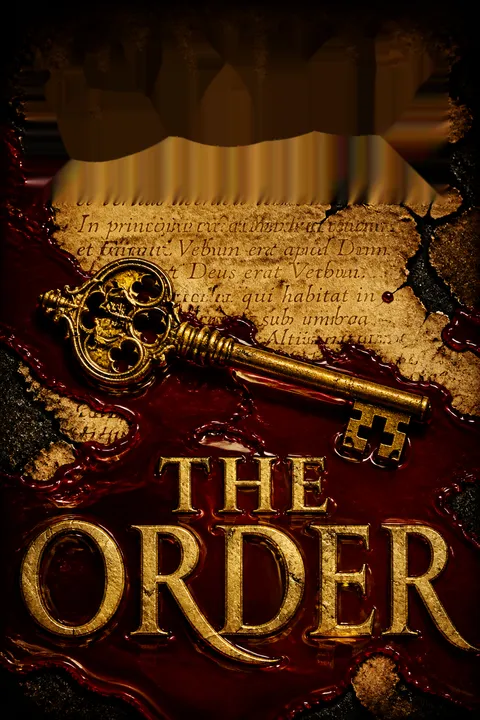


Plot Summary
The Pope's Last Night
Archbishop Luigi Donati,3 private secretary to Pope Paul VII,4 is called to the papal apartments after midnight and finds his friend4 dead. Cardinal Domenico Albanese,5 the camerlengo, says he discovered the pope4 in the chapel and carried him to bed, where a physician declared a heart attack.
Donati3 notices that the study curtains have been closed, a cup of tea has appeared, and a personal letter is missing. Albanese5 also waited nearly two hours before contacting him, then seals the apartments and takes charge of the Church. Donati3 is left with grief, no authority, and a growing suspicion that the tidy official story has been arranged around whatever vanished from the pope's4 desk.
The apparent natural death begins as a contest over who controls the story. Donati's loss is intimate, but the sealed rooms and delayed notification turn mourning into an investigation before he can grieve. His careful attention to small alterations reflects a man trained by the Curia, where omissions can carry more weight than declarations. Albanese's authority is legitimate on paper, which makes Donati's powerlessness more than personal: the institution can close its doors precisely when scrutiny matters most.
A Holiday in the Ghetto
In Venice, Israeli intelligence chief Gabriel Allon1 is trying to spend time with his wife,2 Chiara,2 and their young twins, Irene18 and Raphael.19 Chiara2 has arranged the holiday around his restoration of a Tintoretto painting and a visit to her parents, Rabbi Jacob and Alessia Zolli, in the Jewish ghetto.
The rabbi warns that anti-Jewish attacks are rising alongside the political fortunes of Italy's new far-right government. Gabriel1 hears that an old friend, Pope Paul VII,4 has died, then learns Donati3 wants to meet him in Rome. Chiara2 suspects Albanese's5 account of finding the body and insists on joining Gabriel.1 Their family pause ends before it has properly begun, and the pope's4 death pulls Gabriel1 back into work.
The holiday establishes what Gabriel stands to lose when duty calls: not an abstract domestic ideal, but ordinary time with children who have rarely been safe outside Israel. Venice also makes the political threat personal. The ghetto's memorial and armed police are part of the family's daily landscape, while the rabbi's alarm links present-day rhetoric to remembered catastrophe. Chiara's insistence on joining the investigation shows that partnership, for them, means facing danger together rather than pretending it can be kept outside the home.
The Guard on the Bridge
At lunch in Rome, Donati3 tells Gabriel1 that the pope's4 death has troubling gaps: a vanished letter, a missing Swiss Guard named Niklaus Janson,8 and Albanese's5 unexplained delay. Gabriel1 agrees to locate Janson,8 whose phone appears in Florence. He, Chiara,2 and Donati3 track its signal through the city, then follow Janson8 across the Ponte Vecchio as he exchanges messages with someone unseen.
When Donati3 calls, Janson8 turns in alarm and moves toward them. A gunman shoots him three times in the crowd. Gabriel1 takes Janson's8 wallet and phone, but the device is remotely erased before they can read its messages. Donati3 recognizes the dying guard's final words as a cry of despair, and Gabriel1 accepts that the killing was deliberate.
Janson's death converts suspicion into certainty, but denies the investigators the easy clarity of a confession or intact phone. His movement through Florence suggests he is both seeking contact and fearing surveillance, a double bind that ends in public execution. Gabriel's choice to take the device and wallet is practical, yet it also makes him a participant in a dangerous contest over evidence. Donati's spiritual care of Janson and Gabriel's operational instincts meet at the same scene, exposing their different ways of answering helplessness.
A Letter Behind Christ
In Fribourg, Donati3 tells Janson's8 fiancée, Stefani Hoffmann,9 that Niklaus8 has been killed. She explains that a priest named Markus Graf7 became his spiritual guide, drew him into the secretive Order of St. Helena, and persuaded him to break off their engagement unless she joined too. Janson8 had feared the Order would kill him.
Stefani9 recounts the night of the pope's4 death: Albanese5 visited the apartments earlier than he admitted, returned later with a case, and left carrying a book. Afterward, Janson8 slipped away with a package for her. Donati3 opens its framed devotional image and finds Pope Lucchesi's unfinished letter to Gabriel1 hidden behind it. The letter says the pope4 discovered a remarkable book in the Secret Archives.
Stefani's testimony changes Janson from a suspicious missing guard into a young man trapped between devotion, romantic attachment, and institutional coercion. The Order's demand that she submit to its authority makes private love a recruitment tool. The letter hidden behind a sacred image gives the investigation a material link to the pope's unfinished purpose, while its concealment also shows Janson trying to preserve evidence without knowing whom he can trust. A personal keepsake becomes a channel through which political violence reaches the living.
The Archive's Hidden Gospel
Lucchesi's letter describes a suppressed Latin book in the Vatican Secret Archives, one that could unsettle the Gospel accounts of Jesus's death. Gabriel1 and Donati3 learn that Albanese5 controlled access to the archive's most secret collection, then exploit a power failure engineered by Unit 8200 to enter the underground Manuscript Depository.
A shadowy priest calling himself Father Joshua meets them in the dark, warns that guards are coming, and gives Donati3 a page before disappearing. The text identifies itself as the Gospel according to Pontius Pilate.
Donati3 takes the page to Father Robert Jordan,11 a retired scholar in Assisi. Jordan11 explains how Passion-era accounts could shift blame from Rome to Jews, and says a first-hand record would challenge that tradition.
The archive raid dramatizes how knowledge is physically governed: access depends on locked doors, inventories, and the authority of a custodian who may have reasons to suppress what he guards. Father Joshua's brief intervention refuses easy verification, keeping the page between evidence and mystery. Jordan's scholarship expands the stakes beyond a Vatican succession dispute. If the text is credible, it could expose how religious narrative assigns collective guilt, and how a literary choice can harden into a historical burden carried by generations.
Votes Bought in Red
Donati3 explains that the Order of St. Helena grew from a militant Catholic network whose founder, Ulrich Schiller, allied with Europe's far right and later helped Nazi fugitives escape.
Investigative reporter Alessandro Ricci17 adds the present-day mechanism: Bishop Hans Richter6 and German industrialist Jonas Wolf12 are financing a bid to place Cardinal Franz von Emmerich on the papal throne. The Order has paid or blackmailed dozens of cardinal-electors, while Albanese's5 access to compromising files helps enforce their obedience.
Donati3 wants proof strong enough to stop the conclave without publicly shaming the Church. Gabriel1 therefore turns to the Office, targeting Andreas Estermann,13 the former German intelligence officer who manages the Order's security and political operations.
The conspiracy's force comes from continuity rather than a sudden secret cabal: old ideological alliances have adapted to modern money, intelligence networks, and electoral manipulation. Donati's reluctance to expose the scheme publicly is not simple institutional loyalty; he fears that a legitimate scandal could hand the Church to the very faction exploiting it. Gabriel, by contrast, treats evidence as an operational weapon. Their different calculations sharpen the central problem: how to defend an institution without protecting the habits that made it vulnerable.
The Bombs Were Theirs
Gabriel's1 team compromises Estermann's phone, uncovering messages, financial records, and the identities of political allies across Europe. They learn that the Order's money has gone to cardinal-electors and that Estermann13 has kept a share in a hidden account.
The team lures him to a Munich cafe, abducts him, and pressures him to name the recipients. Estermann13 confirms the plan to elect Emmerich and describes the Order's political project: manufacture fear of Muslim immigrants, then use far-right governments to drive them out.
He also admits responsibility for the Berlin and Hamburg bombings, staged to boost German extremist Axel Brünner. Gabriel's1 intelligence helps German police arrest a neo-Nazi operative before he can bomb the Cologne Christmas market.
The digital trail turns surveillance, usually an instrument of coercion, against the men who rely on secrecy. Estermann's phone reveals that the same organization manipulating a sacred election is manufacturing public fear through violence. The Cologne plot gives Gabriel's investigation a civilian consequence beyond the Vatican: stopping the conspiracy also prevents a mass-casualty attack. Estermann's prejudice lets him frame expulsion as protection, showing how political cruelty becomes easier to enact when its architects describe it as defense.
Wolf's Alpine Shrine
Estermann13 leads Gabriel's1 team to Jonas Wolf's12 fortified estate in the Obersalzberg, where Wolf12 has recreated the grand hall once used by Hitler. Gabriel1 discovers that Wolf12 is Peter Fromm, the son of an SS official who helped organize the Holocaust and escaped to South America with Order assistance.
Wolf's12 fortune began with the same network that had extorted money and valuables from Jewish families, including Eli Lavon's14 client. He has burned the Gospel of Pilate, insisting the Church cannot be wrong, while Gabriel1 learns that Father Graf7 killed Lucchesi4 with a fentanyl injection and shot Janson.8 The original book appears lost, but Wolf12 directs Lavon14 to return a stolen painting to the survivor's family before police arrive.
Wolf's reconstructed hall makes ideology architectural: he has built a private sanctuary in which the Nazi past is not merely remembered but carefully staged as authority. His biography links personal inheritance to institutional complicity, while his refusal to question the Church protects the moral story that protects his father. The painting's return offers a limited counteraction, not restitution for murdered relatives but recovery of an object stolen under false promises. Gabriel's restraint around Wolf contrasts with the force of his anger, which the book's destruction cannot satisfy.
A Hostage at Conclave
Back in Rome, Donati3 learns that the Order has deposited two million euros in his Vatican Bank account to make him look compromised. He contacts Cardinal Angelo Francona,15 the conclave dean, and secures permission to address the electors before they are sealed away. But as Donati3 enters the Casa Santa Marta, Veronica Marchese10 calls from a phone controlled by Father Graf.
Graf7 threatens to kill her unless Donati3 abandons the meeting. Donati3 sees the choice with terrible clarity: expose the conspiracy now, or leave the cardinals and risk Veronica's10 life. He runs out to find Gabriel1 and asks for help. Above them, Albanese5 watches and reports the disruption to Richter,6 believing the Order still has time to force its preferred election.
The planted money attacks Donati's credibility precisely because it mimics the real corruption he means to expose. Graf's threat then turns public duty into an intimate moral test, forcing Donati to confront the cost of the vows and relationships he has kept separate. His decision to leave the cardinals is not a retreat from the Church, but an acknowledgment that Veronica is not expendable collateral. Albanese's surveillance adds a chilling institutional dimension: private suffering is observed and used as leverage by men who claim spiritual authority.
The Piazza's Gunfire
Gabriel,1 Chiara,2 and Swiss Guard commander Alois Metzler trace Veronica's10 stolen car to the Villa Borghese. Father Graf7 marches her through the dark gardens and into the Piazza di Siena, where he prepares to kill her.
Gabriel1 uses anonymous messages to make Graf7 reveal his position, then approaches across the grass. When Graf7 turns and fires, Gabriel1 charges rather than retreating, trying to close the distance without hitting Veronica.10 Metzler arrives from the shadows and shoots Graf7 before Gabriel1 can take the shot himself.
Veronica10 survives with a head wound and ringing ears. Metzler takes responsibility for the killing and arranges to conceal it until the conclave is over, while Donati3 waits in St. Peter's Basilica, praying for both of them.
The rescue hinges on measured risk rather than a clean tactical solution. Gabriel's messages expose Graf's position, but the darkness, gravel track, and hostage make every next move uncertain. Metzler's intervention complicates the familiar distinction between lawful duty and personal vengeance: the commander acts to save Veronica, then assumes the burden of the shot. Donati's absence from the confrontation is emotionally active rather than passive; his prayer registers the cost of choosing the Church's public crisis while someone he loves faces immediate danger.
Eighty Votes for Donati
After Veronica10 is safe, Donati3 returns to the Casa Santa Marta and confronts the cardinals with the payments, Albanese's5 contradictions, and the Order's attempt to control the papacy. He admits that money was placed in his own account as a frame-up and demands that the electors surrender their bribes for charitable work. The next day, the cardinals enter the Sistine Chapel expecting a drawn-out contest.
Instead, on the first ballot, eighty votes go to Donati,3 far above the required majority. He accepts the election but has not yet chosen a papal name. In the Room of Tears he puts on the white cassock, then appears on the basilica balcony as the new pope, while Gabriel1 watches the friend3 he came to investigate become the Church's leader.
Donati's address makes confession a political act: he names his own compromised appearance before exposing the electors' actual bargains. The striking first-ballot result reverses the expected mechanics of capture, though it does not erase the compromises or motives inside the chapel. Donati's election also transforms the relationship that began with a summons from a powerless former secretary. Gabriel's role in the outcome remains deliberately ambiguous, while Donati's elevation places his reforming convictions inside the institution he once feared would be lost.
High Water, Hidden Witness
Gabriel1 returns to Venice with Chiara2 and the twins as flooding traps the family in their Cannaregio apartment. During the lull, Pope Donati3 begins reshaping the Vatican from a simpler residence, while news reports expose the Order's political ties and a lawsuit seeks the return of Jewish property.
After the waters recede, Gabriel1 visits Chiara's2 prospective restoration firm and spots Father Joshua in the flooded streets. Joshua says he gave the pope3 the book and tells Gabriel1 not to blame himself, then disappears before Gabriel1 can follow.
The next day, General Ferrari16 reports that the page from the Archives was made recently by a paper forger. The document that launched the search is not an ancient original, and the Gospel's authenticity is again in doubt.
The Venice sequence places private recovery beside public damage. Floodwater forces the Allons into the family life Gabriel has been postponing, while the ghetto's damaged museum and synagogues show that historical vulnerability is also material and local. Father Joshua's appearance offers reassurance but no verifiable identity, preserving the story's spiritual uncertainty. Ferrari's dating of the page then destabilizes the apparent proof: the investigation has found a manufactured artifact, yet that does not settle whether the text behind it is false.
The Book Belongs to Giordano
Gabriel1 returns to Assisi with Chiara2 and the children and confronts Father Robert Jordan,11 who admits his name is false. Jordan11 is the grandson of Emanuele Giordano, a Roman Jew who gave the Gospel of Pilate to the Order under a promise of protection before the family fled to America. Jordan11 found the book in the Archives, showed it to Lucchesi,4 and made the recent copy that Albanese5 stole.
He gives Gabriel1 the original, explaining that it depicts Jesus as a Jewish man executed by Roman authority without a Sanhedrin trial or a hostile crowd. The text assigns responsibility to Pilate. Jordan11 sends the family away with the book; Gabriel1 carries it toward a future in Venice, where he plans to restore art and raise his children.
The final revelation makes authenticity a question of custody as much as age. The forged page was designed to protect a genuine text, while the book's provenance runs through extortion, concealment, and a descendant's divided religious identity. Jordan's Jewish ancestry and Christian vocation embody the shared history the Gospel has helped distort, but he refuses to treat publication as a cure by itself. Gabriel receives the manuscript alongside his family, ending not with a public victory but with a private obligation to remember and choose what kind of life follows.
Analysis
The novel builds its thriller around a struggle over who gets to define the past. The Order of St. Helena seeks power through money, surveillance, political fear, and control of a papal election, but its deepest vulnerability is a disputed account of Jesus's death. If the familiar narrative falsely transfers responsibility from Roman power to Jews, then centuries of Christian teaching have helped make persecution seem deserved. The Gospel of Pilate dramatizes that possibility, while its uncertain provenance prevents the story from reducing historical truth to a convenient artifact.
Gabriel's1 work as an art restorer provides a precise model for the novel's ethical method. Restoration does not erase damage; it distinguishes original material from later intervention and makes loss legible. The forged page, the hidden letter, and the stolen painting each require investigators to ask who altered an object, who benefited, and what can still be recovered. That method extends to the Church itself. Donati3 must decide whether preserving institutional legitimacy is worth tolerating corruption, while Gabriel's1 evidence forces the cardinals to confront the difference between spiritual authority and purchased influence.
The novel also refuses to make memory purely private. Gabriel1 carries his mother's experience of Auschwitz, Lavon14 remembers Munich, and Jordan11 inherits a family history hidden from him until adulthood. Their different forms of inheritance meet in the question of responsibility: people cannot change what their ancestors did, but they can either repeat its justifications or expose them. Donati's3 election offers a chance at reform, not a guarantee. The ending turns away from triumphal public disclosure toward family, restoration, and careful custody of a book whose truth may be dangerous. Its final moral pressure is therefore practical: remembering matters only when it changes what the living are willing to defend.
Review Summary
The Order receives mixed reviews (4.17/5) as the 20th Gabriel Allon novel. Many longtime fans found it disappointing compared to earlier books, citing slow pacing, weak action, and repetitive Vatican conspiracy themes. Critics noted the first 100 pages drag before conflict emerges, making it feel more like a locked-room mystery than a spy thriller. Some readers appreciated the exploration of Catholic Church anti-Semitism and the fictional "Gospel of Pontius Pilate," while others found it preachy and offensive to Catholics. Positive reviews praised Silva's research and timely themes, though most agreed it's among the series' weaker entries.
People Also Read




Characters
Gabriel Allon
The restorer-spymasterGabriel is an Israeli intelligence chief whose work as an art restorer gives him both patience with damaged things and an eye for what has been altered. He is disciplined, observant, and deeply practiced at anticipating danger, yet family life exposes the cost of treating every pause as a temporary interval before the next crisis. His wife, Chiara2, and their twins anchor him to a future beyond the Office, even as his loyalty to friends repeatedly pulls him back into danger. His Jewish identity is shaped by his mother's survival of Auschwitz and by the long history of persecution he encounters in Europe. He tends to answer grief through action, but the novel shows that action cannot restore everything that history has taken.
Chiara Allon
The clear-eyed partnerChiara is Gabriel's1 wife, a former intelligence operative, and the daughter of Venice's chief rabbi. She understands both the habits of espionage and the emotional evasions that let Gabriel1 call absence a necessity. Her pragmatism does not make her cold: she arranges a family holiday, plans a professional future in restoration, and insists on accompanying Gabriel1 when the investigation becomes dangerous. Chiara often sees the implication of a clue before Gabriel1 is willing to accept it. She wants a life with room for children, work, and shared time, and she refuses to treat those desires as secondary simply because her husband1 holds an important office.
Luigi Donati
The pope's fierce secretaryDonati is a Jesuit archbishop who has spent years as Pope Paul VII's4 closest aide and chief defender. Attractive, sharp-tongued, and politically formidable, he is also a man of faith who wrestles with the demands his vows place on his private life. He has a complicated history with Veronica Marchese10 and a profound affection for Lucchesi4, whose reforming instincts he shares but whose caution he sometimes resents. Donati's combination of administrative skill and moral urgency makes him effective inside the Curia, yet his deepest struggle is whether loyalty to the Church requires protecting its reputation or confronting its failures. He believes institutions can change, but not without risk.
Pietro Lucchesi
The reform-minded pontiffPope Paul VII, born Pietro Lucchesi, is a modest and cautious leader who wants a more compassionate Church. His friendship with Donati3 and Gabriel1 reflects his commitment to improving Catholic-Jewish relations and acknowledging the Church's failures. Lucchesi believes reform must be pursued without tearing the institution apart, a restraint that earns him both devoted allies and powerful opponents. He is attentive to the Church's public responsibilities and to the people harmed by its history, yet aware that even a pope's authority has limits.
Domenico Albanese
The Curial gatekeeperAlbanese is a senior cardinal who combines the offices of camerlengo and prefect of the Secret Archives. He is a seasoned insider, protective of his authority and skilled at turning procedure into leverage. His ambitions are entangled with the Vatican's opaque traditions, where control of information can matter as much as formal rank. To those around him, he can appear physically imposing and socially blunt, but his real strength is institutional access. Albanese represents the hazards of a system in which the same official can manage a crisis, guard its records, and shape what the public is allowed to know.
Hans Richter
The order's stern superiorBishop Richter leads the Order of St. Helena and sees himself as a guardian of Catholic civilization. Imposing, disciplined, and convinced that Europe is facing an existential struggle, he treats political alliances as instruments of religious defense. His confidence is matched by a capacity for strategic patience: he knows how to turn money, personal loyalties, and private information into influence. Richter's polished authority conceals a worldview in which coercion can be recast as service to a sacred cause.
Markus Graf
The bishop's polished aideFather Graf is Richter's6 private secretary and a close aide within the Order. Athletic, charismatic, and disciplined, he can present himself as a spiritual guide while drawing people into the Order's orbit. His relationship with Niklaus Janson8 shows how religious counsel may become a means of control when obedience is demanded without question. Graf is comfortable in both clerical and secular settings, and his composure makes him difficult to read.
Niklaus Janson
The conflicted Swiss GuardJanson is a young Swiss Guard from a close-knit Catholic village, where he grew up with his fiancée, Stefani Hoffmann9. Shy as a child and deeply religious as an adult, he is drawn to the Church's promise of purpose and service. His devotion makes him vulnerable to those who claim spiritual authority over him, while his affection for Stefani9 pulls him toward an ordinary life outside the Vatican. He is caught between obedience, conscience, and the fear of betraying people he loves.
Stefani Hoffmann
The painter left waitingStefani is a painter from Rechthalten who works in a Fribourg restaurant and has known Janson8 since childhood. Practical and perceptive, she resists being folded into the Order's private world, even when doing so might preserve her relationship. Her artistic attention helps her recall and describe a visitor who came asking about Janson8. Stefani's life is modest, but her clear judgment makes her an important witness to what the powerful would prefer to keep obscure.
Veronica Marchese
The archaeologist and confidanteVeronica directs Italy's National Etruscan Museum and is the widow of a wealthy antiquities dealer. She is intelligent, socially connected, and alert to the way private histories shape public reputations. Her long relationship with Donati3 carries affection and restraint in equal measure; she knows the life he chose and the limits it places on their closeness. Veronica also understands Rome's political circles and is willing to tell uncomfortable truths when others would rather avoid them.
Robert Jordan
The scholar in retreatJordan is an American Jesuit scholar who has devoted his academic life to early Christian writings and the history of the Passion narratives. Brilliant and independent-minded, he believes serious faith need not depend on treating every scriptural detail as literal history. He has a contemplative temperament but is not detached from the consequences of scholarship: he is troubled by how interpretations of Jesus's death have shaped Christian attitudes toward Jews. His life in an Umbrian monastery reflects a desire for simplicity, though his intellectual questions remain unresolved.
Jonas Wolf
The reclusive industrialistWolf is a German billionaire whose immense private wealth supports conservative Catholic and political causes. He is guarded, disciplined, and drawn to grand historical narratives about national decline and restoration. A collector of Old Master paintings, he treats culture as both personal possession and political inheritance. His isolation in the Bavarian mountains has sharpened his conviction that he can shape Europe's future from behind the scenes. Wolf's polished manners conceal a severe, absolutist view of history.
Andreas Estermann
The intelligence operatorEstermann is a former German security officer who moves from counterterrorism into the Order's intelligence and political operations. His professional habits make him methodical, discreet, and useful to powerful patrons. Over time, his resentment of Muslim immigrants hardens into an ideology that blurs the distinction between actual threats and civilians seeking a safer life. He is also a family man, a devout Catholic, and a believer in the Order's claim to defend Europe, contradictions that allow him to see himself as moral while serving dangerous ends.
Eli Lavon
The patient trackerLavon is a veteran of the Office and a specialist in surveillance and investigation. He appears mild and unremarkable, qualities that make him exceptionally good at following people without being noticed. His work investigating looted Holocaust assets has made historical restitution personal rather than theoretical. Lavon carries old grief from Munich and Vienna, yet he remains steady within Gabriel's1 team, bringing patience and moral memory to operations that might otherwise reduce the past to intelligence.
Angelo Francona
The cautious conclave deanFrancona is dean of the College of Cardinals and responsible for guiding the Church through the papal election. A liberal who helped elect Lucchesi4, he wants the conclave to be credible and the next pope to heal a divided Church. He is cautious by temperament and acutely aware that even a well-intentioned intervention can be seen as interference. His sense of duty is tested by the gap between preserving procedure and confronting a threat to the election's integrity.
Cesare Ferrari
The art squad generalFerrari commands Italy's Art Squad, which investigates cultural theft. Missing fingers and an artificial eye mark a career spent confronting dangerous criminal networks, but he remains dryly humorous and professionally measured. He respects Gabriel's1 expertise and helps him navigate Italian institutions without pretending the police are free of politics. Ferrari's commitment to recovering art gives him a concrete way to defend the past, even when the people who stole it have powerful friends.
Alessandro Ricci
The relentless Vatican reporterRicci is an investigative journalist who has spent years documenting the Order of St. Helena and the Vatican's finances. He is sharp, persistent, and willing to risk his safety for a story, though he understands that publication can alter the events he is reporting. His sources give him access to the Curia's private world, while his affection for his family and professional ambition keep him grounded in ordinary concerns.
Irene Allon
Gabriel and Chiara's daughterIrene is one of Gabriel1 and Chiara's2 young twins. She is spirited and observant, and her presence reminds Gabriel1 that his choices shape a life beyond his work. She shares the family's disrupted travel and home life without understanding the dangers surrounding it.
Raphael Allon
Gabriel and Chiara's sonRaphael is Gabriel1 and Chiara's2 young son and Irene's18 twin. His resemblance to Gabriel1 makes the father notice the family traits he has passed on, while his childish mischief brings ordinary comedy into a story crowded with threats. He represents the future Gabriel1 hopes to inhabit more fully.
Christoph Bittel
The Swiss intelligence contactBittel is a senior officer in Switzerland's security service and a longtime professional contact of Gabriel's1. Careful and somewhat wry, he knows the risks of lending official help to a foreign intelligence chief, but recognizes when an old colleague's warning deserves attention.
Father Erich
The village priestErich is the parish priest in Janson8 and Stefani's9 village. He is trusted by the young couple and connected to the Order's local network, illustrating how institutions gain influence through familiar community relationships.
Plot Devices
Lucchesi's missing letter
A vanished papal clueThe pope's4 unfinished letter, written for Gabriel1, is removed from the papal study and hidden by Janson8 behind a devotional picture. Its recovery connects the staged account of Lucchesi's4 death to the Secret Archives and identifies the suppressed book that drew the Order's attention. The letter is not merely a clue: it preserves the dead pope's4 final intention and gives Gabriel1 a personal reason to continue after the investigation becomes politically dangerous.
The Gospel of Pilate
The silenced historical witnessThe purported ancient account challenges the familiar Gospel narrative by assigning responsibility for Jesus's execution to Roman authority rather than a Jewish crowd. The Order fears the book's religious and political consequences, while Jordan's11 copy and the true original create a mystery of provenance. The manuscript gives the thriller's conspiracy a historical center, connecting modern antisemitism to older stories of collective blame.
Compromised phones
A digital surveillance trailGabriel's1 colleagues at Unit 8200 use phone locations, recovered files, messages, and microphones to trace Janson8 and infiltrate Estermann's13 network. The technology supplies evidence that conventional Vatican channels cannot be trusted to provide. It also creates a moral echo: the Order surveils its opponents and manipulates information, but Gabriel's1 team uses the same invasive tools to uncover bribery and prevent an attack.
The conclave
A vote under pressureThe closed papal election concentrates the story's institutional conflict into a fixed deadline. Once the cardinals are sequestered, outside access narrows and the Order expects its paid and obligated electors to deliver the papacy to its candidate. The ritual's secrecy protects the Church from public interference, but it also makes it vulnerable to a conspiracy operating inside the College of Cardinals.
The returned painting
A traceable stolen inheritanceA Dutch river landscape taken from Samuel Feldman in exchange for false promises of protection links the Order's wealth to its prewar extortion of Jewish families. Lavon14 recognizes the painting's history, and its recovery provides a tangible form of restitution for Feldman's surviving family. Unlike the disputed Gospel, the artwork has a visible chain of ownership and can expose how the Order converted persecution into capital.
Gabriel Allon Series











About the Author
Download PDF
Download EPUB
.epub digital book format is ideal for reading ebooks on phones, tablets, and e-readers.








