

Plot Summary
A Body Under Bernini
Before dawn, Niccolo Moretti, caretaker of St. Peter’s Basilica, discovers a woman sprawled on the marble beneath the dome. She is Claudia Andreatti, a curator from the Vatican Museums, and the blood around her body turns the Church’s most sacred interior into a crime scene. Vatican officials avoid calling the police at once.
The cardinal rector summons the pope’s private secretary, Luigi Donati, who searches Claudia’s pockets and removes an item before anyone can ask what it was. Donati decides that the Vatican needs one inquiry for public view and another kept secret. For that private investigation, he chooses Gabriel Allon, an Israeli art restorer whose quiet life in Rome rests on a dangerous past.
The murder begins inside a place built to make authority feel eternal, but the first response is administrative concealment. That choice makes the Vatican’s secrecy part of the crime’s machinery before Gabriel knows what he is investigating. Moretti’s intimate knowledge of the Basilica contrasts with the officials’ instinct to control the story rather than preserve evidence. The setting also links physical space to institutional identity: a body beneath the dome threatens not only a person but the Church’s image of itself. Gabriel is summoned because discretion, in this world, is treated as both a moral virtue and a political weapon.
The Cross Is Missing
Gabriel has returned to Rome to restore Caravaggio’s Deposition of Christ, hoping to leave intelligence work behind. At the Basilica, he recognizes Claudia from a brief encounter the night before and notices that her gold cross is missing. Police chief Lorenzo Vitale points out that her shoes were found far apart and suggests she may have hesitated before jumping from the dome’s gallery.
Gabriel searches the stairs and finds the broken chain, then concludes that another person tore it from her neck before pushing her. Donati admits Claudia was secretly reviewing the origins of the Vatican’s antiquities and had been due to meet him that night. He asks Gabriel to investigate privately while the official inquiry labels her death a suicide.
Gabriel’s method is an act of attention: the broken chain and scattered shoes matter because they contradict the convenient account already forming around Claudia. His restoration work and investigative work share a discipline of reading damage without erasing it. Donati’s request complicates the line between truth-seeking and cover-up. He wants the killer found, yet also wants the investigation hidden from the authorities who could expose the Vatican’s vulnerabilities. Gabriel accepts a role in which moral clarity must be pursued through ethically compromised means.
Claudia’s Other Half
Gabriel and his wife, Chiara, enter Claudia’s apartment with Donati’s keys and find her identical twin, Paola, already searching through the disturbed rooms. Paola is a London cardiologist who rejects the idea that her devout sister would have chosen death. Gabriel spots a clean rectangle in the dust where a computer once sat, while Paola confirms that Claudia’s diary has also vanished.
The intruders who searched the flat have overlooked its mailbox. A credit card statement shows that Claudia spent a winter night at a hotel in Ladispoli, close to Cerveteri, where her phone records reveal repeated calls to a local number. With Paola’s help, Gabriel moves from signs of murder toward the last person Claudia tried to reach.
Paola’s resemblance to Claudia makes grief almost physically confusing, but her medical training gives the investigation a steadier counterweight to the Vatican’s assumptions. The missing diary and computer show that the apartment was searched for information, not merely entered in haste. Even so, the overlooked mail offers a reminder that professional surveillance is never perfect. The clue to Ladispoli is mundane, a hotel charge rather than a dramatic confession, and that ordinariness suits the novel’s investigative logic: private lives leave records, and records can outlast the stories institutions tell.
Falcone’s Acid Vat
The phone number takes Gabriel and Chiara to Roberto Falcone’s villa in Cerveteri. A starving German shepherd guards the property, but Gabriel feeds it before picking the locks. Inside, an abandoned meal and days-old burnt coffee suggest Falcone left suddenly.
A box of freshly cleaned Greek pottery fragments points to his real trade: tomb robbery. In a locked workshop, Gabriel and Chiara find a professional antiquities lab and Falcone’s body submerged in acid.
The Carabinieri’s Art Squad brings them to General Cesare Ferrari, who reveals that Falcone had been his informant and a regional link in a larger smuggling chain. Ferrari suspects Claudia found a connection between the Vatican’s missing objects and a new, violent criminal network, so he agrees to work with Gabriel.
The dog is not simply an obstacle; its hunger exposes the household’s abandonment and makes the crime legible before the body appears. Falcone’s laboratory shows how illicit trade depends on expertise as well as violence: objects are cleaned, classified, and prepared to pass into respectable hands. Ferrari’s informant has been killed, so the official investigation and Gabriel’s private one now depend on each other. The recovered artifacts also sharpen the novel’s central irony: people claim to protect heritage while removing objects from the contexts that give them meaning.
The Priest’s Old Love
At the Villa Giulia, archaeologist Veronica Marchese explains that Claudia had found dozens of missing antiquities and had consulted Falcone. Claudia’s father had been a tomb robber, a secret she carried with shame while trying to repair the damage his work caused.
Gabriel then presses Donati, who reveals that he once left the priesthood and planned a life with Veronica before returning to his vows. Veronica later married Carlo Marchese, a wealthy Vatican Bank patron whose fortune conceals a criminal empire and control of the antiquities trade.
Donati admits Claudia had evidence linking Carlo to the Vatican’s missing pieces and asks Gabriel to obtain proof without triggering a public scandal. Carlo invites Gabriel and Chiara to dinner, already aware of the inquiry.
The revelation that Claudia’s father was a looter makes her professional mission more than career work: she is trying to answer inherited guilt with preservation. Donati’s history with Veronica likewise shows how private choices can become institutional liabilities. He helped place Carlo near the Vatican Bank because Veronica trusted him, and now that trust has become an access route for crime. The section’s moral tension lies in compromised protection: Donati wants justice, but only in a form that shields the Church and the woman he once loved.
A Message on Cobblestones
At Carlo’s palazzo, Gabriel recognizes a recovered Cezanne among the family’s paintings and sees that Carlo has the means to retrieve stolen art as easily as he can acquire it. Carlo offers him a lucrative restoration commission and warns him that the Vatican would be safer if he stopped asking questions.
On the walk home, a motorcyclist draws a suppressed pistol and swings it toward Chiara. Gabriel knocks a car mirror into the assassin’s path, tackles him from the bike, and captures him alive.
The attack makes clear that Carlo will kill to protect his operation. Gabriel leaves Rome for Israel, where Office chief Uzi Navot and veteran spymaster Ari Shamron reveal that Carlo’s partners include Hezbollah and recruit Gabriel to dismantle the network.
Carlo’s dinner invitation is a performance of wealth and civility, but the recovered Cezanne quietly exposes the violence beneath his polished collection. The attempt on Chiara turns that threat personal and removes Gabriel’s last plausible claim to retirement. His improvised use of a broken mirror echoes the larger operation to come: he survives by reading the moment and using what is available. Shamron’s recruitment also reopens Gabriel’s conflicted relationship with the Office, which has repeatedly treated his skill as a resource more than a choice.
The Stolen Greek Vase
Gabriel’s team traces Carlo’s payments through the Lebanon Byzantine Bank to David Girard, a Swiss antiquities dealer who regularly visits Beirut and the Temple Mount. To test him, the team hires Parisian art thief Maurice Durand to steal a Cezanne and a Greek hydria from a private villa in southern France. Gabriel breaks the hydria himself, then poses as a German dealer and offers Girard its fragments.
Girard recognizes the theft alert but chooses profit, arranging a sale to a Saudi buyer and withdrawing cash. Before Gabriel can deliver the pieces, a bomb destroys the gallery. Girard dies, Gabriel is badly injured, and two bystanders are killed. Swiss police arrest Gabriel, believing he planted the bomb to murder Girard.
The staged theft turns criminal appetite into an investigative instrument: Gabriel needs Girard to behave as a dealer in stolen objects so the network’s route to money can be observed. Yet the operation cannot control every force it attracts. The Iranian bombing kills civilians and nearly kills Gabriel, revealing that the antiquities chain is entangled with state violence rather than merely greed. Gabriel’s decision to break the vase is also a sharp personal cost: he damages an object to expose people who have made cultural damage their business.
The Swiss Ledger
In Swiss custody, Gabriel negotiates his release by trading answers about earlier operations for the security service’s files on Girard. Back in Israel, the files confirm that Girard’s gallery laundered money for Hezbollah and that Carlo received a share through the Vatican Bank.
The intelligence also suggests Girard carried messages to cells abroad. Dina Sarid studies a surveillance photograph of Girard on a Zurich streetcar and recognizes a passenger by a bandaged hand: Massoud Rahimi, an Iranian terror planner believed to be directing the coming attack.
The Office concludes that Girard’s bombing may have been meant to expose the connection and lure Gabriel into a trap. With evidence of an imminent strike, Gabriel’s team shifts its focus from Carlo to locating Massoud.
The Swiss files transform an apparently hostile service into an accidental partner, showing that intelligence can emerge from transactional bargaining rather than shared trust. Dina’s identification depends not on a face but on an old wound, a bodily record that surveillance databases cannot interpret on their own. The section also reframes the gallery bombing: what looked like a failed Iranian attempt to kill Gabriel may have been a calculated signal. The plot’s recurring concern with provenance applies to people too, as the team tries to establish who is acting, under which name, and for whom.
Massoud Taken in Berlin
Gabriel’s team tracks Massoud to the Iranian Embassy in Berlin and plans a rapid extraction disguised as a rescue. They trigger a false bomb scare at the Europa Center, drawing police away, then damage Massoud’s car with a small magnetic charge.
As his driver stops for a pedestrian, the team sedates both men and carries Massoud away as apparent good Samaritans. A fabricated Iranian opposition group claims responsibility, concealing the Israelis’ role.
In a safe house in Denmark, Gabriel confronts Massoud with evidence of his terrorist history and his stolen operational funds. Massoud first denies everything, then bargains for his life. He explains that Girard served as his courier and reveals that a Hezbollah cell is preparing to strike Vienna that evening.
The abduction succeeds because the team does not merely conceal its action; it supplies a public story that can absorb the event. Their deception mirrors Massoud’s own methods, complicating Gabriel’s insistence that operational necessity does not make him morally equivalent to his enemy. The interrogation becomes a contest over credible promises. Gabriel can extract information only by offering Massoud release, an agreement that will constrain his later choices. The threat is now immediate, but the information comes from a man whose self-preservation makes every fact suspect.
Two Seconds in Vienna
Massoud directs the Office and Austrian security services to four Hezbollah operatives heading toward Vienna’s Stadttempel synagogue. Gabriel and his colleague Mikhail Abramov wait near the entrance while Austrian police quietly evacuate the worshippers.
The attackers approach in a disciplined formation, coats concealing guns and suicide devices. Gabriel and Mikhail are ordered to wait until weapons appear, leaving them only moments to act. When a child spots a gun and screams, the terrorists begin to move.
Gabriel and Mikhail fire before the bombers can detonate their charges; the four attackers die, while the congregants survive. Austrian officials claim credit for the operation, and the team releases Massoud as promised. Yet Dina suspects the Vienna cell was a decoy for a larger attack.
The rescue compresses the novel’s ethical problem into a fraction of a minute: hesitation risks mass death, while premature force risks killing the wrong people. Gabriel’s restraint is not passivity; it is a trained effort to distinguish threat from appearance under unbearable pressure. The child’s scream breaks the controlled timetable and forces action. Afterward, the official fiction protects cooperation between Israel and Austria, but Dina’s doubts prevent success from becoming complacency. The apparent climax is real, yet it may also be part of a larger deception.
The Pope’s Dangerous Pilgrimage
Pope Paul VII proceeds with his pilgrimage to Israel despite warnings that the region is unsafe. He challenges Palestinian leaders in Bethlehem, visits the Temple Mount, and at Yad Vashem delivers an unscripted pledge of support for Israel against the threat of Iran.
On Good Friday, as the pope walks the Via Dolorosa, Dina decodes hidden images sent by Girard. One shows him underground with Imam Hassan Darwish; another marks a point deep beneath the Temple Mount.
Dina concludes the Vienna attack was designed to draw Israel’s attention away from a bomb intended to destroy the Mount and its sacred shrines. She alerts Navot, who sends Gabriel to the Western Wall Tunnel. Gabriel pulls archaeologist Eli Lavon from his excavation and uses the images to locate a concealed route beneath the sanctuary.
The papal visit gathers the book’s religious and political histories into one public journey, while Dina’s discovery reveals that spectacle itself has been used as cover. The hidden images make archaeology a form of intelligence: an image of ancient stones becomes a map to a contemporary weapon. The pope’s unscripted support raises the stakes beyond physical security, since any attack during the visit could inflame several faith communities at once. Gabriel must leave the pope’s side to protect the larger landscape that the pilgrimage is meant to reconcile.
The Temple Beneath the Temple
Gabriel and Lavon break through a sealed passage from the Western Wall Tunnel and enter a network of ancient cisterns beneath the Temple Mount. As they search for the bomb, Waqf guards attack them; Gabriel shoots his way free and learns that Darwish sent them.
The archaeologists reach a vast hidden chamber filled with objects removed during the Waqf’s construction work, including two rows of pillars that Lavon identifies as remains of Solomon’s First Temple. A massive bomb lies beside them, set to explode while worshippers crowd above.
Darwish arrives with a pistol and opens fire. Gabriel kills him, but Lavon is shot while trying to protect the pillars. Israeli forces enter the Mount, and bomb technicians move in to prevent the device from detonating.
The chamber turns the argument over history into physical evidence, but its discovery arrives with no clean triumph. The artifacts have been stripped of context, then concealed in a space meant to erase the evidence of the Temple. Lavon’s response is both scholarly and intimate: the pillars are the work he has spent a lifetime seeking, and they become worth risking his life to protect. Gabriel’s shooting of Darwish ends the immediate threat but cannot undo the violence already set in motion. The ancient site is simultaneously archive, crime scene, and battlefield.
Pillars Through the Fire
Israeli forces secure the Temple Mount, and the bomb is made safe, but their entry triggers a Palestinian uprising across the territories. Hamas rockets kill Israelis, the Old City becomes a flashpoint, and the pope cancels his remaining public services before returning to Rome.
Gabriel stays beside Lavon in hospital while the archaeologist hovers near death. Once order allows, officials guide journalists through the underground chamber and display the bomb and twenty-two pillars, prompting fierce argument over their authenticity.
Twelve days after his release, Massoud is killed by a bomb beneath his car in Tehran. Lavon finally wakes and asks that someone protect Rivka, the ancient woman whose bones he had been excavating. Chiara agrees to help care for him and design the pillars’ museum display.
The crisis is contained, but its consequences spread outward: control of the Mount becomes a catalyst for street violence and political retaliation. The pillars enter public view only after the danger has passed, and even then evidence cannot compel agreement from those invested in denying it. Lavon’s survival gives the discovery a human cost and a future caretaker. His concern for Rivka links the fragile present to the dead he has tried to restore to history. Gabriel, meanwhile, remains at a bedside rather than returning immediately to the next operation.
Carlo’s Last Judgment
Back in Rome, Gabriel tells Paola the full story and promises she can confront Carlo. He first meets General Ferrari, who admits he knew of Carlo’s criminal ties and had sent Gabriel toward the case to force a solution. At the Basilica, Carlo is led to the dome gallery where Claudia died. Gabriel explains how Carlo used Veronica’s phone to lure Claudia there, killed her, and staged the fall.
Paola watches as Gabriel demands Carlo resign from the Vatican Bank and explain the murder. When Carlo lunges at him in rage, Gabriel dodges and reaches for him too late; Carlo falls over the balustrade. Donati kneels beside the body. Two days later, Gabriel finishes restoring the Caravaggio, then disappears before anyone can find him.
The final confrontation makes the Basilica’s architecture carry the weight of a verdict: Carlo is brought to the place where he converted murder into a false suicide. Gabriel offers confession as a route to accountability, but he also provokes the very violence that makes Carlo fall. His failed attempt to catch him leaves the ending morally unsettled rather than simply triumphant. Donati’s presence at the body restores ritual to a space repeatedly used for concealment. Gabriel’s completed painting provides a quieter form of closure, though his disappearance suggests that repair has not yet become a settled life.
Analysis
The novel makes restoration and intelligence work mirror one another. Gabriel studies a damaged painting by separating original work from later injury, while his investigation tries to distinguish genuine history from institutional cover stories and fabricated provenance. Yet neither practice offers a clean return to an untouched past. Looted objects have lost their archaeological context; Gabriel’s own life has been shaped by violence he cannot undo. His skill lies in preserving what remains and identifying what has been concealed.
The story’s institutions all claim stewardship. The Vatican guards religious art, the Waqf controls the Temple Mount, Israel protects Jewish historical claims, and intelligence services defend populations through secrecy. Each form of stewardship can become possessive. The conflict over artifacts matters because whoever controls the evidence can shape the public account of belonging. The hidden pillars are therefore more than a discovery: their survival challenges the authority of those who have tried to erase or monopolize the past. But the novel also shows the danger of turning history into a weapon. Evidence may resist denial without resolving the political struggle built around it.
Gabriel’s emotional arc is a repeated movement from withdrawal to obligation. He wants to restore the Caravaggio, remain with Chiara, and stop serving the Office, but each new threat draws on an older wound. His choices protect strangers, yet they keep him from a settled home. The ending does not erase that contradiction. Carlo’s death and the finished painting offer limited forms of closure, while Gabriel’s disappearance suggests that his attempt to leave violence remains unfinished. The book’s most difficult question is not whether one can repair damage, but whether a person who has spent a lifetime repairing other people’s crises can finally choose a life that belongs to him.
Review Summary
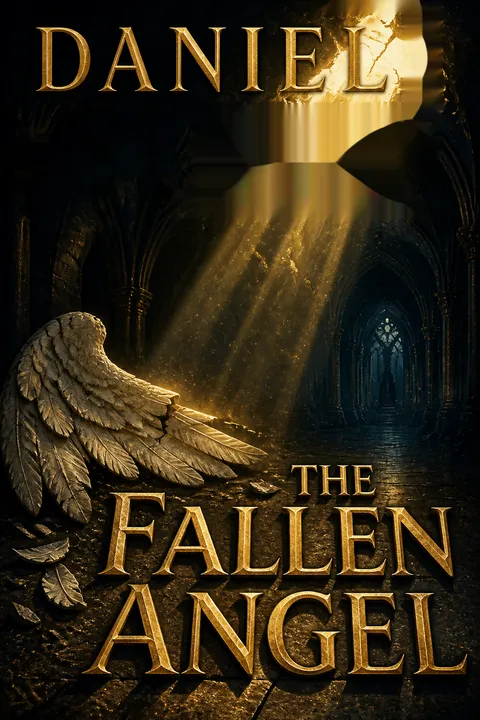
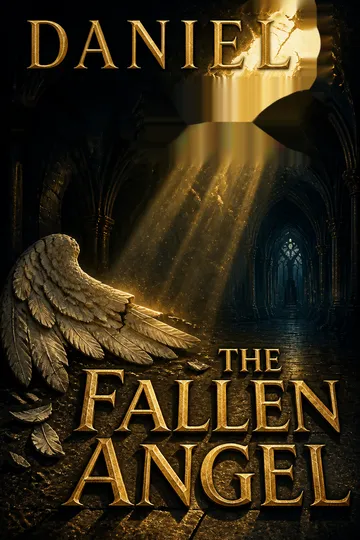
The Fallen Angel receives mostly positive reviews (4.21/5), praised for its fast-paced plot, historical detail, and educational value about Middle Eastern politics. Readers appreciate Gabriel Allon's character development, the Vatican setting, and Silva's research on art smuggling and terrorism. Some criticize the formulaic nature of the series, predictable outcomes, and excessive exposition. Several note the book works well standalone but benefits from reading earlier installments. George Guidall's audiobook narration receives praise. Common themes include Temple Mount history, Hezbollah connections, and Israeli-Palestinian conflict context woven into the thriller narrative.
People Also Read

Characters
Gabriel Allon
Restorer with a pastGabriel is an Israeli art restorer whose careful work on Old Master paintings coexists with a history as a spy and assassin. He wants the Caravaggio restoration in Rome to mark a lasting retreat from violence, but he cannot ignore Claudia’s suspicious death or the danger closing around the Vatican. His attention to damage, whether in a painting or a crime scene, makes him a patient investigator; his experience also makes him dangerous when patience runs out. Gabriel is devoted to Chiara, burdened by the loss of his son and the suffering of his first wife, Leah, and still emotionally bound to his mentor, Ari Shamron. His struggle is not simply whether to return to work, but whether he can choose a life beyond it.
Chiara Allon
Clear-eyed partnerChiara is Gabriel’s wife, an Italian scholar of Roman and ancient history who has also worked in Israeli intelligence. She joins him in examining Claudia’s records and antiquities, bringing specialist knowledge as well as the instinct to challenge his assumptions. Chiara understands how easily Gabriel’s sense of duty becomes a path back into danger, and she does not mistake his silence for indifference. Their marriage carries tenderness and strain, especially around their shared grief and hopes for a family. She wants a life with Gabriel that is not governed by the next emergency, while recognizing that his past cannot simply be put away like a finished assignment.
Luigi Donati
The pope’s hard adviserDonati is the private secretary to Pope Paul VII, a brilliant and formidable priest who manages Vatican power with political caution. He trusts Gabriel because both men believe consequential matters are often best handled quietly, but his discretion can slide into concealment. Donati’s loyalty to the pope and the Church shapes his decisions, even when personal history complicates his judgment. He is intellectually serious, strategically minded, and capable of affection he cannot easily express. His bond with Veronica Marchese and his friendship with Gabriel reveal a man who has repeatedly chosen service over private happiness, while still carrying the emotional consequences of that choice.
Claudia Andreatti
Curator seeking provenanceClaudia is a Vatican antiquities curator entrusted with examining the origins of the Church’s collection. Devout but intellectually independent, she takes seriously the ethical burden of objects whose histories are unclear. Her work is shaped by a difficult family inheritance: she knows that her father’s dealings with antiquities caused harm, and she wants her own life to serve preservation rather than profit. Claudia is private, disciplined, and protective of her research, sharing information selectively even with people she trusts. Her investigation places her between powerful institutions and a criminal trade that depends on keeping objects, money, and responsibility difficult to trace.
Carlo Marchese
A polished collectorCarlo is an immensely wealthy Roman businessman, collector, and Vatican Bank patron. He moves comfortably among politicians, clergy, and art-world figures, presenting his money and cultural interests as signs of respectability. Carlo understands how reputation grants access, and he values control over both people and information. His marriage to archaeologist Veronica gives him a connection to the antiquities world, while his resemblance to Donati hints at the kind of life Veronica might once have chosen. He is confident, socially skilled, and accustomed to having others accommodate him. Beneath the polish, his appetite for influence makes him a dangerous figure to investigate.
Eli Lavon
Archaeologist and old comradeEli Lavon is a biblical archaeologist and one of Gabriel’s oldest colleagues from the Office. Bookish, observant, and famously uneasy in the field, he has spent years tracking evidence of the past with the same persistence he once brought to surveillance work. His friendship with Gabriel is built on shared danger and a deep understanding of the costs of their former lives. Lavon’s archaeological work is not detached scholarship: he believes physical evidence matters because people use history to justify present claims. He is also compassionate, particularly toward the ancient dead whose remains and objects have been pushed aside by modern conflict.
Ari Shamron
The relentless mentorAri Shamron is the legendary Israeli spymaster who recruited Gabriel and shaped much of his career. Now older and less central to the Office, he remains a forceful strategist with a long memory and an unshaken belief in Israel’s need to defend itself. His affection for Gabriel is real, though it often arrives wrapped in pressure, persuasion, or a new assignment. Shamron understands the moral residue of intelligence work but insists that refusing action can also carry a human cost. He is a mentor, surrogate father, and reminder of the generation that built the institutions Gabriel is trying to leave behind.
Uzi Navot
Office chief under pressureUzi Navot runs the Israeli intelligence service while facing urgent security threats and political scrutiny. He respects Gabriel’s judgment but must balance the risks of an operation against the danger of inaction. Navot has a more managerial temperament than Shamron, yet he can make decisive choices when evidence demands it. His role connects Gabriel’s private investigation to the larger Israeli response.
Paola Andreatti
Claudia’s twin sisterPaola is Claudia’s identical twin and a cardiologist living in London. Her scientific outlook differs from her sister’s Catholic faith, but their intimacy gives her confidence about Claudia’s state of mind. Grief does not make Paola passive: she searches the apartment, challenges Gabriel’s evasions, and insists on knowing what happened. She wants truth not as a political tool but as something owed to her sister.
Veronica Marchese
Archaeologist in a gilded worldVeronica is an archaeologist and lawyer, a leading scholar of Etruscan culture and a longtime friend of Claudia. Her expertise gives her authority in the study of looted antiquities, while her position among wealthy collectors places her close to the interests she criticizes. Veronica is intelligent, sharply observant, and aware that personal loyalties can distort professional judgment. Her history with Donati gives her relationship to the Vatican an emotional dimension beyond scholarship.
Massoud Rahimi
Iranian intelligence operatorMassoud is an Iranian diplomat stationed in Berlin and a veteran figure in the secret world. Educated, self-controlled, and adept at presenting a legitimate public identity, he has survived by understanding both political power and the needs of the people around him. In Gabriel’s custody, he proves capable of negotiation as well as denial. Massoud treats violence as a strategic instrument rather than a personal aberration, which makes him a chilling counterpart to Gabriel: both are trained professionals, but they draw sharply different boundaries around what they will do and promise.
General Cesare Ferrari
Italy’s art-crime hunterFerrari commands Italy’s Art Squad, a unit dedicated to stolen art and antiquities. Scarred by years fighting terrorism and organized crime, he brings practical discipline to a field often dismissed as genteel. He values results, informants, and evidence that can survive in court. His working relationship with Gabriel is wary but professionally respectful, shaped by a shared understanding that criminal networks adapt whenever authorities dismantle them.
Pope Paul VII
The reforming pontiffPope Paul VII, born Pietro Lucchesi, is a long-serving pontiff whose age has not softened his demanding schedule or appetite for consequential decisions. He wants to address the Church’s historical relationship with Jews and to make a pilgrimage through Israel and the Palestinian territories. He combines pastoral attention with political courage, though his willingness to proceed despite security warnings places others under immense pressure. His relationship with Donati is built on trust and a shared sense of vocation.
David Girard, also known as Daoud Ghandour
Swiss antiquities dealerGirard runs an antiquities gallery in St. Moritz and presents himself as a cosmopolitan expert with academic credentials from Europe’s leading institutions. He knows the legal language and professional conventions of the art market, and he is skilled at making questionable objects appear saleable. His travel between Europe and the Middle East gives him unusual reach. To Gabriel’s team, Girard represents the point where scholarly expertise, private wealth, and the hidden movement of antiquities meet.
Leah
Gabriel’s first wifeLeah is Gabriel’s first wife, a survivor of the Holocaust whose life was further marked by a devastating attack in Vienna. She lives with severe psychological and physical consequences, and her memory moves between past and present. Gabriel’s visits reveal his enduring love and guilt, as well as the way secrets and violence have shaped their shared history. Leah’s presence reminds him that duty can preserve lives while still destroying the private worlds it claims to protect.
Daniel
Gabriel’s absent sonDaniel is Gabriel and Leah’s son, whose loss remains central to Gabriel’s grief. The memory of him shapes Gabriel’s reactions to threatened children and to violence in Vienna, where the family tragedy occurred. Gabriel often imagines the life Daniel might have lived, a private measure of what his work has cost.
Dina Sarid
The Office’s terror analystDina is a gifted intelligence analyst whose memory of terrorist groups, people, and methods gives the Office an unusually detailed map of its enemies. She combines rigorous research with an instinct to assume that an apparent solution may conceal a second threat. Her recognition of Massoud in a surveillance image and her decoding of hidden messages redirect the operation at decisive moments. Dina’s work is intellectual, but her personal history gives the threat of terrorism a human weight.
Plot Devices
The Caravaggio restoration
A refuge under pressureGabriel’s work on Caravaggio’s Deposition gives him a reason to live quietly in Rome and a recurring measure for the damage he cannot repair in himself. The painting’s restoration also places him inside the Vatican, where he can observe the institution and investigate Claudia’s death. His patient craft contrasts with the speed and violence of intelligence work. Finishing the canvas provides a concrete task that survives the shifting political crises, though Gabriel leaves the Vatican before anyone can celebrate the result.
Antiquities provenance
The trail from tomb to bankThe missing objects from the Vatican collection and the Greek pottery at Falcone’s villa turn archaeological provenance into the novel’s investigative trail. Gabriel and Chiara use the artifacts’ origins, condition, and movement to connect tomb robbers with dealers, collectors, and financial accounts. Objects stripped from their original settings become harder to understand and easier to sell, while their paper histories can be fabricated. This device makes cultural theft both the crime under investigation and a model for the story’s wider concern with hidden ownership.
Operational deception
Cover stories as weaponsThe Office repeatedly creates plausible public explanations to conceal its actions. Gabriel poses as an antiquities dealer, the team stages a theft to draw out Girard, and a false Iranian opposition group claims responsibility for Massoud’s abduction. These deceptions buy time and access, but they also generate risks that cannot be fully controlled, as the bombing in St. Moritz demonstrates. The device tests Gabriel’s belief that his methods remain morally distinct from those of the people he pursues.
Hidden digital messages
Images conceal the targetDina’s analysis of ordinary-looking digital images reveals concealed photographs and a crude map linked to Girard. The images transform a seemingly resolved Vienna plot into evidence of a second attack under the Temple Mount. Their meaning depends on specialized analysis and on Lavon’s knowledge of the underground structures, bringing together intelligence work and archaeology. The device also reinforces the novel’s pattern of surface appearances: a harmless image may carry a lethal instruction, just as an ancient object may conceal the history of its removal.
The Temple Mount tunnels
A buried historical archiveThe tunnels, cisterns, and passages beneath the Temple Mount provide the route to the hidden bomb and to the buried archaeological chamber. Lavon’s knowledge of nineteenth-century surveys helps Gabriel interpret the structures, while the danger of the site makes every step a race against time and political escalation. The underground space holds evidence that can challenge historical denial, but it has been altered and concealed, leaving the artifacts without their original context. It is simultaneously a physical setting, a source of intelligence, and the novel’s most dangerous historical revelation.
Gabriel Allon Series


About the Author
Download PDF
Download EPUB
.epub digital book format is ideal for reading ebooks on phones, tablets, and e-readers.








