

Plot Summary
Prologue
In Vienna in 1991, Gabriel Allon1 works by night as an art restorer while living under an assumed identity with his wife and young son. As Scud missiles fall on Israel, his wife prepares to leave for the airport if he misses a set deadline.
Gabriel1 says goodbye and starts away, but the Mercedes engine hesitates. He turns back and sees his wife trying the ignition again. The scene ends as he realizes the car is about to start, its danger still unclear.
The opening makes restoration and espionage two versions of the same discipline: Gabriel studies a surface for hidden damage while concealing his own life beneath a respectable profession. The family’s escape plan turns ordinary domestic gestures into operational procedure, while the stalled engine converts routine into immediate danger. Because the scene withholds the full consequence, the reader meets Gabriel first as a man whose private life is already governed by threat. His craftsmanship promises patience and repair; the car’s ignition warns that some damage cannot be controlled by careful hands.
The Boy Watches Cornwall
Eleven-year-old Timothy Peel5 watches the reserved stranger1 who has settled near his home on a Cornish creek. The man1 tends a vintage car and an old sailboat, disappears for days, then returns without any suspicious cargo. Peel’s5 curiosity grows when a large crate arrives and the cottage glows with harsh white light at night.
One evening, Derek,19 his mother’s impatient partner, catches Peel5 outside and hits him. The stranger1 intervenes, telling Derek19 to treat the boy5 with care, then offers Peel5 a place on his boat. When Peel5 sneaks into the cottage, he finds restoration tools and valuable paintings. The stranger1 identifies himself as an art restorer, but leaves his own name unspoken.
Peel’s surveillance begins as a child’s attempt to make an adult world legible. He gives the stranger a succession of imagined roles, then revises them whenever evidence contradicts his theory. The boy’s skill at watching comes from loneliness, but it also gives him a form of agency: he can observe when he cannot control the adults around him. The stranger’s intervention against Derek offers Peel a rare experience of protection without humiliation. Yet the paintings, the equipment, and the withheld name establish that this kindness belongs to a man living behind several carefully maintained surfaces.
Paris Turns to Fire
In Paris, Emily Parker15 believes René3 has healed the hurt left by her broken engagement. Her friend Leila8 introduced them, and Emily15 ignores his absences and evasions because the relationship has made her feel wanted again. At a reception, Israeli Ambassador Zev Eliyahu16 leaves with his wife, Hannah, while a waiter secretly signals the attackers.
A staged collision traps the limousine on the Pont Alexandre III. René3 takes a submachine gun from his bag and plants a bomb beneath the car; a masked motorcyclist helps the team escape. Emily15 understands that her lover3 is part of the attack. When René3 approaches her afterward, she retreats to the bridge’s edge, and he shoots her into the Seine.
Emily’s vulnerability is not simple gullibility. René finds a need she has named openly, to be loved after rejection, and exploits it with attention, gifts, and promises. The violence therefore destroys more than trust: it turns intimacy into evidence that can no longer be interpreted safely. Her new bracelet embodies the trap, a beautiful object that becomes inseparable from the moment she recognizes its giver as a killer. The attack also establishes Tariq’s method through René: a civilian relationship functions as operational camouflage, then becomes disposable once its purpose has been served.
Shamron Reopens the Hunt
The Paris killings pull Ari Shamron2 out of retirement. Israel’s prime minister17 authorizes him to pursue Tariq al-Hourani,3 a disciplined Palestinian militant who has broken with Yasir Arafat11 over negotiations with Israel. Shamron2 studies witness reports and stolen museum footage until he identifies Mohammed Azziz, the waiter who signaled the attackers, as one of Tariq’s3 operatives.
A second clue arrives from Greece: a Palestinian courier has been shot dead in a rented villa registered to a man who does not exist. Shamron2 persuades the prime minister17 that the evidence is strong enough to act, then chooses Gabriel,1 his former field operative, for the job. Gabriel1 has spent years avoiding the service and its violence.
Shamron’s return is powered by both public danger and private appetite. He sees the attack as proof that Israel’s intelligence service must recover its capacity to act, but his fixation on a precise clue also shows how instinct can become a claim to authority. His certainty about Tariq outpaces the evidence, and the prime minister’s approval turns that conviction into state policy. The choice of Gabriel links institutional repair to a damaged individual. Shamron is not merely asking an expert to solve a case; he is calling back the man whose departure represents the cost of the service’s older methods.
The Killer Reaches Samos
After the Paris operation, Tariq3 changes passports and vehicles as he moves across Europe toward Greece. On Samos, a delayed ferry leaves his contact, Achmed, waiting at a villa. Tariq3 sees the young man’s careless movements as a threat to secrecy and shoots him rather than risk police attention.
He takes the ticket Achmed brought and boards a train to meet Kemel Azouri,7 a wealthy pharmaceutical executive who secretly manages Tariq’s3 money, communications, weapons, and plans. Kemel7 reports that Leila8 has arranged a place and a woman for Tariq3 in Amsterdam. He also warns that Shamron2 has returned and is likely to assign Gabriel1 to the hunt. Tariq3 accepts the news as an opportunity to draw his old enemy into danger.
Tariq’s efficiency is inseparable from a hair-trigger suspicion that makes every human relationship conditional. Achmed is not killed for betrayal but for the possibility of carelessness, a distinction that reveals how thoroughly operational logic has replaced ordinary judgment. Kemel supplies the polished infrastructure that lets Tariq’s violence travel through legitimate business. Their partnership joins opposite forms of power: public respectability and private force. Learning that Gabriel is involved does not make Tariq cautious. He treats the pursuit as a chance to turn an old grievance into one final, public act.
Gabriel Leaves the Creek
Shamron2 reaches Gabriel1 in Cornwall through Julian Isherwood,9 the art dealer whose rare Vecellio altarpiece Gabriel1 is restoring. Gabriel1 refuses at first, arguing that killing Tariq3 will only breed more violence. Shamron2 counters with the Paris murders and the history between them: Gabriel1 once killed Tariq’s3 brother, and Tariq3 later destroyed Gabriel’s1 family in Vienna.
The appeal tears open Gabriel’s1 old guilt. He studies the case file on Yusef al-Tawfiki,6 an operative believed to work for Tariq,3 and finally agrees to run the search on his own terms. He packs away his boat and leaves without explaining himself to Peel.5 The boy5 watches the MG disappear and is left with another adult who has gone.
Gabriel’s decision is neither a clean return to duty nor a simple surrender to revenge. Shamron presses precisely where professional obligation and personal guilt have become difficult to separate. Gabriel’s objection to retaliation is morally serious, but his silence about Vienna reveals how much of his refusal is also self-protection. Leaving Peel repeats the very abandonment the boy has learned to expect, even as Gabriel knows the harm it causes. The restored painting remains unfinished, a concrete measure of the life he must interrupt to resume the work that once consumed him.
London's Quiet Window
In London, Gabriel1 rents a flat across from Yusef’s6 building and watches him move between his Bayswater home and the Kebab Factory, where he works. Yusef6 is a Palestinian student and poet, careful enough to perform countersurveillance when he leaves home. Gabriel1 brings in Randy Karp,10 an American technical expert, to tap Yusef’s6 work telephone and monitor his computer.
Karp10 warns that room coverage requires access to the flat itself. Gabriel1 arranges to get inside through a woman, then contacts Jacqueline Delacroix,4 a French model who once worked for Shamron.2 Before she agrees, Gabriel1 visits Leah, his wife, who lives with severe injuries and trauma after Vienna. Her small gesture of recognition leaves him more shaken than he admits.
The watch operation brings Gabriel’s two professions into direct contact. Both require patience, disciplined attention, and the ability to notice minute changes, but espionage turns that attention toward another person’s vulnerabilities. The flat becomes a controlled viewing point, while Leah’s institution makes visible what Gabriel cannot restore by looking harder. Her brief response offers connection without absolution. Jacqueline’s recruitment then brings his private history back into the field: the operation depends on a woman he loved, while his grief has taught him to behave as if love itself were another risk to contain.
Jacqueline Returns to Service
At her villa in Valbonne, Jacqueline4 weighs a fading modeling career against her dream of opening a ballet school. She once joined Shamron’s2 service as a female assistant agent, partly because her Jewish grandparents had been murdered at Sobibor and she wanted to defend Israel. In Tunis, she and Gabriel1 posed as a couple while he prepared the assassination of Abu Jihad, and their affair became the source of lasting guilt after Vienna.
Now Gabriel1 asks her to help enter Yusef’s6 flat. She refuses until he tells her he trusts her, then names a high fee and cancels her fashion work. In a mountain clearing, Gabriel1 tests her pistol skills. Jacqueline4 shoots accurately while advancing, proving she can still function under pressure.
Jacqueline’s choice grows from motives that pull in different directions. Her Jewish identity gives intelligence work a moral purpose, while ballet represents a self she might build outside the service. Gabriel’s request reopens an attachment she has never resolved, and her payment demand lets her insist that desire does not erase professional value. The shooting test is practical, but it also exposes the gap between the glamorous image others consume and the trained agent she has become. Her competence is real; so is the emotional cost of returning to a world that once tied her closest intimacy to violence.
Keys Beneath the Mascara
Jacqueline4 takes the cover identity Dominique Bonard and meets Yusef6 at a London bar. She persuades him to bring her home, memorizes his locks, and makes clay impressions of his three keys while he showers. She also records the models of his telephone and clock radio.
Gabriel1 and Karp10 use the information to replace both devices with listening equipment, giving them access to calls and conversations inside the flat. Yusef6 notices something unusual and informs his contact, who orders him to keep seeing Dominique4 while the organization investigates her.
Gabriel1 listens as their intimacy deepens, including Yusef’s6 account of the Palestinian past and the massacre he claims shaped him. The personal performance begins to burden Jacqueline4 and unsettle Gabriel.1
The key impressions make the operation’s central metaphor tangible: intimacy opens doors that force cannot enter without leaving marks. Jacqueline succeeds by being observant and emotionally responsive, yet those same qualities make it harder to treat Yusef as a mere target. Gabriel’s access to their private life is technologically complete but ethically incomplete; he can hear the words without sharing the experience that gives them weight. Yusef’s suspicion complicates the apparent imbalance. The people being watched are also watching, and every gesture of trust may be either genuine feeling or deliberate tradecraft.
Love Becomes a Cover
As Yusef6 grows closer to Jacqueline,4 Gabriel1 hears him meet a contact in Hyde Park. The recording is mostly lost beneath wind and fountain noise, but fragments suggest that the contact wants Jacqueline4 checked and then used in a mission.
Yusef6 asks her to travel with a Palestinian leader under the name Lucien,3 posing as his French girlfriend. Jacqueline4 is disturbed by the deception but agrees after Yusef6 presents the trip as essential to Palestinian political hopes.
Gabriel1 fears that the invitation is a trap, and asks Shamron2 to withdraw her; Shamron2 refuses. Gabriel1 visits Leah again, carrying the unresolved weight of Vienna into the decision. Jacqueline4 accepts the assignment, and Shamron2 gives her a beacon hidden in a gold lighter so the team can locate her.
The mission invitation turns romance into a test of competing loyalties. Jacqueline believes her attachment gives her a reason to help Yusef, while he uses the trust she has offered to move her into an operation she cannot assess. Gabriel recognizes the danger but cannot distinguish protective judgment from fear of losing her. Shamron’s refusal converts that uncertainty into policy. The beacon promises rescue through technology, yet it cannot guarantee that anyone will reach Jacqueline in time. The lighter is therefore both safeguard and fragile symbol of the Office’s confidence in its own control.
Montreal Changes the Rules
At Charles de Gaulle, Yusef6 sends Jacqueline4 to wait for Lucien,3 but Leila8 arrives instead and says she will accompany her. Jacqueline4 boards a flight to Montreal without knowing the destination or the full plan. Gabriel1 follows with Shamron2 and a small team aboard Benjamin Stone’s12 private jet.
In Montreal, Leila8 drives Jacqueline4 to the Queen Elizabeth Hotel, where the man calling himself Lucien Daveau3 is waiting. Jacqueline4 recognizes that his polished French manner hides a more complicated identity, but follows the mission rules and checks her London telephone messages.
The call alerts the Office to her location. Shamron’s2 team confirms that the man is probably Tariq,3 while Gabriel1 remains uneasy about the abrupt change of plan and the woman who has disappeared from sight.
The shift from Paris to Montreal reveals how secrecy can be used against the people it claims to protect. Jacqueline has been trained to accept incomplete information, but each new omission reduces her ability to consent meaningfully to the danger. The airport handoff also shows the adversary’s advantage: Tariq can change plans because his organization is compartmentalized, while the Office must spend people and time rebuilding its picture. The secure call is an ingenious link to headquarters, yet it becomes a signal that exposes Jacqueline’s position. A tool designed for safety turns into part of the trap.
The Border Takes Her
Tariq3 takes Jacqueline4 shopping through Montreal’s underground malls, checking repeatedly for surveillance. Gabriel’s1 team confirms his identity but cannot make a move in the crowded passageways.
At dinner, a getaway car arrives; Tariq3 forces Jacqueline4 inside and escapes with her, leaving her purse and the tracking lighter behind. He changes cars and drives south through Quebec. Near the Vermont border, he tells Jacqueline4 that he knows she is an Israeli agent and that Gabriel1 had been approaching him in Montreal.
He strikes her when she denies it, then explains how Yusef’s6 organization discovered her connection to Gabriel.1 Tariq3 presents a passport bearing Leila’s photograph and pressures Jacqueline4 to cross into the United States under a false identity. She complies to stay alive.
The loss of the purse is a decisive reversal because it removes both Jacqueline’s ordinary identity and the device meant to keep her traceable. Tariq’s violence is calculated, but his explanation is more damaging than the blows: it reveals that the romance, the mission, and even the apparent discovery of her cover have been shaped by the opposing side. Jacqueline’s choice at the border is not consent but tactical survival. The passport makes identity a physical instrument, and the crossing transforms her from a watched operative into a captive outside the Office’s immediate reach.
Brooklyn's Locked Room
Tariq3 brings Jacqueline4 to a Brooklyn apartment where Leila8 is waiting. He explains that his organization recognized Jacqueline4 as Gabriel’s1 former partner in Tunis and deliberately used Yusef6 to deepen her trust. Tariq3 plans to use her as bait to draw Gabriel1 toward a final attack in New York. He leaves her chained to a bed with Leila8 guarding her.
After Leila8 burns her with hot tea, Jacqueline4 asks to use the bathroom and conceals a metal nail file in her hand. She stabs Leila8 in the face and neck, takes her gun, and kills her when she lunges. A second man enters with a baseball bat; Jacqueline4 shoots him too. She reaches Shamron2 by telephone and warns him that Tariq3 is disguised as a waiter.
Jacqueline’s escape reverses the operation’s central arrangement. She has been used as bait because others assume her emotional attachment makes her predictable, yet survival depends on her own decisions rather than Gabriel’s rescue plan. The nail file is an improvised tool, not a symbol of mastery: it works because Jacqueline recognizes a narrow opening and acts before fear can close it. Killing Leila is psychologically distinct from the target practice in Provence. This time the violence is immediate, defensive, and personally costly. Her call to Shamron converts individual survival into the information needed to prevent another attack.
Dates at the Door
At a New York reception for Yasir Arafat,11 Tariq3 enters disguised as a catering worker and waits for an opening to shoot him. Arafat11 recognizes the old intelligence officer beneath the disguise and speaks to him privately, reminding him of past loyalty and warning that an assassination would reduce his legacy to fanaticism. Tariq3 lowers his weapon and leaves.
Gabriel1 reaches the party too late to stop him. He chases Tariq3 through a service stairwell, where Tariq3 shoots him in the chest and runs. Jacqueline4 follows, catches the weakened Tariq3 in a corridor, and empties her pistol into him. Shamron2 finds her beside the body and takes her to Gabriel.1 The assassin3 is dead, but the victory arrives with Gabriel1 gravely wounded.
Arafat’s intervention gives Tariq something neither force nor deception could provide: a witness to the person he once was. The appeal to legacy briefly interrupts the revenge logic that has governed his life, though it cannot undo the violence already committed. Gabriel’s failure to capture Tariq becomes bodily rather than abstract when a bullet stops him in the stairwell. Jacqueline’s pursuit then completes the action Gabriel began, but she acts independently, not as an instrument of his will. The ending resists a clean triumph: the immediate threat ends, while the injuries and moral debts remain.
Shamron's Hidden Hand
While Gabriel1 recovers in Jerusalem, Shamron2 tells him to travel through Israel and reconsider the life he has withdrawn from. Gabriel1 visits Jacqueline4 in Herzliya, then spots Yusef6 in Tel Aviv and follows him to the beach. Yusef6 admits he works for Shamron.2
The apparent identity of Yusef al-Tawfiki belonged to a child killed with his family at Shatila; Shamron2 placed another wounded boy in that identity and trained him to enter Tariq’s3 organization.
Shamron2 then reveals that he deliberately exposed Gabriel’s1 return to make Tariq3 react, keeping Jacqueline4 in danger because he expected the trap to draw Tariq3 into reach. Gabriel1 understands that his service has used him as bait. Benjamin Stone12 is later reported missing at sea, and Lev14 resigns after being excluded from the operation.
The revelation reframes the novel’s earlier evidence without making it false: Yusef’s suffering was real, but the identity attached to it was constructed by the service that claimed to protect him. Shamron’s method treats biography as an intelligence asset, turning a wounded child into a credible enemy and Gabriel into bait. The result is operational success purchased through concealed consent. Gabriel’s anger arises not only from being deceived but from recognizing how readily his own history made him usable. The disappearance of Stone and resignation of Lev show that institutional victories leave political costs beyond the battlefield.
Home Is Not Restored
Gabriel1 drives across Israel, from the Negev and Masada to the Galilee where he grew up, seeking a sense of belonging he cannot quite recover. The journey brings a brief quiet by the lake, but not a cure. At Herzliya, Jacqueline4 tells him she cannot return to her public life after their identities and operation have reached the press.
She is grateful for what the mission gave her, though their love remains unresolved. Gabriel1 apologizes and returns to the task waiting in England: the unfinished Vecellio. He leaves Israel with the sense that Jacqueline4 might have been a life he could choose, but he does not stay. In Cornwall, Peel5 will soon see the MG return to the creek.
The novel does not equate survival with restoration. Gabriel can return to the country of his childhood and look at its landscapes, but geographical home cannot reverse bereavement or repair the choices that brought him back to the service. Jacqueline’s altered public life likewise makes a return to her former identity impossible. Their tenderness remains real, yet neither can promise the other a future free of consequence. The unfinished Vecellio offers Gabriel a form of work that rewards patience without pretending wounds vanish. His return to Cornwall suggests continuation, not closure.
Epilogue
In Cornwall, Peel5 wakes before dawn and hears an old car rattling along the quay. He sees its headlights stop at the foreman’s cottage and flashes his torch twice.
The MG’s lights answer, then go dark. Peel5 climbs back into bed, no longer troubled by his mother’s quarrel with Derek.19 The stranger1 has returned, and the boy5 falls asleep with that knowledge.
The return to Cornwall closes the novel with a small recognition rather than a grand reconciliation. Peel’s signal establishes that the relationship he feared losing has not disappeared, though the stranger still arrives without explanation. The boy has learned to notice absence, but the answering headlights offer a limited reassurance that someone can return. The image also leaves Gabriel’s future open: he comes back to the quiet work of restoration, yet the life he left behind is not automatically repaired. The epilogue offers presence, not absolution.
Analysis
The novel’s central conflict is not simply between Israeli intelligence and Palestinian militancy. It is between people who believe history authorizes violence and institutions that claim the same authority while hiding their methods. Tariq3 turns displacement and family loss into a mandate for revenge. Gabriel1 has lived through the consequences of that logic and fears that killing merely reproduces the conditions that created the next killer. Shamron2 rejects that hesitation as a luxury the state cannot afford, yet his own strategy depends on manufacturing identities and using the wounded as instruments.
Art restoration gives the book a precise way to examine this problem. Gabriel1 can remove varnish, identify damage, and make new paint almost invisible, but his skill cannot return a life to its former state. The craft offers repair without erasure: close inspection may reveal a wound even after the surface has been restored. That distinction applies to Gabriel’s1 family, Jacqueline’s4 future, and the intelligence service’s moral record. Success can stop an immediate threat without reversing the damage that produced it.
The novel also treats intimacy as contested territory. Tariq3 uses lovers15 as cover and discards them; Jacqueline4 uses attraction as a tool but discovers that empathy can interfere with control. Gabriel’s1 surveillance makes him an unseen participant in her private relationship, revealing how operational success can violate the very person it claims to protect. The book’s final deception sharpens this problem: Yusef’s identity is built from a dead child’s history, and Gabriel1 is returned to service as bait without informed consent. The operation works, but its victory belongs as much to manipulation as courage.
The ending resists the comforting idea that truth automatically heals. Gabriel1 learns what Shamron2 did, sees Jacqueline4 again, and still cannot repair their shared past or choose an uncomplicated life. His return to the unfinished painting offers a modest alternative to vengeance: patient work that acknowledges damage instead of pretending it never happened. Yet even that is not a cure. The story’s moral pressure comes from the gap between ending a cycle of violence and repairing the people who have been made to carry it.
Review Summary
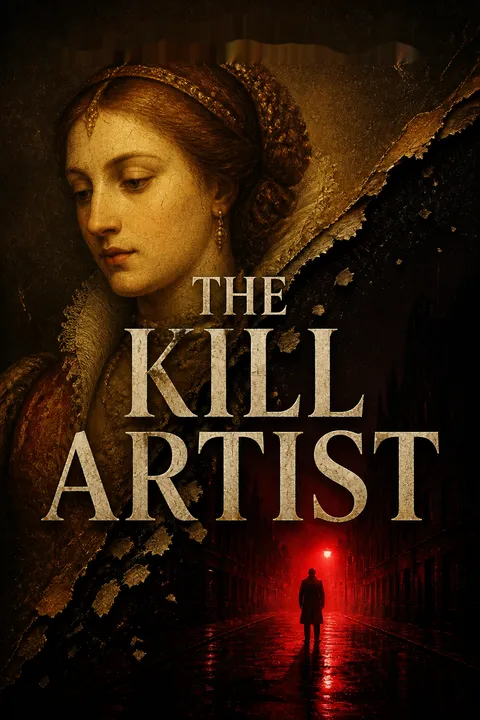
The Kill Artist receives mixed reviews as the first book in the Gabriel Allon series. Many praise Silva's writing style, complex characters, and intriguing plot twists. Readers appreciate the balanced portrayal of Israeli-Palestinian conflicts and the protagonist's dual role as an art restorer and spy. However, some find the pacing slow at times and the plot formulaic. Critics note that later books in the series improve upon this initial installment. Overall, reviewers recommend it as a solid start to a popular spy thriller series.
People Also Read


Characters
Gabriel Allon
Restorer turned operativeGabriel is an Israeli intelligence operative living under the cover of an art restorer in Cornwall. He is exacting, patient, multilingual, and most at ease when studying a difficult surface, whether a damaged painting or a human target. The work that makes him exceptional also isolates him: he tends to convert feeling into observation and grief into labor. His history with Shamron2 binds him to the service even as he distrusts its appetite for retaliation. Gabriel’s craft suggests a desire to preserve what violence has damaged, but he knows that repairing an image is not the same as healing a person.
Ari Shamron
Israel's relentless spymasterShamron is a veteran intelligence chief whose sleeplessness, cigarettes, and blunt authority make him seem almost inseparable from the institution he serves. He believes that deterrence requires the capacity to strike enemies before they can strike again, and he treats operational secrecy as a moral necessity. His affection for Gabriel1 is genuine, but it does not prevent him from using personal history to secure obedience. Shamron can read people with unnerving precision and is willing to make them instruments of a larger plan. Beneath his confidence lies a man burdened by the violence he has ordered and the legacy he hopes to leave behind.
Tariq al-Hourani
Rejectionist master plannerTariq is a Palestinian militant who rejects Arafat’s11 turn toward negotiations and leads a small, disciplined organization. He plans with care, changes identities readily, and treats emotional connection as both a useful disguise and a weakness to exploit. His hatred is rooted in family loss and displacement, but he has converted that history into a justification for killing civilians. Tariq’s composure makes him dangerous; his private dependence on women and growing recklessness expose the strain beneath it. He sees his conflict with Gabriel1 as a personal contest as well as a political one, and he measures his life by the cause he believes it serves.
Jacqueline Delacroix
Model with a second lifeJacqueline is a successful French model whose public beauty disguises training as an assistant agent for Israeli intelligence. Born Sarah Halévy, she carries the family memory of grandparents murdered at Sobibor and has made service a way to give that history practical meaning. She is observant, ambitious, and capable of using charm without mistaking it for consent or affection. Her attachment to Gabriel1 complicates her judgment, while her frustration with modeling pushes her toward a life of her own choosing. Jacqueline wants more than admiration: she wants competence, purpose, and eventually the freedom to build something beyond the identities other people assign her.
Timothy Peel
The boy at the windowPeel is an eleven-year-old observer living with his mother and her partner, Derek19, in Cornwall. He studies the stranger1 across the creek because watching gives structure to a lonely summer and lets him imagine himself capable. He is sharp, stubborn, and hungry for adult attention, though he hides that need behind guesses and surveillance games. The stranger’s1 kindness matters because it is offered without pretending to be Peel’s5 father. Peel’s notebook, binoculars, and watchful window make him the story’s clearest witness to Gabriel’s1 fragile attempt at ordinary life.
Yusef al-Tawfiki
A student inside the networkYusef appears to be a Palestinian student, poet, and restaurant worker in London, shaped by a childhood in exile and drawn toward rejectionist politics. He is intelligent and disciplined, with a practiced awareness of surveillance and a gift for making private conversations feel persuasive. His relationship with Jacqueline4 combines ideological conviction with personal attention, leaving her uncertain where one ends and the other begins. To Gabriel1, Yusef is a possible route into Tariq’s3 organization; to Jacqueline4, he is a man who shares a history she cannot simply dismiss. His guardedness makes him difficult to read even when he seems most open.
Kemel Azouri
The respectable operations chiefKemel is a senior executive at a European pharmaceutical company and Tariq’s3 discreet manager of money, logistics, communications, and weapons. His polished manners and business success give him access to worlds where a militant would attract attention. He is practical rather than theatrical, maintaining a double life through systems and professional credibility. Kemel’s partnership with Tariq3 depends on both loyalty and a clear-eyed understanding of the danger surrounding them. He gives violence an administrative structure, making him as essential to the organization as its more visible leader.
Leila Khalifa
The elegant facilitatorLeila is a cosmopolitan Jordanian student whose beauty, languages, and social ease allow her to move between Parisian student circles and more dangerous networks. She recognizes emotional needs quickly and knows how to make people feel chosen. Her friendship with Emily15 begins as social intimacy, while her later role around Tariq3 shows how readily charm can become operational labor. Leila is controlled and resourceful, and her confidence depends on treating other people’s vulnerability as something she can manage.
Julian Isherwood
The anxious art dealerJulian owns a struggling London gallery specializing in old masters and depends on Gabriel’s1 skill to authenticate and restore a valuable Vecellio altarpiece. He is theatrical, financially anxious, and deeply attached to the paintings he sells, sometimes more so than to sound business judgment. His rivalry with Oliver Dimbleby exposes his fear of becoming irrelevant in a market that rewards glossy fashion over scholarship. Despite his bluster, Julian is loyal to Gabriel1 and capable of compassion, especially toward people left adrift by Gabriel’s1 absences.
Randy Karp
The surveillance technicianKarp is an American technical specialist known for devising discreet ways to collect sound and electronic signals. He approaches surveillance as a craft, testing the limits of devices and explaining their weaknesses before risking a field operation. His humor softens his professional caution, but he is alert to the human consequences of working with Gabriel1. Karp’s expertise gives the London operation its ears, transforming a rented flat and ordinary household electronics into a listening post.
Yasir Arafat
The embattled Palestinian leaderArafat is the leader of the Palestinian Authority and a former guerrilla whose political life has shifted toward negotiation. He understands the risks posed by rejectionists within the Palestinian movement but cannot simply command men who have rejected his authority. His vigilance is a survival habit, sharpened by years of assassination attempts and internal rivalries. Arafat’s political pragmatism sits alongside personal memories of comrades who helped keep him alive, making him capable of seeing a person beneath an enemy’s3 disguise.
Benjamin Stone
The publisher who funds shadowsStone is a flamboyant British media magnate and one of Shamron’s2 most valuable covert supporters. His newspapers provide cover and influence, while his money helps finance operations outside ordinary government channels. He is domineering, theatrical, and acutely aware that business survival depends on appearing powerful to creditors and rivals. Stone’s generosity is real but never uncomplicated; he expects loyalty and eventually wants a public return on what he has given.
Uzi Navot
Shamron's Paris officerNavot is a capable Israeli intelligence officer who retrieves the Paris surveillance tape and works directly with Shamron2. He admires the older spymaster2 more than he wants to admit, and that need for approval shapes his responses to criticism. His personal relationship with Bella exposes a more vulnerable side than his field work does. Navot represents the younger service, talented but uncertain whether Shamron’s2 methods remain worth inheriting.
Lev
The ambitious operations chiefLev leads the Office’s Operations division and sees Shamron’s2 return as a threat to his own advancement. Brilliant, volatile, and politically alert, he understands that control of information can matter as much as control of field teams. His resentment of Gabriel1 is sharpened by professional envy. Lev’s insect-collecting hobby reflects his interest in creatures that survive through specialized defenses and predatory adaptation.
Emily Parker
The lover caught in a lieEmily is an American graduate living in Paris after a broken engagement. She doubts her own attractiveness and trusts Leila’s8 promise that a new relationship can restore her confidence. Her longing for reassurance makes her receptive to René’s3 charm, but she is observant enough to recognize danger when the attack begins.
Zev Eliyahu
Israel's targeted ambassadorEliyahu is Israel’s ambassador in Paris, a former intelligence officer and successful financier with an energetic, practical temperament. He attends a museum reception to improve strained relations with France, despite finding diplomatic ritual tiresome. His position makes him a target in a conflict whose consequences reach far beyond the people in the limousine.
The Israeli Prime Minister
The cautious authorizerThe prime minister is a shrewd political operator balancing public security, international pressure, and the fragile peace process. He distrusts unsupported hunches but authorizes action once Shamron2 presents sufficient evidence. His decisions show the constraints of leadership: he wants results without the diplomatic fallout that covert violence can produce.
Adrian Carter
The CIA's blunt negotiatorCarter is a senior CIA official with field experience and a talent for bureaucratic pressure. He demands that the United States be included in the response to an American citizen’s murder, and warns Israel against unauthorized operations abroad. His courteous manner does not soften the firmness of his position.
Derek
Peel's mother's partnerDerek is a struggling playwright who drinks too much and resents the disruption of a child in his household. He uses authority without earning Peel’s5 trust, worsening the boy’s5 sense of being unwanted. His presence helps explain why Peel5 is so drawn to the stranger’s1 steadier attention.
Plot Devices
The Restored Painting
A craft for seeing damageGabriel’s1 restoration of Francesco Vecellio’s damaged altarpiece provides a practical cover for his life in Cornwall and a recurring measure of his character. He studies paint layers, tests solvents, and makes tiny corrections that must blend with the original. The work contrasts with assassination, where the target is also studied closely but the result cannot be repaired. The painting gives Gabriel1 a disciplined refuge and gives Julian Isherwood9 a financial hope. Its unfinished state follows Gabriel1 into the operation, making the interruption of his craft a visible cost rather than an abstract sacrifice.
Borrowed Identities
Respectability as camouflageFalse names and credible occupations let characters cross borders and enter guarded spaces. Tariq3 poses as a lover, businessman, or worker; Gabriel1 relies on art restoration; Jacqueline4 becomes Dominique Bonard, a French secretary. These identities work because they attach deception to familiar social roles. The device also makes trust dangerous: people act on the person they think they know, while an adversary can use that expectation to redirect them. In the final revelations, identity becomes more than a disguise, exposing how an intelligence service can build a whole life story to place an agent inside an enemy organization.
The Listening Post
Private life becomes evidenceGabriel1 and Karp10 replace Yusef’s6 telephone and clock radio with covert equipment, allowing them to hear calls and conversations from a nearby rented flat. The equipment gives the operation access without a visible break-in, but its signals are imperfect: wind, traffic, and public fountains obscure crucial exchanges. Listening also blurs the boundary between professional observation and intimate intrusion as Gabriel1 hears Jacqueline4 and Yusef6 together. The devices advance the plot by revealing the proposed journey, while their limitations preserve uncertainty and force the agents to interpret fragments rather than receive a complete account.
The Gold Lighter
A beacon disguised as a giftShamron2 gives Jacqueline4 a gold lighter fitted with a beacon that can help the Office locate her over a substantial distance. Its ordinary appearance makes it easy to carry without attracting attention, and its personal inscription gives it emotional meaning. The device is meant to reassure Jacqueline4 that the team can find her if the mission goes wrong. When Tariq3 takes her purse in Montreal, the lighter and its tracking signal disappear with it. The lost object marks the moment when the Office’s sense of control collapses and Jacqueline4 must survive without the safeguard she was promised.
The Hidden Source
A life built as intelligenceThe operation depends on a source inside Tariq’s3 organization, but even Gabriel1 does not know the source’s true history. Shamron’s2 account reveals that the apparent Yusef al-Tawfiki identity was taken from a child killed at Shatila and given to another wounded boy whom the Office trained. That constructed biography makes the source credible to Tariq’s3 network and makes Jacqueline’s4 story of shared political history persuasive. The device transforms the meaning of earlier scenes: apparent confession, surveillance, and recruitment all belong to a deeper design. It also exposes the human cost of treating trauma as a tool of statecraft.
Gabriel Allon Series























About the Author
Download PDF
Download EPUB
.epub digital book format is ideal for reading ebooks on phones, tablets, and e-readers.








