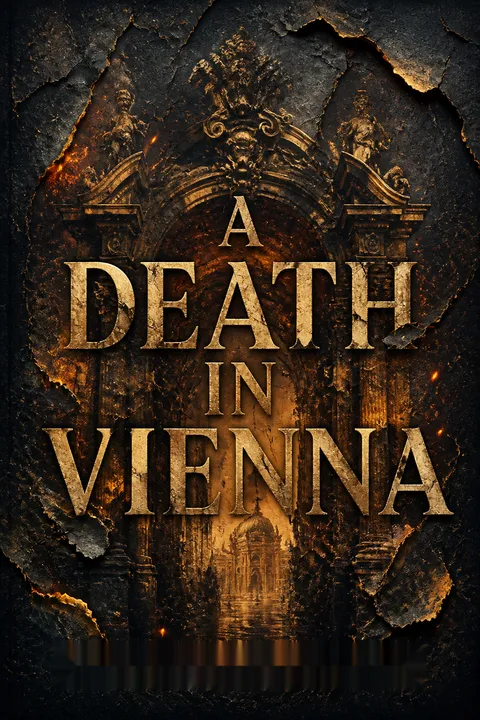


Plot Summary
Vienna's Shattered Office
Eli Lavon, an Israeli Holocaust researcher in Vienna, has spent weeks investigating a case when a bomb destroys his fortified office. His assistants, Reveka and Sarah, are killed, and Lavon is left in a coma. He had noticed a man following him but could not stop the attacker. In Venice, Lavon's old mentor, Ari Shamron, asks Gabriel Allon to return to Vienna and find who planted the bomb.
Gabriel has built a quieter life restoring a Bellini altarpiece and living with Chiara, an Israeli intelligence officer. The city is dangerous for him: years earlier, a car bomb there killed his young son and left his wife, Leah, profoundly disabled. Still, Gabriel accepts Shamron's false identity and goes back.
Max Klein's Accusation
At Vienna General Hospital, Gabriel visits Lavon and slips into the room where Leah once lay, reopening memories he has kept sealed away. A nurse, Marguerite, recognizes him but lets him remain with his friend. Outside, an elderly man named Max Klein approaches and says he set the catastrophe in motion. In his apartment, Klein explains that he survived Auschwitz as a violinist in the camp orchestra.
An SS officer once forced him to play while killing prisoners who could not identify the music. Decades later, Klein heard that officer's voice at Café Central. He began sitting beside the prosperous customer, Ludwig Vogel, then asked Lavon to investigate him. Lavon's office had promised Klein new findings on the morning it was bombed.
Vogel's Polished Past
Gabriel meets Renate Hoffmann, a reformist lawyer who secretly supplied Lavon with Austrian government records. She has traced Vogel to a successful investment firm and to the campaign of Peter Metzler, a far-right candidate for chancellor.
Official files say Vogel was born in 1925, served in the Wehrmacht, and worked for the American occupation after the war. Yet he has no police file, an odd absence in a country where prominent citizens are routinely recorded.
Renate explains that her former colleagues protect the powerful, just as they once shielded a doctor accused of wartime murders. She gives Gabriel the documents despite knowing that possession could put them both in prison. The records contradict Klein's memory, but Gabriel suspects they were constructed to conceal something.
The Chalet's Hidden Clues
At Café Central, Gabriel watches Vogel arrive with a bodyguard. Vogel recognizes that he is being observed and deliberately makes contact, then asks after the elderly regular who has stopped coming. Gabriel takes the warning seriously and drives to Vogel's empty chalet in the Alps.
Inside, he finds a man's watch engraved with a woman's name, a ring marked with the number 1005, and a photograph of Vogel with a woman and a boy. A Staatspolizei officer catches him leaving, and Gabriel knocks the man unconscious before escaping.
Back in Vienna, he discovers Max Klein murdered in his bedroom, strangled beneath a plastic bag. Manfred Kruz, the security chief who interrogated Gabriel after the earlier Vienna bombing, then corners him at his hotel and orders him onto a flight out of Austria.
The Name Beneath Vogel
In Jerusalem, Holocaust scholar Moshe Rivlin examines the ring and recognizes its inscription as a reference to Aktion 1005, the Nazi program that exhumed and burned mass graves to erase evidence of murder.
Archival records identify the man in Gabriel's photograph as Erich Radek, an SS officer who had directed the operation across occupied eastern Europe. Radek's engineering skill helped him devise vast cremation pyres, while Jewish prisoners who performed the work were killed afterward. The evidence places his unit at Auschwitz, supporting Klein's account.
Yet Gabriel has seen Radek's face before, in a painting stored by his childhood caretaker, Tziona Levin. The discovery turns his investigation into a search not only for a Nazi fugitive, but for the man who scarred his own family.
Irene's Unfinished Testimony
In Safed, Tziona shows Gabriel the paintings his mother, Irene Allon, left behind. One depicts Radek, confirming that he was the SS officer who confronted Irene during the 1945 death march from Birkenau. Gabriel returns to Yad Vashem and reads the testimony Irene recorded in 1957. She survived after refusing to repeat Radek's denial of the camps; he killed two other prisoners before allowing her to rejoin the march.
Shamron admits he had read the testimony before recruiting Gabriel, understanding that his mother's sealed trauma shaped the son he trained as an assassin. Gabriel chooses to pursue Radek rather than turn away. Rivlin's research points to Bishop Hudal in Rome, who may have helped the fugitive escape after the war.
Rome's Forged Escape
With help from Monsignor Luigi Donati, Gabriel enters the archives of Rome's Santa Maria dell'Anima, where Bishop Hudal assisted fugitives after the war. The papers show that a man claiming to be Radek received a Vatican identity card, a Red Cross passport, and a Syrian visa under the name Otto Krebs.
An Israeli report from spy Eli Cohen later places Krebs in Damascus with Nazi fugitive Aloïs Brunner, before Krebs reportedly moved to Argentina. The trail seems to explain Radek's disappearance, but Gabriel senses it may be too convenient.
The Clockmaker, a professional assassin hired by an unseen client, attacks Gabriel in Rome. Chiara arrives in time to shoot the pursuing rider and carry Gabriel to safety. The couple decide to continue the search in Argentina.
The Wrong Krebs Grave
In Buenos Aires, journalist Alfonso Ramirez helps Gabriel search Argentina's neglected immigration archives for Otto Krebs. They find a landing card showing Krebs entered the country in 1963, then trace him to Patagonia, where police records say he died in 1982.
At Puerto Blest, Gabriel finds Krebs's grave and sees that the photograph on the headstone is not Radek. Someone had impersonated Radek in Rome, creating a false trail that would make investigators believe the real fugitive had crossed the world and died under an alias.
Before Gabriel can pursue the next clue, the Clockmaker corners him and Chiara in the cemetery. Armed men intervene and extract them across the Chilean border. Their rescuers are American intelligence officers, making clear that the case reaches far beyond Austria.
The American Connection
At a CIA safe house in Virginia, deputy director Adrian Carter explains that after the war the United States recruited Reinhard Gehlen, Hitler's chief intelligence officer on the Soviet front. Gehlen hired Radek, then helped create the false identity of Ludwig Vogel and the fake escape route through Rome.
Radek became a valuable Cold War agent, eventually building an Austrian network with CIA and West German support. Carter also identifies the boy in the chalet photograph: Peter Metzler is Radek's son, raised under a cover story and now poised to become chancellor.
A hidden Swiss account contains billions in looted Nazi assets, and Radek plans to unlock it after Metzler takes office. Recent murders among the intended beneficiaries suggest Radek is clearing the way to control the money.
A Bargain at Treblinka
Gabriel, Shamron, and Chiara persuade Israel's prime minister to authorize Radek's capture, while Lev, the intelligence chief, warns that exposing the operation could endanger Austrian Jews and damage Israel's alliances.
The plan is to use Radek's fear for his son to make him come to Israel voluntarily, avoiding a public kidnapping and a political rupture with Washington. Gabriel assembles a team in Munich, with Carter's reluctant cooperation, and directs Swiss banker Konrad Becker to bring an Israeli operative into Vogel's home.
At Treblinka, Gabriel forces Radek to walk through the memorial and describe how prisoners were murdered and their bodies burned. Gabriel offers a choice: face the truth in Israel and spare Metzler public exposure, or watch his son's future collapse. Radek follows the agents, but gives no clear answer.
The Vienna Extraction
In Vienna, Uzi Navot poses as Becker's lawyer and enters Vogel's house carrying documents that conceal no weapon. A planted call, made in the voice of Kruz, warns Radek that Israeli kidnappers are on the way and urges him to leave with police protection.
Radek steps into the corridor, where the supposed officers are actually Gabriel's team. Navot disarms bodyguard Klaus Halder and the agents seize Radek before he can escape through a hidden lift. They carry him north in a decoy convoy, then transfer him to Chiara's van for the border crossing.
At the Czech checkpoint, officials search the van while Chiara endures questions about her identity and journey. The hidden compartment holds Radek under sedation. The guards finally wave her through, and the team continues toward Poland.
The River of Ashes
As the agents carry Radek through Poland, he drifts between drugged sleep and memories of his wartime work. At Treblinka, Gabriel makes him explain the camp's arrival platform, concealed killing area, gas chambers, and cremation pits.
Radek admits that his unit removed bodies from mass graves, burned them, crushed the bones, and scattered the remains. He also reveals that more than a million people were killed there, exceeding the accepted estimate. Gabriel refuses to kill him on the memorial grounds.
Instead, he offers permanent imprisonment in Israel and a role helping historians document Aktion 1005, in exchange for a full account and silence about Metzler's parentage. Radek resists, but he does not flee. He rises with the agents and goes with them, choosing the bargain that protects his son.
Sparks Return to Venice
Israel announces that Radek came voluntarily and will remain in detention while working with historians, though Austrian officials deny wrongdoing and the press identifies him as Ludwig Vogel. Before Radek's televised testimony begins, he asks Gabriel to visit and admits he killed more prisoners during the death march, then recognizes Irene's eyes in her son.
Gabriel rejects the apology Radek cannot sincerely offer. After a month, Lavon wakes briefly in a Jerusalem hospital, and Gabriel tells him the case has been solved.
He gives Irene's paintings to Yad Vashem, visits his parents' graves, and returns to Venice to finish the Bellini. Three weeks later, Chiara detonates a bomb in the Clockmaker's shop after identifying herself as a friend of Lavon and the dead assistants. Gabriel joins her in the getaway car, thinking of her rather than his own past.
Analysis
The novel treats historical denial as an active operation, not merely a failure of memory. Radek's crimes included killing people, but also organizing the destruction of the evidence that could name them. Aktion 1005 makes the archive, the survivor's testimony, and even a family painting into countermeasures against that erasure. The mystery's central question is therefore not only who Vogel is, but how a person can be made to disappear while his work continues to shape politics.
Gabriel's profession gives this problem a personal form. Restoration asks him to distinguish original material from later intervention without leaving visible damage. Intelligence work demands a similar eye, but it also asks him to manipulate people and sometimes conceal facts. His mother lived with a truth she could not tell him directly; her paintings became an indirect inheritance. Gabriel's movement from identifying Radek to insisting on testimony marks a shift from private injury toward public record. He does not claim that documentation heals the dead or absolves the living. He argues that an account should be made precise enough to withstand another generation of evasion.
The book's political conflict prevents justice from appearing pure. American officials once protected Radek because he was useful against the Soviet Union, and now fear that exposing him will damage their own institution. Austrian officials invoke stability while shielding a powerful political network. Israel, too, calculates risks, especially to vulnerable Jewish communities. The resulting bargain is morally compromised: Radek's son's political future is protected in exchange for the father's testimony. Yet the novel distinguishes compromise from silence. The deal does not undo the past, but it removes Radek from the safe life his allies built and compels him to help document what he tried to erase.
Its most unsettling insight is that institutions remember selectively. Files can be altered, archives sealed, and public stories managed, while survivors carry knowledge without being believed. The novel's answer is neither simple vengeance nor faith in bureaucracy. It is the difficult work of preserving testimony, naming complicity, and refusing to let political convenience become the last version of history.
Review Summary
A Death in Vienna receives an overall rating of 4.25 out of 5 stars. Readers praise the fourth Gabriel Allon novel for its complex plot following Israeli spy/art restorer Gabriel Allon as he hunts a Nazi war criminal hiding in Vienna. Reviewers appreciate Silva's meticulous research into Holocaust atrocities, the Vatican's collaboration with Nazis, and post-war escape networks. The graphic descriptions of concentration camps are noted as disturbing but powerful. While most find it fast-paced and compelling, some critics note formulaic elements and static character development.
People Also Read





Characters
Gabriel Allon
Restorer turned operativeAn Israeli intelligence officer who has built a second life restoring Old Master paintings in Venice. Gabriel's trained eye serves him in both worlds: he studies a face, a brushstroke, or a pattern of surveillance until its hidden structure emerges. He is disciplined and exacting, but not untouched by the lives his work has cost. His wife's long illness and his son's death remain private injuries that make returning to Vienna especially dangerous. His relationship with Chiara offers intimacy, though he struggles to imagine a future beyond service. Gabriel's pursuit of Nazi fugitives is not simply professional; his own family history ties the work of remembrance to the question of what justice can still accomplish.
Chiara Zolli
Field agent and partnerAn Israeli intelligence officer trained in undercover work, surveillance, and combat, Chiara is both Gabriel's lover and a capable colleague. Her assignments often require her to perform intimacy as part of a cover, leaving her wary of emotional arrangements that never become permanent. She wants a shared life with Gabriel, but understands the pull of the work that keeps taking him away. Practical and brave, she does not confuse affection with passivity: she challenges his choices, protects him in the field, and expects him to treat her as a full partner rather than a person to shield from danger.
Ari Shamron
The old intelligence chiefGabriel's mentor and a legendary founder of Israeli intelligence, Shamron has spent a lifetime making decisions in which human cost and national survival are difficult to separate. His volatile manner can frighten allies as readily as enemies, but beneath it lies a strategic patience built from decades of operations. He trusts Gabriel's judgment while also recognizing how deeply he has shaped him. Shamron's influence is personal as well as professional: he recruited Gabriel into a life of violence and carries a sense of responsibility for the burdens Gabriel now bears. His loyalty to the victims of the Holocaust coexists with an unsentimental understanding of political power.
Eli Lavon
Holocaust case investigatorA former Israeli intelligence surveillance specialist, Lavon now runs Wartime Claims and Inquiries in Vienna, pursuing unresolved Holocaust cases. He is modest, scholarly, and chronically short of money, yet his instinct for observation remains formidable. Gabriel regards him as a close friend and trusts his judgment. Lavon's office is more than a workplace: its research assistants and vulnerable clients form a small community devoted to recovering evidence that powerful institutions would rather leave buried.
Max Klein
Survivor seeking recognitionA Viennese Holocaust survivor and former violinist, Klein carries the burden of having been forced to play music at Auschwitz. He has spent decades living among the society that destroyed his family, refusing a small restitution payment because it cannot measure his losses. His identification of a former SS officer gives him a reason to seek help, though guilt makes him feel responsible for the danger that follows.
Renate Hoffmann
Reformist Austrian lawyerA former state prosecutor, Renate left government service after superiors protected a police officer accused of killing a prisoner. She now works with the Coalition for a Better Austria and quietly gathers records for Lavon. Direct, skeptical, and politically courageous, she knows that challenging Austrian institutions can put both her career and colleagues at risk.
Ludwig Vogel
Viennese investor and powerbrokerA wealthy Austrian businessman with impeccable manners, Vogel is accustomed to being welcomed in Vienna's elite circles. He supports political causes and has built a spotless public reputation, yet his guarded habits suggest a man who has spent years anticipating scrutiny. His routine at Café Central, his security arrangements, and his carefully managed records reveal an instinct for control. He is not merely protecting his privacy; he treats information as a resource to be owned and others as potential threats.
Manfred Kruz
State security enforcerA senior Austrian security official, Kruz uses surveillance, institutional access, and political connections to keep unwanted investigations contained. He is coolly pragmatic rather than theatrical, and believes stability depends on controlling what the public is allowed to know. His relationship with Vogel places him between official duty and private allegiance, while his history with Gabriel makes their encounters especially tense.
Peter Metzler
Far-right chancellor candidateMetzler is a polished political candidate whose confidence and skill before a crowd help turn the Austrian National Party into a serious contender for power. He understands how outrage can be converted into support and frames criticism as interference by outsiders. His public ambition is inseparable from a carefully managed personal image, making questions about his background politically dangerous.
Adrian Carter
CIA operations deputyA senior American intelligence official, Carter is a professional realist who defends the bargains his predecessors made during the Cold War. He is neither a cartoon villain nor a clean conscience: he knows that intelligence agencies recruit compromised people and that admitting the cost can threaten current alliances. Gabriel's evidence forces him to weigh institutional protection against the consequences of shielding a criminal.
Moshe Rivlin
Yad Vashem historianA Holocaust scholar who specializes in perpetrators, Rivlin moves between archives and survivor communities to establish what the evidence can prove. He brings rigor to Gabriel's investigation, identifying the meaning of documents and connecting scattered records. His impatience with operational clumsiness does not diminish his commitment to historical testimony.
Alfonso Ramirez
Argentine truth-seeking journalistA crusading journalist who has investigated Argentina's military dictatorship and its postwar refuge for Nazi fugitives, Ramirez has survived imprisonment, threats, and attacks on his office. He is loud, perceptive, and difficult to intimidate. His work gives Gabriel access to records others have neglected, while his insistence on pursuing the story makes their alliance morally complicated.
Uzi Navot
Israeli field operativeA seasoned Israeli case officer with a talent for languages, cover identities, and recruitment, Navot operates across western Europe. His charm can make him seem casual, but his preparation is meticulous. During the operation, he must impersonate a Swiss lawyer well enough to pass the scrutiny of a guarded target.
Irene Allon
Survivor and painterGabriel's mother was a German Jewish artist deported to Auschwitz-Birkenau, where she survived two years and a death march. After the war, she built a life in Israel while carrying memories she could rarely share with her son. Her paintings became a language for experiences she could not easily discuss; they contain both artistic discipline and the pressure of trauma. Irene's testimony and art shape Gabriel's understanding of his family, his work, and the limits of what a child can know about a parent's suffering.
Luigi Donati
Papal private secretaryA powerful Vatican official with a sharp political mind, Donati uses his access to secure Gabriel's entry into the Anima archives. His loyalty to the pope coexists with a worldly understanding of the Church's institutional self-protection.
The Clockmaker
Discreet contract assassinAn Austrian assassin who operates behind the respectable front of an antique clock shop, the Clockmaker approaches violence as paid craft. He plans carefully, demands higher fees when conditions change, and shows little attachment to clients. His precision makes him dangerous, but his rigid sense of professional control can be exploited when a job stops matching the terms he expected.
Plot Devices
Aktion 1005
Erasing the crime sceneThe Nazi program to exhume mass graves, burn the bodies, crush bones, and disguise the sites gives the mystery its historical center. The ring's inscription links Radek to the operation, while records and survivor testimony reveal its reach. The program also turns absence into evidence: the missing bodies and altered landscapes are consequences of deliberate concealment, not proof that the killings did not occur. Radek's eventual account gives historians a witness to a system designed to destroy its own traces.
The Otto Krebs Trail
A false identity across bordersDocuments from the Vatican, an Israeli intelligence report, Argentine immigration records, and a Patagonian grave appear to chart Radek's postwar escape. Gabriel follows each clue from Rome to Syria to Argentina, only to discover that the man who used the name Otto Krebs was an impostor. The false trail shows how a fabricated biography can protect a fugitive by giving investigators a plausible destination and a convincing grave. It also leads Gabriel toward the American intelligence history that made the deception possible.
Irene's Testimony and Art
Memory made visibleIrene's testimony at Yad Vashem and her paintings preserve experiences she could not fully share with Gabriel while alive. The portrait of Radek connects a private family archive to the public historical record, and her account explains why Gabriel recognizes the man before he understands the memory. Her art also complicates the work of restoration: Gabriel can repair damaged paintings, but cannot repair the past. The testimony gives him a concrete witness to bring into negotiations with Radek and a reason to seek disclosure rather than revenge.
The Zurich Account
Looted wealth as leverageA secret Swiss account built from Nazi loot gives Radek a reason to protect his political arrangements and a reason for the Americans to keep him useful. Its planned release depends on a letter from Austria's next chancellor, tying the hidden money to Metzler's election. The account also connects old collaborators to present-day power and gives Shamron leverage over the banker who manages it. Rather than making the money the sole motive, the plot uses it to expose the financial infrastructure that allowed fugitives and their supporters to remain influential.
Gabriel Allon Series












About the Author
Download PDF
Download EPUB
.epub digital book format is ideal for reading ebooks on phones, tablets, and e-readers.








