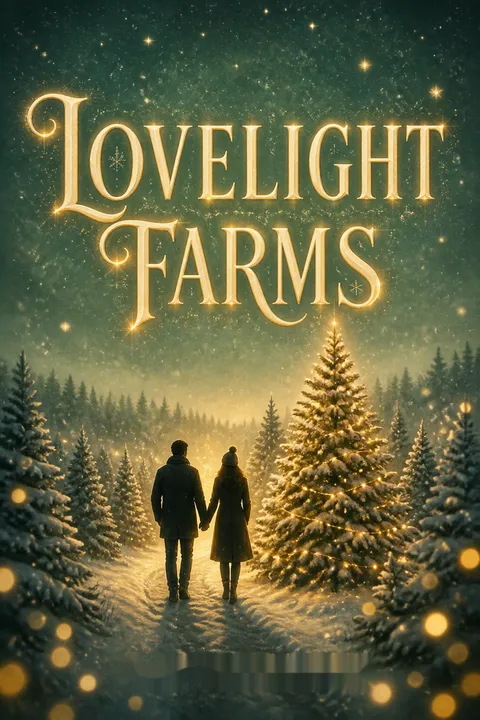


Plot Summary
A Farm on the Brink
Stella Milford has poured her savings into Lovelight Farms, a Christmas tree farm meant to give families the holiday magic she once found there with her mother. Now inherited debts, missed deliveries, damaged equipment, and a dying pasture threaten the business she built with farmer Beckett and baker Layla.
When travel influencer Evelyn St. James names the farm a finalist for a small-business feature and a $100,000 prize, Stella sees a possible lifeline. She also knows she has misrepresented herself: her application says she owns the farm with her boyfriend. Hoping a love story will make the farm irresistible to Evelyn, Stella asks Beckett to play the part. He refuses, leaving her with the friend she is most afraid to ask.
The farm is both a business and Stella’s attempt to make permanence tangible. She has built a place where visitors can return each winter, in contrast to her own childhood of moving and the loss of her mother. That ambition makes the debt more than an accounting problem: failure would seem to confirm that roots are always temporary. Her invented boyfriend is not simply a marketing embellishment. It reveals how readily she assumes that a woman’s work needs a romance attached to be legible or lovable. The contest therefore puts pressure on two linked vulnerabilities, the farm’s survival and Stella’s belief that she can earn belonging only by presenting a story others want.
The Friend She Chooses
Stella’s history with Luka Peters began nearly ten years earlier, when she was grieving her mother and he steadied her after she stumbled outside a hardware store. He took her for grilled cheese, then gradually became the person woven into her ordinary life, even as both avoided naming their attraction. Now Stella asks him to pose as her boyfriend for Evelyn’s visit.
Luka agrees, but bristles that she considered Beckett and other men first. Stella explains the contest and admits the lie on her application. Her fear is that pretending will damage their friendship, the closest thing she has to family. Luka promises their bond will survive whatever happens, and they decide to make the story believable in public.
The original meeting matters because it established a pattern of care before either character could call it romance. Luka offered food and steadiness without demanding that Stella explain her grief; she, in turn, allowed a stranger to enter a life she had been retreating from. Nearly a decade later, their fake-dating arrangement makes that pattern newly visible while giving Stella a reason to misread it as mere usefulness. Luka’s hurt at being a second choice exposes a need he has concealed beneath his easy helpfulness: he wants to be chosen deliberately. The promise they make is sincere, but it also reveals their asymmetry. Stella treats change as a threat to attachment; Luka believes their existing closeness can absorb it.
Inglewild Takes the Bait
Before the farm’s Christmas season can begin, someone smashes nearly every pumpkin in the patch, adding another unexplained loss to Stella’s list of troubles.
Rather than waste the damage, she, Beckett, and Luka turn the twisted south-pasture trees into a haunted Halloween attraction, drawing a crowd of local teenagers and giving the farm an unexpected burst of business. Stella and Luka then walk through town holding hands and present themselves as a couple.
Mabel, a greenhouse owner, spreads the news almost instantly, and Inglewild’s phone tree sends congratulations ahead of them. At the firehouse and on Main Street, locals celebrate the match. Sheriff Dane Jones greets Luka with a protective warning, while Luka takes the town’s attention in stride.
Stella responds to sabotage by converting loss into an experience, a small example of the resourcefulness that keeps the farm alive. Yet the response also shows her tendency to shoulder problems privately and improvise before asking for help. Inglewild, by contrast, makes private life communal property: its gossip network transforms Stella and Luka’s performance into a public event before they have agreed on what it means. The town’s enthusiasm is funny, but it also acts as pressure. Their affection has an audience now, and gestures once safely filed under friendship can be interpreted as evidence. Dane’s warning adds a protective dimension to that audience, reminding Luka that Stella is not merely the partner in a harmless scheme.
The Thanksgiving She Endures
Luka learns that Stella still attends an awkward early Thanksgiving hosted by her wealthy father, Brian, who left her mother before Stella was born. He sees how little she expects from the visit, but she refuses his first offer to come along, worried he will witness her father’s coldness.
At the house, Stella’s half-brother Charlie and stepmother Elle welcome her; Brian arrives drunk, fumbles through dinner, and eats with his hands before passing out. Luka’s presence lets Stella laugh instead of enduring the humiliation alone. On the drive back, she admits she is glad he came. The evening sharpens her sense of what she lacks, but it also makes her consider accepting the family warmth Luka has offered her for years.
Stella’s annual visit is an effort to turn a blood tie into a dependable bond, even when the ritual repeatedly disappoints her. She tolerates Brian’s neglect because the alternative feels like conceding that she has no family there at all. Luka’s presence changes the emotional conditions of the dinner, not the behavior of her father: Stella can see the absurdity of the scene because someone trustworthy is beside her. Her laughter is a small act of self-protection, but her gratitude also signals a shift from merely enduring family customs to choosing where she might belong. The scene makes intimacy practical. Luka does not rescue her from the past; he helps her remain present without facing it alone.
A Kiss in the Barn
Before leaving for New York, Luka agrees that they should rehearse the physical side of their story. Stella’s first attempt at kissing him is clumsy, so Luka kisses her slowly and carefully until the performance becomes difficult to distinguish from desire. He leaves for the city, and Stella spends the following days insisting to herself that the kiss meant nothing.
Meanwhile, she and Luka’s mother, Carina, talk about grief and the father Luka lost as a boy. Carina invites Stella to the Peters family Thanksgiving, and Stella accepts, finally willing to enter the warmth she has kept at a distance. When Luka returns, she is no longer only pretending to be close to his family. She is choosing to be there.
The kiss gives Stella a concrete experience that challenges the story she has told herself about Luka, but she immediately tries to contain it by labeling it practice. That response is consistent with her larger strategy: preserve a valued relationship by refusing to test what it could become. Carina’s conversation about grief opens a different route to closeness. Both Stella and Luka learned to protect themselves by limiting how much they revisit loss, and Carina’s longing for her son to speak of his father helps Stella recognize that silence can preserve pain as effectively as it can prevent it. Accepting the invitation is therefore more than a holiday decision. It is a tentative willingness to join a family without first proving she deserves a place.
A Place at Their Table
Stella discovers that the barn’s supposed raccoons are a mother cat and three kittens. Beckett names them after Santa’s reindeer and takes responsibility for the animals, exposing a tenderness beneath his gruff manner.
Luka returns to Inglewild before dawn, exhausted and unable to sleep, and Stella lets him rest beside her. Their sleepy closeness awakens a desire neither wants to dismiss, so Luka suggests they treat the week as a genuine trial of dating rather than switch off their affection when they are alone.
Stella agrees, still asking for reassurance that their friendship will remain. At the Peters family Thanksgiving, Luka’s mother, grandmother, and aunts fold Stella into their noisy traditions. Their warmth helps her understand that accepting care does not erase her mother’s place in her heart.
The kittens mirror the improvised family taking shape around the farm: vulnerable creatures find shelter in a place Stella and her friends thought they understood, and their care becomes shared rather than solitary. Luka’s early return similarly reveals that his attachment to home is changing, though Stella is still inclined to interpret every gesture as friendship unless he makes the meaning explicit. Their trial period gives desire a temporary structure, a way to approach intimacy without immediately confronting permanence. The Peters gathering then supplies an alternative model of family to the one Stella has pursued through Brian: affection expressed through food, teasing, and inclusion. She can participate in that warmth while keeping her grief, which loosens the false choice between remembering her mother and accepting new love.
Lights Against the Intruder
After Stella and Luka grow physically closer, a security alert wakes them in the night. The camera shows a hooded person disabling it with a rake. Luka tells Stella to call for help, but she follows him toward the barn with a pink softball bat while Beckett and Dane rush to the farm. Beckett switches on every holiday light, exposing movement near the west pasture.
He and Luka pursue the intruder, but the person escapes before Dane can catch up. The officers find no suspect, yet the broken camera and the open barn door make the previous damage look deliberate. Dane asks Stella to file a formal report, and she realizes the farm’s problems may be more than bad luck.
The nighttime intrusion turns Stella’s diffuse anxiety into a visible threat. Until now, she has treated each failure as an isolated setback she should absorb; the disabled camera supplies evidence that someone is actively exploiting her reluctance to make trouble. Her decision to follow Luka despite the obvious danger shows both courage and a familiar difficulty: she often confuses self-reliance with having to be physically present for every problem. The lights, designed to make the farm festive, become an improvised security system. That reversal captures the novel’s practical imagination: the same structures that create welcome can also expose danger, especially when a community learns to coordinate rather than leave Stella to manage alone.
The Numbers Come Due
Evelyn arrives to find the farm glowing with lights, but her first meeting with Beckett turns awkward when they recognize each other from a brief sexual encounter at a Maine farming conference. Beckett fears their history could derail the feature.
Stella, already under strain, admits to Beckett and Layla that the farm is in serious financial trouble and that she has used her own earnings to keep every employee paid. Hurt that she hid the danger, Beckett leaves and Layla follows.
Luka helps Stella examine the accounts, then makes clear that accepting help does not make her achievements less her own. Beckett and Layla return with a business plan, agree to take pay cuts, and ask to become equal partners in ownership and financial responsibility.
The Beckett and Evelyn complication briefly makes the farm’s central opportunity feel precarious, but the more consequential exposure is Stella’s silence about the books. She has protected her employees by sacrificing her own income, yet withholding the information also denies Beckett and Layla the agency of true partners. Her generosity has become a form of control: if she alone carries the risk, she alone can decide what everyone else is allowed to know. Their anger is therefore compatible with loyalty. By returning with a plan to share ownership, they transform care from personal sacrifice into governance. Luka’s role is to challenge Stella’s equation of help with rescue, while her friends demonstrate that shared responsibility can strengthen rather than diminish her work.
The Librarian's Alpaca Scheme
Dane identifies the trespasser as Will Hewett, the town librarian, who admits that he had hoped to buy the farm before Stella did. He wanted land for an alpaca farm and tried to make Lovelight Farms seem burdensome: he disrupted deliveries, damaged fences and decorations, and secretly disabled the south pasture’s drainage system and soil sensor, causing root rot in the trees.
Stella’s friends are furious, especially Beckett, who spent months trying to diagnose the failing trees. They vote together on the response. Rather than send Hewett to jail, they require him to repay the farm’s losses and keep him away through a restraining order. The explanation brings relief, but the scale of the damage means Stella still needs the farm’s new partners and Evelyn’s exposure.
Hewett’s scheme gives the farm’s apparent misfortunes a single human cause, but his motive is not grand malice. He believed the land should have been his and chose to manufacture a reason for Stella to surrender it. That entitlement makes his actions consequential precisely because he treated another person’s dream as an obstacle to his own. The discovery also reframes Stella’s persistence: what seemed like simple bad luck was partly deliberate interference, so her optimistic adaptation cannot solve every problem. The group’s vote matters as much as the culprit’s confession. Stella is no longer making consequential decisions alone. Choosing restitution and a restraining order combines accountability with proportionality, while ensuring Hewett’s wrongdoing does not define the future of the farm.
Snow Over Lovelight
Evelyn continues exploring the farm, joining Stella for a tour of the fields, the illuminated Gum Drop Forest, and the Santa barn, where town volunteers help children prepare their holiday wish lists. She tells Stella she wants to tell more honest stories about small businesses and communities.
As the season’s first snow begins, Stella and Evelyn return to the cottage for dinner, where Luka cooks and the three share stories. Luka recounts searching for Stella after their first meeting; Stella admits she believes her late mother somehow led her to him.
After Evelyn leaves, Stella and Luka kiss outside beneath the falling snow, then go inside together. Their affection turns into a sexual relationship, no longer confined to a practice session or a public performance.
Evelyn’s visit shifts from a contest evaluation toward attentive witnessing. She asks what the farm feels like, not merely how it photographs, which allows Stella’s work to be seen without being reduced to a marketable romance. The wish-list program also shows the farm functioning as communal infrastructure, not just a seasonal business. In that setting, Stella’s account of her mother and Luka’s account of their first meeting converge around the need to make meaning from coincidence and loss. Their kiss follows a genuine disclosure, so physical intimacy becomes an extension of a shared history rather than a tactic for the influencer. The falling snow intensifies the holiday atmosphere, but the emotional change is earned through reciprocal recognition.
A Confession Misheard
The morning after they sleep together, Luka reveals that he has accepted a job in Delaware and wants Stella to see his new home near the coast. When he says he wants to be her boyfriend, Stella assumes he means their temporary arrangement and warns that she does not want a friends-with-benefits relationship.
Luka tells her he is in love with her. Afraid that sex and a coming move have confused him, Stella rejects the confession, and Luka leaves hurt. Later, she admits to Evelyn that the boyfriend claim on her application was a lie.
Evelyn says she has already disqualified Stella from the prize, but will feature the farm anyway. A video of Luka’s unguarded devotion makes Stella see that her supposed performance has concealed a love he has shown for years.
The conflict is not caused by a lack of feeling but by incompatible ways of managing uncertainty. Luka states his desire directly, yet Stella interprets commitment as a promise that may later be revoked, so she tries to preserve the friendship by rejecting the possibility of change. His departure confirms her deepest fear in the moment, even though he leaves because he is hurt, not because he intends to abandon her. Evelyn’s video functions as external evidence against Stella’s defensive interpretation: Luka’s expressions reveal what his words have struggled to make credible. The disqualification is a real consequence of Stella’s lie, not a reward for romance. Evelyn’s decision to feature the farm separates its genuine value from the false premise of the application.
Two Hundred Pine Trees
After Layla and Beckett remind Stella that she has long been afraid to risk their friendship, she finds Luka waiting on her porch. He apologizes for leaving after his confession and explains that the tiny pine air fresheners he has given her over the years began when he realized how much he wanted to make her smile.
Stella brings him to her room and empties a box containing the keepsakes she saved. She tells him that she has loved him for years, chose him deliberately for the fake-boyfriend story, and hoped one week together would quiet her feelings.
It did the opposite. Luka promises he will stay, and Stella tells him she loves him. Their relationship becomes real, while the farm faces its future with partners, restitution, and Evelyn’s feature.
The keepsake box makes Stella’s inward life materially undeniable. Each small tree records an instance of care she accepted but refused to interpret, just as her fear of abandonment turned evidence of love into something safely deniable. By listing specific memories and habits, she does not merely confess a feeling; she revises the narrative she has used to explain their relationship. Luka’s matching account shows that the connection has been mutual, though expressed through gestures rather than declarations. The emotional resolution depends on Stella risking a different kind of loss: not the possibility of rejection alone, but the loss of her familiar role as the one who needs nothing. Their promise cannot guarantee permanence, yet it gives her a relationship in which asking and answering are both possible.
Epilogue
Luka reflects on how long he and Stella spent circling the love they now share. He intends to stay near her in Delaware and care for her through ordinary acts: cooking, dancing in the kitchen, and keeping her stocked with real food instead of instant noodles.
Meanwhile, Charlie tells him that Elle plans to leave Brian after learning of his infidelity. Charlie wants to put the farm’s ruined trees on his father’s lawn, turning old damage into a pointed farewell. Luka settles beside Stella, content to build a life through the small acts of attention that first brought them together.
The epilogue recasts the romance’s long delay as a history of care that lacked an explicit name. Luka’s plans are deliberately domestic: food, music, and steady presence. These gestures do not erase the years of misunderstanding, but they show how commitment can be practiced rather than merely declared. Stella’s future is no longer framed as a solitary test of competence; Luka means to accompany her without taking ownership of her achievements. The news about Elle and Brian gives the Milford family thread a late counterpoint. Charlie’s proposed use of the dead trees expresses anger through spectacle, while Elle’s departure suggests that a family’s polished exterior cannot guarantee loyalty or safety.
Analysis
Lovelight Farms builds its romance around a conflict between receiving care and remaining in control of one’s safety. Stella is capable, generous, and resourceful, but her history of loss has taught her to treat need as a liability. She hides the farm’s financial trouble from the people who depend on it, just as she hides her love for Luka from the person most likely to answer it. In both cases, concealment appears protective, but it deprives others of the chance to choose her freely.
The novel’s setting gives that emotional pattern a material form. Stella is trying to establish a place where visitors can return, where holiday rituals make belonging repeatable. Yet the farm cannot survive on sentiment alone. Its inherited debt, sabotaged trees, and disrupted supplies expose the limits of optimism when it is unsupported by shared responsibility. The eventual partnership with Beckett and Layla is therefore a major resolution in its own right: they do not simply reassure Stella, they take on risk and decision-making with her.
Luka’s steady acts of care challenge Stella’s assumption that love must either be earned through usefulness or avoided to prevent abandonment. The air fresheners, meals, and visits are not dramatic declarations, but their accumulation makes his devotion legible. Evelyn’s video makes that evidence visible to Stella, while the story refuses to treat the contest’s prize as the ultimate measure of success. Stella loses eligibility because she lied, yet the farm still earns attention through its genuine character and community.
The romance resolves not when fear disappears, but when Stella speaks while afraid. Her confession joins private feeling to a history of concrete choices, allowing the two friends to reinterpret their past without pretending it was simple. The novel’s idea of home is consequently relational and practical: a place is made durable when people are permitted to share its burdens, not when one person silently carries everything.
Review Summary
Lovelight Farms receives mostly positive reviews, with an average rating of 3.84 out of 5. Readers praise the cozy holiday atmosphere, charming small-town setting, and sweet friends-to-lovers romance between Stella and Luka. Many enjoy the chemistry between the main characters and the festive vibes. Some criticize the slow pacing and predictable plot, while others find the third-act conflict frustrating. Overall, it's considered a heartwarming, if somewhat formulaic, holiday romance that delivers on Christmas spirit and swoony moments.
People Also Read






Characters
Stella Milford
The determined farm ownerStella, often called Estelle by her father, owns Lovelight Farms and dreams of making it a lasting holiday destination. After a childhood of frequent moves and the death of her mother, she associates home with something precious and easily lost. She is inventive under pressure, warm with her employees, and skilled at turning setbacks into new experiences for visitors. Yet she hides her financial distress and minimizes her own needs, believing that self-sufficiency protects her from disappointment. Her long friendship with Luka is a source of comfort she is reluctant to risk. Stella’s central tension is between wanting to belong and fearing that asking for more will make others leave.
Luka Peters
The loyal best friendLuka is Stella’s closest friend, a data analyst who lives in New York and returns often to visit his mother in Inglewild. He is observant, affectionate, and dependable, expressing care through food, practical help, and small rituals. His easy humor can disguise how deeply he wants to be chosen by Stella, and his own childhood loss has taught him to keep some feelings private. He remembers details she overlooks and naturally makes space for her in his life. Luka is not simply Stella’s rescuer: he wants a relationship built on mutual choice, not permanent indebtedness. His patience reflects genuine devotion, though it also leaves both of them vulnerable to years of avoiding a direct conversation.
Beckett
The guarded lead farmerBeckett oversees the farm’s crops and maintenance, bringing practical knowledge and a blunt, reserved manner to Stella’s small team. He is deeply loyal to the people who work beside him, though he tends to express concern through action rather than emotional conversation. His affection for animals and his devotion to farming complicate his intimidating exterior. Beckett is wary of being exposed or made the subject of attention, yet he shows up when the farm needs him. His commitment is rooted in shared work and responsibility, not in sentimentality, which makes his trust in Stella especially meaningful.
Layla Dupree
The generous bakery managerLayla runs the farm’s bakehouse and fills its tables with the pastries and warmth that draw visitors back. She is affectionate, quick-witted, and physically demonstrative, often offering comfort before anyone asks. Her optimism is not naïveté; she recognizes when Stella is hiding from her own feelings and challenges her with unusual candor. Layla has her own romantic disappointments and can be drawn to partners who give her less care than she deserves. Her friendship with Stella rests on tenderness and truth in equal measure, and her practical contributions make the farm feel like a shared home rather than a one-person dream.
Evelyn St. James
The influential storytellerEvelyn is a prominent travel and small-business influencer whose online features can bring a struggling enterprise new customers and attention. She is polished in public but values experiencing a place before deciding how to present it. Her original interest in storytelling has become complicated by sponsorships and the pressure to make social media content. At Lovelight Farms, she looks beyond a staged romance to the people and community that sustain the business. Evelyn is perceptive without being cruel, and her professional decisions distinguish honest storytelling from a flattering but false account.
Dane Jones
The protective town sheriffDane is Inglewild’s sheriff and one of Stella’s earliest sources of safety. He helped her and her mother when they first arrived in town, and he has continued to watch over Stella and the farm. His stern manner, careful attention, and dry humor make his concern unmistakable. Dane takes threats seriously, even when Stella dismisses them, and he expects her to follow safety procedures. Beneath his authority is a man who has quietly built family ties through loyalty rather than obligation.
Carina Peters
Luka's devoted motherCarina, Luka’s mother, is an Italian American teacher who brings food, strong opinions, and a commanding warmth wherever she goes. She is close to her son and attentive to the people he loves. Her husband’s death remains a private grief, and she hopes that remembering him aloud will keep the family’s connection to him alive. Carina treats food and holiday gatherings as ways of caring for people, sometimes with the force of a lesson. Her acceptance offers Stella a glimpse of the family intimacy she has long kept at arm’s length.
Charlie
Stella's half-brotherCharlie is Stella’s younger half-brother, born only months after her, and works at the firm run by their father. He and Stella developed an affectionate relationship despite the awkward circumstances of their first meeting. Charlie is sociable, funny, and attentive to Stella’s feelings, while also carrying the pressure of his father’s expectations. He offers her a connection to the family she hoped to find, even when the household itself remains uncomfortable.
Elle
Stella's gracious stepmotherElle is Brian’s wife and Charlie’s mother. She is poised and welcoming, making an effort to include Stella despite the complicated history that links them. Her formal home and polished manners contrast with Stella’s memories of life with her mother, but Elle’s kindness is sincere. She tries to create family rituals even when Brian’s behavior makes them difficult to sustain.
Brian Milford
Stella's distant fatherBrian is Stella’s wealthy father, who left her mother before Stella was born and maintains only a limited connection with Stella. He is accustomed to control and professional status, but offers little emotional recognition to the daughter he rarely sees. His annual early Thanksgiving invitation becomes a ritual that preserves appearances without repairing their relationship. Stella’s resemblance to him makes his distance especially painful.
Will Hewett
The reclusive librarianWill is Inglewild’s reserved librarian, known for his formal manner and love of books. He is proud of his private ambitions and uncomfortable with the way the town changes around him. His reserve can make it difficult for others to know what he is thinking or what he wants.
Caleb Alvarez
The attentive deputyCaleb is a deputy who assists Dane when trouble reaches Lovelight Farms. He is conscientious, kind, and a little shy, with an obvious appreciation for Layla’s baking. His careful manner makes him a reassuring presence during the farm’s late-night scare.
Mabel Brewster
The town's greenhouse dynamoMabel runs Inglewild’s greenhouse and has known Stella for years. Energetic, perceptive, and devoted to local gossip, she quickly notices the change in Stella and Luka’s relationship. Her enthusiasm helps turn their private performance into town news.
Gus
The cheerful paramedicGus works as a paramedic and is one of Inglewild’s friendly, sociable regulars. He enjoys sweets and joins readily in the town’s communal enthusiasm. His good humor makes him an easy source of neighborhood news.
Matty
The local pizza makerMatty owns Inglewild’s pizza shop and feeds many of the town’s regulars. He is generous toward Stella and Luka, whose visits make them familiar customers. His shop is one of the small businesses that gives the town its everyday social life.
Jacob
Layla's inattentive boyfriendJacob is Layla’s current boyfriend, though he often seems absorbed in his phone rather than attentive to her. His presence gives Stella a reason to worry that her friend is settling for less care than she deserves.
Plot Devices
The Fake Relationship
Romance under coverStella claims on her application that she and Luka own the farm together as a couple, hoping the romantic image will appeal to Evelyn. To make the story plausible, they present themselves as longtime partners in public and agree to rehearse affection in private. The device creates the central tension: each can treat a real feeling as part of a performance, delaying an honest conversation while intensifying their closeness. The town’s eager gossip and Evelyn’s attention keep the pretense visible, while Stella’s fear of losing Luka makes the eventual distinction between pretend and real emotionally consequential.
The Small-Business Contest
A financial lifelineEvelyn’s small-business sweepstakes promises a substantial cash prize and social-media exposure to selected finalists. For Stella, the opportunity could draw new customers to Lovelight Farms and ease mounting debts. The contest connects the romantic falsehood to the farm’s economic stakes, making a seemingly harmless application detail carry real consequences. Evelyn’s feature ultimately remains valuable even after Stella is disqualified from the prize, distinguishing the farm’s genuine appeal from the story Stella invented to win.
The Pine Air Fresheners
A trail of affectionLuka leaves Stella small pine-scented air fresheners, one for each visit home. She collects them without understanding the importance of the ritual, keeping them in a drawer among the objects that preserve their shared history. The tokens serve as a quiet record of Luka’s consistent presence and Stella’s habit of noticing his gestures while refusing to interpret them as love. When they discuss the air fresheners directly, a private collection becomes evidence that their bond has been growing for years.
The Security Cameras
A warning made visibleStella installs inexpensive cameras after a series of unexplained problems at the farm. When an intruder disables one, the alert brings Luka, Beckett, and Dane into a nighttime search and turns vague suspicion into a formal investigation. The cameras give the friends evidence that the damage is not simply bad luck, while their limited coverage keeps the culprit hidden until Dane investigates. The device also contrasts the farm’s welcoming lights with the need to protect the place Stella has built.
The Holiday Farm
A home built in publicLovelight Farms’ lights, ice rink, bakery, Santa barn, and family traditions make the business a seasonal destination and embody Stella’s wish to create a place where people can return. Its public nature draws Evelyn and the town into Stella’s story, but it also exposes how much the farm depends on shared labor, visitors, and local support. As the plot develops, the farm is more than a backdrop for the romance: its financial pressures force Stella to trust her partners, and its communal traditions offer her a form of belonging not defined by her father’s household.
FAQ
```markdown
Synopsis & Basic Details
What is Lovelight Farms about?
- A Dreamer's Holiday Vision: Lovelight Farms follows Estelle "Stella" Bloom, who pours her heart and life savings into a struggling Christmas tree farm in the quaint town of Inglewild, hoping to create a magical holiday destination and a sense of belonging she's always craved.
- A Desperate Fake Relationship: Facing mounting debts and a string of mysterious misfortunes, Stella applies for a small business contest hosted by a major social media influencer, Evelyn St. James. A white lie on her application—claiming she co-owns the farm with her boyfriend—forces her to enlist her steadfast best friend, Luka Peters, to play the part.
- Love Blooms Amidst Chaos: As Evelyn's visit approaches, Stella and Luka navigate the complexities of their fake relationship, which quickly blurs the lines of their long-standing friendship. Amidst community gossip, farm sabotage, and Stella's deep-seated fears of abandonment, their pretend love story begins to reveal a very real, undeniable connection.
Why should I read Lovelight Farms?
- Heartfelt Exploration of Vulnerability: Readers should dive into Lovelight Farms for its tender portrayal of Stella's journey to overcome deep-seated fears of abandonment and embrace vulnerability, showing that true strength lies in asking for help and risking your heart.
- Charming Small Town Setting: The novel offers a delightful escape into the quirky, supportive, and delightfully meddlesome community of Inglewild, where neighbors become family and everyone is invested in Stella's happiness, providing a warm backdrop to the central romance.
- Slow-Burn Best Friends-to-Lovers: For fans of the best friends-to-lovers trope, Lovelight Farms delivers a masterclass in unspoken longing and simmering chemistry, as Stella and Luka's fake relationship forces them to confront years of buried feelings, culminating in a deeply satisfying emotional payoff.
What is the background of Lovelight Farms?
- A Legacy of Wanderlust: Stella's background is defined by constant movement with her mother, chasing temporary jobs and never truly planting roots. This history fuels her deep desire for a permanent home and a place to belong, making Lovelight Farms more than just a business—it's a personal quest for stability.
- Inglewild's Quirky Charm: The town of Inglewild, once ambitiously branded "Little Florence," provides a unique cultural backdrop. Its small-town intimacy means everyone knows everyone's business, leading to both humorous gossip (like the town betting pool on Stella and Luka) and unwavering community support, shaping the narrative's external pressures and internal comforts.
- The Weight of Unspoken Grief: Stella's mother's death from cancer, occurring just before Luka entered her life, is a foundational trauma. This loss, coupled with her father's abandonment, explains Stella's reluctance to fully commit and her fear of losing those she loves, deeply influencing her psychological complexities and motivations throughout the story.
What are the most memorable quotes in Lovelight Farms?
- "Christmas Eve will find me Where the love-light gleams. I'll be home for Christmas If only in my dreams.": This opening epigraph sets a poignant, hopeful tone, foreshadowing Stella's longing for a magical, loving home and the dream-like quality of her initial vision for Lovelight Farms. It encapsulates the core theme of seeking belonging and warmth during the holidays.
- "Just because you let yourself love someone, doesn't mean they're going to leave.": Layla's profound advice to Stella cuts to the heart of Stella's deepest fear of abandonment, serving as a pivotal moment that challenges Stella's self-protective instincts and encourages her to embrace vulnerability. This quote is central to Stella's emotional growth and the themes in Lovelight Farms regarding trust.
- "No matter where you go, you will always end up at home.": Carina Peters, Luka's mother, shares this Italian proverb, which Luka translates, encapsulating the novel's powerful found family theme and Stella's journey to find her true home not just in a place, but in the people who love her. It signifies the culmination of Stella's search for belonging.
What writing style, narrative choices, and literary techniques does B.K. Borison use?
- First-Person Intimate Narration: Borison employs a first-person perspective from Stella's point of view, immersing readers directly into her anxieties, internal monologues, and emotional turmoil. This choice allows for deep psychological insight into Stella's fears and desires, making her journey of self-discovery particularly resonant.
- Balancing Humor and Heartbreak: The narrative skillfully weaves witty banter, physical comedy (like Stella's clumsy attempts at kissing or Beckett's mud wrestling), and moments of profound vulnerability. This tonal balance prevents the story from becoming overly saccharine or melodramatic, enhancing the emotional impact of Stella's breakthroughs.
- Symbolism and Foreshadowing: Borison subtly uses recurring motifs, such as the pine tree air fresheners Luka leaves for Stella, the twisted trees in the south pasture, and the recurring theme of "continuing" from Luka's father. These elements serve as symbolism in Lovelight Farms, foreshadowing character development and reinforcing central themes of growth, resilience, and enduring love.
Hidden Details & Subtle Connections
What are some minor details that add significant meaning?
- Pine Tree Air Fresheners as Love Tokens: Stella's collection of pine tree air fresheners, "a single pine tree for every time Luka has been home," subtly symbolizes Luka's consistent presence in her life and Stella's quiet hoarding of these small, meaningful gestures. This detail highlights Luka's steadfast devotion and Stella's deep, often unacknowledged, emotional attachment to him, even before their fake relationship.
- The "Little Florence" Branding Failure: The town's failed attempt to brand itself "Little Florence" is a subtle nod to the contrast between idealized visions and grounded reality, mirroring Stella's initial romanticized view of Lovelight Farms versus its challenging reality. It also subtly connects to Luka's Italian heritage and his mother's longing for Italy, adding a layer of intertextual irony.
- Luka's Dad's "Continue" Advice: Luka's fragmented memory of his father's advice, "When that happens, you continue," becomes a profound thematic anchor, especially in the epilogue. This seemingly throwaway line from his past guides Luka's patient approach to life and love, ultimately becoming the philosophy for his and Stella's enduring relationship, emphasizing resilience and commitment.
What are some subtle foreshadowing and callbacks?
- Mr. Hewett's Thoreau Quote: When Stella first bumps into Mr. Hewett, he recites, "'It is better to have your head in the clouds, and know where you are, than to breathe the clearer atmosphere below them, and think you are in paradise.'" This quote subtly foreshadows his own "head in the clouds" dream of an alpaca farm and his misguided actions, contrasting with Stella's eventual grounded understanding of her farm's reality.
- The "Nuclear Wasteland Christmas": Layla's early description of the farm as a "nuclear wasteland Christmas" after Hank's neglect serves as a callback to the farm's initial state, emphasizing Stella's transformative efforts. It highlights the immense work Stella put in, making the eventual community rally and Evelyn's praise ("North Pole had a love child with Hogwarts") even more impactful.
- Luka's "Long Game" Strategy: Luka's internal monologue in the epilogue reveals his "general wear down" plan for Stella, a "long game" of consistent presence and small gestures. This subtly foreshadows his patient approach throughout the book, explaining why he never pushed Stella, and validates his quiet acts of love that Stella initially overlooked, reinforcing his Luka motivations.
What are some unexpected character connections?
- Beckett and Evelyn's Past Encounter: The revelation that Beckett and Evelyn had a "three-time thing" at a Maine conference is an unexpected twist, adding a layer of personal history and awkwardness to Evelyn's visit. This connection not only provides comic relief but also humanizes Evelyn, showing her vulnerability and challenging Stella's initial perception of the influencer.
- Sheriff Dane Jones's Crush on Matty: The gruff Sheriff Dane Jones's secret crush on Matty, the pizza shop owner, is a charming and unexpected subplot. It reveals a softer, more vulnerable side to the protective father figure, mirroring Stella's own journey of opening up to love and highlighting the pervasive theme of romance in Inglewild, even for its most stoic residents.
- Mr. Hewett's Alpaca Dream: The antagonist, Mr. Hewett, is revealed to be driven by a lifelong dream of an alpaca farm, a surprisingly whimsical motivation for his sabotage. This unexpected detail connects him to Stella's own dream-driven nature, creating a parallel between their aspirations and underscoring the novel's theme that even seemingly villainous characters can be motivated by a longing for something special.
Who are the most significant supporting characters?
- Layla Dupree, the Emotional Catalyst: Layla is more than just Stella's baker; she's her emotional compass and truth-teller. Her direct questions ("You have feelings for him, Stella.") and unwavering belief in Stella's capacity for love ("Just because you let yourself love someone, doesn't mean they're going to leave.") are crucial in pushing Stella to confront her feelings for Luka.
- Beckett Porter, the Steadfast Protector: Beckett, the gruff head farmer, embodies unwavering loyalty and quiet support. His willingness to take a pay cut, his fierce protection of Stella (even chasing a saboteur), and his unexpected vulnerability with Evelyn highlight his role as a foundational pillar of Stella's found family and the farm's success.
- Carina Peters, the Matriarchal Anchor: Luka's mother, Carina, provides a warm, chaotic, and deeply loving contrast to Stella's own fractured family history. Her immediate acceptance of Stella as "family" and her subtle wisdom ("Speaking of them keeps their memory alive") offer Stella a glimpse of the belonging she craves, influencing her decision to embrace Luka's family and, eventually, Luka himself.
Psychological, Emotional, & Relational Analysis
What are some unspoken motivations of the characters?
- Stella's Self-Sabotage for Self-Preservation: Stella's deepest unspoken motivation is to protect herself from the pain of abandonment, stemming from her father's absence and her mother's death. This manifests as a reluctance to fully commit to Luka, a fear of acknowledging her true feelings, and a tendency to shoulder burdens alone, believing that if she doesn't rely on others, they can't leave her. Her Stella motivations are rooted in this trauma.
- Luka's Patient, Persistent Love: Luka's unspoken motivation is a long-held, quiet love for Stella, coupled with a profound understanding of her fears. He agrees to the fake relationship not just to help the farm, but as a calculated "long game" to show Stella his unwavering presence and give her a safe space to explore her feelings without pressure, hoping she'll eventually see him as more than just a friend.
- Mr. Hewett's Lonely Longing: Mr. Hewett's sabotage, while destructive, is driven by an unspoken longing for his own dream—an alpaca farm—and a sense of injustice. His actions are a desperate, misguided attempt to reclaim a dream he felt was stolen, revealing a deep-seated loneliness and a desire for purpose that mirrors, in a twisted way, Stella's own aspirations for the farm.
What psychological complexities do the characters exhibit?
- Stella's Avoidant Attachment Style: Stella exhibits classic traits of an avoidant attachment style, stemming from early childhood abandonment and loss. She struggles with intimacy, compartmentalizes her emotions (the "Luka box"), and fears vulnerability, often pushing away those who get too close. Her journey is about learning to trust and allow herself to be truly seen and supported.
- Luka's Empathetic Patience and Hidden Vulnerability: Luka, while outwardly logical and steadfast, carries his own complexities. His deep empathy for Stella's past makes him incredibly patient, but he also hides his own vulnerability and fear of rejection, evident in his "long game" approach and his initial hesitation to confess his love. His Luka motivations are a blend of logic and profound emotional intelligence.
- Beckett's Stoic Sensitivity: Beneath Beckett's gruff exterior and aversion to social interaction lies a deeply sensitive and loyal individual. His discomfort with expressing emotions, coupled with his fierce protectiveness of Stella and his unexpected romantic past with Evelyn, reveals a complex character who struggles to reconcile his internal tenderness with his outward stoicism.
What are the major emotional turning points?
- Stella's Confession to Layla: A significant emotional turning point occurs when Stella finally admits to Layla that she has "big feelings for Luka," even if she immediately tries to rationalize them. This moment marks the first crack in Stella's carefully constructed emotional defenses, signaling her growing awareness of her true desires and the inadequacy of her "friend zone" strategy.
- Luka's Thanksgiving Revelation: Luka's insistence on accompanying Stella to her father's "forced, fake Thanksgiving" is a turning point, as he confronts Stella's unspoken loneliness and her need for family. His anger at her self-imposed isolation ("Why haven't you been spending Thanksgiving with me and my mom?") forces Stella to acknowledge her longing for belonging and accept his unwavering support.
- The "Causal Analysis" Conversation: The playful yet deeply intimate "causal analysis" conversation on the couch, where Luka uses scientific terms to describe their escalating physical and emotional connection, is a major turning point. It allows Stella to explore her desire for Luka in a "safe" intellectual framework, leading to their first truly passionate encounter and shattering her illusion that their connection is merely platonic.
How do relationship dynamics evolve?
- Stella and Luka: From Platonic to Passionate Partnership: Their relationship evolves from a deeply comfortable, almost familial friendship into a passionate, committed partnership. The fake relationship acts as a catalyst, forcing them to confront years of unspoken feelings, culminating in Luka's confession of love and Stella's brave acceptance, transforming their bond into a real, enduring romance.
- Stella and Her Found Family: From Burden to Shared Strength: Stella's dynamic with Beckett and Layla shifts from her carrying the farm's burdens alone to embracing them as true partners. Her confession about the farm's financial struggles, and their subsequent decision to share ownership and responsibility, solidifies their found family bond, demonstrating that shared vulnerability strengthens relationships.
- Stella and Her Father: From Obligation to Self-Respect: Stella's relationship with her father, Brian Milford, evolves from a painful obligation to one where Stella asserts her self-worth. Luka's presence at the awkward Thanksgiving and Stella's growing confidence allow her to see her father's shortcomings more clearly, leading to a healthier detachment and a greater appreciation for the family she chooses.
Interpretation & Debate
Which parts of the story remain ambiguous or open-ended?
- The Future of Mr. Hewett's Alpaca Dream: While Mr. Hewett faces legal and financial consequences, the story leaves the ultimate fate of his alpaca farm dream ambiguous. Readers might debate whether he will ever achieve it, or if his experience at Lovelight Farms will lead him to a different, more ethical path, highlighting the theme of second chances and personal growth.
- The Long-Term Impact of Evelyn's Feature: While Evelyn's feature significantly boosts Lovelight Farms' visibility, the exact long-term financial stability of the farm, beyond the immediate influx of customers, remains somewhat open-ended. The narrative focuses more on the emotional and communal success, leaving the precise business trajectory to the reader's imagination.
- The Nuances of Luka's "Long Game": While the epilogue confirms Luka's "long game" strategy, the extent to which he consciously manipulated the fake relationship to achieve his romantic goals could be debated. Was he truly just waiting for Stella, or did he subtly orchestrate situations to push her towards him? This adds a layer of complexity to his otherwise patient and devoted character.
What are some debatable, controversial scenes or moments in Lovelight Farms?
- Stella's Prolonged Deception to Her Friends: Stella's decision to hide the farm's dire financial situation from Beckett and Layla, her closest friends and business partners, is a debatable moment. While motivated by fear of abandonment and a desire to protect them, it raises questions about trust and the ethics of withholding crucial information from those who have invested their lives in her dream.
- The Ethics of the "Fake Relationship" for the Contest: The central premise of the fake relationship for the contest is inherently debatable. Stella's lie to Evelyn St. James, and the subsequent disqualification, forces readers to consider the line between ambition and integrity, and whether the ends (saving the farm) justify the means (deception).
- Luka's Initial Reaction to Stella's Confession of Love: When Stella finally confesses her love, Luka's immediate, almost angry response ("Fucking finally.") and his subsequent temporary departure could be seen as controversial. While understandable given his years of suppressed feelings and Stella's earlier denial, some readers might debate if his reaction was overly harsh or if it momentarily undermined the vulnerability of Stella's confession.
Lovelight Farms Ending Explained: How It Ends & What It Means
- Love's Triumph Over Fear: The Lovelight Farms ending explained culminates in Stella finally overcoming her deep-seated fears of abandonment and vulnerability, confessing her love for Luka. This signifies her emotional breakthrough, choosing to risk her heart for a real, enduring relationship rather than clinging to the safety of friendship, embodying the novel's core theme of courage in love.
- Found Family as the True Prize: Despite being disqualified from Evelyn's contest, the farm is saved by the community's unwavering support and the exposure from Evelyn's feature. This highlights that the true "prize" is not the money, but the found family Stella has cultivated with
Lovelight Series
About the Author
Other books by B.K. Borison



Download PDF
Download EPUB
.epub digital book format is ideal for reading ebooks on phones, tablets, and e-readers.








