

Key Takeaways
Treat psychedelics as different tools, not one drug class
One label, many effects. The book uses “psychedelic” broadly for substances that create unusual states of consciousness. Classical psychedelics such as LSD and psilocybin act mainly through serotonin systems; empathogens such as MDMA intensify emotional openness; dissociatives such as ketamine detach users from their bodies and surroundings. Other substances resist tidy labels. DiPT, for example, is known for altering sound pitch rather than producing the familiar visual effects.
Differences matter. The same broad category includes substances with very different durations, bodily effects, risks, and cultural roles. Cannabis may bring relaxation or anxiety; salvia can produce abrupt, unsettling changes in identity; MDMA is often social and emotionally connective. A category can guide curiosity, but it cannot predict an individual experience or establish that one substance is safe because another appears relatively low-risk.
What's striking is how much the book's taxonomy resists the popular idea of a single psychedelic experience. That distinction resembles the difference between grouping medicines by broad effect and asking what each does in a particular patient: labels help organize questions, but they do not answer them. The classification also has limits. A substance's effects depend on dose, person, and circumstances, while broad families can conceal meaningful variation. The useful habit is to ask what kind of change a specific substance produces, and what evidence supports that description, rather than treating “psychedelic” as a safety rating.
The ceremony, expectations, and company shape the experience itself
Context is part of the event. “Set and setting” means a person's mindset and expectations, plus the physical and social environment around an experience. The book connects this idea to indigenous ritual and modern clinical practice. In ayahuasca ceremonies, a healer's songs help structure the session and reassure participants. In psilocybin research, supportive surroundings and trusted guides are intended to reduce the chance that fear becomes overwhelming.
Meaning is guided. The same intense sensation can be understood as a frightening loss of control, a spiritual encounter, or a memory worth examining. This does not mean that context erases a substance's pharmacology. It means that preparation, support, and interpretation can shape how a person responds. The book's practical message is not a recipe for use, but a warning against treating powerful altered states as context-free entertainment.
This account fits a wider finding from psychology: expectations and social cues influence perception, pain, and emotional response. Ritual can function as a kind of interpretive scaffolding, giving people a shared way to understand unusual sensations. That helps explain why a clinic, a ceremony, and a crowded party are not interchangeable settings. Still, supportive context is not a guarantee of safety, and ritual authority can be misused. Any serious discussion of setting must include consent, competent supervision, and a way to seek medical help without fear.
Prohibition can make uncertain substances harder to use safely
Black markets hide the contents. The book argues that prohibition can increase some risks by pushing substances into unregulated markets. Someone buying a pill sold as MDMA may not know what it contains or how strong it is. Fear of legal consequences can also discourage people from seeking help during a medical emergency. The author contrasts this with regulated research, where substances are identified and administered in controlled conditions.
History offers a warning. In 1967, tablets sold as “STP” at San Francisco's Human Be-In contained DOM, a long-lasting psychedelic with a slow onset. Some people took more when they felt no early effect, and hospitals received many distressed attendees. The episode illustrates how misinformation and unknown substances can compound risk. It does not prove that every form of regulation works, but it challenges the assumption that punishment alone makes drug use safer.
The central policy distinction is between reducing consumption and reducing harm. Public health approaches often prioritize reliable information, emergency access, and product oversight because risky behavior does not disappear simply because it is illegal. The DOM episode makes a vivid case for accurate labeling and education. But regulation is not a magic switch: access rules, enforcement, and commercial incentives can create new problems. The strongest version of the book's argument is modest. Policy should be judged by whether it measurably reduces injury and death, not by whether it signals moral disapproval.
Use therapeutic claims as research leads, not settled cures
Early results are compelling. The book describes psilocybin studies in which people with advanced cancer reported reduced anxiety and depression after supported sessions, with benefits persisting for months. It also highlights a smoking-cessation study: participants receiving psilocybin alongside cognitive behavioral therapy had an 80 percent quit rate at six months. That result came from a small study, not a definitive comparison with every available treatment.
The evidence is promising, not final. Early MDMA-assisted therapy studies reported that many participants with PTSD no longer met diagnostic criteria after treatment. Ayahuasca and ketamine also showed potential for mental health and addiction-related conditions, though evidence varied substantially. These findings justify careful research. They do not establish that psychedelics work for everyone, replace established care, or can be safely used without trained support.
The key scientific distinction is between a signal worth pursuing and proof strong enough to guide routine care. Small, carefully screened studies can reveal whether a treatment deserves larger trials, but they can overstate benefits when expectations are high and comparison groups are weak. Psychedelic studies also face a special challenge: participants often know whether they received the active drug, which can influence reported outcomes. The research deserves serious attention precisely because the possible benefit is substantial, and because rigorous testing is the best way to separate durable effects from enthusiasm.
MDMA therapy aims to make traumatic memories bearable, not erase them
Emotional access is the premise. MDMA is described as reducing fear and defensiveness while increasing feelings of trust and connection. In therapy, that may help a person approach traumatic memories without becoming overwhelmed. The treatment model in the book pairs the drug with trained therapists and structured sessions, rather than treating a dose as a stand-alone cure.
A veteran's account illustrates the idea. Iraq War veteran Tony Macie said that, during a MAPS-sponsored study, he first experienced relief from his usual hypervigilance. As memories surfaced, he found that facing and processing them felt more manageable than pushing them away. His story is a vivid example of the proposed process, but one person's account cannot establish how often the treatment works or for whom. The book presents MDMA-assisted therapy as a promising route to processing trauma, not deleting its history.
The model has an important conceptual difference from symptom suppression: it tries to create conditions in which difficult learning can be revisited and updated. That resembles exposure-based approaches, where a person encounters feared material within a setting that supports safety and new interpretation. MDMA may change the emotional conditions of that work, but the therapeutic relationship and follow-up remain essential parts of the intervention. The account also invites a useful caution: emotional openness is not automatically healing. Skilled support, consent, and careful screening matter as much as the drug's effects.
A changed brain scan explains experience, not efficacy
The brain is not simply switched on. The book describes brain-imaging studies in which LSD and psilocybin were associated with less activity or coordination in certain major hubs, alongside greater communication between regions that usually operate more independently. Researchers linked some of these changes to “ego dissolution,” the temporary weakening of a person's ordinary sense of being a separate self. The default mode network, a set of connected brain regions active during self-focused thought, became a prominent focus of this research.
A mechanism is not a cure. These findings offer possible explanations for why perceptions and the sense of self can change so dramatically. They do not show that every reported insight is accurate, or that a particular neural pattern produces lasting clinical improvement. Brain scans can connect subjective experience to measurable activity, but clinical outcomes require separate evidence.
The appeal of a neural explanation is understandable: it makes a mysterious experience available to measurement. Yet brain networks are not simple control panels, and the default mode network should not be treated as a literal location of the self. Correlations between imaging and reported ego dissolution help generate hypotheses, but they do not settle philosophical questions about identity or establish a treatment mechanism. The most productive interpretation is neither “just a brain scan” nor proof of transcendence. It is evidence that ordinary perception depends on flexible coordination among brain systems.
Indigenous plant medicines are cultural systems, not recipes
Knowledge lives in practice. Ayahuasca illustrates why a plant medicine cannot be reduced to a single ingredient. Its usual preparation combines DMT-containing leaves with caapi vine, whose compounds inhibit enzymes that would otherwise break down DMT after ingestion. But in Amazonian traditions, the brew is also embedded in ceremony, healing roles, songs, preparation, and shared beliefs about plant spirits.
History shapes access. The book recounts how Spanish authorities condemned Indigenous visionary practices, while contemporary spiritual tourism brings both attention and economic opportunity to Amazonian communities, alongside risks of exploitation and unsafe operators. The same pattern appears in peyote traditions, which survived persecution and are now central to the Native American Church. These histories show that plant knowledge belongs to living communities, not only to laboratories or visitors seeking an intense experience.
This perspective aligns with ethnobotany, which studies how people, plants, and knowledge systems develop together. A chemical account can explain an interaction in the body, while leaving out the social practices that determine when a medicine is used, by whom, and for what purpose. Respecting that difference also complicates claims that traditional use automatically proves safety or efficacy. Cultural continuity deserves recognition, but it should not be romanticized or used as a substitute for consent, evidence, and fair treatment of the communities whose knowledge attracts outsiders.
Match safety claims to each substance and its actual risks
There is no single risk profile. The book notes that classic psychedelics such as LSD and psilocybin have not been associated with recorded overdose deaths in the account it presents, yet reckless behavior, psychological vulnerability, and unsafe combinations can still cause harm. MDMA can contribute to overheating during prolonged dancing, and frequent high-dose use has raised concerns about lasting effects. Chronic ketamine use is linked to serious bladder and urinary problems.
Some promises carry serious hazards. Ibogaine has attracted attention for interrupting addiction and withdrawal, but the book describes deaths associated with its use, including cases involving heart problems or other drugs. Controlled clinical settings differ sharply from unregulated use. A substance's possible therapeutic value does not make it harmless, and the comparatively low physical toxicity of one drug cannot be generalized to the whole category.
Risk is best understood as a profile, not a verdict. Toxicity, psychological destabilization, accidents, interactions, and long-term effects are separate dimensions, and each substance can rank differently on them. This approach avoids two errors: declaring all psychedelics uniformly dangerous, or treating low overdose risk as proof of overall safety. Context matters here too, but clinical supervision cannot be assumed to erase every hazard. Clear communication should distinguish established harms, plausible concerns, and unanswered questions rather than compressing them into a reassuring or alarming slogan.
Study unusual states to learn what ordinary consciousness hides
Strange effects can be scientific clues. The book's tour ranges beyond familiar visual psychedelics. DiPT can distort pitch and make familiar music sound alien, offering a possible way to investigate how the brain processes sound. Salvia produces abrupt changes in body and self-perception through Salvinorin A, which acts on an unusual opioid receptor rather than the main targets associated with classic psychedelics. DMT users often report encounters with seemingly intelligent entities, a recurring subjective experience that remains open to interpretation.
Experience is evidence of experience. Such reports can help researchers ask sharper questions about perception, memory, identity, and consciousness. They do not, by themselves, establish that entities exist independently of the mind or that altered states reveal a more accurate reality. The book's strongest scientific invitation is to investigate these states without dismissing them or mistaking vividness for proof.
These substances function like probes: by perturbing one aspect of experience, they can expose processes that usually remain unnoticed. DiPT makes pitch perception conspicuous; dissociatives make bodily self-models feel less fixed. This is valuable for cognitive science, which often learns about a system by observing what happens when it changes. The interpretive discipline is equally important. A compelling encounter is psychologically real, but its explanation may be neurological, cultural, spiritual, or some combination. Taking the report seriously does not require taking its first interpretation literally.
Analysis
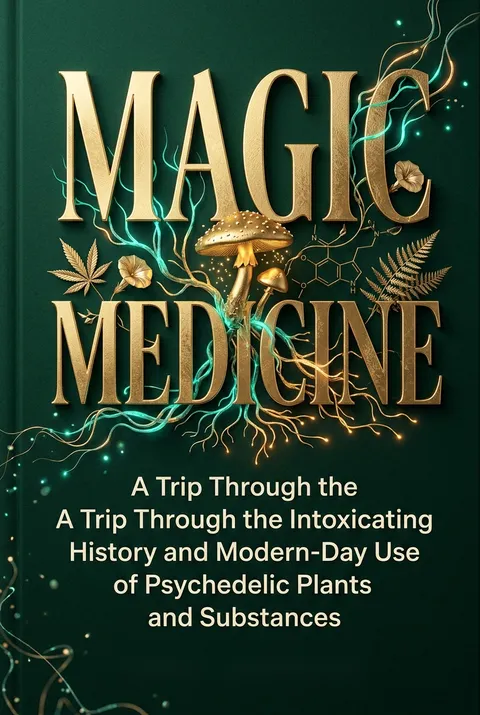
Magic Medicine is best understood as a popular survey of substances, histories, and research rather than a treatment manual or a single unified theory. Its organizing narrative moves from Indigenous ceremonial use, through Western discovery and prohibition, toward renewed scientific investigation. That arc gives the book momentum, while the varied substances prevent “psychedelic” from becoming a synonym for one predictable experience. The most durable insight is that chemistry, expectation, culture, and setting interact. A molecule is not encountered in a vacuum, and a laboratory result does not automatically translate to a festival, a ceremony, or ordinary clinical care.
The strongest parts of the account are its historical contrasts and its insistence on distinguishing drug classes. The DOM episode shows how delayed effects, uncertain identity, and poor information can turn novelty into crisis. The accounts of ayahuasca, peyote, and iboga also make clear that traditional use is embedded in communities and institutions, not merely in recipes. At the same time, the book's enthusiasm for therapeutic potential sometimes runs ahead of the evidence it describes. Many findings are preliminary, based on small or selected samples, or dependent on therapy delivered alongside the substance. Reports of lasting change are important, but they do not settle questions of effectiveness, safety, or who benefits.
A careful reader can hold two ideas together: altered states may offer valuable clinical and scientific opportunities, and claims about them require unusually strong scrutiny. The book is most useful when it opens questions rather than closing them. It encourages curiosity about consciousness while showing why informed research, ethical cultural exchange, and substance-specific risk assessment matter more than either romantic celebration or blanket condemnation.
Review Summary
Magic Medicine receives mostly positive reviews (4.13/5) for its comprehensive exploration of psychedelics throughout history and modern medical applications. Readers appreciate Johnson's accessible writing style, thorough research, and coverage of therapeutic potential for conditions like PTSD, depression, and anxiety. The book is organized into four categories: classical psychedelics, empathogens, dissociatives, and unique substances. Some criticisms include small print size, occasional padding, and lack of depth in certain areas. Most reviewers found it educational and valuable as a reference guide, though some desired more detailed information or found it dry in places.
People Also Read






Glossary
Psychedelic
mind-altering categoryA broad term for substances that produce distinctive states of consciousness beyond ordinary waking experience. The book includes classical serotonin-acting psychedelics, empathogens such as MDMA, dissociatives such as ketamine, and less easily categorized substances. The categories overlap in subjective effects, so the label does not imply a common mechanism, experience, or risk profile.
Set and setting
mindset and environmentA framework for understanding how a person's mental state and surroundings shape a psychedelic experience. “Set” includes expectations, intentions, and emotional condition. “Setting” includes the physical environment and the people present. The idea appears in Indigenous ritual practice and modern research, where preparation and supportive supervision are treated as important parts of the experience.
Empathogen
emotional openness enhancerA term for substances that intensify feelings of empathy, trust, and emotional connection. MDMA is the best-known example in the book, while MDA is presented as an earlier related compound. Empathogens may be less visually hallucinogenic than classical psychedelics, but their effects on emotion and self-disclosure can make them relevant to psychotherapy.
Dissociative
detachment-producing substanceA class of substances associated with detachment from one's body, surroundings, or ordinary sense of reality. Ketamine and DXM are examples discussed in the book. At different levels of intensity, dissociatives can produce altered bodily sensations, out-of-body experiences, or profound disconnection from the environment. Their effects and risks vary by substance.
MAOI
enzyme-blocking compoundA monoamine oxidase inhibitor is a substance that temporarily blocks monoamine oxidase enzymes, which normally break down certain neurotransmitters and related compounds. In ayahuasca, harmala alkaloids from the caapi vine inhibit the breakdown of DMT in the digestive system, allowing orally consumed DMT to become active. This interaction is central to the brew's pharmacology.
Default mode network
self-focused brain networkA connected set of brain regions associated with activity during rest and self-directed thought. The book discusses research finding reduced coordination in this network during LSD experiences, alongside reports of ego dissolution. The proposed connection is a research model, not proof that the network alone creates the self or that changing it produces therapeutic benefit.
MAPS
psychedelic research nonprofitThe Multidisciplinary Association for Psychedelic Studies is a nonprofit organization described in the book as a major supporter of psychedelic research. It has focused particularly on MDMA-assisted therapy, including studies for post-traumatic stress disorder. The organization works to develop research evidence and pathways for regulated therapeutic use.
Good Friday Experiment
psilocybin and religious experience studyA 1962 study led by Walter Pahnke that examined whether psilocybin could produce mystical-type experiences. Theology students attended a Good Friday service, with some receiving psilocybin and others a placebo. The study reported profound religious experiences among many participants in the active group, though it belongs to an era with research standards different from those expected today.
Download PDF
Download EPUB
.epub digital book format is ideal for reading ebooks on phones, tablets, and e-readers.








