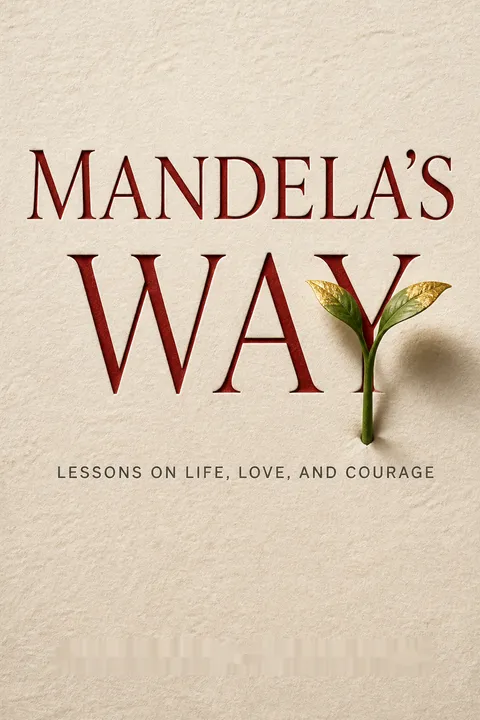


Key Takeaways
Build courage by acting while fear is still present.
Fear is not failure. Mandela admitted he was frightened in moments that became part of his legend. In 1994, when an engine failed during a flight to a dangerous political rally, he stayed composed, then told Stengel he had been terrified. As a teenager facing a painful public rite of passage, he felt he had shown less courage than the other boys. That memory stayed with him and helped shape his view that bravery is a choice made under pressure, not a gift some people are born with.
Practice changes the response. Mandela sometimes acted confident before he felt confident, including when challenging prison guards. The outward performance did not erase his fear; it helped him keep moving despite it.
The distinction between feeling fear and obeying it is useful because emotions are signals, not instructions. Rehearsing a difficult action can make it more manageable, much as practice prepares people for high-stakes performance. Mandela’s composure also shows how one person’s behavior can steady a group. The limit is that a brave front can become harmful if it prevents someone from naming danger or seeking help. Courage here is not denial. It is the ability to acknowledge risk and still choose a purposeful response.
Train yourself to become the calmest person in the room.
Composure is a decision. In 1993, ANC leader Chris Hani was assassinated while Mandela was in the Transkei. The country was at risk of spiraling into racial conflict. Mandela learned the news while greeting a visiting rugby team, finished the greeting, then made calls and prepared to address the nation. That evening, his message urged people to control their anger and protect the fragile political transition. Stengel describes him as steady and analytical, not indifferent to the loss.
Calm helps others act. Mandela believed people look to leaders in a crisis for a clear account of what is happening. He preferred careful explanations to dramatic rhetoric, even when that made him seem dull.
In a crisis, calm can function as a coordination signal. It tells others that the situation is being assessed rather than merely reacted to, which can create room for better choices. But visible composure should not be mistaken for emotional absence, and it is not always the right response to injustice. Anger can identify a real violation and mobilize action. Mandela’s example is strongest as a lesson in governing emotion, not suppressing it: pause long enough to choose a response proportionate to the stakes.
Take the visible risk before asking others to follow.
Leadership starts with example. On arriving at Robben Island, Mandela placed himself at the front of the prisoners’ line, facing the guards’ taunts. He also refused special treatment and did ordinary work, including cleaning other prisoners’ chamber pots when they were ill. His conduct made his expectations credible: he asked others to stand firm while accepting the same risks and indignities himself.
Responsibility can mean acting alone. In prison, Mandela privately opened talks with the government, despite the possibility that colleagues would call him disloyal. He later explained his decision to them and accepted responsibility for it. Leading from the front meant not only taking public risks, but owning the consequences of a consequential choice.
People judge leadership partly by whether its costs are shared. A leader who takes a risk personally can make a request feel more legitimate than one who transfers all danger downward. Yet visible sacrifice is not proof that a decision is wise. It can even become performance. Mandela’s example combines example with accountability: the leader acts, explains the choice, and remains answerable to the people affected. That final step matters, especially when unilateral action is defended as necessary.
Listen first, then guide people from behind.
A leader need not dominate. Mandela compared leadership to herding cattle: the person guiding the herd stays behind, while a few capable animals move ahead and draw the others along. He had learned another version of this approach by watching King Jongintaba, who heard people’s views before speaking at community meetings. The chief summarized what he had heard, then helped shape a decision.
Listening builds ownership. Mandela often let colleagues challenge him, spoke near the end of meetings, and accepted collective decisions even when he disagreed. This reflected ubuntu, the idea that people become fully human through their relationships with others. A group that helps shape a decision is more likely to feel responsible for carrying it out.
This model links authority to the creation of shared agency. In organizations, listening can surface information that a senior person lacks and make a decision easier to implement. It also places a useful check on charisma: the leader’s presence should not crowd out other people’s judgment. Still, listening is not the same as consensus, and consultation can become theater if the outcome is already fixed. A leader who guides from behind must make clear how input affects the decision and who remains responsible for it.
Use appearance and ritual to make dignity visible.
Symbols shape first impressions. Mandela cared about clothing because appearance could communicate status and self-respect. As a young lawyer, he wore tailored suits in a society that expected black South Africans to occupy subordinate roles. On Robben Island, he challenged the rule that black prisoners must wear shorts while other racial groups could wear long trousers. When meeting President Botha, he wanted a suit rather than prison clothing so he could meet the president on more equal terms.
Presentation can carry political meaning. After becoming president, Mandela wore brightly patterned shirts that expressed African identity and confidence. His posture, public greetings, and carefully managed smile also helped reassure a country fearful of what the transition would bring.
Appearance is not superficial when it determines who is treated as credible, safe, or entitled to speak. Clothing and ritual can challenge a hierarchy before a policy discussion even begins. Mandela’s attention to presentation also shows that public symbols can help make a new political identity imaginable. The caution is that image can outrun substance. A reassuring gesture cannot replace fair institutions or material change. Symbols do their best work when they make a real commitment legible rather than disguising its absence.
Keep the moral destination fixed, but change the route.
Principles and tactics differ. Mandela’s central political commitment was equal rights across race, class, and gender. He treated many other positions as strategies to reconsider when circumstances changed. As a young activist, he concluded that nonviolent protest alone was not stopping apartheid and helped lead the ANC toward armed resistance. Decades later, believing a military victory was impossible, he secretly began talks with the government, even though that risked his standing in the movement.
Adaptation served the larger aim. In negotiations, Mandela accepted compromises that helped establish a democratic transition, including arrangements that preserved roles for former opponents. For him, changing a method did not necessarily mean abandoning the goal. A fixed destination could require a different route as conditions shifted.
This distinction helps separate moral commitments from inherited tactics. Strategy should respond to evidence about what can work, while principles clarify what outcomes remain unacceptable. The approach is especially powerful in political conflict, where rigid methods can protect a movement’s identity at the cost of its purpose. But pragmatism needs guardrails. If every means is justified by a declared good end, the distinction collapses. Mandela’s model depends on keeping equality as a genuine constraint, not merely a slogan used to bless expedient choices.
Assume people can improve, without confusing hope with proof.
People are more than their worst conduct. Mandela could describe a prison commander’s cruelty and still remember that the man wished the prisoners well when leaving the island. Mandela interpreted the contradiction as evidence that oppressive systems can reward and cultivate dehumanizing behavior. He tried to understand the conditions shaping people without pretending their actions were harmless.
Look for mixed motives. Mandela believed that treating others as capable of honor could encourage better behavior. But he could misjudge people. He initially trusted F. W. de Klerk more than later events warranted, and eventually felt betrayed by him. Mandela continued to see value in cooperation, while recognizing that trust carries risk.
This is a form of moral attention: judging behavior clearly without reducing a person to a permanent category. It leaves room for changed conduct and can make cooperation possible across deep divisions. The distinction between explanation and excuse is essential, however. Structural pressure can help explain cruelty without removing responsibility or centering the suffering of those harmed. Generosity is most useful when paired with observation, boundaries, and consequences. Hope can invite better behavior, but it cannot substitute for evidence that behavior has changed.
Learn your opponent’s language before asking them to change.
Understanding is a practical skill. While underground and later in prison, Mandela studied Afrikaans, the language of many white South Africans, and learned about Afrikaner history. His colleagues sometimes saw this as deference to the oppressor. Mandela saw it as necessary preparation for a future that would include Afrikaners, not simply exclude them. Speaking their language helped him communicate with prison guards and build relationships with some of them.
Culture can open political doors. Mandela also learned about rugby, a sport associated with Afrikaner identity and long opposed by many black activists. As president, he supported the national team and wore its jersey during the 1995 World Cup. The gesture helped make a shared national identity feel possible to people who had recently been enemies.
Learning an opponent’s language and symbols can reduce the distance created by stereotypes. It also helps a negotiator notice what the other side fears, values, or misunderstands. This kind of cultural fluency need not mean agreement or surrender. It is a way to communicate across a divide that argument alone may not cross. The risk is instrumentalizing a culture as a tool while ignoring the power imbalance beneath the encounter. Genuine persuasion requires respect for people, not merely skill at influencing them.
Bring dangerous rivals close enough to influence and read them.
Proximity can reduce uncertainty. Mandela kept ambitious or volatile figures near him rather than simply pushing them away. He invited younger leaders such as Bantu Holomisa and Chris Hani to meetings and public events, sometimes making them feel important and included. He could observe their thinking, give them a stake in the movement, and reduce the appeal of those who wanted to isolate him.
Inclusion can also be strategic. Mandela disliked Mangosuthu Buthelezi and considered him a serious rival, yet invited him into his first cabinet. He believed it was better to have a dangerous opponent inside the government, where he could be watched, than outside it, where his actions were harder to anticipate. The tactic did not make rivalry disappear; it managed the risk.
This approach combines coalition-building with political risk management. Inclusion can make a rival accountable to shared decisions and give others a reason to prefer cooperation. It also provides information that distance may conceal. But proximity is not a substitute for trust, and co-option can create the appearance of partnership without real power-sharing. The strategy works best when participation is meaningful and institutions can contain conflict. Otherwise, keeping a rival close may only bring the contest into the room.
Choose the long view without mistaking delay for wisdom.
Speed is not the same as resolve. Mandela’s twenty-seven years in prison taught him to work on a longer horizon than the immediate political moment. He did not assume apartheid would disappear quickly, and he believed hurried choices could damage goals that took years to achieve. When conditions made negotiations the only plausible path to democracy, he accepted the risk of beginning them, even though he had spent decades resisting the government.
Patience still requires action. Mandela did not treat long-term thinking as an excuse to ignore immediate danger. After Hani’s assassination, he acted quickly to address a crisis while keeping the larger aim of a peaceful transition in view. The question was not whether to move fast or slowly, but which pace served the purpose.
A longer time horizon can loosen the grip of headlines, provocation, and the urge to look decisive. It encourages decision-makers to ask what today’s move does to tomorrow’s options. Yet patience is not automatically virtuous. Under unjust conditions, calls for restraint can protect the status quo and ask the harmed to wait. The useful test is whether delay is producing better information or preserving avoidable harm. Long-term thinking should sharpen action, not become a polite name for postponement.
Refuse clearly, and relinquish authority when your role is complete.
A clear refusal is kinder than false hope. Mandela could delay a decision when more thought was useful, but he did not want to disguise a no as a maybe. He believed ambiguity made it harder for the other person to understand the boundary. The same clarity shaped his decision not to seek a second presidential term. South Africa had elected him as its first democratic president, but he believed the example of leaving office mattered more than holding power longer.
Leadership includes succession. Mandela left after one term, despite being immensely popular. Like George Washington, he understood that a precedent could outlast an individual policy. A leader who leaves voluntarily helps show that public office belongs to an institution, not to the person occupying it.
Clear boundaries protect time, trust, and the other person’s ability to make plans. Voluntary departure extends that principle from private dealings to public power: the officeholder declines to treat influence as personal property. This is especially important when a leader’s popularity makes continued rule easy to justify. Still, leaving is not always responsible if institutions are too weak to function without the departing person. The deeper lesson is to build successors and durable rules, so stepping aside strengthens the institution rather than merely staging a graceful exit.
Cultivate a private life that restores what public duty consumes.
Renewal needs a place. On Robben Island, Mandela created a small garden in difficult soil. He grew vegetables for the prisoners’ meals and spent time tending the plants, which gave him a focused, creative task in a life he could not otherwise control. At Pollsmoor, he expanded the garden and shared its produce with prison staff. The work brought order and satisfaction without removing him from his public responsibilities.
Duty has a private cost. Mandela’s commitment to the struggle kept him from being a conventional husband and father, and his marriage to Winnie did not survive their years apart. He did not give up on intimacy, however. At eighty, he married Graça Machel, finding companionship after a lifetime in which love and public duty had often pulled in opposite directions.
A restorative practice can return attention and agency to someone whose wider circumstances are constrained. The garden is more than a hobby: it offers visible results, routine, and care for something living. The story of Mandela’s family life adds an important complication. Public sacrifice can serve a cause while leaving deep private losses, and those losses do not become trivial because the cause is noble. Renewal therefore includes both solitary pursuits and human closeness. Neither should be treated as a reward to postpone indefinitely.
Analysis
Mandela’s Way is a biographical argument told through remembered encounters, not a formal leadership manual. Richard Stengel’s access to Mandela gives the lessons texture: a failed airplane engine, an assassination, a garden in prison, a carefully chosen suit. These stories complicate the public image of a flawless saint. Mandela is disciplined, but also vain, lonely, stubborn, and capable of misjudging people. His authority comes partly from that tension between human limitation and deliberate self-command.
The book’s deepest pattern is the separation of ends from means. Mandela holds tightly to equal political rights while revising tactics, relationships, and public presentation as conditions change. This makes him neither an inflexible idealist nor a pure opportunist. His pragmatism is anchored by a moral destination, while his willingness to listen and persuade helps make political change survivable for former opponents. The account also shows that symbolism is not decoration in politics. Clothing, public gestures, and calm speech help people imagine a different relationship to power, although such signals matter only when backed by action.
The leadership lessons are strongest when treated as practices shaped by context, not universal formulas. Calm can prevent panic, but it can also conceal grief. Trust can invite better conduct, but it can expose people to betrayal. Patience can protect long-term aims, but it can also ask the oppressed to wait longer. Leading from behind can create ownership, but only if participation is genuine. These tensions are not flaws in the book’s portrait. They are part of its most useful insight: good judgment requires holding competing truths without losing the principle that makes a choice worth making.
The narrative also makes a cost visible that leadership books often soften. Mandela’s public service came at the expense of family closeness and years of private freedom. His garden and later companionship do not cancel that loss; they show the human need for a life beyond public purpose. The model offered here is not sainthood or self-erasure. It is the difficult craft of becoming more measured, more strategic, and more humane while remaining answerable for the consequences.
Review Summary
Mandela's Way receives mostly positive reviews for its insightful portrayal of Nelson Mandela's leadership and life philosophy. Readers appreciate the anecdotes and lessons drawn from Mandela's experiences, finding them inspirational and applicable. Some criticize the book's structure and writing style, feeling it lacks depth or reads like a leadership manual. Others value the unique perspective offered by Stengel's close relationship with Mandela. Overall, the book is praised for its accessible presentation of Mandela's wisdom and its potential to inspire readers.
People Also Read








Glossary
ubuntu
Humanity through relationshipA South African concept describing human identity as formed through relationships with other people. In Mandela’s understanding, individuals do not achieve important things entirely alone, and a community’s well-being is bound up with the dignity and contribution of its members. It supports leadership based on mutual recognition, listening, and shared responsibility.
leading from behind
Guiding through othersA leadership approach in which a leader listens, encourages capable people to move forward, and shapes direction without always occupying the center. Mandela associated it with the image of guiding cattle from behind and with the community meetings he observed under King Jongintaba, where the chief heard others before speaking.
Spear of the Nation
ANC armed wingThe English name used in the book for the ANC’s military wing, also referred to as MK. Mandela helped establish it in 1961 after concluding that nonviolent protest alone was not achieving the movement’s aims. Its adoption marked a major strategic change in the struggle against apartheid.
The Third Force
Alleged covert violenceA term Mandela used for a shadowy paramilitary force that he believed was supported by elements of the South African government and involved in fomenting violence during negotiations. The book presents this as Mandela’s belief and notes that de Klerk disputed the accusation. The alleged violence threatened the transition to democracy.
FAQ
What's "Mandela's Way: Lessons on Life, Love, and Courage" about?
- Overview: "Mandela's Way" by Richard Stengel explores the life and leadership lessons of Nelson Mandela, offering insights into his character and the principles that guided him.
- Structure: The book is organized into fifteen chapters, each focusing on a specific lesson or principle that Mandela exemplified, such as courage, leadership, and seeing the good in others.
- Personal Insights: Stengel shares personal anecdotes and experiences from his time working with Mandela on his autobiography, providing a unique perspective on Mandela's personality and leadership style.
- Broader Themes: The book delves into themes of forgiveness, resilience, and the power of seeing the humanity in others, drawing from Mandela's experiences in prison and his role in ending apartheid.
Why should I read "Mandela's Way: Lessons on Life, Love, and Courage"?
- Inspiration: The book offers inspiration through Mandela's life story, showcasing how he overcame adversity with grace and determination.
- Leadership Lessons: Readers can learn valuable leadership lessons applicable to personal and professional life, emphasizing empathy, patience, and strategic thinking.
- Historical Context: It provides a deeper understanding of South Africa's history and the struggle against apartheid, highlighting Mandela's pivotal role.
- Personal Growth: The lessons in the book encourage personal growth and self-reflection, urging readers to adopt Mandela's principles in their own lives.
What are the key takeaways of "Mandela's Way: Lessons on Life, Love, and Courage"?
- Courage and Fear: Mandela taught that courage is not the absence of fear but the ability to overcome it, a lesson he learned throughout his life.
- Leadership Styles: The book emphasizes leading from both the front and the back, showing the importance of empowering others while taking decisive action.
- Seeing Good in Others: Mandela's ability to see the good in people, even his adversaries, was a cornerstone of his leadership and helped him build bridges.
- Long-term Vision: Mandela's approach to leadership involved playing the long game, focusing on enduring change rather than immediate results.
What are the best quotes from "Mandela's Way: Lessons on Life, Love, and Courage" and what do they mean?
- "Courage is not the absence of fear": This quote encapsulates Mandela's belief that true bravery involves facing and overcoming fear, not the lack of it.
- "Lead from the back": This phrase highlights the importance of empowering others and guiding them subtly, rather than always being at the forefront.
- "See the good in others": Mandela's philosophy of looking for the positive in people, even those who opposed him, helped him foster reconciliation and unity.
- "It's a long game": This quote reflects Mandela's strategic patience and focus on long-term goals, rather than seeking quick fixes.
How did Nelson Mandela define courage according to "Mandela's Way"?
- Overcoming Fear: Mandela believed that courage is about overcoming fear, not the absence of it, a lesson he learned from his own experiences.
- Daily Acts: He saw courage as an everyday activity, demonstrated in both small and large actions.
- Public and Private Courage: Mandela's courage was evident in public acts, like his trial speeches, and private moments, such as his resilience in prison.
- Role Models: Mandela was inspired by African leaders and historical figures who exemplified bravery, shaping his understanding of courage.
What leadership lessons can be learned from "Mandela's Way"?
- Lead from the Front and Back: Mandela demonstrated the importance of taking initiative while also empowering others to lead.
- Empathy and Understanding: He emphasized understanding and empathizing with adversaries to foster reconciliation and peace.
- Strategic Patience: Mandela's leadership was marked by patience and a focus on long-term goals, rather than immediate results.
- Adaptability: He was willing to change tactics and strategies to achieve his core principle of equality and justice.
How did Mandela's time in prison shape his leadership, as discussed in "Mandela's Way"?
- Self-Control and Discipline: Prison taught Mandela self-control and discipline, essential traits for effective leadership.
- Empathy for Others: His time in prison deepened his empathy, allowing him to see the humanity in his jailers and adversaries.
- Strategic Thinking: Mandela used his time in prison to think strategically about the future of South Africa and the ANC's role in it.
- Personal Growth: The isolation and challenges of prison life helped Mandela mature and refine his leadership style.
What is the concept of ubuntu, and how does it relate to Mandela's philosophy in "Mandela's Way"?
- Definition: Ubuntu is an African philosophy that emphasizes the interconnectedness of all people and the idea that one's humanity is tied to the humanity of others.
- Mandela's Belief: Mandela embraced ubuntu, believing that collective action and empathy were essential for achieving equality and justice.
- Leadership Style: This philosophy influenced his leadership style, focusing on consensus-building and empowering others.
- Cultural Context: Ubuntu reflects the communal values of African societies, which Mandela saw as vital to South Africa's future.
How did Mandela's approach to seeing the good in others impact his leadership, according to "Mandela's Way"?
- Building Bridges: Mandela's ability to see the good in others helped him build bridges with adversaries and foster reconciliation.
- Trust and Risk: He took emotional risks by trusting others, which often led to positive outcomes and strengthened relationships.
- Influencing Behavior: By expecting the best from people, Mandela often inspired them to rise to the occasion and act honorably.
- Criticism and Balance: While some criticized him for being too trusting, Mandela believed that seeing the good in others was ultimately beneficial.
What role did appearances play in Mandela's leadership, as described in "Mandela's Way"?
- Symbolic Importance: Mandela understood the symbolic importance of appearances and used them to convey messages and build trust.
- Dressing the Part: He believed in dressing appropriately for the role he was playing, whether as a lawyer, revolutionary, or president.
- Public Image: Mandela carefully managed his public image to align with his values and goals, using it as a tool for leadership.
- Cultural Significance: His choice of attire, such as the iconic "Mandela shirts," reflected his pride in African identity and leadership.
How did Mandela's pragmatism influence his decisions, as explored in "Mandela's Way"?
- Core Principle: Mandela's pragmatism was guided by his core principle of equality and justice, with other decisions being tactical.
- Adaptability: He was willing to change tactics and strategies to achieve his overarching goal, demonstrating flexibility and realism.
- Balancing Ideals and Reality: Mandela balanced his ideals with the practical realities of political and social change, focusing on achievable outcomes.
- Strategic Compromises: He made strategic compromises when necessary, understanding that some principles could be adjusted to serve the greater good.
What is the significance of Mandela's garden on Robben Island, as discussed in "Mandela's Way"?
- Symbol of Renewal: Mandela's garden was a symbol of renewal and hope, providing a sense of purpose and normalcy in prison.
- Personal Sanctuary: It served as a personal sanctuary where he could find peace and focus away from the harsh realities of prison life.
- Metaphor for Growth: The garden was a metaphor for personal and political growth, reflecting Mandela's belief in nurturing and cultivating change.
- Connection to Childhood: Gardening connected Mandela to cherished memories of his childhood, offering comfort and continuity amidst adversity.
Download PDF
Download EPUB
.epub digital book format is ideal for reading ebooks on phones, tablets, and e-readers.








